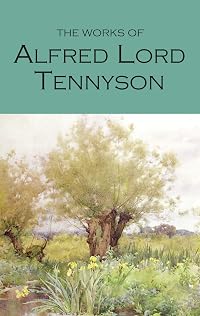
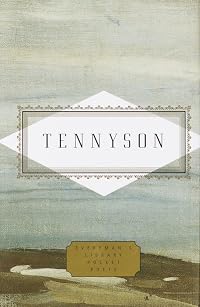
The Works of Alfred Lord Tennyson
by Alfred Tennyson
452 Members (4.35)
On This Page
Description
Selected by Rosemary Gray. Poignant, wry, chilling, challenging, amusing, thought-provoking and always intriguing, these accomplished tales from the pens of great writers are object-lessons in the art of creating a literary masterpiece on a small canvas. From the straightforwardly anecdotal to the more analytical of human behaviour, all are guaranteed to capture the imagination, stir the emotions, linger in the memory and whet the reader's appetite for more. In this book, Wordsworth Editions show more presents the modern reader with a rich variety of short stories by a host of towering literary figures ranging from Arnold Bennett to Virginia Woolf. This disparate and distinguished company of writers has rarely - if ever - met within the pages of one volume: the result is a positive feast. show lessTags
Recommendations






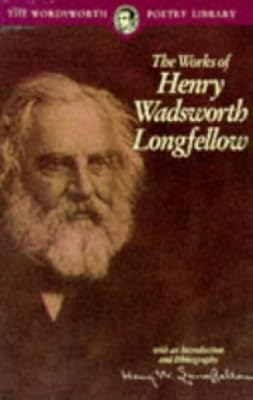




Member Reviews
Members
- Recently Added By
Lists

Harold Bloom - The Western Canon: C. The Democratic Age
336 works; 15 members

Book Titles Mentioned In Newberry Medal And Honor Books
884 works; 3 members
Author Information

708+ Works 14,307 Members
Alfred Tennyson was born on August 6, 1809 in Somersby, England. He attended Trinity College in Cambridge. Tennyson is chiefly known for his poetry, an art form that had interested him since the age of six. His best known work is the Idylls of the King. Tennyson was appointed Poet Laureate of England in 1850 and became the Baron of Aldworth and show more Farrington in 1883. Tennyson was still writing his his 80s, and died on October 6, 1892 near Haslemere, England. (Bowker Author Biography) If there were a contest for the title "greatest Victorian poet," Tennyson would in death, as in life, obtain the prize. He had the finest ear of any English poet, admitting to know the metrical value of every word in the English language except "scissors." In addition, his ability to evoke a closely rendered scene was unsurpassed. Therefore, although those who sought to attack Tennyson called him "the stupidest of the English poets," he remains the only one ennobled for his poetry. Tennyson was born at Somersby rectory in Lincolnshire, the son of the rector there, and was educated at Louth Grammar School and Trinity College, Cambridge. His earliest published verse, Poems Chiefly Lyrical (1830) and Poems (1833), were considered too sentimental by many critics. Signs of future greatness could be detected in some of the poems in these collections, however. In 1842, a new volume entitled Poems was published. This work, consisting of heavily revised poems from the two earlier collections as well as many new poems, helped to establish Tennyson's fame. His masterpiece, In Memoriam (1850), crowned his fame. The work is a tribute to his close friend Arthur Henry Hallam, whose sudden death in 1833 was a crucial event in the poet's life. The year it was published he succeeded Wordsworth as poet laureate of England. Thereafter, he became tremendously popular and held the respect and admiration of the nation, including Queen Victoria and Prince Albert. From that point, Tennyson also became the poet of the establishment, and for the next 40 years he was the Parnassian idol whom younger poets would vainly seek to topple. In many of his poems, including "Ulysses," "The Princess," and "Idylls of the King" (1859--1885), Tennyson trumpeted the creed of the benevolent tyrant. It was this embrace of an authoritarian universe that, as much as his versecraft, had earned him the respect of the British monarchs. His lifelong fascination with King Arthur was the inspiration for Idylls of the King, a series of 12 narrative poems published over a period of 26 years. In 1888, Tennyson chronologically arranged these 12 poems, thus depicting the full story of Arthur and his vision of the perfect state. Tennyson's last poem, "Crossing the Bar," was a 16-line lyric written while crossing from Lymington to the Isle of Wight. It was included in a collection entitled Demeter and Other Poems published in 1889. Tennyson's most characteristic form of poetry was the idyl, a poem of country life. These poems frequently take the form of dramatic reveries that tell a story. Mood is often created through the power of richly described settings. All of Tennyson's work reflects his talent for achieving fine shades of poetic expression, and his lyrics express the emotions and experiences shared by all people. His work is also notable for its heroic quality. In 1883, Tennyson was awarded the title of Baron Tennyson by Queen Victoria; his full title was Baron of Aldworth and Farringford. When he died in 1892, he was buried in the Poet's Corner of Westminster Abbey. Tennyson's letters show almost nothing of the vividness and brilliance of his poetry, but Cecil Y. Lang and Edgar F. Shannon have been publishing them for their sidelights. More important for an understanding of Tennyson's poetry, the century-long ban on publishing the contents of Tennyson's notebooks, held by Trinity College in Cambridge, was lifted not long ago; an edition of In Memoriam, incorporating these variants, was brought out by Susan Shatto and Marion Shaw in 1982. (Bowker Author Biography) show less
Series
Belongs to Publisher Series
Common Knowledge
- Disambiguation notice
- The Wordsworth Poetry Library Collection (ISBN 1853264148). Do not combine with collections containing different poems.
Classifications
Statistics
- Members
- 452
- Popularity
- 67,588
- Rating
- (4.35)
- Languages
- English, German
- Media
- Paper
- ISBNs
- 2
- ASINs
- 1