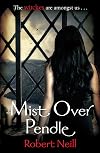
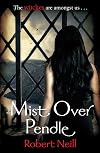
Mist Over Pendle
by Robert Neill
On This Page
Description
In a wild inaccessible corner of Lancashire, where the ancient fear of deamons and witches is still a part of life, several people have died in mysterious circumstances. Talk of witchcraft is dismissed but then there are some unmistakeable signs.Tags
Recommendations























Member Reviews
Mist Over Pendle was nothing like I had imagined it to be, and was probably all the better for it.
The story is set in 1611-12, against a background of the events leading up to the famous Pendle Witch Trials; using what was known of the trials, from Thomas Potts' contemporary account in The Wonderfull Discoverie of Witches, and of social mores at the time, Robert Neill presents a fictional imagining of the events leading up to the final committal for trial. A book centring on witchcraft was, I assumed, going to be quite dark, a little gothic maybe; but if an interest in witchcraft and the occult is what brings you to this book, you may be disappointed. Because what Neill has done s produce a light, and highly readable, impression of how show more much of the concern over witchcraft was born out of hysteria and lack of knowledge.
Margery Whittaker, a lively, intelligent young girl brought up in, but longing to rebel from, a stern Puritan household, becomes a concern to her elder brothers and sisters when their mother dies. Anxious for Margery to be away from potential trouble and distractions, they decide to send her to a distant cousin, one of the landed gentry with an estate near in Pendle, and a Justice of the Peace, by the name of Roger Nowell. Luckily for Margery, it turns out that she was cut from the same cloth as her cousin, and a strong bond builds between the two.
While able to write, Roger is not a wordsmith, so Margery takes up the quill and acts as clerk at the weekly magistrate hearings. Through this, and her increasing familiarity with the people living in the area, she becomes aware of the undercurrent of concern over witchcraft.
Rather than having his characters immediately assume witchcraft, author Neill demonstrates that witchcraft could be, and was blamed, for deaths that may have been chance or likely to happen anyway; and that some of what was considered witchcraft was more down to good knowledge and application of the properties of plants.The "witches" are committed for trial, and witchcraft is really only cited by Roger Nowell, when it becomes clear that a lady of means is using the coven to do her bidding .
In Margery, Neill has created a wonderful, lively, intelligent central character; the sardonic cousin Roger is also beautifully drawn, as is the relationship between the two cousins.
The book is a gentle read, and at times it does feel that things are moving a little slowly, but on the whole I found it and excellent read, full of evocative images of the landscape and weather. show less
The story is set in 1611-12, against a background of the events leading up to the famous Pendle Witch Trials; using what was known of the trials, from Thomas Potts' contemporary account in The Wonderfull Discoverie of Witches, and of social mores at the time, Robert Neill presents a fictional imagining of the events leading up to the final committal for trial. A book centring on witchcraft was, I assumed, going to be quite dark, a little gothic maybe; but if an interest in witchcraft and the occult is what brings you to this book, you may be disappointed. Because what Neill has done s produce a light, and highly readable, impression of how show more much of the concern over witchcraft was born out of hysteria and lack of knowledge.
Margery Whittaker, a lively, intelligent young girl brought up in, but longing to rebel from, a stern Puritan household, becomes a concern to her elder brothers and sisters when their mother dies. Anxious for Margery to be away from potential trouble and distractions, they decide to send her to a distant cousin, one of the landed gentry with an estate near in Pendle, and a Justice of the Peace, by the name of Roger Nowell. Luckily for Margery, it turns out that she was cut from the same cloth as her cousin, and a strong bond builds between the two.
While able to write, Roger is not a wordsmith, so Margery takes up the quill and acts as clerk at the weekly magistrate hearings. Through this, and her increasing familiarity with the people living in the area, she becomes aware of the undercurrent of concern over witchcraft.
Rather than having his characters immediately assume witchcraft, author Neill demonstrates that witchcraft could be, and was blamed, for deaths that may have been chance or likely to happen anyway; and that some of what was considered witchcraft was more down to good knowledge and application of the properties of plants.
In Margery, Neill has created a wonderful, lively, intelligent central character; the sardonic cousin Roger is also beautifully drawn, as is the relationship between the two cousins.
The book is a gentle read, and at times it does feel that things are moving a little slowly, but on the whole I found it and excellent read, full of evocative images of the landscape and weather. show less
Ratings
Members
- Recently Added By
Lists

Witchy Fiction
253 works; 126 members

Books Read in 2025
4,128 works; 98 members

Fiction With Familiar Settings
280 works; 94 members
Author Information
16 Works 357 Members
Common Knowledge
- Original publication date
- 1951
- Important places
- Pendle Hill, Lancashire, England, UK
- Epigraph
- Da veniam Ignoto non displicuisse meretur Festinat studiis qui placuisse tibi
- Dedication
- To the dusty memory of Master Thomas Potts sometime Clerk to the Judges in the Circuit of the North Parts who in November, 1612, at his lodging in Chancery Lane, wrote of the Late Wonderful Discoverie of Witches in the Counti... (show all)e of Lancaster.
- First words
- In December 1595 died Dr. William Whitaker, Master of St. John's College and Regius Professor of Divinity in the University of Cambridge.
- Last words
- (Click to show. Warning: May contain spoilers.)"Surely," said Nick Bannister
- Disambiguation notice
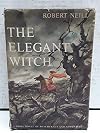
- Mist over Pendle has also been published as The Elegant Witch.
Classifications
Statistics
- Members
- 180
- Popularity
- 182,659
- Reviews
- 3
- Rating
- (3.97)
- Languages
- English
- Media
- Paper, Ebook
- ISBNs
- 12
- ASINs
- 5