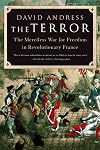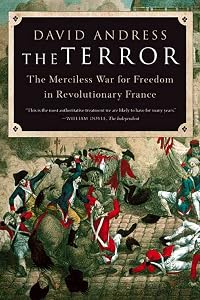
The Terror: The Merciless War for Freedom in Revolutionary France
by David Andress
On This Page
Description
For two hundred years, the Terror has haunted the imagination of the West. The descent of the French Revolution from rapturous liberation into an orgy of apparently pointless bloodletting has been the focus of countless reflections on the often malignant nature of humanity and the folly of revolution. David Andress, a leading historian of the French Revolution, presents a radically different account of the Terror. The violence, he shows, was a result of dogmatic and fundamentalist thinking: show more dreadful decisions were made by groups of people who believed they were still fighting for freedom but whose survival was threatened by famine, external war, and counter-revolutionaries within the fledgling new state. Urgent questions emerge from Andress's reassessment: When is it right to arbitrarily detain those suspected of subversion? When does an earnest patriotism become the rationale for slaughter? This new interpretation draws troubling parallels with today's political an religious fundamentalism.--From publisher description. show lessTags
Recommendations












Member Recommendations



Member Reviews
This is a very well written historical narrative that, despite its title, really covers the whole of the French revolutionary period from the fall of the Bastille in July 1789 up to and beyond the fall of Robespierre in July 1794. The author conveys the spirit of the times very well - the huge thirst for change and something different from the past, which could be discerned even when the ideals of the Revolution became so besmirched with the blood of many people during the reign of terror (the majority of these not, however, being the aristocrats of popular imagination); and the attempt to create a sense of solidarity against internal and external enemies, both real and perceived, a necessary move in some ways, but eventually show more grotesquely distorted under Robespierre so that any opposition to his rule was seen as treachery and anti-patriotic. The disintegration into factional strife and the fall of various groups, the Girondins, the Hebertists, the Indulgents (Dantonists) and finally the Robespierrists, over a period of only a few months is excitingly and horrifically recounted. All in all, this is an excellent account of five of the most important years in modern world history, in that they paved the way for more modern representative government in the nineteenth and subsequent centuries, spelled the death knell of absolutist monarchy in western Europe (Napoleon notwithstanding) and gave birth to modern concepts such as liberty, equality and human rights. 5/5 show less
Can I say I "read" the book if I had to quit? There's no category for "gave up." Which is too bad, because there is so much good information in this book, but maybe that's the problem -- there is so much!
The author is a historian, a professor, and he knows a lot. But that doesn't mean he can write for the lay person. I love reading history -- even sometimes very dense history -- but here's the deal with this one: if I have to wade through any more sentences like this on Page 118, my brain is going to explode. Here goes:
"Since all this was done in the name of proclaiming themselves the only true patriots, and in an atmosphere of war emergency, the numbers repelled by the process, or unwilling to expose themselves to possible charges of show more treason, grew ever larger."
Oh, my. After the excessive introductory dependent clause, I am already lost. Where is the subject? Oh, there it is -- "the numbers." Where is the verb? Oh, way at the end: "grew." Keep breathing...
Unfortunately, most of the book has long paragraphs and long convoluted sentences, with no shorter sentences interwoven to give the reader a mental break. Long sentences. Then short sentence. Varying the lengths of sentences is one of the rules of good writing.
Too bad, as this is my second attempt to read about the French Revolution. But I still want to learn about it, so will keep looking for something more fun and not so painful. (If you can call "the French Revolution" fun!) show less
The author is a historian, a professor, and he knows a lot. But that doesn't mean he can write for the lay person. I love reading history -- even sometimes very dense history -- but here's the deal with this one: if I have to wade through any more sentences like this on Page 118, my brain is going to explode. Here goes:
"Since all this was done in the name of proclaiming themselves the only true patriots, and in an atmosphere of war emergency, the numbers repelled by the process, or unwilling to expose themselves to possible charges of show more treason, grew ever larger."
Oh, my. After the excessive introductory dependent clause, I am already lost. Where is the subject? Oh, there it is -- "the numbers." Where is the verb? Oh, way at the end: "grew." Keep breathing...
Unfortunately, most of the book has long paragraphs and long convoluted sentences, with no shorter sentences interwoven to give the reader a mental break. Long sentences. Then short sentence. Varying the lengths of sentences is one of the rules of good writing.
Too bad, as this is my second attempt to read about the French Revolution. But I still want to learn about it, so will keep looking for something more fun and not so painful. (If you can call "the French Revolution" fun!) show less
The Terror is an in-depth look at the French state leading up to and the years following the revolution of 1792. During this remarkable period of history, public executions (the Guillotine) became common place as those in power assumed the authority to tell people how to think and act (not unlike some modern-day politicians). If you weren't an active cheerleader for the Revolutionary government, then you must be a counter-revolutionary, and that cannot be tolerated. Say goodbye to your head.
Of course, the problem with this sort of thing is rampant abuse, and eventually the Terror (as it was called) consumed its own architects, such as Maximilian "The Incorruptible" Robespierre. While lasting only about three years, The Terror saw the show more demise of not only the aristocratic class that had hereditarily ruled the country since the time of Charlemagne, but all contemporary political groups who might adopt an unpopular stance on issues dear to those controlling the blade of "justice."
What is remarkable is how, during this period, France managed to conduct wars against England, Prussia and Austria; as well as their own civil war against royalist factions who could still muster a fighting force. Eventually, though, it wasn't bloodshed that brought down The Terror, but rampant inflation and chronic food shortages.
Andress does an admirable job identifying the main players and reporting on their actions rather dispassionately. It is hard to find any heroes during this time, and Andress does not sympathetically create any. The last chapter briefly covers ensuing events that led to the rise of Napoleon -- a Romantic tale in contrast to the Gothic horror of The Terror. In his conclusion, he summarizes the rise and fall of The Terror through the words of some of its protagonists; but I really wanted to see more about how transition occurred that resulted in l'Empereur. show less
Of course, the problem with this sort of thing is rampant abuse, and eventually the Terror (as it was called) consumed its own architects, such as Maximilian "The Incorruptible" Robespierre. While lasting only about three years, The Terror saw the show more demise of not only the aristocratic class that had hereditarily ruled the country since the time of Charlemagne, but all contemporary political groups who might adopt an unpopular stance on issues dear to those controlling the blade of "justice."
What is remarkable is how, during this period, France managed to conduct wars against England, Prussia and Austria; as well as their own civil war against royalist factions who could still muster a fighting force. Eventually, though, it wasn't bloodshed that brought down The Terror, but rampant inflation and chronic food shortages.
Andress does an admirable job identifying the main players and reporting on their actions rather dispassionately. It is hard to find any heroes during this time, and Andress does not sympathetically create any. The last chapter briefly covers ensuing events that led to the rise of Napoleon -- a Romantic tale in contrast to the Gothic horror of The Terror. In his conclusion, he summarizes the rise and fall of The Terror through the words of some of its protagonists; but I really wanted to see more about how transition occurred that resulted in l'Empereur. show less
Gripping, bloody, and full of details about the different factions who all fought for place in what became known as the Reign of Terror. It begins with the Royal Family's flight to Varennes and their arrest and return to Paris, and documents well their inability to grasp the full wrath of their people.
2021 Addition: After finishing this book, I am keeping the 3 stars. This book is incredibly well researched and the writing style leaves a lot to be desired. One of the areas that Andress does well is to document the vast numbers of people caught up in making of The Terror and what drove them. Danton, Robespierre, Saint Just, Marat were all men who got a grip on power and held onto it, no matter the cost. The September Massacre in 1793 was show more just the start, and by 1794 the numbers of people per month in the different towns who were guillotined were rising. They were arrested and held in prisons, and by the end to be accused was enough to find them guilty and sentence them to death.
But the details and the asides and the parenthetical sections are enough to just pull this book down. The subject matter alone is difficult, and add to that a break in the sentence to reference an incident or person, all create a wall of confusion instead of a clear narration of events.
What is fascinating is to see how the in-fighting resulted not in justice for the French, bread for the hungry, a new government that dealt with the ideas of Liberty, Equality, and Fraternity. As an example, Robespierre was not interested in governing, per his own words. He had an idea for what justice and an end to the Ancien Regime should look like, and friends to help him put it into place. And he spoke well and had the charisma to bring others to follow him, while knowing how to hold onto the reins of power to wrest it from his political enemies. But he had no conscience when it came to protecting the innocent or any sense of true justice for the accused. show less
2021 Addition: After finishing this book, I am keeping the 3 stars. This book is incredibly well researched and the writing style leaves a lot to be desired. One of the areas that Andress does well is to document the vast numbers of people caught up in making of The Terror and what drove them. Danton, Robespierre, Saint Just, Marat were all men who got a grip on power and held onto it, no matter the cost. The September Massacre in 1793 was show more just the start, and by 1794 the numbers of people per month in the different towns who were guillotined were rising. They were arrested and held in prisons, and by the end to be accused was enough to find them guilty and sentence them to death.
But the details and the asides and the parenthetical sections are enough to just pull this book down. The subject matter alone is difficult, and add to that a break in the sentence to reference an incident or person, all create a wall of confusion instead of a clear narration of events.
What is fascinating is to see how the in-fighting resulted not in justice for the French, bread for the hungry, a new government that dealt with the ideas of Liberty, Equality, and Fraternity. As an example, Robespierre was not interested in governing, per his own words. He had an idea for what justice and an end to the Ancien Regime should look like, and friends to help him put it into place. And he spoke well and had the charisma to bring others to follow him, while knowing how to hold onto the reins of power to wrest it from his political enemies. But he had no conscience when it came to protecting the innocent or any sense of true justice for the accused. show less
4491. The Terror The Merciless War for Freedom in Revolutionary France, by David Andress (read 30 Sep 2008) This 2005 book by a British historian who is an expert on the French Revolution is a well-researched account of the time in France from 1789 yo 1795, concentrating on the Terror from September 1793 to late 1794. There is a glossary, a timeline, a listing of the cast of characters, an index, and adequate footnotes--but, sadly, no bibliography as such. The author shows how in their eagerness to safeguard what they believed was right the authors of the Terror rode roughshod over elementary rights which should be extended to every person, even if the person is inimical to what the persons in power believe to be right.
Ratings
Members
- Recently Added By
Author Information

13 Works 606 Members
David Andress is Principal Lecturer in Modern History at the University of Portsmouth.
Common Knowledge
- People/Characters
- Maximilien de Robespierre; Georges Danton; Louis XVI, King of France; Marie Antoinette; Gilbert du Motier, Marquis de Lafayette; Jean-Paul Marat (show all 60); Jean-Marie Roland; Charlotte Corday; Madame Roland; Jean Sylvain Bailly; Charles François Dumouriez; Jacques Hébert; Jean-Baptiste Carrier; Louis Antoine de Saint-Just; Jean-Marie Collot d'Herbois; Marie-Jean Hérault de Séchelles; Louis Philippe II, Duke of Orléans, "Philippe Égalité"; Joseph Fouché; Olympe de Gouges; Philippe François Fabre d'Églantine; Louis Marie Turreau; Louis Lazare Hoche; Henri de la Rochejaquelein; Honoré Gabriel Riqueti, Count of Mirabeau; Antoine Quentin Fouquier-Tinville; Jacques-Louis David; Camille Desmoulins; Georges Auguste Couthon; Jacques Pierre Brissot; Joseph Chalier; François Hanriot; Augustin Robespierre; Jean-Lambert Tallien; Jean-Charles Pichegru; Paul Barras; Pierre François Charles Augereau; Jean Victor Marie Moreau; Lazare Carnot; Jean-Baptiste Jourdan; Adam Philippe, Comte de Custine; François Joseph Westermann; François Christophe de Kellermann; François Athanase Charette de La Contrie; Alexander Hood, 1st Viscount Bridport; Jean Chouan; Charles X, King of France; Francis II, Holy Roman Emperor; Leopold II, Holy Roman Emperor; Charles William Ferdinand, Duke of Brunswick-Wolfenbüttel; Emmanuel Joseph Sieyès; Antoine Barnave; Bertrand Barère de Vieuzac; Jacques Nicolas Billaud-Varenne; William Pitt the Younger; Samuel Hood, 1st Viscount Hood; Jean Baptiste Kléber; Bernard de Saintes; Louis-Michel le Peletier, marquis de Saint-Fargeau; Joseph Ignace Guillotin; Napoleon Bonaparte
- Important places
- Paris, Île-de-France France; Lyon, Rhône, Auvergne-Rhône-Alpes, France; Nantes, Loire-Atlantique, Pays de la Loire, France; Bordeaux, Gironde, Nouvelle-Aquitaine, France; Marseille, Bouches-du-Rhône, Provence-Alpes-Côte d'Azur, France; Varennes-en-Argonne, Meuse, Grand-Est, France (show all 8); Versailles, Yvelines, Île-de-France, France; Toulon, Var, Provence-Alpes-Côte d'Azur, France
- Important events
- French Revolution (1789-1799); Storming of the Bastille; Women's March on Versailles; Revolt in the Vendée; Massacre on the Champ de Mars; Royal Flight to Varennes (show all 12); September Massacres; Execution of Louis XVI; Reign of Terror; Assassination of Jean-Paul Marat; Execution of Robespierre; Thermidorian Reaction
Classifications
- Genres
- History, Nonfiction, General Nonfiction
- DDC/MDS
- 944.044 — History & geography History of Europe France and Monaco France Revolution 1789-1804 Reign of terror, May 1793-July 1794
- LCC
- DC183.5 .A53 — History of Europe, Asia, Africa and Oceania France – Andorra – Monaco History of France Modern, 1515- Revolutionary and Napoleonic period, 1789-1815
- BISAC
Statistics
- Members
- 305
- Popularity
- 104,939
- Reviews
- 5
- Rating
- (3.74)
- Languages
- English, Portuguese, Spanish
- Media
- Paper
- ISBNs
- 8
- ASINs
- 3