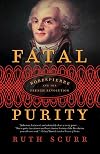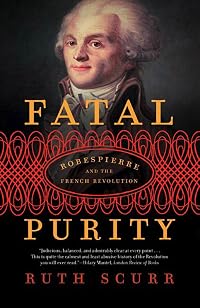
Fatal Purity: Robespierre and the French Revolution
by Ruth Scurr
On This Page
Description
Chronicles the life of French revolutionary Maximilien Robespierre, discussing his personal life, role in the French Revolution, political and military achievements, personal and professional scandals, and other related topics.Tags
Recommendations








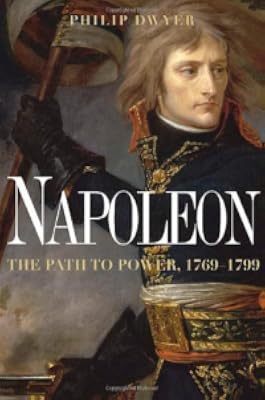
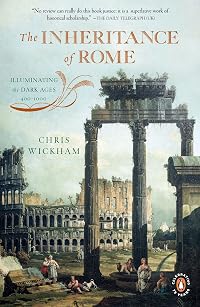
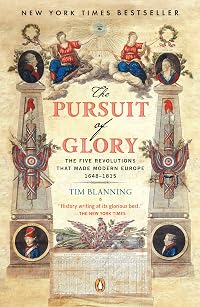

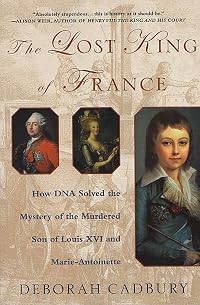







Member Recommendations




Member Reviews
'Though Robespierre died over two hundred years ago, he still makes new friends and enemies among the living. I have tried to be his friend and to see things from his point of view.'
The road to hell is paved with good intents, right? Well, if there's an historical figure who can incarnate such a saying to perfection it's Robespierre, the man whose name ultimately became infamously associated with the Terror. Indeed, modest lawyer not foreign to philanthropic and humanitarian deeds, once his fervent idealism and fanatic obsession with virtue got sucked up into the turmoil of the French Revolution it's a great deal of the French revolutionary ideals themselves that went down to hell with his regime! How to make sense of all that? Utopia show more hand in hand with dystopia, ruled over by the same man? 'Fatal Purity', a gripping read and a surprisingly well-balanced account of the events that shaped Robespierre's life, tries and brings some sort of insight.
Ambitious and cynical, possessed by a will to serve the weakest and poorest but animated by unforgiving and blind self-righteousness, endowed with a strong reputation for being incorruptible yet playing willingly with mob violence and political dissensions to better his career and accrue his power, the man was far from easy to understand! Sadly, we don't get out of this book anymore enlightened about his motives and true character than upon opening it. Whatever your opinion about such an elusive man indeed (idealist do-gooder who lost it in trying to set an utopia in motion or, bloodthirsty tyrant at the head of a terrorist regime) chances are, 'Fatal Purity' is so well-balanced it will not challenge it much. What it does very well though, is to narrate through Robespierre's ascension to power the unstoppable and chilling descent of France into tyranny -the September massacres, the death of the king, the Law of 22 Prairial and the spreading Terror engulfing the country... This in itself makes for an enthralling read.
Now, the Terror is still an era up for debates (let alone Robespierre!) and the raging controversies, most being the products of our own contemporary political zeitgeist (e.g. Ruth Scurr is pretty clear in not seeing in him a proto-Communist…) make it difficult to navigate through such an historical minefield! Such a balanced yet straightforward account is therefore more than welcome to put things back into perspective. If you have any sort of interest in the French Revolution, you cannot miss this book! show less
The road to hell is paved with good intents, right? Well, if there's an historical figure who can incarnate such a saying to perfection it's Robespierre, the man whose name ultimately became infamously associated with the Terror. Indeed, modest lawyer not foreign to philanthropic and humanitarian deeds, once his fervent idealism and fanatic obsession with virtue got sucked up into the turmoil of the French Revolution it's a great deal of the French revolutionary ideals themselves that went down to hell with his regime! How to make sense of all that? Utopia show more hand in hand with dystopia, ruled over by the same man? 'Fatal Purity', a gripping read and a surprisingly well-balanced account of the events that shaped Robespierre's life, tries and brings some sort of insight.
Ambitious and cynical, possessed by a will to serve the weakest and poorest but animated by unforgiving and blind self-righteousness, endowed with a strong reputation for being incorruptible yet playing willingly with mob violence and political dissensions to better his career and accrue his power, the man was far from easy to understand! Sadly, we don't get out of this book anymore enlightened about his motives and true character than upon opening it. Whatever your opinion about such an elusive man indeed (idealist do-gooder who lost it in trying to set an utopia in motion or, bloodthirsty tyrant at the head of a terrorist regime) chances are, 'Fatal Purity' is so well-balanced it will not challenge it much. What it does very well though, is to narrate through Robespierre's ascension to power the unstoppable and chilling descent of France into tyranny -the September massacres, the death of the king, the Law of 22 Prairial and the spreading Terror engulfing the country... This in itself makes for an enthralling read.
Now, the Terror is still an era up for debates (let alone Robespierre!) and the raging controversies, most being the products of our own contemporary political zeitgeist (e.g. Ruth Scurr is pretty clear in not seeing in him a proto-Communist…) make it difficult to navigate through such an historical minefield! Such a balanced yet straightforward account is therefore more than welcome to put things back into perspective. If you have any sort of interest in the French Revolution, you cannot miss this book! show less
Scurr strikes a superlative balance between explanation and flow of history as she depicts how the social justice warrior ascends to national importance only to fall into state-sponsored terror in the name of defending the republic. She brings into the narrative Marat, Danton and the other actors in the French revolution. No more a paragraph is devoted to Charlette Corday, the assassin of Marat, and even less space to an unemployed captain of the artillery who bemoans how the king might have saved himself if he had mounted his horse and led. This biography moves smoothly while taking the time to go into depth of situations and character.
Robespierre is one of the most interesting figures of the French Revolution and this biography aims to bring clarity to his shadowy reputation. Robespierre did not act in a vacuum (the French Revolution is populated with a range of idealistic and nefarious figures), but Scurr's take is that he did possess a kind of self-confidence that permitted him to believe he was morally in the right even as his policies resulted in increasing deaths. I doubt this book will be (nor should it be) the final word on Robespierre, but it is an interesting take on his dramatic life.
A well written and fascinating account of the life and career of this most famous and infamous of French revolutionaries. Robespierre is a fascinating man of contrasts. For much of his life, certainly before the Revolution and for a couple of years after the fall of the Bastille, his positive points predominate - a passion for justice and for the plight of the poor, as shown by his advocacy of the poor in many court cases when he was a simple lawyer in Arras, and by many of his speeches afterwards; and his radical and uncompromising democracy, an advanced phenomenon in the 18th century. It is only really from 1792, the fall of the monarchy and the suspension of the 1793 constitution before it ever came into effect, that we see the awful show more side of Robespierre - his singlemindedness becoming a complete personal identification of his own views with the interests of the Revolution, and an utterly and chillingly sincere belief therefore that those opposed to himself and, ipso facto, the Revolution must die - the title of this biography "Fatal Purity" is well chosen. The story from the arrest of the Girondins in June 1793 is the story of the fall and massacring of one faction after another until Robespierre's own fall and death in late July 1794. There are some sickening, horrific and tragic stories along the way, especially those of the prison massacres of September 1792, the separating of Marie Antoinette from her children, the execution of Camille Desmoulins's wife and the many poor and working class people who fell under the guillotine's blade - it was by no means aristocrats who were its most common victims as is commonly supposed. A great and tragic read. show less
Cambridge University historian Ruth Scurr's first book might be one of the most gruesome biographies I've ever read. Fatal Purity: Robespierre and the French Revolution is the tale of Maximilien Robespierre, "The Incorruptible" - one of the foremost leaders of the Revolution which would ultimately condemn even him to death.
The French Revolution is a subject I am not particularly familiar with, but having spent last semester in a graduate seminar on its American counterpart, I thought this book would at least prove interesting. It was that, and much more. Scurr has woven together an excellent narrative on the life and times of Robespierre, focusing necessarily and appropriately on the Revolutionary years. This is not a book for the show more squeamish - after about page 60 at least one person is put to death with every turn of the page (I exaggerate, but only slightly). It provides a fascinating comparison to the revolution in America, whose leaders somehow managed not to start chopping off each others' heads once they'd won.
I had very few quibbles with this book; I do wish that Scurr had discussed in more depth the impact of America's struggle on the French revolutionaries, but I'll set that aside. On the whole, I really enjoyed this biography of a deeply principled yet somehow just-as-deeply unlikeable man. For the casual reader of biographies, this is highly recommended; for those interested in a deeper understanding of the difficulties and trials of the French Revolution and the people who made it, I recommend Fatal Purity just as highly. show less
The French Revolution is a subject I am not particularly familiar with, but having spent last semester in a graduate seminar on its American counterpart, I thought this book would at least prove interesting. It was that, and much more. Scurr has woven together an excellent narrative on the life and times of Robespierre, focusing necessarily and appropriately on the Revolutionary years. This is not a book for the show more squeamish - after about page 60 at least one person is put to death with every turn of the page (I exaggerate, but only slightly). It provides a fascinating comparison to the revolution in America, whose leaders somehow managed not to start chopping off each others' heads once they'd won.
I had very few quibbles with this book; I do wish that Scurr had discussed in more depth the impact of America's struggle on the French revolutionaries, but I'll set that aside. On the whole, I really enjoyed this biography of a deeply principled yet somehow just-as-deeply unlikeable man. For the casual reader of biographies, this is highly recommended; for those interested in a deeper understanding of the difficulties and trials of the French Revolution and the people who made it, I recommend Fatal Purity just as highly. show less
Excellent. shows the strength of biography for getting across complexities of history. R's life makes for a clear narrative and a sense of who's on which side in the swirling tide.We learn also that R was no villain but pretty paranoid; he voted for abolition of the death penalty in the early days, but later deemed it necessary for dealing with "internal enemies". We also see the noose gradually tighteningfom the Declaration of rights which entailed an end to torture and cruel punishments until the climax where no evidence is required to condemn someone and there is no defence, no appel, and no punishment other than death. What is not clear is how this consummate political operator reached the pinnacle of absolute power, only to be show more overthrown within the year. seems absolute power is only relative. Score writes in vivid form with mastery of facts and background; slight flaw at the end where she dramatises R's scream from the scaffold and in the Coda from Wordsworth's Prelude, where she shows how mistaken W was about R - but this just leaves the reader with a So What? show less
4256 Fatal Purity Robespierre and the French Revolution, by Ruth Scurr (read 10 Jan 2007). Robespierre was born May 6, 1758, in Arras, France and had his head cut off on July 28, 1794, and is a figure of high interest. I read a biography of him on Aug 7, 1975 and a 1927 biography of him on 8 Mar 2006. But when I saw this new biography I felt I had to read it. It is well-written, and aims to be balanced. But the facts show Robespierre in power was an awful person who felt he was always right. This book tells his story well, and it is extremely riveting when relating the time from Sept 1793 to July 28, 1794. Periodically one needs to read about the astounding event which was the French Revolution. Putting "French Revolution" in my show more searcher here is what I get:
135 Scaramouche A Romance of the French Revolution, by Rafael Sabatini (read Dec 1943)
1038 History of the French Revolution, by Thomas Carlyle (read 27 Dec 1969)
1330 The French Revolution of 1830, by David H. Pinkney (read 3 May 1975)
1694 The Days of the French Revolution, by Christopher Hibbert (read 14 Feb 1982)
1948 The French Revolution and the Church, by John McManners (read 13 Oct 1985)
2153 Toward the French Revolution: Europe and America in the Eighteenth Century World, by Louis Gottschalk and Donald Lach (read 11 July 1988)
2265 Words of Fire, Deeds of Blood: The Mob, the Monarchy, and the French Revolution, by Olivier Bernier (read 23 Jan 1990)
2512 Citizens: A Chronicle of the French Revolution, by Simon Schama (read 19 Jun 1993)
2864 Leaders of the French Revolution, by J. M. Thompson (read 21 Apr 1996)
4200 Earthly Powers The Clash of Religion and Politics in Europe from the French Revolution to the Great War, by Michael Burleigh (read 22 Aug 2006)
4256 Fatal Purity Robespierre and the French Revolution, by Ruth Scurr (read 10 Jan 2007) show less
135 Scaramouche A Romance of the French Revolution, by Rafael Sabatini (read Dec 1943)
1038 History of the French Revolution, by Thomas Carlyle (read 27 Dec 1969)
1330 The French Revolution of 1830, by David H. Pinkney (read 3 May 1975)
1694 The Days of the French Revolution, by Christopher Hibbert (read 14 Feb 1982)
1948 The French Revolution and the Church, by John McManners (read 13 Oct 1985)
2153 Toward the French Revolution: Europe and America in the Eighteenth Century World, by Louis Gottschalk and Donald Lach (read 11 July 1988)
2265 Words of Fire, Deeds of Blood: The Mob, the Monarchy, and the French Revolution, by Olivier Bernier (read 23 Jan 1990)
2512 Citizens: A Chronicle of the French Revolution, by Simon Schama (read 19 Jun 1993)
2864 Leaders of the French Revolution, by J. M. Thompson (read 21 Apr 1996)
4200 Earthly Powers The Clash of Religion and Politics in Europe from the French Revolution to the Great War, by Michael Burleigh (read 22 Aug 2006)
4256 Fatal Purity Robespierre and the French Revolution, by Ruth Scurr (read 10 Jan 2007) show less
Members
- Recently Added By
Published Reviews
ThingScore 100
Present historic: Carlyle, Robespierre and the French Revolution
Ruth Scurr has done an enormous service by producing a collection of extracts from Thomas Carlyle’s powerful narrative The French Revolution to add to her earlier biography of Robespierre, in which she uncovers something of the character and motivations of a man who is more usually hidden in the “blood red mist” of the show more Terror. The portrait she offers is a generally sympathetic one that aims to present an objective picture of Robespierre and restore him to his rightful place in history as a man who helped to shape modern political institutions—albeit by a means of a revolutionary process that is entirely unpalatable to the present-day liberals that benefit from it. As Scurr writes, “To understand him is to begin to understand the French Revolution.”
Part 1 - http://www.wsws.org/en/articles/2010/07/fren-j15.html
Part 2 - http://www.wsws.org/en/articles/2010/... show less
Ruth Scurr has done an enormous service by producing a collection of extracts from Thomas Carlyle’s powerful narrative The French Revolution to add to her earlier biography of Robespierre, in which she uncovers something of the character and motivations of a man who is more usually hidden in the “blood red mist” of the show more Terror. The portrait she offers is a generally sympathetic one that aims to present an objective picture of Robespierre and restore him to his rightful place in history as a man who helped to shape modern political institutions—albeit by a means of a revolutionary process that is entirely unpalatable to the present-day liberals that benefit from it. As Scurr writes, “To understand him is to begin to understand the French Revolution.”
Part 1 - http://www.wsws.org/en/articles/2010/07/fren-j15.html
Part 2 - http://www.wsws.org/en/articles/2010/... show less
added by sampathp
Author Information

10+ Works 755 Members
Lecturer and fellow at Gonville Caius College, University of Cambridge, Ruth Scurr is a historian, writer, and literary critic. The author of the award-winning Fatal Purity: Robespierre and the French Revolution, she lives in Cambridge, England.
Awards and Honors
Series
Belongs to Publisher Series
Common Knowledge
- Original publication date
- 2006
- People/Characters
- Maximilien de Robespierre; Georges Danton; Arthur Young; Joachim Vilate; Pierre Antoine Jean-Baptiste Villiers; Marc-Guillaume Alexis Vadier (show all 75); Catherine Théot; Jean Lambert Tallien; Emmanuel Joseph Sieyès; Joseph Marie Servan de Gerbey; Louis Antoine de Saint-Just; Rousseau, Jean-Jacques, 1712-1778; Marie-Jeanne Phlippon Roland; Jean-Marie Roland, Vicomte de la Platière; Pierre-Louis Roederer; Charlotte de Robespierre; Augustin Robespierre; Liévin-Bonaventure Proyart; William Pitt the Younger; Jérôme Pétion de Villeneuve; Claude-François de Payan; Jacques Necker; Honoré Gabriel Riqueti, Count of Mirabeau; Marie Antoinette; Jean-Paul Marat; Jean-Baptiste Louvet de Couvray; Louis XVI, King of France; Louis XV, King of France; Louis XIV, 1638-1715; Philippe François Joseph Le Bas; Bernard René Jourdan, marquis de Launay; Chrétien François de Lamoignon de Basville; Gilbert du Motier, Marquis de Lafayette; Martial Joseph Armand Herman; Jacques Hébert; François Hanriot; Joseph Ignace Guillotin; François-Joseph Gossec; Philippe François Fabre d'Églantine; Jacques de Flesselles; Joseph Fouché; Antoine Quentin Fouquier-Tinville; Benjamin Franklin; Camille Desmoulins; Anne-Lucile-Philippe Desmoulins; Ferdinand Dubois de Fosseux; Charles-François Dumouriez; Maurice Duplay; Éléonore Duplay; Robert-François Damiens; Jacques-Louis David; Jean-Marie Collot d'Herbois; Louis Joseph de Bourbon, Prince of Condé; Marie Jean Antoine Nicolas de Caritat, Marquis de Condorcet; Georges Auguste Couthon; Charlotte Corday; Pierre Jean George Cabanis; Lazare Carnot; Pierre Gaspard Chaumette; Antoine-Joseph Buissart; Charles William Ferdinand, Duke of Brunswick-Wolfenbüttel; Jacques Pierre Brissot; François Claude Amour du Chariol, marquis de Bouillé; Jacques Nicolas Billaud-Varenne; Antoine Barnave; Bertrand Barère de Vieuzac; Jean Sylvain Bailly; Charles-Dominique, Sieur de Vissery de Bois-Vallé; Jean-Baptiste Treilhard; Guy-Jean-Baptiste Target; Cécile-Aimée Renault; John Moore (Scottish physician); Joseph Foullon de Doué; Pierre Victor, baron Malouet; Jean-François Delacroix
- Important places
- Arras, Pas-de-Calais, Hauts-de-France, France; Paris, Île-de-France, France; Varennes-en-Argonne, Meuse, Grand-Est, France
- Important events
- French Revolution; Reign of Terror; Storming of the Bastille; Champ de Mars Massacre; Women's March on Versailles; Execution of Louis XVI (show all 32); Declaration of the Rights of Man and the Citizen; Fête de la Fédération; Royal Flight to Varennes; September Massacres; Storming of the Tuileries Palace; Execution of Marie Antoinette; Assassination of Jean-Paul Marat; Execution of Robespierre; Civil Constitution of the Clergy; Death of Mirabeau; Execution of Georges Danton; Nancy Affair; Law of Suspects; Law of 22 Prairial; Thermidorian Reaction; Convention of the Estates-General of 1789; Battle of Valmy; Battle of Fleurus; Battle of Neerwinden; French Revolutionary Wars; Tennis Court Oath; Demonstration of 20 June 1792; Brunswick Manifesto; War in the Vendée; Federalist Revolt against the National Convention (Marseilles, Bordeaux, Caen and Lyon); Siege of Toulon
- First words
- No backdrop can match the French Revolution.
- Last words
- (Click to show. Warning: May contain spoilers.)The real severance had already happened - it happened when he screamed and the picture in his mind went blank.
Classifications
- Genres
- History, Nonfiction, Biography & Memoir, General Nonfiction
- DDC/MDS
- 944.04092 — History & geography History of Europe France and Monaco France Revolution 1789-1804
- LCC
- DC146 .R6 .S38 — History of Europe, Asia, Africa and Oceania France – Andorra – Monaco History of France Modern, 1515- Revolutionary and Napoleonic period, 1789-1815
- BISAC
Statistics
- Members
- 436
- Popularity
- 70,527
- Reviews
- 9
- Rating
- (3.79)
- Languages
- Dutch, English, Polish, Russian
- Media
- Paper, Ebook
- ISBNs
- 9
- ASINs
- 3