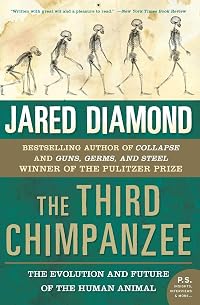
The Third Chimpanzee: The Evolution and Future of the Human Animal
by Jared M. Diamond
On This Page
Description
The Development of an Extraordinary SpeciesWe human beings share 98 percent of our genes with chimpanzees. Yet humans are the dominant species on the planet -- having founded civilizations and religions, developed intricate and diverse forms of communication, learned science, built cities, and created breathtaking works of art -- while chimps remain animals concerned primarily with the basic necessities of survival. What is it about that two percent difference in DNA that has created such a show more divergence between evolutionary cousins? In this fascinating, provocative, passionate, funny, endlessly entertaining work, renowned Pulitzer Prize--winning author and scientist Jared Diamond explores how the extraordinary human animal, in a remarkably short time, developed the capacity to rule the world . . . and the means to irrevocably destroy it.
. show less
Tags
Recommendations
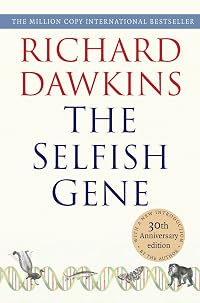
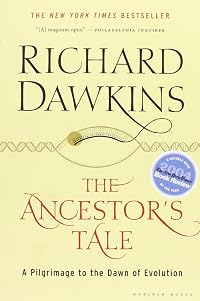
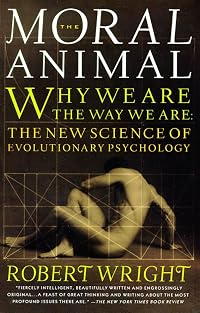
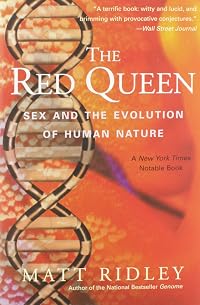





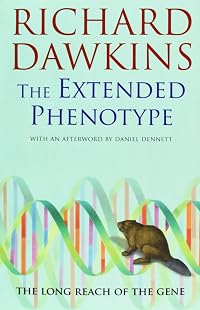
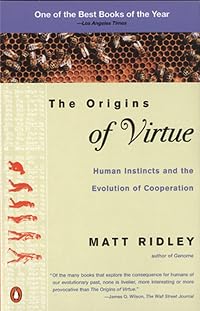
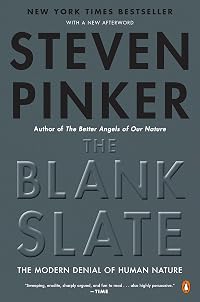
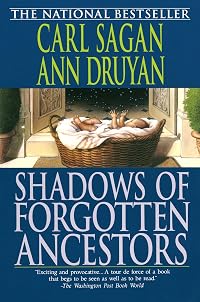


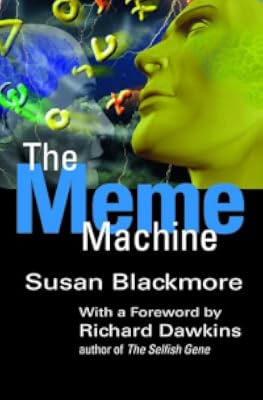
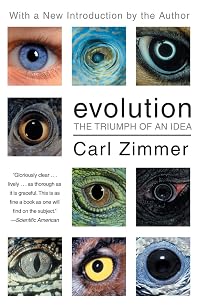

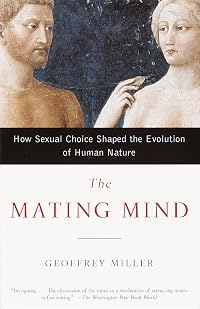
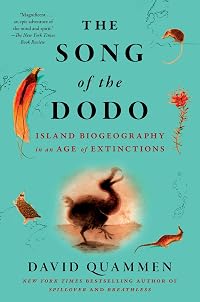

Member Recommendations
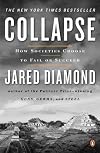
jigarpatel Specific case studies describing how natural history (environment and agriculture) has driven the life cycle of historic societies.
Also recommended by kuukkeli
30
br77rino The science in this is more up to date, and the argument is more persuasive.

Member Reviews
We share 98% of our genome with that of chimpanzees. The impact, enormous, has been studied and delved upon elsewhere. But there is another question to ask: what do the 2% left, defining us as a separate specie, truly imply?
Jared Diamond tells us here the story of homo sapiens. He questions what differentiate us (or not) from our cousins the chimps and the bonobos -from language to sex and from art to violence. He recounts, above all, a key revolution in our history: that of the apparition of agriculture, having led to 'the third chimpanzee' indeed to conquer its environment... at the peril of destroying it too!
Prehistory and ethology are, here, dancing around with ecology, as Jared Diamond demonstrates, if need be, that nothing is show more more important than a solid understanding of our past to better move on towards our future.
Here's a vertiginous book, mirroring our faraway past before projecting us forward into a possible future that, only our abilities to learn from history (can we?) will determine if it ever belong to us or not. Highly recommended to anyone interested by the most fascinating odyssey ever: ours. show less
Jared Diamond tells us here the story of homo sapiens. He questions what differentiate us (or not) from our cousins the chimps and the bonobos -from language to sex and from art to violence. He recounts, above all, a key revolution in our history: that of the apparition of agriculture, having led to 'the third chimpanzee' indeed to conquer its environment... at the peril of destroying it too!
Prehistory and ethology are, here, dancing around with ecology, as Jared Diamond demonstrates, if need be, that nothing is show more more important than a solid understanding of our past to better move on towards our future.
Here's a vertiginous book, mirroring our faraway past before projecting us forward into a possible future that, only our abilities to learn from history (can we?) will determine if it ever belong to us or not. Highly recommended to anyone interested by the most fascinating odyssey ever: ours. show less
Very early on Diamond sets his stall. He's not interested in intricate molecular insights, but an overarching evolutionary basis for human lifecycle and behaviour. Sometimes he digresses, like when he talks for no obvious purpose about how the relatively large size of the male penis is unexplained, when really it might just be chance: there may be no direct impact to passing one's seed and it's really not a driver of natural selection.
Ageing, bizarrely in my view, is described as many unconnected factors (deteriorating senses, brittle bones, weakening heart) converging over time so that they fail optimally around the same time. Why maintain one feature when others are failing? More likely, shortening telomeres at the ends of our show more chromosomes cause most if not all these conditions. The notion that one underlying cause can be expressed in many different ways is dismissed offhandedly.
Language gets some treatment. I feel as though Diamond makes too much of minor aspects such as word order. Apparently, subject-verb-object is the "natural" order of human language, yet many precursors to English such as Latin, Greek and Sanskrit (the last especially) have no such restriction. There's too much emphasis on how Old English got to English, when really we should looking at how these more ancient languages developed.
Diamond believes races exist due to sexual selection rather than natural selection. In other words, natural selection explains only some variation in skin colour across climates. A much more potent driver, according to Diamond, is people are attracted to those who look like people they are raised around. I'm not sure about this. I wouldn't put it beyond ancient humans to want to keep genes in tight communities for other purposes, e.g. trust within a clan when sharing resources. Diamond does, however, give a convincing explanation for maladaptive traits, e.g. a peacock who is fast even with a plethora of useless but eye-catching tail feathers is deemed attractive to peahens.
One point where I agree wholeheartedly with Diamond is the importance of multi-generational knowledge, made possible (via a positive feedback loop?) by improved life expectancy, in advancing a preliterate society. There's no archaeological evidence for this, but Diamond's own experience living with "traditional" New Guinean societies adds colour and indicates the importance of studying these traditional societies today to understand better our distant past.
The last third is an accessible overview of Guns, Germs and Steel and Collapse. If you have the time or interest to read only one or a couple of Diamond's books, choose these over The Third Chimpanzee as they cover Diamond's views on natural history and chance driving society in greater depth. show less
Ageing, bizarrely in my view, is described as many unconnected factors (deteriorating senses, brittle bones, weakening heart) converging over time so that they fail optimally around the same time. Why maintain one feature when others are failing? More likely, shortening telomeres at the ends of our show more chromosomes cause most if not all these conditions. The notion that one underlying cause can be expressed in many different ways is dismissed offhandedly.
Language gets some treatment. I feel as though Diamond makes too much of minor aspects such as word order. Apparently, subject-verb-object is the "natural" order of human language, yet many precursors to English such as Latin, Greek and Sanskrit (the last especially) have no such restriction. There's too much emphasis on how Old English got to English, when really we should looking at how these more ancient languages developed.
Diamond believes races exist due to sexual selection rather than natural selection. In other words, natural selection explains only some variation in skin colour across climates. A much more potent driver, according to Diamond, is people are attracted to those who look like people they are raised around. I'm not sure about this. I wouldn't put it beyond ancient humans to want to keep genes in tight communities for other purposes, e.g. trust within a clan when sharing resources. Diamond does, however, give a convincing explanation for maladaptive traits, e.g. a peacock who is fast even with a plethora of useless but eye-catching tail feathers is deemed attractive to peahens.
One point where I agree wholeheartedly with Diamond is the importance of multi-generational knowledge, made possible (via a positive feedback loop?) by improved life expectancy, in advancing a preliterate society. There's no archaeological evidence for this, but Diamond's own experience living with "traditional" New Guinean societies adds colour and indicates the importance of studying these traditional societies today to understand better our distant past.
The last third is an accessible overview of Guns, Germs and Steel and Collapse. If you have the time or interest to read only one or a couple of Diamond's books, choose these over The Third Chimpanzee as they cover Diamond's views on natural history and chance driving society in greater depth. show less
"The Third Chimpanzee" was Diamond's first major book, and it sows the seeds for his three more recent works, "Why is Sex Fun?", "Guns, Germs and Steel", and "Collapse". Many of the chapters here introduce the ideas of the later books prior to their later expansion and development.
Diamond's aim is to view human history through the lens of biology: given that we are about 98% genetically identical to chimps, what light does that shed on our own life-cycle, culture, history and destiny?
The book's first section briefly documents our genetic history - our divergence from a proto-chimp ancestor, and the development of homo sapiens over about six million years (homo erectus, homo habilis etc). Diamond is always keen to draw out the political show more implications of his science, and suggests that if we were to label chimps as "homo troglodytes" rather than "pan troglodytes", we might make different ethical decisions about their treatment. I found this first section all too-brief - I'd have liked to see a lot more detail on the biological commonalities and differences between humans and chimps.
The second section reviews the human life-cycle, particulary our sexuality - why are we monogamous? How do we choose mates? What can sexual selection suggest about human races? This draws heavily on comparisons and contrasts with other animal species and I found it all interesting.
The third section covers the evolution of things that might seem "uniquely human" - language, art, agriculture, drug use - and traces animal precursors to see whether we really are as unique as we think. I found all of this to be far too brief - a whole book on this area would have been interesting. I did find sympathy with Diamond's argument that the development of agriculture was as much a curse as a blessing (being the source of the apparatus for political oppression). There are strong similarities here to the ideas of radicals like John Zerzan who has expanded on the same theme.
The next section enters the territory of "Guns, Germs and Steel", discussing how much of human history has been determined by geographical and biological accident e.g. the difficulty in migrating crops across continents with a strong north-south axis (Africa and America) leading to a slower pace of development. This section also asks why the human race seems to be prone to genocide, again with a strong political slant.
The final section covers extinction - both analysing the countless past extinctions of other species that humans have caused, and the implications for our own future.
Throughout, the book's willingness to spell out political implications is very welcome. I also appreciated the extent to which the content draws on Diamond's own extensive work in New Guinea. On the downside, there are just too many ideas here, and it would be nice to see them all explored at greater length - although of course that's exactly what the author has since done in other books. show less
Diamond's aim is to view human history through the lens of biology: given that we are about 98% genetically identical to chimps, what light does that shed on our own life-cycle, culture, history and destiny?
The book's first section briefly documents our genetic history - our divergence from a proto-chimp ancestor, and the development of homo sapiens over about six million years (homo erectus, homo habilis etc). Diamond is always keen to draw out the political show more implications of his science, and suggests that if we were to label chimps as "homo troglodytes" rather than "pan troglodytes", we might make different ethical decisions about their treatment. I found this first section all too-brief - I'd have liked to see a lot more detail on the biological commonalities and differences between humans and chimps.
The second section reviews the human life-cycle, particulary our sexuality - why are we monogamous? How do we choose mates? What can sexual selection suggest about human races? This draws heavily on comparisons and contrasts with other animal species and I found it all interesting.
The third section covers the evolution of things that might seem "uniquely human" - language, art, agriculture, drug use - and traces animal precursors to see whether we really are as unique as we think. I found all of this to be far too brief - a whole book on this area would have been interesting. I did find sympathy with Diamond's argument that the development of agriculture was as much a curse as a blessing (being the source of the apparatus for political oppression). There are strong similarities here to the ideas of radicals like John Zerzan who has expanded on the same theme.
The next section enters the territory of "Guns, Germs and Steel", discussing how much of human history has been determined by geographical and biological accident e.g. the difficulty in migrating crops across continents with a strong north-south axis (Africa and America) leading to a slower pace of development. This section also asks why the human race seems to be prone to genocide, again with a strong political slant.
The final section covers extinction - both analysing the countless past extinctions of other species that humans have caused, and the implications for our own future.
Throughout, the book's willingness to spell out political implications is very welcome. I also appreciated the extent to which the content draws on Diamond's own extensive work in New Guinea. On the downside, there are just too many ideas here, and it would be nice to see them all explored at greater length - although of course that's exactly what the author has since done in other books. show less
The roots in our evolution of what we can be proud of as a species and of what we should be ashamed of as a species.
I found the first part rather heavy going, partly because I suspect at least some of has been outdated by discoveries in the field of genetics since the book was written in 1990. The author has explored many of the themes of the rest of the book in greater detail in his other popular works, though his overview of the history of genocide was new to me. Given his knife-edge between optimism and pessimism about our species's future in the epilogue, there seem to be depressingly more grounds for pessimism looking back at the 30 years since then.
I found the first part rather heavy going, partly because I suspect at least some of has been outdated by discoveries in the field of genetics since the book was written in 1990. The author has explored many of the themes of the rest of the book in greater detail in his other popular works, though his overview of the history of genocide was new to me. Given his knife-edge between optimism and pessimism about our species's future in the epilogue, there seem to be depressingly more grounds for pessimism looking back at the 30 years since then.
***.5
The man's got O-pinions! Starting out with anthropology and evolution as the title implies, soon we are hearing about everything from linguistics to the Fermi Paradox and SETI.
It's interesting to see how things have 'evolved' in the 30+ years since the book was written. Some of the science is outdated, some of the speculations disproven, but many of the conjectures have been borne out.
The man's got O-pinions! Starting out with anthropology and evolution as the title implies, soon we are hearing about everything from linguistics to the Fermi Paradox and SETI.
It's interesting to see how things have 'evolved' in the 30+ years since the book was written. Some of the science is outdated, some of the speculations disproven, but many of the conjectures have been borne out.
The beginning of this book was well written and fascinating to read. There were actually witty remarks that had me amused in parts, which you wouldn't expect from something so scientific. The explanations for how humans developed behaviors and the comparisons with chimps and other animals in order to help with those explanations were easy to associate with and really helped with the taking in of the information. The text didn't treat the readers like award winning scientists, but it didn't dumb everything up for the ignorant either.
By the last 100 pages of the book I became frustrated, however. As long as the book was actually doing what was expected of it and comparing us to chimps and explaining our evolution, I was content, but once show more it switched to how we were destroying our environment, it became less of "this is why we do what we do" to "this is how the demise of the world will come about." There wasn't even really a connection to humans beyond that we killed things. I'm not saying it wasn't well written, but it simply wasn't as mind-catching the way the first 200 pages were.
Definitely worth the read for the amazing revelations put forward about human nature and the ways of some animals. I know that I will forever have friends check the lengths of their middle fingers against their spouses from this point onward. show less
By the last 100 pages of the book I became frustrated, however. As long as the book was actually doing what was expected of it and comparing us to chimps and explaining our evolution, I was content, but once show more it switched to how we were destroying our environment, it became less of "this is why we do what we do" to "this is how the demise of the world will come about." There wasn't even really a connection to humans beyond that we killed things. I'm not saying it wasn't well written, but it simply wasn't as mind-catching the way the first 200 pages were.
Definitely worth the read for the amazing revelations put forward about human nature and the ways of some animals. I know that I will forever have friends check the lengths of their middle fingers against their spouses from this point onward. show less
Humans are genetically so close to the two species of chimpanzees and have so much in common with them that only our vanity puts us in a separate genus. In this delightful, fascinating and illuminating book Jared Diamond sheds much light on human nature and also makes a strong case for their being three species of chimpanzee: pan, bonobo and homo.
Members
- Recently Added By
Published Reviews
ThingScore 75
To this day, those who see our species as part of the animal kingdom continue to lock horns with those who see us as separate. While zoologists treat humans as mere animals -- and not even particularly unusual ones given the incredible diversity of life -- many social scientists still place us somewhere between heaven and earth. What is particularly attractive about Jared Diamond's book, "The show more Third Chimpanzee," is that he tries to strike a balance. show less
added by jlelliott
Lists

Best Science Books for Non-Scientists
113 works; 57 members

Lesser known books of well known authors
39 works; 17 members

The Torchlight List
95 works; 1 member

LQW Research Reading List
75 works; 1 member

In Our Time books
4,934 works; 2 members
Author Information

82+ Works 50,563 Members
Jared Mason Diamond is a physiologist, ecologist, and the author of several popular science books. Born in Boston in 1937, Diamond earned his B.A. at Harvard and his Ph.D. from Cambridge. A distinguished teacher and researcher, Diamond is well-known for the columns he contributes to the widely read magazines Natural History and Discover. Diamond's show more book The Third Chimpanzee: The Evolution and Future of the Human Animal was heralded for its accessibility and for its blending of science and social science. The interdisciplinary Guns, Germs and Steel--Diamond's examination of the relationship between scientific technology and economic disparity--won the 1997 Pulitzer Prize. Diamond has won a McArthur Foundation Fellowship in addition to several smaller awards for his science and writing. (Bowker Author Biography) show less
Awards and Honors
Awards
Distinctions
Notable Lists
Series
Belongs to Publisher Series
Work Relationships
Is abridged in
Has as a student's study guide
Common Knowledge
- Canonical title
- The Third Chimpanzee: The Evolution and Future of the Human Animal
- Original title
- The rise and fall of the third chimpanzee : how our animal heritage affects the way we live
- Original publication date
- 1991 (UK) (UK); 1992 (USA) (USA); 2000-11-21 (1e traduction et édition française, NRF essais, Gallimard) (1e traduction et édition française, NRF essais, Gallimard); 2011-01-20 (Réédition française, Folio essais, N° 546, Gallimard) (Réédition française, Folio essais, N° 546, Gallimard)
- Epigraph*
- Thema
Wie sich der Mensch innerhalb kurzer Zeitvon einer Säugetierart unter vielenzu einem Eroberer der Welt aufschwang ;und wie wir die Fähigkeit erwarben,all jenen Fortschritt über Nacht auszulöschen. - Dedication
- Dedicated to my sons Max and Joshua, to help them understand where we came from and where we may be heading
- First words
- It's obvious that humans are unlike all animals. (Prologue)
The clues about when, why, and in what ways we ceased to be just another species of big mammal come from three types of evidence. - Last words
- (Click to show. Warning: May contain spoilers.)The only uncertainties are whether the resulting disaster would strike our children or our grandchildren, and whether we choose to adopt now the many obvious countermeasures.
(Click to show. Warning: May contain spoilers.)If we learn from our past that I have traced, our own future may yet prove brighter than that of the other two chimpanzees. (Epilogue) - Publisher's editor
- Miller, Thomas
- Blurbers
- Ackerman, Diane ; Ehrlich, Paul
- Original language
- English
- Disambiguation notice
- Published in the UK in 1991 as The rise and fall of the third chimpanzee, and in the USA in 1992 as The third chimpanzee.
*Some information comes from Common Knowledge in other languages. Click "Edit" for more information.
Classifications
- Genres
- Anthropology, Science & Nature, Nonfiction, General Nonfiction
- DDC/MDS
- 573.2 — Natural sciences & mathematics Biology Specific physiological systems in animals, regional histology and physiology in animals Origin of man
- LCC
- GN281 .D53 — Geography, Anthropology and Recreation Anthropology Anthropology Physical anthropology. Somatology Human evolution
- BISAC
Statistics
- Members
- 4,022
- Popularity
- 3,876
- Reviews
- 40
- Rating
- (3.91)
- Languages
- 16 — Chinese, Czech, Danish, Dutch, English, Finnish, French, German, Hungarian, Italian, Korean, Polish, Portuguese, Spanish, Swedish, Turkish
- Media
- Paper, Audiobook, Ebook
- ISBNs
- 47
- ASINs
- 13