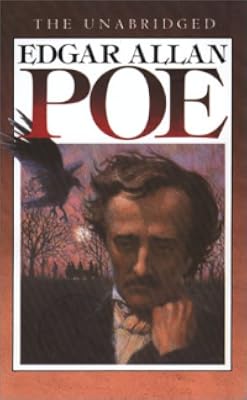
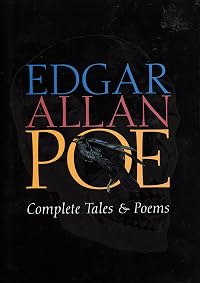
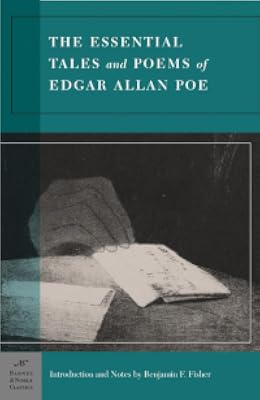
The Unabridged Edgar Allan Poe
by Edgar Allan Poe
On This Page
Description
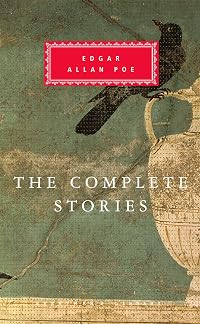
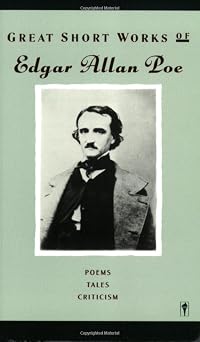
Includes short stories, poems, and other works by one of the great American writers.Tags
Recommendations
















Member Reviews
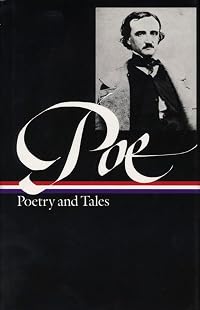
I came out of this thick door-stopper, toe-crushing tome a fan of Poe. What would Vincent Price have done without him? What would Stephen King have done without him? "The Black Cat, " "The Cask of Amontillado," The Fall of the House of Usher," "Ligeia" "The Masque of the Red Death", "The Pit and the Pendulum," "The Premature Burial" and "The Tell-Tale Heart. Spooky, creepy, and so so memorable. For that matter, not just the horror field but the mystery story owes a great debt to him. "The Murders in the Rue Morgue" and "The Purloined Letter" with Poe's great detective, C. August Dupin, predates Arthur Conan Doyle's Sherlock Holmes by more than four decades. (It's a debt Conan Doyle himself recognized: "Each [of Poe's detective stories] show more is a root from which a whole literature has developed.... Where was the detective story until Poe breathed the breath of life into it?") His only novel, The Narrative of Arthur Gordon Pym of Nantucket is notable for being set in Antarctica and was an inspiration for a story by Jules Verne. There's also great, influential poetry in here as well: "Annabel Lee," "To Helen," "Lenore," "The Raven." One of the first great American writers and one of the earliest masters of the short story--and very, very readable and entertaining today. show less
Poe's stories are a hit and miss. Now, some of this is undeniably due to my own personal taste, which can not be helped, and if I were to rate all the stories individually and then average them together, this book would recieve somewhere between three to four stars, because some of his stories are awesome, others so-and-so, and a few are just pretty meh.
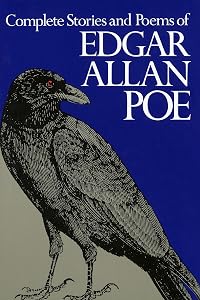
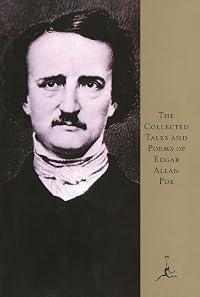
However, as far as a collection on a single author goes, this is an excellent book which collects Poe's poetry and short stories. If you're looking for a definitive collection of a classic author bound into one volume, this is the book for you, but be forewarned, it's a quite thick and heavy book (over 1000 pages) so it's not one of these light mass-market paperbacks that's easy to tote show more around.
However, if this is not an issue for you and you want a paperback version of the collection rather than the Kindle/e-book collections that can be found out there, then you definitely want to get this particular book, you will not be disappointed. show less
However, as far as a collection on a single author goes, this is an excellent book which collects Poe's poetry and short stories. If you're looking for a definitive collection of a classic author bound into one volume, this is the book for you, but be forewarned, it's a quite thick and heavy book (over 1000 pages) so it's not one of these light mass-market paperbacks that's easy to tote show more around.
However, if this is not an issue for you and you want a paperback version of the collection rather than the Kindle/e-book collections that can be found out there, then you definitely want to get this particular book, you will not be disappointed. show less
Okay, I have to start off by admitting I'm a little tone-deaf when it comes to poetry. (I wonder if there are courses on poetry appreciation?) I wasn't wholly unmoved by Poe's poetry, but if you weren't already aware that "The Raven" and "Annabel Lee" are brilliant and melancholy poems, well, you probably shouldn't be considering The Unabridged Edgar Allen Poe. So, I'm going to admit I really can't judge most of poetry, which is a shame because I know Poe's poetic works are pretty important, influencing at least two schools of French poetics, yada yada.
Still, that leaves quite a bit of prose works I'll gladly comment on. There are a couple of strong impressions I took away from this collection. The first is that he's quite a bit more show more interesting than he gets credit for. Poe has to a large extent become synonymous with his darkest, most eerie tales, which helped inspire so many later gothic, weird, and horror works. And there's the detective stories of August Dupin, which led to Sherlock Holmes and pretty much the whole field of detective fiction? But I never realized Poe could be so funny. Not surprisingly, that sense of humor can be really dark, as with the story "Never Bet the Devil your Head" (the title says it all) or "Loss of Breath," which is downright Kafkaesque in its twistedness. Poe was also fascinated with the science and exploration of his era, which shows up in many of the stories and essays in this collection.
The other impression made on me is that as far as 19th Century prose stylists go, I wouldn't place Poe near the top. Sure, most 19th Century writers tended to go towards the convoluted and needlessly flowery, but compared with, say Nathaniel Hawthorne, who can make the description of a garden a real pleasure to read, Poe's style can be a bit flat at times. He makes up for it with a brilliant imagination, and when he's writing macabre or funny or detailing a mystery, you don't really notice the style as much. Whatever Poe's failings as a prose stylist, I still enjoyed this collection very much. It was especially fascinating to see the role Poe played in creating new genres, and it was a wonderful revalation to learn he could be so funny. So I do highly recommend the collection.
And if you have and ear/eye for poetry, even better. show less
Still, that leaves quite a bit of prose works I'll gladly comment on. There are a couple of strong impressions I took away from this collection. The first is that he's quite a bit more show more interesting than he gets credit for. Poe has to a large extent become synonymous with his darkest, most eerie tales, which helped inspire so many later gothic, weird, and horror works. And there's the detective stories of August Dupin, which led to Sherlock Holmes and pretty much the whole field of detective fiction? But I never realized Poe could be so funny. Not surprisingly, that sense of humor can be really dark, as with the story "Never Bet the Devil your Head" (the title says it all) or "Loss of Breath," which is downright Kafkaesque in its twistedness. Poe was also fascinated with the science and exploration of his era, which shows up in many of the stories and essays in this collection.
The other impression made on me is that as far as 19th Century prose stylists go, I wouldn't place Poe near the top. Sure, most 19th Century writers tended to go towards the convoluted and needlessly flowery, but compared with, say Nathaniel Hawthorne, who can make the description of a garden a real pleasure to read, Poe's style can be a bit flat at times. He makes up for it with a brilliant imagination, and when he's writing macabre or funny or detailing a mystery, you don't really notice the style as much. Whatever Poe's failings as a prose stylist, I still enjoyed this collection very much. It was especially fascinating to see the role Poe played in creating new genres, and it was a wonderful revalation to learn he could be so funny. So I do highly recommend the collection.
And if you have and ear/eye for poetry, even better. show less
It took me over a year to complete, but I read every work in this book eventually. Everyone who likes Poe has their favorites, so it may be cheaper and more convenient to purchase a not-so-complete book for those who aren't die-hard Poe fans. Even I will probably never read the essays again, though I've read "Mask of the Red Death", "The Black Cat", and many others over and over again. There are plenty of Poe compilations out there, however, so if you're just looking for a basic collection, and want to skip some of his drier works like his essays, that may be a better way to go.
Views on a fee of the stories within:
Purloined Letter
I read this because it is one of the books on the 1001 Books You Must Read List. It's clear why it's on there - a clear antecedent of Sherlock Holmes in almost every respect.
Purloined Letter
I read this because it is one of the books on the 1001 Books You Must Read List. It's clear why it's on there - a clear antecedent of Sherlock Holmes in almost every respect.
Ratings
Members
- Recently Added By
Lists

Books
85 works; 1 member
Author Information

3,802+ Works 107,340 Members
Edgar Allan Poe was born in Boston, Massachusetts on January 19, 1809. In 1827, he enlisted in the United States Army and his first collection of poems, Tamerlane and Other Poems, was published. In 1835, he became the editor of the Southern Literary Messenger. Over the next ten years, Poe would edit a number of literary journals including the show more Burton's Gentleman's Magazine and Graham's Magazine in Philadelphia and the Broadway Journal in New York City. It was during these years that he established himself as a poet, a short story writer, and an editor. His works include The Fall of the House of Usher, The Tell-Tale Heart, The Murders in the Rue Morgue, The Mystery of Marie Roget, A Descent into the Maelstrom, The Masque of the Red Death, and The Raven. He struggle with depression and alcoholism his entire life and died on October 7, 1849 at the age of 40. (Bowker Author Biography) show less
Common Knowledge
- Original publication date
- 1827 - 1849 (original stories & poems) (original stories & poems)
Classifications
Statistics
- Members
- 600
- Popularity
- 48,647
- Reviews
- 5
- Rating
- (4.48)
- Languages
- English
- Media
- Paper, Audiobook, Ebook
- ISBNs
- 6
- ASINs
- 1