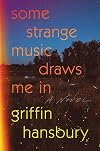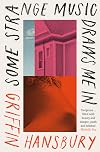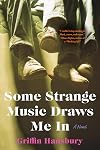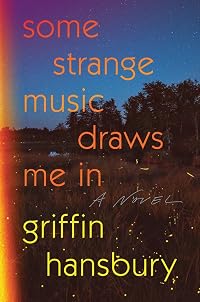
Some Strange Music Draws Me In: A Novel
by Griffin Hansbury
On This Page
Description
"It's the summer of 1984 in Swaffham, Massachusetts, when Mel (short for Melanie) meets Sylvia, a tough-as-nails trans woman whose shameless swagger inspires Mel's dawning self-awareness. But Sylvia's presence sparks fury among her neighbors and throws Mel into conflict with her mother and best friend. Decades later, in 2019, Max (formerly Mel) is on probation from his teaching job for, ironically, defying speech codes around trans identity. Back in Swaffham, he must navigate life as part of show more a fractured family and face his own role in the disasters of the past"-- show lessTags
Recommendations
















Member Reviews
Rating: 4* of five
The Publisher Says: From an award-winning author, this provocative novel tells an emotionally gripping story about friendship, family, and transgender awakening in a working-class American town.
It’s the summer of 1984 in Swaffham, Massachusetts, when Mel (short for Melanie) meets Sylvia, a tough-as-nails trans woman whose shameless swagger inspires Mel’s dawning self-awareness. But Sylvia’s presence sparks fury among her neighbors and throws Mel into conflict with her mother and best friend. Decades later, in 2019, Max (formerly Mel) is on probation from his teaching job for, ironically, defying speech codes around trans identity. Back in Swaffham, he must navigate life as part of a fractured family and face his show more own role in the disasters of the past.
Populated by a cast of unforgettable characters, Some Strange Music Draws Me In is a propulsive page turner about multiple electrifying relationships—between a working-class mother and her queer child, between a trans man and his right-wing sister, and between a teenager and her troubled best friend. Griffin Hansbury, in elegant, arresting, and fearless prose, dares to explore taboos around gender and class as he offers a deeply moving portrait of friendship, family, and a girlhood lived sideways. A timely and captivating narrative of self-realization amid the everyday violence of small-town intolerance, Some Strange Music Draws Me In builds to an explosive conclusion, illuminating the unexpected ways that difference can provide a ticket to liberation.
I RECEIVED A DRC FROM THE PUBLISHER VIA EDELWEISS+. THANK YOU.
My Review: There is always a class divide in capitalist societies. There are reinforced, heteronormative binaries; there are intense pressures to conform. In 1984, these things were unquestioned, and enforced by laws prohibiting "crossdressing" and enabling parents to abuse and harm their children physically and psychically to "straighten them out."
There was a lot more, but that's plenty for now, if you weren't there you should be glad you missed the AIDS deaths, the hoo-rah for Reagan shit, the pillaging of Social Security...oh dear, starting to sound familiar? Oh, I forgot: the war on workers, the plant closures, the pension-fund thefts....
None of that shit is foregrounded but it very much makes the attitude (transfem) Sylvia carries, downright truculent, make more sense than it already does. Melanie...Mel...is attracted to Sylvia for her serious edge, her survivor's black humor, her wealth of knowledge Mel wants and needs. Mel wants to become Max. Mel has no way to verbalize that, has no framework to put a new mind into, is reeling from the very existence of someone...someone she knows...holding a slightly skewed mirror to her thus showing that she is real, there are others.
Of course, capitalist patriarchy is not about to let Mel go.
I'm queer but not trans; I've known it since 1966 without knowing what it was or meant, just that it was me. As a male, my path was hugely easier than Mel's or even Sylvia's. I got threatened and bullied in school. No one ever followed through because I'm also large and tall. It was entirely bad enough; these characters would've given anything to be in my so-easy place. I hurt for them now, in this miraculously better world we've wrestled into being that can never be left to just run the right way because "They"...the god squad, the macho pindicks, the scumbag transphobes...will not allow it. Our lives, our happiness, our progress, all threaten "Them" in some inexplicable way.
I still don't get that. I have the one "christian" sister who said to my face (okay, my ear, it was by phone) that gay marriage threatened her church because "what if "They" make us perform a wedding?! It will diminish my marriage!"
I was more patient then and did not simply hang up and never speak to her again. We had a discussion, but I was so sick with rage that I remember little of it except telling her that if someone sued their church to force them to marry a couple queers I'd contribute heavily to their legal defense fund.
Again, this is mild compared to what the characters face in this story.
It's never been easy to be Other. It leads to the emotional and physical violence of being Othered. As the story moves from 1984 to 2019, I felt a lot of the emotional rawness, the highs and the lows, leaching out; the author wanted, like me, to make some points, and in the context of a novel that drains dramatic tension below optimal levels. It doesn't ever recover, though. We get a satisfactory ending where from the jump I was primed by the intensity of the story for a satisfying one. It's not bad, it's not poorly thought out; it just didn't go to the next level. Things like Mel becoming Max don't resonate like the woofers at a concert because we never delve, or even dabble, in the dysphoria inherent in transness pre-transition; we don't get, let's say, the bathroom-usage nightmares that make the pervasiveness of transphobia and its implicit capacity for potential lethality immediate.
So I land on four stars and strongly recommend you give this (after some probing questions, though) to someone trans you know and love. I think they'll really mean the thank you they offer. show less
The Publisher Says: From an award-winning author, this provocative novel tells an emotionally gripping story about friendship, family, and transgender awakening in a working-class American town.
It’s the summer of 1984 in Swaffham, Massachusetts, when Mel (short for Melanie) meets Sylvia, a tough-as-nails trans woman whose shameless swagger inspires Mel’s dawning self-awareness. But Sylvia’s presence sparks fury among her neighbors and throws Mel into conflict with her mother and best friend. Decades later, in 2019, Max (formerly Mel) is on probation from his teaching job for, ironically, defying speech codes around trans identity. Back in Swaffham, he must navigate life as part of a fractured family and face his show more own role in the disasters of the past.
Populated by a cast of unforgettable characters, Some Strange Music Draws Me In is a propulsive page turner about multiple electrifying relationships—between a working-class mother and her queer child, between a trans man and his right-wing sister, and between a teenager and her troubled best friend. Griffin Hansbury, in elegant, arresting, and fearless prose, dares to explore taboos around gender and class as he offers a deeply moving portrait of friendship, family, and a girlhood lived sideways. A timely and captivating narrative of self-realization amid the everyday violence of small-town intolerance, Some Strange Music Draws Me In builds to an explosive conclusion, illuminating the unexpected ways that difference can provide a ticket to liberation.
I RECEIVED A DRC FROM THE PUBLISHER VIA EDELWEISS+. THANK YOU.
My Review: There is always a class divide in capitalist societies. There are reinforced, heteronormative binaries; there are intense pressures to conform. In 1984, these things were unquestioned, and enforced by laws prohibiting "crossdressing" and enabling parents to abuse and harm their children physically and psychically to "straighten them out."
There was a lot more, but that's plenty for now, if you weren't there you should be glad you missed the AIDS deaths, the hoo-rah for Reagan shit, the pillaging of Social Security...oh dear, starting to sound familiar? Oh, I forgot: the war on workers, the plant closures, the pension-fund thefts....
None of that shit is foregrounded but it very much makes the attitude (transfem) Sylvia carries, downright truculent, make more sense than it already does. Melanie...Mel...is attracted to Sylvia for her serious edge, her survivor's black humor, her wealth of knowledge Mel wants and needs. Mel wants to become Max. Mel has no way to verbalize that, has no framework to put a new mind into, is reeling from the very existence of someone...someone she knows...holding a slightly skewed mirror to her thus showing that she is real, there are others.
Of course, capitalist patriarchy is not about to let Mel go.
I'm queer but not trans; I've known it since 1966 without knowing what it was or meant, just that it was me. As a male, my path was hugely easier than Mel's or even Sylvia's. I got threatened and bullied in school. No one ever followed through because I'm also large and tall. It was entirely bad enough; these characters would've given anything to be in my so-easy place. I hurt for them now, in this miraculously better world we've wrestled into being that can never be left to just run the right way because "They"...the god squad, the macho pindicks, the scumbag transphobes...will not allow it. Our lives, our happiness, our progress, all threaten "Them" in some inexplicable way.
I still don't get that. I have the one "christian" sister who said to my face (okay, my ear, it was by phone) that gay marriage threatened her church because "what if "They" make us perform a wedding?! It will diminish my marriage!"
I was more patient then and did not simply hang up and never speak to her again. We had a discussion, but I was so sick with rage that I remember little of it except telling her that if someone sued their church to force them to marry a couple queers I'd contribute heavily to their legal defense fund.
Again, this is mild compared to what the characters face in this story.
It's never been easy to be Other. It leads to the emotional and physical violence of being Othered. As the story moves from 1984 to 2019, I felt a lot of the emotional rawness, the highs and the lows, leaching out; the author wanted, like me, to make some points, and in the context of a novel that drains dramatic tension below optimal levels. It doesn't ever recover, though. We get a satisfactory ending where from the jump I was primed by the intensity of the story for a satisfying one. It's not bad, it's not poorly thought out; it just didn't go to the next level. Things like Mel becoming Max don't resonate like the woofers at a concert because we never delve, or even dabble, in the dysphoria inherent in transness pre-transition; we don't get, let's say, the bathroom-usage nightmares that make the pervasiveness of transphobia and its implicit capacity for potential lethality immediate.
So I land on four stars and strongly recommend you give this (after some probing questions, though) to someone trans you know and love. I think they'll really mean the thank you they offer. show less
2024. I loved this book. It is full of heart and grit. But I have a lot in common with the protagonist, Max, so your mileage may vary. We're both from Mass., we're both trans masculine, and Max is only 5 years younger than me. It perfectly captured how hard it was to be queer or trans, in 1984, outside a major city.
Set in the made up town of Swaffham, Mass., and its neighbor Brixton. Max is 13-14 in the summer of 1984, about to enter a Catholic girls high school. His, well her, and her name was Mel, short for Melanie then, best friend/almost girlfriend Jules is going to Swaffham High so they won't be together anymore. The book tenderly recounts all the moments Max was confronted his queerness and transness as a child, and how he dealt show more with it, or didn't. Then he meets Sylvia, the only trans person in town, and they become friends, enlarging the possibilities he sees for his future. She introduces him to Patti Smith and Robert Mapplethorpe, and lets him know a queer life is possible if you move to the city.
The other part of the book takes place in 2019, when Max and his ne'er-do-well sister, Donna, go back to Swaffham to sell the house after their parents have died. Donna has her granddaughter, Dakota, in tow, and wants Max to take care of her. Dakota is pansexual and non-binary, and these identities seem to come easy to her. It's hard for Max to process how much things have changed for queer and trans youth; he's still so traumatized from his own path. CW/TW sexual violence, queer bashing, fire. You must read if you're from Massachusetts and trans. show less
Set in the made up town of Swaffham, Mass., and its neighbor Brixton. Max is 13-14 in the summer of 1984, about to enter a Catholic girls high school. His, well her, and her name was Mel, short for Melanie then, best friend/almost girlfriend Jules is going to Swaffham High so they won't be together anymore. The book tenderly recounts all the moments Max was confronted his queerness and transness as a child, and how he dealt show more with it, or didn't. Then he meets Sylvia, the only trans person in town, and they become friends, enlarging the possibilities he sees for his future. She introduces him to Patti Smith and Robert Mapplethorpe, and lets him know a queer life is possible if you move to the city.
The other part of the book takes place in 2019, when Max and his ne'er-do-well sister, Donna, go back to Swaffham to sell the house after their parents have died. Donna has her granddaughter, Dakota, in tow, and wants Max to take care of her. Dakota is pansexual and non-binary, and these identities seem to come easy to her. It's hard for Max to process how much things have changed for queer and trans youth; he's still so traumatized from his own path. CW/TW sexual violence, queer bashing, fire. You must read if you're from Massachusetts and trans. show less
It's the summer of 1984 when Mel meets Sylvia, a trans woman in her hometown of Swaffham, MA. At thirteen years old, Mel is having issues of her own trans self- awareness. Being in the company of Sylvia brings fury from her mother, her best friend and the whole town. Decades later, Max (formally Mel) is on probation from his teaching job and returns to his hometown to empty out their mother's house with his sister. There's a lot to unpack in this story.
Ratings
Members
- Recently Added By
Lists

Yet another list
68 works; 1 member

Books With Complete Sentence Titles
502 works; 17 members
Author Information

3+ Works 92 Members
Awards and Honors
Awards
Notable Lists
Classifications
Statistics
- Members
- 77
- Popularity
- 411,850
- Reviews
- 3
- Rating
- (4.00)
- Languages
- English
- Media
- Paper, Audiobook, Ebook
- ISBNs
- 6
- ASINs
- 3