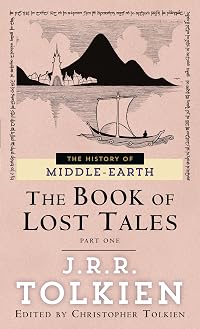
The Book of Lost Tales, Part One
by J. R. R. Tolkien, Christopher Tolkien (Editor)
The History of Middle-Earth (1)
On This Page
Description
The Book of Lost Tales: Part One is the first of a two-volume set that contains the early myths and legends which led to the writing of J.R.R. Tolkien's epic tale of war, The Silmarillion.The Book of Lost Tales was the first major work of imagination by J.R.R. Tolkien, begun in 1916-17 when he was twenty-five years old and left incomplete several years later. It stands at the beginning of the entire conception of Middle-earth and Valinor, for these tales were the first form of the myths and show more legends that came to be called The Silmarillion. Embedded in English legend, they are set in the narrative frame of a great westward voyage over the Ocean by a mariner named Eriol (or Ælfwine) to Tol Eressea, the Lonely Isle, where elves dwelt; from him they learned their true history, the Lost Tales of Elfinesse.
In these Tales are found the earliest accounts and original ideas of Gods and Elves, Dwarves, Balrogs, and Orcs; of the Silmarils and the Two Trees of Valinor; of Nargothrond and Gondolin; of the geography and cosmology of Middle-earth.
Part One contains the tales of The Music of the Ainur, The Building of Valinor, The Chaining of Melko, The Coming of the Elves, and The Flight of the Noldoli, among others. Each tale is followed by a short essay by Christopher Tolkien, the author's son and literary executor.
. show less
Tags
Recommendations



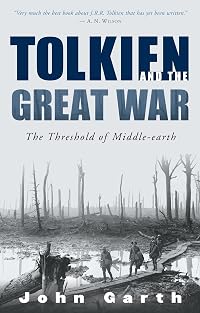


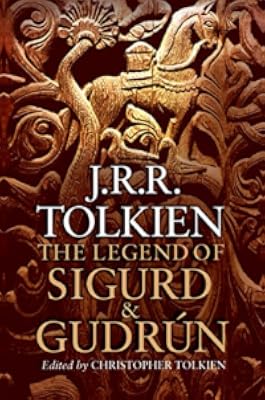



Member Recommendations
Member Reviews
Rating this a 3 primarily so as not to invoke Dave's ire. He's right that the tales are "turgid, tedious, and unconscionably self-indulgent." But then, he also uses "belike" in a nonsensical way.
Where I differ from him is in trying to imagine what the reviews would be in a world that didn't contain Tolkien's other published works. First of all, I shudder to think of such a world. Secondly, we don't live in that world, so what's the point in rating a book from that subjunctive point of view? Such arguments are simply attempts to justify one's own peevishness.
The Book of Lost Tales is a solid 3. No, the tales are not great, and yes sometimes they are downright terrible. But the book does precisely what it's supposed to do: Provide early, show more unrefined versions of stories that NEVER got to a point where Tolkien himself was comfortable publishing them. It's for the Tolkien lovers who want to delve into that minutiae. There's no reason to criticize the book simply because you're not one of those people. show less
Where I differ from him is in trying to imagine what the reviews would be in a world that didn't contain Tolkien's other published works. First of all, I shudder to think of such a world. Secondly, we don't live in that world, so what's the point in rating a book from that subjunctive point of view? Such arguments are simply attempts to justify one's own peevishness.
The Book of Lost Tales is a solid 3. No, the tales are not great, and yes sometimes they are downright terrible. But the book does precisely what it's supposed to do: Provide early, show more unrefined versions of stories that NEVER got to a point where Tolkien himself was comfortable publishing them. It's for the Tolkien lovers who want to delve into that minutiae. There's no reason to criticize the book simply because you're not one of those people. show less
These Lost Tales are part of the "History of Middle-Earth," i.e. Christopher Tolkien's exhaustive multivolume autopsy of his father's creative process in generating the mythology that underlies the world of The Lord of the Rings and The Hobbit. The contents of this book were recovered from old manuscript notebooks, and mostly constitute variant tellings of episodes later reworked in The Silmarillion, concerning the doings of gods and elves prior to the "awakening of men." They are set in a frame-story according to which various elves of the Lonely Island (Tol Eressea) recount these legends to a human traveler Eriol.
Although the tales themselves are buttressed with copious notes on the source texts and their relationships to the show more Middle-Earth Tolkien canon, I admit I read little of that material. Instead, I offered the stories themselves aloud to my Other Reader as occasional bedtime reading. We both found the book enjoyable and satisfying that way. (On points where I had particular curiosity, I did read in the editorial apparatus that constitutes nearly half of the book.)
The content and imagery of these stories is very Dunsanian, reminiscent of stories like "The Fortress Unvanquishable Save for Sacnoth" and The King of Elfland's Daughter. But instead of Dunsany's lucid-if-ornate prose, we get the affected archaicisms of the aspiring English philologist. That certainly made this material a challenge to read aloud, but it was fun nevertheless. (I'm sure it didn't hurt that I've studied Middle English verse and enjoyed reading those texts aloud.) Reading this material as its own story, rather than a draft of what Tolkien was later to produce, is a pleasant enough experience. It may even be better than reading it with the hope of profound insights into the secrets of The Lord of the Rings, despite all of the younger Tolkien's efforts to facilitate such discoveries. show less
Although the tales themselves are buttressed with copious notes on the source texts and their relationships to the show more Middle-Earth Tolkien canon, I admit I read little of that material. Instead, I offered the stories themselves aloud to my Other Reader as occasional bedtime reading. We both found the book enjoyable and satisfying that way. (On points where I had particular curiosity, I did read in the editorial apparatus that constitutes nearly half of the book.)
The content and imagery of these stories is very Dunsanian, reminiscent of stories like "The Fortress Unvanquishable Save for Sacnoth" and The King of Elfland's Daughter. But instead of Dunsany's lucid-if-ornate prose, we get the affected archaicisms of the aspiring English philologist. That certainly made this material a challenge to read aloud, but it was fun nevertheless. (I'm sure it didn't hurt that I've studied Middle English verse and enjoyed reading those texts aloud.) Reading this material as its own story, rather than a draft of what Tolkien was later to produce, is a pleasant enough experience. It may even be better than reading it with the hope of profound insights into the secrets of The Lord of the Rings, despite all of the younger Tolkien's efforts to facilitate such discoveries. show less
The Book of Lost Tales is aptly named. These stories — J. R. R. Tolkien's earliest writings about the world that would become Middle-earth — were tossed into boxes and packed away for years, only coming to light as part of Christopher Tolkien's work of retracing his father's mythology. The Lost Tales were first published in 1983–4, nearly seventy years after the date of the earliest known poem. Many of the stories and fragments related here later became the bulk of The Silmarillion; some were abandoned. But the one thing they share with all Tolkien's works is a sense of stately beauty, rich archaic language, and yearning for "great and sad things" (16).
Tolkien dreamed of writing a mythology for England (in his view, Arthur doesn't show more count). In his Letters, Tolkien says he was distressed as a young man because "there was nothing English, save impoverished chap-book stuff" in the English mythological tradition (144). So he set out to change that. All the events that happen in the Third Age, the destruction of the Ring and the passing of the Elves and all of it, are supposed to be pre-historical legends that connect to the real England that Tolkien loved (though by 1951 he had shelved the idea as overly ambitious). I had read of this intention before and had wondered how Middle-earth would be tied in with the misty beginnings of recorded history on the British isle... well, in the Lost Tales we have the faintest sketches of Tolkien's early vision. There is a complex outline of the Eriol story (that was no doubt a nightmare to put together from the scattered notes and scribblings of Tolkien's fast writing), rough and clearly in the beginning stages of conception. But it does give us a vague image of how Tolkien envisioned Middle-earth eventually becoming our earth. It's interesting stuff.
But the fact that these are such rough drafts (many of which were extensively rewritten later or entirely abandoned) calls into question the ethical premise for Christopher Tolkien's entire twelve-volume Histories of Middle-earth, of which The Book of Lost Tales comprises the first two volumes. Is it right to unveil Tolkien's roughest, most unpolished imaginings to the world at large? Christopher Tolkien seems to anticipate this question near the end of Part Two, where he writes, "Much in this chapter is necessarily inconclusive and uncertain; but I believe that these very early notes and projections are rightly disinterred. Although, as 'plots', abandoned and doubtless forgotten, they bear witness to truths of my father's heart and mind that he never abandoned" (327). Maybe that's so, but it doesn't necessarily follow that he wanted those unfinished "truths" published. But... I'm torn.
(review continued here on LibraryThing) show less
Tolkien dreamed of writing a mythology for England (in his view, Arthur doesn't show more count). In his Letters, Tolkien says he was distressed as a young man because "there was nothing English, save impoverished chap-book stuff" in the English mythological tradition (144). So he set out to change that. All the events that happen in the Third Age, the destruction of the Ring and the passing of the Elves and all of it, are supposed to be pre-historical legends that connect to the real England that Tolkien loved (though by 1951 he had shelved the idea as overly ambitious). I had read of this intention before and had wondered how Middle-earth would be tied in with the misty beginnings of recorded history on the British isle... well, in the Lost Tales we have the faintest sketches of Tolkien's early vision. There is a complex outline of the Eriol story (that was no doubt a nightmare to put together from the scattered notes and scribblings of Tolkien's fast writing), rough and clearly in the beginning stages of conception. But it does give us a vague image of how Tolkien envisioned Middle-earth eventually becoming our earth. It's interesting stuff.
But the fact that these are such rough drafts (many of which were extensively rewritten later or entirely abandoned) calls into question the ethical premise for Christopher Tolkien's entire twelve-volume Histories of Middle-earth, of which The Book of Lost Tales comprises the first two volumes. Is it right to unveil Tolkien's roughest, most unpolished imaginings to the world at large? Christopher Tolkien seems to anticipate this question near the end of Part Two, where he writes, "Much in this chapter is necessarily inconclusive and uncertain; but I believe that these very early notes and projections are rightly disinterred. Although, as 'plots', abandoned and doubtless forgotten, they bear witness to truths of my father's heart and mind that he never abandoned" (327). Maybe that's so, but it doesn't necessarily follow that he wanted those unfinished "truths" published. But... I'm torn.
(review continued here on LibraryThing) show less
What IS The Book of Lost Tales? It’s a collection of Tolkien’s unpublished and unfinished writings, brought together and annotated by his son Christopher Tolkien. It includes rejected ideas, drafts, outlines, and variations as well as comparisons and notes on the evolution of the texts. Ever wanted to know how Tolkien developed his iconic elves, what Melian was originally named, or a more detailed account of Gondolin? BoLT is your book. No idea what I’m talking about? Read The Lord of the Rings and Silmarillion first.
The BoLT blew my mind, especially Part I. These are Tolkien’s very early writings, before his concept of the world was fully developed. And wow, I’m very glad that he did develop it further. His elves were once show more decidedly closer to fairies and gnomes. He had an entirely different framework for telling these tales, one which he eventually (and in my opinion, rightly) discarded. Some of the concepts and ideas were very whimsical and childish (like “the cottage of lost play”) and don’t seem to fit Tolkien’s high-fantasy world.
Part II and the later sections of Part I are much closer to Tolkien’s finalized world. There are all sorts of familiar stories, not always “accurate” to published canon, but often with much more detail; most of these stories were revised and shortened before being added to the Silmarillion. The tales were not yet sewn together by the story of the Silmarils; the jewels were a side-story at best, and the Sons of Fëanor were not fully realized. I don’t think I appreciated how intricately Tolkien wove the Silmarillion together until I read BoLT.
Favorites: Glorfindel! He’s a side character at best, but one of my favorites. The BoLT contains the full narrative of the Fall of Gondolin, which is only summarized in the Silmarillion. Gondolin itself, while not a “character,” is one of my favorite sections, especially Tuor and Idril. I won’t lie; I broke out the sticky notes to mark Gondolin sections. The detailed variations on the creation story, the sun and moon, the trees, etc., were also wonderful. It was fascinating to watch the Silmaril narrative develop.
Least favorites: Oh god, Ælfwine. The original framework was the story of Ælfwine, an Englishman who journeys to an elven land and hears tales of elvish history. It ties the story together and embeds it into English history… but the entire thing is just too whimsical and fairytale-like. I love the sort of nonsense whimsy you find in children’s bedtime stories, but it just isn’t right for Tolkien’s world.
Writing style: Tolkien paints a wonderfully full, detailed, high-fantasy world, full of fantastic characters and beautiful scenery. Lots of repeated themes: betrayal, greed, love, oaths, etc. Many of the stories seemed darker than in the Silmarillion, which I very much appreciated.
I recently had a friend (a reader and a fantasy fan) complain that Tolkien “interrupts” his story too often. I can see where she’s coming from; but to insist that side stories like the Entwives were interruptions and just bad writing, not world-building? This is what happens when you speed read through everything, children. ಠ_ಠ
Finally, you can’t tackle BoLT without warning: CHRISTOPHER TOLKIEN IS SUPER PEDANTIC. No criticism is intended; it’s just that he has taken great pains to present and interpret his father’s drafts, notes, corrections, re-writes, name changes, etc. etc. as accurately as possible. So be prepared to read (or skip through) his analysis and explanations for every section. show less
The BoLT blew my mind, especially Part I. These are Tolkien’s very early writings, before his concept of the world was fully developed. And wow, I’m very glad that he did develop it further. His elves were once show more decidedly closer to fairies and gnomes. He had an entirely different framework for telling these tales, one which he eventually (and in my opinion, rightly) discarded. Some of the concepts and ideas were very whimsical and childish (like “the cottage of lost play”) and don’t seem to fit Tolkien’s high-fantasy world.
Part II and the later sections of Part I are much closer to Tolkien’s finalized world. There are all sorts of familiar stories, not always “accurate” to published canon, but often with much more detail; most of these stories were revised and shortened before being added to the Silmarillion. The tales were not yet sewn together by the story of the Silmarils; the jewels were a side-story at best, and the Sons of Fëanor were not fully realized. I don’t think I appreciated how intricately Tolkien wove the Silmarillion together until I read BoLT.
Favorites: Glorfindel! He’s a side character at best, but one of my favorites. The BoLT contains the full narrative of the Fall of Gondolin, which is only summarized in the Silmarillion. Gondolin itself, while not a “character,” is one of my favorite sections, especially Tuor and Idril. I won’t lie; I broke out the sticky notes to mark Gondolin sections. The detailed variations on the creation story, the sun and moon, the trees, etc., were also wonderful. It was fascinating to watch the Silmaril narrative develop.
Least favorites: Oh god, Ælfwine.
Writing style: Tolkien paints a wonderfully full, detailed, high-fantasy world, full of fantastic characters and beautiful scenery. Lots of repeated themes: betrayal, greed, love, oaths, etc. Many of the stories seemed darker than in the Silmarillion, which I very much appreciated.
I recently had a friend (a reader and a fantasy fan) complain that Tolkien “interrupts” his story too often. I can see where she’s coming from; but to insist that side stories like the Entwives were interruptions and just bad writing, not world-building? This is what happens when you speed read through everything, children. ಠ_ಠ
Finally, you can’t tackle BoLT without warning: CHRISTOPHER TOLKIEN IS SUPER PEDANTIC. No criticism is intended; it’s just that he has taken great pains to present and interpret his father’s drafts, notes, corrections, re-writes, name changes, etc. etc. as accurately as possible. So be prepared to read (or skip through) his analysis and explanations for every section. show less
i have described this book as a pilot for the Silmarillion. this was Tolkien developing the stories, timeline, and persons within his mythological universe. his son Christopher explores and explains his father’s ideas as they manifested and evolved through different versions. it is a very interesting deep dive into Tolkien’s mythology and myth-making process. it really does bring satisfying insight into the world of LotR.
Tolkien set a framing story in a place that feels like Rivendell but is, in fact, on Tol Erresea, in a house called the House of Lost Play. thus it begins more like a classic fairy story, complete with time dilation and foods that will bind you forever to that land and ancient fey beings that will tell you of the show more unnumbered epochs of ancient time, even before the Sun and Moon. the stories come forth as stories told within this house on the island rather than by some omniscient teller of tales. we hear the stories second-hand from the mouths of those whose grandfathers or grandfathers grandfathers might have lived to see them or even from some who witnessed first-hand the deeds of the first children of Illuvatar, the Valar, and the coming of the second children.
this deep look into the history of Middle Earth and its inhabitants gives a realistic and plausible fundament to the events and actions of the LotR. it makes sense why humans behave as they do; it explains the leaving of the elves; what Sauron strove for and how; what it meant for the Valar to intervene if and when they did or why they might not. the commentary from Christopher might take too scholarly a tack for some readers because it speaks of JRR’s notes and guesses at many intentions of his rather than telling a coherent tale or set of tales. it jarred my young brain too much for me to understand and enjoy the book the first time i attempted a read. now, i understand that readers should see this book more rightly as a reference book, a concordance of sorts for understanding the creation of the creation of Ea/Arda wherein the LotR takes place. show less
Tolkien set a framing story in a place that feels like Rivendell but is, in fact, on Tol Erresea, in a house called the House of Lost Play. thus it begins more like a classic fairy story, complete with time dilation and foods that will bind you forever to that land and ancient fey beings that will tell you of the show more unnumbered epochs of ancient time, even before the Sun and Moon. the stories come forth as stories told within this house on the island rather than by some omniscient teller of tales. we hear the stories second-hand from the mouths of those whose grandfathers or grandfathers grandfathers might have lived to see them or even from some who witnessed first-hand the deeds of the first children of Illuvatar, the Valar, and the coming of the second children.
this deep look into the history of Middle Earth and its inhabitants gives a realistic and plausible fundament to the events and actions of the LotR. it makes sense why humans behave as they do; it explains the leaving of the elves; what Sauron strove for and how; what it meant for the Valar to intervene if and when they did or why they might not. the commentary from Christopher might take too scholarly a tack for some readers because it speaks of JRR’s notes and guesses at many intentions of his rather than telling a coherent tale or set of tales. it jarred my young brain too much for me to understand and enjoy the book the first time i attempted a read. now, i understand that readers should see this book more rightly as a reference book, a concordance of sorts for understanding the creation of the creation of Ea/Arda wherein the LotR takes place. show less
It is a monumental effort to have begun this work, and Christopher Tolkien is to be commended on his persistence with this look at his father's earliest notes.
For Tolkien fans it is fascinating to see how these tales emerge. For a writer who is interested in world-building, it is a good way to see how the process works and how many, many versions a tale has to take before it is considered "complete." And yes, I know that these are chapters that Tolkien never completed in his lifetime, but they became [The Silmarillion]. Many of them are more detailed than what was eventually published, and I think the best example of this expansion is Chapter VIII, "The Tale of the Sun and the Moon." It is so much more fleshed out and more detailed and show more described than what came into "Silmarillion" and I just totally loved it. show less
For Tolkien fans it is fascinating to see how these tales emerge. For a writer who is interested in world-building, it is a good way to see how the process works and how many, many versions a tale has to take before it is considered "complete." And yes, I know that these are chapters that Tolkien never completed in his lifetime, but they became [The Silmarillion]. Many of them are more detailed than what was eventually published, and I think the best example of this expansion is Chapter VIII, "The Tale of the Sun and the Moon." It is so much more fleshed out and more detailed and show more described than what came into "Silmarillion" and I just totally loved it. show less
3.5 stars
My first attempt to read _The Book of Lost Tales_ was made way too early in my life and made certain that my response was to put it on the shelf and decide that all of this background stuff, especially taken from this early phase in Tolkien’s life as a writer, was way too different from the Middle-Earth stories that I loved for me to waste any time on it. Looking at where the book mark from my first attempt still sat when I picked it up again, I noticed that I didn’t even get much beyond the first several pages of the introductory chapter “The Cottage of Lost Play”. I remember thinking that it was just altogether too twee for me, what with the Eldar of Middle-Earth still being referred to as ‘faeries’ and the, to show more me, bizarre structure of a wanderer coming to a tiny cottage (bigger on the inside than the outside) peopled by dancing and singing children and adults who primarily sat around telling tales and reciting pretty mediocre poetry. It wasn’t really Middle-Earth now was it? Well, at the time I put down the volume and decided that I’d stick with the ‘real’ stuff of LotR, [b:The Hobbit|5907|The Hobbit|J.R.R. Tolkien|http://d.gr-assets.com/books/1328953407s/5907.jpg|1540236] and [b:The Silmarillion|953403|The Silmarillion|J.R.R. Tolkien|http://d.gr-assets.com/books/1281878908s/953403.jpg|4733799] and that, as they say, was that for probably about two and a half decades. Then it came about that I discovered my greatest love vis a vis Tolkien’s work was growing to be the posthumously published [b:The Silmarillion|953403|The Silmarillion|J.R.R. Tolkien|http://d.gr-assets.com/books/1281878908s/953403.jpg|4733799] and [b:Unfinished Tales of Númenor and Middle-Earth|7329|Unfinished Tales of Númenor and Middle-Earth|J.R.R. Tolkien|http://d.gr-assets.com/books/1165611104s/7329.jpg|2961645], both of which contained some of the most beautiful and powerful of Tolkien’s writing. I looked at the corpus of ‘The History of Middle Earth’ with something of a new eye and decided that I might just dip into it and see what it was like. I consciously chose to first read those volumes that dealt with the matter of the First and Second ages of Middle-Earth and were latest in the chronology of composition thus presumably assuring that I was coming across ideas and stories that were closer in tone and content to the ones with which I was so familiar and that thrilled me with their mythic reverberations. I ended up loving what I found in [b:Morgoth's Ring|214173|Morgoth's Ring (The History of Middle-Earth, #10)|J.R.R. Tolkien|http://d.gr-assets.com/books/1308532389s/214173.jpg|4992849] and [b:The War of the Jewels|214166|The War of the Jewels (The History of Middle-Earth, #11)|J.R.R. Tolkien|http://d.gr-assets.com/books/1308532544s/214166.jpg|6561935] and decided that maybe this huge work undertaken by Christopher Tolkien to present the works of his father in toto wasn’t an altogether bad idea after all (especially given my hunger for more material regarding the tales as told in [b:The Silmarillion|953403|The Silmarillion|J.R.R. Tolkien|http://d.gr-assets.com/books/1281878908s/953403.jpg|4733799]).
So now I find myself re-embarking on the journey from the beginning and tackling the very Book of Lost Tales (part one) that defeated me in my youth. I’m glad I came back. Pushing through past the point in the first chapter beyond which I never made it before I actually found a fair bit to like, even though it wasn’t the undiluted Middle-Earth vintage I had initially wanted. I was actually reminded a bit of William Morris’ medieval romances that so influenced Tolkien as I read about the journey of Eriol the mariner upon the Isle of Tol Eressëa and once the tales themselves began to be told I saw that there was a surprising amount of coherence between these earliest versions of the myths of Middle-Earth with what eventually came to be published in The Sil. The differences themselves were intriguing and I found as the chapters sped on the framing device didn’t bother me half as much as once it had. I will readily admit that much of the poetry in this volume leaves something to be desired. I am not one of those readers of Tolkien that skips over the poems, and I think that many of them are quite beautiful (esp. Bilbo’s poem of Eärendil sung in Rivendell), but the early ones showcased in this volume are not really my cup of tea (though one can certainly see Tolkien’s word-craft in them improving as time went on). The Cottage of Lost Play itself took on greater interest as well as I started to see some parallels between it and the ultimate development of Elrond’s house of Rivendell as “a perfect house, whether you like food or sleep or story-telling or singing, or just sitting and thinking best, or a pleasant mixture of them all’. Merely to be there was a cure for weariness, fear, and sadness.”
Eriol the mariner, a man from medieval England who has found his way to the magical isles of the west, sits in this pleasant house and has recounted to him many of the tales of the elder days when the Elves were alone in Middle-Earth, or mankind just arising from their ages long slumber. All of these tales are ones that a reader of [b:The Silmarillion|953403|The Silmarillion|J.R.R. Tolkien|http://d.gr-assets.com/books/1281878908s/953403.jpg|4733799] will already be familiar with: the creation myth of the Music of the Ainur, the building of Valinor and creation of the Two Trees of Light, the battles against Melkor (here named Melko) and his initial imprisonment, the coming of the Elves to the blessed lands and their ultimate rebellion and return to Middle-Earth in pursuit of Melko, and the myth of the creation of the sun and moon upon the death of the two trees. Some of these are not very far from the more final versions that were presented in [b:The Silmarillion|953403|The Silmarillion|J.R.R. Tolkien|http://d.gr-assets.com/books/1281878908s/953403.jpg|4733799], while others display drastic differences (such as the expanded legend of the sun and moon, the extensive bits that deal with cosmology and the make-up of the world, and the inclusion of Valar who mate and even include in their number some gods of war), but it is very safe to say that unless you have a deep and abiding love for Middle-Earth, and especially tales of the elder days, you probably won’t get much out of this book. I would agree with those who claim this is really only for aficionados of Tolkien’s tales who want more and who are interested in seeing the development of his mythology. It is indeed a fascinating peek over the shoulder of Tolkien as he writes his tales and we finally start to get a glimpse of the sheer magnitude of the effort that his son expended simply in producing from the jumble of inter-related texts about the legends of the Elves a volume as slim and relatively cohesive as [b:The Silmarillion|953403|The Silmarillion|J.R.R. Tolkien|http://d.gr-assets.com/books/1281878908s/953403.jpg|4733799].
I’m looking forward to tackling Book II of the lost tales and proceeding with the history of Middle-Earth texts at least up to volume 5 to continue to get my fix and maybe even get a taste of some legends of the elder days that I haven’t already experienced in another form. Recommended for hard-core Tolkien fans who don’t mind critical apparatus and multiple versions of tales. show less
My first attempt to read _The Book of Lost Tales_ was made way too early in my life and made certain that my response was to put it on the shelf and decide that all of this background stuff, especially taken from this early phase in Tolkien’s life as a writer, was way too different from the Middle-Earth stories that I loved for me to waste any time on it. Looking at where the book mark from my first attempt still sat when I picked it up again, I noticed that I didn’t even get much beyond the first several pages of the introductory chapter “The Cottage of Lost Play”. I remember thinking that it was just altogether too twee for me, what with the Eldar of Middle-Earth still being referred to as ‘faeries’ and the, to show more me, bizarre structure of a wanderer coming to a tiny cottage (bigger on the inside than the outside) peopled by dancing and singing children and adults who primarily sat around telling tales and reciting pretty mediocre poetry. It wasn’t really Middle-Earth now was it? Well, at the time I put down the volume and decided that I’d stick with the ‘real’ stuff of LotR, [b:The Hobbit|5907|The Hobbit|J.R.R. Tolkien|http://d.gr-assets.com/books/1328953407s/5907.jpg|1540236] and [b:The Silmarillion|953403|The Silmarillion|J.R.R. Tolkien|http://d.gr-assets.com/books/1281878908s/953403.jpg|4733799] and that, as they say, was that for probably about two and a half decades. Then it came about that I discovered my greatest love vis a vis Tolkien’s work was growing to be the posthumously published [b:The Silmarillion|953403|The Silmarillion|J.R.R. Tolkien|http://d.gr-assets.com/books/1281878908s/953403.jpg|4733799] and [b:Unfinished Tales of Númenor and Middle-Earth|7329|Unfinished Tales of Númenor and Middle-Earth|J.R.R. Tolkien|http://d.gr-assets.com/books/1165611104s/7329.jpg|2961645], both of which contained some of the most beautiful and powerful of Tolkien’s writing. I looked at the corpus of ‘The History of Middle Earth’ with something of a new eye and decided that I might just dip into it and see what it was like. I consciously chose to first read those volumes that dealt with the matter of the First and Second ages of Middle-Earth and were latest in the chronology of composition thus presumably assuring that I was coming across ideas and stories that were closer in tone and content to the ones with which I was so familiar and that thrilled me with their mythic reverberations. I ended up loving what I found in [b:Morgoth's Ring|214173|Morgoth's Ring (The History of Middle-Earth, #10)|J.R.R. Tolkien|http://d.gr-assets.com/books/1308532389s/214173.jpg|4992849] and [b:The War of the Jewels|214166|The War of the Jewels (The History of Middle-Earth, #11)|J.R.R. Tolkien|http://d.gr-assets.com/books/1308532544s/214166.jpg|6561935] and decided that maybe this huge work undertaken by Christopher Tolkien to present the works of his father in toto wasn’t an altogether bad idea after all (especially given my hunger for more material regarding the tales as told in [b:The Silmarillion|953403|The Silmarillion|J.R.R. Tolkien|http://d.gr-assets.com/books/1281878908s/953403.jpg|4733799]).
So now I find myself re-embarking on the journey from the beginning and tackling the very Book of Lost Tales (part one) that defeated me in my youth. I’m glad I came back. Pushing through past the point in the first chapter beyond which I never made it before I actually found a fair bit to like, even though it wasn’t the undiluted Middle-Earth vintage I had initially wanted. I was actually reminded a bit of William Morris’ medieval romances that so influenced Tolkien as I read about the journey of Eriol the mariner upon the Isle of Tol Eressëa and once the tales themselves began to be told I saw that there was a surprising amount of coherence between these earliest versions of the myths of Middle-Earth with what eventually came to be published in The Sil. The differences themselves were intriguing and I found as the chapters sped on the framing device didn’t bother me half as much as once it had. I will readily admit that much of the poetry in this volume leaves something to be desired. I am not one of those readers of Tolkien that skips over the poems, and I think that many of them are quite beautiful (esp. Bilbo’s poem of Eärendil sung in Rivendell), but the early ones showcased in this volume are not really my cup of tea (though one can certainly see Tolkien’s word-craft in them improving as time went on). The Cottage of Lost Play itself took on greater interest as well as I started to see some parallels between it and the ultimate development of Elrond’s house of Rivendell as “a perfect house, whether you like food or sleep or story-telling or singing, or just sitting and thinking best, or a pleasant mixture of them all’. Merely to be there was a cure for weariness, fear, and sadness.”
Eriol the mariner, a man from medieval England who has found his way to the magical isles of the west, sits in this pleasant house and has recounted to him many of the tales of the elder days when the Elves were alone in Middle-Earth, or mankind just arising from their ages long slumber. All of these tales are ones that a reader of [b:The Silmarillion|953403|The Silmarillion|J.R.R. Tolkien|http://d.gr-assets.com/books/1281878908s/953403.jpg|4733799] will already be familiar with: the creation myth of the Music of the Ainur, the building of Valinor and creation of the Two Trees of Light, the battles against Melkor (here named Melko) and his initial imprisonment, the coming of the Elves to the blessed lands and their ultimate rebellion and return to Middle-Earth in pursuit of Melko, and the myth of the creation of the sun and moon upon the death of the two trees. Some of these are not very far from the more final versions that were presented in [b:The Silmarillion|953403|The Silmarillion|J.R.R. Tolkien|http://d.gr-assets.com/books/1281878908s/953403.jpg|4733799], while others display drastic differences (such as the expanded legend of the sun and moon, the extensive bits that deal with cosmology and the make-up of the world, and the inclusion of Valar who mate and even include in their number some gods of war), but it is very safe to say that unless you have a deep and abiding love for Middle-Earth, and especially tales of the elder days, you probably won’t get much out of this book. I would agree with those who claim this is really only for aficionados of Tolkien’s tales who want more and who are interested in seeing the development of his mythology. It is indeed a fascinating peek over the shoulder of Tolkien as he writes his tales and we finally start to get a glimpse of the sheer magnitude of the effort that his son expended simply in producing from the jumble of inter-related texts about the legends of the Elves a volume as slim and relatively cohesive as [b:The Silmarillion|953403|The Silmarillion|J.R.R. Tolkien|http://d.gr-assets.com/books/1281878908s/953403.jpg|4733799].
I’m looking forward to tackling Book II of the lost tales and proceeding with the history of Middle-Earth texts at least up to volume 5 to continue to get my fix and maybe even get a taste of some legends of the elder days that I haven’t already experienced in another form. Recommended for hard-core Tolkien fans who don’t mind critical apparatus and multiple versions of tales. show less
Members
- Recently Added By
Lists

Books I've Read More Than Once
602 works; 49 members
Comfort Reads
221 works; 41 members

20th Century Literature
1,161 works; 54 members

Favourite Books
1,819 works; 316 members

Books tagged favorites
390 works; 30 members

Speculative Fiction to Read
706 works; 32 members

Unread books
1,063 works; 87 members

Books Read in 2014
2,343 works; 89 members
Five star books
1,767 works; 110 members
Our Favorite Comfort Reads
334 works; 200 members
Author Information

609+ Works 518,282 Members
A writer of fantasies, Tolkien, a professor of language and literature at Oxford University, was always intrigued by early English and the imaginative use of language. In his greatest story, the trilogy The Lord of the Rings (1954--56), Tolkien invented a language with vocabulary, grammar, syntax, even poetry of its own. Though readers have show more created various possible allegorical interpretations, Tolkien has said: "It is not about anything but itself. (Certainly it has no allegorical intentions, general, particular or topical, moral, religious or political.)" In The Adventures of Tom Bombadil (1962), Tolkien tells the story of the "master of wood, water, and hill," a jolly teller of tales and singer of songs, one of the multitude of characters in his romance, saga, epic, or fairy tales about his country of the Hobbits. Tolkien was also a formidable medieval scholar, as evidenced by his work, Beowulf: The Monster and the Critics (1936) and his edition of Anciene Wisse: English Text of the Anciene Riwle. Among his works published posthumously, are The Legend of Sigurd and Gudrún and The Fall of Arthur, which was edited by his son, Christopher. In 2013, his title, TheHobbit (Movie Tie-In) made The New York Times Best Seller List. (Bowker Author Biography) show less

Christopher Reuel Tolkien was born on November 21, 1924 in Leeds, England. He is author J.R.R. Tolkien's youngest son and is known for having edited and published much of his father's work posthumously, including The Children of Húrin. Christopher Tolkien, who grew up in Oxford, U.K., listening to tales of the Bagginses and their adventures, set show more to work as his father's editor far earlier than that. He was an editor from the age of 5, catching inconsistencies in his father's bedtime tales, and was promised tuppence by his father for every mistake he noticed in "The Hobbit". As a young man he was typing up manuscripts and drawing maps of Middle-earth and around the time he was commissioned an officer in the [Royal Air Force] in 1945, his father was already calling him his chief critic and collaborator. He was also responsible for composing the original map of Middle-earth included with the The Lord of the Rings series when it was first published in the mid-1950s. Christopher also brought us The Silmarillion, The Children of Húrin, The History of Middle-earth series and many others. Christopher Tolkien passed away on January 16, 2020 at the age of 95. (Bowker Author Biography) show less
Some Editions
Awards and Honors
Awards
Notable Lists
Series

Work Relationships
Is contained in
Lord of the Rings Collection:The Hobbit-The Fellowship of the Ring-The Two Towers-Return of the King-The Silmarillion-Unfinished Tales (Lord of the Rings) by J. R. R. Tolkien (indirect)
Common Knowledge
- Canonical title
- The Book of Lost Tales, Part One
- Original title
- The Book of Lost Tales, Part One
- Original publication date
- 1983-10-27; 1917 (original notebook) (original notebook)
- People/Characters
- Aerin (kinswoman of Húrin); Aldor
- Important places
- Middle-earth; Valinor; Beleriand
- First words
- On the cover of one of the now very battered 'High School Exercise Books' in which some of the Lost Tales were composed my father wrote: The Cottage of Lost Play, which introduceth [the] Book of Lost Tales; an on the cover is... (show all) written, in my mother's hand, her initials,l E.M.T., and a date, Feb. 12th 1917.
- Original language
- English
Classifications
Statistics
- Members
- 6,579
- Popularity
- 1,843
- Reviews
- 29
- Rating
- (3.65)
- Languages
- 12 — Catalan, Czech, English, French, German, Hungarian, Italian, Polish, Russian, Spanish, Swedish, Turkish
- Media
- Paper, Ebook
- ISBNs
- 52
- UPCs
- 4
- ASINs
- 47