
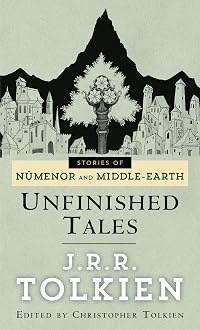
Unfinished Tales of Númenor and Middle-Earth
by J. R. R. Tolkien
On This Page
Description
A New York Times bestseller for twenty-one weeks upon publication, Unfinished Tales is a collection of narratives ranging in time from the Elder Days of Middle-earth to the end of the War of the Ring, and further relates events as told in The Silmarillion and The Lord of the Rings. The book concentrates on the lands of Middle-earth and comprises Gandalf's lively account of how he came to send the Dwarves to the celebrated party at Bag-End, the story of the emergence of the sea-god Ulmo show more before the eyes of Tuor on the coast of Beleriand, and an exact description of the military organization of the Riders of Rohan and the journey of the Black Riders during the hunt for the Ring. Unfinished Tales also contains the only surviving story about the long ages of Númenor before its downfall, and all that is known about the Five Wizards sent to Middle-earth as emissaries of the Valar, about the Seeing Stones known as the Palantiri, and about the legend of Amroth. show lessTags
Recommendations








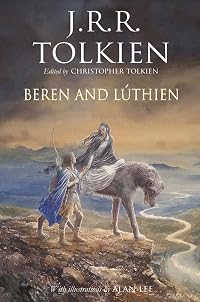
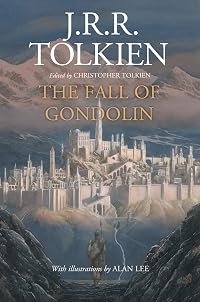
Member Recommendations
Member Reviews
Summary: A collection of stories, many in unfinished state, by J.R.R. Tolkien providing background information on the three ages of Numenor and Middle Earth, edited by his son.
The creation of The Hobbit and The Lord of the Rings (LOTR) is perhaps one of the most astounding instances of worldbuilding in fantasy fiction. Tolkien not only creates Middle-Earth but a whole history surrounding the events in his stories. He invented the languages spoken by the different races. He wrote backstories of many key figures appearing in these works or mentioned. Tolkien intended to publish at least some of this material but it was left unfinished at the time of his death in 1973.
Tolkien’s son, Christopher, has made a life’s work of marshalling show more this literary inheritance into print, beginning with The Silmarillion, in 1977. Here, Christopher Tolkien wove the extant fragments his father had written into a cohesive narrative of the three ages of Middle Earth. In Lost Tales, we see some of the raw materials with which he worked. Sometimes Tolkien changed names, or events. What Christopher Tolkien does is give us these stories, with some editing on his part, along with an extensive set of notes, annotations as it were on the text, changes made, and so forth.
The stories offer helpful background for any dedicated reader of Tolkien. The book follows the three ages of Middle Earth.
Part One: The First Age
This includes the story of Tuor, son of Huor, his captivity in and escape from Morgoth. Tolkien renders Tuor’s journey with the elf, Voronwe, and his coming to Gondolin, carrying the message of Ulmo, and being revealed in all his greatness. Also included is the tragic story of Hurin, son of Turin, involving his marriage to Nienor, not knowing she was his sister.
Part Two: The Second Age
This part opens with a description of the geography, people, and some history of Numenor, often referred to in LOTR. “Aldarion and Erendis: The Mariner’s Wife” tells the story of a prince who loves the sea, and voyaging to Middle Earth more than his wife. Perhaps most moving is the step his father the king takes in resigning his throne to this son. Tolkien follows with an account of the lineage of the kings of Numenor. The part ends with the marriage of Celeborn and Galadriel and we learn of the sadness that marked her life as well as her distinctive greatness.
Part Three: The Third Age
This section begins with the death of Isildur and the loss of the Great Ring in the battle of Gladden Fields. “Cirion and Eorl and the Friendship of Gondor and Rohan” traces the beginnings and long alliance between Rohan and Gondor, so crucial in the final war of the Ring. One of the delights of this collection is the story Gandalf tells Frodo of why he chose Bilbo as the thief to help the dwarves retake the Lonely Mountain. In “The Hunt for the Ring” we learn of the Nine Riders search for The Ring from when Gollum was questioned until Frodo leaves the Shire–as if we didn’t think the Nine sinister enough! In LOTR, we know Theoden lost his son in the battle of Isen. The final story is the account of this battle.
Part Four
The final part of the book includes three background essays. The first gives the background of the Druedain, wild men who inhabited the forests. The second and third were of greater interest. In “The Ishtari,” we learn the history of the wizards, sent by the Valar. We learn there were five, two who passed into the east and out of history. Tolkien traces the long and hidden resentment of Saruman toward Gandalf and of his treachery. Tolkien gives us all the names by which each were known. The last essay describes the nature and number of the Palantiri, including how they were used for seeing and communicating.
Christopher Tolkien appends an Index giving all the names used in the stories and a brief description of each–incredibly useful.
Comments
The success of this work encouraged Christopher Tolkien to embark on his twelve volume History of Middle Earth. This revealed to me the power of Tolkien’s worldmaking. We re-read his major works and want to read more of this world. That’s why an edited collection of unfinished works holds such a fascination. We will wade through pages of notes and even revel in indexes. We want to fix in our minds the contours of this world.
This is not for Tolkien newbies. Rather, it is for dedicated readers who aren’t contented with mere references to Numenor. This is for the afficionado, the one who wants to read everything connected with Tolkien. I would read it after The Silmarillion, which it followed, and after reading The Hobbit and The Lord of the Rings. The stories vary in quality. The account of Turin and that of Aldarion and Erendis are great tragedies. The story of the choosing of Bilbo is just great fun. The lineage of Numenor’s kings and the essay on the Druedain fell into the category of “for your information.” show less
The creation of The Hobbit and The Lord of the Rings (LOTR) is perhaps one of the most astounding instances of worldbuilding in fantasy fiction. Tolkien not only creates Middle-Earth but a whole history surrounding the events in his stories. He invented the languages spoken by the different races. He wrote backstories of many key figures appearing in these works or mentioned. Tolkien intended to publish at least some of this material but it was left unfinished at the time of his death in 1973.
Tolkien’s son, Christopher, has made a life’s work of marshalling show more this literary inheritance into print, beginning with The Silmarillion, in 1977. Here, Christopher Tolkien wove the extant fragments his father had written into a cohesive narrative of the three ages of Middle Earth. In Lost Tales, we see some of the raw materials with which he worked. Sometimes Tolkien changed names, or events. What Christopher Tolkien does is give us these stories, with some editing on his part, along with an extensive set of notes, annotations as it were on the text, changes made, and so forth.
The stories offer helpful background for any dedicated reader of Tolkien. The book follows the three ages of Middle Earth.
Part One: The First Age
This includes the story of Tuor, son of Huor, his captivity in and escape from Morgoth. Tolkien renders Tuor’s journey with the elf, Voronwe, and his coming to Gondolin, carrying the message of Ulmo, and being revealed in all his greatness. Also included is the tragic story of Hurin, son of Turin, involving his marriage to Nienor, not knowing she was his sister.
Part Two: The Second Age
This part opens with a description of the geography, people, and some history of Numenor, often referred to in LOTR. “Aldarion and Erendis: The Mariner’s Wife” tells the story of a prince who loves the sea, and voyaging to Middle Earth more than his wife. Perhaps most moving is the step his father the king takes in resigning his throne to this son. Tolkien follows with an account of the lineage of the kings of Numenor. The part ends with the marriage of Celeborn and Galadriel and we learn of the sadness that marked her life as well as her distinctive greatness.
Part Three: The Third Age
This section begins with the death of Isildur and the loss of the Great Ring in the battle of Gladden Fields. “Cirion and Eorl and the Friendship of Gondor and Rohan” traces the beginnings and long alliance between Rohan and Gondor, so crucial in the final war of the Ring. One of the delights of this collection is the story Gandalf tells Frodo of why he chose Bilbo as the thief to help the dwarves retake the Lonely Mountain. In “The Hunt for the Ring” we learn of the Nine Riders search for The Ring from when Gollum was questioned until Frodo leaves the Shire–as if we didn’t think the Nine sinister enough! In LOTR, we know Theoden lost his son in the battle of Isen. The final story is the account of this battle.
Part Four
The final part of the book includes three background essays. The first gives the background of the Druedain, wild men who inhabited the forests. The second and third were of greater interest. In “The Ishtari,” we learn the history of the wizards, sent by the Valar. We learn there were five, two who passed into the east and out of history. Tolkien traces the long and hidden resentment of Saruman toward Gandalf and of his treachery. Tolkien gives us all the names by which each were known. The last essay describes the nature and number of the Palantiri, including how they were used for seeing and communicating.
Christopher Tolkien appends an Index giving all the names used in the stories and a brief description of each–incredibly useful.
Comments
The success of this work encouraged Christopher Tolkien to embark on his twelve volume History of Middle Earth. This revealed to me the power of Tolkien’s worldmaking. We re-read his major works and want to read more of this world. That’s why an edited collection of unfinished works holds such a fascination. We will wade through pages of notes and even revel in indexes. We want to fix in our minds the contours of this world.
This is not for Tolkien newbies. Rather, it is for dedicated readers who aren’t contented with mere references to Numenor. This is for the afficionado, the one who wants to read everything connected with Tolkien. I would read it after The Silmarillion, which it followed, and after reading The Hobbit and The Lord of the Rings. The stories vary in quality. The account of Turin and that of Aldarion and Erendis are great tragedies. The story of the choosing of Bilbo is just great fun. The lineage of Numenor’s kings and the essay on the Druedain fell into the category of “for your information.” show less
By its very nature, this is an unsatisfactory and even frustrating book, being a highly fragmented series of incomplete texts, really of interest only to those willing to wade through a lot of academic contextualisation to understand the nature of the pieces and the editorial process by which they were selected. Once past that, though, it's gold. The further one goes the more one appreciates the unique genius of Tolkien, the driven obsessive who recounts the stories he invents as though they were myth or history external to himself, discovered largely through the examination of language and linguistic properties, revealing peoples, landscapes, histories. There are terrific things in here, enriching the mythos, providing glimpses into show more the larger stories and of the limits of those stories and the potentially unlimited stories beyond. The least chapter is the horribly messy tale of Galadirel and Celeborn, the most complete is the Children of Hurin, but completists will be already well familiar with this. More obscure, and surprising, are the stories of Numenor - where was that one going, I wonder? And the history of the Druedain. The Quest of Erebor, the various battles and the friendship between Rohan and Gondor are crowd-pleasers. Lot of comments and footnotes that can be studied or skimmed depending on your bent. Not a good read, but a supplemental volume full of little good reads. show less
i have never written a review like this one. the book itself is a series of stories that Tolkien wrote, or partially wrote, to flesh out Middle Earth and its history in particular as it related to the Lord of the Rings and the Hobbit. his son Christopher gathered them together in one volume and annotated it. so, it is a book of disparate stories, most of which have to do with providing background to Tolkien’s major works but a couple near the beginning tell of the First Age. it is more of a reference book, an extended appendix than it is a “book” in its own right.
my mind imagined some bibliophile finding this book, a bit dusty and yellowing, on the shelf of a used book store having never heard of Tolkien or Lord of the Rings show more (farfetched, i know) but then reading the passages within, rich with an unseen depth and scaffolded by the commentary from Christopher. it would seem like a very interesting work of fiction with not only mythic tales, histories, encyclopedic entries, and descriptions of people and places of an obviously larger fantasy construction, but with a world-within-a-world but outside of that of the stories built closer to the one we live in where you have the author’s son attempting to flesh out more of his father’s world for his fan base. what an elaborate and beautifully convoluted piece of art that would be!
a straight-forward review of the book would then be warranted. but it is not that. this book stands as a supplementary piece providing context and background for the primary works of LotR and the Hobbit. for those who have read and enjoyed those books, it deepens the world and tales within them. we come to understand better the struggle and tragedy of Denethor II, how and why Gandalf chose Bilbo, the history of Rohan and Gondor, and much more. probably the most fascinating part for me was the Hunt for the Ring in which we get the Enemy’s point of view and come to understand the power of the rings and the Nazgul better. heady stuff. show less
my mind imagined some bibliophile finding this book, a bit dusty and yellowing, on the shelf of a used book store having never heard of Tolkien or Lord of the Rings show more (farfetched, i know) but then reading the passages within, rich with an unseen depth and scaffolded by the commentary from Christopher. it would seem like a very interesting work of fiction with not only mythic tales, histories, encyclopedic entries, and descriptions of people and places of an obviously larger fantasy construction, but with a world-within-a-world but outside of that of the stories built closer to the one we live in where you have the author’s son attempting to flesh out more of his father’s world for his fan base. what an elaborate and beautifully convoluted piece of art that would be!
a straight-forward review of the book would then be warranted. but it is not that. this book stands as a supplementary piece providing context and background for the primary works of LotR and the Hobbit. for those who have read and enjoyed those books, it deepens the world and tales within them. we come to understand better the struggle and tragedy of Denethor II, how and why Gandalf chose Bilbo, the history of Rohan and Gondor, and much more. probably the most fascinating part for me was the Hunt for the Ring in which we get the Enemy’s point of view and come to understand the power of the rings and the Nazgul better. heady stuff. show less
2025 Advent, Day 24: fragmented and unfiltered incomplete texts which further explore Tolkien's world. There are questions answered I never thought to ask and now in think i more fully understand the fate of Tantalus.
Perfect for established fans of Tolkien. Less perfect for completionists. In summary: I wish the Tales were finished as this lack is the only flaw
Perfect for established fans of Tolkien. Less perfect for completionists. In summary: I wish the Tales were finished as this lack is the only flaw
Wow-o-wow! How had I not read this before? What a way to continue a Tolkien journey this year, having read The Silmarillion, Beren and Luthien, The Children of Hurin, The Fall of Gondolin, and now this.
And the audiobook so, so wonderfully narrated by Timothy and Samuel West. So seamlessly trading back and forth from main text to footnotes and back. Just wonderful. And another wonderful experience of reading the text while listening to the audio.
And the stories here. So much that augments both the Silmarillion and the LotR. Such richness. Numenor! Galadriel and Celeborn! Gladden Fields! Cirion and Eorl! The Quest of Erebor! The Hunt for the Ring! The Istari! The Palantíri! So much depth to Tolkien’s building of Middle Earth (and show more obvious source material for Peter Jackson’s movies- though he did go beyond source material and, to be kind, added his own).
Makes me want to go back and reread the LotR Appendices. (Though I understand the Audible has plans to release Andy Serkis reading the LotR- that is something to look forward to!) show less
And the audiobook so, so wonderfully narrated by Timothy and Samuel West. So seamlessly trading back and forth from main text to footnotes and back. Just wonderful. And another wonderful experience of reading the text while listening to the audio.
And the stories here. So much that augments both the Silmarillion and the LotR. Such richness. Numenor! Galadriel and Celeborn! Gladden Fields! Cirion and Eorl! The Quest of Erebor! The Hunt for the Ring! The Istari! The Palantíri! So much depth to Tolkien’s building of Middle Earth (and show more obvious source material for Peter Jackson’s movies- though he did go beyond source material and, to be kind, added his own).
Makes me want to go back and reread the LotR Appendices. (Though I understand the Audible has plans to release Andy Serkis reading the LotR- that is something to look forward to!) show less
I am a diehard fan of Tolkien’s stories and themes, but I don’t really care about the extra minutiae. If you love extra minutiae, you will not like my review.
So, there’s a lot of good content in the Unfinished Tales, but... as a single BOOK, it’s not very good. I know that the History of Middle-earth series was published later than UT, but if there was ever to be a do-over, I think about a third of the content in UT should be in HoME, leaving UT for the more substantial “tales” left out of the Lord of the Rings and the Silmarillion (and some of the stuff relegated to HoME, like the Athrabeth and the Laws and Customs of the Eldar, might be better at home in the Unfinished Tales). A lot of the Third and Fourth Age content, for show more example, reads more like lore summaries and extra appendices than actual “unfinished tales.”
“Of Tuor and his Coming to Gondolin” was a delight, on the other hand, and I wish there was more of it. “Aldarion and Erendis” was probably my favorite unfinished tale, full of great characters and fascinating gender politics against a tantalizing backdrop of Second Age Númenor before it descended into darkness. The Narn was also good—not as tight as the abridged version in the Silmarillion, but I liked seeing more of Túrin’s world, and I came out of it with more sympathy for his character. I also enjoyed “The History of Galadriel and Celeborn” for its insight into what the house of Finwë was up to this whole time (because out of everyone in the Legendarium, I have the biggest soft spot for the house of Finwë)
If you are a fellow diehard fan thinking about reading the Unfinished Tales, my advice is this: don’t read it all in one go, and treat the individual stories like their own things. That’s what I did (reading whole other books between chapters) and the experience was much less of a slog than it could have been. Also, don’t feel guilty if something is boring and you decide to skip it. The reason the Hobbit, Lord of the Rings, and the Silmarillion are so good is because they tell coherent narratives and had to be edited for publication. UT feels more like a deep-dive into the parts of those narratives that didn’t make the cut. So it’s interesting, but I don’t think it’s “required reading.” show less
So, there’s a lot of good content in the Unfinished Tales, but... as a single BOOK, it’s not very good. I know that the History of Middle-earth series was published later than UT, but if there was ever to be a do-over, I think about a third of the content in UT should be in HoME, leaving UT for the more substantial “tales” left out of the Lord of the Rings and the Silmarillion (and some of the stuff relegated to HoME, like the Athrabeth and the Laws and Customs of the Eldar, might be better at home in the Unfinished Tales). A lot of the Third and Fourth Age content, for show more example, reads more like lore summaries and extra appendices than actual “unfinished tales.”
“Of Tuor and his Coming to Gondolin” was a delight, on the other hand, and I wish there was more of it. “Aldarion and Erendis” was probably my favorite unfinished tale, full of great characters and fascinating gender politics against a tantalizing backdrop of Second Age Númenor before it descended into darkness. The Narn was also good—not as tight as the abridged version in the Silmarillion, but I liked seeing more of Túrin’s world, and I came out of it with more sympathy for his character. I also enjoyed “The History of Galadriel and Celeborn” for its insight into what the house of Finwë was up to this whole time (because out of everyone in the Legendarium, I have the biggest soft spot for the house of Finwë)
If you are a fellow diehard fan thinking about reading the Unfinished Tales, my advice is this: don’t read it all in one go, and treat the individual stories like their own things. That’s what I did (reading whole other books between chapters) and the experience was much less of a slog than it could have been. Also, don’t feel guilty if something is boring and you decide to skip it. The reason the Hobbit, Lord of the Rings, and the Silmarillion are so good is because they tell coherent narratives and had to be edited for publication. UT feels more like a deep-dive into the parts of those narratives that didn’t make the cut. So it’s interesting, but I don’t think it’s “required reading.” show less
Naturally people read The Silmarillion first, but I must say that I prefer this book. It includes a selection of very different writings and while they have the disadvantage that most of them are not finished, to me they are fascinating and they show the scope both of J.R.R. Tolkien's and Christopher Tolkien's work.
The texts cover all the three ages and are often rooted in stories from The Silmarillion, but while that book includes stories that are mostly more like retellings or summaries, in this one they are broadened and told more in the style of a novel or novella, by which I mean a slower pace and more direct speech among other aspects.
The stories from the First Age are about the hidden elvish city of Gondolin and about the show more children of Húrin, humans who became entangled in the fight against Morgoth, a super evil being (Sauron once was his lieutenant), while those of the Second Age are mostly concerned with the island of Númenor (which is kind of the Tolkien version of Atlantis). The stories from the Third Age provide a lot of background information about the characters and events of The Lord of the Rings, such as the original alliance between Gondor and Rohan, an account of how and why Gandalf planned the events of The Hobbit and persuaded Thorin to take a hobbit with him, and more information of what happened to Gollum after Sauron let him go, and how he ended up in Moria where he came across the fellowship. To me, reading the book would be worth it because of those texts alone.
Each text features an introduction by Christopher Tolkien and extensive notes, and these enable the reader to learn a lot about how both father and son worked, and how gigantic this work - and the project of creating Middle-earth - actually was. I am endlessly fascinated by the energy, knowledge, and painstaking labour that went into it, and still does by those who inherited the work from Christopher after his death in 2020. show less
The texts cover all the three ages and are often rooted in stories from The Silmarillion, but while that book includes stories that are mostly more like retellings or summaries, in this one they are broadened and told more in the style of a novel or novella, by which I mean a slower pace and more direct speech among other aspects.
The stories from the First Age are about the hidden elvish city of Gondolin and about the show more children of Húrin, humans who became entangled in the fight against Morgoth, a super evil being (Sauron once was his lieutenant), while those of the Second Age are mostly concerned with the island of Númenor (which is kind of the Tolkien version of Atlantis). The stories from the Third Age provide a lot of background information about the characters and events of The Lord of the Rings, such as the original alliance between Gondor and Rohan, an account of how and why Gandalf planned the events of The Hobbit and persuaded Thorin to take a hobbit with him, and more information of what happened to Gollum after Sauron let him go, and how he ended up in Moria where he came across the fellowship. To me, reading the book would be worth it because of those texts alone.
Each text features an introduction by Christopher Tolkien and extensive notes, and these enable the reader to learn a lot about how both father and son worked, and how gigantic this work - and the project of creating Middle-earth - actually was. I am endlessly fascinated by the energy, knowledge, and painstaking labour that went into it, and still does by those who inherited the work from Christopher after his death in 2020. show less
Members
- Recently Added By
Lists

Favourite High Fantasy Books
113 works; 23 members

20th Century Literature
1,161 works; 55 members

Favourite Books
1,817 works; 316 members

Short Story Collections and Anthologies
261 works; 40 members

1980s
356 works; 23 members

Books I've Read More Than Once
602 works; 48 members
Comfort Reads
221 works; 41 members

Favorite Childhood Books
1,646 works; 518 members
Speculative Fiction to Read
706 works; 32 members

Books Read in 2022
5,166 works; 114 members

Books Read in 2021
5,361 works; 114 members
Science Fiction and Fantasy
63 works; 4 members

The Seven-League Shelf
57 works; 3 members

I Can't Finish This Book
189 works; 22 members
Best Fantasy Novels
821 works; 357 members

Unread books
1,063 works; 82 members

Best Children's Books You've Read
197 works; 74 members
Author Information

598+ Works 516,315 Members
A writer of fantasies, Tolkien, a professor of language and literature at Oxford University, was always intrigued by early English and the imaginative use of language. In his greatest story, the trilogy The Lord of the Rings (1954--56), Tolkien invented a language with vocabulary, grammar, syntax, even poetry of its own. Though readers have show more created various possible allegorical interpretations, Tolkien has said: "It is not about anything but itself. (Certainly it has no allegorical intentions, general, particular or topical, moral, religious or political.)" In The Adventures of Tom Bombadil (1962), Tolkien tells the story of the "master of wood, water, and hill," a jolly teller of tales and singer of songs, one of the multitude of characters in his romance, saga, epic, or fairy tales about his country of the Hobbits. Tolkien was also a formidable medieval scholar, as evidenced by his work, Beowulf: The Monster and the Critics (1936) and his edition of Anciene Wisse: English Text of the Anciene Riwle. Among his works published posthumously, are The Legend of Sigurd and Gudrún and The Fall of Arthur, which was edited by his son, Christopher. In 2013, his title, TheHobbit (Movie Tie-In) made The New York Times Best Seller List. (Bowker Author Biography) show less
All Editions
Some Editions
Awards and Honors
Awards
Distinctions
Series
Belongs to Publisher Series
A tot vent (767)
Work Relationships
Is contained in
Tolkien Fantasy Tales Box Set (The Tolkien Reader/The Silmarillion/Unfinished Tales/Sir Gawain and the Green Knight) by J. R. R. Tolkien
Lord of the Rings Collection:The Hobbit-The Fellowship of the Ring-The Two Towers-Return of the King-The Silmarillion-Unfinished Tales (Lord of the Rings) by J. R. R. Tolkien
The Book of Lost Tales I; The Book of Lost Tales II; Unfinished Tales of Numenor and Middle-earth by J. R. R. Tolkien
Contains
Inspired
Has as a reference guide/companion
Has as a student's study guide
Common Knowledge
- Canonical title
- Unfinished Tales of Númenor and Middle-Earth
- Original title
- Unfinished Tales of Númenor and Middle-earth
- Original publication date
- 1980-10-02
- People/Characters
- Gandalf; Ulmo; Tuor; Gondolin; Húrin; Tar-Aldarion (show all 18); Erendis; Elros; Galadriel; Celeborn; Cirion; Eorl; Aerin (kinswoman of Húrin); Amroth; Khamûl (chief of the Ringwraiths of Dol Guldur); Rían; Huor; Tuor
- Important places
- Middle-earth; Bag End, Hobbiton, The Shire; Beleriand; Rohan; Númenor; Gladden Fields (show all 12); Gondor; Fords of Isen; Anduin; The Shire; Dol Guldur; Arda
- First words
- Rían, wife of Huor, dwelt with the people of the House of Hador; but when rumour came to Dor-lómin of the Nirnaeth Arnoediad, and yet she could hear no news of her lord, she became distraught and wandered forth into the wil... (show all)d alone.
The problems that confront one given responsibility for the writings of a dead author are hard to resolve. (Introduction) - Last words
- (Click to show. Warning: May contain spoilers.)The palantíri could not themselves survey men's minds, at unawares or unwilling; for the transference of thought depended on the wills of the user on either side, and thought (received as speech) was only transmittable by one Stone to another in accord.
- Original language
- English
- Canonical DDC/MDS
- 823.087661
Classifications
- Genres
- Fantasy, Fiction and Literature, General Fiction
- DDC/MDS
- 823.087661 — Literature & rhetoric English & Old English literatures English fiction By type Genre fiction Adventure fiction Speculative fiction Fantasy fiction High fantasy
- LCC
- PR6039 .O32 .U5 — Language and Literature English English Literature 1900-1960
- BISAC
Statistics
- Members
- 12,479
- Popularity
- 671
- Reviews
- 59
- Rating
- (3.83)
- Languages
- 27 — Bulgarian, Catalan, Chinese, Czech, Danish, Dutch, English, Estonian, Finnish, French, German, Greek, Hungarian, Italian, Japanese, Norwegian (Bokmål), Norwegian, Polish, Romanian, Russian, Serbian, Croatian, Slovak, Spanish, Swedish, Turkish, Portuguese (Brazil)
- Media
- Paper, Audiobook, Ebook
- ISBNs
- 129
- UPCs
- 3
- ASINs
- 66