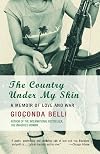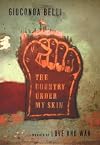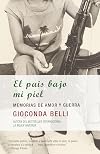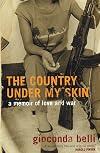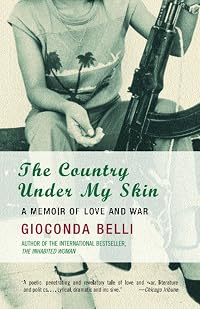
The Country Under My Skin: A Memoir of Love and War
by Gioconda Belli
On This Page
Description
A Nicaraguan writer describes her privileged youth, her growing awareness of Nicaragua's social inequities, her involvement with the Sandinistas, her current life with an American husband, and her devotion to her country.Tags
Recommendations















Member Reviews
This is an intriguing memoir of a woman born into the Nicaraguan upper class, whose experiences and insights cause her to join the Sandinista revolution, work in the Ortega administration, marry an American reporter from NPR and move to Santa Monica, California. What a fascinating life and what multiple perspectives she develops through these experiences.
I have recently read memoirs of other women revolutionaries from Cuba and Russia among others, and have developed more of a knowledge base for making some comparisons. Some of the similarities that I am seeing are struggles with feminist issues, free speech issues, and individual vs. collective rights issues.
Belli is respected for her participation in the revolution early on, as she show more performs such varied actions as writing poetry, publishing magazines and newspapers, and transporting arms, ALL of which put her life at risk. As the revolution succeeds and the Sandinistas come into power, their attempted treatment of women as equals begins to fail. Belli seems to think this is due to the difficulty of ridding themselves of lifelong habits and beliefs about gender differences. It seems that men carry the largest part of the burden of this imbalance of power between genders in their culture, but women are also responsible for falling for some of these old beliefs and giving in to being taken care of. Belli addresses the difficulty of even developing awareness of our socialized gender ideas, never mind trying to overcome them. It is one of the more insightful analyses about gender I have read and Belli shares her own weaknesses in this arena also.
Additionally the common difficulty with addressing individual rights versus the needs of the collective are seen in this memoir. Surely this is an existential issue that most humans experience. Belli's descriptions of her own experience are very touching. Specifically when she moves to a suburban area in the U.S. from Nicaragua city life, she experiences a deep, almost overwhelming loneliness that goes beyond the experience of moving from one country to another. Her description of this alone is worth the read. It is intriguing to read her comparison of conversations at parties in the U.S. with those in Nicaragua, especially with women in the suburbs who live a more sheltered life. Do the topics of conversation bring us closer or keep us at a distance? Of course this experience of Belli's could have been different and she could have made it different with her own search and exploration, but I know many women in the U.S. suburbs who struggle with this issue. With the quiet, empty streets and houses, you have to put in a lot of effort to make things different. Don't know if I would know how to do that in a foreign culture and geography.
Another by-product of imbalance between individualism and collectivism seems to be some loss of creativity. Although I must say that in Cuba, the embargo and other causes of shortages in many areas seem to have resulted in a lot of creativity.
If I understand Belli correctly, as well as my previous reading about the Cuban revolution, Belli seems shocked to find herself thinking that one of the mistakes made by the Ortega administration was too much freedom of speech, specifically freedom of press. She seems to think that Castro was perhaps more effective in his stronger control of the media, believing after the fact that this may be necessary for a new young government initially. I loved that the first thing both the Cuban and Nicaraguan revolutionary governments did was to focus on raising the literacy rates in their countries, because of their belief that an educated population was necessary. This is interesting and timely reading for me as a U.S. citizen watching the effects of Wikileaks, Edward Snowden, and Chelsea Manning. As the news continues to break of illegal U.S. government activity such as illegal war, bombing, imprisonment and torturing, how many U.S. citizens know about it, believe it, understand it, or attempt to learn more? My husband and I went to see the new Wikileaks movie The Fifth Estate on the day it opened. We were the only two people there, in this suburb of the capitol of California. I realize there can be many reasons for that and there are many differing opinions about Assange's actions and whether this movie is factual or not, but was still surprised at the lack of interest. But that's a different review.
I have noticed that other reviewers perceive Belli as narcissistic, grandiose and neglectful of her children. I have to say - nothing new there - studies show these tendencies are found in many if not most leaders and CEOs. Seems one would almost have to have ideas of grandiosity to think you might be able to pull off a revolution. Also, children of leaders often suffer from neglect and danger. I think here about the children of those who fought to free slaves in the U.S. and the children of U.S. civil rights leaders. The decision has to be made about whether your children will benefit most from remaining slaves or suffering the trauma of fighting for freedom. I have often thought about how my parenting might differ if instead of being white in the U.S., I was black. How would I tell my children to respond to being pulled over by police if I were a member of a group who experiences more police brutality. Watch the last scene of the movie Panther and tell me what you teach your children. There seems to me also to be an inordinate amount of sexism found when examining parenting by leaders. I don't often read criticism and accusations of family neglect by male leaders who spend their lives working. Although, I have heard those accusations about Gandhi. Undoubtedly Mandela's children felt abandoned while he was in prison. It is not a decision to be taken lightly or by those of little courage.
One last topic I found interesting was reading about the three factions of the revolutionary party in Nicaragua and the difficulties of dealing with their differences and working together, which was the only way to succeed with a revolution it seems. This is especially interesting reading in the light of current occurrences in Egypt and other countries experiencing revolution today.
So yes - a five star read for me. show less
I have recently read memoirs of other women revolutionaries from Cuba and Russia among others, and have developed more of a knowledge base for making some comparisons. Some of the similarities that I am seeing are struggles with feminist issues, free speech issues, and individual vs. collective rights issues.
Belli is respected for her participation in the revolution early on, as she show more performs such varied actions as writing poetry, publishing magazines and newspapers, and transporting arms, ALL of which put her life at risk. As the revolution succeeds and the Sandinistas come into power, their attempted treatment of women as equals begins to fail. Belli seems to think this is due to the difficulty of ridding themselves of lifelong habits and beliefs about gender differences. It seems that men carry the largest part of the burden of this imbalance of power between genders in their culture, but women are also responsible for falling for some of these old beliefs and giving in to being taken care of. Belli addresses the difficulty of even developing awareness of our socialized gender ideas, never mind trying to overcome them. It is one of the more insightful analyses about gender I have read and Belli shares her own weaknesses in this arena also.
Additionally the common difficulty with addressing individual rights versus the needs of the collective are seen in this memoir. Surely this is an existential issue that most humans experience. Belli's descriptions of her own experience are very touching. Specifically when she moves to a suburban area in the U.S. from Nicaragua city life, she experiences a deep, almost overwhelming loneliness that goes beyond the experience of moving from one country to another. Her description of this alone is worth the read. It is intriguing to read her comparison of conversations at parties in the U.S. with those in Nicaragua, especially with women in the suburbs who live a more sheltered life. Do the topics of conversation bring us closer or keep us at a distance? Of course this experience of Belli's could have been different and she could have made it different with her own search and exploration, but I know many women in the U.S. suburbs who struggle with this issue. With the quiet, empty streets and houses, you have to put in a lot of effort to make things different. Don't know if I would know how to do that in a foreign culture and geography.
Another by-product of imbalance between individualism and collectivism seems to be some loss of creativity. Although I must say that in Cuba, the embargo and other causes of shortages in many areas seem to have resulted in a lot of creativity.
If I understand Belli correctly, as well as my previous reading about the Cuban revolution, Belli seems shocked to find herself thinking that one of the mistakes made by the Ortega administration was too much freedom of speech, specifically freedom of press. She seems to think that Castro was perhaps more effective in his stronger control of the media, believing after the fact that this may be necessary for a new young government initially. I loved that the first thing both the Cuban and Nicaraguan revolutionary governments did was to focus on raising the literacy rates in their countries, because of their belief that an educated population was necessary. This is interesting and timely reading for me as a U.S. citizen watching the effects of Wikileaks, Edward Snowden, and Chelsea Manning. As the news continues to break of illegal U.S. government activity such as illegal war, bombing, imprisonment and torturing, how many U.S. citizens know about it, believe it, understand it, or attempt to learn more? My husband and I went to see the new Wikileaks movie The Fifth Estate on the day it opened. We were the only two people there, in this suburb of the capitol of California. I realize there can be many reasons for that and there are many differing opinions about Assange's actions and whether this movie is factual or not, but was still surprised at the lack of interest. But that's a different review.
I have noticed that other reviewers perceive Belli as narcissistic, grandiose and neglectful of her children. I have to say - nothing new there - studies show these tendencies are found in many if not most leaders and CEOs. Seems one would almost have to have ideas of grandiosity to think you might be able to pull off a revolution. Also, children of leaders often suffer from neglect and danger. I think here about the children of those who fought to free slaves in the U.S. and the children of U.S. civil rights leaders. The decision has to be made about whether your children will benefit most from remaining slaves or suffering the trauma of fighting for freedom. I have often thought about how my parenting might differ if instead of being white in the U.S., I was black. How would I tell my children to respond to being pulled over by police if I were a member of a group who experiences more police brutality. Watch the last scene of the movie Panther and tell me what you teach your children. There seems to me also to be an inordinate amount of sexism found when examining parenting by leaders. I don't often read criticism and accusations of family neglect by male leaders who spend their lives working. Although, I have heard those accusations about Gandhi. Undoubtedly Mandela's children felt abandoned while he was in prison. It is not a decision to be taken lightly or by those of little courage.
One last topic I found interesting was reading about the three factions of the revolutionary party in Nicaragua and the difficulties of dealing with their differences and working together, which was the only way to succeed with a revolution it seems. This is especially interesting reading in the light of current occurrences in Egypt and other countries experiencing revolution today.
So yes - a five star read for me. show less
It happens to all of us. You meet someone - at a party, maybe, or a coffee shop - someone so beautiful you feel slightly blinded, and when you try to talk it just comes out all garbled and stupid. Your hands twist and your heart constricts, like you're trying to curl up into yourself for safety. I feel like that about this book. Rendered stupid and inarticulate, cut to the quick. Her story goes beyond the particulars of one time and place to say something profound about the universal experience of women - women as artists, women as citizens, women as members of families, women alone. I was expecting history, but what I got was revelation.
From the book jacket: An electrifying memoir from the acclaimed Nicaraguan writer … and central figure in the Sandinista revolution. Until her early twenties, Belli inhabited an upper-class cocoon: sheltered from the poverty in Managua in a world of country clubs and debutante balls; educated abroad; early marriage and motherhood. But in 1970, everything changed. Her growing dissatisfaction with domestic life, and a blossoming awareness of the social inequities in Nicaragua, led her to join the Sandinistas, then a burgeoning but still hidden organization. She would be involved with them over the next twenty years at the highest, and often most dangerous levels.
My Reactions
Belli is a good writer and her story-telling is top notch. I show more was fascinated and intrigued, and I learned something about the revolution in Nicaragua. But … I could not put aside my distaste for the way Belli acted. She seemed so immature in the way she jumped from bed to bed, and how she left her children for “the cause” (or – it seemed to me at times – for the Man behind the cause). She seemed in love with “love” or addicted to the high of passionate emotions. I wondered if she had no impulse control at all. And yet … she was a strong woman with steadfast opinions and a willingness to risk all for the good of her country.
In the end I couldn’t reconcile my admiration for her as a writer with my dislike of her as a person. So I’m conflicted, and am taking the middle road with 3 stars. show less
My Reactions
Belli is a good writer and her story-telling is top notch. I show more was fascinated and intrigued, and I learned something about the revolution in Nicaragua. But … I could not put aside my distaste for the way Belli acted. She seemed so immature in the way she jumped from bed to bed, and how she left her children for “the cause” (or – it seemed to me at times – for the Man behind the cause). She seemed in love with “love” or addicted to the high of passionate emotions. I wondered if she had no impulse control at all. And yet … she was a strong woman with steadfast opinions and a willingness to risk all for the good of her country.
In the end I couldn’t reconcile my admiration for her as a writer with my dislike of her as a person. So I’m conflicted, and am taking the middle road with 3 stars. show less
The Country Under My Skin is a courageous autobiography—a deeply personal Memoir of Love and War. The author, Gioconda Belli, is a famous Latin American poet and Sandinista revolutionary.
This memoir can be read on three levels.
For those who love revolutionary and social history, Belli's memoir gives a unique female insider's perspective on the Sandinista Revolution in Nicaragua. Many past reviewers, apparently men, seem to approach this book with this historical dimension squarely in focus. Understandably, some are disappointed by the unusual female perspective. However, as a woman, I was overjoyed to find a dangerous real life story of revolution from a woman's point of view.
I stole across the room to open the door of my daughters' show more room. I stood there for what must have been a long time, watching their peaceful faces as they slept in their orange-colored beds. Melissa with her pacifier and Maryam with her arms wide open. If only I could take them back into my womb to shelter them. I wanted a womb to hide in with them, the warm safety of the amniotic fluid. At least Nicaragua wasn't like Argentina, or Chile, where the dictatorships tortured and killed children along with their parents. I didn't fear for their lives—what I feared was the idea of them being left all alone. Did I have any right, as a mother, to take such risks?...But my fate was sealed. Inside of me there wasn't the slightest impulse to turn back. A threat like this, in fact, had the opposite effect: it fed the rage I felt for the dictatorship, for a system against which we, the citizens, had no form of defense...Then and there, I vowed to myself that I wouldn't allow fear to turn me into a passive observer of all the ills and injustices that surrounded me. (p. 77-78)
For those who love romance, Belli's book is overflowing with deep, heart-felt emotion—passion for country, passion for life, passion for children, passion for family, passion for community, passion for cause, and naturally, passion for the many powerful and famous revoluntionary men in her life. She reveals in heart-wrenching clarity how her lovers possessed her, and failed her, and how she idealized them, and failed them.
So we kissed, gasping with so much want as we had been painfully holding up. But when he tried to go after my shirt, my skirt, I stopped his hands. I buried by head on his chest, hushing him, telling him it would be better if we tried to stay put. Let's not go any further, I said. You better talk to me, talk to me about what you've been doing. My heart was beating fast and hard, and a fire from hell was burning my cheeks. (p. 200)
For those who love to analyze the inner psychological workings of a human life, Belli's book is an intensely revealing coming of age saga—here, Belli's purpose is clearly not to glorify, but rather, through the act of writing, to discover and comes to terms with the healthy, whole, self-assured woman she is today. For this reader, it became very clear that Belli is one of those glorious persons of rare artistic temperament who is Touched with Fire (see Kay Redfield Jamison's book by the same title). As I read this book, I ached for Belli's pain, and felt my heart soar with her joy and courage.
To me, poetry was a gift. It was water flowing from a spring within me, that channeled onto the page, effortlessly. I also thought of it as energy produced by an unseen organ in my body--a sensory antenna, perhaps, that would capture aromas, feelings, sensations, and every so often would release a flash of illunimation. If I had paper, pen, and silence at hand when the first verse broke into my consciousness, that thunderbolt would ignite a poem. (p. 182)
I wrote. I wrote poems of love and songs of desperation. I became so depressed that some days I couldn't get out of bed. (p. 290)
I didn't know how to be alone. I had exposed myself to bullets, death; I had smuggled weapons, given speeches, received awards, had children—so many things, but a life without men, without love, was alien to me, I felt I had no existence unless a man's voice said my name and a man's love rendered my life worthwile. It was not a question of denying men a role in my life, but I was determined to stop being emotionally dependent on them. I forced myself to examine my vulnerabilities: I had filled a raw emotional void, tried to make up for affection I had lacked, by asserting myself and my femininity mostly though my sexuality and my powers of seduction, ignoring and underestimating my other gifts. I thought nothing of my tenacity, or my optimism...I also understood that I loved my children, but only as reflections, only in two dimensions, as if they were just simple, sweet creatures, and I could not see that below the surface they too had fears, complexities. (p. 290)
It was so easy to love this book. The Country Under My Skin is well-crafted, often poetical, and reads better than most novels. When I finished it, I felt a deep emotional bond with Belli. What a courageous and beautiful soul she is! show less
This memoir can be read on three levels.
For those who love revolutionary and social history, Belli's memoir gives a unique female insider's perspective on the Sandinista Revolution in Nicaragua. Many past reviewers, apparently men, seem to approach this book with this historical dimension squarely in focus. Understandably, some are disappointed by the unusual female perspective. However, as a woman, I was overjoyed to find a dangerous real life story of revolution from a woman's point of view.
I stole across the room to open the door of my daughters' show more room. I stood there for what must have been a long time, watching their peaceful faces as they slept in their orange-colored beds. Melissa with her pacifier and Maryam with her arms wide open. If only I could take them back into my womb to shelter them. I wanted a womb to hide in with them, the warm safety of the amniotic fluid. At least Nicaragua wasn't like Argentina, or Chile, where the dictatorships tortured and killed children along with their parents. I didn't fear for their lives—what I feared was the idea of them being left all alone. Did I have any right, as a mother, to take such risks?...But my fate was sealed. Inside of me there wasn't the slightest impulse to turn back. A threat like this, in fact, had the opposite effect: it fed the rage I felt for the dictatorship, for a system against which we, the citizens, had no form of defense...Then and there, I vowed to myself that I wouldn't allow fear to turn me into a passive observer of all the ills and injustices that surrounded me. (p. 77-78)
For those who love romance, Belli's book is overflowing with deep, heart-felt emotion—passion for country, passion for life, passion for children, passion for family, passion for community, passion for cause, and naturally, passion for the many powerful and famous revoluntionary men in her life. She reveals in heart-wrenching clarity how her lovers possessed her, and failed her, and how she idealized them, and failed them.
So we kissed, gasping with so much want as we had been painfully holding up. But when he tried to go after my shirt, my skirt, I stopped his hands. I buried by head on his chest, hushing him, telling him it would be better if we tried to stay put. Let's not go any further, I said. You better talk to me, talk to me about what you've been doing. My heart was beating fast and hard, and a fire from hell was burning my cheeks. (p. 200)
For those who love to analyze the inner psychological workings of a human life, Belli's book is an intensely revealing coming of age saga—here, Belli's purpose is clearly not to glorify, but rather, through the act of writing, to discover and comes to terms with the healthy, whole, self-assured woman she is today. For this reader, it became very clear that Belli is one of those glorious persons of rare artistic temperament who is Touched with Fire (see Kay Redfield Jamison's book by the same title). As I read this book, I ached for Belli's pain, and felt my heart soar with her joy and courage.
To me, poetry was a gift. It was water flowing from a spring within me, that channeled onto the page, effortlessly. I also thought of it as energy produced by an unseen organ in my body--a sensory antenna, perhaps, that would capture aromas, feelings, sensations, and every so often would release a flash of illunimation. If I had paper, pen, and silence at hand when the first verse broke into my consciousness, that thunderbolt would ignite a poem. (p. 182)
I wrote. I wrote poems of love and songs of desperation. I became so depressed that some days I couldn't get out of bed. (p. 290)
I didn't know how to be alone. I had exposed myself to bullets, death; I had smuggled weapons, given speeches, received awards, had children—so many things, but a life without men, without love, was alien to me, I felt I had no existence unless a man's voice said my name and a man's love rendered my life worthwile. It was not a question of denying men a role in my life, but I was determined to stop being emotionally dependent on them. I forced myself to examine my vulnerabilities: I had filled a raw emotional void, tried to make up for affection I had lacked, by asserting myself and my femininity mostly though my sexuality and my powers of seduction, ignoring and underestimating my other gifts. I thought nothing of my tenacity, or my optimism...I also understood that I loved my children, but only as reflections, only in two dimensions, as if they were just simple, sweet creatures, and I could not see that below the surface they too had fears, complexities. (p. 290)
It was so easy to love this book. The Country Under My Skin is well-crafted, often poetical, and reads better than most novels. When I finished it, I felt a deep emotional bond with Belli. What a courageous and beautiful soul she is! show less
"What was it that enabled people to give their lives for an idea, for the freedom of others?",, 2 June 2015
This review is from: The Country Under My Skin: A Memoir of Love and War (Paperback)
The Sandinistas and the Contras were just words to me, and I wondered whether this autobiography of a woman who became a Nicaraguan revolutionary would be readable. Well, it certainly is: the author's account of her fascinating life - from privileged daughter of a well-to-do family to an increasing awareness of the horrors of the Somoza regime. As she becomes a member of the illegal Sandinistas, she tells of the passionate commitment to the cause, that ended up taking her away from her children for long spells. Of the friendships and love affairs show more with her colleagues, and the tragedies of the endless deaths and tortures at the hands of the regime.
As the Sandinistas finally gain victory, Belli writes movingly:
"Overcome with joy, we fell into one another's arms...I don't know who began crying first...but suddenly the tiny apartment was filled with wails and sobs. Alfredo and I looked in each other's eyes, remembering the dinners in Mazatlan with Marcos.I saw Ricardo in the inky twilight at the Poet's house, Pin and his thick eyeglasses, Arnoldo's smile as he left my house, Camilo talking to me about Woodstock..."
But life in Nicaragua remains difficult as the USA supports the expelled Somoza regime, and the Sandinista leaders begin arguing among themselves and losing their revolutionary ideals.
Very interesting and highly readable work. show less
This review is from: The Country Under My Skin: A Memoir of Love and War (Paperback)
The Sandinistas and the Contras were just words to me, and I wondered whether this autobiography of a woman who became a Nicaraguan revolutionary would be readable. Well, it certainly is: the author's account of her fascinating life - from privileged daughter of a well-to-do family to an increasing awareness of the horrors of the Somoza regime. As she becomes a member of the illegal Sandinistas, she tells of the passionate commitment to the cause, that ended up taking her away from her children for long spells. Of the friendships and love affairs show more with her colleagues, and the tragedies of the endless deaths and tortures at the hands of the regime.
As the Sandinistas finally gain victory, Belli writes movingly:
"Overcome with joy, we fell into one another's arms...I don't know who began crying first...but suddenly the tiny apartment was filled with wails and sobs. Alfredo and I looked in each other's eyes, remembering the dinners in Mazatlan with Marcos.I saw Ricardo in the inky twilight at the Poet's house, Pin and his thick eyeglasses, Arnoldo's smile as he left my house, Camilo talking to me about Woodstock..."
But life in Nicaragua remains difficult as the USA supports the expelled Somoza regime, and the Sandinista leaders begin arguing among themselves and losing their revolutionary ideals.
Very interesting and highly readable work. show less
Ik hou eigenlijk echt niet van biografieën, en ook deze van Belli kon me niet echt bekoren. Toch is haar leven als moeder, vrijheidsstrijdster en dichter meer dan een biografie waard, dus daar gaat het niet om.
Ook is het ontzettend duidelijk dat Belli over een fantastisch schrijfvermogen beschikt. Zelfs in een droge opsomming van gebeurtenissen, namen en data, weet ze geweldige zinsneden te plaatsen en de lezer ervan te overtuigen hoe prachtig Nicaragua moet zijn (de vertaler daarentegen slaagt erin om op één pagina twee dt-fouten te maken en meer...).
Het is een heel open en eerlijk verhaal van een sterke feministe die in de meest moeilijke omstandigheden toch altijd haar overtuigingen en dromen trouw is gebleven. Inspirerend dus, show more maar niet zo boeiend voor mij door de biografie-vorm. show less
Ook is het ontzettend duidelijk dat Belli over een fantastisch schrijfvermogen beschikt. Zelfs in een droge opsomming van gebeurtenissen, namen en data, weet ze geweldige zinsneden te plaatsen en de lezer ervan te overtuigen hoe prachtig Nicaragua moet zijn (de vertaler daarentegen slaagt erin om op één pagina twee dt-fouten te maken en meer...).
Het is een heel open en eerlijk verhaal van een sterke feministe die in de meest moeilijke omstandigheden toch altijd haar overtuigingen en dromen trouw is gebleven. Inspirerend dus, show more maar niet zo boeiend voor mij door de biografie-vorm. show less
I am going to try to be as balanced as possible in my review and restrain myself from making any criticism that is personal but it might be difficult.
I shall start with the positives of this book. Set in Nicaragua in Central America it chronicles the life of Gioconda Belli. I have never read anything about Nicaragua which is a country of nearly 6 million people, ruled by the Somoza family for around half a century. Nicaragua was and still is a poor country. The Somoza family were put in power with North American support and exploited their power. A group called the Sandinista Liberation Front was initially based upon the fight against American occupation lead by Augusto Sandino in the 1930s. The FLN deposed Somoza in 1979 and retained show more power until 1990.
Gioconda Belli was born in the capital city, Managua on the shores of Lake Managua to parents who she states were upper class, privileged, bourgeoise. Gioconda grew up in this privileged setting later noticing the poverty all around her. Gioconda married young, then decided she didn't love her husband, she became a journalist, had an affair, joined the Sandinistas, had another affair, but stayed with her husband and had another child. Then Gioconda split from her husband, divorced, had another affair with another man and havind pretty much simultaneously married again and had a son. About a year later, she met someone else, fell hopelessly in love, had some therapy and finally fell in love again and getting married. You get the jist. Gioconda was unable to control her need for attention or her emotions or her body.
Gioconda did some work for the Sandinistas, driving men around Managua, letting them sleep in her home, going on long trips and leaving her children with their grandparents or family friends. gioconda eventually went into exile in Costa Rica.
The book is described by several reviewers as "an adventure novel", "compelling" and by Salman Rushdie as "unforgettable".
I just don't get it. I agree that the book is readable but unfortunately the writer is irritating, self absorbed, vindictive....... I am holding back! I want to give examples to demonstrate this... When introducing the wife of a guerrilla called Dona Maria she says... "I felt her looking at me with hostility, as if she resented my long hair and my youth, aspects of herself that she had shed so many years before".
It is unclear whether Gioconda Belli is aware that she has drawn herself in such an unsympathetic light. She rationalises her many affairs, for example stating that her affair with Modesto was a gift to a man who would not be alive for long!
There are several times I wanted to throw this book out of the window, I was so frustrated on behalf of womankind for this writer's total lack of self respect, and of care for her children. I hope that Ms. Belli is now able to reflect and perhaps this book was some sort of catharsis. Perhaps I am being unfair, other reviewers on LT have called her courageous and love the journey that she goes on, and empathise greatly. Everyone makes mistakes, that is what makes us human, I do feel I am being a bit too tough. Anyhow, not recommended, one star. show less
I shall start with the positives of this book. Set in Nicaragua in Central America it chronicles the life of Gioconda Belli. I have never read anything about Nicaragua which is a country of nearly 6 million people, ruled by the Somoza family for around half a century. Nicaragua was and still is a poor country. The Somoza family were put in power with North American support and exploited their power. A group called the Sandinista Liberation Front was initially based upon the fight against American occupation lead by Augusto Sandino in the 1930s. The FLN deposed Somoza in 1979 and retained show more power until 1990.
Gioconda Belli was born in the capital city, Managua on the shores of Lake Managua to parents who she states were upper class, privileged, bourgeoise. Gioconda grew up in this privileged setting later noticing the poverty all around her. Gioconda married young, then decided she didn't love her husband, she became a journalist, had an affair, joined the Sandinistas, had another affair, but stayed with her husband and had another child. Then Gioconda split from her husband, divorced, had another affair with another man and havind pretty much simultaneously married again and had a son. About a year later, she met someone else, fell hopelessly in love, had some therapy and finally fell in love again and getting married. You get the jist. Gioconda was unable to control her need for attention or her emotions or her body.
Gioconda did some work for the Sandinistas, driving men around Managua, letting them sleep in her home, going on long trips and leaving her children with their grandparents or family friends. gioconda eventually went into exile in Costa Rica.
The book is described by several reviewers as "an adventure novel", "compelling" and by Salman Rushdie as "unforgettable".
I just don't get it. I agree that the book is readable but unfortunately the writer is irritating, self absorbed, vindictive....... I am holding back! I want to give examples to demonstrate this... When introducing the wife of a guerrilla called Dona Maria she says... "I felt her looking at me with hostility, as if she resented my long hair and my youth, aspects of herself that she had shed so many years before".
It is unclear whether Gioconda Belli is aware that she has drawn herself in such an unsympathetic light. She rationalises her many affairs, for example stating that her affair with Modesto was a gift to a man who would not be alive for long!
There are several times I wanted to throw this book out of the window, I was so frustrated on behalf of womankind for this writer's total lack of self respect, and of care for her children. I hope that Ms. Belli is now able to reflect and perhaps this book was some sort of catharsis. Perhaps I am being unfair, other reviewers on LT have called her courageous and love the journey that she goes on, and empathise greatly. Everyone makes mistakes, that is what makes us human, I do feel I am being a bit too tough. Anyhow, not recommended, one star. show less
Members
- Recently Added By
Author Information

55+ Works 2,196 Members
Some Editions
Awards and Honors
Common Knowledge
- Canonical title*
- Il paese sotto la pelle: memorie di amore e guerra
- Original title
- El País Bajo Mi Piel
- Alternate titles
- El País Bajo Mi Piel: Memorias de amor y guerra
- Original publication date
- 2002
- People/Characters
- Bayardo Arce; Tomas Borge; Fidel Castro; Pedro Joaquin Chamorro; Ernesto Cardenal; Ruben Dario (show all 13); Ernesto ''Che'' Guevara; Bianca Jagger; Daniel Ortega; Rosario Murillo; Roger Perez de la Rocha; Sergio Ramirez; Dora Maria Tellez
- Important places
- Nicaragua
- Epigraph
- We fill the craters left by the bombs/ And once again we sing/ And once again we sow/ Because life never surrenders-------------anonymous Vietnamese poem
- Dedication
- this book is dedicated to Chepita, Alicia, Eda, Anita, Cristina, Maria Elsa, Nidia, Petrona; and most especially for Socorro Ruiz, Beatriz Mancilla, Dolores Ortega and all the women who helped me on the home front, and withou... (show all)t whom neither this book nor the life I have led would have been possible. For my children, Maryam, Melissa, Camilo and Adriana. For Charlie.
- First words
- With each shot I fired my body shuddered, the impact reverberating through every last joint, leaving an unbearable ringing in my head, sharp and disturbing.
- Last words
- (Click to show. Warning: May contain spoilers.)Somewhere within my soul she had her place; a love that was waiting to bloom years even before we actually found each other.
- Original language
- Spanish
*Some information comes from Common Knowledge in other languages. Click "Edit" for more information.
Classifications
- Genre
- Biography & Memoir
- DDC/MDS
- 868.6409 — Literature & rhetoric Spanish Literature Spanish miscellaneous writings 20th Century 1945-2000
- LCC
- PQ7519.2 .B44 .Z47413 — Language and Literature French, Italian, Spanish and Portuguese literatures Spanish literature Provincial, local, colonial, etc. Spanish America
- BISAC
Statistics
- Members
- 388
- Popularity
- 80,912
- Reviews
- 21
- Rating
- (4.05)
- Languages
- 7 — Dutch, English, German, Italian, Portuguese, Spanish, Turkmen
- Media
- Paper, Ebook
- ISBNs
- 23
- ASINs
- 3