On This Page
Description
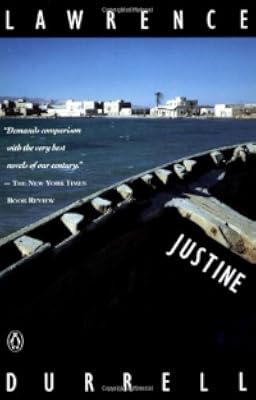
This "very remarkable novel"—first in the acclaimed Alexandria Quartet—tells a haunting story of love, desire, and deception in the Egyptian city pre-WWII (New York Herald Tribune Book Review).Set in Alexandria, Egypt, in the years between World Wars I and II, Justine is the first installment in the distinguished Alexandria Quartet. Here Lawrence Durrell crafts an exquisite and challenging modern novel that explores tragic love and the fluidity of recollection. Employing a fluctuating show more narrative and poetic prose, Durrell recounts his unnamed narrator's all-encompassing romance with the intoxicating Justine. The result is a matchless work that confronts all we understand and believe about sexual desire, identity, place, and the certainty of time. This ebook contains a new introduction by Jan Morris. show less
Tags
Recommendations

















Member Reviews
I first read this novel, along with the rest of the Quartet, back in the 90's. I remember being enthralled by the narrative, but after more than thirty years, I didn't remember many of the details, just that it was about an adulterous affair and set in Alexandria, Egypt.
In this second reading, I was as entranced by the sense of time and place as I was the first time. The city of Alexandria wafts off the pages with desert heat and ancient, crumbling stones. The city is a character as much as the humans that people the narrative, shaping and being shaped by the events that occur within and without. In a way, the character of Justine is the living avatar of Alexandria, a labyrinth of twisting streets, blind alleys, and past tragedies; an show more extended metaphor, beautifully rendered. But where the younger me saw the exotic romance and passion, the older me sees a story of objectification and obsession, the 'othering' of the woman who is the focus of the narrative, which I find uncomfortable, even cringy in places. The book abounds with racial overtones, and most of the main characters are white, expatriates in Alexandria.
Justine's Jewishness is constantly mentioned, not in terms of religion, but in terms of ethnicity. None of the men who are her lovers see her as a person. To them she is a goddess, a sex object, something to be possessed and manipulated and explored, if not exploited. The unnamed narrator doesn't ever ask himself what he brings to the table, what it is that Justine sees in him. He never sees her as a person, only as a puzzle to be solved. He never counts the consequences of his actions, though he very likely destroyed several lives, including his own.
I don't know what Durrell's purpose was, but if it was to show these two levels of awareness, he succeeded. As a writer, Durrell is the opposite of Hemingway. He paints every thought, every emotion, sculpting and building the story like an Impressionist painter builds a painting. He focuses on emotional nuance and depth, often skipping over important events that are only alluded to in metaphor and memory.
The story pacing is languid and serpentine, as is the prose. The narrative is a jumbled mosaic of thoughts, memories, and introspection. This isn't a book to be sped through, but rather one to be savored and thought about.
Aspects of this novel include: first person POV, single narrator, fractured structure with flashbacks and flashforward, lots of internal monologue. Rich and textured sense of place. show less
In this second reading, I was as entranced by the sense of time and place as I was the first time. The city of Alexandria wafts off the pages with desert heat and ancient, crumbling stones. The city is a character as much as the humans that people the narrative, shaping and being shaped by the events that occur within and without. In a way, the character of Justine is the living avatar of Alexandria, a labyrinth of twisting streets, blind alleys, and past tragedies; an show more extended metaphor, beautifully rendered. But where the younger me saw the exotic romance and passion, the older me sees a story of objectification and obsession, the 'othering' of the woman who is the focus of the narrative, which I find uncomfortable, even cringy in places. The book abounds with racial overtones, and most of the main characters are white, expatriates in Alexandria.
Justine's Jewishness is constantly mentioned, not in terms of religion, but in terms of ethnicity. None of the men who are her lovers see her as a person. To them she is a goddess, a sex object, something to be possessed and manipulated and explored, if not exploited. The unnamed narrator doesn't ever ask himself what he brings to the table, what it is that Justine sees in him. He never sees her as a person, only as a puzzle to be solved. He never counts the consequences of his actions, though he very likely destroyed several lives, including his own.
I don't know what Durrell's purpose was, but if it was to show these two levels of awareness, he succeeded. As a writer, Durrell is the opposite of Hemingway. He paints every thought, every emotion, sculpting and building the story like an Impressionist painter builds a painting. He focuses on emotional nuance and depth, often skipping over important events that are only alluded to in metaphor and memory.
The story pacing is languid and serpentine, as is the prose. The narrative is a jumbled mosaic of thoughts, memories, and introspection. This isn't a book to be sped through, but rather one to be savored and thought about.
Aspects of this novel include: first person POV, single narrator, fractured structure with flashbacks and flashforward, lots of internal monologue. Rich and textured sense of place. show less
I love this book, and when I was assigned to teach a class on The Modern Novel (major novels after 1900), I knew I wanted to teach it. Many of my students sort of bounced off it: it's a difficult book to follow, and it was late enough in the semester that I don't think all of my students were being particularly careful readers. (The class average on the four-question quiz was 39%, even when I scored it out of three!) We ended up having to spend one of our four class sessions just discussing what was going on in it. Yet I don't regret my decision to teach it for an instant. Indeed, I wish I could teach a whole course on The Alexandria Quartet. Probably you'd want to read Justine twice over to make it really work.
One of the reasons I love show more it is that, like many postmodern novels, Justine is about the act of reading itself. At one point our anonymous first-person narrator reads a book that was "in the first person singular, and was a diary of Alexandrian life as seen by a foreigner in the middle thirties," a day-to-day account of life in Alexandria "accurate and penetrating" (52). This description could, of course, be applied to Justine itself, and he seeks answers in its pages. Reading art gives us insight into what we have experienced.
But when we try to render events into comprehensible narratives, we reduce their power. The character Clea argues, "It is our disease […] to want to contain everything within the frame of reference of a psychology or a philosophy" (65). Despite being told this, the narrator still attempts to do it. "[E]verything is susceptible of more than one explanation" (65), yet the narrator is constantly seeking to find the answer, the explanation that will finally allow him to comprehend Justine. He's doomed to failure, of course, as is everyone else who has tried to figure out Justine. If you stick to science, you'll get no further than the fact that "man […] is just a passage for liquids and solids, a pipe of flesh" (81): true but useless.
Justine presents hope for the novel as a project, however. Our narrator has written Justine, and he has invented a new literary form in doing so. There are two times he sums up his approach the most effectively I think. On one occasion, he does it negatively, explaining why all his previous novels had not succeeded: "In art I had failed (it suddenly occurred to me at that moment) because I did not believe in the discrete human personality. ('Are people', writes Pursewarden, 'continuously themselves, or simply over and over again so fast they give the illusion of continuous features—the temporal flicker of old silent film?') I lacked a belief in the true authenticity of people in order to successfully portray them" (180). Ever since I first read the book, I've loved that parenthetical question by Pursewarden. It is why Justine is more a stream of incidents than a narrative: because that is all we are.
The narrator solves his problem as much as he can by devising a new way of writing, one he casually (as with Pursewarden's observation above) just drops into a parenthetical: "What I most need to do is to record experiences, not in the order in which they took place—for that is history—but in the order in which they first became significant to me" (102). That is Justine, and that is one of the reasons it is beautiful.
That said, the form of the novel, even the postmodern novel still generates explanations. Hence the reason for the book's three sequels: each in turn reveals that the books before it were not the explanation of the events they covered. "[E]verything is susceptible of more than one explanation," after all. Durrell pushes at the limits of novelistic form, and manages to create a beautiful example of one all at once.
Also, given the title of the course, I had to appreciate this line: "The modern novel! The grumus merdae [specks of excrement] left behind by criminals upon the scene of their misdeeds" (124). show less
One of the reasons I love show more it is that, like many postmodern novels, Justine is about the act of reading itself. At one point our anonymous first-person narrator reads a book that was "in the first person singular, and was a diary of Alexandrian life as seen by a foreigner in the middle thirties," a day-to-day account of life in Alexandria "accurate and penetrating" (52). This description could, of course, be applied to Justine itself, and he seeks answers in its pages. Reading art gives us insight into what we have experienced.
But when we try to render events into comprehensible narratives, we reduce their power. The character Clea argues, "It is our disease […] to want to contain everything within the frame of reference of a psychology or a philosophy" (65). Despite being told this, the narrator still attempts to do it. "[E]verything is susceptible of more than one explanation" (65), yet the narrator is constantly seeking to find the answer, the explanation that will finally allow him to comprehend Justine. He's doomed to failure, of course, as is everyone else who has tried to figure out Justine. If you stick to science, you'll get no further than the fact that "man […] is just a passage for liquids and solids, a pipe of flesh" (81): true but useless.
Justine presents hope for the novel as a project, however. Our narrator has written Justine, and he has invented a new literary form in doing so. There are two times he sums up his approach the most effectively I think. On one occasion, he does it negatively, explaining why all his previous novels had not succeeded: "In art I had failed (it suddenly occurred to me at that moment) because I did not believe in the discrete human personality. ('Are people', writes Pursewarden, 'continuously themselves, or simply over and over again so fast they give the illusion of continuous features—the temporal flicker of old silent film?') I lacked a belief in the true authenticity of people in order to successfully portray them" (180). Ever since I first read the book, I've loved that parenthetical question by Pursewarden. It is why Justine is more a stream of incidents than a narrative: because that is all we are.
The narrator solves his problem as much as he can by devising a new way of writing, one he casually (as with Pursewarden's observation above) just drops into a parenthetical: "What I most need to do is to record experiences, not in the order in which they took place—for that is history—but in the order in which they first became significant to me" (102). That is Justine, and that is one of the reasons it is beautiful.
That said, the form of the novel, even the postmodern novel still generates explanations. Hence the reason for the book's three sequels: each in turn reveals that the books before it were not the explanation of the events they covered. "[E]verything is susceptible of more than one explanation," after all. Durrell pushes at the limits of novelistic form, and manages to create a beautiful example of one all at once.
Also, given the title of the course, I had to appreciate this line: "The modern novel! The grumus merdae [specks of excrement] left behind by criminals upon the scene of their misdeeds" (124). show less
Justine, the first volume in The Alexandria Quartet, was published in 1957 and Durrell (1912-1990) intended the four volumes to be read as one, as a “time continuum,” with Justine, Balthazar and Mountolive as interrelated siblings and Clea standing alone as a true sequel. In other words, he based his Quartet on dimensions in physics and this is therefore experimental fiction.
Be not alarmed, for it is quite readable. The key to enjoying the work is simply to float with it – relax, don’t struggle and enjoy the prose poetry while waiting for Durrell’s coastguard to rescue you.
The novel begins intriguingly with the unnamed narrator living on an unnamed island with a child he identifies as that of Melissa, a former lover now show more deceased. This setup remains murky as he begins to conjure the images of Alexandria and the expatriate circle to which he belonged, a circle so small that he knew each of its members by sight. The scenes are out of order and shift frequently, characters are referenced casually and only “introduced” much later, the narrator estimates time only in the vaguest sense (phrases such as "once, much later, he told me.…" and "I knew them by sight for many months before we actually met…" are frequently used) and immediate investment is almost impossible. There is a choking sense of austerity to the work, it appears strait-laced, locked in by its style, the characters mere figurines and Durrell an emotionless author. It is important not to be frustrated by this. Where most novels begin in a concrete way and build from there, reading Justine is like watching a genie coalesce out of smoke when you feared it would instead dissipate into thin air.
The cast consists of cosmopolitan, over-educated types, most of whom appear clinically depressed, disillusioned with the world and deluded about themselves, grappling with the question of God (the expatriates all study the Cabbala under Balthazar’s tutelage) and having affairs. They are a strange crew, frustrating, even revolting at times, yet pitiable and sympathetic. They are all utterly real, bearing such weight and stamp as if they were characters in Durrell’s own personal mythology. There’s the narrator, an apathetic man and a failure at human relations. There’s Justine, who is commented on by choral work from the rest of the cast and from the pages of her former husband Arnauti, each one attempting to define her character ("Justine surrounded by her philosophers is like an invalid surrounded by medicines – empty capsules, bottles and syringes") while she, in her own rabid need to justify and explain herself, comes up with many contradictory and individually pat phrases to excuse her conduct. A man less impressed than her lovers sums her up more sharply: “Justine and her city are alike in that both have a strong flavour without having any real character.”
Melissa operates as a reverse-image of Justine. Justine, strong and implacable; Melissa, delicate and charitable. Much of the novel’s pathos derives from the Melissa subplot as she is treated shabbily by everyone and doesn’t even seem to realise it; going, moth-like, to flaming ruin. The many subplots included knit together in the most extraordinary ways, as even the minor character of Cohen the furrier, who only gets two scenes, is in some way illuminating; a parallel to the narrator in his treatment of Melissa and to her in his eventual fate.
There are also Nessim, devoted husband of Justine, whose awareness of her infidelity sends him off the deep end in a restrained and therefore highly disturbing manner; Pursewarden, celebrated author of a series of books entitled God is a Humourist; Balthazar, philosophic teacher of the Cabal; Clea, artist and celibate; Scobie, comic relief; Mnemjian, hunchbacked violet-eyed dwarf barber; Pombal, self-satisfied Frenchman; Capodistria, "more of a goblin than a man…."
It’s a fascinating cast of characters and with them are intertwining subplots, any of which could have framed an entire novel in another writer’s hands. Durrell renders them all in a way that – while not negating their impact – does keep things from ever seeming melodramatic. Another writer would have crafted a soap opera out of these myriad characters and events. Durrell crafts a meditation.
However, it does amuse. The narrator ends up recruited onto the Secret Service and in documenting his new job the narrative veers into Our Man in Havana territory, though the absurdity is far less blatant. "Another interesting aspect of the work was that one had the power to order raids to be made on the house of one’s friends. I enjoyed very much having Pombal’s apartment raided. The poor fellow had a calamitous habit of bringing official files home to work on in the evening. We captured a whole set of papers…. Pombal was badly shaken by this raid and went about looking over his shoulder for nearly a month afterwards, convinced that he was being shadowed…. He was still waiting for his cross and his transfer and was very much afraid that the loss of the files would prejudice both, but as we had thoughtfully left him the classification-covers he was able to return them to their series with a minute to say that they had been burnt ‘according to instructions.’" So the novel is thankfully not without its wry humour.
I have as yet made little mention of Durrell’s use of language because believe you me, there is a whole lot more to the novel than that, and I feel the prose is slightly over-emphasised, to the point that I expected little beyond its style to impress me. I am however, quite certain that Justine is one of the pinnacles of the English language, describing in the most heavenly style the beauty of Alexandria…but also a nightmarish walk through the city’s red light district, emotional despair, a camel butchered in the streets, men dying alone and child prostitutes. The prose only rarely tips its hand, staying consistent throughout and even, miraculously, improving as the novel progresses, while the story it tells is a melancholy one; its lost, washed-up characters centering every scene in a landscape of decay. It is amongst the most beautiful and haunting works of fiction I have ever read.
A sample paragraph: "Melissa was afraid now, for she knew that offence given to the great could, by the terms of the city, be punished swiftly and dreadfully. She was aghast at what she had done and fought back a desire to cry as she picked off her eyelashes with trembling hands. There was no way of refusing the invitation. She dressed in her shabby best and carrying her fatigue like a heavy pack followed Selim to the great car which stood in deep shadow. She was helped in beside Nessim. They moved off slowly into the dense crepuscular evening of an Alexandria which, in her panic, she no longer recognised. They scouted a sea turned to sapphire and turned inland, folding up the slums, towards Mareotis and the bituminous slag-heaps of Mex where the pressure of the headlights now peeled off layer after layer of the darkness, bringing up small intimate scenes of Egyptian life – a drunkard singing, a biblical figure on a mule with two children escaping from Herod, a porter sorting sacks – swiftly, like someone dealing cards. She followed these familiar sights with emotion, for behind lay the desert, its emptiness echoing like a seashell. All this time her companion had not spoken, and she had not dared to risk so much as a glance in his direction."
I believe, however, that Durrell deserves accolades not only for the accomplishment of his prose but for his ability to take a concept out of physics and craft a truly human, moving and readable work of experimental fiction out of it. His timescape allows characters to live even in the very instant he mentions that they’ve died. "Unfortunately, though I have searched my mind, I can recall little of our actual conversation, though I have often tried to do so. The fact that this was our last meeting has invested it, in retrospect, with a significance which surely it cannot have possessed. Nor, for the purpose of this writing, has he ceased to exist; he has simply stepped into the quicksilver of a mirror as we all must – to leave our illnesses, or evil acts, the hornets’ nest of our desires, still operative for good or evil in the real world – which is the memory of our friends."
Another thing: Upon completing Justine, returning to the first pages that caused so much frustration reveals their enormous import and resonance. So really, the only flaws in the work are an occasional over-written paragraph and occasional pseudo-intellectual psycho-babble. Luckily there’s really not too much of that sort of thing.
There are also gentle metafictional touches, first of all in Arnauti’s memoir when he writes “I dream of a book powerful enough to contain the elements of her – but it is not the sort of book to which we are accustomed these days. For example, on the first page a synopsis of the plot in a few lines. Thus we might dispense with the narrative articulation. What follows would be drama freed from the burden of form. I would set my own book free to dream.” Durrell never goes quite so far, erring at least somewhat on the side of suspense and thus leaving grave hints of death and betrayal to join the story at the appropriate juncture; which explained, the details knit together at once as if there all along, as with the simple A-Z timescape abolished, in a way they were. And for the care he must have taken to craft that style of plotting, I believe Durrell was a genius. Also, that among intelligent readers only those who hate anything that smacks of pretension will dislike this book.
Another metafictional touch comes with the Workpoints at the end of Justine. My final note shall be on these endpapers. The Workpoints should not be skipped; they are the equivalent of deleted scenes, snippets he never incorporated into the work but which nevertheless illuminate. He published them to prove the workability of his timescape.
He also utilized epigraphs. A good epigraph is a joy forever – well, not quite. But a creative epigraph leaves you glancing at it occasionally, trying to match it to the book’s content like a coded message. Less successful epigraphs require only a glance at the cover copy to know how they relate to the work and are never spared another thought. Here, Freud’s statement that there are four people in any love affair and De Sade’s argument that crime and suicide are differing but equally good options take some wrestling with to properly place in the context of Justine (I still haven’t quite got the latter one figured out, honestly).
This review is already well over 1500 words so I will stop here and continue commenting upon Durrell’s work on completion of Balthazar. Stay tuned.
http://pseudointellectualreviews.wordpress.com/2012/08/27/justine-lawrence-durre... show less
Be not alarmed, for it is quite readable. The key to enjoying the work is simply to float with it – relax, don’t struggle and enjoy the prose poetry while waiting for Durrell’s coastguard to rescue you.
The novel begins intriguingly with the unnamed narrator living on an unnamed island with a child he identifies as that of Melissa, a former lover now show more deceased. This setup remains murky as he begins to conjure the images of Alexandria and the expatriate circle to which he belonged, a circle so small that he knew each of its members by sight. The scenes are out of order and shift frequently, characters are referenced casually and only “introduced” much later, the narrator estimates time only in the vaguest sense (phrases such as "once, much later, he told me.…" and "I knew them by sight for many months before we actually met…" are frequently used) and immediate investment is almost impossible. There is a choking sense of austerity to the work, it appears strait-laced, locked in by its style, the characters mere figurines and Durrell an emotionless author. It is important not to be frustrated by this. Where most novels begin in a concrete way and build from there, reading Justine is like watching a genie coalesce out of smoke when you feared it would instead dissipate into thin air.
The cast consists of cosmopolitan, over-educated types, most of whom appear clinically depressed, disillusioned with the world and deluded about themselves, grappling with the question of God (the expatriates all study the Cabbala under Balthazar’s tutelage) and having affairs. They are a strange crew, frustrating, even revolting at times, yet pitiable and sympathetic. They are all utterly real, bearing such weight and stamp as if they were characters in Durrell’s own personal mythology. There’s the narrator, an apathetic man and a failure at human relations. There’s Justine, who is commented on by choral work from the rest of the cast and from the pages of her former husband Arnauti, each one attempting to define her character ("Justine surrounded by her philosophers is like an invalid surrounded by medicines – empty capsules, bottles and syringes") while she, in her own rabid need to justify and explain herself, comes up with many contradictory and individually pat phrases to excuse her conduct. A man less impressed than her lovers sums her up more sharply: “Justine and her city are alike in that both have a strong flavour without having any real character.”
Melissa operates as a reverse-image of Justine. Justine, strong and implacable; Melissa, delicate and charitable. Much of the novel’s pathos derives from the Melissa subplot as she is treated shabbily by everyone and doesn’t even seem to realise it; going, moth-like, to flaming ruin. The many subplots included knit together in the most extraordinary ways, as even the minor character of Cohen the furrier, who only gets two scenes, is in some way illuminating; a parallel to the narrator in his treatment of Melissa and to her in his eventual fate.
There are also Nessim, devoted husband of Justine, whose awareness of her infidelity sends him off the deep end in a restrained and therefore highly disturbing manner; Pursewarden, celebrated author of a series of books entitled God is a Humourist; Balthazar, philosophic teacher of the Cabal; Clea, artist and celibate; Scobie, comic relief; Mnemjian, hunchbacked violet-eyed dwarf barber; Pombal, self-satisfied Frenchman; Capodistria, "more of a goblin than a man…."
It’s a fascinating cast of characters and with them are intertwining subplots, any of which could have framed an entire novel in another writer’s hands. Durrell renders them all in a way that – while not negating their impact – does keep things from ever seeming melodramatic. Another writer would have crafted a soap opera out of these myriad characters and events. Durrell crafts a meditation.
However, it does amuse. The narrator ends up recruited onto the Secret Service and in documenting his new job the narrative veers into Our Man in Havana territory, though the absurdity is far less blatant. "Another interesting aspect of the work was that one had the power to order raids to be made on the house of one’s friends. I enjoyed very much having Pombal’s apartment raided. The poor fellow had a calamitous habit of bringing official files home to work on in the evening. We captured a whole set of papers…. Pombal was badly shaken by this raid and went about looking over his shoulder for nearly a month afterwards, convinced that he was being shadowed…. He was still waiting for his cross and his transfer and was very much afraid that the loss of the files would prejudice both, but as we had thoughtfully left him the classification-covers he was able to return them to their series with a minute to say that they had been burnt ‘according to instructions.’" So the novel is thankfully not without its wry humour.
I have as yet made little mention of Durrell’s use of language because believe you me, there is a whole lot more to the novel than that, and I feel the prose is slightly over-emphasised, to the point that I expected little beyond its style to impress me. I am however, quite certain that Justine is one of the pinnacles of the English language, describing in the most heavenly style the beauty of Alexandria…but also a nightmarish walk through the city’s red light district, emotional despair, a camel butchered in the streets, men dying alone and child prostitutes. The prose only rarely tips its hand, staying consistent throughout and even, miraculously, improving as the novel progresses, while the story it tells is a melancholy one; its lost, washed-up characters centering every scene in a landscape of decay. It is amongst the most beautiful and haunting works of fiction I have ever read.
A sample paragraph: "Melissa was afraid now, for she knew that offence given to the great could, by the terms of the city, be punished swiftly and dreadfully. She was aghast at what she had done and fought back a desire to cry as she picked off her eyelashes with trembling hands. There was no way of refusing the invitation. She dressed in her shabby best and carrying her fatigue like a heavy pack followed Selim to the great car which stood in deep shadow. She was helped in beside Nessim. They moved off slowly into the dense crepuscular evening of an Alexandria which, in her panic, she no longer recognised. They scouted a sea turned to sapphire and turned inland, folding up the slums, towards Mareotis and the bituminous slag-heaps of Mex where the pressure of the headlights now peeled off layer after layer of the darkness, bringing up small intimate scenes of Egyptian life – a drunkard singing, a biblical figure on a mule with two children escaping from Herod, a porter sorting sacks – swiftly, like someone dealing cards. She followed these familiar sights with emotion, for behind lay the desert, its emptiness echoing like a seashell. All this time her companion had not spoken, and she had not dared to risk so much as a glance in his direction."
I believe, however, that Durrell deserves accolades not only for the accomplishment of his prose but for his ability to take a concept out of physics and craft a truly human, moving and readable work of experimental fiction out of it. His timescape allows characters to live even in the very instant he mentions that they’ve died. "Unfortunately, though I have searched my mind, I can recall little of our actual conversation, though I have often tried to do so. The fact that this was our last meeting has invested it, in retrospect, with a significance which surely it cannot have possessed. Nor, for the purpose of this writing, has he ceased to exist; he has simply stepped into the quicksilver of a mirror as we all must – to leave our illnesses, or evil acts, the hornets’ nest of our desires, still operative for good or evil in the real world – which is the memory of our friends."
Another thing: Upon completing Justine, returning to the first pages that caused so much frustration reveals their enormous import and resonance. So really, the only flaws in the work are an occasional over-written paragraph and occasional pseudo-intellectual psycho-babble. Luckily there’s really not too much of that sort of thing.
There are also gentle metafictional touches, first of all in Arnauti’s memoir when he writes “I dream of a book powerful enough to contain the elements of her – but it is not the sort of book to which we are accustomed these days. For example, on the first page a synopsis of the plot in a few lines. Thus we might dispense with the narrative articulation. What follows would be drama freed from the burden of form. I would set my own book free to dream.” Durrell never goes quite so far, erring at least somewhat on the side of suspense and thus leaving grave hints of death and betrayal to join the story at the appropriate juncture; which explained, the details knit together at once as if there all along, as with the simple A-Z timescape abolished, in a way they were. And for the care he must have taken to craft that style of plotting, I believe Durrell was a genius. Also, that among intelligent readers only those who hate anything that smacks of pretension will dislike this book.
Another metafictional touch comes with the Workpoints at the end of Justine. My final note shall be on these endpapers. The Workpoints should not be skipped; they are the equivalent of deleted scenes, snippets he never incorporated into the work but which nevertheless illuminate. He published them to prove the workability of his timescape.
He also utilized epigraphs. A good epigraph is a joy forever – well, not quite. But a creative epigraph leaves you glancing at it occasionally, trying to match it to the book’s content like a coded message. Less successful epigraphs require only a glance at the cover copy to know how they relate to the work and are never spared another thought. Here, Freud’s statement that there are four people in any love affair and De Sade’s argument that crime and suicide are differing but equally good options take some wrestling with to properly place in the context of Justine (I still haven’t quite got the latter one figured out, honestly).
This review is already well over 1500 words so I will stop here and continue commenting upon Durrell’s work on completion of Balthazar. Stay tuned.
http://pseudointellectualreviews.wordpress.com/2012/08/27/justine-lawrence-durre... show less
Justine is a story of adultery, of fate, of attraction. It's the story of Alexandria, Egypt as well, which the narrator blames on page one for all that follows. It's a fascinating setting brought to life with Durrell's Proustian descriptive passages - but not really so dry as that. He demonstrates the city's character through its citizens, exposing us to a wide swath of the social scale and all of their qualities. Alexandria as he portrays it is a den of self-aware licentiousness closely tied to a sense of the inevitable. This serves to feed the same beliefs in the character Justine.
Justine believes she is a slave to fate, that she must inevitably act upon attraction even before it burgeons into love. It's a strange belief I can't show more relate to, but I found solace from confusion in the narrator - her latest lover - who doesn't really believe in it either. Nonetheless it is part of the mystery of her that attracts him in return. Both of them betray other loves in their lives, each of those relationships with its own complications. Their secret cannot be kept forever.
Dialogue like music, its lyrics like poetry, whatever the subject matter. Nearly everyone in this novel is fiercely introspective, if not always correct in their analysis. The narrator is aided by a novel written by Justine's former lover that he uses as a map to navigate his own relationship with her. Perhaps here Durrell is cribbing from an earlier draft of a similar story, his own "Go Find a Watchman". The title's borrowing from Marquis de Sade does not at first seem as direct in the novel's content. The Justine of this novel acts more like her own torturer, until we learn her behaviour is likely explained by childhood abuse. Possibly it was darker abuse than we know, further shaded by fears for her lost daughter. The reader should anticipate a bolt of lightning? show less
Justine believes she is a slave to fate, that she must inevitably act upon attraction even before it burgeons into love. It's a strange belief I can't show more relate to, but I found solace from confusion in the narrator - her latest lover - who doesn't really believe in it either. Nonetheless it is part of the mystery of her that attracts him in return. Both of them betray other loves in their lives, each of those relationships with its own complications. Their secret cannot be kept forever.
Dialogue like music, its lyrics like poetry, whatever the subject matter. Nearly everyone in this novel is fiercely introspective, if not always correct in their analysis. The narrator is aided by a novel written by Justine's former lover that he uses as a map to navigate his own relationship with her. Perhaps here Durrell is cribbing from an earlier draft of a similar story, his own "Go Find a Watchman". The title's borrowing from Marquis de Sade does not at first seem as direct in the novel's content. The Justine of this novel acts more like her own torturer, until we learn her behaviour is likely explained by childhood abuse. Possibly it was darker abuse than we know, further shaded by fears for her lost daughter. The reader should anticipate a bolt of lightning? show less
The New York Times Book Review says Justine "Demands comparison with the very best novels of our century." The back of my copy states, "Justine has inspired an almost religious devotion among readers and critics." If that doesn't make you want to read it, nothing I write could ever convince you to pick it up.
The novel is narrated by a frustrated schoolmaster in Alexandria, Egypt before World War II begins. He wants to be a writer and he has fallen neurotically in lust with Justine- a beautiful, rich, married Jewess. The problem is almost all of the characters are neurotically obsessed with Justine in one way or another. She has a very sketchy and erotic past. Justine herself is neurotic and uses the others' obsessions to satiate her show more own demons, emotionally destroying those involved. The plot thickens as the narrator and Justine worry that her husband, who is also the narrator's friend, knows about their affair. The city is as mesmerizing and haunting as Justine and becomes its own character in a way.
The book is beautifully written, but it is not an easy read. Passages of intellectual discussion about the nature of love, relationships, guilt, philosophy, etc. dominate. There is a book within the book, which is always a sign that the reading will not be the usual beach-reading fare. And there are frequent poetic descriptions of characters and their mental states that go on for paragraphs and sometimes for pages.
For example:
"Frankly Scobie looks anybody's age; older than the birth of tragedy, younger than the Athenian death. Spawned in the Ark by a chance meeting and mating of the bear and the ostrich; delivered before term by the sickening grunt of the keel on Ararat. Scobie came forth from the womb in a wheel chair with rubber tyres, dressed in a deer-stalker and a red flannel binder... like a patron saint he has left little pieces of his flesh all over the world..."
Another example: “The noise of her voice is jumbled in the back of his brain like the sound-track of an earthquake run backwards.”
See what I mean? Beautifully written. It's even funny, but action and pace are not first and foremost in this novel. I like stuff like this, but I think it's because I was brainwashed as an English major that I'm supposed to like it. It's difficult, intellectual, and beautiful; therefore it must be good. Is it one of the best novels of the century? No. Will I end up reading the rest of The Alexandria Quartet? Probably. show less
The novel is narrated by a frustrated schoolmaster in Alexandria, Egypt before World War II begins. He wants to be a writer and he has fallen neurotically in lust with Justine- a beautiful, rich, married Jewess. The problem is almost all of the characters are neurotically obsessed with Justine in one way or another. She has a very sketchy and erotic past. Justine herself is neurotic and uses the others' obsessions to satiate her show more own demons, emotionally destroying those involved. The plot thickens as the narrator and Justine worry that her husband, who is also the narrator's friend, knows about their affair. The city is as mesmerizing and haunting as Justine and becomes its own character in a way.
The book is beautifully written, but it is not an easy read. Passages of intellectual discussion about the nature of love, relationships, guilt, philosophy, etc. dominate. There is a book within the book, which is always a sign that the reading will not be the usual beach-reading fare. And there are frequent poetic descriptions of characters and their mental states that go on for paragraphs and sometimes for pages.
For example:
"Frankly Scobie looks anybody's age; older than the birth of tragedy, younger than the Athenian death. Spawned in the Ark by a chance meeting and mating of the bear and the ostrich; delivered before term by the sickening grunt of the keel on Ararat. Scobie came forth from the womb in a wheel chair with rubber tyres, dressed in a deer-stalker and a red flannel binder... like a patron saint he has left little pieces of his flesh all over the world..."
Another example: “The noise of her voice is jumbled in the back of his brain like the sound-track of an earthquake run backwards.”
See what I mean? Beautifully written. It's even funny, but action and pace are not first and foremost in this novel. I like stuff like this, but I think it's because I was brainwashed as an English major that I'm supposed to like it. It's difficult, intellectual, and beautiful; therefore it must be good. Is it one of the best novels of the century? No. Will I end up reading the rest of The Alexandria Quartet? Probably. show less
Many of the criticisms of this work are certainly easy to understand. Durrel’s characterizations of most of the women in the story can range from the merely inane to the truly offensive. Orientalism, so common in western literary writers during this time period, is displayed with the usual clichés, at times leading to sentences that will give most contemporary readers pause: he describes how the city of Alexandria “has been built like a dyke to hold back the flood of African darkness, but the soft-footed blacks have already started leaking into the European quarters.” And yes, the writing style can be florid or over-the-top ‘literary’ at times. All fair points.
The charge that the plot is hard to follow is unfounded, however. show more The lack of a strictly linear plot is stated clearly by Durrell’s narrator, as he wishes to “record experiences, not in the order in which they took place—that is history—but in the order in which they first became significant for me.” The book Durrell’s narrator is reading spells it out: its author wishes to write a different kind of book, not “the sort of book to which we are accustomed these days. For example, on the first page a synopsis of the plot and a few lines. Thus we might dispense with the narrative articulation. What follows would be drama freed from the burden of form. I would set my own book free to dream.” Durrell wrote a Modernist book, using that style’s themes: memory, time and space, urban settings, questioning reality, fractured identities. This was an important book *given its time period.*
What saves the book are its moments and its use of the city as the main character, not its overall arc. There are sentences and paragraphs that are truly gorgeous, writing that you know you have not read, in some similar form, many times before. It’s an entire workshop on how to use setting as a character. Long after individual details are forgotten, the emotional resonance that permeates the book will make it worth a second read, if you can get past those areas where the work has not fully met its own expectations.
Justine is the first book of the Alexandria Quartet, and I suspect the sum will be greater than any individual part. What appear to be plot holes in the book, unanswered questions, will probably feature in varying degrees in the subsequent books. show less
The charge that the plot is hard to follow is unfounded, however. show more The lack of a strictly linear plot is stated clearly by Durrell’s narrator, as he wishes to “record experiences, not in the order in which they took place—that is history—but in the order in which they first became significant for me.” The book Durrell’s narrator is reading spells it out: its author wishes to write a different kind of book, not “the sort of book to which we are accustomed these days. For example, on the first page a synopsis of the plot and a few lines. Thus we might dispense with the narrative articulation. What follows would be drama freed from the burden of form. I would set my own book free to dream.” Durrell wrote a Modernist book, using that style’s themes: memory, time and space, urban settings, questioning reality, fractured identities. This was an important book *given its time period.*
What saves the book are its moments and its use of the city as the main character, not its overall arc. There are sentences and paragraphs that are truly gorgeous, writing that you know you have not read, in some similar form, many times before. It’s an entire workshop on how to use setting as a character. Long after individual details are forgotten, the emotional resonance that permeates the book will make it worth a second read, if you can get past those areas where the work has not fully met its own expectations.
Justine is the first book of the Alexandria Quartet, and I suspect the sum will be greater than any individual part. What appear to be plot holes in the book, unanswered questions, will probably feature in varying degrees in the subsequent books. show less
“I tried to tell myself how stupid this was — a banal story of an adultery which was among the cheapest commonplaces of the city: and how it did not deserve romantic or literary trappings” (87).
In a way that’s exactly what this novel is about, but it is also a mediation on human relationships, why we form them, and why we need them. And it is beautifully written. This is prose poetry if I’ve ever seen it. Durrell has a knack for delivering sometimes windy descriptions of locations and mental states but more often for delivering incisive observations delivered in unusual metaphoric or analogical terms.
The only thing that irritated me about the book was the way that the Durrell’s prose elevated mundane characters to such show more unbelievable, dizzying heights of profundity. Of course all of this is filtered through the narrator, an author trying to set these details down and to make sense of his own experiences which, of course, must seem profound to him. How can he bear to be be where he ends up at the end of the novel except by retelling those events as grand and profound? If he can’t be happy, perhaps he can say that he learned something. Nevertheless, I’m a little disappointed that some of the main characters, especially the women, are so lifeless. It’s paradoxical, perhaps, for women like Justine and Melissa to be so flat and abstract as characters but so elevated and rich as symbols in the author’s mind. So, that flatness may be more the narrator of the book than Durrell.
Perhaps another explanation comes from the fact that the story is set in Alexandria, the seat of learning and knowledge in antiquity — the site of the Great Library of Alexandria. As the author of the manuscript we receive as Justine, the narrator is attempting to understand or to know something about Justine. His desire for knowledge of her is described at one point as a “devouring” of her. In this way, Durrell positions Justine as an object (of knowledge) and it is difficult for her to budge from that position. Melissa and Nessim are similarly positioned. But in studying people this way, the narrator does manage to deliver very thoughtful points about relationships.
One of the observations that stuck with me: “[…] each person can only claim one aspect of our character as part of his knowledge. To everyone we turn a different face of the prism” (119). I understood this like facets of a gemstone. And what we choose to develop and understand about our character for ourselves is a subset of what we project to others. We may gravitate to people who see a facet that we admire or recognize or develop in ourselves. And our other facets attract other people. Similarly, the facets that we see of others attract us to them. We all have many surfaces to support multiple relationships of love, acquaintanceship, disdain, cruelty, etc. The implication of an observation like this is that there are different facets through which we connect to and know others, some beautiful and kind, some aloof and professional, some cruel or indifferent.
Building those relationships drives a desire to know, but what we know or can know about others is so limited. And there are things about those who are close to us that we may not want to know. This also implies that there are different ways of knowing one another, spiritually, bodily, intellectually, emotionally. Likewise, there are many different ways that we have of knowing, through conversation, observation, and imagination … through others’ eyes and through our own. Ultimately, however, what evidence do we have that what we know is true or justified or warranted or permanent?
I sound a bit negative about things but I actually did like the book and plan to read the rest of the quartet. There is a lot to like and to think about here. show less
In a way that’s exactly what this novel is about, but it is also a mediation on human relationships, why we form them, and why we need them. And it is beautifully written. This is prose poetry if I’ve ever seen it. Durrell has a knack for delivering sometimes windy descriptions of locations and mental states but more often for delivering incisive observations delivered in unusual metaphoric or analogical terms.
The only thing that irritated me about the book was the way that the Durrell’s prose elevated mundane characters to such show more unbelievable, dizzying heights of profundity. Of course all of this is filtered through the narrator, an author trying to set these details down and to make sense of his own experiences which, of course, must seem profound to him. How can he bear to be be where he ends up at the end of the novel except by retelling those events as grand and profound? If he can’t be happy, perhaps he can say that he learned something. Nevertheless, I’m a little disappointed that some of the main characters, especially the women, are so lifeless. It’s paradoxical, perhaps, for women like Justine and Melissa to be so flat and abstract as characters but so elevated and rich as symbols in the author’s mind. So, that flatness may be more the narrator of the book than Durrell.
Perhaps another explanation comes from the fact that the story is set in Alexandria, the seat of learning and knowledge in antiquity — the site of the Great Library of Alexandria. As the author of the manuscript we receive as Justine, the narrator is attempting to understand or to know something about Justine. His desire for knowledge of her is described at one point as a “devouring” of her. In this way, Durrell positions Justine as an object (of knowledge) and it is difficult for her to budge from that position. Melissa and Nessim are similarly positioned. But in studying people this way, the narrator does manage to deliver very thoughtful points about relationships.
One of the observations that stuck with me: “[…] each person can only claim one aspect of our character as part of his knowledge. To everyone we turn a different face of the prism” (119). I understood this like facets of a gemstone. And what we choose to develop and understand about our character for ourselves is a subset of what we project to others. We may gravitate to people who see a facet that we admire or recognize or develop in ourselves. And our other facets attract other people. Similarly, the facets that we see of others attract us to them. We all have many surfaces to support multiple relationships of love, acquaintanceship, disdain, cruelty, etc. The implication of an observation like this is that there are different facets through which we connect to and know others, some beautiful and kind, some aloof and professional, some cruel or indifferent.
Building those relationships drives a desire to know, but what we know or can know about others is so limited. And there are things about those who are close to us that we may not want to know. This also implies that there are different ways of knowing one another, spiritually, bodily, intellectually, emotionally. Likewise, there are many different ways that we have of knowing, through conversation, observation, and imagination … through others’ eyes and through our own. Ultimately, however, what evidence do we have that what we know is true or justified or warranted or permanent?
I sound a bit negative about things but I actually did like the book and plan to read the rest of the quartet. There is a lot to like and to think about here. show less
Members
- Recently Added By
Published Reviews
ThingScore 100
"A very remarkable novel: deeper in thought, more intricate in design, more distinguished in our style than most... Justine is altogether worth our delighted and admiring attention."
added by SaraElizabeth11
"Brilliant...Durrell makes Alexandria seem a glitteringly sophisticated, dazzlingly beautiful, and suffocatingly evil place. ...The final effect is one of unity and great strength."
added by SaraElizabeth11
"Demands comparison with the very best novels of our century."
added by SaraElizabeth11
Lists

1001 Books You Must Read Before You Die
1,448 works; 1,137 members

The Guardian's 1000 Novels Everyone Must Read
1,005 works; 552 members
501 Must-Read Books
529 works; 72 members

Folio Society
831 works; 48 members
20th Century Literature
1,161 works; 55 members

Canon de la narrativa universal del siglo XX
254 works; 6 members

1,001 BYMRBYD Concensus
723 works; 27 members

SHOULD Read Books!
354 works; 9 members

Tablet Magazine's List of 101 Great Jewish Books
103 works; 9 members

Blue Pyramid 1,276 Best Books of All Time
1,248 works; 32 members

My TBR
371 works; 3 members

the preppy handbook
36 works; 1 member

Recommended Reading : 600 Classics Reviewed, Editors of Salem Press, 2015
634 works; 6 members
Canon de la narrativa universal del s. XX (cicutadry)
499 works; 3 members
Author Information

152+ Works 18,712 Members
Lawrence Durrell was born on February 27, 1912 in Jullundur, India to British parents. During World War II, he served as a British press officer. His first novel, Pied Piper of Lovers, was published in 1935, but was considered a failure. Some of his other works include The Black Book, The Alexandria Quartet, The Avignon Quintet, and Caesar's Vast show more Ghost: A Portrait of Provence. Bitter Lemons won the Duff Cooper Prize in 1959. He died on November 7, 1990 at the age of 78. (Bowker Author Biography) show less

Lawrence Durrell has a Legacy Library. Legacy libraries are the personal libraries of famous readers, entered by LibraryThing members from the Legacy Libraries group.
Some Editions
Awards and Honors
Awards
Distinctions
Series


Belongs to Publisher Series
河出海外小説選 (1)
Work Relationships
Is contained in
Has the adaptation
Common Knowledge
- Canonical title
- Justine
- Original title
- Justine
- Alternate titles
- Alexandria Quartet
- Original publication date
- 1957
- People/Characters
- Darley; Melissa; Pursewarden; Scobie; Justine; Balthazar (show all 9); Clea; Florence Petrides; Roger
- Important places
- Alexandria, Egypt; Egypt
- Related movies
- Justine (1969 | IMDb)
- Epigraph
- I am accustoming myself to the idea of regarding every sexual act as a process in which four persons are involved. We shall have a lot to discuss about that.
S. Freud: Letters
There are two positions available to us - either crime which renders us happy, or the noose, which prevents us from being unhappy. I ask whether there can be any hesitation, lovely Thérèse, and where will your ... (show all)little mind find an argument able to combat that one?
D.A.F. de Sade: Justine - Dedication
- To Eve
these memorials of her native city - First words
- The sea is high again today, with a thrilling flush of wind.
- Quotations
- I am accustoming myself to the idea of regarding every sexual act as a process in which four persons are involved. We shall have a lot to discuss about that.
S. FREUD: LETTERS
There are two positions available to us--either crime which renders us happy, or the noose, which prevents us from being unhappy. I ask whether there can be any hesitation, lovely Therese, and where will your little mind f... (show all)ind an argument able to combat that one?
D.A.F. DE SADE: JUSTINE - Last words
- (Click to show. Warning: May contain spoilers.)Does not everything depend on our interpretation of the silence around us? So that....
- Blurbers
- Sykes, Gerald; Connolly, Cyril
- Original language
- English
Classifications
Statistics
- Members
- 3,011
- Popularity
- 5,956
- Reviews
- 64
- Rating
- (3.80)
- Languages
- 19 — Catalan, Chinese, Danish, Dutch, English, Estonian, Finnish, French, German, Greek, Hungarian, Italian, Japanese, Latvian, Polish, Portuguese, Croatian, Spanish, Turkish
- Media
- Paper, Audiobook, Ebook
- ISBNs
- 86
- UPCs
- 3
- ASINs
- 87