On This Page
Description
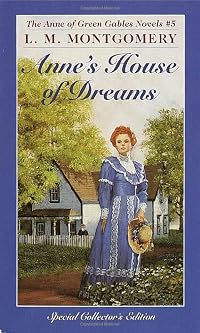
Anne, an eleven-year-old orphan, is sent by mistake to live with a lonely, middle-aged brother and sister on a Prince Edward Island farm and proceeds to make an indelible impression on everyone around her.Tags
Recommendations
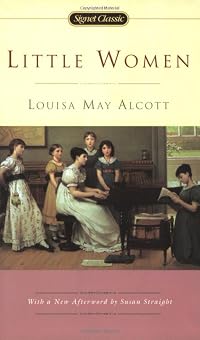
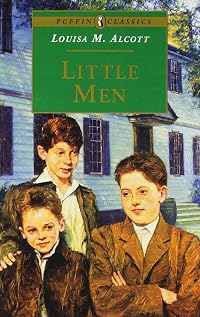
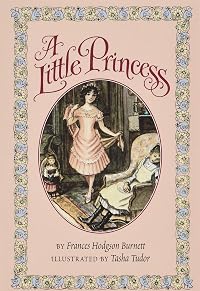

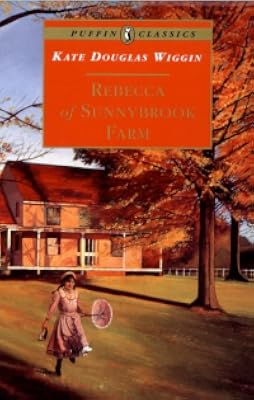
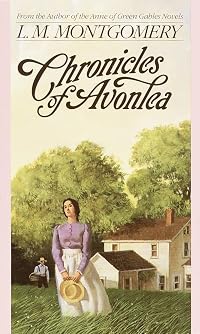
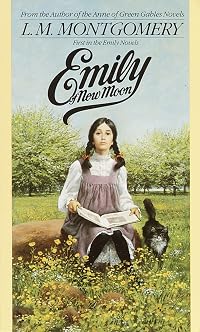
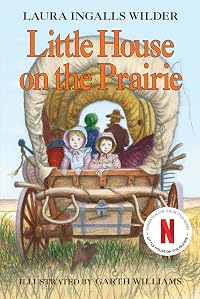
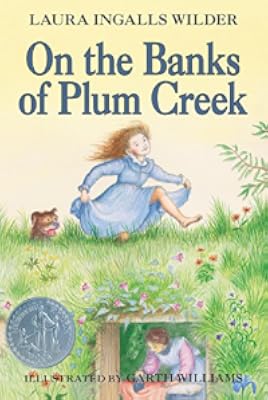





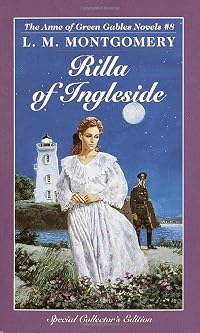


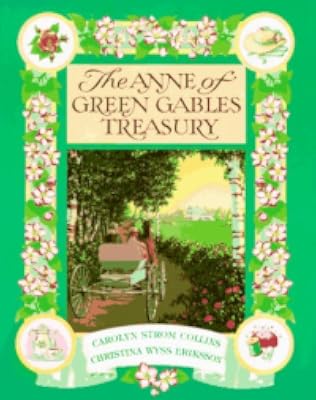







Member Recommendations

by anonymous user
Member Reviews
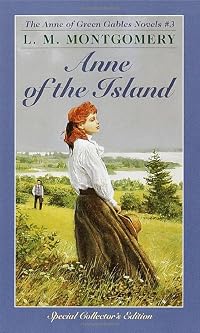
L.M. Montgomery's irrepressible red-headed heroine, Anne Shirley - she of the high ideals, fiery temper, and elfin beauty - returns in this third volume devoted to her adventures, first published in 1915, and following upon the initial Anne of Green Gables (1908), and its first sequel, Anne of Avonlea (1909). Picking up one week after the events of the preceding book, Anne of the Island is the story of Anne's four years at Redmond College, and follows her as she leaves the island - Prince Edward Island, that is - for the fictional town of Kingsport, Nova Scotia. Here she plunges into the labor and leisure of the college experience - her studies, in which (predictably) she excels in English; her friends, both old and new; her living show more situation, first in a boarding house, and then in the delightful Patty's Place; and finally, her first serious "beaus" (and proposals!) - emerging, in the end, transformed from girl to woman.
I have always loved this book, enjoying everything from the love-triangle involving Anne, Gilbert Blythe and Royal Gardner, to the many little holiday and summer interludes, in which Anne returns to Avonlea, and to her circle of family and friends at Green Gables. The doings of those four college girls - Priscilla Grant and Stella Maynard, two of Anne's old school chums from Queens; Philippa Gordon, a flighty but lovable rich girl whom the others meet for the first time at Redmond; and Anne herself - who take up residence together, make for an engaging story (I particularly adore the three cats!), and I cannot think of Patty's Place without wishing that I too had had the experience of living in such a house, while in college!
Of course, this being L.M. Montgomery, it isn't all sweetness and light, and the early death of Ruby Gillis - one of Anne's grade-school chums - from consumption, provides a poignant counter-balance to the more carefree aspects of the story. While there's no doubt that this particular part of the novel functions as a cautionary tale - so much so, that a number of other reviewers have found it offensively preachy - I have always been moved by Anne's genuine struggle, in her discussion with Ruby, to articulate her own inchoate beliefs about the metaphysical. This balancing of the inner and outer life - of the everyday and the eternal - is something I always find particularly well done, in Montgomery's work, and in her characters.
All in all, Anne of the Island was as delightful on this reread (hard to say how many times it's been), as the first time I encountered it! I think I may reread the next "Anne" book - Anne of Windy Poplars - sooner, rather than later. show less
I have always loved this book, enjoying everything from the love-triangle involving Anne, Gilbert Blythe and Royal Gardner, to the many little holiday and summer interludes, in which Anne returns to Avonlea, and to her circle of family and friends at Green Gables. The doings of those four college girls - Priscilla Grant and Stella Maynard, two of Anne's old school chums from Queens; Philippa Gordon, a flighty but lovable rich girl whom the others meet for the first time at Redmond; and Anne herself - who take up residence together, make for an engaging story (I particularly adore the three cats!), and I cannot think of Patty's Place without wishing that I too had had the experience of living in such a house, while in college!
Of course, this being L.M. Montgomery, it isn't all sweetness and light, and the early death of Ruby Gillis - one of Anne's grade-school chums - from consumption, provides a poignant counter-balance to the more carefree aspects of the story. While there's no doubt that this particular part of the novel functions as a cautionary tale - so much so, that a number of other reviewers have found it offensively preachy - I have always been moved by Anne's genuine struggle, in her discussion with Ruby, to articulate her own inchoate beliefs about the metaphysical. This balancing of the inner and outer life - of the everyday and the eternal - is something I always find particularly well done, in Montgomery's work, and in her characters.
All in all, Anne of the Island was as delightful on this reread (hard to say how many times it's been), as the first time I encountered it! I think I may reread the next "Anne" book - Anne of Windy Poplars - sooner, rather than later. show less
Despite this book being the one where Anne and Gilbert finally get engaged, it's also the one that convinced me Anne was aro-spec. Her experiences with disillusionment throughout this book felt so familiar to me that I can't read her as anything but on the aromantic spectrum. Anne's revelation of love feels more like a revelation that she doesn't want to live without Gilbert in her life and traditional romantic love/marriage is the only way it's going to happen, so that's how she reacts.
“Harvest is ended and summer is gone,” quoted Anne Shirley, gazing across the shorn fields dreamily. She and Diana Barry had been picking apples in the Green Gables orchard, but were now resting from their labors in a sunny corner, where airy fleets of thistledown drifted by on the wings of a wind that was still summer-sweet with the incense of ferns in the Haunted Wood.
I love Anne of the Island. It isn't my absolute favorite of the series, but, it is oh-so-good. In this one Anne goes away to college, makes new friends, receives a handful of marriage proposals, and corresponds with folks from Avonlea.
Anne does mature, but, in some ways it is slow in coming. Particularly in terms of her seeing the obvious: Gilbert is her soul mate. show more But perhaps because it is so long in coming, it makes for quite a satisfying conclusion.
The best way to show you how much I adore this one, is perhaps to share my favorite quotes:
Great one-liners...
It is never pleasant to have our old shrines desecrated, even when we have outgrown them.
We mustn’t let next week rob us of this week’s joy.
But FEELING is so different from KNOWING. My common sense tells me all you can say, but there are times when common sense has no power over me. Common nonsense takes possession of my soul.
Exaggeration is merely a flight of poetic fancy.
Facts are stubborn things, but as some one has wisely said, not half so stubborn as fallacies.
“All life lessons are not learned at college,” she thought. “Life teaches them everywhere.”
We are never half so interesting when we have learned that language is given us to enable us to conceal our thoughts.
“People who send word they are coming on Saturday shouldn’t come on Friday,” said Aunt Jamesina.
“Words aren’t made — they grow,” said Anne.
“Will you please define what gumption is, Aunt Jimsie?” asked Phil. “No, I won’t, young woman. Any one who has gumption knows what it is, and any one who hasn’t can never know what it is. So there is no need of defining it.”
Fun with Anne:
Talk of being lonesome! It’s I who should groan. YOU’LL be here with any number of your old friends — AND Fred! While I shall be alone among strangers, not knowing a soul!” “EXCEPT Gilbert — AND Charlie Sloane,” said Diana, imitating Anne’s italics and slyness. “Charlie Sloane will be a great comfort, of course,” agreed Anne sarcastically; whereupon both those irresponsible damsels laughed. Diana knew exactly what Anne thought of Charlie Sloane; but, despite sundry confidential talks, she did not know just what Anne thought of Gilbert Blythe.
“Miss Ada’s cushions are really getting on my nerves,” said Anne. “She finished two new ones last week, stuffed and embroidered within an inch of their lives. There being absolutely no other cushionless place to put them she stood them up against the wall on the stair landing. They topple over half the time and if we come up or down the stairs in the dark we fall over them. Last Sunday, when Dr. Davis prayed for all those exposed to the perils of the sea, I added in thought ‘and for all those who live in houses where cushions are loved not wisely but too well!’ There! we’re ready, and I see the boys coming through Old St. John’s. Do you cast in your lot with us, Phil?”
“You LOVE it,” said Miss Patty with emphasis. “Does that mean that you really LOVE it? Or that you merely like the looks of it? The girls nowadays indulge in such exaggerated statements that one never can tell what they DO mean. It wasn’t so in my young days. THEN a girl did not say she LOVED turnips, in just the same tone as she might have said she loved her mother or her Savior.” Anne’s conscience bore her up. “I really do love it,” she said gently. “I’ve loved it ever since I saw it last fall. My two college chums and I want to keep house next year instead of boarding, so we are looking for a little place to rent; and when I saw that this house was to let I was so happy.”
“No, I shall never try to write a story again,” declared Anne, with the hopeless finality of nineteen when a door is shut in its face. “I wouldn’t give up altogether,” said Mr. Harrison reflectively. “I’d write a story once in a while, but I wouldn’t pester editors with it. I’d write of people and places like I knew, and I’d make my characters talk everyday English; and I’d let the sun rise and set in the usual quiet way without much fuss over the fact. If I had to have villains at all, I’d give them a chance, Anne — I’d give them a chance. There are some terrible bad men in the world, I suppose, but you’d have to go a long piece to find them — though Mrs. Lynde believes we’re all bad. But most of us have got a little decency somewhere in us. Keep on writing, Anne.”
Trotting along behind her, close to her heels, was quite the most forlorn specimen of the cat tribe she had ever beheld. The animal was well past kitten-hood, lank, thin, disreputable looking. Pieces of both ears were lacking, one eye was temporarily out of repair, and one jowl ludicrously swollen. As for color, if a once black cat had been well and thoroughly singed the result would have resembled the hue of this waif’s thin, draggled, unsightly fur. Anne “shooed,” but the cat would not “shoo.” As long as she stood he sat back on his haunches and gazed at her reproachfully out of his one good eye; when she resumed her walk he followed. Anne resigned herself to his company until she reached the gate of Patty’s Place, which she coldly shut in his face, fondly supposing she had seen the last of him. But when, fifteen minutes later, Phil opened the door, there sat the rusty-brown cat on the step. More, he promptly darted in and sprang upon Anne’s lap with a half-pleading, half-triumphant “miaow.” “Anne,” said Stella severely, “do you own that animal?” “No, I do NOT,” protested disgusted Anne. “The creature followed me home from somewhere. I couldn’t get rid of him. Ugh, get down. I like decent cats reasonably well; but I don’t like beasties of your complexion.” Pussy, however, refused to get down. He coolly curled up in Anne’s lap and began to purr. “He has evidently adopted you,” laughed Priscilla. “I won’t BE adopted,” said Anne stubbornly.
“It seems funny and horrible to think of Diana’s being married,” sighed Anne, hugging her knees and looking through the gap in the Haunted Wood to the light that was shining in Diana’s room. “I don’t see what’s horrible about it, when she’s doing so well,” said Mrs. Lynde emphatically. “Fred Wright has a fine farm and he is a model young man.” “He certainly isn’t the wild, dashing, wicked, young man Diana once wanted to marry,” smiled Anne. “Fred is extremely good.” “That’s just what he ought to be. Would you want Diana to marry a wicked man? Or marry one yourself?” “Oh, no. I wouldn’t want to marry anybody who was wicked, but I think I’d like it if he COULD be wicked and WOULDN’T.
Fun with Davy
“When I’m grown up I’m not going to do one single thing I don’t want to do, Anne.” “All your life, Davy, you’ll find yourself doing things you don’t want to do.”
“But if you DID want to catch a man how would you go about it? I want to know,” persisted Davy, for whom the subject evidently possessed a certain fascination. “You’d better ask Mrs. Boulter,” said Anne thoughtlessly. “I think it’s likely she knows more about the process than I do.” “I will, the next time I see her,” said Davy gravely. “Davy! If you do!” cried Anne, realizing her mistake. “But you just told me to,” protested Davy aggrieved.
Dear anne, please write and tell marilla not to tie me to the rale of the bridge when I go fishing the boys make fun of me when she does. Its awful lonesome here without you but grate fun in school. Jane andrews is crosser than you. I scared mrs. lynde with a jacky lantern last nite. She was offel mad and she was mad cause I chased her old rooster round the yard till he fell down ded. I didn’t mean to make him fall down ded. What made him die, anne, I want to know. mrs. lynde threw him into the pig pen she mite of sold him to mr. blair. mr. blair is giving 50 sense apeace for good ded roosters now. I herd mrs. lynde asking the minister to pray for her. What did she do that was so bad, anne, I want to know.
“I — I want to say a bad word, Anne,” blurted out Davy, with a desperate effort. “I heard Mr. Harrison’s hired boy say it one day last week, and ever since I’ve been wanting to say it ALL the time — even when I’m saying my prayers.” “Say it then, Davy.” Davy lifted his flushed face in amazement. “But, Anne, it’s an AWFUL bad word.” “SAY IT!” Davy gave her another incredulous look, then in a low voice he said the dreadful word. The next minute his face was burrowing against her. “Oh, Anne, I’ll never say it again — never. I’ll never WANT to say it again. I knew it was bad, but I didn’t s’pose it was so — so — I didn’t s’pose it was like THAT.” “No, I don’t think you’ll ever want to say it again, Davy — or think it, either. And I wouldn’t go about much with Mr. Harrison’s hired boy if I were you.” “He can make bully war-whoops,” said Davy a little regretfully. “But you don’t want your mind filled with bad words, do you, Davy — words that will poison it and drive out all that is good and manly?” “No,” said Davy, owl-eyed with introspection. “Then don’t go with those people who use them. And now do you feel as if you could say your prayers, Davy?”
“Our new teacher is a man. He does things for jokes. Last week he made all us third-class boys write a composishun on what kind of a wife we’d like to have and the girls on what kind of a husband. He laughed fit to kill when he read them. This was mine. I thought youd like to see it. “‘The kind of a wife I’d like to Have. “‘She must have good manners and get my meals on time and do what I tell her and always be very polite to me. She must be fifteen yers old. She must be good to the poor and keep her house tidy and be good tempered and go to church regularly. She must be very handsome and have curly hair. If I get a wife that is just what I like Ill be an awful good husband to her. I think a woman ought to be awful good to her husband. Some poor women haven’t any husbands. “‘THE END.’”
Mrs. Lynde was awful mad the other day because I asked her if she was alive in Noah’s time. I dident mean to hurt her feelings. I just wanted to know. Was she, Anne?
The new minister was here to tea last night. He took three pieces of pie. If I did that Mrs. Lynde would call me piggy. And he et fast and took big bites and Marilla is always telling me not to do that. Why can ministers do what boys can’t? I want to know.
The mention of age evidently gave a new turn to Davy’s thoughts for after a few moments of reflection, he whispered solemnly: “Anne, I’m going to be married.” “When?” asked Anne with equal solemnity. “Oh, not until I’m grown-up, of course.” “Well, that’s a relief, Davy. Who is the lady?” “Stella Fletcher; she’s in my class at school. And say, Anne, she’s the prettiest girl you ever saw. If I die before I grow up you’ll keep an eye on her, won’t you?” “Davy Keith, do stop talking such nonsense,” said Marilla severely.
Fun with Mrs. Lynde:
Mrs. Lynde’s letter was full of church news. Having broken up housekeeping, Mrs. Lynde had more time than ever to devote to church affairs and had flung herself into them heart and soul. She was at present much worked up over the poor “supplies” they were having in the vacant Avonlea pulpit. “I don’t believe any but fools enter the ministry nowadays,” she wrote bitterly. “Such candidates as they have sent us, and such stuff as they preach! Half of it ain’t true, and, what’s worse, it ain’t sound doctrine. The one we have now is the worst of the lot. He mostly takes a text and preaches about something else. And he says he doesn’t believe all the heathen will be eternally lost. The idea! If they won’t all the money we’ve been giving to Foreign Missions will be clean wasted, that’s what! Last Sunday night he announced that next Sunday he’d preach on the axe-head that swam. I think he’d better confine himself to the Bible and leave sensational subjects alone. Things have come to a pretty pass if a minister can’t find enough in Holy Writ to preach about, that’s what.
“Poor Atossa laid in her coffin peaceful enough,” said Mrs. Lynde solemnly. “I never saw her look so pleasant before, that’s what. Well, there weren’t many tears shed over her, poor old soul. The Elisha Wrights are thankful to be rid of her, and I can’t say I blame them a mite.” “It seems to me a most dreadful thing to go out of the world and not leave one person behind you who is sorry you are gone,” said Anne, shuddering. “Nobody except her parents ever loved poor Atossa, that’s certain, not even her husband,” averred Mrs. Lynde. “She was his fourth wife. He’d sort of got into the habit of marrying. He only lived a few years after he married her. The doctor said he died of dyspepsia, but I shall always maintain that he died of Atossa’s tongue, that’s what. Poor soul, she always knew everything about her neighbors, but she never was very well acquainted with herself. Well, she’s gone anyhow; and I suppose the next excitement will be Diana’s wedding.”
Anne and Gilbert:
“I hope no great sorrow ever will come to you, Anne,” said Gilbert, who could not connect the idea of sorrow with the vivid, joyous creature beside him, unwitting that those who can soar to the highest heights can also plunge to the deepest depths, and that the natures which enjoy most keenly are those which also suffer most sharply.
“But there must — sometime,” mused Anne. “Life seems like a cup of glory held to my lips just now. But there must be some bitterness in it — there is in every cup. I shall taste mine some day. Well, I hope I shall be strong and brave to meet it. And I hope it won’t be through my own fault that it will come. Do you remember what Dr. Davis said last Sunday evening — that the sorrows God sent us brought comfort and strength with them, while the sorrows we brought on ourselves, through folly or wickedness, were by far the hardest to bear? But we mustn’t talk of sorrow on an afternoon like this.
As a companion, Anne honestly acknowledged nobody could be so satisfactory as Gilbert; she was very glad, so she told herself, that he had evidently dropped all nonsensical ideas — though she spent considerable time secretly wondering why.
But Gilbert’s visits were not what they once were. Anne almost dreaded them. It was very disconcerting to look up in the midst of a sudden silence and find Gilbert’s hazel eyes fixed upon her with a quite unmistakable expression in their grave depths; and it was still more disconcerting to find herself blushing hotly and uncomfortably under his gaze, just as if — just as if — well, it was very embarrassing. Anne wished herself back at Patty’s Place, where there was always somebody else about to take the edge off a delicate situation. At Green Gables Marilla went promptly to Mrs. Lynde’s domain when Gilbert came and insisted on taking the twins with her. The significance of this was unmistakable and Anne was in a helpless fury over it.
“There is something I want to say to you.” “Oh, don’t say it,” cried Anne, pleadingly. “Don’t — PLEASE, Gilbert.” “I must. Things can’t go on like this any longer. Anne, I love you. You know I do. I — I can’t tell you how much. Will you promise me that some day you’ll be my wife?” “I — I can’t,” said Anne miserably. “Oh, Gilbert — you — you’ve spoiled everything.” “Don’t you care for me at all?” Gilbert asked after a very dreadful pause, during which Anne had not dared to look up. “Not — not in that way. I do care a great deal for you as a friend. But I don’t love you, Gilbert.” “But can’t you give me some hope that you will — yet?” “No, I can’t,” exclaimed Anne desperately. “I never, never can love you — in that way — Gilbert. You must never speak of this to me again.” There was another pause — so long and so dreadful that Anne was driven at last to look up. Gilbert’s face was white to the lips. And his eyes — but Anne shuddered and looked away. There was nothing romantic about this. Must proposals be either grotesque or — horrible? Could she ever forget Gilbert’s face? “Is there anybody else?” he asked at last in a low voice. “No — no,” said Anne eagerly. “I don’t care for any one like THAT — and I LIKE you better than anybody else in the world, Gilbert. And we must — we must go on being friends, Gilbert.”
“Do you call it idiotic to refuse to marry a man I don’t love?” said Anne coldly, goaded to reply. “You don’t know love when you see it. You’ve tricked something out with your imagination that you think love, and you expect the real thing to look like that. There, that’s the first sensible thing I’ve ever said in my life. I wonder how I managed it?” “Phil,” pleaded Anne, “please go away and leave me alone for a little while. My world has tumbled into pieces. I want to reconstruct it.” “Without any Gilbert in it?” said Phil, going. A world without any Gilbert in it! Anne repeated the words drearily. Would it not be a very lonely, forlorn place? Well, it was all Gilbert’s fault. He had spoiled their beautiful comradeship. She must just learn to live without it.
Gilbert Blythe and Christine Stuart were nothing to her — absolutely nothing. But Anne had given up trying to analyze the reason of her blushes. As for Roy, of course she was in love with him — madly so. How could she help it? Was he not her ideal? Who could resist those glorious dark eyes, and that pleading voice? Were not half the Redmond girls wildly envious? And what a charming sonnet he had sent her, with a box of violets, on her birthday! Anne knew every word of it by heart. It was very good stuff of its kind, too. Not exactly up to the level of Keats or Shakespeare — even Anne was not so deeply in love as to think that.
Yet just before she left Patty’s Place for Convocation she flung Roy’s violets aside and put Gilbert’s lilies-of-the-valley in their place. She could not have told why she did it. Somehow, old Avonlea days and dreams and friendships seemed very close to her in this attainment of her long-cherished ambitions. She and Gilbert had once picturedout merrily the day on which they should be capped and gowned graduates in Arts. The wonderful day had come and Roy’s violets had no place in it. Only her old friend’s flowers seemed to belong to this fruition of old-blossoming hopes which he had once shared.
The Arts graduates gave a graduation dance that night. When Anne dressed for it she tossed aside the pearl beads she usually wore and took from her trunk the small box that had come to Green Gables on Christmas day. In it was a thread-like gold chain with a tiny pink enamel heart as a pendant. On the accompanying card was written, “With all good wishes from your old chum, Gilbert.” Anne, laughing over the memory the enamel heart conjured up the fatal day when Gilbert had called her “Carrots” and vainly tried to make his peace with a pink candy heart, had written him a nice little note of thanks. But she had never worn the trinket. Tonight she fastened it about her white throat with a dreamy smile.
There is a book of Revelation in every one’s life, as there is in the Bible. Anne read hers that bitter night, as she kept her agonized vigil through the hours of storm and darkness. She loved Gilbert — had always loved him! She knew that now. She knew that she could no more cast him out of her life without agony than she could have cut off her right hand and cast it from her.
And the knowledge had come too late — too late even for the bitter solace of being with him at the last. If she had not been so blind — so foolish — she would have had the right to go to him now. But he would never know that she loved him — he would go away from this life thinking that she did not care. Oh, the black years of emptiness stretching before her! She could not live through them — she could not! She cowered down by her window and wished, for the first time in her gay young life, that she could die, too. If Gilbert went away from her, without one word or sign or message, she could not live. Nothing was of any value without him. She belonged to him and he to her. In her hour of supreme agony she had no doubt of that. He did not love Christine Stuart — never had loved Christine Stuart. Oh, what a fool she had been not to realize what the bond was that had held her to Gilbert — to think that the flattered fancy she had felt for Roy Gardner had been love. And now she must pay for her folly as for a crime.
He had come quite often to Green Gables after his recovery, and something of their old comradeship had returned. But Anne no longer found it satisfying. The rose of love made the blossom of friendship pale and scentless by contrast. And Anne had again begun to doubt if Gilbert now felt anything for her but friendship. In the common light of common day her radiant certainty of that rapt morning had faded.
“Have you any unfulfilled dreams, Anne?” asked Gilbert. Something in his tone — something she had not heard since that miserable evening in the orchard at Patty’s Place — made Anne’s heart beat wildly. But she made answer lightly. “Of course. Everybody has. It wouldn’t do for us to have all our dreams fulfilled. We would be as good as dead if we had nothing left to dream about. What a delicious aroma that low-descending sun is extracting from the asters and ferns. I wish we could see perfumes as well as smell them. I’m sure they would be very beautiful.” Gilbert was not to be thus sidetracked. “I have a dream,” he said slowly. “I persist in dreaming it, although it has often seemed to me that it could never come true. I dream of a home with a hearth-fire in it, a cat and dog, the footsteps of friends — and YOU!” show less
I love Anne of the Island. It isn't my absolute favorite of the series, but, it is oh-so-good. In this one Anne goes away to college, makes new friends, receives a handful of marriage proposals, and corresponds with folks from Avonlea.
Anne does mature, but, in some ways it is slow in coming. Particularly in terms of her seeing the obvious: Gilbert is her soul mate. show more But perhaps because it is so long in coming, it makes for quite a satisfying conclusion.
The best way to show you how much I adore this one, is perhaps to share my favorite quotes:
Great one-liners...
It is never pleasant to have our old shrines desecrated, even when we have outgrown them.
We mustn’t let next week rob us of this week’s joy.
But FEELING is so different from KNOWING. My common sense tells me all you can say, but there are times when common sense has no power over me. Common nonsense takes possession of my soul.
Exaggeration is merely a flight of poetic fancy.
Facts are stubborn things, but as some one has wisely said, not half so stubborn as fallacies.
“All life lessons are not learned at college,” she thought. “Life teaches them everywhere.”
We are never half so interesting when we have learned that language is given us to enable us to conceal our thoughts.
“People who send word they are coming on Saturday shouldn’t come on Friday,” said Aunt Jamesina.
“Words aren’t made — they grow,” said Anne.
“Will you please define what gumption is, Aunt Jimsie?” asked Phil. “No, I won’t, young woman. Any one who has gumption knows what it is, and any one who hasn’t can never know what it is. So there is no need of defining it.”
Fun with Anne:
Talk of being lonesome! It’s I who should groan. YOU’LL be here with any number of your old friends — AND Fred! While I shall be alone among strangers, not knowing a soul!” “EXCEPT Gilbert — AND Charlie Sloane,” said Diana, imitating Anne’s italics and slyness. “Charlie Sloane will be a great comfort, of course,” agreed Anne sarcastically; whereupon both those irresponsible damsels laughed. Diana knew exactly what Anne thought of Charlie Sloane; but, despite sundry confidential talks, she did not know just what Anne thought of Gilbert Blythe.
“Miss Ada’s cushions are really getting on my nerves,” said Anne. “She finished two new ones last week, stuffed and embroidered within an inch of their lives. There being absolutely no other cushionless place to put them she stood them up against the wall on the stair landing. They topple over half the time and if we come up or down the stairs in the dark we fall over them. Last Sunday, when Dr. Davis prayed for all those exposed to the perils of the sea, I added in thought ‘and for all those who live in houses where cushions are loved not wisely but too well!’ There! we’re ready, and I see the boys coming through Old St. John’s. Do you cast in your lot with us, Phil?”
“You LOVE it,” said Miss Patty with emphasis. “Does that mean that you really LOVE it? Or that you merely like the looks of it? The girls nowadays indulge in such exaggerated statements that one never can tell what they DO mean. It wasn’t so in my young days. THEN a girl did not say she LOVED turnips, in just the same tone as she might have said she loved her mother or her Savior.” Anne’s conscience bore her up. “I really do love it,” she said gently. “I’ve loved it ever since I saw it last fall. My two college chums and I want to keep house next year instead of boarding, so we are looking for a little place to rent; and when I saw that this house was to let I was so happy.”
“No, I shall never try to write a story again,” declared Anne, with the hopeless finality of nineteen when a door is shut in its face. “I wouldn’t give up altogether,” said Mr. Harrison reflectively. “I’d write a story once in a while, but I wouldn’t pester editors with it. I’d write of people and places like I knew, and I’d make my characters talk everyday English; and I’d let the sun rise and set in the usual quiet way without much fuss over the fact. If I had to have villains at all, I’d give them a chance, Anne — I’d give them a chance. There are some terrible bad men in the world, I suppose, but you’d have to go a long piece to find them — though Mrs. Lynde believes we’re all bad. But most of us have got a little decency somewhere in us. Keep on writing, Anne.”
Trotting along behind her, close to her heels, was quite the most forlorn specimen of the cat tribe she had ever beheld. The animal was well past kitten-hood, lank, thin, disreputable looking. Pieces of both ears were lacking, one eye was temporarily out of repair, and one jowl ludicrously swollen. As for color, if a once black cat had been well and thoroughly singed the result would have resembled the hue of this waif’s thin, draggled, unsightly fur. Anne “shooed,” but the cat would not “shoo.” As long as she stood he sat back on his haunches and gazed at her reproachfully out of his one good eye; when she resumed her walk he followed. Anne resigned herself to his company until she reached the gate of Patty’s Place, which she coldly shut in his face, fondly supposing she had seen the last of him. But when, fifteen minutes later, Phil opened the door, there sat the rusty-brown cat on the step. More, he promptly darted in and sprang upon Anne’s lap with a half-pleading, half-triumphant “miaow.” “Anne,” said Stella severely, “do you own that animal?” “No, I do NOT,” protested disgusted Anne. “The creature followed me home from somewhere. I couldn’t get rid of him. Ugh, get down. I like decent cats reasonably well; but I don’t like beasties of your complexion.” Pussy, however, refused to get down. He coolly curled up in Anne’s lap and began to purr. “He has evidently adopted you,” laughed Priscilla. “I won’t BE adopted,” said Anne stubbornly.
“It seems funny and horrible to think of Diana’s being married,” sighed Anne, hugging her knees and looking through the gap in the Haunted Wood to the light that was shining in Diana’s room. “I don’t see what’s horrible about it, when she’s doing so well,” said Mrs. Lynde emphatically. “Fred Wright has a fine farm and he is a model young man.” “He certainly isn’t the wild, dashing, wicked, young man Diana once wanted to marry,” smiled Anne. “Fred is extremely good.” “That’s just what he ought to be. Would you want Diana to marry a wicked man? Or marry one yourself?” “Oh, no. I wouldn’t want to marry anybody who was wicked, but I think I’d like it if he COULD be wicked and WOULDN’T.
Fun with Davy
“When I’m grown up I’m not going to do one single thing I don’t want to do, Anne.” “All your life, Davy, you’ll find yourself doing things you don’t want to do.”
“But if you DID want to catch a man how would you go about it? I want to know,” persisted Davy, for whom the subject evidently possessed a certain fascination. “You’d better ask Mrs. Boulter,” said Anne thoughtlessly. “I think it’s likely she knows more about the process than I do.” “I will, the next time I see her,” said Davy gravely. “Davy! If you do!” cried Anne, realizing her mistake. “But you just told me to,” protested Davy aggrieved.
Dear anne, please write and tell marilla not to tie me to the rale of the bridge when I go fishing the boys make fun of me when she does. Its awful lonesome here without you but grate fun in school. Jane andrews is crosser than you. I scared mrs. lynde with a jacky lantern last nite. She was offel mad and she was mad cause I chased her old rooster round the yard till he fell down ded. I didn’t mean to make him fall down ded. What made him die, anne, I want to know. mrs. lynde threw him into the pig pen she mite of sold him to mr. blair. mr. blair is giving 50 sense apeace for good ded roosters now. I herd mrs. lynde asking the minister to pray for her. What did she do that was so bad, anne, I want to know.
“I — I want to say a bad word, Anne,” blurted out Davy, with a desperate effort. “I heard Mr. Harrison’s hired boy say it one day last week, and ever since I’ve been wanting to say it ALL the time — even when I’m saying my prayers.” “Say it then, Davy.” Davy lifted his flushed face in amazement. “But, Anne, it’s an AWFUL bad word.” “SAY IT!” Davy gave her another incredulous look, then in a low voice he said the dreadful word. The next minute his face was burrowing against her. “Oh, Anne, I’ll never say it again — never. I’ll never WANT to say it again. I knew it was bad, but I didn’t s’pose it was so — so — I didn’t s’pose it was like THAT.” “No, I don’t think you’ll ever want to say it again, Davy — or think it, either. And I wouldn’t go about much with Mr. Harrison’s hired boy if I were you.” “He can make bully war-whoops,” said Davy a little regretfully. “But you don’t want your mind filled with bad words, do you, Davy — words that will poison it and drive out all that is good and manly?” “No,” said Davy, owl-eyed with introspection. “Then don’t go with those people who use them. And now do you feel as if you could say your prayers, Davy?”
“Our new teacher is a man. He does things for jokes. Last week he made all us third-class boys write a composishun on what kind of a wife we’d like to have and the girls on what kind of a husband. He laughed fit to kill when he read them. This was mine. I thought youd like to see it. “‘The kind of a wife I’d like to Have. “‘She must have good manners and get my meals on time and do what I tell her and always be very polite to me. She must be fifteen yers old. She must be good to the poor and keep her house tidy and be good tempered and go to church regularly. She must be very handsome and have curly hair. If I get a wife that is just what I like Ill be an awful good husband to her. I think a woman ought to be awful good to her husband. Some poor women haven’t any husbands. “‘THE END.’”
Mrs. Lynde was awful mad the other day because I asked her if she was alive in Noah’s time. I dident mean to hurt her feelings. I just wanted to know. Was she, Anne?
The new minister was here to tea last night. He took three pieces of pie. If I did that Mrs. Lynde would call me piggy. And he et fast and took big bites and Marilla is always telling me not to do that. Why can ministers do what boys can’t? I want to know.
The mention of age evidently gave a new turn to Davy’s thoughts for after a few moments of reflection, he whispered solemnly: “Anne, I’m going to be married.” “When?” asked Anne with equal solemnity. “Oh, not until I’m grown-up, of course.” “Well, that’s a relief, Davy. Who is the lady?” “Stella Fletcher; she’s in my class at school. And say, Anne, she’s the prettiest girl you ever saw. If I die before I grow up you’ll keep an eye on her, won’t you?” “Davy Keith, do stop talking such nonsense,” said Marilla severely.
Fun with Mrs. Lynde:
Mrs. Lynde’s letter was full of church news. Having broken up housekeeping, Mrs. Lynde had more time than ever to devote to church affairs and had flung herself into them heart and soul. She was at present much worked up over the poor “supplies” they were having in the vacant Avonlea pulpit. “I don’t believe any but fools enter the ministry nowadays,” she wrote bitterly. “Such candidates as they have sent us, and such stuff as they preach! Half of it ain’t true, and, what’s worse, it ain’t sound doctrine. The one we have now is the worst of the lot. He mostly takes a text and preaches about something else. And he says he doesn’t believe all the heathen will be eternally lost. The idea! If they won’t all the money we’ve been giving to Foreign Missions will be clean wasted, that’s what! Last Sunday night he announced that next Sunday he’d preach on the axe-head that swam. I think he’d better confine himself to the Bible and leave sensational subjects alone. Things have come to a pretty pass if a minister can’t find enough in Holy Writ to preach about, that’s what.
“Poor Atossa laid in her coffin peaceful enough,” said Mrs. Lynde solemnly. “I never saw her look so pleasant before, that’s what. Well, there weren’t many tears shed over her, poor old soul. The Elisha Wrights are thankful to be rid of her, and I can’t say I blame them a mite.” “It seems to me a most dreadful thing to go out of the world and not leave one person behind you who is sorry you are gone,” said Anne, shuddering. “Nobody except her parents ever loved poor Atossa, that’s certain, not even her husband,” averred Mrs. Lynde. “She was his fourth wife. He’d sort of got into the habit of marrying. He only lived a few years after he married her. The doctor said he died of dyspepsia, but I shall always maintain that he died of Atossa’s tongue, that’s what. Poor soul, she always knew everything about her neighbors, but she never was very well acquainted with herself. Well, she’s gone anyhow; and I suppose the next excitement will be Diana’s wedding.”
Anne and Gilbert:
“I hope no great sorrow ever will come to you, Anne,” said Gilbert, who could not connect the idea of sorrow with the vivid, joyous creature beside him, unwitting that those who can soar to the highest heights can also plunge to the deepest depths, and that the natures which enjoy most keenly are those which also suffer most sharply.
“But there must — sometime,” mused Anne. “Life seems like a cup of glory held to my lips just now. But there must be some bitterness in it — there is in every cup. I shall taste mine some day. Well, I hope I shall be strong and brave to meet it. And I hope it won’t be through my own fault that it will come. Do you remember what Dr. Davis said last Sunday evening — that the sorrows God sent us brought comfort and strength with them, while the sorrows we brought on ourselves, through folly or wickedness, were by far the hardest to bear? But we mustn’t talk of sorrow on an afternoon like this.
As a companion, Anne honestly acknowledged nobody could be so satisfactory as Gilbert; she was very glad, so she told herself, that he had evidently dropped all nonsensical ideas — though she spent considerable time secretly wondering why.
But Gilbert’s visits were not what they once were. Anne almost dreaded them. It was very disconcerting to look up in the midst of a sudden silence and find Gilbert’s hazel eyes fixed upon her with a quite unmistakable expression in their grave depths; and it was still more disconcerting to find herself blushing hotly and uncomfortably under his gaze, just as if — just as if — well, it was very embarrassing. Anne wished herself back at Patty’s Place, where there was always somebody else about to take the edge off a delicate situation. At Green Gables Marilla went promptly to Mrs. Lynde’s domain when Gilbert came and insisted on taking the twins with her. The significance of this was unmistakable and Anne was in a helpless fury over it.
“There is something I want to say to you.” “Oh, don’t say it,” cried Anne, pleadingly. “Don’t — PLEASE, Gilbert.” “I must. Things can’t go on like this any longer. Anne, I love you. You know I do. I — I can’t tell you how much. Will you promise me that some day you’ll be my wife?” “I — I can’t,” said Anne miserably. “Oh, Gilbert — you — you’ve spoiled everything.” “Don’t you care for me at all?” Gilbert asked after a very dreadful pause, during which Anne had not dared to look up. “Not — not in that way. I do care a great deal for you as a friend. But I don’t love you, Gilbert.” “But can’t you give me some hope that you will — yet?” “No, I can’t,” exclaimed Anne desperately. “I never, never can love you — in that way — Gilbert. You must never speak of this to me again.” There was another pause — so long and so dreadful that Anne was driven at last to look up. Gilbert’s face was white to the lips. And his eyes — but Anne shuddered and looked away. There was nothing romantic about this. Must proposals be either grotesque or — horrible? Could she ever forget Gilbert’s face? “Is there anybody else?” he asked at last in a low voice. “No — no,” said Anne eagerly. “I don’t care for any one like THAT — and I LIKE you better than anybody else in the world, Gilbert. And we must — we must go on being friends, Gilbert.”
“Do you call it idiotic to refuse to marry a man I don’t love?” said Anne coldly, goaded to reply. “You don’t know love when you see it. You’ve tricked something out with your imagination that you think love, and you expect the real thing to look like that. There, that’s the first sensible thing I’ve ever said in my life. I wonder how I managed it?” “Phil,” pleaded Anne, “please go away and leave me alone for a little while. My world has tumbled into pieces. I want to reconstruct it.” “Without any Gilbert in it?” said Phil, going. A world without any Gilbert in it! Anne repeated the words drearily. Would it not be a very lonely, forlorn place? Well, it was all Gilbert’s fault. He had spoiled their beautiful comradeship. She must just learn to live without it.
Gilbert Blythe and Christine Stuart were nothing to her — absolutely nothing. But Anne had given up trying to analyze the reason of her blushes. As for Roy, of course she was in love with him — madly so. How could she help it? Was he not her ideal? Who could resist those glorious dark eyes, and that pleading voice? Were not half the Redmond girls wildly envious? And what a charming sonnet he had sent her, with a box of violets, on her birthday! Anne knew every word of it by heart. It was very good stuff of its kind, too. Not exactly up to the level of Keats or Shakespeare — even Anne was not so deeply in love as to think that.
Yet just before she left Patty’s Place for Convocation she flung Roy’s violets aside and put Gilbert’s lilies-of-the-valley in their place. She could not have told why she did it. Somehow, old Avonlea days and dreams and friendships seemed very close to her in this attainment of her long-cherished ambitions. She and Gilbert had once picturedout merrily the day on which they should be capped and gowned graduates in Arts. The wonderful day had come and Roy’s violets had no place in it. Only her old friend’s flowers seemed to belong to this fruition of old-blossoming hopes which he had once shared.
The Arts graduates gave a graduation dance that night. When Anne dressed for it she tossed aside the pearl beads she usually wore and took from her trunk the small box that had come to Green Gables on Christmas day. In it was a thread-like gold chain with a tiny pink enamel heart as a pendant. On the accompanying card was written, “With all good wishes from your old chum, Gilbert.” Anne, laughing over the memory the enamel heart conjured up the fatal day when Gilbert had called her “Carrots” and vainly tried to make his peace with a pink candy heart, had written him a nice little note of thanks. But she had never worn the trinket. Tonight she fastened it about her white throat with a dreamy smile.
There is a book of Revelation in every one’s life, as there is in the Bible. Anne read hers that bitter night, as she kept her agonized vigil through the hours of storm and darkness. She loved Gilbert — had always loved him! She knew that now. She knew that she could no more cast him out of her life without agony than she could have cut off her right hand and cast it from her.
And the knowledge had come too late — too late even for the bitter solace of being with him at the last. If she had not been so blind — so foolish — she would have had the right to go to him now. But he would never know that she loved him — he would go away from this life thinking that she did not care. Oh, the black years of emptiness stretching before her! She could not live through them — she could not! She cowered down by her window and wished, for the first time in her gay young life, that she could die, too. If Gilbert went away from her, without one word or sign or message, she could not live. Nothing was of any value without him. She belonged to him and he to her. In her hour of supreme agony she had no doubt of that. He did not love Christine Stuart — never had loved Christine Stuart. Oh, what a fool she had been not to realize what the bond was that had held her to Gilbert — to think that the flattered fancy she had felt for Roy Gardner had been love. And now she must pay for her folly as for a crime.
He had come quite often to Green Gables after his recovery, and something of their old comradeship had returned. But Anne no longer found it satisfying. The rose of love made the blossom of friendship pale and scentless by contrast. And Anne had again begun to doubt if Gilbert now felt anything for her but friendship. In the common light of common day her radiant certainty of that rapt morning had faded.
“Have you any unfulfilled dreams, Anne?” asked Gilbert. Something in his tone — something she had not heard since that miserable evening in the orchard at Patty’s Place — made Anne’s heart beat wildly. But she made answer lightly. “Of course. Everybody has. It wouldn’t do for us to have all our dreams fulfilled. We would be as good as dead if we had nothing left to dream about. What a delicious aroma that low-descending sun is extracting from the asters and ferns. I wish we could see perfumes as well as smell them. I’m sure they would be very beautiful.” Gilbert was not to be thus sidetracked. “I have a dream,” he said slowly. “I persist in dreaming it, although it has often seemed to me that it could never come true. I dream of a home with a hearth-fire in it, a cat and dog, the footsteps of friends — and YOU!” show less
I'm not entirely sure Roy is a real person, but more of a figment of Anne's overblown imagination, and he suffers a merciless death (figuratively) when at last her quixotic dream ceases to sustain itself before her and she grows up. What happens with Anne seldom happens in real life, as it is ludicrously fortunate for her that Gilbert is so indomitable in his love that she gets so many chances, perhaps to an excessive degree (in so far as his contracting typhoid fever in his loveless agony because he can't live without her). The thing is, there is no such thing as a perfect man (or woman) and we are only deceiving ourselves if we think such people exist; they only exist in novels like this. I think this novel should serve as a warning: show more if we let ourselves become like Anne, it may very well cost us the only chance at love we get. show less
At the heart of this exquisite episode into Anne's life is a love story, but it's not merely of romance. Anne falls in love with college and the pursuit of intellect, and that's what makes it one of my favorite books in the series. She finds her college friends, and they form an intimate circle. She starts to write, though this gets downplayed as the book continues--which is odd, since this is one of her dearest wishes. And, yes, she learns what it means to be in love, not just in the fairy stories, but for real.
Let's get spoilery, though. Proceed only if you want to be spoiled.
In the past, I've given Anne a hard time about refusing Gilbert the first time, but rereading it since I've been married has given me a little perspective. I show more have the feeling that if Gilbert had been alive 100 years later, that proposal would not have taken place, because the pressure to marry would have been less existent and he would have seen how very friend-driven Anne was. I think he fell into the trap of social conditioning. Anne, as it was, was not ready to marry *anyone* at that time in her life, and I don't think she would have been happy had she accepted Gilbert then. She had to realize of her own accord that she was in love with him, and to his credit, he backed off once she said no and only tried again when given a friend's encouragement that Anne would possibly be more receptive.
I also think that Royal Gardner exists to show that a *physical* ideal is not the same as your *actual* ideal, because good grief, that man sounded hideously boring. I believe, too, that Anne needed a relationship with a flat and uninteresting character to contrast Gilbert's vibrant and supportive personality. Had she married Roy, she would have been thrust into the role of society wife, for which she was entirely unsuited and unprepared. And that's an alternate-universe fanfic I would be kind of interested in reading, now that you mention it. show less
Let's get spoilery, though. Proceed only if you want to be spoiled.
In the past, I've given Anne a hard time about refusing Gilbert the first time, but rereading it since I've been married has given me a little perspective. I show more have the feeling that if Gilbert had been alive 100 years later, that proposal would not have taken place, because the pressure to marry would have been less existent and he would have seen how very friend-driven Anne was. I think he fell into the trap of social conditioning. Anne, as it was, was not ready to marry *anyone* at that time in her life, and I don't think she would have been happy had she accepted Gilbert then. She had to realize of her own accord that she was in love with him, and to his credit, he backed off once she said no and only tried again when given a friend's encouragement that Anne would possibly be more receptive.
I also think that Royal Gardner exists to show that a *physical* ideal is not the same as your *actual* ideal, because good grief, that man sounded hideously boring. I believe, too, that Anne needed a relationship with a flat and uninteresting character to contrast Gilbert's vibrant and supportive personality. Had she married Roy, she would have been thrust into the role of society wife, for which she was entirely unsuited and unprepared. And that's an alternate-universe fanfic I would be kind of interested in reading, now that you mention it. show less
This was my favorite of the series yet. Gosh, LMM’s writing is delightful.
Usually, the romanticism of typical conversation is overdone in classics—the characters talk in a way that no one ever has or ever will speak. But not with this series. The conversations, characters, and circumstances feel so REAL. Not to mention, the writing itself is concise. LMM doesn’t often go on useless tangents about silly things like dinner plates. And I appreciate that.
And let’s not forget the setting. LMM has a way of writing that really does take you to Avonlea and Prince Edward Island. It’s such a nice feeling there and it’s the kind of place that makes me crave the book when I’m not reading it. Throughout my reading of this whole show more series, no matter where I’ve been or what I’ve been doing, I’ve always felt that I’d much rather be in Avonlea with Anne than anywhere else. And I like that.
Also Philippa. Philippa was one of the best parts of this book. Her sass and banter with Anne. And her flat-out ABSURDITY made me love her so, so much. GAH. I can’t wait to continue on with the series.
—Elliana Maselli
Monday, September 7, 2020
11:47PM show less
Usually, the romanticism of typical conversation is overdone in classics—the characters talk in a way that no one ever has or ever will speak. But not with this series. The conversations, characters, and circumstances feel so REAL. Not to mention, the writing itself is concise. LMM doesn’t often go on useless tangents about silly things like dinner plates. And I appreciate that.
And let’s not forget the setting. LMM has a way of writing that really does take you to Avonlea and Prince Edward Island. It’s such a nice feeling there and it’s the kind of place that makes me crave the book when I’m not reading it. Throughout my reading of this whole show more series, no matter where I’ve been or what I’ve been doing, I’ve always felt that I’d much rather be in Avonlea with Anne than anywhere else. And I like that.
Also Philippa. Philippa was one of the best parts of this book. Her sass and banter with Anne. And her flat-out ABSURDITY made me love her so, so much. GAH. I can’t wait to continue on with the series.
—Elliana Maselli
Monday, September 7, 2020
11:47PM show less
This might be the world's most frustrating story ever told.
At first it's so enticing. College! Phil Gordon! Intrigue! Romance! Drama!
Then...
Let's skip over six months for no apparent reason! Let's have a pages and pages long letter from Davy that make me wish he'd just been sent to a damn orphanage instead! Let's have a long and boring interlude where Anne goes somewhere, meets some people we don't care about, learns something she could easily have learned in Avonlea, and hears the phrase "jog along, black mare!" about seven million times more than was necessary! Let's limit the amount of screen time Gilbert gets for no reason other than to fill the pages with people who are not him and are supremely unfit substitutes for such! Let's show more give the reader time to wonder how Anne chooses suitor with such terrible first names! Let's include a few extra housemates for Anne that we never get to know because... LM MONTGOMERY WHAT WERE YOU SMOKING?!
I'm done. No more for me. show less
At first it's so enticing. College! Phil Gordon! Intrigue! Romance! Drama!
Then...
Let's skip over six months for no apparent reason! Let's have a pages and pages long letter from Davy that make me wish he'd just been sent to a damn orphanage instead! Let's have a long and boring interlude where Anne goes somewhere, meets some people we don't care about, learns something she could easily have learned in Avonlea, and hears the phrase "jog along, black mare!" about seven million times more than was necessary! Let's limit the amount of screen time Gilbert gets for no reason other than to fill the pages with people who are not him and are supremely unfit substitutes for such! Let's show more give the reader time to wonder how Anne chooses suitor with such terrible first names! Let's include a few extra housemates for Anne that we never get to know because... LM MONTGOMERY WHAT WERE YOU SMOKING?!
I'm done. No more for me. show less
Members
- Recently Added By
Lists

Best L.M. Montgomery novels
20 works; 8 members

Favorite Childhood Books
1,646 works; 518 members

Books about characters you'd like to know
34 works; 13 members

Best School Stories
219 works; 22 members
NPRs Ultimate Backseat Bookshelf: 100 Must-Reads for kids 9-14
222 works; 30 members

Elevenses
316 works; 88 members

NPRs your favorites: 100 Best Ever Teen Novels
237 works; 49 members

Childhood Favorites
427 works; 24 members

Best Friendship Stories
205 works; 16 members

Comfort Reads
221 works; 41 members

The Best of Canadian Literature
235 works; 33 members
Honey For a Child's Heart
1,152 works; 25 members

First published in 1915
87 works; 11 members
Ambleside Books
459 works; 18 members

Fiction with Women's Names in the Title
378 works; 15 members

Bibliography for How to be a Heroine
148 works; 12 members
Female Protagonist
1,056 works; 57 members

Blue Pyramid 1,276 Best Books of All Time
1,248 works; 32 members

Books With Characters I'd Like to Date
18 works; 9 members

Most Popular Young Adult Lit on LT
100 works; 4 members
Books I've Read More Than Once
602 works; 49 members

Historical Fiction
889 works; 91 members

Books We Loved As Children
603 works; 252 members

1970s
657 works; 23 members
Children's Literature 1900 - 1950 in order
413 works; 8 members
Spring Reading
11 works; 1 member
Favorite Romance Fiction
247 works; 115 members

20th Century Literature
1,161 works; 54 members

Favourite Virago Modern Classics
183 works; 38 members
Books tagged favorites
390 works; 30 members
Books available on Open Library
171 works; 4 members
Canada
42 works; 3 members
Favourite Books
1,817 works; 308 members

the L2go shelf
15 works; 2 members
Female Author
1,235 works; 67 members

Books Read in 2012
816 works; 34 members
Books We Want To Read Again For The First Time
384 works; 160 members

Books About Girls
219 works; 17 members
Author Information

384+ Works 159,116 Members
One of the best-loved children's/young adult authors, Lucy Maud Montgomery was born on November 30, 1874 in Clifton, Prince Edward Island, Canada, the daughter of Hugh John and Clara Woolner. After attending Prince of Wales College and Dalhouse College in Halifax, she became a certified teacher, eventually teaching in Bideford, Prince Edward show more Island. She also served as an assistant at the post office and as a writer for the local newspaper, The Halifax Daily Echo. Best known for her Anne of Avonlea and Anne of Green Gables books, Montgomery received many high honors. She was named a Fellow of the Royal Society of Arts in 1923 and a Canadian stamp commemorates Montgomery and Anne of Green Gables. In addition, various museums dedicated to the book series and Montgomery's life dot Prince Edward Island. The books in the Anne series follow the growth and adventures of a red-haired, spritely, high-spirited and imaginative orphan named Anne who lives on Prince Edward Island. The success of these books rested in Montgomery's ability to vividly recollect childhood and her easy storytelling ability. They are tremendously popular to this day and have been translated into more than 35 languages and adapted as movies and PBS television productions. On July 5, 1911, L.M. Montgomery married Ewan Macdonald, a Presbyterian minister, and the marriage produced three children. She died on April 24, 1942. (Bowker Author Biography) show less
Some Editions
Awards and Honors
Notable Lists
Series

Belongs to Publisher Series
Work Relationships
Common Knowledge
- Canonical title
- Anne of the Island
- Original title
- Anne of the Island
- Original publication date
- 1915-07; 1996 (Nouvelle édition française, Presses de la Cité) (Nouvelle é | dition franç | aise, Presses de la Cité | )
- People/Characters
- Anne Shirley; Marilla Cuthbert; Gilbert Blythe; Charlie Sloane; Priscilla Grant; Stella Maynard (show all 13); Philippa Gordon; Royal Gardener; Diana Barry; Davy Keith; Dora Keith; Ruby Gillis; Jane Andrews
- Important places
- Nova Scotia, Canada; Redmond College, Kingsport, Nova Scotia, Canada; Kingsport, Nova Scotia, Canada; Patty's Place, Kingsport, Nova Scotia, Canada; Canada; Prince Edward Island, Canada (show all 7); Avonlea, Prince Edward Island, Canada
- Epigraph
- All precious things discovered late
To those that seek them issue forth,
For Love in sequel works with Fate,
And draws the veil from hidden worth.
- Tennyson - Dedication
- To all the girls all over the world
who have 'wanted more' about Anne - First words
- "Harvest is ended and summer is gone," quoted Anne Shirley, gazing across the shorn fields dreamily.
- Quotations
- We mustn't let next week rob us of this week's joy.
- Last words
- (Click to show. Warning: May contain spoilers.)Then they walked home together in the dusk, crowned king and queen in the bridal realm of love, along winding paths fringed with the sweetest flowers that ever bloomed, and over haunted meadows where winds of hope and memory blew.
- Original language
- English
- Canonical DDC/MDS
- 813.52
Classifications
- Genres
- Children's Books, Fiction and Literature, Kids, Young Adult
- DDC/MDS
- 813.52 — Literature & rhetoric American literature in English American fiction in English 1900-1999 1900-1945
- LCC
- PZ7 .M768 .A — Language and Literature Fiction and juvenile belles lettres Fiction and juvenile belles lettres Juvenile belles lettres
- BISAC
Statistics
- Members
- 12,704
- Popularity
- 642
- Reviews
- 142
- Rating
- (4.16)
- Languages
- 21 — Czech, Danish, Dutch, English, Finnish, French, German, Hebrew, Hungarian, Indonesian, Italian, Japanese, Norwegian (Bokmål), Farsi/Persian, Polish, Russian, Slovak, Spanish, Swedish, Turkish, Portuguese (Portugal)
- Media
- Paper, Audiobook, Ebook
- ISBNs
- 379
- UPCs
- 4
- ASINs
- 136