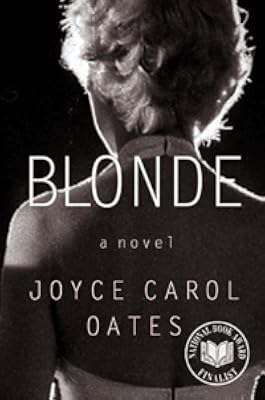
Blonde
by Joyce Carol Oates
On This Page
Description
The National Book Award finalist and national bestseller exploring the life and legend of Marilyn MonroeNow a Netflix Film starring Ana de Armas, Adrien Brody, Bobby Cannavale and Julianne Nicholson
In one of her most ambitious works, Joyce Carol Oates boldly reimagines the inner, poetic, and spiritual life of Norma Jeane Baker—the child, the woman, the fated celebrity, and idolized blonde the world came to know as Marilyn Monroe. In a voice startlingly intimate and rich, Norma Jeane show more tells her own story of an emblematic American artist—intensely conflicted and driven—who had lost her way. A powerful portrait of Hollywood's myth and an extraordinary woman's heartbreaking reality, Blonde is a sweeping epic that pays tribute to the elusive magic and devastation behind the creation of the great 20th-century American star.
. show less
Tags
Recommendations





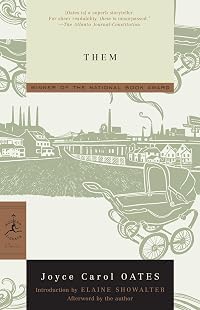
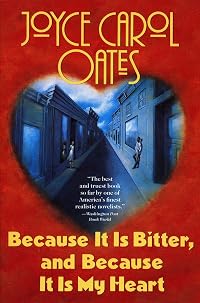







Member Recommendations
becksdakex A little bit of Louise Brooks, another Hollywood Star.
Member Reviews
"The Studio meant to market the blond woman's body but only on its own strict terms."
WOW, what a ride. What a life.
Blonde is a FICTIONALIZED version of the life of Norma Jeane (AKA Marilyn Monroe). From her infancy to her last incoherent days, this innocent woman's life was a true American tragedy.
Despite being fiction, this book gifted me Norma Jeane's sad truth. She will live in my heart forever.
Norma Jeane was a smart, highly sensitive, creative genius and perpetual girl who was starving for love. Sadly, she wasn’t able to take in what little love she did get because of the severe damage she sustained at the hands of numerous incredibly shitty people throughout her entire life.
One of life's greatest ironies is that souls like Norma show more Jeane often attract, and are drawn to, seriously dysfunctional people and so their lives continue to be heart wrenching. Hollywood had no shortage of dysfunction or sociopaths...from the broken children of some of the industry's earliest stars to the men who headed the studios.
So Norma Jean never got the love she wanted…or the career she desired.
She may have lacked a formal education, but she was one smart woman (and an avid reader!) who wanted to be so much more than sexy "Marilyn.” But, sadly, in 1950s/1960s America, it didn't really matter what a woman wanted…especially if you were a commodity in an industry run entirely by men...most of whom were sociopaths.
These days I (unintentionally) read a lot of books by authors, but few by writers. Joyce Carol Oates is definitely the latter. This is not an easy read...at times it's disjointed (similar to Marilyn herself, so likely intentionally), confusing (who the heck is narrating now???), and disorienting (is this fact or totally fiction???). But, there was no way I could give it anything less than 5 stars. It's simply brilliant.
I feel like I know Norma Jean now and this knowledge comes with a very deep respect. Vindication comes a little late, but better than never.
I highly suggest watching her movies as you read the book. To be able to see the facade of Marilyn and have an idea of what was really going on with Norma Jeane was powerful. show less
WOW, what a ride. What a life.
Blonde is a FICTIONALIZED version of the life of Norma Jeane (AKA Marilyn Monroe). From her infancy to her last incoherent days, this innocent woman's life was a true American tragedy.
Despite being fiction, this book gifted me Norma Jeane's sad truth. She will live in my heart forever.
Norma Jeane was a smart, highly sensitive, creative genius and perpetual girl who was starving for love. Sadly, she wasn’t able to take in what little love she did get because of the severe damage she sustained at the hands of numerous incredibly shitty people throughout her entire life.
One of life's greatest ironies is that souls like Norma show more Jeane often attract, and are drawn to, seriously dysfunctional people and so their lives continue to be heart wrenching. Hollywood had no shortage of dysfunction or sociopaths...from the broken children of some of the industry's earliest stars to the men who headed the studios.
So Norma Jean never got the love she wanted…or the career she desired.
She may have lacked a formal education, but she was one smart woman (and an avid reader!) who wanted to be so much more than sexy "Marilyn.” But, sadly, in 1950s/1960s America, it didn't really matter what a woman wanted…especially if you were a commodity in an industry run entirely by men...most of whom were sociopaths.
These days I (unintentionally) read a lot of books by authors, but few by writers. Joyce Carol Oates is definitely the latter. This is not an easy read...at times it's disjointed (similar to Marilyn herself, so likely intentionally), confusing (who the heck is narrating now???), and disorienting (is this fact or totally fiction???). But, there was no way I could give it anything less than 5 stars. It's simply brilliant.
I feel like I know Norma Jean now and this knowledge comes with a very deep respect. Vindication comes a little late, but better than never.
I highly suggest watching her movies as you read the book. To be able to see the facade of Marilyn and have an idea of what was really going on with Norma Jeane was powerful. show less
This is a novel about Marilyn Monroe and is written by Joyce Carol Oates which tells you pretty much all you need to know about it, except it's also pretty long. And the length did something to me as I read. Oates's ability to dig into the unsavory corners and to lean into the uncomfortable, combined with the stark facts of Monroe's life became, for me, an utterly immersive reading experience, where I thought about this book even while I wasn't reading it. I raced through it, until I neared the end, where I found myself slowing down, unwilling to let go of the hope that the novel ended with Monroe living happily in a farmhouse with lots of babies, doing some community playhouse as her hobby. And of course I knew all along that that was show more never going to be the ending, but Oates had drawn me so deeply into this damaged woman's life that I couldn't help but hope.
The facts of Monroe's life are well-known and so Oates plays with them, changing the story in ways small and large, to show the long-term effects of unaddressed childhood trauma. But JCO is also looking at all the ways Monroe was used and victimized, and how she refused to see herself as the victim, working relentlessly to make a place for herself, until the sheer weight of it all dragged her under. There's a new sub-genre of books by women, about women who ruin their own lives and it strikes me that although this book is two decades older than that trend, it wouldn't be out of place among them. show less
The facts of Monroe's life are well-known and so Oates plays with them, changing the story in ways small and large, to show the long-term effects of unaddressed childhood trauma. But JCO is also looking at all the ways Monroe was used and victimized, and how she refused to see herself as the victim, working relentlessly to make a place for herself, until the sheer weight of it all dragged her under. There's a new sub-genre of books by women, about women who ruin their own lives and it strikes me that although this book is two decades older than that trend, it wouldn't be out of place among them. show less
I have conflicting emotions about this book, and it goes something like this, “The book is about Marilyn, so what is there NOT to like about it, right? Warts and all, it is a powerful book written by a powerful writer.” But the song that keeps playing in my head, the words that keep haunting me, comes from the voice of another writer, This is the story of a rape.
“This is the story of a rape, of the events that led up to it and followed it and of the place in which it happened. There are the action, the people and the place; all of which are interrelated but in their totality incommunicable in isolation from the moral continuum of human affairs.” (Paul Scott, [b:The Jewel in the Crown|146746|The Jewel in the Crown (The Raj show more Quartet, #1)|Paul Scott|https://i.gr-assets.com/images/S/compressed.photo.goodreads.com/books/1328872722l/146746._SY75_.jpg|2103139].)
There is something so ugly and disturbing about Joyce Carol Oates’s interpretation of Marilyn’s life that if one were to take away the author’s name, one would suspect it was written by a loathsome mysogynist, hell-bent on destroying every last vestige of humanity in Marilyn Monroe, movie-queen, and Norma Jeane Baker, innocent dreamer.
I fell into a trance in the first few hundred pages, falling subject to Norma Jeane’s unquenchable spirit. Even tossed about by the vagaries of her early years, the reader sees how Norma Jeane was destined for some kind of greatness. She was an indefatigable optimist; a resilient life force that did battle with her mother’s depression and burgeoning insanity, and from under which she sprang out stronger still. It was only later, after the little fighter had grown into a vibrant woman who had been knocked down one too many times that the inherited depression finally consumed her and dragged her into hell. In the intervening years she fought -- and fought like hell -- to hang onto the dream of “getting out alive” and making something of her life. The reader can’t help but feel an overwhelming sadness, and fatalism, because unlike the young Norma Jeane, we know how the story ends.
So far, so good, despite its all-consuming sadness.
Then, Oates’s fangs come out. She reveals to us her secret loathing for Marilyn, sub-consciously played out in the voice of the men who hated The Blonde Actress: cow, cunt, stupid cunt, mammalian bitch, tramp, slut, WHORE, sucker of cocks, depressed whacko bitch, stupid cunt, stupid cunt, stupid cunt. OK, we hear you. But that’s the point: I don’t hear the voice of the men so much as I hear Oates’s voice in my head: you whore, you bitch, you cunt. The sub-text screams to me so loudly, it’s like a punch in the face by Oates, every slander uttered.
This is nothing but a vile peep show, it occurred to me half way through the novel. Here I am, engaging in the tearing down of the movie-queen, complicit in the act of rape. No one is forcing me to read this book, just like no one forced Oates to write it.
The voyeuristic quality is enhanced by the protracted use of the third person: The Blonde Actress, The Ex-Athlete, The Playwright, The President. We, the readers, are standing in the red light district, leering into the dimly-lit and dirty window where the young woman lies exposed and vulnerable. No one looks away, either out of decency or revulsion. A human being is being torn apart, and we continue to be complicit in her excoriation.
You won’t write about me, will you, Daddy? You won’t write about me, will you? You won’t write about me?
Knowing this -- knowing how much Norma Jeane abhorred being written about in her Marilyn persona -- Oates revels in ignoring her plea. Like the paparazzi who swoop like carrion birds, she licks up every last intimate detail and splatters it luridly for our consumption.
Disturbingly, Oates seems even more obsessed with Marilyn’s body than the raving fans: dwelling, obsessively, on skin and excretions and secretions, ad nauseam. She is pre-occupied with Marilyn’s sexual intimacies and her miscarriages and her womb. She is so consumed by Marilyn’s womb, in fact, that she leaves us with the notion she believes all Marilyn ever was, was a big gaping receptacle of vileness, hungry for as much degradation as she could possibly contain. Over and over again, we hear stupid cunt, hailed as the avenue to the stinking, infertile receptacle. Marilyn’s womb did not bear fruit, after all -- it was simply another secreting, foul failure of our movie-queen.
“I’m always running into people’s unconscious.” Those words, prophetically spoken by Marilyn Monroe in her empty-headed persona, shine quite a light on this fictional biography. Oates seems to have run smack into the middle of her own “unconscious” while trying to explore Marilyn’s.
As much as art can be an exploratory medium to expose the vileness of the world and act as a cathartic force for change, just as often it reveals the vileness or the victim within. It often uncovers our own hidden truths and reveals to us our own failings. When confronted with ourselves, it thus becomes easy to say “this is just art” when we really should be admitting “this is me.”
As much as this was an authoritative book then, it was an equally forceful indictment of the things that should not be said. Certain secrets should not be violated. Add to that, there are some books that should never have been written, despite the truths they hold. This is one of them.
So many will disagree -- because it was written by an influential writer, and it’s art. show less
“This is the story of a rape, of the events that led up to it and followed it and of the place in which it happened. There are the action, the people and the place; all of which are interrelated but in their totality incommunicable in isolation from the moral continuum of human affairs.” (Paul Scott, [b:The Jewel in the Crown|146746|The Jewel in the Crown (The Raj show more Quartet, #1)|Paul Scott|https://i.gr-assets.com/images/S/compressed.photo.goodreads.com/books/1328872722l/146746._SY75_.jpg|2103139].)
There is something so ugly and disturbing about Joyce Carol Oates’s interpretation of Marilyn’s life that if one were to take away the author’s name, one would suspect it was written by a loathsome mysogynist, hell-bent on destroying every last vestige of humanity in Marilyn Monroe, movie-queen, and Norma Jeane Baker, innocent dreamer.
I fell into a trance in the first few hundred pages, falling subject to Norma Jeane’s unquenchable spirit. Even tossed about by the vagaries of her early years, the reader sees how Norma Jeane was destined for some kind of greatness. She was an indefatigable optimist; a resilient life force that did battle with her mother’s depression and burgeoning insanity, and from under which she sprang out stronger still. It was only later, after the little fighter had grown into a vibrant woman who had been knocked down one too many times that the inherited depression finally consumed her and dragged her into hell. In the intervening years she fought -- and fought like hell -- to hang onto the dream of “getting out alive” and making something of her life. The reader can’t help but feel an overwhelming sadness, and fatalism, because unlike the young Norma Jeane, we know how the story ends.
So far, so good, despite its all-consuming sadness.
Then, Oates’s fangs come out. She reveals to us her secret loathing for Marilyn, sub-consciously played out in the voice of the men who hated The Blonde Actress: cow, cunt, stupid cunt, mammalian bitch, tramp, slut, WHORE, sucker of cocks, depressed whacko bitch, stupid cunt, stupid cunt, stupid cunt. OK, we hear you. But that’s the point: I don’t hear the voice of the men so much as I hear Oates’s voice in my head: you whore, you bitch, you cunt. The sub-text screams to me so loudly, it’s like a punch in the face by Oates, every slander uttered.
This is nothing but a vile peep show, it occurred to me half way through the novel. Here I am, engaging in the tearing down of the movie-queen, complicit in the act of rape. No one is forcing me to read this book, just like no one forced Oates to write it.
The voyeuristic quality is enhanced by the protracted use of the third person: The Blonde Actress, The Ex-Athlete, The Playwright, The President. We, the readers, are standing in the red light district, leering into the dimly-lit and dirty window where the young woman lies exposed and vulnerable. No one looks away, either out of decency or revulsion. A human being is being torn apart, and we continue to be complicit in her excoriation.
You won’t write about me, will you, Daddy? You won’t write about me, will you? You won’t write about me?
Knowing this -- knowing how much Norma Jeane abhorred being written about in her Marilyn persona -- Oates revels in ignoring her plea. Like the paparazzi who swoop like carrion birds, she licks up every last intimate detail and splatters it luridly for our consumption.
Disturbingly, Oates seems even more obsessed with Marilyn’s body than the raving fans: dwelling, obsessively, on skin and excretions and secretions, ad nauseam. She is pre-occupied with Marilyn’s sexual intimacies and her miscarriages and her womb. She is so consumed by Marilyn’s womb, in fact, that she leaves us with the notion she believes all Marilyn ever was, was a big gaping receptacle of vileness, hungry for as much degradation as she could possibly contain. Over and over again, we hear stupid cunt, hailed as the avenue to the stinking, infertile receptacle. Marilyn’s womb did not bear fruit, after all -- it was simply another secreting, foul failure of our movie-queen.
“I’m always running into people’s unconscious.” Those words, prophetically spoken by Marilyn Monroe in her empty-headed persona, shine quite a light on this fictional biography. Oates seems to have run smack into the middle of her own “unconscious” while trying to explore Marilyn’s.
As much as art can be an exploratory medium to expose the vileness of the world and act as a cathartic force for change, just as often it reveals the vileness or the victim within. It often uncovers our own hidden truths and reveals to us our own failings. When confronted with ourselves, it thus becomes easy to say “this is just art” when we really should be admitting “this is me.”
As much as this was an authoritative book then, it was an equally forceful indictment of the things that should not be said. Certain secrets should not be violated. Add to that, there are some books that should never have been written, despite the truths they hold. This is one of them.
So many will disagree -- because it was written by an influential writer, and it’s art. show less
[Blonde] by [[Joyce Carol Oates]]
[Blonde] is an epic fictional biography of the life of Norma Jean Baker, better known as Marilyn Monroe. The book covers her life from birth to death in great detail, creating a compelling picture of a woman whose troubled childhood and then abuse by the film industry led to her downfall and death.
I knew very little about Marilyn Monroe, and now I realize that nobody, maybe even not Norma Jean herself, knew Monroe. JCO's portrait reveals a woman so used to being constructed by everyone around her that there ends up being almost no person underneath to know.
This is incredibly sad and hard to read about. I thought a lot about the intense sexism and control that men had over women, even famous and show more supposedly powerful women. There is also a focus on how a troubled childhood leads to a damaged adult.
In some ways, I loved this book. But I also was somewhat bored in sections. It is a really long book - over 700 pages of a small font - and in certain sections I felt like I didn't need to read more because I already got what JCO was going for. But, then again, it ends up being an incredibly convincing portrait and in that way is masterfully written.
I didn't like her version of the ending, i.e. Marilyn's death. show less
[Blonde] is an epic fictional biography of the life of Norma Jean Baker, better known as Marilyn Monroe. The book covers her life from birth to death in great detail, creating a compelling picture of a woman whose troubled childhood and then abuse by the film industry led to her downfall and death.
I knew very little about Marilyn Monroe, and now I realize that nobody, maybe even not Norma Jean herself, knew Monroe. JCO's portrait reveals a woman so used to being constructed by everyone around her that there ends up being almost no person underneath to know.
This is incredibly sad and hard to read about. I thought a lot about the intense sexism and control that men had over women, even famous and show more supposedly powerful women. There is also a focus on how a troubled childhood leads to a damaged adult.
In some ways, I loved this book. But I also was somewhat bored in sections. It is a really long book - over 700 pages of a small font - and in certain sections I felt like I didn't need to read more because I already got what JCO was going for. But, then again, it ends up being an incredibly convincing portrait and in that way is masterfully written.
I didn't like her version of the ending, i.e. Marilyn's death. show less
Blonde by Joyce Carol Oates is the author’s portrait of an American icon, Marilyn Monroe, and while the author illuminates her life, it’s biggest impact is how she was able to get inside her subject and deliver interior dialogues that felt visceral and real. We know Marilyn Monroe through her appearance and her work in film, she’s the dumb/smart blonde, the sexy bombshell. We have also read enough about her in the past to see her as a lost soul, a self-destructive diva, a star that was used and abused by Hollywood.
In this novel, Joyce Carol Oates brings her to life and gives her a voice on these pages. Using the facts of Marilyn Monroe's life and blending in the author's insights, we learn that Norma Jeane Baker was doomed almost show more from birth. She was damaged by her single parent mother and she grew up never knowing her father. By the time she was eleven, her mother was in a psychiatric hospital and Norma Jeane was in an orphanage and later foster homes. Her first marriage was at fifteen and she appeared to be searching for a father figure most of her life. Although today she is remembered as the leading sex symbol of the 1950s this engrossing novel gives us not only Marilyn but is an epic story about the dangers and pitfalls of becoming a celebrity. We experience her triumphs and her downfalls, her troubled private life, along with her addictions and mental disorders.
Blonde plays upon mythology of Marilyn Monroe but also delivers a story of a character that is imaginative, engrossing and complex. I had become a fan of this author through her short stories and this was the first full-length novel of hers that I have read, and although I have to admit I did find this novel of over 750 pages to be overly long, my admiration for Joyce Carol Oates has grown. show less
In this novel, Joyce Carol Oates brings her to life and gives her a voice on these pages. Using the facts of Marilyn Monroe's life and blending in the author's insights, we learn that Norma Jeane Baker was doomed almost show more from birth. She was damaged by her single parent mother and she grew up never knowing her father. By the time she was eleven, her mother was in a psychiatric hospital and Norma Jeane was in an orphanage and later foster homes. Her first marriage was at fifteen and she appeared to be searching for a father figure most of her life. Although today she is remembered as the leading sex symbol of the 1950s this engrossing novel gives us not only Marilyn but is an epic story about the dangers and pitfalls of becoming a celebrity. We experience her triumphs and her downfalls, her troubled private life, along with her addictions and mental disorders.
Blonde plays upon mythology of Marilyn Monroe but also delivers a story of a character that is imaginative, engrossing and complex. I had become a fan of this author through her short stories and this was the first full-length novel of hers that I have read, and although I have to admit I did find this novel of over 750 pages to be overly long, my admiration for Joyce Carol Oates has grown. show less
“In life, the woman was hell and in hell; on film, divine.”
-Billy Wilder
“Beauty is a question of optics. All sight is illusion.”
This is a fictionalized account of Norma Jeane Baker, aka Marilyn Monroe. From a stuttering, neglected, little girl, to a drugged out, burned out starlet. It is not an easy read. This woman is relentlessly abused, exploited, raped and scorned for 700 pages. Nightmarish and hallucinogenic. What makes it captivating and readable, is the author's terrific writing skill and wildly ambitious approach. She has surely done her homework too, capturing many facets of the film industry and her complex relationships, with her many husbands. Do not take this as a true biography, but if your stomach and brain can show more handle the abuse, give it a try. show less
-Billy Wilder
“Beauty is a question of optics. All sight is illusion.”
This is a fictionalized account of Norma Jeane Baker, aka Marilyn Monroe. From a stuttering, neglected, little girl, to a drugged out, burned out starlet. It is not an easy read. This woman is relentlessly abused, exploited, raped and scorned for 700 pages. Nightmarish and hallucinogenic. What makes it captivating and readable, is the author's terrific writing skill and wildly ambitious approach. She has surely done her homework too, capturing many facets of the film industry and her complex relationships, with her many husbands. Do not take this as a true biography, but if your stomach and brain can show more handle the abuse, give it a try. show less
I can't recommend this fictionalized version of the life of Marilyn Monroe more highly. I had put off reading it for a long time since it is so voluminous (more than 700 pages), but almost every word resonates, and it is well-worth the time invested (though that was much less than might be thought, since it is such a compelling read).
Oates warns in her forward that this book should not be read as a historic document--she calls it a radically distilled "life" in the form of fiction. She states that in place of numerous lovers, medical crises, abortions, and suicide attempts, she has selected a symbolic few, although the husbands are there, referred to as "the ex-athlete" and "the playwright". (There was also a brief early marriage to show more "Bucky"). However, I think that the book captures the essence of Marilyn Monroe, who was a mass of contradictions--the "dumb blonde" and the intellectual, the prude and the sex-pot, the little girl and the sophisticate. Overall, Oates depicts Marilyn's life as a search for her father (she frequently called her lovers and husbands "Daddy"). Moreover, the book is a fascinating inside look at the avarice and brutality of Hollywood and its insiders as they exploit "Norma Jean" and create the fiction of Marilyn Monroe.
There are some readers who don't care for Oates's writing style. She sometimes tends to run on. I don't find that a problem, and I loved this book. show less
Oates warns in her forward that this book should not be read as a historic document--she calls it a radically distilled "life" in the form of fiction. She states that in place of numerous lovers, medical crises, abortions, and suicide attempts, she has selected a symbolic few, although the husbands are there, referred to as "the ex-athlete" and "the playwright". (There was also a brief early marriage to show more "Bucky"). However, I think that the book captures the essence of Marilyn Monroe, who was a mass of contradictions--the "dumb blonde" and the intellectual, the prude and the sex-pot, the little girl and the sophisticate. Overall, Oates depicts Marilyn's life as a search for her father (she frequently called her lovers and husbands "Daddy"). Moreover, the book is a fascinating inside look at the avarice and brutality of Hollywood and its insiders as they exploit "Norma Jean" and create the fiction of Marilyn Monroe.
There are some readers who don't care for Oates's writing style. She sometimes tends to run on. I don't find that a problem, and I loved this book. show less
Members
- Recently Added By
Published Reviews
ThingScore 75
Gerade mit solchen fiktionalen Materialien, die in manchen Fällen nur hauchdünn neben den Originalen zu liegen scheinen, versteht es Oates, den inneren Raum der Monroe zu öffnen. Das Buch "Blond" behält also mit Sicherheit nicht nur bei der Haarfarbe recht, es ist als Ganzes gut recherchiert und es ist dort, wo es absichtsvoll von den verbürgten Fakten abweicht, fast noch besser erfunden. show more "Blond" ist aber vor allem gut geschrieben, und zwar deshalb, weil es über Strecken recht unkonventionell und frisch wirkt. show less
added by Indy133
Dramatic, provocative and unsettlingly suggestive, Blonde is as much a bombshell as its protagonist, the legendary Marilyn Monroe. Writing in highly charged, impressionistic prose, Oates creates a striking and poignant portrait of the mythic star and the society that made and failed her....Oates sees Monroe as doomed from the beginning by heredity and fate, and hurried to her death by a show more combination of cynical Hollywood exploitation, dependence on drugs and flawed choices of lovers and mates: JFK's cruel manipulation and shadowy intervention is the final blow to her fragile ego and her very existence. It is no surprise when, at the end, Oates subscribes to a controversial theory about Monroe's demise....In an author's note, Oates declares that her novel ""is not intended as a historic document."" Yet she illuminates the source of her subject's long emotional torment as few factual biographies ever do. show less
added by Lemeritus
Lists

1001 Books You Must Read Before You Die
1,448 works; 1,137 members

Novels from The Guardian's Great American Novelist Tournament
148 works; 24 members

Best Contemporary Literary Fiction (Around the Last 30 Years)
400 works; 124 members

20th Century Literature
1,161 works; 55 members

Favorite Long Books
330 works; 42 members

Female Author
1,234 works; 66 members
Female Protagonist
1,056 works; 57 members

2000s (the decade, not the century)
184 works; 11 members
The American Experience
173 works; 18 members

National Book Award Finalists - Fiction
377 works; 12 members

Elena Ferrante's 40 favourite books by female authors
40 works; 10 members

Books Read in 2023
5,638 works; 147 members

I Can't Finish This Book
189 works; 22 members

Books You Couldn't Finish
202 works; 32 members

Pulitzer Prize for Fiction - Finalists
88 works; 9 members

BBC World Book Club
267 works; 5 members
The Atlantic's The Great American Novel
136 works; 12 members
Canon de la narrativa universal del s. XX (cicutadry)
499 works; 3 members

Fiction Based on Lives of Historical Women
17 works; 1 member

World Book Club (BBC World Service)
212 works; 1 member
Talk Discussions
Past Discussions
Group Read, November 2021: Blonde in 1001 Books to read before you die (November 2021)
Author Information

475+ Works 63,298 Members
Joyce Carol Oates was born on June 16, 1938 in Lockport, New York. She received a bachelor's degree in English from Syracuse University and a master's degree in English from the University of Wisconsin. She is the author of numerous novels and collections of short stories. Her works include We Were the Mulvaneys, Blonde, Bellefleur, You Must show more Remember This, Because It Is Bitter, Because It Is My Heart, Solstice, Marya : A Life, and Give Me Your Heart. She has received numerous awards including the National Book Award for Them, the PEN/Malamud Award for Excellence in Short Fiction, and the F. Scott Fitzgerald Award for Lifetime Achievement in American Literature. She was a finalist for the 2015 Pulitzer Prize for Fiction with her title Lovely, Dark, Deep. She also wrote a series of suspense novels under the pseudonym Rosamond Smith. In 2015, her novel The Accursed became listed as a bestseller on the iBooks chart. She worked as a professor of English at the University of Windsor, before becoming the Roger S. Berlind Distinguished Professor of Humanities at Princeton University. She and her late husband Raymond J. Smith operated a small press and published a literary magazine, The Ontario Review. (Bowker Author Biography) Joyce Carol Oates is one of the most eminent and prolific literary figures and social critics of our times. She has won the National Book Award and several O. Henry and Pushcart prizes. Among her other awards are an NEA grant, a Guggenheim fellowship, the PEN/Malamud Lifetime Achievement Award, and the F. Scott Fitzgerald Award for Lifetime Achievement in American Literature. (Publisher Provided) show less
Some Editions
Awards and Honors
Awards
Work Relationships
Has the adaptation
Common Knowledge
- Canonical title
- Blonde
- Original title
- Blonde
- Original publication date
- 2000
- People/Characters
- Marilyn Monroe; Norma Jeane Baker; Gladys Pearl (Monroe | Mortensen); Della Monroe; Clive Pearce; I.E. Shinn (Issac) (show all 13); Cass Chaplin; Eddy G; Mr. Z; Mr. D; The Ex-Athlete; Whitey; Yvet
- Important places
- Hollywood, Los Angeles, California, USA
- Related movies
- Blonde (2022 | IMDb)
- Dedication*
- For Eleanor Bergstein, and for Michael Goldman
- First words
- There came Death hurtling along the Boulevard in waning sepia light. - Prologue
This movie I've been seeing all my life, yet never to its completion. - Last words
- (Click to show. Warning: May contain spoilers.)'Norma Jeane, see? - that man is your father.'
- Original language
- English
- Canonical DDC/MDS
- 813.54
- Canonical LCC
- PS3565.A8
*Some information comes from Common Knowledge in other languages. Click "Edit" for more information.
Classifications
Statistics
- Members
- 2,438
- Popularity
- 8,035
- Reviews
- 68
- Rating
- (3.96)
- Languages
- 10 — Danish, English, Finnish, French, German, Italian, Norwegian (Bokmål), Portuguese, Spanish, Swedish
- Media
- Paper, Audiobook, Ebook
- ISBNs
- 51
- UPCs
- 1
- ASINs
- 13