On This Page
Description
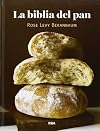
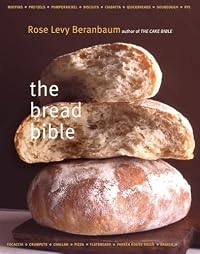
Presents a collection of baked bread recipes; outlines key baking techniques; and offers complementary information on ingredients, equipment, and baking chemistry.Tags
Recommendations
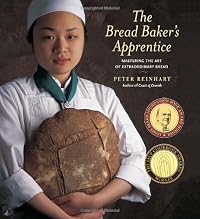





Member Reviews
A lot of words about bread and a lot of recipes.
Unfortunately, after reading the words, I felt like I still didn't understand what was going on all that well. Even more unfortunately, very few of the recipes I tried came out very well.
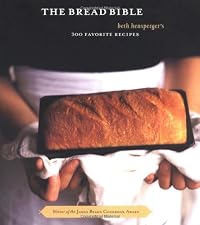
Nearly all recipes in The Bread Bible are time-consuming and complex, with multiple rises, often taking many hours. The instructions are very detailed, but still not that easy to follow - when I kneaded dough for the times directed (using a standard KitchenAid mixer and King Arthur flours, measuring by weight), I rarely saw the texture I was supposed to. Stated rising times were off in both directions, sometimes too short and sometimes too long (same yeast). Since the recipes also took hours to complete show more and the dough had to be worked at intervals, it was very challenging to do other things on days when I was baking bread - I could never quite predict when the dough would be ready for the next interaction.
After cooking with this book for a while, I realized that while I enjoyed reading the words, the recipes never gave results better than a King Arthur Flour recipe, despite being much more work. I got rid of The Bread Bible after I discovered Peter Reinhart's The Bread Baker's Apprentice, which clicked with me a lot better. show less
Unfortunately, after reading the words, I felt like I still didn't understand what was going on all that well. Even more unfortunately, very few of the recipes I tried came out very well.
Nearly all recipes in The Bread Bible are time-consuming and complex, with multiple rises, often taking many hours. The instructions are very detailed, but still not that easy to follow - when I kneaded dough for the times directed (using a standard KitchenAid mixer and King Arthur flours, measuring by weight), I rarely saw the texture I was supposed to. Stated rising times were off in both directions, sometimes too short and sometimes too long (same yeast). Since the recipes also took hours to complete show more and the dough had to be worked at intervals, it was very challenging to do other things on days when I was baking bread - I could never quite predict when the dough would be ready for the next interaction.
After cooking with this book for a while, I realized that while I enjoyed reading the words, the recipes never gave results better than a King Arthur Flour recipe, despite being much more work. I got rid of The Bread Bible after I discovered Peter Reinhart's The Bread Baker's Apprentice, which clicked with me a lot better. show less
The only recipe I made out of this was the "Basic Soft White Sandwich Loaf" and it is hands down the best bread I've ever made. (As a guesstimate, I've made at least 50 loaves of bread of the last 4 years.) The only thing I anticipate changing about it is subbing in a little whole wheat flour because I feel wrong eating white bread.
Other than using a store brand of all purpose flour, and adjusting the rise times by eye for high altitude, I followed the recipe strictly. (Hand knead method)
She's wonderfully precise, but that's almost too much for my "flip through, bake something on a whim" style.
I'm sure she's totally right that having a long sponge stage improves flavor - but I want bread now! I prefer things that tell me the perfect show more way to do it, but with the caveat of "but will be ok if you do it this simpler way".
It's not the best bread book for me - I don't think I'll need to own a copy. I totally understand that being a perfectionist is how you come up with the best recipes, but it does take some of the fun out of trying to follow them.
But if you are a perfectionist and you're willing to track down the right brand of flour, weigh all your ingredients, etc. then I bet you'd love this book. show less
Other than using a store brand of all purpose flour, and adjusting the rise times by eye for high altitude, I followed the recipe strictly. (Hand knead method)
She's wonderfully precise, but that's almost too much for my "flip through, bake something on a whim" style.
I'm sure she's totally right that having a long sponge stage improves flavor - but I want bread now! I prefer things that tell me the perfect show more way to do it, but with the caveat of "but will be ok if you do it this simpler way".
It's not the best bread book for me - I don't think I'll need to own a copy. I totally understand that being a perfectionist is how you come up with the best recipes, but it does take some of the fun out of trying to follow them.
But if you are a perfectionist and you're willing to track down the right brand of flour, weigh all your ingredients, etc. then I bet you'd love this book. show less
If you want to learn how to make bread at home from scratch, this is an absolutely brilliant place to start. The introductory essay(s) talk about both the art and the science of breadmaking, making it much easier to grasp as a whole. I've had nothing but successes with this book, and breadmaking is quickly becoming a regular part of my life since, once you get the hang of it, it's actually pretty easy.
A pretty good primer on breads, with a wide range of recipes. Written very clearly and in a most detailed manner. Excellent illustrations throughout the book. Rose's bread making methods often include short sponges. (Personally, I prefer longer fermenting poolishes or bigas.)
This cookbook is a comprehensive and exhaustive work on baking bread. Beranbaum goes into great detail outlining the science behind why she wrote her recipes the way she did. While it is definitely not a book for beginning bakers, it is a great resource for an experienced bread maker.
If you're tired of your old standby bread recipes, then sure- this will do. Plus it explains why certain things happen that you might not know if you're an unschooled home baker such as myself. But the prose leaves something to be desired. Serviceable as a cookbook, but not as food porn.
This is the best book on bread baking I have ever seen. It is very technical, and at times the book reads more like a textbook in organic chemistry than a cook book. But the results are spectacular. Every single recipe I tried produced amazing bread.
Members
- Recently Added By
Author Information

16+ Works 4,552 Members
Rose Levy Beranbaum is an award-winning baker, food writer, and cookbook author. She has been a guest on many major television shows and was a presenter at the Melbourne Food and Wine Festival and the Oxford Food Symposium. She also created the Rose Levy Bakeware product line. Beranbaum has written for The Washington Post, Fine Cooking, Reader's show more Digest, Hemispheres, and Food Arts Magazine, for which she won The Association of Food Journalists Award for the Best Food Feature in a Magazine and The Jacob's Creek World Food Award for Best Food Article. She has also published many award-winning books, including The Cake Bible, The Bread Bible, and Rose's Christmas Cookies. (Bowker Author Biography) show less
1 Work 954 Members
Some Editions
Series

Classifications
- Genres
- Food & Cooking, Nonfiction, General Nonfiction
- DDC/MDS
- 641.815 — Applied Science & Technology Home economics & family management Food, Cooking & Recipes / Meals, Picnics Cooking specific kinds of dishes and preparing beverages Cooking side dishes, sauces, garnishes Bread and bread-like foods
- LCC
- TX769 .B365 — Technology Home economics Home economics Cooking
- BISAC
Statistics
- Members
- 954
- Popularity
- 27,613
- Reviews
- 14
- Rating
- (4.20)
- Languages
- Czech, English, Spanish
- Media
- Paper, Ebook
- ISBNs
- 6
- ASINs
- 2