On This Page
Description
The daughter of a slave taken from fallen Troy, Gull was chosen to become the voice of the Lady of the Dead and counsel kings. But when nine black ships appear, captained by exiled Prince Aeneas, she joins him as his guide and leads him to his destiny.Tags
Recommendations


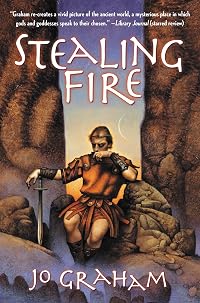
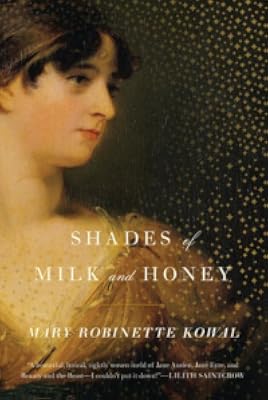
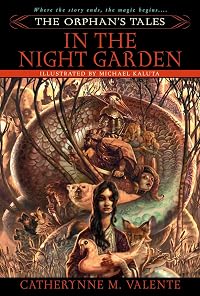
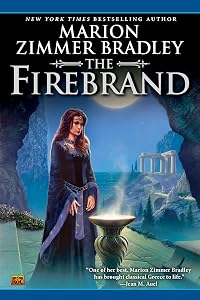








Member Recommendations

Member Reviews
A lot can go wrong in a work of historical fiction, all the more when it’s based on a semi-mythological historical record. Since the story has already been plotted out in its entirety the author doesn’t have to engage as deeply with her characters as if she’d invented them from nothing, with the result that many such endeavors simply go through the motions instead of truly telling a story. Similarly, the mythological origins of the work can tempt an author to rely on fantastic deus ex machina in lieu of moving the plot forward in a more considered, believable fashion.
Jo Graham’s Black Ships retells the Aeneid from the point of view of Gull, a young Trojan captive of the Greek city of Pylos, while avoiding all of the pitfalls show more mentioned above. Graham is obviously not only a fan of Virgil’s work, but of archeological research into the era in which it’s set as well, and Black Ships seamlessly blends the mythological with the factual, making the epic poetry of the original work in modern English prose. By rooting her epic in the larger historical context of its time period, Graham adds valuable context and urgency to her narrative while avoiding having to put long expository passages into the mouths of her characters. While the underpinnings of Black Ships are reminiscent of similar novels that blend history with myth and fantasy, Graham approaches her story in a unique way that neither relies too heavily on the fantastic nor the scientific to explain its pivotal aspects. Indeed, her deft handling of historically troubling aspects of the Aeneid such as Aeneas’ sojourn in Carthage and the rape of the Sabine women combine fact and spirituality in a way that often makes sense of the original while not sacrificing the otherworldly.
Similarly, Graham earns major kudos for returning the real world to the high adventure of the Aeneid. After all, heroic doings come with painful consequences that aren’t as glamorous as the epics makes them seem. The characters of the Aeneid/Black Ships are young. They struggle with love, sexuality, and confusion over competing desires and loyalties; hunger, sickness, and physical insecurity, and their daring deeds are more frequently precipitated by necessity than the desire for valor. Yet although Graham definitely means to impress this point on her readers, she keeps it subtle and believable to the personalities and motivations of her characters. Furthermore, her handling of many aspects that trip up YA and adult authors alike (How do I make romance sensual without being overly crass or precious? How do I handle depictions of violence that stress its horrors without being too graphic?) is quite skillful.
Although I imagined that I would enjoy Black Ships, I wasn’t sure if it could compare to old favorites like Megan Whalen Turner’s Attolia series or Marion Zimmer Bradley’s The Mists of Avalon. Surprisingly, it does—not by slavishly emulating them, but by telling its own story. I cared deeply for all the characters and miss them now that the last page has been turned. show less
Jo Graham’s Black Ships retells the Aeneid from the point of view of Gull, a young Trojan captive of the Greek city of Pylos, while avoiding all of the pitfalls show more mentioned above. Graham is obviously not only a fan of Virgil’s work, but of archeological research into the era in which it’s set as well, and Black Ships seamlessly blends the mythological with the factual, making the epic poetry of the original work in modern English prose. By rooting her epic in the larger historical context of its time period, Graham adds valuable context and urgency to her narrative while avoiding having to put long expository passages into the mouths of her characters. While the underpinnings of Black Ships are reminiscent of similar novels that blend history with myth and fantasy, Graham approaches her story in a unique way that neither relies too heavily on the fantastic nor the scientific to explain its pivotal aspects. Indeed, her deft handling of historically troubling aspects of the Aeneid such as Aeneas’ sojourn in Carthage and the rape of the Sabine women combine fact and spirituality in a way that often makes sense of the original while not sacrificing the otherworldly.
Similarly, Graham earns major kudos for returning the real world to the high adventure of the Aeneid. After all, heroic doings come with painful consequences that aren’t as glamorous as the epics makes them seem. The characters of the Aeneid/Black Ships are young. They struggle with love, sexuality, and confusion over competing desires and loyalties; hunger, sickness, and physical insecurity, and their daring deeds are more frequently precipitated by necessity than the desire for valor. Yet although Graham definitely means to impress this point on her readers, she keeps it subtle and believable to the personalities and motivations of her characters. Furthermore, her handling of many aspects that trip up YA and adult authors alike (How do I make romance sensual without being overly crass or precious? How do I handle depictions of violence that stress its horrors without being too graphic?) is quite skillful.
Although I imagined that I would enjoy Black Ships, I wasn’t sure if it could compare to old favorites like Megan Whalen Turner’s Attolia series or Marion Zimmer Bradley’s The Mists of Avalon. Surprisingly, it does—not by slavishly emulating them, but by telling its own story. I cared deeply for all the characters and miss them now that the last page has been turned. show less
 This review was written for LibraryThing Early Reviewers.
"The world has ended. And I don't know why I yet live."
"You live... because the world ends and then begins."
Summary: The Trojan war marked the beginning of a time of great upheaval, with the great cities falling, vast numbers of people either killed or dispossessed and homeless, and the old world going up in the smoke of raiders' fires. Into this world is born Gull, the daughter of a Trojan woman brought to Greece as a slave. When she is young, she becomes an acolyte to Pythia, the handmaiden of the Lady of the Dead. On her sixteenth birthday, Gull sees black ships sail into the harbor - Prince Aeneas and his warships, the people of her blood, come to wreak revenge and reclaim their kinsmen from slavery. She makes her choice and leaves show more with them, where she - and her Lady - must help to guide the straggling remnants of a people across the sea, to Byblos, Egypt, and beyond, through a world that is failing around them, struggling to find a future and a home.
Recommendation: I'm having a hard time finding words that can do justice to how much I enjoyed this book. I've never read the Aeneid, which is this book's inspiration, but taking the story of Black Ships on its own merits, it's wonderful. To see how people react to the world almost literally falling apart around them... it's an incredible period of history, this turning point, the falling into a Dark Age, and it's one I'd never considered before. Guiding us through this world is Gull, whose voice is strong and beautiful, but still recognizable and immediate - the motivations of all of the characters are familiar and believable, and they are relatable as young people doing their best to find a future in an uncertain world. I thought the religious aspects added a complex touch as well, bringing in the mysticism that we associate with that time period, without overplaying it or stretching credibility too far.
However, as much as I loved the characters and the story, what tipped this book into five-star territory for me was the writing. It's deceptively simple and unobtrusive, but at the same time, I found it achingly beautiful and incredibly haunting. I can't describe it any better than to say that it was the kind of writing that seemed to expand inside my chest, grabbing my heart and making it hard to breathe, even at parts that wouldn't ordinarily be particularly emotionally stirring. The writing fit the subject and the narrator perfectly, and vice versa. It's not a match that comes along often, and to find it in a debut novel blew me away.
Recommendation: Highly recommended. It's not everyone's cup of tea, I'm sure, but anyone with even a vague interest in historical fiction, Mists of Avalon-type fantasy, or the ancient world should definitely seek this one out. show less
"You live... because the world ends and then begins."
Summary: The Trojan war marked the beginning of a time of great upheaval, with the great cities falling, vast numbers of people either killed or dispossessed and homeless, and the old world going up in the smoke of raiders' fires. Into this world is born Gull, the daughter of a Trojan woman brought to Greece as a slave. When she is young, she becomes an acolyte to Pythia, the handmaiden of the Lady of the Dead. On her sixteenth birthday, Gull sees black ships sail into the harbor - Prince Aeneas and his warships, the people of her blood, come to wreak revenge and reclaim their kinsmen from slavery. She makes her choice and leaves show more with them, where she - and her Lady - must help to guide the straggling remnants of a people across the sea, to Byblos, Egypt, and beyond, through a world that is failing around them, struggling to find a future and a home.
Recommendation: I'm having a hard time finding words that can do justice to how much I enjoyed this book. I've never read the Aeneid, which is this book's inspiration, but taking the story of Black Ships on its own merits, it's wonderful. To see how people react to the world almost literally falling apart around them... it's an incredible period of history, this turning point, the falling into a Dark Age, and it's one I'd never considered before. Guiding us through this world is Gull, whose voice is strong and beautiful, but still recognizable and immediate - the motivations of all of the characters are familiar and believable, and they are relatable as young people doing their best to find a future in an uncertain world. I thought the religious aspects added a complex touch as well, bringing in the mysticism that we associate with that time period, without overplaying it or stretching credibility too far.
However, as much as I loved the characters and the story, what tipped this book into five-star territory for me was the writing. It's deceptively simple and unobtrusive, but at the same time, I found it achingly beautiful and incredibly haunting. I can't describe it any better than to say that it was the kind of writing that seemed to expand inside my chest, grabbing my heart and making it hard to breathe, even at parts that wouldn't ordinarily be particularly emotionally stirring. The writing fit the subject and the narrator perfectly, and vice versa. It's not a match that comes along often, and to find it in a debut novel blew me away.
Recommendation: Highly recommended. It's not everyone's cup of tea, I'm sure, but anyone with even a vague interest in historical fiction, Mists of Avalon-type fantasy, or the ancient world should definitely seek this one out. show less
This review was written for LibraryThing Early Reviewers.I really enjoyed this -- a deep, engrossing read, with wonderful characters and a very satisfying, unique story. I wrote "unique" with some trepidation, since this story has, in fact, been told a gazillion times, broadly the journey the defeated Trojans took after their city's fall and the founding of Rome by Aeneas, the Trojan prince. But the story is told by Aeneas' "oracle," a former slave and child of rape called Gull. Through her eyes, we see one of the (many) great cataclysms of ancient world, the destruction of cities (and knowledge) prompted by sea-faring and the attempt by the Greeks to capitalize on their victory at Troy by taking over the Mediterranean. Graham is excellent at putting us firmly in Gull while at the same time show more panning out to gives us a sense of the overall world (a skill I'm definitely working on). The start is a bit slow and the pace leisurely, but it really pays off at the end. show less
'Black Ships' is marketed as fantasy, but there is really no fantasy element. The book is straight historical fiction. The interesting element of mythology is that the characters knew personally some of the protagonists of the Aenid, the story of the seige of Troy. In fact, one of the protagonists is Aeneas himself. The book is extremely well written - I picked it off the rack at the bookstore to check it out by reading a few pages, and couldn't stop reading until I'd pretty much read the whole thing, skipping bits here and there.
The historical period is that of the declining ages of Ancient Greece, and the end of the book links together with the founding of Rome. The characters embark on a journey around the civilized Mediterranean show more Sea, with exciting battles and escapes along the way. There is lots of action, but at the same time, the protagonist is a woman and the whole plot is told through her eyes. Troy has been destroyed, and the remnants of the populace, only a few hundred people, must find someplace else to live, someplace safe where they will not be further pursued by those who wish to destroy even the remainder. The heroine is the daughter of a Trojan woman who was made a slave by other greeks who have raided her city. Crippled, her mother takes her to the priestess of one of the local gods to raise, knowing there is no other hope for a slave girl who cannot work and be productive. Grown up, she earns the respect of others with her ability to serve, and one of the interesting aspects of the book is a picture of how a priestess might have performed her role in ancient Greek society. She eventually is found by the remnants of her mother's people and joins them in their quest to find a new home.
Besides the history, the book has a slight flavor of romance novels, that is, there's some "mushy personal stuff." I didn't enjoy that aspect of the book much, but some people will. The depth of characters was far more than I suppose one finds in a typical romance novel, though, and the historical and social aspects of the book overshadowed the romance aspects plenty enough that this wasn't too much of a distraction for me.
The book was exceptionally good, and a big surprise in the fantasy aisle of the bookstore. If you're looking for standard fantasy, this isn't it - but if you want a highly entertaining read set in a period so different from our modern world that it might as well be a fantasy world, this is the perfect choice. show less
The historical period is that of the declining ages of Ancient Greece, and the end of the book links together with the founding of Rome. The characters embark on a journey around the civilized Mediterranean show more Sea, with exciting battles and escapes along the way. There is lots of action, but at the same time, the protagonist is a woman and the whole plot is told through her eyes. Troy has been destroyed, and the remnants of the populace, only a few hundred people, must find someplace else to live, someplace safe where they will not be further pursued by those who wish to destroy even the remainder. The heroine is the daughter of a Trojan woman who was made a slave by other greeks who have raided her city. Crippled, her mother takes her to the priestess of one of the local gods to raise, knowing there is no other hope for a slave girl who cannot work and be productive. Grown up, she earns the respect of others with her ability to serve, and one of the interesting aspects of the book is a picture of how a priestess might have performed her role in ancient Greek society. She eventually is found by the remnants of her mother's people and joins them in their quest to find a new home.
Besides the history, the book has a slight flavor of romance novels, that is, there's some "mushy personal stuff." I didn't enjoy that aspect of the book much, but some people will. The depth of characters was far more than I suppose one finds in a typical romance novel, though, and the historical and social aspects of the book overshadowed the romance aspects plenty enough that this wasn't too much of a distraction for me.
The book was exceptionally good, and a big surprise in the fantasy aisle of the bookstore. If you're looking for standard fantasy, this isn't it - but if you want a highly entertaining read set in a period so different from our modern world that it might as well be a fantasy world, this is the perfect choice. show less
I love historical fiction - especially novels set during classical times. Graham's debut is a fresh take on "The Aeneid." Most readers are familiar with the Illiad and the Odyssey (even if they've never read them) and many authors, and filmmakers, have retold those stories. One of my favorite of these is Marion Zimmer Bradley's "Firebrand" told from the point of view of the Seeress, Kassandra - fated to see the future but cursed that no one would believe her until it was too late. However, I have never read a modern author who has gone beyond the fall of Troy. Finally, one has and it was worth waiting for!
Graham has taken a familiar path – that of a famous story told from the POV of a minor character, often a slave, or servant. The show more story is told mostly from first person by Gull. She is the daughter of slave captured in Troy, and a strong female protagonist. When a chariot hits and cripples her, her mother gives her to the Pythia (a twist on the Delphic Oracle, here given visions by a Goddess instead of Apollo) where she discovers her real gift. Readers of Bradley's work will notice the obvious parallels between the two heroines, but Graham has her own distinct voice. Though the book is truly not fast-paced, it is still a page turner. The Aeneid is more of an adventure tale, a quest even. Gull is reminiscent of Kassandra, but the story will evoke themes in the Odyssey as Gull travels with Prince Aeneas searching for a new home for the exiled Trojans (here called Wilusans). The characters are fully developed, and the author provides details to secondary characters’ lives as well, even when they do not directly impact Gull. This makes the characters seem real.
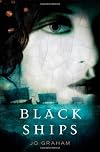
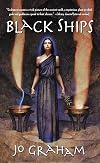
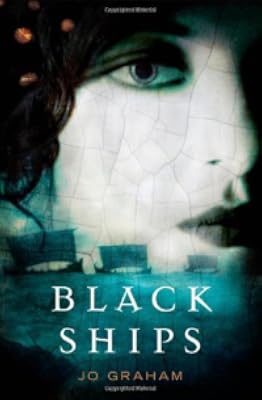
Though I found the title uninspiring, and the cover almost boring, the writing is excellent; smooth and flowing. I sat down to read a couple of chapters and finished 65 pages without realizing it. Before I started, I learned Graham's next book will center on Cleopatra, as told by one of her handmaids. At first I was skeptical - another Cleopatra book? However, after Black Ships, I can hardly wait to see what she does with the doomed queen. And, the new edition of Black Ships has a much better cover. :-) show less
Graham has taken a familiar path – that of a famous story told from the POV of a minor character, often a slave, or servant. The show more story is told mostly from first person by Gull. She is the daughter of slave captured in Troy, and a strong female protagonist. When a chariot hits and cripples her, her mother gives her to the Pythia (a twist on the Delphic Oracle, here given visions by a Goddess instead of Apollo) where she discovers her real gift. Readers of Bradley's work will notice the obvious parallels between the two heroines, but Graham has her own distinct voice. Though the book is truly not fast-paced, it is still a page turner. The Aeneid is more of an adventure tale, a quest even. Gull is reminiscent of Kassandra, but the story will evoke themes in the Odyssey as Gull travels with Prince Aeneas searching for a new home for the exiled Trojans (here called Wilusans). The characters are fully developed, and the author provides details to secondary characters’ lives as well, even when they do not directly impact Gull. This makes the characters seem real.
Though I found the title uninspiring, and the cover almost boring, the writing is excellent; smooth and flowing. I sat down to read a couple of chapters and finished 65 pages without realizing it. Before I started, I learned Graham's next book will center on Cleopatra, as told by one of her handmaids. At first I was skeptical - another Cleopatra book? However, after Black Ships, I can hardly wait to see what she does with the doomed queen. And, the new edition of Black Ships has a much better cover. :-) show less
This review was written for LibraryThing Early Reviewers.Gull is given to Pythia's temple when she is young, and slowly learns the mysteries of the priestesses of death. Eventually she becomes the sibyl, just in time to receive a vision of approaching black ships. Her prophecy compels her to race into the town, where she prevents whole-sale slaughter between her mother's people and the people who took her as a slave. Gull goes with the Wilusans (from the Hittite's word for Trojans) as they search for a new homeland. As they travel they realize that their own tragedy is part of a larger spread of chaos and war throughout the Mediterranean. Eventually, led by their heroic prince Aeneas, they marry into a new land and form the foundations for Rome.
I liked this, but I would have liked this a lot show more more if A)Graham had used names I recognized from Greek and Roman tales, instead of confusing me with Hittite names and B)magic and the gods weren't clearly at work. With just a few edits, Gull's visions from and discussions with gods could have become enticingly ambiguous. Additionally, after the first few chapters I felt like nothing bad would happen to the company; I was all too sure that Gull and Aeneas would succeed at their every endeavor. Again, I would have loved a little less surety, a little more ambiguity. show less
I liked this, but I would have liked this a lot show more more if A)Graham had used names I recognized from Greek and Roman tales, instead of confusing me with Hittite names and B)magic and the gods weren't clearly at work. With just a few edits, Gull's visions from and discussions with gods could have become enticingly ambiguous. Additionally, after the first few chapters I felt like nothing bad would happen to the company; I was all too sure that Gull and Aeneas would succeed at their every endeavor. Again, I would have loved a little less surety, a little more ambiguity. show less
[LT early reviewer - These comments apply to the advance reading edition (ARC)]
A well constructed opening to this novel of Trojan refugees draws the reader in quickly and never disappoints. This is a wonderfully crafted story which takes place at the end of the age of heroes and the beginning of the story of Rome. Almost hidden behind marvelous storytelling is an excellent conflation of the mythic and heroic tales of the ancient Greek world, and the historic and archeological records related to ancient Greece, the Middle East, ancient Egypt, and pre-Roman Italy.
This is one of those novels whose three dimensional characters grow on the reader to the point that finishing the book is like watching old friends disappearing around the bend. show more Though Black Ships tells of the many adventures these refugees encounter in their wanderings, real excitement comes from watching as the main characters struggle to find their path - sometimes relying on faith in the whispers of gods; sometimes by trusting their own judgement.
Jo Graham tells the story through a significant female character, and the feminine experience is a major theme of the book. However, she has avoided one of my frequent complaints about novels that strive to give a 'new' point of view. She has done a fine job of "fleshing out" both male and female characters, and giving some of the male characters 'real' lives that are not always told only as they impact the main character/narrator/
This is a great read for anyone who enjoys a well crafted adventure story, but, for those with an interest in the history and mythology of the ancient Mediteranean, this is a real treasure.
Os. show less
A well constructed opening to this novel of Trojan refugees draws the reader in quickly and never disappoints. This is a wonderfully crafted story which takes place at the end of the age of heroes and the beginning of the story of Rome. Almost hidden behind marvelous storytelling is an excellent conflation of the mythic and heroic tales of the ancient Greek world, and the historic and archeological records related to ancient Greece, the Middle East, ancient Egypt, and pre-Roman Italy.
This is one of those novels whose three dimensional characters grow on the reader to the point that finishing the book is like watching old friends disappearing around the bend. show more Though Black Ships tells of the many adventures these refugees encounter in their wanderings, real excitement comes from watching as the main characters struggle to find their path - sometimes relying on faith in the whispers of gods; sometimes by trusting their own judgement.
Jo Graham tells the story through a significant female character, and the feminine experience is a major theme of the book. However, she has avoided one of my frequent complaints about novels that strive to give a 'new' point of view. She has done a fine job of "fleshing out" both male and female characters, and giving some of the male characters 'real' lives that are not always told only as they impact the main character/narrator/
This is a great read for anyone who enjoys a well crafted adventure story, but, for those with an interest in the history and mythology of the ancient Mediteranean, this is a real treasure.
Os. show less
This review was written for LibraryThing Early Reviewers.Members
- Recently Added By
Published Reviews
ThingScore 50
The structure of this story isn’t anything readers of feminist historical fantasy haven’t seen before... But although the novel lacks surprises, it compensates with sympathetic characters and emotional truth.
added by sturlington
Lists

Best Historical Fiction
620 works; 261 members

Best historical fiction set in the ancient world
126 works; 38 members

Recommend the 20 best books you've read in the last five years
2,168 works; 601 members

Female Protagonist
1,056 works; 57 members

Books Read in 2015
3,299 works; 129 members

Myth (Reuse and Retelling)
188 works; 24 members

Books with Colourful Titles
171 works; 8 members

BingoDOG 2015 Challenge
49 works; 3 members

Stories Inspired by Other Fiction
127 works; 24 members

SantaThing 2014 Gifts
299 works; 17 members

First Novels
373 works; 17 members

SFFCat 2015
35 works; 1 member

BingoDOG - Prophecy, Signs, or Portents are part of the plot
18 works; 9 members

Best Mythic Fiction
35 works; 6 members

Jean's Sci Fi/Fantasy Reading list
189 works; 12 members

Aeneas
15 works; 1 member

Historical Fantasy
93 works; 14 members

A Rainbow of Books: Colors in the Title
570 works; 24 members

Stories Inspired by Myth
8 works; 1 member

Fantasy by Women Who Broke Away from Europe
144 works; 12 members
Author Information

26 Works 2,098 Members
Some Editions
Awards and Honors
Awards
Distinctions
Series

Work Relationships
Is a retelling of
Common Knowledge
- Original publication date
- 2008-03-10
- People/Characters
- Gull [Black Ships] (Pythia, sybil); Aeneas; Alexandros "Xandros"; Anchises; Kos; Neoptolemos (show all 9); Lavinia; Lide; Basetamon
- Important places
- Pylos; Island of the Dead (Thera | now Santorini); Byblos; Wilusa (Troy); Millawanda (Miletus); Memphis, Egypt (show all 10); Thera, Greece (Island of the Dead); Santorini, Greece (Island of the Dead); Troy (Wilusa); Miletus (Millawanda)
- Important events
- Trojan War
- First words
- You must know that, despite all else I am, I am of the People.
- Quotations
- In the beginning there was nothing, not even time. And then there was something. A word. A thought. And then in an instant there was everything.
- Last words
- (Click to show. Warning: May contain spoilers.)And the world was mended.
- Publisher's editor
- Pillai, Devi
- Blurbers
- Novik, Naomi
- Original language
- English
Classifications
Statistics
- Members
- 730
- Popularity
- 38,660
- Reviews
- 87
- Rating
- (3.87)
- Languages
- English
- Media
- Paper, Audiobook, Ebook
- ISBNs
- 9
- ASINs
- 5