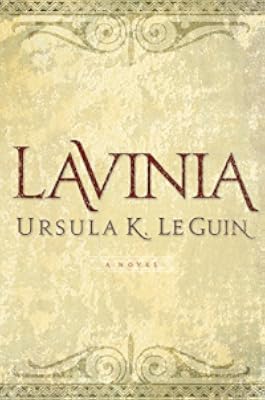
Lavinia
by Ursula K. Le Guin
On This Page
Description
In The Aeneid, Vergil's hero fights to claim the king's daughter, Lavinia, with whom he is destined to found an empire. Lavinia herself never speaks a word. Now, Ursula K. Le Guin gives Lavinia a voice in a novel that takes us to the half-wild world of ancient Italy, when Rome was a muddy village near seven hills. Lavinia grows up knowing nothing but peace and freedom, until suitors come. Her mother wants her to marry handsome, ambitious Turnus. But omens and prophecies spoken by the sacred show more springs say she must marry a foreigner - that she will be the cause of a bitter war - and that her husband will not live long. When a fleet of Trojan ships sails up the Tiber, Lavinia decides to take her destiny into her own hands. And so, she tells us what Vergil did not: the story of her life, and of the love of her life. show lessTags
Recommendations




Member Recommendations
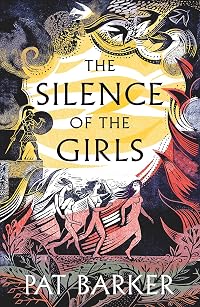
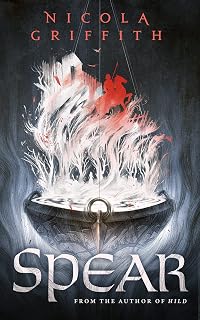
knhaydon Modern retelling of a classical myth, narrated by a character with a less central part in the original source text(s).
20
sturlington Aeneas legend told from POV of women

Limelite Interpretational tales about female Greek mythological characters
Both books have plot twists and are rather weird and strange and dream-like
casvelyn Both are stories of strong, motherless women with dysfunctional families who play a part in a mythical tale
11

Member Reviews
Le Guin enchants you immediately, as Lavinia’s own voice and stories glow with an existential nostalgia that you have no right feeling for pre-Roman Latium. Lavinia’s story, previously unsung, is human and mystical in turns, mixing heartache and family matters with ancient ritual and poetic necromancy. Le Guin weaves history into the story with skill; although the Roman abstraction of divinity is probably too early for Lavinia’s timeline, she still pulls us directly and beautifully into her ancient world. If you liked Circe, you’ll love this.
Le Guin gives a voice to the woman who becomes Aeneas's wife and helps to found Rome.
As I should have come to expect with a writer like Le Guin, this book was not what I was expecting. I was expecting a work of straightforward historical fiction with perhaps a little fantasy, the end of the The Aeneid told from a female point of view, something of a sequel to Jo Graham's Black Ships, which I read previously this year. And I got all that, but Le Guin has added an extra metafictional layer, which makes her book so much more complex and interesting.
Lavinia in this novel is not only a historical figure, but is also a fictional character, a character who knows she's a character and who even meets her author, Vergil, also a character in the show more book. From Vergil, she understands that she was such a minor character that she was barely more than a name, but since she did not die in The Aeneid, she is in effect immortal, and she determines to tell the story that Vergil did not. From Vergil, she also learns the fate of Aeneas--although it's deliberately unclear whether that fate was indeed historical or only fateful because the author had written it so--and armed with that foreknowledge, she is actually able to take control of her own life and shape her destiny.
Lavinia in Le Guin's hands is a fascinating character, a woman who is acutely aware of the position of women--especially the unmarried daughters of kings--in her society. What I admire about her is how she manipulates her own understanding of the world and knowledge of the future to get what she wants. She is not only predestined to marry Aeneas, but she wants to marry him, and when war breaks out over the question, she skillfully uses the people's fear of the gods and oracle to bring her own destiny about. Later, after Aeneas's death, she uses the same strategy to ensure that their son remains with her and she can raise him to adulthood, in direct contradiction of the prevailing traditions. Lavinia does not struggle against the society she is born into; she is a pragmatist who works within the confines of her society in order to transcend them. Yet, the reader must remain aware that she is not a real woman at all, but a character in a poem, an immortal character who transforms herself into author to write her own story, since her author failed to do so.
This was a wonderful character study as well as a multilayered reinterpretation of The Aeneid. Le Guin is always surprising and always worth reading. show less
As I should have come to expect with a writer like Le Guin, this book was not what I was expecting. I was expecting a work of straightforward historical fiction with perhaps a little fantasy, the end of the The Aeneid told from a female point of view, something of a sequel to Jo Graham's Black Ships, which I read previously this year. And I got all that, but Le Guin has added an extra metafictional layer, which makes her book so much more complex and interesting.
Lavinia in this novel is not only a historical figure, but is also a fictional character, a character who knows she's a character and who even meets her author, Vergil, also a character in the show more book. From Vergil, she understands that she was such a minor character that she was barely more than a name, but since she did not die in The Aeneid, she is in effect immortal, and she determines to tell the story that Vergil did not. From Vergil, she also learns the fate of Aeneas--although it's deliberately unclear whether that fate was indeed historical or only fateful because the author had written it so--and armed with that foreknowledge, she is actually able to take control of her own life and shape her destiny.
Lavinia in Le Guin's hands is a fascinating character, a woman who is acutely aware of the position of women--especially the unmarried daughters of kings--in her society. What I admire about her is how she manipulates her own understanding of the world and knowledge of the future to get what she wants. She is not only predestined to marry Aeneas, but she wants to marry him, and when war breaks out over the question, she skillfully uses the people's fear of the gods and oracle to bring her own destiny about. Later, after Aeneas's death, she uses the same strategy to ensure that their son remains with her and she can raise him to adulthood, in direct contradiction of the prevailing traditions. Lavinia does not struggle against the society she is born into; she is a pragmatist who works within the confines of her society in order to transcend them. Yet, the reader must remain aware that she is not a real woman at all, but a character in a poem, an immortal character who transforms herself into author to write her own story, since her author failed to do so.
This was a wonderful character study as well as a multilayered reinterpretation of The Aeneid. Le Guin is always surprising and always worth reading. show less
Lavinia is a story about grief, fate, the succession of generations, and the voices that linger. The "real" Lavinia is an object of Virgil's Aeneid, the daughter of the king Latinus who's betrothal to Aeneas rather the neighboring Turnus is the spark that ignites the bloody war of the second half of the Aeneid. In Virgil's account, Lavinia gets one stanza of description and zero lines of dialog. Le Guin expands this character to a worthy protagonist in her own right.
The story follows Lavinia from her beginning to end--not death, for her existence is too contingent to grant her life, and so without life she is without death. Very roughly, the first third is her childhood, a growing up a wild and free princess in the peaceful realm of her show more father Latinus. The only real discord in the kingdom is between Latinus and Lavinia's mother Amata, who has become maddened and embittered by grief after Lavinia's two brothers died of a childhood fever. As a maiden, Lavinia learns the rites and rituals of her station. She does not want to marry, ever.
But the fate of a princess is betrothal, and Turnus, handsome, strong, wealthy, reckless, greedy, is her most likely suitor and one she attempts to avoid. At a sacred spring, Lavinia encounters the shade of a dying poet centuries hence, and learns that she is part of a poem, and her husband is coming soon. In one rather riveting sequence, the poet describes the way to come in the matter of fact tone of death in the epics: who is speared, who has their throat cut, who has their skull shattered by a rock, who eats dirt with a bloody mouth.
And then Aeneas arrives, and all proceeds as foreseen. Turnus leads the local tribes in a hasty alliance against the Trojans that the old King Latinus is unable to stop. Mars, leaping Mars, Mars Mavors macte esto, takes all the men, and the slaughter becomes its own justification. Lavinia tends the wounded, and learns what the "glory" of war means.
And in the last third, Lavinia finds that peace is a process more than a state. She has three happy years and a son with Aeneas, and then her Trojan dies to a random spear thrown by a bandit at a ford. The fortunes of the kingdom wax and wane under Aeneas's older son Ascanius, and there is finally closure, and a sense that one days these little villages of Latium will become a great empire.
In many ways, Iron Age Italy is just as fantastic as Earthsea or Gethen, and Le Guin has a talent for the rock solidity of the lived experience of Lavinia and her peers, close to the earth and the trees and their cattle. The great powers of the land, the named gods like Vesta, Ceres, Venus, and Mars, and the domestic gods of the Lares and Penates, have an absolute reality in their assurance. Their oracles are unavoidable, fates perfectly bound and cut, even as mortals struggle and grieve. The family relationships that Lavinia has, and the way that rulership is the family writ large, makes the politics and emotions of this distant world come alive.
In the postscript, Le Guin decries that with the loss of the classical education focus on Latin and Greek, the Aeneid is no longer read as it should be. My own education definitely covered the Odyssey (I have Fagles' translation from 9th grade) and the Illiad, but I'm only vaguely familiar with Virgil's work. The question now is which translation. Nicolas Whyte makes a solid case for the classis Dryden over Fagles or Heaney, but apparently Fitzgerald's translation is considered the modern standard. Choices, choices! show less
The story follows Lavinia from her beginning to end--not death, for her existence is too contingent to grant her life, and so without life she is without death. Very roughly, the first third is her childhood, a growing up a wild and free princess in the peaceful realm of her show more father Latinus. The only real discord in the kingdom is between Latinus and Lavinia's mother Amata, who has become maddened and embittered by grief after Lavinia's two brothers died of a childhood fever. As a maiden, Lavinia learns the rites and rituals of her station. She does not want to marry, ever.
But the fate of a princess is betrothal, and Turnus, handsome, strong, wealthy, reckless, greedy, is her most likely suitor and one she attempts to avoid. At a sacred spring, Lavinia encounters the shade of a dying poet centuries hence, and learns that she is part of a poem, and her husband is coming soon. In one rather riveting sequence, the poet describes the way to come in the matter of fact tone of death in the epics: who is speared, who has their throat cut, who has their skull shattered by a rock, who eats dirt with a bloody mouth.
And then Aeneas arrives, and all proceeds as foreseen. Turnus leads the local tribes in a hasty alliance against the Trojans that the old King Latinus is unable to stop. Mars, leaping Mars, Mars Mavors macte esto, takes all the men, and the slaughter becomes its own justification. Lavinia tends the wounded, and learns what the "glory" of war means.
And in the last third, Lavinia finds that peace is a process more than a state. She has three happy years and a son with Aeneas, and then her Trojan dies to a random spear thrown by a bandit at a ford. The fortunes of the kingdom wax and wane under Aeneas's older son Ascanius, and there is finally closure, and a sense that one days these little villages of Latium will become a great empire.
In many ways, Iron Age Italy is just as fantastic as Earthsea or Gethen, and Le Guin has a talent for the rock solidity of the lived experience of Lavinia and her peers, close to the earth and the trees and their cattle. The great powers of the land, the named gods like Vesta, Ceres, Venus, and Mars, and the domestic gods of the Lares and Penates, have an absolute reality in their assurance. Their oracles are unavoidable, fates perfectly bound and cut, even as mortals struggle and grieve. The family relationships that Lavinia has, and the way that rulership is the family writ large, makes the politics and emotions of this distant world come alive.
In the postscript, Le Guin decries that with the loss of the classical education focus on Latin and Greek, the Aeneid is no longer read as it should be. My own education definitely covered the Odyssey (I have Fagles' translation from 9th grade) and the Illiad, but I'm only vaguely familiar with Virgil's work. The question now is which translation. Nicolas Whyte makes a solid case for the classis Dryden over Fagles or Heaney, but apparently Fitzgerald's translation is considered the modern standard. Choices, choices! show less
I love Le Guin, and was overjoyed when I saw her newest book was about one of my favorite subjects! Having read parts of The Aeneid in Latin in high school and college, I was prepared to be nitpicking and disappointed at the inaccuracies, and it was only that this WAS Le Guin that I opened the book.
I was not disappointed, and I was not nitpicking, either. If I was a Latin teacher, I would have my students reading this book (or at least excerpts from it) to help them understand the Latin religion and their treatment of household gods and the sacred places.
Le Guin brings a new path to the story-telling process (which I won't spoil for you), allowing Lavinia to tell us her story from an odd angle. I enjoyed that almost as much as I was show more fascinated by the details of Latin life. show less
I was not disappointed, and I was not nitpicking, either. If I was a Latin teacher, I would have my students reading this book (or at least excerpts from it) to help them understand the Latin religion and their treatment of household gods and the sacred places.
Le Guin brings a new path to the story-telling process (which I won't spoil for you), allowing Lavinia to tell us her story from an odd angle. I enjoyed that almost as much as I was show more fascinated by the details of Latin life. show less
In this book Ursula K. Le Guin riffs on a minor character from Virgil’s Aeneid, that of Lavinia, daughter of Latinus and eventual wife of Aeneas. Aeneas, of course, was the Trojan prince not killed when Troy fell, escaping and traveling to Italy, after a journey ala Odysseus took him to places like Carthage where he’d meet Queen Dido. His descendants, so the Virgil legend goes, would found Rome. It’s the second half of the Aeneid that Le Guin essentially retells in prose through Lavinia, the point at which Aeneas arrives.
Little was mentioned of Lavinia in the source text, but Le Guin crafts quite a narrative around her, and to her credit, it’s completely harmonious with Virgil’s work. In weaker hands it might have become some show more kind of manifesto, but Le Guin uses Lavinia to fill out the story from a woman’s perspective. The result is a broader picture of life in the 8th century BC in the area around what would become Rome, even if Le Guin (as Virgil did) makes it a teeny less primitive than it may have been, as she discusses in the Afterword. The elements of intrigue and inevitable warfare are of course present, but the perspective shift brings them more to life, and adds a layer of humanism.
Le Guin uses an interesting technique of having the narrator, Lavinia, communicating with poet Virgil who would live centuries later, and aware of this fact, much as the people of the day would consult oracles and abide by them. It’s a scholarly work, and one that was clearly well-researched. It would make a fantastic companion read with the Aeneid, and even reading it many years after the Aeneid in my case, brought it back to life for me. It’s the stuff of legend, but communicates universal truths about humanity, both in virtues and failings. show less
Little was mentioned of Lavinia in the source text, but Le Guin crafts quite a narrative around her, and to her credit, it’s completely harmonious with Virgil’s work. In weaker hands it might have become some show more kind of manifesto, but Le Guin uses Lavinia to fill out the story from a woman’s perspective. The result is a broader picture of life in the 8th century BC in the area around what would become Rome, even if Le Guin (as Virgil did) makes it a teeny less primitive than it may have been, as she discusses in the Afterword. The elements of intrigue and inevitable warfare are of course present, but the perspective shift brings them more to life, and adds a layer of humanism.
Le Guin uses an interesting technique of having the narrator, Lavinia, communicating with poet Virgil who would live centuries later, and aware of this fact, much as the people of the day would consult oracles and abide by them. It’s a scholarly work, and one that was clearly well-researched. It would make a fantastic companion read with the Aeneid, and even reading it many years after the Aeneid in my case, brought it back to life for me. It’s the stuff of legend, but communicates universal truths about humanity, both in virtues and failings. show less
""She's pious.' By that word I meant responsible, faithful to duty, open to awe.'
Anything I might say about this novel short of an essay might be a understatement. Le Guin is always insightful, always challenging, always analytical, but in "Lavinia" the eponymous protagonist embodies all these aspects of her author in a manner that repeatedly struck me speechless. This book, in stride with Virgil's "Aeneid," offers not only a suspenseful and vivid story but a compassionate meditation on womanhood, companionship, steadfastness, and what piety could really mean. Entering into one of Le Guin's novels always feels like jumping in at the deep end of the pool, but if you tread water long enough to see what beauty exists about you, such an show more effort is well worth it. show less
Anything I might say about this novel short of an essay might be a understatement. Le Guin is always insightful, always challenging, always analytical, but in "Lavinia" the eponymous protagonist embodies all these aspects of her author in a manner that repeatedly struck me speechless. This book, in stride with Virgil's "Aeneid," offers not only a suspenseful and vivid story but a compassionate meditation on womanhood, companionship, steadfastness, and what piety could really mean. Entering into one of Le Guin's novels always feels like jumping in at the deep end of the pool, but if you tread water long enough to see what beauty exists about you, such an show more effort is well worth it. show less
A review I wrote in 2020:
Lavinia by Ursula Le Guin (4 stars)
Based on a minor character from the last few books of Virgil’s Aeneid, this is a beautifully written
novel immersed in Roman myth and history but with a very modern feel to her lead character,
Lavinia, and a modern style of storytelling. Lavinia in the story meets a soothsayer poet who
comes to her at the sacred spring, or oracle, near her home and tells her he has written and is
writing her story but that he is dying; he foretells Lavinia’s meeting the Trojan hero Aeneas and her
rejection of other suitors for her hand in marriage. Lavinia retains a certain amount of control and
self-awareness over her destiny as the soothsayer poet (Virgil) admits that he has got some
details show more about her wrong, and as he becomes acquainted with her over his visitations, admits that
he should have made her a more important character in his poem.
Virgil himself based his Aeneas upon a minor character in Homer’s Iliad, so it’s a very playful take
on that same literary device and makes for an interesting read.
Lavinia, though a princess, has had a troubled upbringing since the death of her brother and heir
to the throne. Her mother, driven mad with grief, shows little interest in the happiness of her living
child and plots for Lavinia’s future.
I’d stop short of giving this 5 stars but nevertheless I really enjoyed Ursula’s wonderful writing, the
originality and her interesting and imperfect heroine, Lavinia. Highly recommend. show less
Lavinia by Ursula Le Guin (4 stars)
Based on a minor character from the last few books of Virgil’s Aeneid, this is a beautifully written
novel immersed in Roman myth and history but with a very modern feel to her lead character,
Lavinia, and a modern style of storytelling. Lavinia in the story meets a soothsayer poet who
comes to her at the sacred spring, or oracle, near her home and tells her he has written and is
writing her story but that he is dying; he foretells Lavinia’s meeting the Trojan hero Aeneas and her
rejection of other suitors for her hand in marriage. Lavinia retains a certain amount of control and
self-awareness over her destiny as the soothsayer poet (Virgil) admits that he has got some
details show more about her wrong, and as he becomes acquainted with her over his visitations, admits that
he should have made her a more important character in his poem.
Virgil himself based his Aeneas upon a minor character in Homer’s Iliad, so it’s a very playful take
on that same literary device and makes for an interesting read.
Lavinia, though a princess, has had a troubled upbringing since the death of her brother and heir
to the throne. Her mother, driven mad with grief, shows little interest in the happiness of her living
child and plots for Lavinia’s future.
I’d stop short of giving this 5 stars but nevertheless I really enjoyed Ursula’s wonderful writing, the
originality and her interesting and imperfect heroine, Lavinia. Highly recommend. show less
Members
- Recently Added By
Published Reviews
ThingScore 100
Lavinia is a historical novel set in mythical antiquity, Bronze Age Italy in the aftermath of the Trojan War. Le Guin has taken a (very) minor character from Virgil’s epic The Aeneid - in the poem Aeneas’s last wife Lavinia has no line of dialogue whatsoever - and given her voice. And a powerful and seemingly authentic voice too. The landscape, homes, religion, politicking, people and show more battles are all convincingly portrayed. When reading this you feel as if you are there, immersed in prehistory. Even the scenes in the place of oracles where Lavinia talks to the apparition she knows only as the poet - she could merely be dreaming of course - have the stamp of authority. At any rate Lavinia believes in him, and his revelations are borne out by events. There is, too, enough of a body count - foretold by the poet in a long, disturbing list - to satisfy the bloodthirsty.
For Lavinia starts a war. Not by allowing herself to be taken by men, she says (in a beautifully understated inference to the much more famous Helen) but instead by choosing one for herself. I quibble slightly at who actually chooses Aeneas for Lavinia; she is swayed not only by the lack of suitability of the other candidates for her hand but also by her conversations with the poet. Otherwise she is a strong decisive character, who stands up to both her father, the King Latinus, and mother, Amata, and later to Ascanius, Aeneas’s son by his previous marriage.
Given the book’s context the perennial follies of men are an unsurprising theme of Lavinia, the character and the novel.
Despite its setting the book was on the short list for the BSFA Award for best novel of 2009, which on the face of it is baffling, even if Le Guin is a stalwart of the genres of SF and fantasy. I suppose its proposers could argue that since in the book Lavinia speaks with the ghost of a poet not yet born in her time there is an element of fantasy present. (Le Guin uses the spelling Vergil. I know his Latin name was Vergilius but in my youth the poem was always known as Virgil’s Aeneid.) True too, the past is always a different country. Fictionally it takes as much imagination to invest it with verisimilitude as it does to describe an as yet unrealised (SF) future. Except - sometimes - you can research the past.
This is an admirably realised and executed novel, though, whichever genre you wish to pigeon-hole it with.
Or you could say, as I do, that it is simply an excellent novel, full stop. show less
For Lavinia starts a war. Not by allowing herself to be taken by men, she says (in a beautifully understated inference to the much more famous Helen) but instead by choosing one for herself. I quibble slightly at who actually chooses Aeneas for Lavinia; she is swayed not only by the lack of suitability of the other candidates for her hand but also by her conversations with the poet. Otherwise she is a strong decisive character, who stands up to both her father, the King Latinus, and mother, Amata, and later to Ascanius, Aeneas’s son by his previous marriage.
Given the book’s context the perennial follies of men are an unsurprising theme of Lavinia, the character and the novel.
Despite its setting the book was on the short list for the BSFA Award for best novel of 2009, which on the face of it is baffling, even if Le Guin is a stalwart of the genres of SF and fantasy. I suppose its proposers could argue that since in the book Lavinia speaks with the ghost of a poet not yet born in her time there is an element of fantasy present. (Le Guin uses the spelling Vergil. I know his Latin name was Vergilius but in my youth the poem was always known as Virgil’s Aeneid.) True too, the past is always a different country. Fictionally it takes as much imagination to invest it with verisimilitude as it does to describe an as yet unrealised (SF) future. Except - sometimes - you can research the past.
This is an admirably realised and executed novel, though, whichever genre you wish to pigeon-hole it with.
Or you could say, as I do, that it is simply an excellent novel, full stop. show less
added by jackdeighton
Lists

Best Historical Fiction
620 works; 261 members

Top Five Books of 2013
1,562 works; 715 members

Best Contemporary Literary Fiction (Around the Last 30 Years)
388 works; 123 members

Best historical fiction set in the ancient world
126 works; 39 members

Historical Fiction
889 works; 90 members

Female Protagonist
1,056 works; 57 members

Love and Marriage
93 works; 10 members
Female Author
1,235 works; 67 members

2000s (the decade, not the century)
184 works; 11 members

Best Mythic Fiction
35 works; 6 members

War Literature
101 works; 19 members
Literature About Women and Girls
394 works; 39 members

Fiction with Women's Names in the Title
378 works; 15 members
Books with a Character's Name as the Title
129 works; 9 members

Stories Inspired by Other Fiction
127 works; 24 members

Myth (Reuse and Retelling)
188 works; 24 members

Parallel Novels
37 works; 6 members

Retrospective of Historical Fiction
48 works; 7 members

Books Read in 2015
3,299 works; 129 members

once upon a time ~ ancient world
46 works; 7 members

BingoDOG 2015 Challenge
49 works; 3 members

Acclaimed Fanfiction
23 works; 2 members

Speculative Fiction to Read
706 works; 32 members

Books Read in 2022
5,166 works; 112 members

Books Set in Rome
98 works; 2 members

SFFCat 2015
35 works; 1 member

Global Reads: Books Set in Western Europe
186 works; 10 members

Dead narrators
50 works; 4 members

Stories Inspired by Myth
8 works; 1 member

Historical Figures in Fiction
51 works; 5 members

Books Read in 2013
1,630 works; 51 members
Rethinking Myths and Fairy Tales
13 works; 1 member

Aeneas
15 works; 1 member

Books Read in 2024
4,623 works; 126 members
Our Favorite Comfort Reads
334 works; 200 members

Books We Discovered On LibraryThing
530 works; 130 members

Top Five Books of 2025
954 works; 303 members

Unread books
1,063 works; 87 members
Author Information

497+ Works 166,984 Members
Ursula K. Le Guin was born Ursula Kroeber in Berkeley, California on October 21, 1929. She received a bachelor's degree from Radcliffe College in 1951 and a master's degree in romance literature of the Middle Ages and Renaissance from Columbia University in 1952. She won a Fulbright fellowship in 1953 to study in Paris, where she met and married show more Charles Le Guin. Her first science-fiction novel, Rocannon's World, was published in 1966. Her other books included the Earthsea series, The Left Hand of Darkness, The Dispossessed: An Ambiguous Utopia, The Lathe of Heaven, Four Ways to Forgiveness, and The Telling. A Wizard of Earthsea received an American Library Association Notable Book citation, a Horn Book Honor List citation, and the Lewis Carroll Shelf Award in 1979. She received the Medal for Distinguished Contribution to American Letters in 2014. She also received the Nebula Award and the Hugo Award. She also wrote books of poetry, short stories collections, collections of essays, children's books, a guide for writers, and volumes of translation including the Tao Te Ching of Lao Tzu and selected poems by Gabriela Mistral. She died on January 22, 2018 at the age of 88. (Bowker Author Biography) show less
Some Editions
Awards and Honors
Awards
Distinctions
Notable Lists
Series
Belongs to Publisher Series
Work Relationships
Common Knowledge
- Canonical title*
- Lavinia
- Original title
- Lavinia
- Original publication date
- 2008-04
- People/Characters
- Lavinia; Turnus; Aeneas
- Important places*
- Laurentum; Lavinium; Alba Longa
- Epigraph
- sola domum et tantas servabat filia sedes,
iam matura viro, iam plenis nubilis annis.
multi illam magno e Latio totaque petebant
Ausonia . . .
A single daughter, now ripe for a man,
now of full marriageab... (show all)le age, kept the great
household. Many from broad Latium and
all Ausonia came wooing her . . . - First words
- I WENT TO THE SALT BEDS BY THE MOUTH OF THE RIVER, in the May of my nineteenth year, to get salt for the sacred meal.
- Quotations*
- S'entendre promettre pour sceller un traité, être échangée comme une coupe ou un vêtement constitue peut-être la pire insulte pour une âme humaine. Mais les esclaves et les filles à marier s'attendent à se voir ainsi... (show all) insulter, même quand on leur a accordé assez de liberté pour qu'elles jouent à se croire libres.
— On peut difficilement attendre d'un jeune homme qu'il soit désintéressé, dit Énée avec un sourire contrit.
— On semble l'attendre très naturellement des jeunes femmes. »
Sans guerre il n'y a pas de héros.
Serait-ce vraiment un mal ?
Dans l'urgence, à l'instant de choisir, Énée pouvait hésiter, douter, peser les conséquences, se laisser déchirer par des considérations opposées : torturé par l'indécision, il cherchait son but, son destin, jusqu'Ã... (show all) le trouver. Là, son choix était fait et il agissait en conséquence. Et pendant qu'il agissait son but était immuable. Après coup, il pouvait recommencer à se torturer, harceler sa conscience, jamais certain d'avoir bien agi. - Last words
- (Click to show. Warning: May contain spoilers.)Only sometimes my soul wakes as a woman again, and then when I listen I can hear silence, and in the silence his voice.
- Original language
- English
*Some information comes from Common Knowledge in other languages. Click "Edit" for more information.
Classifications
Statistics
- Members
- 2,591
- Popularity
- 7,311
- Reviews
- 104
- Rating
- (3.85)
- Languages
- 11 — Catalan, Dutch, English, Finnish, French, German, Italian, Polish, Portuguese, Spanish, Turkish
- Media
- Paper, Audiobook, Ebook
- ISBNs
- 38
- ASINs
- 22