
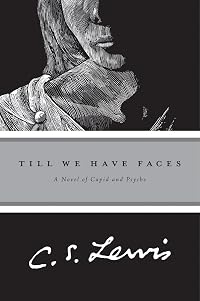
Till We Have Faces: A Myth Retold
by C. S. Lewis
On This Page
Description
This tale of two princesses - one beautiful and one unattractive - and of the struggle between sacred and profane love is Lewis's reworking of the myth of Cupid and Psyche and one of his most enduring works.Tags
Recommendations
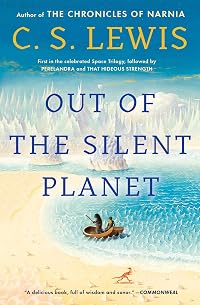
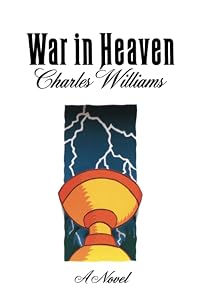

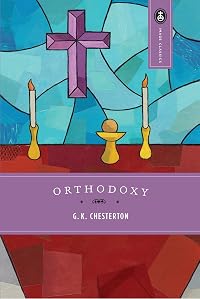
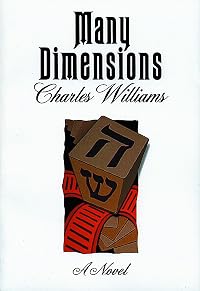
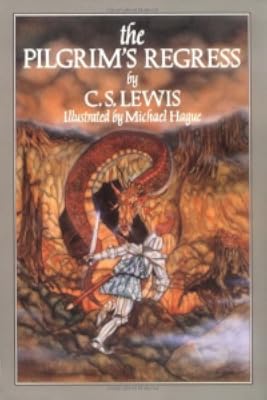
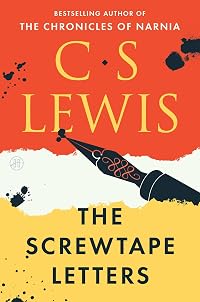
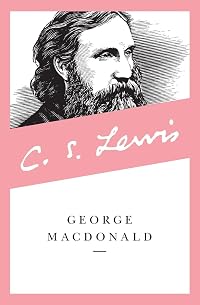
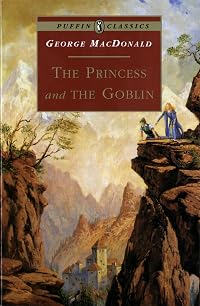








Member Recommendations

AnnaClaire A different author retelling a different myth, but they still seem to fit together nicely.
30
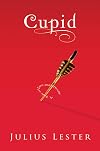
raizel A retelling of the Psyche and Cupid myth; Lester's version is for a younger (teen
20
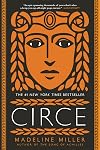
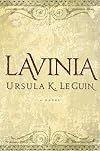
casvelyn Both are stories of strong, motherless women with dysfunctional families who play a part in a mythical tale
Member Reviews
I hadn’t read anything by C. S. Lewis for many years; the last was probably [b:Perelandra|100924|Perelandra (The Space Trilogy, #2)|C.S. Lewis|https://images.gr-assets.com/books/1388623162s/100924.jpg|3148586] when I was a teenager. That didn’t make much of an impression and I associated Lewis primarily with the Chronicles of Narnia, which were very important to my childhood (in a very similar fashion to Francis Spufford in [b:The Child That Books Built: A Life in Reading|358803|The Child That Books Built A Life in Reading|Francis Spufford|https://images.gr-assets.com/books/1388229409s/358803.jpg|1422235]). As a consequence, ‘Till We Have Faces’ caught me somewhat by surprise. It retells the Greek myth of Cupid and Psyche, which show more I had only the very vaguest notion of. A note sensibly placed at the end explains this story and makes clear that Lewis took the outline and reshaped it considerably. What gave the book its power and appeal to me was the wonderful narrative voice of Orual, older sister of Psyche. She is a marvellous, complicated, flawed character who I found deeply sympathetic and involving. The daughter of a king, she is abused and dismissed for not being beautiful. Her life story, set in a mythical ancient kingdom, examines gender roles with unexpected thoughtfulness. Orual observes that she is not treated like a woman because men dismiss her as unattractive, a situation she learns to use to her advantage while still finding it hurtful. Other female characters find that the beauty which gives them value as women also constrains their lives; this is especially well shown in the case of Ansit. Orual’s relationship with Psyche has a Sophoclean feeling of intensity, something made explicit in the text when Orual compares herself to Antigone.
I found the writing elegant and eloquent. It manages to be mythic without being pompous, lyrical without being obscure, and moving without being melodramatic. Orual’s voice is clear and distinctive throughout:
The narrative is structured in two parts, the second much shorter. In the former, Orual tells her life story as a challenge and accusation to the gods of her world. In the second, she reconsiders elements of her past on the basis of other people’s perspectives. This was powerfully done until the very end, when it seemed that Lewis was trying to insert a Christian model of god into an ancient setting. I found that a little awkward, as it seemed not to fit with the previous nuance of Orual’s relationship with the gods and with morality. Ending on the note, ‘You yourself are the answer. Before your face questions die away’ jibed somewhat with what had come before. If the intent was to reduce Orual to perfect humility before an unknowable godlike presence, this final scene did not sweep away the previous critical examination of ancient gods nor undermine the empathy I felt for Orual. She was fierce and strong and hurt some people that she loved, but her relationships were complex and her decisions understandable.
I think it important that she was repeatedly told that she should have born a man: then her looks would not have mattered, her talents for war and statecraft would have been recognised and respected immediately, and her father wouldn’t have treated her like dirt. There is a sense that society or the gods, whichever way you want to put it, punish her for not fitting into the roles usual for a woman. Even when she is accorded the power and respect due to a man, she pays the price in loneliness. The only people close to her are her advisors, obliged to keep her company as it is their job. She veils her face, making literal her concealment of all vulnerability and femininity in order to rule the kingdom. The tragic loss of Psyche involves Orual's protectiveness of her younger sister in the face of seeming madness. The judgement that Orual ultimately receives would not have been heaped upon a man, as no man would be expected to constantly place the emotional well-being of others before their own. As a character Orual fascinated me and her tale was by turns tragic, disconcerting, and profound. I think it will linger in my mind for a long time. show less
I found the writing elegant and eloquent. It manages to be mythic without being pompous, lyrical without being obscure, and moving without being melodramatic. Orual’s voice is clear and distinctive throughout:
The thing on the bed which had been half-alive for so long was dead; had died (if he understood it) seeing a girl ransacking his armoury.
“Peace be upon him,” said Bardia. “We’ll be done here very shortly. Then the women can come and wash the body.” And we turned again at once to settle the matter of the hauberks.
And so the thing that I had thought of for so many years slipped by in a huddle of business which was, at that moment, of more consequence. An hour later, when I looked back, it astonished me. Yet I have often noticed since how much less stir nearly everyone’s death makes than you might expect. Men better loved and more worth loving than my father go down making only a small eddy.
I kept my old hauberk, but we told the armourer to scour it well, so that it might pass for silver.
The narrative is structured in two parts, the second much shorter. In the former, Orual tells her life story as a challenge and accusation to the gods of her world. In the second, she reconsiders elements of her past on the basis of other people’s perspectives. This was powerfully done until the very end, when it seemed that Lewis was trying to insert a Christian model of god into an ancient setting. I found that a little awkward, as it seemed not to fit with the previous nuance of Orual’s relationship with the gods and with morality. Ending on the note, ‘You yourself are the answer. Before your face questions die away’ jibed somewhat with what had come before. If the intent was to reduce Orual to perfect humility before an unknowable godlike presence, this final scene did not sweep away the previous critical examination of ancient gods nor undermine the empathy I felt for Orual. She was fierce and strong and hurt some people that she loved, but her relationships were complex and her decisions understandable.
I think it important that she was repeatedly told that she should have born a man: then her looks would not have mattered, her talents for war and statecraft would have been recognised and respected immediately, and her father wouldn’t have treated her like dirt. There is a sense that society or the gods, whichever way you want to put it, punish her for not fitting into the roles usual for a woman. Even when she is accorded the power and respect due to a man, she pays the price in loneliness. The only people close to her are her advisors, obliged to keep her company as it is their job. She veils her face, making literal her concealment of all vulnerability and femininity in order to rule the kingdom. The tragic loss of Psyche involves Orual's protectiveness of her younger sister in the face of seeming madness. The judgement that Orual ultimately receives would not have been heaped upon a man, as no man would be expected to constantly place the emotional well-being of others before their own. As a character Orual fascinated me and her tale was by turns tragic, disconcerting, and profound. I think it will linger in my mind for a long time. show less
There’s so much to be said for this novel – so many layers to consider. To begin with, it’s written as a new light on the story of Cupid and Psyche from Apuleius’s Metamorphoses, presented as the true story behind (or, perhaps, the rebuttal to) the ancient myth. In an interesting twist, the Graeco-Roman story is set in a barbarian land prone to believing in such things, whilst a wise Greek character is introduced who critiques pagan spirituality through his rationalism. “Lies of priests and poets!” he says. It’s a sort of ironic twist, as the heroine struggles to understand which is real: the spirit-world of Greek gods and faeries (as represented by the barbarian religion), or cold hard rationalism (as represented by the show more Greek). Of course, the trick of it all is reading as a Christian, knowing the whole time that the author himself is a prolific Christian apologist. Just what is Lewis doing, entering into this world of gods versus rationalism? Why is he presenting a choice between two philosophies when he agrees with neither? Unlike many of his other works, Lewis waits to the very end before revealing his own philosophy, inviting the reader to endure the tension and darkness of the pagan world for most of the book. It was a brilliant book in this way, as though the apostle Paul himself decided to borrow a bit of John’s knack for artful poetry, weaving together a drama for the purpose of converting both the spiritualist and the naturalist. I can see him now, sitting down on Mars Hill, saying, “Let me tell you a story…” What depths there are to this story, even before the story itself is considered! And what is the story? The gods have spoken to one sister and not the other, inviting one to be wedded to the god himself. The one who cannot see (the story’s heroine) gathers all the powers of her selfish love to convince her sister to break faith with the god, which she does. The remainder of the story is the tragedy which results, both sisters being cast out in a sense, as the heroine lives the rest of her days as queen, not knowing what has become of her sister, only that she has been consigned to some terrible fate for her faithlessness – her life ruined for giving up the god she loved for the sister she loved. The queen’s sin toward her sister becomes a source of great bitterness and shame as her soul shrinks and dies within her, though she attributes her miseries to the cruelty of the gods who never revealed enough of themselves for her to have believed her sister’s report. She finally, in her dying days, has the opportunity to make her case in court against the gods, at which point her truest complaint comes spilling out – she was mine, and what right had you to take her?! “That there should be gods at all, there’s our misery and bitter wrong. There’s no room for you and us in the same world.” It is only now at the end of her days (when she can find words to voice her truest complaint) that the gods can hear and give answer, as “How can they meet us face to face till we have faces?” Again, it’s a brilliant work with much besides all this – a most non-Christian Christian apology for the God who seemingly shows Himself too little to the friends of His Bride.
As a footnote, I'll add that I just read a book of Lewis's letters, and he often remarks that this was his personal favorite among the books he'd written, though it did not enjoy an enthusiatic reception in his day. show less
As a footnote, I'll add that I just read a book of Lewis's letters, and he often remarks that this was his personal favorite among the books he'd written, though it did not enjoy an enthusiatic reception in his day. show less
Incredible. Lewis' final novel explores love and betrayal, the divine and the natural, possession and relinquishing, transformaion, and many other seemingly typical themes, but he weaves them around his main character, Orual, in such a way that she is the most whole character I have ever encountered. A tricky retelling of the Cupid and Psyche myth, this is truly one of Lewis' unsung greats. Not for the casual reader, however. It can seem dry and shallow if you don't know the original story, or are looking for fast-paced, page-turning fare.
When I read this as a teenager, I loved it: when I read it again five years later, it infuriated me. Lewis has a narrow, venomous view of love and god and fate and choice and, well, everything; and a fluid manner of proselytizing that makes his self-righteousness seem oh so perfectly reasonable. And unlike his Narnia books, it's impossible to separate plot from religion here. The non-theist reader is intentionally isolated and totally unforgiven. Screw you, Lewis. Conviction doesn't change a dream into a fact.
I've never felt less sympathetic towards theism than when I read this.
When the time comes to you at which you will be forced at last to utter the speech which has lain at the center of your soul for years, which you have, all that show more time, idiot-like, been saying over and over, you'll not talk about joy of words.
Yes. Oh, if he had only stopped there!
But then.
I saw well why the gods do not speak to us openly, nor let us answer. Till that word can be dug out of us, why should they hear the babble that we think we mean? How can they meet us face to face till we have faces?
Huh. Why should the gods bother to help us when we're so stupid and wrong? BECAUSE IT IS THE RIGHT THING TO DO. The idea that a god would need a better reason than that is awful. But Lewis seems to think that if you cannot teach the alphabet to the ants, you may as well pour boiling water down their holes. Yeah? well, "I expect more." show less
I've never felt less sympathetic towards theism than when I read this.
When the time comes to you at which you will be forced at last to utter the speech which has lain at the center of your soul for years, which you have, all that show more time, idiot-like, been saying over and over, you'll not talk about joy of words.
Yes. Oh, if he had only stopped there!
But then.
I saw well why the gods do not speak to us openly, nor let us answer. Till that word can be dug out of us, why should they hear the babble that we think we mean? How can they meet us face to face till we have faces?
Huh. Why should the gods bother to help us when we're so stupid and wrong? BECAUSE IT IS THE RIGHT THING TO DO. The idea that a god would need a better reason than that is awful. But Lewis seems to think that if you cannot teach the alphabet to the ants, you may as well pour boiling water down their holes. Yeah? well, "I expect more." show less
A great work of fiction, with a much richer tone and nuanced and complex dynamic than Lewis’s Narnia series. Lewis used an ancient Greek setting as a mirror to show how our syncretistic Greek and pagan ways have led to our arrogance about the Divine. Primarily a parable where Luther’s notion of a hidden God is put on display and justified, Lewis draws us into a world where the gods must be believed and obeyed, even if they are not seen--an offensive notion to us modern day Greeks. The characters are compelling—especially to those of us who believe themselves to be wise. The ending is a true force of theological narrative.
I loved Till We Have Faces. I have never read any of C. S. Lewis's books for adults. I recall having a few religious friends in high school recommend The Screwtape Letters to me, but I shied away. As a child, I read a few of the Narnia books. I stopped because something nebulous about A Horse and His Boy made twelve-year-old me extremely uncomfortable. As an adult, I realized that the nebulous thing was racism. But even before I realized that, I'd been turned off of Lewis. He didn't appeal to me.
I might have to revisit that, because I thought Will We Have Faces was wonderful. I thought it was beautifully written. It evoked classical mythology so authentically but was simultaneously very accessible to the modern reader. It also presents show more some intriguing philosophical questions.
Orual and Psyche represent two very different views of religious belief. Orual struggles against the gods, angry about their interventions or lack thereof. Orual trusts in herself instead of the gods and becomes her own woman independent of all others, god and man alike. Psyche, by contrast, trusts in the gods implicitly, letting her life be guided by their actions. Psyche comes to religion from a place of service and humility.
Although Part II undoes Orual's characterization, bringing her firmly back into the religious camp, the bulk of the book focuses on her original journey. While Orual represents many of the weaknesses of the human condition, I connected with her. That rage against the supernatural's indifference, that decision to rely only on herself -- it spoke to me.
Orual is not a good person. She loves Psyche jealously in the classical, self-centered sense of the word. She cannot let Psyche go. But her actions in response to the gods' cruelty were so relatable to the modern, secular human. Nothing like an ancient tale to connect us to modernity.
Orual ends up discovering that until we can judge and assess ourselves, we cannot ask the gods to judge us. But the happiness she gains from this revelation is no greater than Psyche's happiness from her pure trust in the gods. So who should we aspire to be: Orual, who discovers her faith, or Psyche, who has it all along? show less
I might have to revisit that, because I thought Will We Have Faces was wonderful. I thought it was beautifully written. It evoked classical mythology so authentically but was simultaneously very accessible to the modern reader. It also presents show more some intriguing philosophical questions.
Orual and Psyche represent two very different views of religious belief. Orual struggles against the gods, angry about their interventions or lack thereof. Orual trusts in herself instead of the gods and becomes her own woman independent of all others, god and man alike. Psyche, by contrast, trusts in the gods implicitly, letting her life be guided by their actions. Psyche comes to religion from a place of service and humility.
Although Part II undoes Orual's characterization, bringing her firmly back into the religious camp, the bulk of the book focuses on her original journey. While Orual represents many of the weaknesses of the human condition, I connected with her. That rage against the supernatural's indifference, that decision to rely only on herself -- it spoke to me.
Orual is not a good person. She loves Psyche jealously in the classical, self-centered sense of the word. She cannot let Psyche go. But her actions in response to the gods' cruelty were so relatable to the modern, secular human. Nothing like an ancient tale to connect us to modernity.
Orual ends up discovering that until we can judge and assess ourselves, we cannot ask the gods to judge us. But the happiness she gains from this revelation is no greater than Psyche's happiness from her pure trust in the gods. So who should we aspire to be: Orual, who discovers her faith, or Psyche, who has it all along? show less
I read "The Chronicles of Narnia" when a child, which I believe was a statutory requirement for American children born between 1958 and 1970. I went on to read Lewis's Martian books, eg "Perelandra", and suddenly *smack* the Jesus factor hit me and I lost my taste for Lewis. No chance of that here, since this is a retelling of the classical myth of Cupid and Psyche.
Aphrodite, for reasons of her own, gets wildly jealous of a mortal beauty, and demands of her local enforcer/priest that he sacrifice Psyche to appease her wrath; her son goes to collect the sacrifice, and instead falls in love with her; he spirits (pardon pun) Psyche off to his Palace of Luuuv; and then all Hades breaks loose.
In Lewis's skillful hands, the retelling of the show more tale becomes a cautionary tale of political/religious power concentrating in one set of hands and the cruelties and idiocies that follow inevitably therefrom; and the horrid cruelty of the beautiful to each other, the nature of sibling rivalry, and why sisters should always be kept apart, preferably in tiger cages, until breeding age is attained. (Okay, I added that last part.)
It's a marvelous story, fraught with conflicts among a powerful family of women, and almost unbearably sad in many places. It speaks loudly of Lewis's undeniable abilities as a storyteller. It makes all the sense in the world that this should rank in his canon with "The Lion, the Witch, and the Wardrobe", and yet somehow it doesn't. I suspect the lack of Christian symbolism hurts the book in his fans' eyes. But I am here to say that, for the non-Christian looking for an entree into world of Lewis, this is the place to go. What a delight to discover this book at last!
Recommended, with a shooing motion towards the bookery of your choice and a firm admonishment to buy it soon. show less
Aphrodite, for reasons of her own, gets wildly jealous of a mortal beauty, and demands of her local enforcer/priest that he sacrifice Psyche to appease her wrath; her son goes to collect the sacrifice, and instead falls in love with her; he spirits (pardon pun) Psyche off to his Palace of Luuuv; and then all Hades breaks loose.
In Lewis's skillful hands, the retelling of the show more tale becomes a cautionary tale of political/religious power concentrating in one set of hands and the cruelties and idiocies that follow inevitably therefrom; and the horrid cruelty of the beautiful to each other, the nature of sibling rivalry, and why sisters should always be kept apart, preferably in tiger cages, until breeding age is attained. (Okay, I added that last part.)
It's a marvelous story, fraught with conflicts among a powerful family of women, and almost unbearably sad in many places. It speaks loudly of Lewis's undeniable abilities as a storyteller. It makes all the sense in the world that this should rank in his canon with "The Lion, the Witch, and the Wardrobe", and yet somehow it doesn't. I suspect the lack of Christian symbolism hurts the book in his fans' eyes. But I am here to say that, for the non-Christian looking for an entree into world of Lewis, this is the place to go. What a delight to discover this book at last!
Recommended, with a shooing motion towards the bookery of your choice and a firm admonishment to buy it soon. show less
Members
- Recently Added By
Lists

Best Historical Fiction
620 works; 261 members

1001 Books You Must Read Before You Die
1,448 works; 1,133 members

20th Century Literature
1,161 works; 55 members

Favorite Fairy Tale Retellings
210 works; 61 members

Books I've Read More Than Once
602 works; 49 members

Dishonourable Mentions of 2013
189 works; 63 members

Christianity Books You've Read
179 works; 19 members

Pleasant Surprises: Books That Exceeded Our Expectations
418 works; 143 members

Best Mythic Fiction
35 works; 6 members

Top Five Books of 2017
757 works; 231 members

Blue Pyramid 1,276 Best Books of All Time
1,248 works; 32 members

Religious Fiction
58 works; 13 members

One Book, Many Authors
441 works; 40 members
Best First Lines
133 works; 8 members

Myth (Reuse and Retelling)
188 works; 24 members
CCE 100 Great Books List
145 works; 8 members

Good, Smart, Clean Fiction
46 works; 4 members

SantaThing 2014 Gifts
299 works; 17 members
Overdue Podcast
806 works; 9 members

Books Read in 2022
5,166 works; 114 members

Book Review Roundup
254 works; 2 members

Read in 2001–2002
29 works; 1 member
Books With Our Favorite First Lines
168 works; 104 members

Books With the Most Memorable Titles
478 works; 158 members
Recommendations by Peter Kreeft
45 works; 4 members

Books With Body Parts in the Title
153 works; 9 members

Recommended Literary Books
111 works; 1 member

Spiritual Growth
8 works; 1 member

Princess Tales
130 works; 4 members
16 Books About Gods and Mythology
16 works; 1 member

The Seven-League Shelf
57 works; 3 members
Trinity Norman Recommended Christian Readings
170 works; 5 members

Sonlight Books
1,487 works; 25 members

Books talked about in Pamela Dean's Tam Lin
74 works; 1 member

Unread books
1,063 works; 87 members
Talk Discussions
Past Discussions
MAY READ - SPOILERS - Till We Have Faces in The Green Dragon (May 2013)
MAY READ - NO SPOILERS - Till We Have Faces in The Green Dragon (April 2013)
Group Read - Til We Have Faces in 75 Books Challenge for 2009 (September 2009)
Author Information

528+ Works 523,238 Members
C. S. (Clive Staples) Lewis, "Jack" to his intimates, was born on November 29, 1898 in Belfast, Ireland. His mother died when he was 10 years old and his lawyer father allowed Lewis and his brother Warren extensive freedom. The pair were extremely close and they took full advantage of this freedom, learning on their own and frequently enjoying show more games of make-believe. These early activities led to Lewis's lifelong attraction to fantasy and mythology, often reflected in his writing. He enjoyed writing about, and reading, literature of the past, publishing such works as the award-winning The Allegory of Love (1936), about the period of history known as the Middle Ages. Although at one time Lewis considered himself an atheist, he soon became fascinated with religion. He is probably best known for his books for young adults, such as his Chronicles of Narnia series. This fantasy series, as well as such works as The Screwtape Letters (a collection of letters written by the devil), is typical of the author's interest in mixing religion and mythology, evident in both his fictional works and nonfiction articles. Lewis served with the Somerset Light Infantry in World War I; for nearly 30 years he served as Fellow and tutor of Magdalen College at Oxford University. Later, he became Professor of Medieval and Renaissance English at Cambridge University. C.S. Lewis married late in life, in 1957, and his wife, writer Joy Davidman, died of cancer in 1960. He remained at Cambridge until his death on November 22, 1963. (Bowker Author Biography) show less
Some Editions
Awards and Honors
Awards
Distinctions
Notable Lists
Series
Belongs to Publisher Series
Иллюминатор (14)
Work Relationships
Is contained in
Is a retelling of
Has as a reference guide/companion
Common Knowledge
- Canonical title
- Till We Have Faces: A Myth Retold
- Original title
- Till we have faces
- Alternate titles
- Till we have faces : a myth retold, love is too young to know what conscience is; Till we have faces : the myth of Cupid and Psyche
- Original publication date
- 1956
- People/Characters
- the Fox; Persephone; Psyche; Orual; Redival; Cupid (the god of the mountain) (show all 8); Arnom; Aphrodite
- Important places
- Glome; Greece
- Epigraph
- "Love is too young to know what conscience is"
--Shakespeare - Dedication
- To Joy Davidman
Joy Davidman - First words
- I am old now and have not much to fear from the anger of gods.
- Quotations
- (Food for the gods must always be found somehow, even when the land starves.)
Now mark yet again the cruelty of the gods. There is no escape from them into sleep or madness, for they can pursue you into them with dreams. Indeed you are then most at their mercy. The nearest thing we have to a defence... (show all) against them (but there is no real defence) is to be very wide awake and sober and hard at work, to hear no music, never to look at earth or sky, and (above all) to love no one.
Weakness, and work, are two comforts the gods have not taken from us.
To love, and to lose what we love, are equally things appointed for our nature. If we cannot bear the second well, that evil is ours.
The sight of the huge world put mad ideas into me; as if I could wander away, wander for ever, see strange and beautiful things, one after the other to the world's end. - Last words
- (Click to show. Warning: May contain spoilers.)The Priest who comes after me has it in charge to give up the book to any stranger who will take an oath to bring it into Greece.
(Click to show. Warning: May contain spoilers.)This re-interpretation of an old story has lived in the author's mind, thickening and hardening with the years, ever since he was an undergraduate. That way, he could be said to have worked at it most of his life. Recently, what seemed to be the right form presented itself and themes suddenly interlocked: the straight tale of barbarism, the mind of an ugly woman, dark idolatry and pale enlightenment at war with each other and with vision, and the havoc which a vocation, or even a faith, works on human life.
Classifications
Statistics
- Members
- 10,207
- Popularity
- 957
- Reviews
- 174
- Rating
- (4.22)
- Languages
- 16 — Chinese, Czech, Dutch, English, Finnish, French, German, Hebrew, Hungarian, Italian, Korean, Polish, Russian, Spanish, Swedish, Portuguese (Portugal)
- Media
- Paper, Audiobook, Ebook
- ISBNs
- 64
- ASINs
- 63