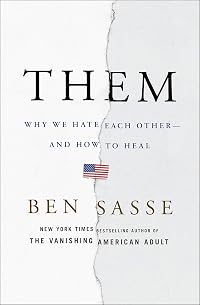
Them
by Benjamin E. Sasse
On This Page
Description
This program is read by the author.From the New York Times bestselling author of The Vanishing American Adult, an intimate and urgent assessment of the existential crisis facing our nation.
Something is wrong. We all know it.
American life expectancy is declining for a third straight year. Birth rates are dropping. Nearly half of us think the other political party isn't just wrong; they're evil. We're the richest country in history, but we've never been more pessimistic.
What's causing the show more despair?
In Them, bestselling author and U.S. senator Ben Sasse argues that, contrary to conventional wisdom, our crisis isn't really about politics. It's that we're so lonely we can't see straight—and it bubbles out as anger.
Local communities are collapsing. Across the nation, little leagues are disappearing, Rotary clubs are dwindling, and in all likelihood, we don't know the neighbor two doors down. Work isn't what we'd hoped: less certainty, few lifelong coworkers, shallow purpose. Stable families and enduring friendships—life's fundamental pillars—are in statistical freefall.
As traditional tribes of place evaporate, we rally against common enemies so we can feel part of a team. No institutions command widespread public trust, enabling foreign intelligence agencies to use technology to pick the scabs on our toxic divisions. We're in danger of half of us believing different facts than the other half, and the digital revolution throws gas on the fire.
There's a path forward—but reversing our decline requires something radical: a rediscovery of real places and human-to-human relationships. Even as technology nudges us to become rootless, Sasse shows how only a recovery of rootedness can heal our lonely souls.
America wants you to be happy, but more urgently, America needs you to love your neighbor and connect with your community. Fixing what's wrong with the country depends on it.
. show less
Tags
Recommendations




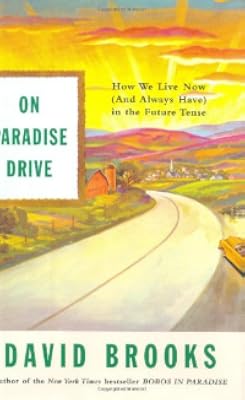

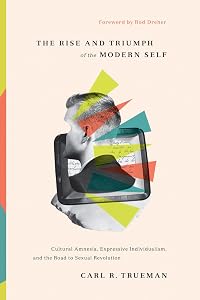


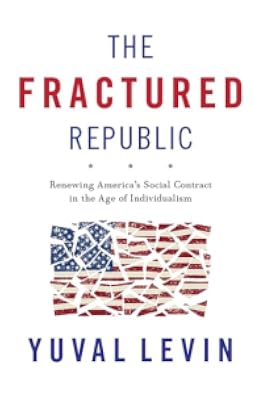
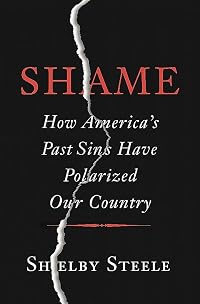





















Member Recommendations
Member Reviews
Rating: 4* of five
The Publisher Says: From the New York Times bestselling author of The Vanishing American Adult, an intimate and urgent assessment of the existential crisis facing our nation.
Something is wrong. We all know it.
American life expectancy is declining for a third straight year. Birth rates are dropping. Nearly half of us think the other political party isn’t just wrong; they’re evil. We’re the richest country in history, but we’ve never been more pessimistic. What’s causing the despair?
In Them, bestselling author and U.S. Senator Ben Sasse argues that, contrary to conventional wisdom, our crisis isn’t really about politics. It’s that we’re so lonely we can’t see straight—and it bubbles out as anger.
Local show more communities are collapsing. Across the nation, little leagues are disappearing, Rotary clubs are dwindling, and in all likelihood, we don’t know the neighbor two doors down. Work isn’t what we’d hoped: less certainty, few lifelong coworkers, shallow purpose. Stable families and enduring friendships—life’s fundamental pillars—are in statistical freefall.
As traditional tribes of place evaporate, we rally against common enemies so we can feel part of on a team. No institutions command widespread public trust, enabling foreign intelligence agencies to use technology to pick the scabs on our toxic divisions. We’re in danger of half of us believing different facts than the other half, and the digital revolution throws gas on the fire.
There’s a path forward—but reversing our decline requires something radical: a rediscovery of real places and real human-to-human relationships. Even as technology nudges us to become rootless, Sasse shows how only a recovery of rootedness can heal our lonely souls.
America wants you to be happy, but more urgently, America needs you to love your neighbor. Fixing what’s wrong with the country depends on you rebuilding right where you’re planted.
I CHECKED THIS BOOK OUT FROM THE PRIME LENDING SERVICE. USE THEM OFTEN, THEY PAY AUTHORS FOR OUR USE.
My Review: I'm allergic to old-fasihoned neighborliness, community-building exercises, the idea that living in the same zip code says something fundamental about my connection to people.
In days of yore, that would've marked me out as weird. Now that makes me...for the first time in my adult life...mainstream. And what did Mark Twain say about about agreeing with the majority? "Whenever you find yourself on the side of the majority, it is time to reform (or pause and reflect)."
I doubt I can change much, but others? There's hope for them and by extension all of us.
That Author Sasse is a Republican should tell anyone who knows me everything I need to convey by reporting positive agreement with his prescription for what ails the US body politic. (Also, per Wikipedia, Senator Sasse: "{o}n February 13, 2021, ...was one of seven Republican senators to vote to convict Donald Trump of incitement of insurrection in his second impeachment trial."} Go former Senator Sasse!)
The anomie and isolation of seemingly the majority of young people is absolutely terrifying. What Author Sasse posits as solutions earn all my four stars. His framing of the problems we face is resolutely inside the educated elite PoV one would expect from a lifelong academic and former Senator. Only in the funhouse mirror of US politics is this man in any way a centrist. He is also not wrong.
Many of the rights and norms Author Sasse identified as under threat in this 2018 book, eg the inalienable rights of all individuals including habeas corpus, and the freedom of conscience and the right to exercise it in private life (the Dobbs decision rises before my appalled eyes),have been explicitly targeted by the current administration. It's been a long, slow process to dumb down and distract people away from the assault on our institutions of trust and collective action. Look at Project 2025's digital ghosts.
A big part of that process has been the demonization and politicization of Others. When someone is Other, they're not protected like you should be, or protected from you like they should be. A long and successful campaign to convince people "They" are a threat to decency and rightness has been waged by the real "Them" the actual political operators of the Heritage Foundation, the Federalist Society, and so on.
Destroying the people's willingness to see each other as real, decent people who might disagree on things but who nonetheless have a lot in common, or divide and conquer, has been the colonizer's, the fascist's, the authoritarian's cornerstone strategy for millennia. It hasn't stopped working yet.
You, as an individual, have to stop falling for it in order to defeat it.
Read some of Sasse's ideas and try them out. show less
The Publisher Says: From the New York Times bestselling author of The Vanishing American Adult, an intimate and urgent assessment of the existential crisis facing our nation.
Something is wrong. We all know it.
American life expectancy is declining for a third straight year. Birth rates are dropping. Nearly half of us think the other political party isn’t just wrong; they’re evil. We’re the richest country in history, but we’ve never been more pessimistic. What’s causing the despair?
In Them, bestselling author and U.S. Senator Ben Sasse argues that, contrary to conventional wisdom, our crisis isn’t really about politics. It’s that we’re so lonely we can’t see straight—and it bubbles out as anger.
Local show more communities are collapsing. Across the nation, little leagues are disappearing, Rotary clubs are dwindling, and in all likelihood, we don’t know the neighbor two doors down. Work isn’t what we’d hoped: less certainty, few lifelong coworkers, shallow purpose. Stable families and enduring friendships—life’s fundamental pillars—are in statistical freefall.
As traditional tribes of place evaporate, we rally against common enemies so we can feel part of on a team. No institutions command widespread public trust, enabling foreign intelligence agencies to use technology to pick the scabs on our toxic divisions. We’re in danger of half of us believing different facts than the other half, and the digital revolution throws gas on the fire.
There’s a path forward—but reversing our decline requires something radical: a rediscovery of real places and real human-to-human relationships. Even as technology nudges us to become rootless, Sasse shows how only a recovery of rootedness can heal our lonely souls.
America wants you to be happy, but more urgently, America needs you to love your neighbor. Fixing what’s wrong with the country depends on you rebuilding right where you’re planted.
I CHECKED THIS BOOK OUT FROM THE PRIME LENDING SERVICE. USE THEM OFTEN, THEY PAY AUTHORS FOR OUR USE.
My Review: I'm allergic to old-fasihoned neighborliness, community-building exercises, the idea that living in the same zip code says something fundamental about my connection to people.
In days of yore, that would've marked me out as weird. Now that makes me...for the first time in my adult life...mainstream. And what did Mark Twain say about about agreeing with the majority? "Whenever you find yourself on the side of the majority, it is time to reform (or pause and reflect)."
I doubt I can change much, but others? There's hope for them and by extension all of us.
That Author Sasse is a Republican should tell anyone who knows me everything I need to convey by reporting positive agreement with his prescription for what ails the US body politic. (Also, per Wikipedia, Senator Sasse: "{o}n February 13, 2021, ...was one of seven Republican senators to vote to convict Donald Trump of incitement of insurrection in his second impeachment trial."} Go former Senator Sasse!)
The anomie and isolation of seemingly the majority of young people is absolutely terrifying. What Author Sasse posits as solutions earn all my four stars. His framing of the problems we face is resolutely inside the educated elite PoV one would expect from a lifelong academic and former Senator. Only in the funhouse mirror of US politics is this man in any way a centrist. He is also not wrong.
Many of the rights and norms Author Sasse identified as under threat in this 2018 book, eg the inalienable rights of all individuals including habeas corpus, and the freedom of conscience and the right to exercise it in private life (the Dobbs decision rises before my appalled eyes),have been explicitly targeted by the current administration. It's been a long, slow process to dumb down and distract people away from the assault on our institutions of trust and collective action. Look at Project 2025's digital ghosts.
A big part of that process has been the demonization and politicization of Others. When someone is Other, they're not protected like you should be, or protected from you like they should be. A long and successful campaign to convince people "They" are a threat to decency and rightness has been waged by the real "Them" the actual political operators of the Heritage Foundation, the Federalist Society, and so on.
Destroying the people's willingness to see each other as real, decent people who might disagree on things but who nonetheless have a lot in common, or divide and conquer, has been the colonizer's, the fascist's, the authoritarian's cornerstone strategy for millennia. It hasn't stopped working yet.
You, as an individual, have to stop falling for it in order to defeat it.
Read some of Sasse's ideas and try them out. show less
My oldest Facebook posts are from May 2008, which means a third of my life has been spent in the blue light of social media. I remember the time before, but it feels like a different world — and that’s a big part of what concerns former Nebraska Senator Ben Sasse.
Anyone who’s spent years in the social media space has seen the discourse degenerate to the point that it feels as if the only thing we have in common is mutual loathing. It’s difficult to imagine a bright future for people this wracked by distrust, dislike, and hate.
Sasse’s diagnosis is that America is in the throes of a loneliness crisis. Technological revolutions have disrupted age-old patterns of work, migration, and family. We're losing our sense of place, show more leaving us more isolated from tangible flesh-and-blood people than ever before. Seeking the society we crave, we’re more vulnerable than ever to the malevolent anti-tribes: loose collections of online strangers with no organizing principle other than the fact that we dislike the same things.
This ability to huddle in front of our phones, cocooning ourselves in negative echo chambers, has proven corrosive to national unity. When you exist in a real-life local tribe, the need to solve local problems incentivizes debate, compromise, consensus, and community. When you exist in a digital anti-tribe, the incentives are toward hating your enemies as extravagantly as possible.
The result is not a continent unified on the American dream, but an archipelago of islands at war in a sea of mutual incomprehension. The way back won’t start with government or business or thought leaders: it will come only as individuals, families, and communities choose to unplug from the industries of online hate, reconnect with real neighbors, and build real relationships with real people.
I like this book, which neatly straddles the space between Charles Murray’s “Coming Apart” and Yuval Harari’s “Homo Deus.” Sasse recognizes that technology is only accelerating the fracturing that Murray documented in great detail, and with Harari recognizes that technology is driving us toward a biomechanical future so fast that we haven’t even begun to count the cost.
Where Sasse shines is how he zeroes in on loneliness as a key driver of our disintegrating society. Tech is not the problem, nor is partisan politics, nor are economics. The problem is that we’ve taken the infinite potential of our tools and used them to silo ourselves. We create alliances on Internet battlefields as a sickly and harmful substitute for difficult but rewarding friendships over the back fence.
Sasse writes in an easy conversational style that’s pleasant and engaging. Despite being one of the most conservative Republican senators at the time of writing, he’s even-handed in his handling of the culture of spite. If anything, he’s harder on his own team than he is on progressives. And you’d expect nothing less: after all, according to him, healing comes when you turn off your smart phone and start pulling weeds in your own backyard. show less
Anyone who’s spent years in the social media space has seen the discourse degenerate to the point that it feels as if the only thing we have in common is mutual loathing. It’s difficult to imagine a bright future for people this wracked by distrust, dislike, and hate.
Sasse’s diagnosis is that America is in the throes of a loneliness crisis. Technological revolutions have disrupted age-old patterns of work, migration, and family. We're losing our sense of place, show more leaving us more isolated from tangible flesh-and-blood people than ever before. Seeking the society we crave, we’re more vulnerable than ever to the malevolent anti-tribes: loose collections of online strangers with no organizing principle other than the fact that we dislike the same things.
This ability to huddle in front of our phones, cocooning ourselves in negative echo chambers, has proven corrosive to national unity. When you exist in a real-life local tribe, the need to solve local problems incentivizes debate, compromise, consensus, and community. When you exist in a digital anti-tribe, the incentives are toward hating your enemies as extravagantly as possible.
The result is not a continent unified on the American dream, but an archipelago of islands at war in a sea of mutual incomprehension. The way back won’t start with government or business or thought leaders: it will come only as individuals, families, and communities choose to unplug from the industries of online hate, reconnect with real neighbors, and build real relationships with real people.
I like this book, which neatly straddles the space between Charles Murray’s “Coming Apart” and Yuval Harari’s “Homo Deus.” Sasse recognizes that technology is only accelerating the fracturing that Murray documented in great detail, and with Harari recognizes that technology is driving us toward a biomechanical future so fast that we haven’t even begun to count the cost.
Where Sasse shines is how he zeroes in on loneliness as a key driver of our disintegrating society. Tech is not the problem, nor is partisan politics, nor are economics. The problem is that we’ve taken the infinite potential of our tools and used them to silo ourselves. We create alliances on Internet battlefields as a sickly and harmful substitute for difficult but rewarding friendships over the back fence.
Sasse writes in an easy conversational style that’s pleasant and engaging. Despite being one of the most conservative Republican senators at the time of writing, he’s even-handed in his handling of the culture of spite. If anything, he’s harder on his own team than he is on progressives. And you’d expect nothing less: after all, according to him, healing comes when you turn off your smart phone and start pulling weeds in your own backyard. show less
Finally, a voice of reason. Never thought I'd agree with a conservative Republican from Nebraska, but that is exactly the point of this book - finding things upon which to agree and not letting differences become divisions. Sasse seems to relegate his conservatism to his politics and policies rather than his total world view or his ability to interact with others. He is not a blind party follower and did not vote for Trump, choosing instead to do a write-in candidate. He is principled and has integrity and a concept of being a public servant rather than a power-wielding politician. This is a well-thought-out treatise on the ways we have become isolated (technology, social mobility) and rather than having the traditional foundation of show more family, we seek other substitutes like Facebook friends. Or we align with others against something rather than for something. He has served as a college president, so he values education and sees the merit in open-mindedness and discussing differing opinions rather than shouting about them. I've been re-reading some of our country's founding documents this year: the Declaration, the Constitution, the Federalist Papers and some speeches by Washington and Lincoln. All, like Sasse, extol the virtues of a common good, and warn against factions and divisions. We are currently on a path completely divergent from the original intent of our founding fathers. Sasse offers excellent examples of what to do and what not to do from both parties and also some really concrete actions we can all do going forward. Feeling smug or powerless is not an option. Thinking about making this required reading in my household. show less
Summary: Senator Sasse’s book describes how the breakdown of community due to advancing technology, changes in the way we consume news, and general changes in how we interact with each other has led to heated tribalism.
My Thoughts: I totally agree with Sasse about several subjects – especially how we consume news. Instead of reading accurate, important, and informative news, our media outlets and social media feeds are focusing on stupid, distracting tribalism. For instance, why are we focusing on whether Melania Trump slapped Donald’s hand away (or what she’s wearing) instead of focusing on major issues like healthcare and border security? Focusing on things like this is hateful, useless, and silly. Because we are inundated show more with this information, it is more difficult to find the important news. I also agree with Sasse about addiction to screens, and how it is causing a breakdown in family and friend communication. However, despite agreeing with his main points about technology, I found his chapter on technology too long for the point he was trying to make. He’s not an expert on technology, he doesn’t need to write pages and pages of descriptions of upcoming technologies.
I did not relate to Sasse’s argument on a number of points. For instance, he grew up in a small town and describes the breakdown of that small town culture over his lifetime. Despite growing up in the same decade as Sasse, I can’t relate to this loss at all. I’m sure it’s great that everyone was able to sit around every Friday night at a small town football game and chat about politics amicably. But that’s not the life I grew up in. How does Sasse’s argument about the breakdown of culture apply to great number of people who, like myself, did not grow up in that situation? Or am I not his target audience? I can see Sasse’s point that loneliness and lack of occupation leads to depression-like symptoms, which can then lead to hateful speech and focusing on the negatives of life. However, I have not been lonely or lacked occupation. Though I mainly avoid hateful speech (I like to think), I do lean heavily to the left politically. (In other words, I have my tribe.) So there’s more to tribalism than the loss of small town dynamics, loneliness, and lack of occupation.
I thought Sasse did an excellent job of remaining as unpartisaned as he could, considering his strong right leanings. Of course, he had to include some partisan points because he needed to talk about subjects he was familiar with (which is why he focused so much on the breakdown of small-town life when many of his readers will not be able to relate to that subject). But he did a good job of keeping it down to a minimum and not saying anything strongly controversial for the sake of his more liberal-leaning readers. I really admired his restraint on staying as unpartisaned as he could.
In fact, the only objection I had to what was in the book was one comment in which he used the word “schizophrenic” in an inappropriate sense, using it as an adjective to describe people who move from job to job in an erratic way. Misuse of words like “bipolar” and “schizophrenic” is one of my pet peeves. Mental illness is real, Mr. Sasse, and it’s painful. Misusing these words minimizes the pain people with mental illnesses (like myself) go through. I would say that this is not a partisan thing, but I guess sensitivity to others’ feelings (a.k.a. political correctness) IS actually a partisan thing sometimes.
Anyway, enough of my rant. I want to give the book 3.5 stars because I felt that it made some very good points, but had some rather boring sections (like the overly-long chapter on technology). I’d like to give him an extra half of a star for remaining as unpartisaned as possible, however, so I’m settling on 4 stars. show less
My Thoughts: I totally agree with Sasse about several subjects – especially how we consume news. Instead of reading accurate, important, and informative news, our media outlets and social media feeds are focusing on stupid, distracting tribalism. For instance, why are we focusing on whether Melania Trump slapped Donald’s hand away (or what she’s wearing) instead of focusing on major issues like healthcare and border security? Focusing on things like this is hateful, useless, and silly. Because we are inundated show more with this information, it is more difficult to find the important news. I also agree with Sasse about addiction to screens, and how it is causing a breakdown in family and friend communication. However, despite agreeing with his main points about technology, I found his chapter on technology too long for the point he was trying to make. He’s not an expert on technology, he doesn’t need to write pages and pages of descriptions of upcoming technologies.
I did not relate to Sasse’s argument on a number of points. For instance, he grew up in a small town and describes the breakdown of that small town culture over his lifetime. Despite growing up in the same decade as Sasse, I can’t relate to this loss at all. I’m sure it’s great that everyone was able to sit around every Friday night at a small town football game and chat about politics amicably. But that’s not the life I grew up in. How does Sasse’s argument about the breakdown of culture apply to great number of people who, like myself, did not grow up in that situation? Or am I not his target audience? I can see Sasse’s point that loneliness and lack of occupation leads to depression-like symptoms, which can then lead to hateful speech and focusing on the negatives of life. However, I have not been lonely or lacked occupation. Though I mainly avoid hateful speech (I like to think), I do lean heavily to the left politically. (In other words, I have my tribe.) So there’s more to tribalism than the loss of small town dynamics, loneliness, and lack of occupation.
I thought Sasse did an excellent job of remaining as unpartisaned as he could, considering his strong right leanings. Of course, he had to include some partisan points because he needed to talk about subjects he was familiar with (which is why he focused so much on the breakdown of small-town life when many of his readers will not be able to relate to that subject). But he did a good job of keeping it down to a minimum and not saying anything strongly controversial for the sake of his more liberal-leaning readers. I really admired his restraint on staying as unpartisaned as he could.
In fact, the only objection I had to what was in the book was one comment in which he used the word “schizophrenic” in an inappropriate sense, using it as an adjective to describe people who move from job to job in an erratic way. Misuse of words like “bipolar” and “schizophrenic” is one of my pet peeves. Mental illness is real, Mr. Sasse, and it’s painful. Misusing these words minimizes the pain people with mental illnesses (like myself) go through. I would say that this is not a partisan thing, but I guess sensitivity to others’ feelings (a.k.a. political correctness) IS actually a partisan thing sometimes.
Anyway, enough of my rant. I want to give the book 3.5 stars because I felt that it made some very good points, but had some rather boring sections (like the overly-long chapter on technology). I’d like to give him an extra half of a star for remaining as unpartisaned as possible, however, so I’m settling on 4 stars. show less
Nebraska senator Ben Sasse wrote Them: Why We Hate Each Other – and How to Heal because he is genuinely concerned about the deep political divide that is destroying the culture this country. However, while Sasse recognizes the seriousness of the problem, he believes that it is not too late to do something about America’s cultural decline. I only wish I were even half as optimistic about that as Senator Sasse is.
Arguing about political differences is not something new; Americans have argued politics since before there was a United States of America and that will never change. What is different now is that almost no one even tries to debate a political opponent anymore. Instead, we prefer to treat those who do not agree with us as show more realenemies, and we resort to calling them names, personally ostracizing them, banning their work or products from our lives forever, and viciously ridiculing them at every opportunity that presents itself. Why is that?
Sasse believes that our cultural split is largely due to the alienation and loneliness that too many people feel today despite being more “connected” to the world than ever before. The problem is not that people are connected; the problem is that they can never escape that connection, and are instead bombarded 24-7 by what the media today mislabel “news.” If it’s not CNN or MSNBC, it’s Fox News; if it’s not Twitter, it’s Facebook or whatever social media app is the latest thing; if it’s not TheWashington Post, it’s The Wall Street Journal. There are media outlets to upset every one of us, and media outlets to reinforce every bias we already have.
So is it any wonder that the old groups or tribes (including our own families) we belonged to throughout our lives have splintered to the point that we are now more likely to be part of what Sasse calls an anti-tribe than part of a more traditional tribe? Anti-tribes are, after all, nothing more than re-formed tribes whose members share a group of political enemies, and that list of common enemies is all it takes to make us passionate about our new family. Even worse according to Sasse, Americans are now addicted to what he calls “polititainment,” the art of turning politics into entertainment that was so cynically created by the media in order to maximize its own profits. But not only the media have monetized politics – politicians use the same anti-tribe message to maximize the political contributions so necessary to ensure their re-election (and every politician is alwaysrunning for re-election).
Sasse does offer ways to stem the downward slide the U.S. is engaged in, but he admits that this will be a process of “taking back America by inches.” He warns against expecting a sudden or quick turnaround, because his solution may well be a generational one instead, one in which we learn to communicate with our families again; form four or five close friendships that will last the rest of our lives; and remind ourselves of the important role that satisfying work plays in our lives.
That’s a good start, and maybe in the long run it will help do the trick. I hope so. But I believe that Sasse's suggestion that we quit spending our lives watching tiny screens and reading rants from people we have no reason to trust is even more important.
(I read this one via its audiobook version read by the author.) show less
Arguing about political differences is not something new; Americans have argued politics since before there was a United States of America and that will never change. What is different now is that almost no one even tries to debate a political opponent anymore. Instead, we prefer to treat those who do not agree with us as show more realenemies, and we resort to calling them names, personally ostracizing them, banning their work or products from our lives forever, and viciously ridiculing them at every opportunity that presents itself. Why is that?
Sasse believes that our cultural split is largely due to the alienation and loneliness that too many people feel today despite being more “connected” to the world than ever before. The problem is not that people are connected; the problem is that they can never escape that connection, and are instead bombarded 24-7 by what the media today mislabel “news.” If it’s not CNN or MSNBC, it’s Fox News; if it’s not Twitter, it’s Facebook or whatever social media app is the latest thing; if it’s not TheWashington Post, it’s The Wall Street Journal. There are media outlets to upset every one of us, and media outlets to reinforce every bias we already have.
So is it any wonder that the old groups or tribes (including our own families) we belonged to throughout our lives have splintered to the point that we are now more likely to be part of what Sasse calls an anti-tribe than part of a more traditional tribe? Anti-tribes are, after all, nothing more than re-formed tribes whose members share a group of political enemies, and that list of common enemies is all it takes to make us passionate about our new family. Even worse according to Sasse, Americans are now addicted to what he calls “polititainment,” the art of turning politics into entertainment that was so cynically created by the media in order to maximize its own profits. But not only the media have monetized politics – politicians use the same anti-tribe message to maximize the political contributions so necessary to ensure their re-election (and every politician is alwaysrunning for re-election).
Sasse does offer ways to stem the downward slide the U.S. is engaged in, but he admits that this will be a process of “taking back America by inches.” He warns against expecting a sudden or quick turnaround, because his solution may well be a generational one instead, one in which we learn to communicate with our families again; form four or five close friendships that will last the rest of our lives; and remind ourselves of the important role that satisfying work plays in our lives.
That’s a good start, and maybe in the long run it will help do the trick. I hope so. But I believe that Sasse's suggestion that we quit spending our lives watching tiny screens and reading rants from people we have no reason to trust is even more important.
(I read this one via its audiobook version read by the author.) show less
I took this one out because I thought it would get political. I was pleasantly surprised.
People in America are divided along many lines; race, religion, political ideals, socioeconomic status, and other demographics. Ben Sasse explores the reasons why in this timely and incisive book. It is fantastically interesting while being clear at the same time.
Historically, Americans had many tribes; groups that they could join to stave off the intense pain of loneliness. However, those traditional bastions of togetherness are gradually eroding away. From Church service to Rotary Clubs and other such programs, people are dropping out and not being replaced. Little Leagues are fading, neighbors don’t check on each other, our social structure is show more losing its stability. Now you may read that previous sentence and smile at the maudlin sentimentality dripping from it, but loneliness is a serious issue.
To illustrate this, Sasse turns to the 1995 Chicago heatwave. Many of the people that died in that heatwave did not have someone to check on them or make sure that they were okay. So their rotting corpses weren’t found until days later when they were fully ripe and perceptible from outside their door. Is that what you would want? Probably not. I can’t imagine someone wanting to die alone and unwanted.
Even when it comes to job satisfaction Sasse says we are losing. Back in the day you lived in your neighborhood, knew everyone and played with everyone. The child of the police officer would play with the child of the mechanic. This was aided by the fact that people kept their jobs and felt an identity with them. However, that too has changed. People keep the same job for about four years now on average, electing to have some kind of long-distance impersonal relationship with their co-workers. The advancement of technology has also exacerbated the rift between classes. The rich are getting richer while the poor are getting poorer. When you are poor, you don’t have a lot of the same advantages that a rich person would have. Say you are the child of a single mom. Dad is a deadbeat that hasn’t ever paid child support, you live practically hand to mouth. Do you really have the money or connections to enter into college and drag yourself up by your bootstraps? The answer to that is also probably not.
Take me for instance. I don’t particularly like my neighbors; they are rude and noisy. They have a terrible taste in music and the source of their income is rather veiled and unusual. I wouldn’t trust them to check on my home or even mow my lawn if I wasn’t around.
Sasse has solutions to this in his book. This too is interesting. I would recommend this book to almost anyone I know, and even those I don't know. The book is just that good. show less
People in America are divided along many lines; race, religion, political ideals, socioeconomic status, and other demographics. Ben Sasse explores the reasons why in this timely and incisive book. It is fantastically interesting while being clear at the same time.
Historically, Americans had many tribes; groups that they could join to stave off the intense pain of loneliness. However, those traditional bastions of togetherness are gradually eroding away. From Church service to Rotary Clubs and other such programs, people are dropping out and not being replaced. Little Leagues are fading, neighbors don’t check on each other, our social structure is show more losing its stability. Now you may read that previous sentence and smile at the maudlin sentimentality dripping from it, but loneliness is a serious issue.
To illustrate this, Sasse turns to the 1995 Chicago heatwave. Many of the people that died in that heatwave did not have someone to check on them or make sure that they were okay. So their rotting corpses weren’t found until days later when they were fully ripe and perceptible from outside their door. Is that what you would want? Probably not. I can’t imagine someone wanting to die alone and unwanted.
Even when it comes to job satisfaction Sasse says we are losing. Back in the day you lived in your neighborhood, knew everyone and played with everyone. The child of the police officer would play with the child of the mechanic. This was aided by the fact that people kept their jobs and felt an identity with them. However, that too has changed. People keep the same job for about four years now on average, electing to have some kind of long-distance impersonal relationship with their co-workers. The advancement of technology has also exacerbated the rift between classes. The rich are getting richer while the poor are getting poorer. When you are poor, you don’t have a lot of the same advantages that a rich person would have. Say you are the child of a single mom. Dad is a deadbeat that hasn’t ever paid child support, you live practically hand to mouth. Do you really have the money or connections to enter into college and drag yourself up by your bootstraps? The answer to that is also probably not.
Take me for instance. I don’t particularly like my neighbors; they are rude and noisy. They have a terrible taste in music and the source of their income is rather veiled and unusual. I wouldn’t trust them to check on my home or even mow my lawn if I wasn’t around.
Sasse has solutions to this in his book. This too is interesting. I would recommend this book to almost anyone I know, and even those I don't know. The book is just that good. show less
In this book Ben Sasse spoke about so many of the things I felt relating to lack of community and ultimately loneliness that I had not been able to articulate no matter how hard I tried. Specifically, the quote "We are all alone together" resonated very strongly with me.
Ultimately, I'm not sure if the book gave much actionable advice about how to fix our current situation as a society besides general advice like avoiding excessive cell phone use (to be more "present") and to try harder to emphasise with other people and think critically about why they might arrive at the different conclusion then you did.
At the very least, the book made it clear to me that I wasn't alone in what I was feeling about lacking a sense of belonging and show more "rootedness".
I'm so happy, I read this book and would highly recommend it to anyone on the fence.
As an aside the book does not focus on the politics in the US, even though the author is a US politician, I know that politics has a tendency to polarise people so I thought I would mention it. show less
Ultimately, I'm not sure if the book gave much actionable advice about how to fix our current situation as a society besides general advice like avoiding excessive cell phone use (to be more "present") and to try harder to emphasise with other people and think critically about why they might arrive at the different conclusion then you did.
At the very least, the book made it clear to me that I wasn't alone in what I was feeling about lacking a sense of belonging and show more "rootedness".
I'm so happy, I read this book and would highly recommend it to anyone on the fence.
As an aside the book does not focus on the politics in the US, even though the author is a US politician, I know that politics has a tendency to polarise people so I thought I would mention it. show less
Members
- Recently Added By
Author Information

4 Works 1,167 Members
Some Editions
Common Knowledge
- Canonical title
- Them
- Alternate titles
- Them: Why We Hate Each Other–and How to Heal
- Original publication date
- 2018-10-16
- Publisher's editor
- Keith Urbahn
- Blurbers
- Burns, Ken; Brooks, Arthur; Powers, Kirsten; Schmidt, Eric
Classifications
- Genres
- Sociology, Politics and Government, Nonfiction, General Nonfiction
- DDC/MDS
- 323.650973 — Society, government, & culture Political science Civil Rights & Liberties/ Human Rights Citizenship Duties and obligations of citizens
- LCC
- JK1759 — Political Science Political institutions and public administration (United States) Political institutions and public administration United States Political rights. Practical politics Citizenship
- BISAC
Statistics
- Members
- 342
- Popularity
- 93,105
- Reviews
- 13
- Rating
- (3.86)
- Languages
- English, Italian
- Media
- Paper, Audiobook, Ebook
- ISBNs
- 7
- ASINs
- 2