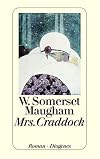
Mrs Craddock
by W. Somerset Maugham 
On This Page
Description
On her 21st birthday, when she comes into her deceased father's money, Bertha Ley announces, to the dismay of her former guardian, that she is going to marry 27-year-old Edward Craddock, her steward. Herself a member of the landed gentry, Bertha has been raised to cultivate an immoderate desire for knowledge and to understand, and enjoy, European culture of both past and present ages. In particular, during long stays on the Continent, she has learned to appreciate Italy's tremendous cultural show more heritage. A virtuous girl, her views on womanhood are thoroughly traditional. She has no doubts about her role in life, which will be to serve and obey her future husband. show lessTags
Recommendations

















Member Recommendations
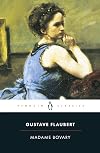
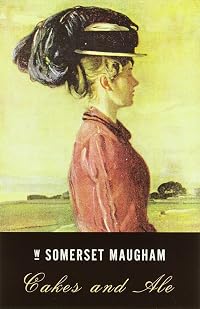
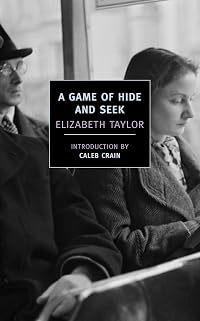
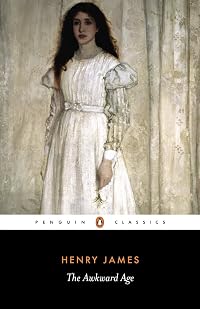
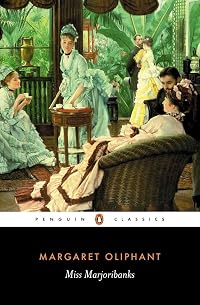
soylentgreen23 'Mrs Craddock' evidently shares a lot in common with Flaubert's masterpiece, especially in terms of its representation of a woman married to a dull man, who wishes to have a renewed taste of passion, despite the likely terrible consequences.
Member Reviews
Maugham wrote a great deal about unequal love affairs, and this is a particularly infuriating one. Mrs. Craddock tells the story of an intelligent, educated, tasteful young woman who falls in love with a very provincial, limited young farmer. She stubbornly resists her guardians’ well meaning attempts to break the attachment, and marries him as quickly as she can. Edward Craddock is a good man by his peers’ standards, but his narrow, self-satisfied mind precludes any understanding between the lovebirds. This is a brutal book, but there are many beautiful flashes of prose and psychological insight. Here are some of my favorite quotes from the book. Overall, it’s a much better version of Ethan Frome.
Mrs Craddock is an emotional, witty and thought-provoking story about a young woman who marries beneath her in a fit of passion and ends up with a husband and a life that are not what she thought they would be. Somerset Maugham writes women so well that it's often hard to believe that the female characters' observations and inner musings were written by a man. I came across lines that seemed like they could've been written by Jane Austen or Dorothy Parker, and it also put me in mind of Kate Chopin's The Awakening. I fell in love with the title character. A wonderful book - highly recommended.
***************
A side note I found interesting: The forward in my edition talked about how hard it was to find a publisher for this book because show more of its "controversial" content. Maugham actually had to leave out quite a few scenes to get it published. (All of which have been restored in current editions.)
After reading the book all I can conclude is that it must have been controversial simply to have an unhappily married female character who was dissatisfied with her husband even though he was a decent man. There wasn't too much more than that to object to. Maybe that shouldn't surprise me for a book published in 1902, but it really did! Especially since Maugham had already had critical and commercial success as an author by that time. show less
***************
A side note I found interesting: The forward in my edition talked about how hard it was to find a publisher for this book because show more of its "controversial" content. Maugham actually had to leave out quite a few scenes to get it published. (All of which have been restored in current editions.)
After reading the book all I can conclude is that it must have been controversial simply to have an unhappily married female character who was dissatisfied with her husband even though he was a decent man. There wasn't too much more than that to object to. Maybe that shouldn't surprise me for a book published in 1902, but it really did! Especially since Maugham had already had critical and commercial success as an author by that time. show less
"Between any two lovers there is always one who loves, and one who lets themself be loved. It is the one who loves, that always gets hurt."
This quote from Mrs. Craddock (I've rendered it as best I can from the original French) sums the book up well. The theme of unrequited love, or less-requited love at least, is also central to Maugham's superb Of Human Bondage (in fact, I believe a character in that book says it as well, only in English).
While Mrs. Craddock is definitely not up to the snuff of Of Human Bondage, it's a powerful story in its own right. For one of Maugham's earliest published works, it already shows his impressive capacity to drag the reader with him through joy and despair. It also shows his knack for presenting show more characters as three-dimensional people with realistic motivations and needs; he does an amazing job in this novel of presenting characters in bitter conflict with each other, yet he refuses to take the side of either one, leaving the reader to draw his or her own conclusions.
Some of the writing is a little precious and melodramatic compared to his stark, raw later work; this is clearly a novel with one foot still in the 19th century. But it was still a very worthwhile read, for its emotional impact and as an interesting glimpse into Maugham's development as a writer. show less
This quote from Mrs. Craddock (I've rendered it as best I can from the original French) sums the book up well. The theme of unrequited love, or less-requited love at least, is also central to Maugham's superb Of Human Bondage (in fact, I believe a character in that book says it as well, only in English).
While Mrs. Craddock is definitely not up to the snuff of Of Human Bondage, it's a powerful story in its own right. For one of Maugham's earliest published works, it already shows his impressive capacity to drag the reader with him through joy and despair. It also shows his knack for presenting show more characters as three-dimensional people with realistic motivations and needs; he does an amazing job in this novel of presenting characters in bitter conflict with each other, yet he refuses to take the side of either one, leaving the reader to draw his or her own conclusions.
Some of the writing is a little precious and melodramatic compared to his stark, raw later work; this is clearly a novel with one foot still in the 19th century. But it was still a very worthwhile read, for its emotional impact and as an interesting glimpse into Maugham's development as a writer. show less
Ok....this is a really, really early version of 'Men are from Mars, Women are from Venus'.......this is a fairly interesting story of a marriage made for the wrong reasons that definitely had a chance of being wonderful, but for the undeniably strong differences between men and women and the way they view life, love, and relationships. Neither party is anywhere near perfect, but their complete lack of understanding of their different perspectives leads to a sad, weighty tolerance of a basically unhappy marriage. And all the ingredients were there for success had there been any effort on either side to attempt to learn about, understand, and at least try to respect each other's point of view. This is my 1st Maugham novel, and my edition show more has a wonderful tongue-in-cheek introduction by an established Mr. Maugham reflecting on his editing and preparing this reprint of a very early work, and that alone hooked me on wanting to read the book. A little sappy, a little tedious now and then, but very enjoyable overall. Which is good....as there are many more works of Maugham on the shelf to go. show less
I had never read Maugham. I had heard of him. Razor Edge and more recently The Painted Veil because of Edward Norton's film adapted from it. I came upon a rec for Mrs Craddock in Jessica Crispin's Blog of a Bookslut in January. This blog usually gives out there, sometimes underground recs. So I put in a request to have the book transferred from one of my library branch. It's a very ironic, somewhat darkish look at a dying class of people. We are at the end of the Victorian period and on the edge of WW1. A very cold analysis of married life and how someone's expectations can blind, despair and ultimately completely destroy people. It's not a rosy view of married life, of relationships but I find it's as relevant now at it probably was show more then. That even if you love someone it doesn't guaranty happiness and you may love someone passionately and still not know that person.Written in 1902, it doesn't paint any characters in a good light. These are real people, living a somewhat very structured life and they can't see any wrong with it or when they do they can't break free from it. Except for Miss Ley, the spinster that lives her life on her terms and doesn't care one iota what other thinks. I liked the novel, I'll read Merry-Go-Round next since it features Miss Ley as the narrator. show less
A proto-feminist lead character? Maybe. Similarities in the search for freedom that are themes in other Maugham books, "The Razor's Edge" a notable example.
[Preface to Mrs Craddock, Heinemann, The Collected Edition, 1955:]
This novel was written in 1900. It was thought extremely daring, and was refused by publisher after publisher, among others by William Heinemann; but it was at last read by Robertson Nicoll, a partner in the firm of Hodder and Stoughton, and he, though of opinion that it was not the sort of book his own firm should publish, thought well enough of it to urge William Heinemann to reconsider his decision. Heinemann read it himself and, on the condition that I took out passages that he found shocking, agreed to publish it. This was in 1902. It must have had something of a success, since it was reissued the following year, and again in 1908. Thirty years later it was show more republished. This new edition was printed from the original manuscript with the offensive parts left in, for I could not for the life of me imagine what they were, and I had not the patience to compare the manuscript with the printed copy. On the contrary, the propriety of the book seemed to me almost painful. I made, however, certain corrections.
The author had been dead for many years, and I used the manuscript as I would that of a departed friend whose book, unrevised by him, had been entrusted to me for publication. I left it as it was, with all its faults, and contented myself with minor emendations. The author's punctuation was haphazard, and I did my best to put some method into it. I replaced the dashes which he used, I fear from ignorance of a complicated art, with colons, semi-colons and commas; I omitted the rows of dots with which he sought to draw the reader's attention to the elegance of a sentiment or the subtlety of an observation, and I replaced with a full stop the marks of exclamation that stood all over the page, like telegraph poles, apparently to emphasise the author's astonishment at his own acumen.
[…]
Some of the author’s favourite words have now a strangely old-fashioned air, but I saw no reason to change them, since there is nothing to show that the modern ones which I might have put in their stead will not in a few years be just as dated. An epithet has its vogue and is forgotten, and the amusing of the moment will doubtless in a little ring as false as the horrid of the eighteen nineties. But I crossed out a great many somes, certains and rathers, for the author of this book had an unhappy disinclination to make an unqualified statement. I was ruthless with the adverbs. When he used five words to say what he could have said in one, I replaced them with the one; and when it seemed to me that he had not said what he wanted to, I ventured to change what he said for what I could not but think he meant. English is a very difficult language to write, and the author, with whose work I was taking the liberties I have described, had never been taught it. The little he knew he had picked up here and there. No one had ever explained to him the difficulties of composition or the mysteries of style. He began to write as a child begins to walk. He took pains to study good models, but, with none to guide him, he did not always choose his models wisely, and he devoted much care to writers who now seem to most of us affected and jejune.
[…]
And now that for this new edition of Mrs. Craddock I have re-read it, it is as a genre picture that I regard it. I smile and blush at its absurdities, but leave them because they belong to the period; and if the novel has any merit (and that the reader must decide for himself), it is because it is a picture, faithful, I believe, of life in a corner of England during the last years of the nineteenth century.
It was the end of an era, but the landed gentry, who were soon to lose the power they had so long enjoyed, were the last to have a suspicion of it. Owing to the agricultural depression, land was no longer a source of profit, but, except for that, they were quite satisfied that things should go on as they had in the past. They had only disdain for the moneyed class that was already beginning to take their place. They were gentlefolk. It is true that for the most part they were narrow, stupid and intolerant; prudish, formal and punctilious. But they had their points, and I do not think the author was quite fair to them. They did their duty according to their rights. That some should be born to possess a fine estate, and others to work upon it at a miserable wage, was in the nature of things; and it was not for them to cavil at the decrees of inscrutable Providence. The landed gentry were on the whole decent, honourable and upright. They were devoid of envy. They had good manners and were kindly and hospitable. But they had outgrown their use, and perhaps it was inevitable that the course of events should sweep them away.
[…]
I do not know why, unless he had learnt it from Matthew Arnold, he was of opinion that the English were philistines; and for wit, brilliance and culture you must go to the French. He never missed a chance to have a fling at his own countrymen. With a certain naiveté he took the French at their own estimate of themselves, and never doubted that Paris was the centre of civilisation. He was better acquainted with the contemporary literature of France than with that of his own country. […] The only excuse I can make for his attitude, besides his youth, is that for him England signified constraint and convention, whereas France signified freedom and adventure. I highly disapprove of a way he had now and then of stepping out of his novel and in sarcastic terms directly addressing the reader. Where he learnt this bad practice I cannot tell.
Because for his age the author of Mrs. Craddock had travelled extensively in Europe and could speak quite adequately four foreign languages, because he had read much, not only in English and French, but also in German, Spanish and Italian, he had a very good opinion of himself. During his various sojourns on the Continent he came in contact with a number of men, some young, some not so young, who shared his prejudices. With private means adequate to those inexpensive days, they had come down from Oxford or Cambridge with a pass degree and led desultory lives in Paris, Florence, Rome and Capri. He was too ingenuous to see how ineffectual they were. They did not hesitate to call themselves aesthetes and liked to think that they burnt with a hard, gemlike flame. They looked upon Oscar Wilde as the greatest master of English prose in the nineteenth century. Though not insensible to the fact that they thought him immature, in fact a bit of a philistine, he did his best to meet their high standards. He dutifully admired the works of art they admired and despised those they despised. He was not only a foolish young man; he was supercilious, cocksure and often wrong-headed. If I met him now I should take an immediate dislike to him. show less
This novel was written in 1900. It was thought extremely daring, and was refused by publisher after publisher, among others by William Heinemann; but it was at last read by Robertson Nicoll, a partner in the firm of Hodder and Stoughton, and he, though of opinion that it was not the sort of book his own firm should publish, thought well enough of it to urge William Heinemann to reconsider his decision. Heinemann read it himself and, on the condition that I took out passages that he found shocking, agreed to publish it. This was in 1902. It must have had something of a success, since it was reissued the following year, and again in 1908. Thirty years later it was show more republished. This new edition was printed from the original manuscript with the offensive parts left in, for I could not for the life of me imagine what they were, and I had not the patience to compare the manuscript with the printed copy. On the contrary, the propriety of the book seemed to me almost painful. I made, however, certain corrections.
The author had been dead for many years, and I used the manuscript as I would that of a departed friend whose book, unrevised by him, had been entrusted to me for publication. I left it as it was, with all its faults, and contented myself with minor emendations. The author's punctuation was haphazard, and I did my best to put some method into it. I replaced the dashes which he used, I fear from ignorance of a complicated art, with colons, semi-colons and commas; I omitted the rows of dots with which he sought to draw the reader's attention to the elegance of a sentiment or the subtlety of an observation, and I replaced with a full stop the marks of exclamation that stood all over the page, like telegraph poles, apparently to emphasise the author's astonishment at his own acumen.
[…]
Some of the author’s favourite words have now a strangely old-fashioned air, but I saw no reason to change them, since there is nothing to show that the modern ones which I might have put in their stead will not in a few years be just as dated. An epithet has its vogue and is forgotten, and the amusing of the moment will doubtless in a little ring as false as the horrid of the eighteen nineties. But I crossed out a great many somes, certains and rathers, for the author of this book had an unhappy disinclination to make an unqualified statement. I was ruthless with the adverbs. When he used five words to say what he could have said in one, I replaced them with the one; and when it seemed to me that he had not said what he wanted to, I ventured to change what he said for what I could not but think he meant. English is a very difficult language to write, and the author, with whose work I was taking the liberties I have described, had never been taught it. The little he knew he had picked up here and there. No one had ever explained to him the difficulties of composition or the mysteries of style. He began to write as a child begins to walk. He took pains to study good models, but, with none to guide him, he did not always choose his models wisely, and he devoted much care to writers who now seem to most of us affected and jejune.
[…]
And now that for this new edition of Mrs. Craddock I have re-read it, it is as a genre picture that I regard it. I smile and blush at its absurdities, but leave them because they belong to the period; and if the novel has any merit (and that the reader must decide for himself), it is because it is a picture, faithful, I believe, of life in a corner of England during the last years of the nineteenth century.
It was the end of an era, but the landed gentry, who were soon to lose the power they had so long enjoyed, were the last to have a suspicion of it. Owing to the agricultural depression, land was no longer a source of profit, but, except for that, they were quite satisfied that things should go on as they had in the past. They had only disdain for the moneyed class that was already beginning to take their place. They were gentlefolk. It is true that for the most part they were narrow, stupid and intolerant; prudish, formal and punctilious. But they had their points, and I do not think the author was quite fair to them. They did their duty according to their rights. That some should be born to possess a fine estate, and others to work upon it at a miserable wage, was in the nature of things; and it was not for them to cavil at the decrees of inscrutable Providence. The landed gentry were on the whole decent, honourable and upright. They were devoid of envy. They had good manners and were kindly and hospitable. But they had outgrown their use, and perhaps it was inevitable that the course of events should sweep them away.
[…]
I do not know why, unless he had learnt it from Matthew Arnold, he was of opinion that the English were philistines; and for wit, brilliance and culture you must go to the French. He never missed a chance to have a fling at his own countrymen. With a certain naiveté he took the French at their own estimate of themselves, and never doubted that Paris was the centre of civilisation. He was better acquainted with the contemporary literature of France than with that of his own country. […] The only excuse I can make for his attitude, besides his youth, is that for him England signified constraint and convention, whereas France signified freedom and adventure. I highly disapprove of a way he had now and then of stepping out of his novel and in sarcastic terms directly addressing the reader. Where he learnt this bad practice I cannot tell.
Because for his age the author of Mrs. Craddock had travelled extensively in Europe and could speak quite adequately four foreign languages, because he had read much, not only in English and French, but also in German, Spanish and Italian, he had a very good opinion of himself. During his various sojourns on the Continent he came in contact with a number of men, some young, some not so young, who shared his prejudices. With private means adequate to those inexpensive days, they had come down from Oxford or Cambridge with a pass degree and led desultory lives in Paris, Florence, Rome and Capri. He was too ingenuous to see how ineffectual they were. They did not hesitate to call themselves aesthetes and liked to think that they burnt with a hard, gemlike flame. They looked upon Oscar Wilde as the greatest master of English prose in the nineteenth century. Though not insensible to the fact that they thought him immature, in fact a bit of a philistine, he did his best to meet their high standards. He dutifully admired the works of art they admired and despised those they despised. He was not only a foolish young man; he was supercilious, cocksure and often wrong-headed. If I met him now I should take an immediate dislike to him. show less
Members
- Recently Added By
Lists

The Novels of W. Somerset Maugham
22 works; 2 members
Author Information

701+ Works 46,637 Members
Writer William Somerset Maugham was born in Paris on January 25, 1874. He attended St. Thomas's Medical School in London. A prolific writer, Maugham produced novels, short stories, plays, and an autobiographical novel, "Of Human Bondage." Although he remains popular for his novels and short stories, when he was alive his plays, now dated, were show more also popular, and in 1908 four of his plays ran simultaneously. Maugham died in Nice, France, on December 16, 1965. (Bowker Author Biography) show less
W. Somerset Maugham has a Legacy Library. Legacy libraries are the personal libraries of famous readers, entered by LibraryThing members from the Legacy Libraries group.
Some Editions
Series
Belongs to Publisher Series
Work Relationships
Common Knowledge
- Canonical title
- Mrs Craddock
- Original title
- Mrs Craddock
- Alternate titles
- Sreemati Craddock
- Original publication date
- 1902 [bowdlerized]; 1928 [complete, revised and with a new preface by the author]; 1955 [same revisions as above, preface expanded by the author]
- People/Characters
- Bertha Craddock (née Ley); Edward Craddock; Miss Ley; Dr. Ramsay; Charles Glover; Miss Glover (show all 13); Mrs Branderton; Arthur Branderton; Mrs Mayston Ryle; Elder and younger Miss Hancock; Mr Atthill Bacot; General Hancock; Gerald Vaudrey
- Important places
- Blackstable, England, UK; Paris, France; Rome, Italy; London, England, UK
- First words
- This book might be called also The Triumph of Love.
- Quotations
- Marriage is always a hopeless idiocy for a woman who has enough of her own to live upon.
...there is always a certain difficulty in conducting oneself with a person who ostentatiously believes that everyone should min... (show all)d her own business, and who, whatever her thoughts, takes more pleasure in the concealment than in the expression of them.
...and one's greatest duty in this world is to leave people alone.
As far as I can make out, when a man has shown himself incapable of doing anything else they make him a general, just to encourage the others. I understand the reason. It's a great thing, of course, for parents sending their sons into the army to be able to say: "Well, he may be a fool, but there's no reason why he shouldn't become a general."
Happily men don't realise how stupid they are, or half the world would commit suicide. Knowledge is a will-of-the-wisp, fluttering ever out of the traveller's reach; and a weary journey must be endured before it is even seen. It is only when a man knows a good deal that he discovers how unfathomable is his ignorance. The man who knows nothing is satisfied that there is nothing to know, consequently that he knows everything; and you may more easily persuade him that the moon is made of green cheese than that he is not omniscient.
But if the human soul, or the heart, or the mind - call it what you will - is an instrument upon which countless melodies may be played, it is capable of responding to none for very long. Time dulls the most exquisite emotions and softens the most heart-rendering grief;
She wondered whether absence had increased his affection, or whether it was she who had changed. Was he not unchanging as a rock? She knew that she was as unstable as water and as variable as the summer winds. Had he always been kind and considerate; and had she, demanding passion that it was not in him to feel, been blind to his deep tenderness? Expecting nothing from him now, she was astonished to find he had so much to offer. But she felt sorry if he loved her, for she could give him nothing in return but complete indifference; she was even surprised to find herself so utterly callous.
'My dear Gerald, Edward is a model: he is the typical Englishman, as he flourishes in the country, upright and honest, healthy, dogmatic, moral and rather stupid. I esteem him enormously, and I ought to like him much better than you, who are a disgraceful scamp.'
'I wonder why you don't.'
'Because I'm a wicked old woman; and I've learnt by long experience that people generally keep their vices to themselves, but insist on throwing their virtues in your face. And if you don't happen to have any of your own, you get the worst of the encounter.'
Miss Ley smiled: 'The fact is that few women can be happy with only one husband. I believe that the only solution of the marriage question is legalised polyandry.' - Original language
- English
Classifications
Statistics
- Members
- 442
- Popularity
- 69,430
- Reviews
- 9
- Rating
- (3.81)
- Languages
- 11 — Catalan, Czech, Dutch, English, Finnish, French, German, Italian, Portuguese, Spanish, Swedish
- Media
- Paper, Audiobook, Ebook
- ISBNs
- 42
- ASINs
- 24