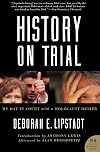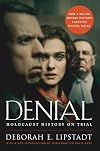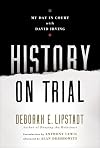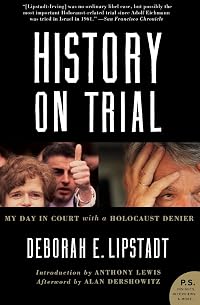
History on Trial: My Day in Court with a Holocaust Denier
by Deborah E. Lipstadt
On This Page
Description
In her acclaimed 1993 book Denying the Holocaust, Deborah Lipstadt called David Irving, a prolific writer of books on World War II, "one of the most dangerous spokespersons for Holocaust denial." The following year, after Lipstadt's book was published in the United Kingdom, Irving led a libel suit against Lipstadt and her publisher. She prepared her defense with the help of a first-rate team of solicitors, historians, and experts, and a dramatic trial unfolded.Denial, previously published show more as History on Trial, is Lipstadt's riveting, blow- by-blow account of this singular legal battle, which resulted in a formal denunciation of a Holocaust denier that crippled the movement for years to come. Lipstadt's victory was proclaimed on the front page of major news- papers around the world, such as The Times (UK), which declared that "history has had its day in court and scored a crushing victory."
. show less
Tags
Recommendations
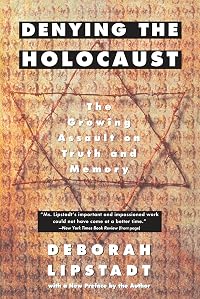
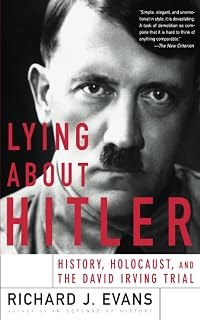


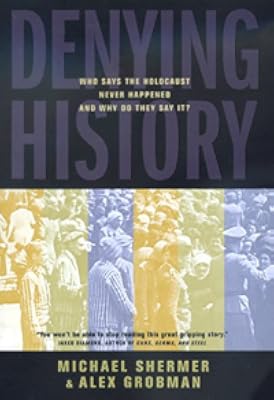

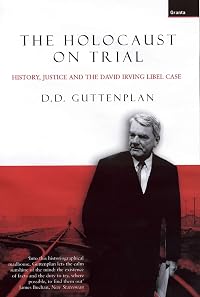




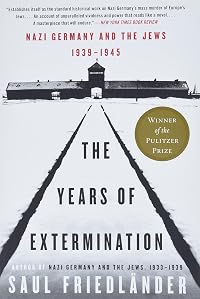

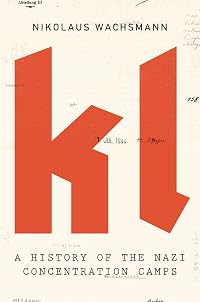
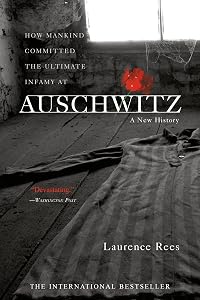





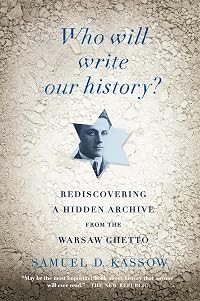










Member Recommendations
charlie68 Both are good compelling courtroom dramas.
Member Reviews
Having seen the recent movie (Denial) I thought the book might be worth the read. The movie was good, but the full-length treatment that a book provides is always certain to be more satisfying. The titles of each are suitable for attracting the interest of viewers and readers, but overlook, I think, what is also on trial here: historians, historiography and freedom of speech.
David Irving is a prolific writer of histories of Hitler and World War II, well-known for taking iconoclastic and revisionist views on Hitler's culpability for the massacre of the Jews in the "Final Solution" atrocities carried out by Germans. He also wrote a book on the bombing of Dresden by the allies that criticizes this as needless to the war effort and as a show more putative war crime because of the magnitude of casualties. Deborah Lipstadt is a professor of Modern Jewish History and Holocaust Studies at Emory University. She had been following the activities of Holocaust deniers and in her book "Denying the Holocaust: The Growing Assault on Truth and Memory" wrote that Irving deliberately falsified and misconstrued facts and data about the Holocaust to the point of claiming that whatever killings that occurred were not known to or sanctioned by Hitler and that the gas chambers of Auschwitz did not exist. She was concerned that, rather than being considered a crank, Irving had garnered considerable favorable attention in literary reviews and among some recognized historians.
Irving sued Lipstadt and Penguin, her UK publisher, for defamation. Defamation suits in Britain, unlike in America, place the burden of proof on the person making the allegedly defamatory statement(s); in other words, the defendant must prove the truth of her words. (Under US law the plaintiff must prove that the words were untrue and in the case involving public figures that the utterance was recklessly made.) The defendants would be liable for punitive awards, court costs, apology and retraction and, importantly, ceasing any further publication of the offending words. Irving had brought such suits, or threats of suits, in the past and this had caused publishers to settle for fear of losing. In this case, Lipstadt and Penguin determined to contest the suit and employed a first-rate team of legal minds and historians to prove that Irving had intentionally distorted and manipulated facts in his histories. Moreover, that his motivation for so doing was his virulent antisemitism as demonstrated by his public utterances and close ties with extremist groups around the world.
Through exhaustive review of sources and examination of Irving's writing and speeches, the defendants were able to prove conclusively that Irving went far beyond the pale of plausible interpretation of facts and willfully distorted evidence that did not support his preconceived conclusions. They showed also that Irving was a rabid and extreme antisemite who had made the most shocking and appalling statements about Jews and Holocaust survivors. Irving agreed with the defense to have the case heard before a judge and not a jury and had decided to represent himself. In his testimony and cross-examination of defense experts he was astoundingly inept, often contradicting himself from one day to the next. (Among the defense experts were Richard J. Evans, perhaps the world's most highly respected historian on 19th and 20th Germany, and Robert Jan Van Pelt whose research and knowledge of Auschwitz is unparalleled.)
Lipstadt recounts the trial with the drama it deserves. It concludes with a smashing victory by the defense. Irving was completely discredited and his reputation put into shreds. He foolishly appealed the judge's 375-page decision only to see his standing as a scholar further diminished. This case garnered international attention and, given the risks to his reputation, it is puzzling why Irving wouldn't have found it wiser to ignore Lipstadt's criticisms. Such is the price to be paid for a large ego and delusions driven by self-regard.
Here's why I think the movie and book are misnamed. Most people who have heard of the Holocaust "denials" understand it to be the work of crackpots and extremists. While we should worry about such fanatics as they tend toward violence, there is little chance that their views will ever garner credulity. But, Irving is different because his work had been fairly well-reviewed and moderately well-accepted by the academic community. Irving was perceived to be an iconoclast and revisionist whose research was thorough if his interpretations and conclusions were off base. This reception of Irving was, however, entirely unjustified and, disturbingly, no one looked closely at his treatment of his source material. When they finally did -- impelled by the court action he brought -- his falsifications, distortions and manipulations were patently clear. Why hadn't anyone done this before? One thinks of how outlandish it would be if scientists failed to check other scientists' data when evaluating their hypotheses and theories. Does not the academic world of historians bear the same obligation? Now, certainly, there is a place for revisionist interpretations in the study of history; we should actually be thankful for it. It is also appropriate to give wide latitude for divergent analysis and interpretation of the meaning of historical events, but this should not extend giving a pass to overt falsehoods, bias and purposeful manipulation of objective truth. The examination of Irving's use of his sources, when it finally occurred, revealed the most egregious dishonesty that was plain to see by anyone who bothered to look. In the aftermath of the trial, some historians criticized the dismantling of Irving's research by stating that any historian should fear such close scrutiny as the flaws in their work might certainly be detected; that's an astonishing statement that undermines our faith in scholarly integrity.
Finally, there's the issue of freedom of speech. Some commentators said that the efforts to discredit Irving served to inhibit the freedom of speech that's the foundation of academic freedom. Such view is entirely wrong headed. It was Irving who, by his legal action, was inhibiting (Lipstadt's) free speech. Certainly, the prospect of being sued for one's speech puts a chill on it. Lipstadt at the outset thought it likely that Penguin would cave in; it was logically in the firm's self-interest to do so. Moreover, academic freedom does not extend to freedom to lie without fear of challenge; indeed it is the dialectical nature of scholarly discourse that does most to advance truth. Irving should not have received a "pass" from his peers and thankfully someone finally (and courageously) called him on this. show less
David Irving is a prolific writer of histories of Hitler and World War II, well-known for taking iconoclastic and revisionist views on Hitler's culpability for the massacre of the Jews in the "Final Solution" atrocities carried out by Germans. He also wrote a book on the bombing of Dresden by the allies that criticizes this as needless to the war effort and as a show more putative war crime because of the magnitude of casualties. Deborah Lipstadt is a professor of Modern Jewish History and Holocaust Studies at Emory University. She had been following the activities of Holocaust deniers and in her book "Denying the Holocaust: The Growing Assault on Truth and Memory" wrote that Irving deliberately falsified and misconstrued facts and data about the Holocaust to the point of claiming that whatever killings that occurred were not known to or sanctioned by Hitler and that the gas chambers of Auschwitz did not exist. She was concerned that, rather than being considered a crank, Irving had garnered considerable favorable attention in literary reviews and among some recognized historians.
Irving sued Lipstadt and Penguin, her UK publisher, for defamation. Defamation suits in Britain, unlike in America, place the burden of proof on the person making the allegedly defamatory statement(s); in other words, the defendant must prove the truth of her words. (Under US law the plaintiff must prove that the words were untrue and in the case involving public figures that the utterance was recklessly made.) The defendants would be liable for punitive awards, court costs, apology and retraction and, importantly, ceasing any further publication of the offending words. Irving had brought such suits, or threats of suits, in the past and this had caused publishers to settle for fear of losing. In this case, Lipstadt and Penguin determined to contest the suit and employed a first-rate team of legal minds and historians to prove that Irving had intentionally distorted and manipulated facts in his histories. Moreover, that his motivation for so doing was his virulent antisemitism as demonstrated by his public utterances and close ties with extremist groups around the world.
Through exhaustive review of sources and examination of Irving's writing and speeches, the defendants were able to prove conclusively that Irving went far beyond the pale of plausible interpretation of facts and willfully distorted evidence that did not support his preconceived conclusions. They showed also that Irving was a rabid and extreme antisemite who had made the most shocking and appalling statements about Jews and Holocaust survivors. Irving agreed with the defense to have the case heard before a judge and not a jury and had decided to represent himself. In his testimony and cross-examination of defense experts he was astoundingly inept, often contradicting himself from one day to the next. (Among the defense experts were Richard J. Evans, perhaps the world's most highly respected historian on 19th and 20th Germany, and Robert Jan Van Pelt whose research and knowledge of Auschwitz is unparalleled.)
Lipstadt recounts the trial with the drama it deserves. It concludes with a smashing victory by the defense. Irving was completely discredited and his reputation put into shreds. He foolishly appealed the judge's 375-page decision only to see his standing as a scholar further diminished. This case garnered international attention and, given the risks to his reputation, it is puzzling why Irving wouldn't have found it wiser to ignore Lipstadt's criticisms. Such is the price to be paid for a large ego and delusions driven by self-regard.
Here's why I think the movie and book are misnamed. Most people who have heard of the Holocaust "denials" understand it to be the work of crackpots and extremists. While we should worry about such fanatics as they tend toward violence, there is little chance that their views will ever garner credulity. But, Irving is different because his work had been fairly well-reviewed and moderately well-accepted by the academic community. Irving was perceived to be an iconoclast and revisionist whose research was thorough if his interpretations and conclusions were off base. This reception of Irving was, however, entirely unjustified and, disturbingly, no one looked closely at his treatment of his source material. When they finally did -- impelled by the court action he brought -- his falsifications, distortions and manipulations were patently clear. Why hadn't anyone done this before? One thinks of how outlandish it would be if scientists failed to check other scientists' data when evaluating their hypotheses and theories. Does not the academic world of historians bear the same obligation? Now, certainly, there is a place for revisionist interpretations in the study of history; we should actually be thankful for it. It is also appropriate to give wide latitude for divergent analysis and interpretation of the meaning of historical events, but this should not extend giving a pass to overt falsehoods, bias and purposeful manipulation of objective truth. The examination of Irving's use of his sources, when it finally occurred, revealed the most egregious dishonesty that was plain to see by anyone who bothered to look. In the aftermath of the trial, some historians criticized the dismantling of Irving's research by stating that any historian should fear such close scrutiny as the flaws in their work might certainly be detected; that's an astonishing statement that undermines our faith in scholarly integrity.
Finally, there's the issue of freedom of speech. Some commentators said that the efforts to discredit Irving served to inhibit the freedom of speech that's the foundation of academic freedom. Such view is entirely wrong headed. It was Irving who, by his legal action, was inhibiting (Lipstadt's) free speech. Certainly, the prospect of being sued for one's speech puts a chill on it. Lipstadt at the outset thought it likely that Penguin would cave in; it was logically in the firm's self-interest to do so. Moreover, academic freedom does not extend to freedom to lie without fear of challenge; indeed it is the dialectical nature of scholarly discourse that does most to advance truth. Irving should not have received a "pass" from his peers and thankfully someone finally (and courageously) called him on this. show less
I was stymied by the task of writing this review for a long time. I didn't know where to start because this is a subject so emotionally charged that it's difficult to discuss. Then I realized that this was one of the central issues of the book and the trial. How do you approach Holocaust denial? Do you even dignify that position by bothering to argue it?
This is the question Deborah Lipstadt has to answer when historian David Irving brought a lawsuit against her for calling him a Holocaust denier, and a liar. He brought the suit in London because British law required Lipstadt to prove that her accusations were true rather than placing the burden of proof on Irving himself as plaintiff as American law would have done. Lipstadt could have show more made it all go away by settling -- and there was pressure on her to do so, even from parts of the Jewish community -- but she chose to fight the suit because not to would have been to imply that it was okay to deny the murder of millions of Jews (and others, though that doesn't actually enter into the narrative.)
The account of the trial shows clearly how frustrated Lipstadt was with the process, with the fact that her legal team would not allow her to testify, nor would they allow Holocaust survivors to take the stand. She didn't understand either position and butted heads with her lawyers on more than one occasion. She took exception to her barrister treating a visit to Auschwitz as a forensic visit rather than a memorial one. Her responses were utterly understandable and based on emotion, and that is why her team made the choices they did. The law doesn't deal in emotional arguments, it deals in facts. The weight of tears cannot be measured against the weight of evidence.
Lipstadt and her team didn't have to prove that millions of people died and that Hitler was ultimately responsible, they just had to prove that in misrepresenting facts and changing words from primary documents, Irving lied. They didn't have to prove that anti-Semitism and racism are wrong, they only had to prove that Irving was a racist and anti-Semite. And only a painstaking examination of fact could ever prove those things.
The book is a powerful one, particularly in our time when racism, anti-Semitism, and all manner of ugly, troll-like behavior is being enabled at the highest levels of government. Irving's behavior feels familiar to this contemporary American, a man who cannot admit either mistakes, or wrong-doing, and who is not only a Holocaust denier but who, on the night when the verdict was given in Lipstadt's favor, went on British television to talk about how, in the end, the decision was actually quite favorable to him. It wasn't, it was devastating to him, but he was either incapable of understanding that or he simply refused to admit it.
When asked if he would then stop denying the Holocaust, Irving replied, "Good lord, no."
I should add that before I wrote this review I also watched the film, and found it excellent. I think they're complimentary, and one enhances the other. Either way, if you're at all interested in the case, one which I did find I remembered from the late 1990s, the book and to a lesser extent the film, is well worth your time. show less
This is the question Deborah Lipstadt has to answer when historian David Irving brought a lawsuit against her for calling him a Holocaust denier, and a liar. He brought the suit in London because British law required Lipstadt to prove that her accusations were true rather than placing the burden of proof on Irving himself as plaintiff as American law would have done. Lipstadt could have show more made it all go away by settling -- and there was pressure on her to do so, even from parts of the Jewish community -- but she chose to fight the suit because not to would have been to imply that it was okay to deny the murder of millions of Jews (and others, though that doesn't actually enter into the narrative.)
The account of the trial shows clearly how frustrated Lipstadt was with the process, with the fact that her legal team would not allow her to testify, nor would they allow Holocaust survivors to take the stand. She didn't understand either position and butted heads with her lawyers on more than one occasion. She took exception to her barrister treating a visit to Auschwitz as a forensic visit rather than a memorial one. Her responses were utterly understandable and based on emotion, and that is why her team made the choices they did. The law doesn't deal in emotional arguments, it deals in facts. The weight of tears cannot be measured against the weight of evidence.
Lipstadt and her team didn't have to prove that millions of people died and that Hitler was ultimately responsible, they just had to prove that in misrepresenting facts and changing words from primary documents, Irving lied. They didn't have to prove that anti-Semitism and racism are wrong, they only had to prove that Irving was a racist and anti-Semite. And only a painstaking examination of fact could ever prove those things.
The book is a powerful one, particularly in our time when racism, anti-Semitism, and all manner of ugly, troll-like behavior is being enabled at the highest levels of government. Irving's behavior feels familiar to this contemporary American, a man who cannot admit either mistakes, or wrong-doing, and who is not only a Holocaust denier but who, on the night when the verdict was given in Lipstadt's favor, went on British television to talk about how, in the end, the decision was actually quite favorable to him. It wasn't, it was devastating to him, but he was either incapable of understanding that or he simply refused to admit it.
When asked if he would then stop denying the Holocaust, Irving replied, "Good lord, no."
I should add that before I wrote this review I also watched the film, and found it excellent. I think they're complimentary, and one enhances the other. Either way, if you're at all interested in the case, one which I did find I remembered from the late 1990s, the book and to a lesser extent the film, is well worth your time. show less
Spellbinding and powerfully written book. Deborah Lipstadt is or was the head of Jewish Studies at Emory University in Atlanta. She had previously written Denying the Holocaust: The Growing Assault on Truth and Memory. David Irving was a prominent "historian," Holocaust denier and anti-Semite mentioned in the book. David Irving proceeded to sue the author under the UK's libel laws, where the defendant bears the burden of proving that the writing was true, and the losing party pays the winner's attorneys' fees.
To illustrate the depths of David Irving's evil he stated, with regard to the testimony of another witness,"I am not just going to annihilate evidence from Dr Roth, I am going to exterminate
it when the times comes." That was show more particularly vile court testimony in a trial about the Holocaust. To illustrate the level of David Irving's credibility, he testified there were Zyklon B residues in what he testified was a morgue because the gas was present "because the room was used "for fumigating objects or cadavers."
The book details both the excruciating effort for trial preparation, the lurid details of the trial and the aftermath of a glorious victory. It was a hard book to put down. One of the best books I've read. show less
To illustrate the depths of David Irving's evil he stated, with regard to the testimony of another witness,"I am not just going to annihilate evidence from Dr Roth, I am going to exterminate
it when the times comes." That was show more particularly vile court testimony in a trial about the Holocaust. To illustrate the level of David Irving's credibility, he testified there were Zyklon B residues in what he testified was a morgue because the gas was present "because the room was used "for fumigating objects or cadavers."
The book details both the excruciating effort for trial preparation, the lurid details of the trial and the aftermath of a glorious victory. It was a hard book to put down. One of the best books I've read. show less
Deborah Lipstadt's account of the trial forced upon her when sued for libel by David Irving is absolutely gripping. Several important points about the trial are made crystal clear, even to a general reader like myself with no historical training:
1. The importance of the trial's outcome: Irving was trying to bully critics of his work into silence. Despite what his supporters allege, it was he, not Professor Lipstradt, who was trying to stifle free expression.
2. David Irving is a charlatan, with no business calling himself a historian. His books, as it is explained in great detail, are riddled with deliberate factual errors designed to put Hitler in a good light and pretend the holocaust never happened. An interesting outcome of the show more defence team's research is proof that Irving's anti-semitism came long before his historical writings.
3. Holocaust denial has no basis in historical fact, and is, in reality, just another form of anti-semitism.
Lipstadt come across very well in the book, and is unfailingly polite and respectful to other academics, though the subsequent actions of two very eminent military historians in defending Irving after the trial verdict were disgraceful.
I can assure one of this book's other Librarything reviewers that this average reader fully grasped the significance of the judges decision. Irving may continue to lecture, but the only people taking him seriously are his fellow neo nazis. show less
1. The importance of the trial's outcome: Irving was trying to bully critics of his work into silence. Despite what his supporters allege, it was he, not Professor Lipstradt, who was trying to stifle free expression.
2. David Irving is a charlatan, with no business calling himself a historian. His books, as it is explained in great detail, are riddled with deliberate factual errors designed to put Hitler in a good light and pretend the holocaust never happened. An interesting outcome of the show more defence team's research is proof that Irving's anti-semitism came long before his historical writings.
3. Holocaust denial has no basis in historical fact, and is, in reality, just another form of anti-semitism.
Lipstadt come across very well in the book, and is unfailingly polite and respectful to other academics, though the subsequent actions of two very eminent military historians in defending Irving after the trial verdict were disgraceful.
I can assure one of this book's other Librarything reviewers that this average reader fully grasped the significance of the judges decision. Irving may continue to lecture, but the only people taking him seriously are his fellow neo nazis. show less
A fabulous book on multiple levels. Prof. Lipstadt gives insight into herself (as a modern, American Jewish woman), into the differences between the British and American legal systems, and, most importantly, into the twisted 'history' and leaps of logic that form the basis for those at the forefront of the Holocaust denial movement. The book is an emotional rollercoaster (as, I'm sure, the trial it recounts must have been for Prof. Lipstadt). For those with some knowledge of the Holocaust, reading as the arguments put forth by a denier are demolished is highly satisfying. I can only hope that those who question whether the Holocaust happened will take the time to read this important book.
I’m a bit hesitant about reviewing Denial because I don’t care to give conspiracy theorists any air on this blog and the fellow who unsuccessfully sued the author Deborah Lipstadt for libel is one of the most egregious. But the movie-tie in edition of the book was there at the library and I had heard about the win in court because it was front page news all over the world. What interested me, was how could the author contrive to make the story interesting, given that anyone who was paying attention already knew what the outcome was?
Well, whether it was intended or not, what made Denial fascinating for me was Lipstadt’s own account of herself…
Lipstadt is an American historian and professor of Holocaust Studies, but the trial took show more place in Britain. This was a deliberate tactic by the plaintiff because in Britain, unlike in America, the onus of proof is on the defendant in a libel case. Lipstadt’s defence had to prove that what she had said in her book was true, and it took her a while to come to grips with this, and with the British legal system in general. She’s uncomfortable with wigs and gowns and bowing to the judge. She’s also (like most of us) not au fait with courtroom tactics, so although she respects her legal team, she keeps badgering them about what she thinks they should be doing and how they should run the case.
She’s totally frustrated by the instruction not to talk to the press because it gives the plaintiff extra ammunition if she says anything critical of him. We’ve all seen how journalists report on cases in America, each side out on the doorstep delivering a carefully staged proclamation about why their side is going to win. But that is Just Not Done in Britain. Judges in particular apparently do not like it if a defendant who has chosen not to testify in court then goes outside and mouths off. And Lipstadt’s counsel had decided that she would not testify: they would rely on expert witnesses to refute the claims made by the plaintiff, and thus prove that what Lipstadt had said in her book was true. So Lipstadt had to stay mute and she did not like it at all.
To read the rest of my review please visit https://anzlitlovers.com/2017/11/23/denial-by-deborah-e-lipstadt/ show less
Well, whether it was intended or not, what made Denial fascinating for me was Lipstadt’s own account of herself…
Lipstadt is an American historian and professor of Holocaust Studies, but the trial took show more place in Britain. This was a deliberate tactic by the plaintiff because in Britain, unlike in America, the onus of proof is on the defendant in a libel case. Lipstadt’s defence had to prove that what she had said in her book was true, and it took her a while to come to grips with this, and with the British legal system in general. She’s uncomfortable with wigs and gowns and bowing to the judge. She’s also (like most of us) not au fait with courtroom tactics, so although she respects her legal team, she keeps badgering them about what she thinks they should be doing and how they should run the case.
She’s totally frustrated by the instruction not to talk to the press because it gives the plaintiff extra ammunition if she says anything critical of him. We’ve all seen how journalists report on cases in America, each side out on the doorstep delivering a carefully staged proclamation about why their side is going to win. But that is Just Not Done in Britain. Judges in particular apparently do not like it if a defendant who has chosen not to testify in court then goes outside and mouths off. And Lipstadt’s counsel had decided that she would not testify: they would rely on expert witnesses to refute the claims made by the plaintiff, and thus prove that what Lipstadt had said in her book was true. So Lipstadt had to stay mute and she did not like it at all.
To read the rest of my review please visit https://anzlitlovers.com/2017/11/23/denial-by-deborah-e-lipstadt/ show less
In her acclaimed 1993 book Denying the Holocaust, Deborah Lipstadt called putative WWII historian David Irving "one of the most dangerous spokespersons for Holocaust denial." A prolific author of books on Nazi Germany who has claimed that more people died in Ted Kennedy's car at Chappaquiddick than in the gas chambers at Auschwitz, Irving responded by filing a libel lawsuit in the United Kingdom -- where the burden of proof lies on the defendant, not on the plaintiff. At stake were not only the reputations of two historians but the record of history itself.
Members
- Recently Added By
Lists

History: Holocaust
106 works; 1 member
Author Information

10+ Works 2,001 Members
Deborah E. Lipstadt is Dorot Professor of Modern Jewish and Holocaust Studies and director of the Institute for Jewish Studies at Emory University.
All Editions
Some Editions
Awards and Honors
Common Knowledge
- Canonical title
- History on Trial: My Day in Court with a Holocaust Denier
- Original title
- History on Trial: My Day in Court with a Holocaust Denier
- Alternate titles
- Denial: Holocaust History on Trial
- Original publication date
- 2005
- People/Characters
- David Irving; Anthony Julius; Deborah E. Lipstadt; Richard Rampton
- Important places
- Auschwitz concentration camp, Oświęcim, Lesser Poland, Poland; London, England, UK; Atlanta, Georgia, USA
- Important events
- Holocaust
- Related movies
- Denial (2016 | IMDb)
- Dedication
- Dedicated to the victims of the Shoah, and to those who enabled me - in so many different ways - to fight the attempts to ravage their history and memory
- First words
- It started on a perfect fall day.
- Last words
- (Click to show. Warning: May contain spoilers.)Ultimately, our victory comes when, even as we defeat them, we demonstrate not only how irrational, but how absolutely pathetic, they are.
- Blurbers
- Wiesel, Elie
Classifications
- Genres
- Politics and Government, History, Nonfiction, General Nonfiction, Biography & Memoir
- DDC/MDS
- 940.53 — History & geography History of Europe History of Europe 1918- World War II, 1939-1945
- LCC
- KD379.5 .I78 .L57 — Law Law of the United Kingdom and Ireland Law of England and Wales Trials Civil trials
- BISAC
Statistics
- Members
- 506
- Popularity
- 59,435
- Reviews
- 15
- Rating
- (4.17)
- Languages
- Czech, Dutch, English, Italian
- Media
- Paper, Audiobook, Ebook
- ISBNs
- 11
- ASINs
- 8