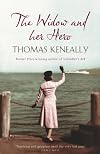
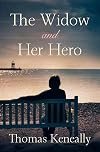
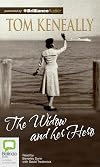
The Widow and Her Hero
by Thomas Keneally
On This Page
Description
When Grace married the handsome and worldly Captain Leo Waterhouse in Australia during the middle of the Second World War, she never doubted that she had married a hero and he would come back to her unscathed. But Leo never returns from a commando raid on Japanese ships in the Singapore Harbour, leaving Grace a widow, like so many, to shoulder the pain and regret of losing her husband. Sixty years later, Grace is still bitter and perplexed by the tragic death of the love of her life when the show more true story of the abortive mission comes to light. As Leo's diary during captivity, scrawled on toilet paper, and new fragments of the events emerge, Grace must confront her doubts about her hero and his ultimate betrayal. Historical Fiction. Literature. Fiction. Romance. show lessTags
Recommendations





















Member Reviews
From the beginning, we know the hero, Australian Captain Leo Waterhouse, was killed as a result of a clandestine raid during WWII. His widow, Grace, tells the story of what happened to her husband and how she dealt with it, over a period of time covering the 1940s to 2000s. This book explores the nature of heroism and grief.
Keneally is obviously a talented writer. It must have been a challenge to figure out how to tell this tale through the widow’s point of view, since she remains outside the military chain of command and is not directly privy to the details of military operations. A number of outsiders are looking into how the mission went so horribly wrong, and they convey their findings to Grace, sometimes many years after the show more fact. She does not always want to hear these new accounts. She must then confront her grief in a new way, and it is a gut-wrenching experience all over again.
The book is reflective in tone. The characters are easy to envision as real people. The settings in Australia, Singapore, and the Malay islands are vividly described. I very much enjoyed the literary references, especially the analogies to George Bernard Shaw’s The Devils’s Disciple. I need to read more of Keneally’s work. show less
Keneally is obviously a talented writer. It must have been a challenge to figure out how to tell this tale through the widow’s point of view, since she remains outside the military chain of command and is not directly privy to the details of military operations. A number of outsiders are looking into how the mission went so horribly wrong, and they convey their findings to Grace, sometimes many years after the show more fact. She does not always want to hear these new accounts. She must then confront her grief in a new way, and it is a gut-wrenching experience all over again.
The book is reflective in tone. The characters are easy to envision as real people. The settings in Australia, Singapore, and the Malay islands are vividly described. I very much enjoyed the literary references, especially the analogies to George Bernard Shaw’s The Devils’s Disciple. I need to read more of Keneally’s work. show less
This is not the kind of book I would normally read - I prefer to avoid stories of war heroism and derring-do, but I am glad I made an exception for this, since Keneally's approach is brilliantly nuanced and full of moral ambiguity.
The central story is largely based on fact - there were two Australian raids on Japanese held Singapore, and the second ended disastrously for the men involved. Keneally's masterstroke is to tell their story through the voice of a widow, who barely knew her young husband, but finds out more of his story piecemeal over the next 60 years. Perhaps the idea of the captured men awaiting execution filling their time rehearsing Shaw's The Devil's Disciple is a little fanciful, but this is a very moving story.
The central story is largely based on fact - there were two Australian raids on Japanese held Singapore, and the second ended disastrously for the men involved. Keneally's masterstroke is to tell their story through the voice of a widow, who barely knew her young husband, but finds out more of his story piecemeal over the next 60 years. Perhaps the idea of the captured men awaiting execution filling their time rehearsing Shaw's The Devil's Disciple is a little fanciful, but this is a very moving story.
(7.5) I struggled to engage with this book to start with, as I found the narrative voice of Grace unconvincing. It came across as very much the male authorial voice. However, as the story progressed I adapted and it did draw my attention to these often unheard of acts of heroism and how many of these combatants were left to die in the greater interests of the war tactics.
I wanted this book to be wonderful. Schindler’s Ark was such an iconic piece of literature, and I was hoping that my second jaunt into Keneally’s world would touch me in the same way. I must admit that I’ve studied the Holocaust in great depth and thus part of the attraction to Keneally’s most famous work stems from that, but The Widow and Her Hero was sadly lacking. Parts of it were written in a fast-moving, captivating manner – I loved the parts about Grace’s life as the girlfriend, wife and widow of an Australian seaman during the Second World War. I felt a connection to her touching but not overly sentimental story, and had Keneally kept it to that, he would have written a fine book that explored ideas of love and grief show more in a really interesting way.
Sadly, the bit that really ruined the book for me were the parts that really defined Keneally’s overall purpose – writing about the reality of war, of carrying out espionage far from home, and ultimately falling victim to a tyrannical enemy. Some parts were interesting, but I struggled to the end, especially with the uncomfortable meeting between one of the Japanese characters and Grace in Australia long after the war has ended. Some of Leo’s colleagues came across as dull and I think I got them confused in the end. I would recommend this if you’re interested in military history, especially in the Pacific front of World War Two, but that wasn’t what I was looking for and as a result I didn’t particularly enjoy large chunks of this book. show less
Sadly, the bit that really ruined the book for me were the parts that really defined Keneally’s overall purpose – writing about the reality of war, of carrying out espionage far from home, and ultimately falling victim to a tyrannical enemy. Some parts were interesting, but I struggled to the end, especially with the uncomfortable meeting between one of the Japanese characters and Grace in Australia long after the war has ended. Some of Leo’s colleagues came across as dull and I think I got them confused in the end. I would recommend this if you’re interested in military history, especially in the Pacific front of World War Two, but that wasn’t what I was looking for and as a result I didn’t particularly enjoy large chunks of this book. show less
A thinly fictionised version of the events of the ill fated Operation Rimau during WWII. It resulted in the capture, repeated torture and finally execution of several Australians at the hands of the Japanese in Singapore, just 4 weeks before the Japanese surrender.
Enjoyable, again the book struck me as factual and historical rather than engaging me with emotion in the drama and making me identify with Grace. But, it was a good read and I finished it in just over a week, so not overly difficult reading.
Enjoyable, again the book struck me as factual and historical rather than engaging me with emotion in the drama and making me identify with Grace. But, it was a good read and I finished it in just over a week, so not overly difficult reading.
A touching tale, a little sentimental even for Keneally. Grace tells the story of her husband's heroism and betrayal.
WWII, Australia
Members
- Recently Added By
Lists

Women in War
148 works; 30 members

THE WAR ROOM
813 works; 24 members
Author Information

83+ Works 19,938 Members
Thomas Keneally was born in Sydney, Australia on October 7, 1935. Although he initially studied for the Catholic priesthood, he abandoned that idea in 1960, turning to teaching and clerical work before writing and publishing his first novel, The Place at Whitton, in 1964. Since that time he has been a full-time writer, aside from the occasional show more stint as a lecturer or writer-in-residence. He won the Booker Prize in 1982 for Schindler's Ark, which Stephen Spielberg adapted into the film Schindler's List. He won the Miles Franklin Award twice with Bring Larks and Heroes and Three Cheers for the Paraclete. His other fiction books include The Chant of Jimmy Blacksmith, Gossip from the Forest, Confederates, The People's Train, Bettany's Book, An Angel in Australia, The Widow and Her Hero, and The Daughters of Mars. His nonfiction works include Searching for Schindler, Three Famines, The Commonwealth of Thieves, The Great Shame, and American Scoundrel. In 1983, he was awarded the order of Australia for his services to Australian Literature. Thomas Keneally is the recipient of the 2015 Australia Council Award for Lifetime Achievement in Literature. The award, formerly known as the Writers' Emeritus Award, recognises 'the achievements of eminent literary writers over the age of 60 who have made an outstanding and lifelong contribution to Australian literature. (Bowker Author Biography) show less
Awards and Honors
Classifications
- Genres
- Fiction and Literature, General Fiction, Historical Fiction
- DDC/MDS
- 823.914 — Literature & rhetoric English & Old English literatures English fiction 1900- 1901-1999 1945-1999
- LCC
- PR9619.3 .K46 .W53 — Language and Literature English English Literature English literature: Provincial, local, etc.
- BISAC
Statistics
- Members
- 110
- Popularity
- 295,124
- Reviews
- 7
- Rating
- (3.44)
- Languages
- English
- Media
- Paper, Audiobook, Ebook
- ISBNs
- 19
- ASINs
- 7