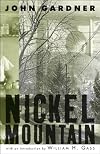
Nickel Mountain
by John Gardner
On This Page
Description
One man's search for personal grace in a town plagued by misfortune Henry Soames runs a diner in an eccentric rural community in the Catskills. He is anxious and overweight, and at age forty-two, suffers from poor health. When Callie Wells, Soames's seventeen-year-old employee, is impregnated by a local boy on his way to college, it becomes apparent that both are in need of a little help. After an unsuccessful attempt to find Callie a husband, Henry accepts the role. But soon after the show more improbable marriage commences, strange events occur in the small town, and Henry's pursuit of personal sal show lessTags
Recommendations



























Member Reviews
In Nickel Mountain, published in 1973 when John Gardner was forty but written much earlier, the author's genius is on full display. This is the story of Henry Soames, 42, who runs the Stop-Off, a diner situated along a highway in the mountainous Catskills in southeastern New York State. Henry—obese, timid, thoughtful, unambitious—waits for whatever life brings his way, much as he waits for customers to darken the door of the Stop-Off. Grossly overweight (a trait inherited from his gentle father) and with a bad heart, he is living on borrowed time and knows it, but is content to let things continue on as they are because he is simply unable to envision how his life might be different. When a neighbour asks if Henry will let his show more daughter work at the diner, though he fears and resents changes to his routine, he relents rather than annoy the man. Thus teenage Callie Wells enters Henry’s life, and though neither of them have any reason to think this is anything but a temporary arrangement, she stays. Henry’s passive and accepting approach to being alive means that he is little more than a spectator to his own fate, and yet we come to care deeply for him. Callie is a wisp of a girl who speaks her mind, makes mistakes and often acts rashly and ill-advisedly, and yet we grieve for her when her lover takes off and she is forced to a decision that changes her life. Gardner populates the community around the diner with a clutch of grotesques, misfits and eccentrics who—be they narrow-minded, pigheaded, brain-addled, misanthropic or some combination of the four—are always interesting. The action and setting are vividly rendered. The natural world, especially the forest, with its suggestion of things beyond our knowing and its threat of chaos, is a pervasive if murky and mysterious presence that informs the narrative at all levels. Nickel Mountain, remarkable for these reasons and more, demonstrates that even for someone like Henry Soames, life is an adventure that can lead anywhere. A major novel by one of America’s best writers. show less
There doesn’t seem to be anything special about Henry Soames. He is a fat man operating a run-down diner, The Stop-Off, more for the conversations with the regulars than as a living. But when Callie, a young waitress, turns up pregnant, and it’s clear that the child’s father won’t be there to help, Henry offers to marry her. While Callie sees the offer more as an arrangement, their devotion to one another grows over the years. She’s drawn, like all Henry’s friends, to his gentle nature, to his open acceptance of everyone.
At several points throughout the story, Henry is faced with difficult decisions – about people in his life, people who he cares about and people who he’s just met. Henry, to his own detriment and often show more in ways that spark ridicule, never fails to help each and every person who he is in a position to help. Though it sometimes troubles Callie and his friends, it’s the kind quality that draws them all to Henry.
Gardner’s book is the story of a man who makes choices from a predisposition that many would consider weak. But the result is a unique and lovable character, one that is rare in literature, one that champions kindness and compassion.
Bottom Line: Rare story about a kind spirit.
4 bones!!!!! show less
At several points throughout the story, Henry is faced with difficult decisions – about people in his life, people who he cares about and people who he’s just met. Henry, to his own detriment and often show more in ways that spark ridicule, never fails to help each and every person who he is in a position to help. Though it sometimes troubles Callie and his friends, it’s the kind quality that draws them all to Henry.
Gardner’s book is the story of a man who makes choices from a predisposition that many would consider weak. But the result is a unique and lovable character, one that is rare in literature, one that champions kindness and compassion.
Bottom Line: Rare story about a kind spirit.
4 bones!!!!! show less
At the outset of John Gardner’s Nickel Mountain, Henry Soames owns and runs a diner by the side of a Catskills highway. He does a better job of that than of controlling his own giving heart; because of his charitable nature, he ends up not only married to a young woman who is pregnant with someone else’s baby, but also opens his home to a Jehovah’s Witness no one likes or trusts, and who may be an arsonist. The novel’s events swirl around Henry, its enigmatically passive-active agent at the center, and through it all the locals for better or for ill, prove that in Gardner’s hands, human nature is endlessly fascinating.
Also as fascinating are the apparent machinations of the gods, or impersonal forces with which humans must show more contend. A young would-be car designer and racer throws his dreams away and attends Cornell Ag school, as coerced by his businessman father. Henry’s bride finds him impossible to live with part of the time, but also unalterably admires his good acts. Other regulars come to Henry’s roadside diner and complain or shake their heads about nature, or the follies of their fellow characters, and nothing apparently changes over time. The town’s doctor, who doubles as its justice of the peace, carries around and expresses the anger and confusion for everyone’s benefit.
The tides of fortune and folly pursue all; no one is immune. Some suffer more than others, as usual, but through all the health challenges and commercial difficulties Henry wrestles with, his surprising wife and child turn out t be improbable blessings, even to the point of a comprehensive upgrade of his business. Gardner prepares us for certain confrontations which end up occurring outside the narrative, and it’s hard to find the purpose in some of the conflict on offer.
But the direct, persuasive, effective passage is always within the author’s repertoire: early on (at p. 66 of 454), as Henry emphatically blubbers on on some subject or other:
“But was he saying anything at all? he wondered. All so hopelessly confused. And yet he knew. He couldn’t do it and maybe never could have, but he knew. He was a fat, blubbering Holy Jesus, or anyway one half of him was, loving hell out of truckers and drunks and Willards and Callies—ready to be nailed for them. Eager. More heart than he knew how to spend.”
A constitutional inarticulateness afflicts the hero Henry: his compelling ideas, in the midst of his trying to express them, become amorphous as he loses his way. In spite of the mental and emotional challenges, he blunders ahead anyway, and comes out somehow ahead of the game. This, and the plain, direct, and vivid descriptions the author gives the other characters and their misadventures, drive the narrative, and attract and reward the reader. It’s all a mystery, and the Henry Soameses of the world, for all their difficulty in expressing it, know it better than the rest of us.
https://bassoprofundo1.blogspot.com/2023/09/nickel-mountain-by-john-gardner.html show less
Also as fascinating are the apparent machinations of the gods, or impersonal forces with which humans must show more contend. A young would-be car designer and racer throws his dreams away and attends Cornell Ag school, as coerced by his businessman father. Henry’s bride finds him impossible to live with part of the time, but also unalterably admires his good acts. Other regulars come to Henry’s roadside diner and complain or shake their heads about nature, or the follies of their fellow characters, and nothing apparently changes over time. The town’s doctor, who doubles as its justice of the peace, carries around and expresses the anger and confusion for everyone’s benefit.
The tides of fortune and folly pursue all; no one is immune. Some suffer more than others, as usual, but through all the health challenges and commercial difficulties Henry wrestles with, his surprising wife and child turn out t be improbable blessings, even to the point of a comprehensive upgrade of his business. Gardner prepares us for certain confrontations which end up occurring outside the narrative, and it’s hard to find the purpose in some of the conflict on offer.
But the direct, persuasive, effective passage is always within the author’s repertoire: early on (at p. 66 of 454), as Henry emphatically blubbers on on some subject or other:
“But was he saying anything at all? he wondered. All so hopelessly confused. And yet he knew. He couldn’t do it and maybe never could have, but he knew. He was a fat, blubbering Holy Jesus, or anyway one half of him was, loving hell out of truckers and drunks and Willards and Callies—ready to be nailed for them. Eager. More heart than he knew how to spend.”
A constitutional inarticulateness afflicts the hero Henry: his compelling ideas, in the midst of his trying to express them, become amorphous as he loses his way. In spite of the mental and emotional challenges, he blunders ahead anyway, and comes out somehow ahead of the game. This, and the plain, direct, and vivid descriptions the author gives the other characters and their misadventures, drive the narrative, and attract and reward the reader. It’s all a mystery, and the Henry Soameses of the world, for all their difficulty in expressing it, know it better than the rest of us.
https://bassoprofundo1.blogspot.com/2023/09/nickel-mountain-by-john-gardner.html show less
John Lennon once said that, "Life is what happens while you're busy making other plans." John Gardner's early novel, Nickel Mountain, is an exploration of this theme through the life of a fat, middle aged, diner owner in the Catskills mountain region of New York. Set in the 1950's Gardner weaves a pastoral novel from a set of interconnected stories centered around Henry Soames.
Henry is a soft, sentimental character, a fixture of his community and friend to all the lonely and damaged people of his environs. When the novel opens, Henry is an outsider, operating a road side diner and gas station catering to truckers and drunks...people passing through life, adrift and alone. His clientele is a mirror image of his own life. He lives in the show more dilapidated lean-to room behind the diner at the edge of town. Restless and facing his own mortality, he finds a new life by accident when he hires Callie Wells, the teenage daughter of the girl he loved in high school. Callie's dream is to earn enough money to leave home and move to New York City.
When Callie becomes pregnant and is abandoned by the son a local dairy farmer, Henry offers to marry her and give her child a father. (This is a small town in the 1950's after all!) And so the central theme of the book is set into play, the manner in which chance and accident determine the course of a person's life. What is, at first, a marriage of convenience, deepens over time into a stable, rich life. It isn't the life that either imagined or deliberately sought, but it is, nevertheless, the life which they chose to build for themselves from the wreakage of their dreams.
Slowly, Henry is changed by the chance pregnancy and marriage. Callie and their son James gives his life a new meaning and direction. Where, at the beginning, Henry is operating the Stop-Off diner on the periphery of society, his new family serves to integrate him into the larger community and give him roots. By the end of the novel, the Stop-Off diner has been replaced by The Maples restaurant mirroring Henry's own transformation from a lonely outsider into a member of a larger family.
The theme of transformative chance is continued through the lives of Henry and Callie's friends and neighbors. Each life is changed and defined by some accident--a limb lost in a farming accident, a burned home, a secret hit-and-run, the death of a child. Everyone is visited and altered by fortune.
The novel obviously began life as a series of stories (the introduction suggests that they were writing workshop exercises) with a common theme and characters. After achieving success with The Sunlight Dialogs and Grendel, Gardner pulled Nickel Mountain out of the bottom drawer, polished it up and published it. The book bears the scars of its birth as it is episodic and written in slightly varying styles suggesting its early and fitful genesis. The early sections feel heavily influenced by Faulkner, but later sections show the slow emergence of Gardner's own individual style. show less
Henry is a soft, sentimental character, a fixture of his community and friend to all the lonely and damaged people of his environs. When the novel opens, Henry is an outsider, operating a road side diner and gas station catering to truckers and drunks...people passing through life, adrift and alone. His clientele is a mirror image of his own life. He lives in the show more dilapidated lean-to room behind the diner at the edge of town. Restless and facing his own mortality, he finds a new life by accident when he hires Callie Wells, the teenage daughter of the girl he loved in high school. Callie's dream is to earn enough money to leave home and move to New York City.
When Callie becomes pregnant and is abandoned by the son a local dairy farmer, Henry offers to marry her and give her child a father. (This is a small town in the 1950's after all!) And so the central theme of the book is set into play, the manner in which chance and accident determine the course of a person's life. What is, at first, a marriage of convenience, deepens over time into a stable, rich life. It isn't the life that either imagined or deliberately sought, but it is, nevertheless, the life which they chose to build for themselves from the wreakage of their dreams.
Slowly, Henry is changed by the chance pregnancy and marriage. Callie and their son James gives his life a new meaning and direction. Where, at the beginning, Henry is operating the Stop-Off diner on the periphery of society, his new family serves to integrate him into the larger community and give him roots. By the end of the novel, the Stop-Off diner has been replaced by The Maples restaurant mirroring Henry's own transformation from a lonely outsider into a member of a larger family.
The theme of transformative chance is continued through the lives of Henry and Callie's friends and neighbors. Each life is changed and defined by some accident--a limb lost in a farming accident, a burned home, a secret hit-and-run, the death of a child. Everyone is visited and altered by fortune.
The novel obviously began life as a series of stories (the introduction suggests that they were writing workshop exercises) with a common theme and characters. After achieving success with The Sunlight Dialogs and Grendel, Gardner pulled Nickel Mountain out of the bottom drawer, polished it up and published it. The book bears the scars of its birth as it is episodic and written in slightly varying styles suggesting its early and fitful genesis. The early sections feel heavily influenced by Faulkner, but later sections show the slow emergence of Gardner's own individual style. show less
Nickel Mountain by John Gardner
...and those who can't, teach.
I began reading Nickel Mountain by John Gardner because I wanted to see if one of the most renown teachers of fiction could actually write as well as he expected others to.
Gardner felt that aspiring to be an author was almost akin to a "higher calling" and required rigorous study and practice. As well as hard work and sacrifice such a career choice came with duties and responsibilities.
The most important of which is telling the truth, and not just getting facts right, but making sure your fiction is believable and not perceived by the reader as a lie. Foremost it must "affirm moral truths about human existence".
Well, okay. That's quite a tall order so I was curious to see if show more his fiction reflected all that high-minded stuff.
Henry Soames is middle-aged but acts and thinks like an old man. He runs a truck stop restaurant by himself on a lonely highway. Everything about him is depressing; he's morbidly overweight, he's got a bad heart, he's filled with self-pity and shows it, he blames his overbearing mother and failure father for his station in life. This guy is your classic victim and one of the most unsympathetic protagonists I've ever encountered.
When an acquaintance suggests Soames hire his teenage daughter to help run the place he agrees. Why does he agree when there's no indication he needs help and is about as misanthropic as a person can be? Gardner doesn't tell the reader.
Which is interesting because the relationship between Henry Soames and Callie, his sixteen year-old employee is at the crux of the story.
Technically, Gardner starts with promise - his opening sentence is brilliant. However, he delays the inciting incident until it's almost too late, and when it is revealed it's tepid.
Good fiction according to Gardner "creates a vivid and continuous dream" for the reader, but his writing is difficult and complicated not at all vivid and continuous.
Since I abandoned Nickel Mountain at page 33, I can't say whether moral truths about human existence were ever affirmed, but for the pages I did read I can affirm the story was depressing and monotonous, filled with insignificant details I imagine the reader was supposed to infuse with meaning, meaning which bordered on creepy.
My conclusion is that rigorous study and endless practice is indeed necessary for an author, but it's obviously not a guarantee he'll write a good book. show less
...and those who can't, teach.
I began reading Nickel Mountain by John Gardner because I wanted to see if one of the most renown teachers of fiction could actually write as well as he expected others to.
Gardner felt that aspiring to be an author was almost akin to a "higher calling" and required rigorous study and practice. As well as hard work and sacrifice such a career choice came with duties and responsibilities.
The most important of which is telling the truth, and not just getting facts right, but making sure your fiction is believable and not perceived by the reader as a lie. Foremost it must "affirm moral truths about human existence".
Well, okay. That's quite a tall order so I was curious to see if show more his fiction reflected all that high-minded stuff.
Henry Soames is middle-aged but acts and thinks like an old man. He runs a truck stop restaurant by himself on a lonely highway. Everything about him is depressing; he's morbidly overweight, he's got a bad heart, he's filled with self-pity and shows it, he blames his overbearing mother and failure father for his station in life. This guy is your classic victim and one of the most unsympathetic protagonists I've ever encountered.
When an acquaintance suggests Soames hire his teenage daughter to help run the place he agrees. Why does he agree when there's no indication he needs help and is about as misanthropic as a person can be? Gardner doesn't tell the reader.
Which is interesting because the relationship between Henry Soames and Callie, his sixteen year-old employee is at the crux of the story.
Technically, Gardner starts with promise - his opening sentence is brilliant. However, he delays the inciting incident until it's almost too late, and when it is revealed it's tepid.
Good fiction according to Gardner "creates a vivid and continuous dream" for the reader, but his writing is difficult and complicated not at all vivid and continuous.
Since I abandoned Nickel Mountain at page 33, I can't say whether moral truths about human existence were ever affirmed, but for the pages I did read I can affirm the story was depressing and monotonous, filled with insignificant details I imagine the reader was supposed to infuse with meaning, meaning which bordered on creepy.
My conclusion is that rigorous study and endless practice is indeed necessary for an author, but it's obviously not a guarantee he'll write a good book. show less
Low key novel about ordinary small-town life in the Catskills. Henry Soames is a good-hearted man with health issues. He owns a diner. He hires Callie Wells to work for him. She is seventeen and pregnant. Her boyfriend leaves for college. Though vastly different in age, Henry and Callie marry. She has the baby. They take in an odd evangelical man whose house has burned down. A good friend visits on occasion. A few deaths occur. There is little to no plot. It seems to be about living and dying. It has a melancholy tone. I cannot rave about it, but I enjoyed reading it.
Not the author of the new James Bond novels, this James Gardner tells the story of Henry Soames, a fat, gentle, middle-aged man and the young, plain girl who drifts into his life and becomes a part of it. The book chronicles Henry's efforts to make sense out of this life he is stumbling through, and at the end he appears to have succeeded in a way, even if he can't exactly articulate it (nor can this reader). At times a plodding, aimless-seeming novel, but well worth the time and thought.
Members
- Recently Added By
Lists

National Book Award Finalists - Fiction
377 works; 12 members
Talk Discussions
Past Discussions
1970’s American Literature in Name that Book (July 2016)
Author Information

47+ Works 15,779 Members
Awards and Honors
Awards
Distinctions
Common Knowledge
- Canonical title*
- Nikkelivuori
- Original title
- Nickel Mountain
- Original publication date
- 1973
- People/Characters
- Henry Soames
- Important places
- Catskill Mountains, New York, USA
- Dedication
- for Joan
- First words
- In December, 1954, Henry Soames would hardly have said his life was just beginning.
*Some information comes from Common Knowledge in other languages. Click "Edit" for more information.
Classifications
Statistics
- Members
- 493
- Popularity
- 60,966
- Reviews
- 9
- Rating
- (3.82)
- Languages
- English, Finnish, Hungarian, Swedish
- Media
- Paper, Audiobook, Ebook
- ISBNs
- 18
- ASINs
- 12