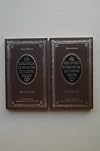
Isaac Asimov's Wonderful Worlds of Science Fiction, Volume 3: Supermen
by Isaac Asimov (Editor), Martin H Greenberg (Editor), Charles G. Waugh (Editor)
Isaac Asimov's Wonderful Worlds of Science Fiction (3)
On This Page
Description
Contains twelve stories about people who are superior in a particular characteristic.Tags
Recommendations












Member Reviews
** Roger Zelazny - Angel, Dark Angel. In a utopian/dystopian future, society is manged by planned deaths, carried out by teleporting modified civil servants. But human emotion can interfere with the most carefully-laid plans. It's not a bad idea, but I didn't love the writing style - never been a huge Zelazny fan, so if you are, mileage may vary.
** Harlan Ellison - Worlds to Kill. A mercenary, aided by a super-computer, guarantees military domination to his select clients. But a larger plan may lurk behind the public facade. Y'know, one gets the impression here that Ellison really truly doesn't see the sexism inherent in his idea that it may be tragic, but necessary to find a superior woman to be the helpmeet and support of the man show more with the superior plan. Too bad if she was ruling a planet all on her own; once all the facts are presented to her, she must see that she should take her proper place at a man's side. UGH!
* Gordon R. Dickson - In the Bone. Hmm. A lone spaceman has a pointless conflict with an alien on a faraway, earth-like planet. I really didn't care for it; not only because the details of the story strained suspension of disbelief, and not only because I might disagree with the story's essential premise that Man can be 'broken down' to a violent, primal, self: certainly humans are violent, and have caused extinctions and do engage in unnecessary violence. But the story felt like it had a self-congratulatory tone about this theorized 'essential nature' that I found quite repugnant. Perhaps it wasn't intended by Dickson - I'm not sure.
**** Damon Knight - What Rough Beast. A poignant and disturbing tale of an 'ordinary' man with the extraordinary ability to swap things between alternate realities. One might think that 'super' powers would make a 'super' man, but here the 'superman' is weak and frightened... but able to cause terrible consequences.
*** Larry Niven - Death By Ecstasy. A Sci-fi noir murder mystery. A policeman's former partner turns up dead, an apparent suicide. But the pieces don't all fit together, and a tale unfolds that involves psi powers, the habits of asteroid miners, black market organ sales, and the quotidien details of life in rather-dystopic apartment buildings unfolds.
* Poul Anderson - Un-Man. This is a very, very boring novella. Quotes like this are contributing to my disinterest: "Funny thing, friendship. It has nothing to do with the love of women - which is why they never understand it." "Treat 'em rough and tell 'em nothing and they'll come running. These modern women aren't as emancipated as they think." Really? OK, if you want to spend time with characters who think/behave like this, your mileage may vary. But I could barely drag myself all the way through this tedious story of a bunch of cloned United Nations agents (Un-Men, get it?) versus extreme Nationalists.
*** Dean R. Koontz - Muse. I usually don't care for Koontz, but I quite liked this story of an alien/human symbiote, prejudice and misunderstanding.
** A.E. van Vogt - Resurrection. A bunch of invading/colonizing aliens arrive at a dead Earth, and resurrect some humans to find out what happened. The last one the choose is a super-powerful being who may seek to end the alien's empire. Too many unanswered questions leave this story feeling unfinished.
** Philip E. High - Pseudopath. The government has an agent that they have decided to advertise to the enemy as a telepath. But, he admits, he doesn't actually have telepathy - although he can accurately identify undercover members of the enemy. How does he do it? Eh, this didn't really enthuse me.
** Robert Silverberg - After the Myths Went Home. I usually do like Silverberg, but I didn't feel that this was one of his best. A far-future human society summons up tales of ancient legend into living, breathing incarnations, for their entertainment. But they get bored with this - and then, there's a hastily tacked on ending.
** Henry Siesar - Before the Talent Dies. A man has preternatural talents which he only hopes to use to help humanity. But a distrustful government does him with a slow-acting poison. His only hope is to use his talent to trick a woman into getting pregnant with his child before he dies, so that his gifts can be passed on, genetically. Not the best idea, and the story is rather awkwardly constructed.
*** Perry A. Chapdelaine - Brood World Barbarian. Spartacus in Space! An alien gladiator fights his way to a position as Champion, offered freedom and rewards - but he is suffused with hatred for the man who captured him and put him in this position, and seeks only to gain revenge. show less
** Harlan Ellison - Worlds to Kill. A mercenary, aided by a super-computer, guarantees military domination to his select clients. But a larger plan may lurk behind the public facade. Y'know, one gets the impression here that Ellison really truly doesn't see the sexism inherent in his idea that
* Gordon R. Dickson - In the Bone. Hmm. A lone spaceman has a pointless conflict with an alien on a faraway, earth-like planet. I really didn't care for it; not only because the details of the story strained suspension of disbelief, and not only because I might disagree with the story's essential premise that Man can be 'broken down' to a violent, primal, self: certainly humans are violent, and have caused extinctions and do engage in unnecessary violence. But the story felt like it had a self-congratulatory tone about this theorized 'essential nature' that I found quite repugnant. Perhaps it wasn't intended by Dickson - I'm not sure.
**** Damon Knight - What Rough Beast. A poignant and disturbing tale of an 'ordinary' man with the extraordinary ability to swap things between alternate realities. One might think that 'super' powers would make a 'super' man, but here the 'superman' is weak and frightened... but able to cause terrible consequences.
*** Larry Niven - Death By Ecstasy. A Sci-fi noir murder mystery. A policeman's former partner turns up dead, an apparent suicide. But the pieces don't all fit together, and a tale unfolds that involves psi powers, the habits of asteroid miners, black market organ sales, and the quotidien details of life in rather-dystopic apartment buildings unfolds.
* Poul Anderson - Un-Man. This is a very, very boring novella. Quotes like this are contributing to my disinterest: "Funny thing, friendship. It has nothing to do with the love of women - which is why they never understand it." "Treat 'em rough and tell 'em nothing and they'll come running. These modern women aren't as emancipated as they think." Really? OK, if you want to spend time with characters who think/behave like this, your mileage may vary. But I could barely drag myself all the way through this tedious story of a bunch of cloned United Nations agents (Un-Men, get it?) versus extreme Nationalists.
*** Dean R. Koontz - Muse. I usually don't care for Koontz, but I quite liked this story of an alien/human symbiote, prejudice and misunderstanding.
** A.E. van Vogt - Resurrection. A bunch of invading/colonizing aliens arrive at a dead Earth, and resurrect some humans to find out what happened. The last one the choose is a super-powerful being who may seek to end the alien's empire. Too many unanswered questions leave this story feeling unfinished.
** Philip E. High - Pseudopath. The government has an agent that they have decided to advertise to the enemy as a telepath. But, he admits, he doesn't actually have telepathy - although he can accurately identify undercover members of the enemy. How does he do it? Eh, this didn't really enthuse me.
** Robert Silverberg - After the Myths Went Home. I usually do like Silverberg, but I didn't feel that this was one of his best. A far-future human society summons up tales of ancient legend into living, breathing incarnations, for their entertainment. But they get bored with this - and then, there's a hastily tacked on ending.
** Henry Siesar - Before the Talent Dies. A man has preternatural talents which he only hopes to use to help humanity. But a distrustful government does him with a slow-acting poison. His only hope is to use his talent to trick a woman into getting pregnant with his child before he dies, so that his gifts can be passed on, genetically. Not the best idea, and the story is rather awkwardly constructed.
*** Perry A. Chapdelaine - Brood World Barbarian. Spartacus in Space! An alien gladiator fights his way to a position as Champion, offered freedom and rewards - but he is suffused with hatred for the man who captured him and put him in this position, and seeks only to gain revenge. show less
Ratings
Members
- Recently Added By
Author Information

Isaac Asimov was born in Petrovichi, Russia, on January 2, 1920. His family emigrated to the United States in 1923 and settled in Brooklyn, New York, where they owned and operated a candy store. Asimov became a naturalized U.S. citizen at the age of eight. As a youngster he discovered his talent for writing, producing his first original fiction at show more the age of eleven. He went on to become one of the world's most prolific writers, publishing nearly 500 books in his lifetime. Asimov was not only a writer; he also was a biochemist and an educator. He studied chemistry at Columbia University, earning a B.S., M.A. and Ph.D. In 1951, Asimov accepted a position as an instructor of biochemistry at Boston University's School of Medicine even though he had no practical experience in the field. His exceptional intelligence enabled him to master new systems rapidly, and he soon became a successful and distinguished professor at Columbia and even co-authored a biochemistry textbook within a few years. Asimov won numerous awards and honors for his books and stories, and he is considered to be a leading writer of the Golden Age of science fiction. While he did not invent science fiction, he helped to legitimize it by adding the narrative structure that had been missing from the traditional science fiction books of the period. He also introduced several innovative concepts, including the thematic concern for technological progress and its impact on humanity. Asimov is probably best known for his Foundation series, which includes Foundation, Foundation and Empire, and Second Foundation. In 1966, this trilogy won the Hugo award for best all-time science fiction series. In 1983, Asimov wrote an additional Foundation novel, Foundation's Edge, which won the Hugo for best novel of that year. Asimov also wrote a series of robot books that included I, Robot, and eventually he tied the two series together. He won three additional Hugos, including one awarded posthumously for the best non-fiction book of 1995, I. Asimov. "Nightfall" was chosen the best science fiction story of all time by the Science Fiction Writers of America. In 1979, Asimov wrote his autobiography, In Memory Yet Green. He continued writing until just a few years before his death from heart and kidney failure on April 6, 1992. (Bowker Author Biography) show less

Martin Harry Greenberg (March 1, 1941 - June 25, 2011) was an American academic and speculative fiction anthologist. In all, he compiled 1,298 anthologies. He founded Tekno Books, a packager of more than 2000 published books; he was also a co-founder of the Sci-Fi Channel. Some of his anthologies included: Past Imperfect (2001), Once Upon a Galaxy show more (2002) and Sirius: The Dog Star (2004). (Bowker Author Biography) show less

Charles Waugh is an associate professor of English at Utah State University and the editor and translator (with Nguyn Lien) of Family of Fallen Leaves: Stories of Agent Orange by Vietnamese Writers. Nguyn Lien was a writer, scholar, and teacher who translated many international works of literature into Vietnamese. Van Gi is the dean of the Faculty show more of Creative Writing at the University of Culture in Hanoi. show less
All Editions
Series

Work Relationships
Common Knowledge
- Canonical title
- Isaac Asimov's Wonderful Worlds of Science Fiction, Volume 3: Supermen
- Original publication date
- 1984 (anthology) (anthology)
- Original language
- English
Classifications
- Genres
- Fiction and Literature, Science Fiction
- DDC/MDS
- 813.087608 — Literature & rhetoric American literature in English American fiction in English By type Genre fiction Adventure fiction Speculative fiction Collections
- LCC
- PS648 .S3 — Language and Literature American literature American literature Collections of American literature Prose (General)
- BISAC
Statistics
- Members
- 128
- Popularity
- 254,438
- Reviews
- 1
- Rating
- (3.20)
- Languages
- English
- Media
- Paper
- ISBNs
- 3
- ASINs
- 2