

Damon Knight (1922–2002)
Author of Creating Short Fiction: The Classic Guide to Writing Short Fiction
About the Author
Series
Works by Damon Knight
Life Edit {short story} 7 copies
SV - Sea Venture 7 copies
I see you (short story) 6 copies
Strangers On Paradise 5 copies
galaxy 14 Auswahl der besten Stories aus dem Science Fiction Magazine Galaxy (1970) — Contributor — 5 copies
World Without Children 5 copies
Dio 3 copies
The Best From Orbit — Editor — 2 copies
La Ronde 2 copies
The Third Little Green Man 2 copies
Tarcan of the Hoboes 2 copies
Perchance to Dream 2 copies
1973 Year in SF 2 copies
Nebula awards stories, 1965 2 copies
The Analogues 2 copies
Messaggi per la mente 2 copies
las llaves de diciembre 1 copy
Orbit 10 1 copy
Beyond Tomorrow 1 copy
Daymon Knight's Orbit 12 1 copy
O 1 copy
On the Wheel [short fiction] 1 copy
Daymon Knight's Orbit 13 1 copy
Worlds To Come: Science fiction adventure classics by Arthur C. Clarke, H.B. Fyfe, Ray Bradbury ... 1 copy
An Annotated 'Masks' 1 copy
Watching Matthew 1 copy
A Galaxy of Gallic Fantasy 1 copy
The Best of Orbit 1 copy
Gli osservatori 1 copy
È proprio la fine del mondo 1 copy
Satisfaction {short story} 1 copy
God's Nose [short story] 1 copy
der-mann-im-baum-roman 1 copy
People Maker, The 1 copy
Turncoat 1 copy
The Star Beast 1 copy
The Green Gods 1 copy
Il lastrico dell'inferno 1 copy
Demo-zero 1 copy
4th Wish 1 copy
Ah Too Late 1 copy
The Dying Man 1 copy
The Shape of Things 1 copy
Associated Works
Twenty Thousand Leagues Under the Sea (1869) — Afterword, some editions — 21,348 copies, 283 reviews
The Science Fiction Hall of Fame, Volume One: The Greatest Science Fiction Stories of All Time (1970) — Contributor — 2,103 copies, 34 reviews
The World Treasury of Science Fiction (1989) — Contributor; Translator, some editions — 969 copies, 2 reviews
The Big Book of Science Fiction: The Ultimate Collection (2016) — Contributor — 522 copies, 8 reviews
The Norton Book of Science Fiction: North American Science Fiction, 1960-1990 (1993) — Contributor — 344 copies, 6 reviews
The Year's Best Science Fiction: Fourth Annual Collection (1987) — Contributor — 219 copies, 1 review
Bruce Coville's Book of Aliens: Tales to Warp Your Mind (1994) — Contributor — 218 copies, 4 reviews
The Arbor House Treasury of Great Science Fiction Short Novels (1980) — Contributor — 188 copies, 1 review
The Very Best of Fantasy & Science Fiction: Sixtieth Anniversary Anthology (2009) — Contributor — 148 copies, 6 reviews
Isaac Asimov's Wonderful Worlds of Science Fiction, Volume 3: Supermen (1984) — Contributor — 128 copies, 1 review
Science Fiction Showcase: Eleven Extraordinary Stories by Eleven Masters of Science-Fiction and Fantasy (1959) — Contributor — 111 copies, 3 reviews
The SFWA Grand Masters, Volume 3: Lester Del Rey, Frederik Pohl, Damon Knight, A. E. van Vogt, and Jack Vance (2001) — Author — 109 copies, 3 reviews
The Very Best of Fantasy & Science Fiction, Volume 2 (2014) — Contributor, some editions — 109 copies, 7 reviews
The Prentice Hall Anthology of Science Fiction and Fantasy (2000) — Contributor — 100 copies, 2 reviews
Nebula Awards Showcase 2002: The Year's Best SF and Fantasy (2002) — Commentary — 95 copies, 1 review
The Magazine of Fantasy & Science Fiction: A 30-Year Retrospective (1980) — Contributor — 94 copies, 1 review
Isaac Asimov's Magical Worlds of Fantasy, Volume 5: Giants (1985) — Contributor — 93 copies, 2 reviews
Nebula Awards 30: SFWA's Choices For The Best Science Fiction And Fantasy Of The Year (Nebula Awards Showcase) (1996) — Contributor — 89 copies, 2 reviews
The World That Couldn't Be and 8 Other Novelets From "Galaxy" (1959) — Contributor — 86 copies, 5 reviews
Bug-Eyed Monsters: 13 Stories of Dripping, Creeping, Gurgling, Purling, Trilling, Oozing, Seeping, Gushing Deadly Monsters (1980) — Contributor — 79 copies, 2 reviews
The Best Fantasy Stories from the Magazine of Fantasy & Science Fiction (1985) — Contributor — 77 copies, 2 reviews
SF: The Year's Greatest Science-Fiction and Fantasy: Second Annual Volume (1958) — Contributor — 75 copies, 1 review
Science Fiction Hall Of Fame Volume Two. The Greatest Science Fiction Stories Of All Time Chosen By The Members Of The Science Fiction Writers Of America (1970) — Contributor, some editions — 41 copies
The Magazine of Fantasy and Science Fiction October 1982, Vol. 63, No. 4 (1982) — Author — 16 copies
The Magazine of Fantasy and Science Fiction February 1985, Vol. 68, No. 2 (1985) — Contributor — 13 copies
The Magazine of Fantasy and Science Fiction October 1964, Vol. 27, No. 4 (1964) — Contributor — 13 copies
The Magazine of Fantasy and Science Fiction December 1959, Vol. 17, No. 6 (1959) — Contributor — 13 copies
Special Wonder: The Anthony Boucher Memorial Anthology of Fantasy and Science Fiction (1970) — Contributor — 12 copies
The Magazine of Fantasy and Science Fiction, 50. Die Cinderella- Maschine. (1980) — Author, some editions — 9 copies
The Magazine of Fantasy and Science Fiction August 1959, Vol. 17, No. 2 (1959) — Contributor — 9 copies, 1 review
The Magazine of Fantasy and Science Fiction January 1960, Vol. 18, No. 1 (1960) — Contributor — 9 copies
The Magazine of Fantasy and Science Fiction Winter-Spring 1950, Vol. 1, No. 2 (1950) — Contributor — 8 copies
The Blind Pilot — Translator, some editions — 7 copies
Faseskift : science fiction noveller : et udvalg (1984) — Author, some editions — 5 copies, 1 review
The New Prehistory {short story} — Translator, some editions — 4 copies
The Dead Fish [short story] — Translator, some editions — 4 copies
Strade senza uscita — Contributor — 4 copies
SFの評論大全集 (別冊奇想天外 4) — Contributor — 1 copy
Tagged
Common Knowledge
- Legal name
- Knight, Damon Francis
- Other names
- Fleming, Stuart
- Birthdate
- 1922-09-19
- Date of death
- 2002-04-15
- Gender
- male
- Occupations
- critic
editor
science fiction writer - Organizations
- Futurians
Milford Science Fiction Writers' Conference
Science Fiction and Fantasy Writers of America (Founder ∙ first President)
National Fantasy Fan Federation [N3F] (cofounder) - Awards and honors
- SFWA Grand Master (1994)
Hugo (1956)
SF Hall Of Fame (2003)
SFRA Pilgrim Award (1975) - Relationships
- Wilhelm, Kate (wife)
- Nationality
- USA
- Birthplace
- Baker City, Baker County, Oregon, USA
- Places of residence
- New York, New York, USA
Eugene, Oregon, USA
Hood River, Oregon, USA - Place of death
- Eugene, Lane County, Oregon, USA
- Associated Place (for map)
- Oregon, USA
Members
Discussions
SF/Horror story: Typos Reveal Sinister Hidden Messages in Name that Book (April 2012)
Science Fiction/Fantasy book at least 30 years old boy with a growth condition in Name that Book (October 2011)
Reviews

You can’t judge a book by it’s cover, I know, but it sure is hard to ignore that testicular head.
If you get passed it, though, you are in for a treat.
A genre story has an effect in mind, always. It is aimed at something. In a horror story, it is fear. In a cowboy story, it is a sense of adventure.
A science fiction story from the fifties wants your chin on the floor and Damon knight knew how to get it there.
His are stories of the kind published in Galaxy and Astounding, polished and show more structured. A lot of them are told like a joke, with the obligatory punchline. “Not with a bang”, is one. “To Serve Man.” Others go a lot deeper and use the outlandish to embody an emotional truth: “The Enemy”, “The Handler”.
Science fiction, by now, has become what it always proclaimed to be: a combination of scientific speculation, combined with domestic realism.
To me, that is a loss.
Because stories from the 50s are crazy, unpredictable, bizarre. You never now what you are getting into and it never takes too long.
Clearly, this is where Rod Serling (The Twilight Zone) did his shopping. show less
If you get passed it, though, you are in for a treat.
A genre story has an effect in mind, always. It is aimed at something. In a horror story, it is fear. In a cowboy story, it is a sense of adventure.
A science fiction story from the fifties wants your chin on the floor and Damon knight knew how to get it there.
His are stories of the kind published in Galaxy and Astounding, polished and show more structured. A lot of them are told like a joke, with the obligatory punchline. “Not with a bang”, is one. “To Serve Man.” Others go a lot deeper and use the outlandish to embody an emotional truth: “The Enemy”, “The Handler”.
Science fiction, by now, has become what it always proclaimed to be: a combination of scientific speculation, combined with domestic realism.
To me, that is a loss.
Because stories from the 50s are crazy, unpredictable, bizarre. You never now what you are getting into and it never takes too long.
Clearly, this is where Rod Serling (The Twilight Zone) did his shopping. show less
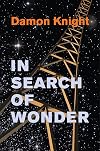
Damon Knight is the most vivid contemporary critic of Golden Age science fiction. He was a pal who crashed on the couches of some of the writers that an organization he founded would later celebrate as Grandmasters. He knew precisely the nature of their talent, but from his1945 devastating takedown of A.E. van Vogt to his qualified appreciations of Asimov, Heinlein, Bradbury, and Clarke, he was quite willing to tell his friends when they tripped over their shoelaces.
Here are some show more highlights.
As a young man in 1945, he was undaunted by the reputation of A. E. van Vogt. He finds egregious errors in his science. He finds the plot of The World of Null-A full of “contradictions, misleading clues and irrelevant action.” Its characters do not act consistently with the qualities they are supposed to have. Knight says van Vogt’s sentence and diction are “fumbling and insensitive.” Nor can he build a scene or create a believable character.
He notes that a year after becoming a best seller, L. Ron Hubbard vanished “trailing a cloud of lawsuits.” His scamming and role-playing led him to waste his talent.
At times, Knight slips in the knife with faint praise: Richard Matheson’s I Am Legend “is full of good ideas, every other one of which is immediately dropped and kicked out of sight.” In Double Star, Knight says Heinlein “demonstrates again that the boobs cannot put so many greasy fingerprints on an idea that a good writer cannot lift it out shining and new.”
Asimov said his Galactic empire was “simply the Roman … Empire written large.” Knight calls that phrase “an absolutely devastating criticism of any science fiction story.”
Knight agrees with those purists who say that Bradbury does not write science fiction and that his technology is a joke. He writes, Knight says, about a remembered Midwestern childhood “seen through the wrong end of a rose-colored glass.”
Finally, Knight would not be the last to note that Arthur C. Clarke writes fiction in which gadgets are more important than people.
He makes a good case for two writers, Theodore Sturgeon and Jack Williamson, whose reputations have unjustly slipped. But he certainly overpraises Curme Gray, the author of only one novel of any note.
Most of these essays were originally published in small circulation pulps, and we are lucky to have them rescued from oblivion in this book. show less
Here are some show more highlights.
As a young man in 1945, he was undaunted by the reputation of A. E. van Vogt. He finds egregious errors in his science. He finds the plot of The World of Null-A full of “contradictions, misleading clues and irrelevant action.” Its characters do not act consistently with the qualities they are supposed to have. Knight says van Vogt’s sentence and diction are “fumbling and insensitive.” Nor can he build a scene or create a believable character.
He notes that a year after becoming a best seller, L. Ron Hubbard vanished “trailing a cloud of lawsuits.” His scamming and role-playing led him to waste his talent.
At times, Knight slips in the knife with faint praise: Richard Matheson’s I Am Legend “is full of good ideas, every other one of which is immediately dropped and kicked out of sight.” In Double Star, Knight says Heinlein “demonstrates again that the boobs cannot put so many greasy fingerprints on an idea that a good writer cannot lift it out shining and new.”
Asimov said his Galactic empire was “simply the Roman … Empire written large.” Knight calls that phrase “an absolutely devastating criticism of any science fiction story.”
Knight agrees with those purists who say that Bradbury does not write science fiction and that his technology is a joke. He writes, Knight says, about a remembered Midwestern childhood “seen through the wrong end of a rose-colored glass.”
Finally, Knight would not be the last to note that Arthur C. Clarke writes fiction in which gadgets are more important than people.
He makes a good case for two writers, Theodore Sturgeon and Jack Williamson, whose reputations have unjustly slipped. But he certainly overpraises Curme Gray, the author of only one novel of any note.
Most of these essays were originally published in small circulation pulps, and we are lucky to have them rescued from oblivion in this book. show less

2.5/5
While better than the other Knight that I've read (Hell's Pavement), A For Anything still leaves a lot to be desired and leaves me feeling like I can safely pass up anything else written by Knight in the future, especially since most consider this his best work.
The narrative is far more coherently drawn than Hell's Pavement, though we still have a dystopia that was nucleated by a singular macguffin technology. In A For Anything the macguffin is a simple matter duplicator called a show more "Gismo" that gets spread to the public, prompting widespread societal upheaval. The story takes place some generations after this event, when the control of this device has been taken over by an aristocratic class who rule over a much large slave caste, much of whom have been 'duped' by the device itself, clones that get replaced as they age out of their function. The central character, Dick Jones, is the juvenile heir apparent to a feudal lord who rules over a portion of land near Pittsburgh. Much like the aristocratic class in Vance's The Last Castle, Dick and his family are mostly wrapped up in political intrigue games, focused on concepts like honor and tradition as their every whim is serviced by the slaves that serve as the backbone of society. Dick is sent off to Eagles, the capital city located near Denver, to earn his stripes in society, make connections with other nobles, and become worthy of inheriting his fathers estate. During this time at Eagles, Dick is involved in political subterfuge that eventually gets overshadowed by a widespread slave revolt.
The central thematic idea is that, once material goods becomes unlimited in quantity, the dominant commodity will become labor itself, and wealth will subsequently be measured by how much labor you command. Hence, a slavery caste system. Knight certainly has a pessimistic view. Where others might see a utopia, he sees reason to believe that without the struggle to survive we would find ourselves reverting to some of our most sinful tendencies as a species. I find it hard to agree with him in many ways.
The characters, the setting, the prose, and everything else outside of the central idea and narrative are boilerplate at best. Nothing memorable or exciting that would set it apart from the million other dullard dystopian novels of the time period. The Last Castle is its superior in most every way, so it's hard to get excited about the limited strengths that I found here. It's also rife with a lot of the more regrettable gender and racial stereotypes that were common at the time.
Interesting to a point, but ultimately not super noteworthy in any particular way. show less
While better than the other Knight that I've read (Hell's Pavement), A For Anything still leaves a lot to be desired and leaves me feeling like I can safely pass up anything else written by Knight in the future, especially since most consider this his best work.
The narrative is far more coherently drawn than Hell's Pavement, though we still have a dystopia that was nucleated by a singular macguffin technology. In A For Anything the macguffin is a simple matter duplicator called a show more "Gismo" that gets spread to the public, prompting widespread societal upheaval. The story takes place some generations after this event, when the control of this device has been taken over by an aristocratic class who rule over a much large slave caste, much of whom have been 'duped' by the device itself, clones that get replaced as they age out of their function. The central character, Dick Jones, is the juvenile heir apparent to a feudal lord who rules over a portion of land near Pittsburgh. Much like the aristocratic class in Vance's The Last Castle, Dick and his family are mostly wrapped up in political intrigue games, focused on concepts like honor and tradition as their every whim is serviced by the slaves that serve as the backbone of society. Dick is sent off to Eagles, the capital city located near Denver, to earn his stripes in society, make connections with other nobles, and become worthy of inheriting his fathers estate. During this time at Eagles, Dick is involved in political subterfuge that eventually gets overshadowed by a widespread slave revolt.
The central thematic idea is that, once material goods becomes unlimited in quantity, the dominant commodity will become labor itself, and wealth will subsequently be measured by how much labor you command. Hence, a slavery caste system. Knight certainly has a pessimistic view. Where others might see a utopia, he sees reason to believe that without the struggle to survive we would find ourselves reverting to some of our most sinful tendencies as a species. I find it hard to agree with him in many ways.
The characters, the setting, the prose, and everything else outside of the central idea and narrative are boilerplate at best. Nothing memorable or exciting that would set it apart from the million other dullard dystopian novels of the time period. The Last Castle is its superior in most every way, so it's hard to get excited about the limited strengths that I found here. It's also rife with a lot of the more regrettable gender and racial stereotypes that were common at the time.
Interesting to a point, but ultimately not super noteworthy in any particular way. show less

A classic science fiction tale and a warning about 'Greeks bearing gifts' from Damon Knight that stands up seventy years on. To say more would ruin the tale because it is really one of those 'punch line' tales that dominated short form sci fi in the 1950s and 1960s.
Many science fiction tales in that era shared the pattern of horror, fantasy and mystery stories in being structured like extended 'jokes' with an exposition that would lead to a 'twist' that caused a shiver in the reader rather show more than a laugh.
This was the tradition of Hitchcockian television whose British equivalent was Roald Dahl's sinister 'Tales of the Unexpected'. It raises interesting questions about the link between laughter and fear, between the punch line and the 'twist' as a shared form of tale-telling.
Either way, the 'twist' was the gateway into an insight into the human condition much as the punch line satirised that condition. It seems to have diminished in importance in the last half century - perhaps we are no longer so easily surprised unless it is more obviously a joke.
But perhaps Knight's tale is a sort of joke of the type we call gallows humour ... show less
Many science fiction tales in that era shared the pattern of horror, fantasy and mystery stories in being structured like extended 'jokes' with an exposition that would lead to a 'twist' that caused a shiver in the reader rather show more than a laugh.
This was the tradition of Hitchcockian television whose British equivalent was Roald Dahl's sinister 'Tales of the Unexpected'. It raises interesting questions about the link between laughter and fear, between the punch line and the 'twist' as a shared form of tale-telling.
Either way, the 'twist' was the gateway into an insight into the human condition much as the punch line satirised that condition. It seems to have diminished in importance in the last half century - perhaps we are no longer so easily surprised unless it is more obviously a joke.
But perhaps Knight's tale is a sort of joke of the type we call gallows humour ... show less
Lists
Awards


You May Also Like


Associated Authors
Statistics
- Works
- 254
- Also by
- 186
- Members
- 8,415
- Popularity
- #2,861
- Rating
- 3.8
- Reviews
- 118
- ISBNs
- 253
- Languages
- 8
- Favorited
- 7

