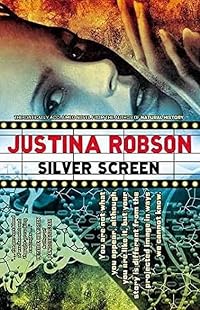
Silver Screen
by Justina Robson
On This Page
Description
Silver Screen presents an enjoyably different, subversive slant on the science fiction themes of AI and cyberspace. Insecure and overweight heroine Anjuli O’Connell is one of a group of friends who have been hot-housed from an early age to perform in genius-level jobs. But Anjuli worries that her eidetic memory and her friendship with genuine smart boy Roy Croft has been her ticket to success, rather than any real intelligence of her own. She’s put to the test when Roy kills himself in show more an experiment to upload his mind into cyberspace, seeking that SF dream of bodiless immortality, which doesn’t work as expected. At the same time her boyfriend’s research has led to him harnessing himself to dubious biomechanoid technologies, which pull the user into mental symbiosis, creating hybrid consciousness – a new "I", continuous with the old, but different. "Where does life end and the machine begin?" Meanwhile Anjuli’s grasping multinational employer, OptiNet, the owner of global communications AI, 901, is locked into an increasingly bitter war with the Machine-Greens, who preach AI liberation. As the case for 901’s humanity, or otherwise, comes up before the Strasbourg Court, expert witness Anjuli is targeted by assassins and entangled in the hunt for an algorithm which is the key to machine consciousness, and which may even be the master-code of life itself. This story explores many interfaces between humans and their technologies, between the promises of science and the explanations of faith. It is written in a first-person style that mingles elements of detective story and confessional. Alongside its SF content, the book delves into the complexities of friendship, loyalty, love, and betrayal from an intimate human perspective. This is "grrrl-style" SF: as well as all the favorite "Airfix" features, the protagonists deconstruct personal relationships amidst macrocosmic and deeply philosophical goings-on. The writing is punchy, but with a literary sheen. It delivers complex concepts and a twisting plot with a deceptively light touch. show lessTags
Recommendations
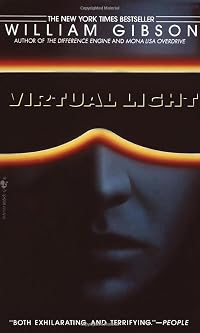
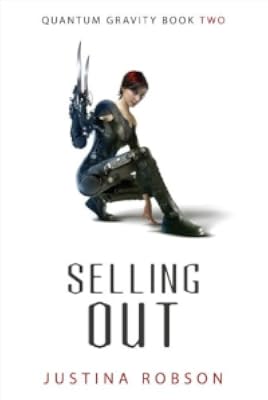
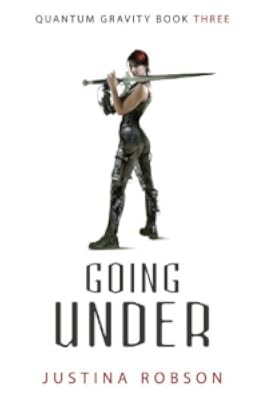
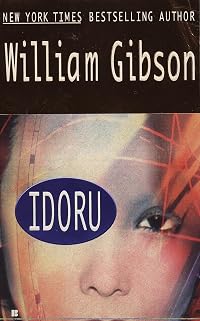

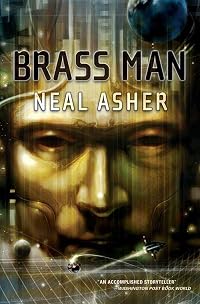
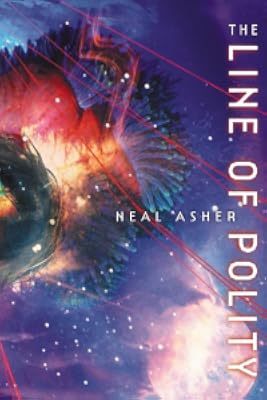
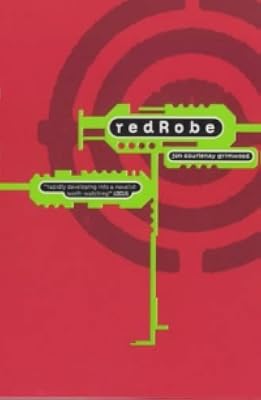
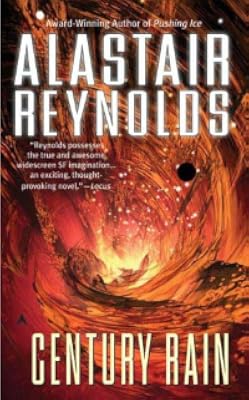
Member Recommendations
AdonisGuilfoyle The American version of this story - gifted heroine, AI, both very well written.
Member Reviews
Having read and immensely enjoyed Robson's 'Keeping It Real' (the first in her Quantum Gravity series), I found myself disappointed by her first novel (1999) despite the three prestigious award nominations it received. The reason lay not in the ideas but the writing.
Seven years later Robson's writing was to be crisp and fast-moving. She had learned a lot about pacing and keeping the story tight and, above all, coherent. 'Silver Screen' is much more plodding and lacks basic clarity to the point that I simply stopped reading a quarter of the way through.
The ideas are interesting. It is a relatively early investigation into what is now a very well covered topic, whether advanced artificial intelligence can develop personality or 'soul' show more sufficient to claim to have 'rights' in a Lockean world.
But there is a mismatch here between a story evidently geared at a young (but fully adult) reading audience and the need to write a little closer to Hemingway than Dostoevsky in style. There is just too much being said too slowly to build interest. The process becomes duller than it should be.
This is certainly not the case in the later book which can be praised for its balance between fantasy, narrative and characterisation directed at a younger audience by a skilled writer then already heading towards 40 but not showing it.
Now, I appreciate that you should not judge a book entirely on the first quarter (although it is a fairly long quarter or at least feels like it) so I have marked where I reached. If I return to it and the plodding ends in favour of some verve and vim then I will come back and say so.
In the meantime, I am puzzled at the nominations yet pleased because, whatever my doubts, Robson learned her trade and got the chance to produce solid work like 'Keeping It Real'. Graham Greene's early novels were actually dreadful which this is not. show less
Seven years later Robson's writing was to be crisp and fast-moving. She had learned a lot about pacing and keeping the story tight and, above all, coherent. 'Silver Screen' is much more plodding and lacks basic clarity to the point that I simply stopped reading a quarter of the way through.
The ideas are interesting. It is a relatively early investigation into what is now a very well covered topic, whether advanced artificial intelligence can develop personality or 'soul' show more sufficient to claim to have 'rights' in a Lockean world.
But there is a mismatch here between a story evidently geared at a young (but fully adult) reading audience and the need to write a little closer to Hemingway than Dostoevsky in style. There is just too much being said too slowly to build interest. The process becomes duller than it should be.
This is certainly not the case in the later book which can be praised for its balance between fantasy, narrative and characterisation directed at a younger audience by a skilled writer then already heading towards 40 but not showing it.
Now, I appreciate that you should not judge a book entirely on the first quarter (although it is a fairly long quarter or at least feels like it) so I have marked where I reached. If I return to it and the plodding ends in favour of some verve and vim then I will come back and say so.
In the meantime, I am puzzled at the nominations yet pleased because, whatever my doubts, Robson learned her trade and got the chance to produce solid work like 'Keeping It Real'. Graham Greene's early novels were actually dreadful which this is not. show less
Despite many warm words from divers readers, I struggled with this. The central character becomes his own McGuffin in chapter two; we take up to chapter five for the writing and characterisation to come alive. There's a lot of telling rather than showing; and when the novel isn't engaged in moments of tension, we are treated to a lot of hi-tech office politics.
The POV character is engaging and quite ordinary (though it says something about how our lives are accelerating when we can look at a woman who is a qualified psychiatrist for AIs and who works on a space station and think of her life as 'ordinary', so credit to Robson). The main problem I had with this character was that she was written as a character of mixed ethnicity - show more Anglo-Indian - but that background played little or no part in the novel until quite late on. At one point, I misattributed her detailed ethnic background, and other reviewers have done that too. More, she hardly came over as 'Yorkshire' at all. And although the story used Northern English settings - a Good Thing, to be sure - they didn't convince and sometimes felt like little more than names plucked from a road atlas. Which given that Robson is a native of Leeds, I find a bit surprising. Perhaps she lacks the 'sense of place' gene - I lack it too, so I understand that this can happen - but then why make a point of a setting that you can't carry off?
Given that this is a 1999 novel, though, the technology doesn't come over as particularly off-target; the AI autonomous taxis ring especially true. A bit more surprising was the sudden inclusion of a religious cult as a major player in a drama about AIs and their legal status. And a terrorist bombing at an unspecified railway station in Manchester was unfortunate. Indeed, there are Green and anti-Green extremist groups referenced in the plot but they are kept very much in the background and indeed are made to seem more like implements in the office politics; had the novel been written five years later, that would not have been possible, and it's one of the things that rings false in a modern reading.
Certainly, the pacing seemed somewhat uneven, though the last third of the book improves greatly on the first two-thirds. Still, enough people thought well of this book to promote Robson's career, and other works followed; so this may just be me. Certainly, there is talent on display because when this novel works, it works adequately. I shall return to Justina Robson's work; but perhaps not just yet. show less
The POV character is engaging and quite ordinary (though it says something about how our lives are accelerating when we can look at a woman who is a qualified psychiatrist for AIs and who works on a space station and think of her life as 'ordinary', so credit to Robson). The main problem I had with this character was that she was written as a character of mixed ethnicity - show more Anglo-Indian - but that background played little or no part in the novel until quite late on. At one point, I misattributed her detailed ethnic background, and other reviewers have done that too. More, she hardly came over as 'Yorkshire' at all. And although the story used Northern English settings - a Good Thing, to be sure - they didn't convince and sometimes felt like little more than names plucked from a road atlas. Which given that Robson is a native of Leeds, I find a bit surprising. Perhaps she lacks the 'sense of place' gene - I lack it too, so I understand that this can happen - but then why make a point of a setting that you can't carry off?
Given that this is a 1999 novel, though, the technology doesn't come over as particularly off-target; the AI autonomous taxis ring especially true. A bit more surprising was the sudden inclusion of a religious cult as a major player in a drama about AIs and their legal status. And a terrorist bombing at an unspecified railway station in Manchester was unfortunate. Indeed, there are Green and anti-Green extremist groups referenced in the plot but they are kept very much in the background and indeed are made to seem more like implements in the office politics; had the novel been written five years later, that would not have been possible, and it's one of the things that rings false in a modern reading.
Certainly, the pacing seemed somewhat uneven, though the last third of the book improves greatly on the first two-thirds. Still, enough people thought well of this book to promote Robson's career, and other works followed; so this may just be me. Certainly, there is talent on display because when this novel works, it works adequately. I shall return to Justina Robson's work; but perhaps not just yet. show less
Excellent, if rather abstract, futuristic novel about a woman with a photographic memory who takes on the cause of an artificially intelligent supercomputer after her genius childhood friend 'uploads' himself into cyberspace. I may be simplifying the plot, but some of the deeper angles escaped me.
That said, Justina Robson's first person narrative is so enjoyable to read, making Anjuli sound normal and witty by explaining her technological (and increasingly chaotic) life in familiar terms, that I didn't altogether mind getting lost in her world. The jarring references to Yorkshire cities like Leeds and Skipton are also amusing - somehow it never occurred to me that the north of England could be the setting for a sci-fi novel!
Engrossing show more and thoughtful, and exactly the type of book I was searching for - Librarything does it again! show less
That said, Justina Robson's first person narrative is so enjoyable to read, making Anjuli sound normal and witty by explaining her technological (and increasingly chaotic) life in familiar terms, that I didn't altogether mind getting lost in her world. The jarring references to Yorkshire cities like Leeds and Skipton are also amusing - somehow it never occurred to me that the north of England could be the setting for a sci-fi novel!
Engrossing show more and thoughtful, and exactly the type of book I was searching for - Librarything does it again! show less
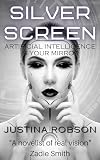
Look at the different covers of this! It's like artists/designers can't figure out what the book is about, or what it's exploring. It's even had a different title, apparently: Transformation. Also, I wonder what it will have to do with the film industry. Hmm...
Picked up for an anticipated group read for a group that failed (Lady Vaults). Now I'll be reading it on my own, hopefully sometime before the end of 2020, for the challenge in the group Women of the Future, for a female author.
---
Now that I've started I'm finding it to be not what I expected, which, given that I had no idea what to expect, is odd. But it's turning out to be a mystery... maybe.... And it feels YA, even though the characters spend only the first small section in show more school. Not sure I'll continue.
-
ok. I had to dnf it. I think it's a pretty good story for the right audience, but not for me atm. The world-building is complex, the voice is stylistic, there is a mystery, there's just an overwhelming amount of information to process and in 2020 I just am not capable. Definitely not YA as too complex. Seems like a good book to read w/ others, or for the right reader of course, but not so much of the classic Sense of Wonder and What If that I like to read SF. (Some What If, yes, but underneath all the entanglements of unreliable narrator, jigsawed understandings, overt and background mysteries....) Sorry. p. 128 and done. show less
Picked up for an anticipated group read for a group that failed (Lady Vaults). Now I'll be reading it on my own, hopefully sometime before the end of 2020, for the challenge in the group Women of the Future, for a female author.
---
Now that I've started I'm finding it to be not what I expected, which, given that I had no idea what to expect, is odd. But it's turning out to be a mystery... maybe.... And it feels YA, even though the characters spend only the first small section in show more school. Not sure I'll continue.
-
ok. I had to dnf it. I think it's a pretty good story for the right audience, but not for me atm. The world-building is complex, the voice is stylistic, there is a mystery, there's just an overwhelming amount of information to process and in 2020 I just am not capable. Definitely not YA as too complex. Seems like a good book to read w/ others, or for the right reader of course, but not so much of the classic Sense of Wonder and What If that I like to read SF. (Some What If, yes, but underneath all the entanglements of unreliable narrator, jigsawed understandings, overt and background mysteries....) Sorry. p. 128 and done. show less
I'm very glad I intercepted one of Justina Robson's books en route to another library becasue this too was a very good read.
In a near future England where clever children are sent to a school to learn faster, Anjuli O'Connell is an exception, among all the exceptionally bright she's different, she has perfect recall, a memory that logs everything (would have made an exceptional librarian!). Her school friends carry over to her working life, partially because she can decode what they're talking about into understandable English.
WHen on of her friends dies while apparently trying to upload himself into the network, her world starts crumbling around her. There are secrets within secrets and the AI's are getting to an independant age.
In a near future England where clever children are sent to a school to learn faster, Anjuli O'Connell is an exception, among all the exceptionally bright she's different, she has perfect recall, a memory that logs everything (would have made an exceptional librarian!). Her school friends carry over to her working life, partially because she can decode what they're talking about into understandable English.
WHen on of her friends dies while apparently trying to upload himself into the network, her world starts crumbling around her. There are secrets within secrets and the AI's are getting to an independant age.
The premise: ganked from publisher's website: Silver Screen presents an enjoyably different, subversive slant on the science fiction themes of AI and cyberspace. Insecure and overweight heroine Anjuli O’Connell is one of a group of friends who have been hot-housed from an early age to perform in genius-level jobs. But Anjuli worries that her eidetic memory and her friendship with genuine smart boy Roy Croft has been her ticket to success, rather than any real intelligence of her own.
She’s put to the test when Roy kills himself in an experiment to upload his mind into cyberspace, seeking that SF dream of bodiless immortality, which doesn’t work as expected. At the same time her boyfriend’s research has led to him harnessing show more himself to dubious biomechanoid technologies, which pull the user into mental symbiosis, creating hybrid consciousness – a new “I”, continuous with the old, but different. “Where does life end and the machine begin?”
Meanwhile Anjuli’s grasping multinational employer, OptiNet, the owner of global communications AI, 901, is locked into an increasingly bitter war with the Machine-Greens, who preach AI liberation. As the case for 901’s humanity, or otherwise, comes up before the Strasbourg Court, expert witness Anjuli is targeted by assassins and entangled in the hunt for an algorithm which is the key to machine consciousness, and which may even be the master-code of life itself.
This story explores many interfaces between humans and their technologies, between the promises of science and the explanations of faith. It is written in a first-person style that mingles elements of detective story and confessional. Alongside its SF content, the book delves into the complexities of friendship, loyalty, love, and betrayal from an intimate human perspective.
This is "grrrl-style" SF: as well as all the favorite “Airfix” features, the protagonists deconstruct personal relationships amidst macrocosmic and deeply philosophical goings-on. The writing is punchy, but with a literary sheen. It delivers complex concepts and a twisting plot with a deceptively light touch.
My Rating: Good Read
I really enjoyed reading this book. It may not be for self-professed cyberpunk snobs, but I think if you enjoy character-centric SF, if you enjoy the focus on people and their problems against the backdrop of an SF-nal setting (and this setting is very SF-nal, you can tell Robson loves the genre), and if you have a relatively solid dose of SF in your reading/viewing background, you should be fine with this book. It boasts of a fascinating heroine who's rather likable (overweight but with the memory of a machine), who's trying desperately to solve both a murder as well as stop the death of another, who also has best friends who pass the Bechdel test, you may want to stick this book in your TBR pile. The AI character is fascinating as well, because not only will it appear as classic film stars from the silver screen (hence the title, but there's more to it than that), but also, you get to learn the AI's creation myth as the AI sees it, which is really cool.
Of Robson's work, Mappa Mundi is still my favorite (and it is a FAVORITE), but this isn't a bad place to start, not at all. That said, if you're more of a fantasy reader than SF reader, you may want to start with Keeping It Real instead, which is her cyberpunk, urban elf fantasy, and is a lot of fun. All that said, Robson's an author whose work I almost always enjoy, and if you find the right book from her for you, I think you will too. :)
Spoilers, yay or nay?: Nay. It took me a while to get to reviewing this, and the book isn't as fresh on my mind as it would have been otherwise. Still, there are some details I'd like to discuss that -- while not spoilerific -- might make some people jumpy, so if you're one of those people (or if you're in a hurry), don't worry about the full review, which is linked below. Everyone else, comments and discussion are most welcome!
REVIEW: Justina Robson's SILVER SCREEN
Happy Reading! show less
She’s put to the test when Roy kills himself in an experiment to upload his mind into cyberspace, seeking that SF dream of bodiless immortality, which doesn’t work as expected. At the same time her boyfriend’s research has led to him harnessing show more himself to dubious biomechanoid technologies, which pull the user into mental symbiosis, creating hybrid consciousness – a new “I”, continuous with the old, but different. “Where does life end and the machine begin?”
Meanwhile Anjuli’s grasping multinational employer, OptiNet, the owner of global communications AI, 901, is locked into an increasingly bitter war with the Machine-Greens, who preach AI liberation. As the case for 901’s humanity, or otherwise, comes up before the Strasbourg Court, expert witness Anjuli is targeted by assassins and entangled in the hunt for an algorithm which is the key to machine consciousness, and which may even be the master-code of life itself.
This story explores many interfaces between humans and their technologies, between the promises of science and the explanations of faith. It is written in a first-person style that mingles elements of detective story and confessional. Alongside its SF content, the book delves into the complexities of friendship, loyalty, love, and betrayal from an intimate human perspective.
This is "grrrl-style" SF: as well as all the favorite “Airfix” features, the protagonists deconstruct personal relationships amidst macrocosmic and deeply philosophical goings-on. The writing is punchy, but with a literary sheen. It delivers complex concepts and a twisting plot with a deceptively light touch.
My Rating: Good Read
I really enjoyed reading this book. It may not be for self-professed cyberpunk snobs, but I think if you enjoy character-centric SF, if you enjoy the focus on people and their problems against the backdrop of an SF-nal setting (and this setting is very SF-nal, you can tell Robson loves the genre), and if you have a relatively solid dose of SF in your reading/viewing background, you should be fine with this book. It boasts of a fascinating heroine who's rather likable (overweight but with the memory of a machine), who's trying desperately to solve both a murder as well as stop the death of another, who also has best friends who pass the Bechdel test, you may want to stick this book in your TBR pile. The AI character is fascinating as well, because not only will it appear as classic film stars from the silver screen (hence the title, but there's more to it than that), but also, you get to learn the AI's creation myth as the AI sees it, which is really cool.
Of Robson's work, Mappa Mundi is still my favorite (and it is a FAVORITE), but this isn't a bad place to start, not at all. That said, if you're more of a fantasy reader than SF reader, you may want to start with Keeping It Real instead, which is her cyberpunk, urban elf fantasy, and is a lot of fun. All that said, Robson's an author whose work I almost always enjoy, and if you find the right book from her for you, I think you will too. :)
Spoilers, yay or nay?: Nay. It took me a while to get to reviewing this, and the book isn't as fresh on my mind as it would have been otherwise. Still, there are some details I'd like to discuss that -- while not spoilerific -- might make some people jumpy, so if you're one of those people (or if you're in a hurry), don't worry about the full review, which is linked below. Everyone else, comments and discussion are most welcome!
REVIEW: Justina Robson's SILVER SCREEN
Happy Reading! show less
One of the best AI books I've ever read. The only thing I felt was a little off was the handling of the character Augustine, who never seemed like he quite fit properly into the narrative, although maybe that was intentional.
Members
- Recently Added By
Lists

Favorite Science Fiction by Women Authors
737 works; 202 members

Arthur C. Clarke Award Winners and Shortlisted Books
219 works; 14 members

Books Read in 2006
423 works; 8 members

Read in 2006
140 works; 1 member
Author Information

31+ Works 3,798 Members
Justina Robson was a teacher (2002,2006) at the Arvon Foundation in the UK.
Some Editions
Awards and Honors
Work Relationships
Common Knowledge
- People/Characters
- Anjuli O'Connell; Roy Croft; Augustine; 901; Jane Croft; Lulu
- Dedication
- For my mother, Ruth, a true friend, and my father, Alec, present in spirit.
- First words
- We were good friends.
Classifications
Statistics
- Members
- 250
- Popularity
- 130,125
- Reviews
- 11
- Rating
- (3.59)
- Languages
- English, German
- Media
- Paper, Audiobook, Ebook
- ISBNs
- 7
- ASINs
- 3