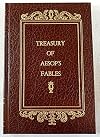
Treasury of Aesop's Fables
by Aesop
On This Page
Description
Introduction by Oliver Goldsmith is based on the partially erroneous information prevalent in Goldsmith's time.Tags
Recommendations




















Member Reviews
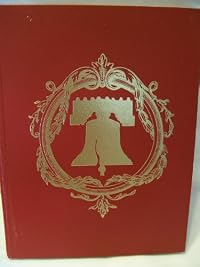
This collection of fables, which I bought at a library sale somewhere a while back, was published in 1973, but based on the writing, I'm guessing these particular English-language versions are a fair bit older than that, and the (hagiographic and not especially enlightening) "Life of Aesop" essay at the beginning may be older still. It also features small woodcut illustrations by Thomas Bewick (1753-1828).
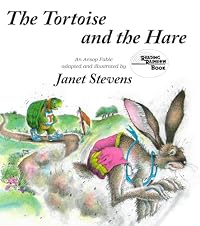
I was interested to revisit some of the familiar fables from my childhood and maybe discover some more obscure ones I hadn't seen before, but I have to say I found this volume rather disappointing. They're not particularly engaging versions of the tales, are sprinkled with not-very-good poetry, and have appended morals that are often show more surprisingly hard to parse, and which sometimes seem to have little to do with the fable itself or even to flat-out contradict their apparent intent. I mean, I have certainly never seen the fox in the "sour grapes" story lauded as a paragon of wisdom before! Very often, too, these tales, in their references and sensibilities, seem to have much more of, say, 19th century England that 600 BCE Greece. Admittedly, different times and cultures adapting ancient stories to suit their own needs is fairly natural and perhaps not to be begrudged, but it's not really what I was looking for here. There also seems to be at least one odd omission: I have no idea where the tortoise and the hare might have run off to this time, but they are certainly nowhere to be found here.
All that having been said, though, at least a couple of these stories did give me a bit of a smile, being, as the kids these days say, #relatable. Like the one about the donkey who always longs for it to be whatever season it currently isn't. Who is, of course, being held up as a model for what not to do, but, man, I feel ya Mr. Donkey. I feel ya. show less
I was interested to revisit some of the familiar fables from my childhood and maybe discover some more obscure ones I hadn't seen before, but I have to say I found this volume rather disappointing. They're not particularly engaging versions of the tales, are sprinkled with not-very-good poetry, and have appended morals that are often show more surprisingly hard to parse, and which sometimes seem to have little to do with the fable itself or even to flat-out contradict their apparent intent. I mean, I have certainly never seen the fox in the "sour grapes" story lauded as a paragon of wisdom before! Very often, too, these tales, in their references and sensibilities, seem to have much more of, say, 19th century England that 600 BCE Greece. Admittedly, different times and cultures adapting ancient stories to suit their own needs is fairly natural and perhaps not to be begrudged, but it's not really what I was looking for here. There also seems to be at least one odd omission: I have no idea where the tortoise and the hare might have run off to this time, but they are certainly nowhere to be found here.
All that having been said, though, at least a couple of these stories did give me a bit of a smile, being, as the kids these days say, #relatable. Like the one about the donkey who always longs for it to be whatever season it currently isn't. Who is, of course, being held up as a model for what not to do, but, man, I feel ya Mr. Donkey. I feel ya. show less
Ratings
Members
- Recently Added By
Author Information

1,049+ Works 24,126 Members
Though many modern scholars dispute his existence, Aesop's life was chronicled by first century Greek historians who wrote that Aesop, or Aethiop, was born into Greek slavery in 620 B.C. Freed because of his wit and wisdom, Aesop supposedly traveled throughout Greece and was employed at various times by the governments of Athens and Corinth. Some show more of Aesop's most recognized fables are The Tortoise and the Hare, The Fox and the Grapes, and The Ant and the Grasshopper. His simple but effective morals are widely used and illustrated for children. (Bowker Author Biography) show less
Classifications
- Genres
- Fiction and Literature, Children's Books
- DDC/MDS
- 398.2 — Society, Government, and Culture Customs, etiquette & folklore Folklore & Folktales Folk literature
- LCC
- PA3855 .E5 .B4 — Language and Literature Greek language and literature. Latin language and literature Greek literature Individual authors Aesop
Statistics
- Members
- 199
- Popularity
- 163,884
- Reviews
- 1
- Rating
- (3.50)
- Languages
- English
- Media
- Paper
- ISBNs
- 1
- ASINs
- 3