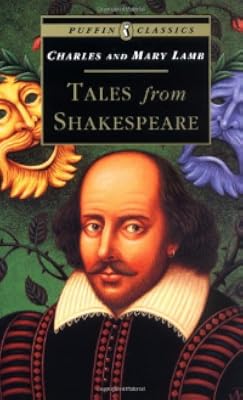
Tales from Shakespeare
by Charles Lamb  , Mary Lamb
On This Page
Description
Shakespeare's fourteen comedies and six tragedies retold in prose.Tags
Recommendations












Member Reviews
http://nwhyte.livejournal.com/1794123.html
It's really very good - a retelling of Shakespeare's dramas, which are not really easy reading for today's reader (or even the reader of 1807) in digestible prose, aimed at sophisticated teenagers. It's surprising what is censored and what is kept in, given how we tend to imagine nineteenth-century senisibilities - the blinding in King Lear is out, and the detail of Antiochus' incest (and Marina's life in the brothel) in Pericles, but so for some reason is the entire Malvolio subplot in Twelfth Night. However, the immorality laws of Vienna in Measure for Measure are explained, and so is the detail of Macduff's birth in Macbeth (of course an important plot detail but one that could have been show more worked round with imagination). Knowing what I now do about the authors, I was also struck by the sympathetic treatment of mental illness in the summary of Hamlet, which sets a good example rarely met in later literature. Strongly recommended. show less
It's really very good - a retelling of Shakespeare's dramas, which are not really easy reading for today's reader (or even the reader of 1807) in digestible prose, aimed at sophisticated teenagers. It's surprising what is censored and what is kept in, given how we tend to imagine nineteenth-century senisibilities - the blinding in King Lear is out, and the detail of Antiochus' incest (and Marina's life in the brothel) in Pericles, but so for some reason is the entire Malvolio subplot in Twelfth Night. However, the immorality laws of Vienna in Measure for Measure are explained, and so is the detail of Macduff's birth in Macbeth (of course an important plot detail but one that could have been show more worked round with imagination). Knowing what I now do about the authors, I was also struck by the sympathetic treatment of mental illness in the summary of Hamlet, which sets a good example rarely met in later literature. Strongly recommended. show less
Well this is one way to end a relatively fruitful Shakespeare catch-up month… It started off strong with Hamnet, kept going decently with Titus Andronicus (even though it’s ridiculous, it is source material, so it can stay), and even though there were a few DNFs to cross off the reading list I was still in a hopeful mood when I cracked the spine on this book. Lamb’s Tales from Shakespeare, specifically the Arthur Rackham illustrated edition, was high on my thrift hunting list so I was pretty excited when I finally scooped a copy a little bit ago and was waiting for the perfect time to delve into their “classic” adapted tales for children. Unfortunately almost from the get go I was disgusted with their interpretation of show more Shakespeare’s stories… Sure, some of the premise and characters were there, but gone was the Shakespearean subtlety, wit, and drama and instead we’re left with infantilized moral tales unsuitable for any but the most vapid child. Starting off were two potentially strong tales, that even with the ribaldry taken out had plenty of room for highjinx and entertainment - the Tempest and a Midsummer Night’s Dream - but the stories were told in such a drab manner that all of the sparkle of magic was completely taken away. After that point I focused entirely on enjoying Rackham’s illustrations, so as not to ruin any beloved stories or spoil the ones I haven’t gotten to yet. This specific edition didn’t have the best versions of his colour work, being a Book of the Month club publication, and their placement was a bit arbitrary, but the simple line work for story headers and enders was well-reproduced and the paper quality was surprisingly lush. With a smidge more effort on the part of the colour reproductions (and a replacement of the atrocious travesty of text) this book actually would have been a solid example of an illustrated classic, as its size and weight was just about perfect for reading and it’s a great size to sit displayed on a shelf! show less
Such a slender little volume and how apparently unimportant. After all, if one reads seriously, why a collection of retold versions of the bard aimed at school children. Ah, but they are witty and to the point and entirely delightful.
Recently I have been reading something that extolled the virtues of Charles Lamb, so I have been feeling the need to fill in the gaps in my education caused by a far too liberal education. And I have been intrigued by the stories of Mary Lamb, who was a sad and sorry case. This little edition seemed a likely introduction.
Ah, well, with the strongly worded warning that the retelling of the Merchant of Venice is distasteful to be kind, may I say that this is a blithe book. I want to buy it for any student who show more is slogging through class readings without the guide of an inspired teacher. Heck, I want to buy it for all sorts of people who don't get Shakespeare. The two authors quote a smattering of stirring speeches, carefully chosen and in enough quantity to whet and not slake a taste for dialogue.
Most of the big plays, the tragedies are the sphere of Charles Lamb, while the comedies belong to his sister. She has a wry wit that flutters happily through Puck, Benedick, Rosalind and she pitches her tone to be as a confident to the reader.
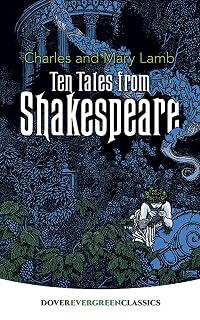
On another point,I really like the cover and want to see more Sadowski. show less
Recently I have been reading something that extolled the virtues of Charles Lamb, so I have been feeling the need to fill in the gaps in my education caused by a far too liberal education. And I have been intrigued by the stories of Mary Lamb, who was a sad and sorry case. This little edition seemed a likely introduction.
Ah, well, with the strongly worded warning that the retelling of the Merchant of Venice is distasteful to be kind, may I say that this is a blithe book. I want to buy it for any student who show more is slogging through class readings without the guide of an inspired teacher. Heck, I want to buy it for all sorts of people who don't get Shakespeare. The two authors quote a smattering of stirring speeches, carefully chosen and in enough quantity to whet and not slake a taste for dialogue.
Most of the big plays, the tragedies are the sphere of Charles Lamb, while the comedies belong to his sister. She has a wry wit that flutters happily through Puck, Benedick, Rosalind and she pitches her tone to be as a confident to the reader.
On another point,I really like the cover and want to see more Sadowski. show less
Shakespeare is pretty hard to follow when read just as text. His plots are complex and characters numerous. And Charles Lamb set out to turn them into straightforward stories. He seems to have achieved this aim because his book is still being produced and read 200 years later. It suffers a little bit in that the language has changed somewhat but by and large it still fulfils the original aim...to make the stories from Shakespeare, more readily accessible.This particular book is enlivened by the illustrations of Arthur Rackham...some in colour and some in black and white. It is interesting that Charles Lamb felt that he was able to use direct quotes from the original Shakespeare with the tragedies but it was more difficult to use direct show more quotes with the comedies or lighter works.
I think it does the job and I've recently persuaded my sone to read Othello in this Lamb version before trying out the original Shakespeare. I have yet to see if this was a good strategy or not. But must confess that I have only dipped into the volume and have not read it from cover to cover. In many cases, i have not felt the need as I've studied a number of these plays extensively in the original, have watched live performances or TV performances, films etc.
I rather like the book and think it's worth 4.5 stars. show less
I think it does the job and I've recently persuaded my sone to read Othello in this Lamb version before trying out the original Shakespeare. I have yet to see if this was a good strategy or not. But must confess that I have only dipped into the volume and have not read it from cover to cover. In many cases, i have not felt the need as I've studied a number of these plays extensively in the original, have watched live performances or TV performances, films etc.
I rather like the book and think it's worth 4.5 stars. show less
Children are not inherently stupid; nor are they incapable of processing complex emotional situations. However, the Lambs' Tales from Shakespeare is just one of the publications that has convinced adults everywhere that their poor little darling really aren't very bright, and they must be sheltered from dangerous ideas at all cost!
The cost, in this case, is a Canon King, and confidence in children's intellectual capabilities. I said this before, but I'll say it again: the Lambs present the shell of the plots, but the characters and details are horribly mangled. The language and story construction are clumsy, and I'm amazed I ever made it through the book as a young reader. I have very strong ideas about children and reading material, show more so I realize I will be in the minority in my opinions. But so they stand.
Neither of us enjoyed the latest bedtime story. show less
The cost, in this case, is a Canon King, and confidence in children's intellectual capabilities. I said this before, but I'll say it again: the Lambs present the shell of the plots, but the characters and details are horribly mangled. The language and story construction are clumsy, and I'm amazed I ever made it through the book as a young reader. I have very strong ideas about children and reading material, show more so I realize I will be in the minority in my opinions. But so they stand.
Neither of us enjoyed the latest bedtime story. show less
Yes, as many will point out, these are excellent introductions to the works of Shakespeare for young readers or older readers who never got around to reading his complete works (here the reviewer raises her hand).
What I really liked about them, though, was the way they allowed me to enjoy the stories as I would a collection of fairy tales. When you avoid the tendency to focus on Shakespeare's language these tales of kings, queens, princesses and mythical creatures are just as good as settling in with a collection of Grimm or Anderson.
What I really liked about them, though, was the way they allowed me to enjoy the stories as I would a collection of fairy tales. When you avoid the tendency to focus on Shakespeare's language these tales of kings, queens, princesses and mythical creatures are just as good as settling in with a collection of Grimm or Anderson.
I don't think I recognised when I read this 50-odd years ago how much of Shakespeare's phrasing was kept in these re-tellings for children. In these days when teachers lament how much children struggle with reading even simple short stories, I wonder how they would cope with these.
Members
- Recently Added By
Lists

1001 Children's Books You Must Read Before You Grow Up
774 works; 100 members

Books Read in 2021
5,361 works; 114 members

HMS: Make Your Child a Lover of Books, Ages 9 & up
111 works; 2 members

Ambleside Year 3
47 works; 1 member

Books Read in 2020
4,379 works; 123 members

Book Titles Mentioned In Newberry Medal And Honor Books
884 works; 3 members

Classical Conversations Challenge III Exposition
8 works; 1 member

Before Austen Comes Aesop
318 works; 9 members
Ambleside Y2
33 works; 1 member

Books Referenced by Izetbegovic's Islam Between East and West
233 works; 2 members

4th Grade Books
312 works; 5 members

1800s (The decade, not the century)
3 works; 1 member

Mensa for Kids Excellence in Reading Award Program (Grades 7-8)
62 works; 1 member

Retellings of Shakespeare Plays
42 works; 12 members

Shakespeare Retellings for Elementary Kids
100 works; 2 members

Out of Copyright
244 works; 14 members

Mensa for Kids Excellence in Reading Award Program (Grades 7-8)
62 works; 3 members

Authors from England
147 works; 4 members

1,000 Good Books of John Senior
36 works; 6 members

Books mentioned in The Diary of a Provincial Lady
59 works; 4 members

CCE 1000 Good Books List
1,033 works; 12 members
Honey For a Child's Heart
1,152 works; 25 members

Works concerning William Shakespeare
75 works; 4 members
Ambleside Books
459 works; 18 members

el
1,139 works; 1 member
Author Information

247+ Works 9,460 Members
Charles Lamb was born in London, England in 1775. He was educated at the well-known Christ's Hospital school, which he attended from age eight to 15. It was there that he met Samuel Taylor Coleridge, who became a lifelong friend; the friendship was to have a significant influence on the literary careers of both men. Lamb did not continue his show more education at the university, probably because of a nervous condition that resulted in a severe stammer. Instead, he went to work as a clerk, eventually becoming an accounting clerk with the East India Company, where he worked for most of his adult life. However, he continued to pursue his literary interests as well and became well-known as a writer. His best work is considered to be his essays, originally published under the pen name Elia, but Lamb also wrote poetry, plays, and stories for children under his own name. In 1796, Lamb's sister, Mary Ann, went mad and attacked her parents with a knife, killing her mother and wounding her father. She was placed in an institution for a time, but was eventually released into her brother's guardianship. This incident, and later periods when she was institutionalized again, had a great effect on Lamb, who had always been very close to his sister. Charles and Mary Ann Lamb collaborated on several books, including Poetry for Children, Mrs. Leicester's School, and Beauty and the Beast. Probably their best-known collaboration, however, was Tales from Shakespeare, a series of summaries of the plots from 20 Shakespearean plays, which was published in 1807. Charles Lamb died in 1834. (Bowker Author Biography) show less
Charles Lamb has a Legacy Library. Legacy libraries are the personal libraries of famous readers, entered by LibraryThing members from the Legacy Libraries group.

40+ Works 7,260 Members
All Editions
Some Editions
Awards and Honors
Series
Belongs to Publisher Series
Everyman's Library (08)
Corticelli [Mursia] (189; 194)
Work Relationships
Is contained in
Is a retelling of
Common Knowledge
- Canonical title
- Tales from Shakespeare
- Original title
- Tales from Shakespeare
- Original publication date
- 1807
- People/Characters
- Miranda; Prospero; Caliban; Ferdinand; Hermia; Lysander (show all 31); Helena; Hermione; Leontes; Beatrice; Benedick; Hero; Rosalind; Celia; Orlando; Valentine; Proteus; Julia; Shylock; Portia; Antonio; Cymbeline; Imogen; Posthumus; King Lear; Macbeth; Banquo; Bertram; Katharine; Petruchio; Aegeon
- Important places
- Athens, Greece; Sicily, Italy; Messina, Sicily, Italy; France; Verona, Veneto, Italy; Venice, Veneto, Italy (show all 8); Paris, France; Padua, Veneto, Italy
- First words
- The following Tales are meant to be submitted to the young reader as an introduction to the study of Shakespeare, for which purpose his words are used whoever it seemed possible to bring them in; and in whatever has been adde... (show all)d to give them the regular form of a connected story, diligent care has been taken to select such words as might least interrupt the effect of the beautiful English tongue in which he wrote: therefore words introduced into our language since his time have been as far as possible avoided.
- Quotations
- It is a dangerous matter for young maidens to be the confidantes of handsome young dukes; ("Twelfth Night", p.238)
- Last words
- (Click to show. Warning: May contain spoilers.)It only remains to be told, that Dionysia, the wicked wife of Cleon, met with an end proportionable to her deserts; the inhabitants of Tarsus, when her cruel attempt upon Marina was known, rising in a body to revenge the daughter of their benefactor, and setting fire to the palace of Cleon, burnt both him and her, and their whole household: the gods seeming well pleased, that so foul a murder, though but intentional, and never carried into act, should be punished in a way befitting its enormity
- Original language
- English
Classifications
Statistics
- Members
- 6,773
- Popularity
- 1,772
- Reviews
- 46
- Rating
- (3.84)
- Languages
- 20 — Catalan, Chinese, Czech, Danish, Dutch, English, Finnish, French, German, Greek, Hebrew, Hungarian, Italian, Japanese, Korean, Portuguese, Croatian, Spanish, Swedish, Turkish
- Media
- Paper, Audiobook, Ebook
- ISBNs
- 291
- UPCs
- 3
- ASINs
- 296