The Door in the Wall
by Marguerite De Angeli
On This Page
Description
A crippled boy in fourteenth-century England proves his courage and earns recognition from the King.Tags
Recommendations








Member Recommendations
Member Reviews
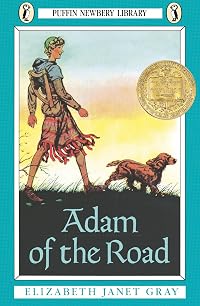
After not really liking Adam of the Road by Elizabeth Janet Gray, I was a bit hesitant with this one as I saw similar plot areas in a similar setting. However, this was its own story and offered a few areas of enjoyment when looking over the whole scope of the story. This was a family read for us which I always have a soft spot for stories we do together as a family and it's interesting to see how a story from 1949 can resonate with younger kids (9 and 7 year old girls) and us big kids. The style and pacing is not something you'd have today. There's no anachronistic language or politics or behaviors. De Angeli does a great job of keeping some of the "ye ol'" language in while still allowing it to be readable and her naming of time show more period accurate items made the story seem a lot older than I thought it was - in a good way.
What impressed me the most was de Angeli's main character Robin going through the character growth arc that he did. There are small moments which the character chooses to make choices that either allows him the possibility to grow and get outside of his own head or to stay festering in self-loathing and frustration. And like any normal boy youth, he succeeds and fails and often times without even realizing it. And as the reader this was true for me too. Other than one really big set piece that shows his arc leading up to this moment these small shifts in characters ring true the meaning of the book's title of having a simple door in the wall he's facing to either go through or not. In fact, I really wasn't sure I was going to be overly poisitive with the story until the ending where you got to see his more mature choices that he would have never made in the beginning. And the final chapter is really a stand out one to pause and added to the bulk of our family reading discussion. This isn't a story like The Three Musketeers where it's swashbuckling and intrigue. It's a simple story that lends to the discussion about virtue when learning, how to tackle adversity, and how youth is not an excuse for sentimental immorality.
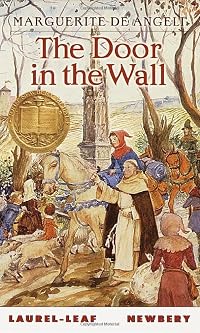
Brother Luke and minstrel John Go-in-the-Wynd join Robin on his journey. Brother Luke is a regular, pious friar who encourages Robin without brow beating him but pushes him where he needs to be encouraged. The minstrel also offers assitance as a friend without being condescending to Robin. There's no liar-revealed-trop here or friends-to-enemies-to-friends-again. In fact, the only diservice that I think is done is from the cover of my copy that makes all three seem silly looking and a bungling comedy is about to take place.
I think this book for us moderns is a sleeper that might stay with you a bit longer if you let it. If your nihilism and sarcasm can be staved off for a bit, you'll be able to enjoy this book of virtue living in the small moments that drive our big character moments. Final Grade - B show less
What impressed me the most was de Angeli's main character Robin going through the character growth arc that he did. There are small moments which the character chooses to make choices that either allows him the possibility to grow and get outside of his own head or to stay festering in self-loathing and frustration. And like any normal boy youth, he succeeds and fails and often times without even realizing it. And as the reader this was true for me too. Other than one really big set piece that shows his arc leading up to this moment these small shifts in characters ring true the meaning of the book's title of having a simple door in the wall he's facing to either go through or not. In fact, I really wasn't sure I was going to be overly poisitive with the story until the ending where you got to see his more mature choices that he would have never made in the beginning. And the final chapter is really a stand out one to pause and added to the bulk of our family reading discussion. This isn't a story like The Three Musketeers where it's swashbuckling and intrigue. It's a simple story that lends to the discussion about virtue when learning, how to tackle adversity, and how youth is not an excuse for sentimental immorality.
Brother Luke and minstrel John Go-in-the-Wynd join Robin on his journey. Brother Luke is a regular, pious friar who encourages Robin without brow beating him but pushes him where he needs to be encouraged. The minstrel also offers assitance as a friend without being condescending to Robin. There's no liar-revealed-trop here or friends-to-enemies-to-friends-again. In fact, the only diservice that I think is done is from the cover of my copy that makes all three seem silly looking and a bungling comedy is about to take place.
I think this book for us moderns is a sleeper that might stay with you a bit longer if you let it. If your nihilism and sarcasm can be staved off for a bit, you'll be able to enjoy this book of virtue living in the small moments that drive our big character moments. Final Grade - B show less
A book from my childhood that I have kept into adulthood, and was a quick read last night when I needed to escape to medieval England.
The events take place during the reign of Edward III of England, while the Scottish and Welsh border wars that his grandfather, Edward Longshanks (he of Braveheart" fame) began. Young Robin is expecting to become the page of his father's friend while his father is at war in Scotland and his mother with the Queen, who is in a delicate condition. But he is in London during an outbreak of the Plague, and while he does not come down with it, he does succumb to a fever that leaves his legs bent and withered.
With the help of Brother Luke he is cared for in a nearby monastery. Brother Luke teaches him to cope show more with the reality of his new life, Brother Matthew teaches him to whittle, and Brother Hugo helps him learn to read the stars. After time passes, he receives word from his father to make the journey to the castle where he will become a page.
The journey with Brother Matthew and John-Go-in-the-Wind does prove eventful, and helps this young boy understand that he still has something to contribute to his friends and his world. He arrives at the castle, uses his carving skills to make a Saxon harp, and more adventures ensue.
Much that makes this book memorable is the action that shows to the newly disabled boy, who wants nothing more than to be a brave knight on horseback like his father, that he still has many gifts and many more to learn. The history and landscape are firmly rooted in mideval England, and the conflicts between "tribes" are also accurate for the age. Brother Matthew and his fellows at the monastery talk in very formal, educated language which may throw some readers off. The events (I'd hardly call them action) evoke a time when crutches were hand planed from hard oak, where travelers went with cheese and bacon in their saddle bags, and a horse's pace was what set the journey for a day. Slower and more thoughtful times, though not an easy life.
The pictures are soft and delightful and occur at just the right places in the book. I'm so glad I kept it all these years. show less
The events take place during the reign of Edward III of England, while the Scottish and Welsh border wars that his grandfather, Edward Longshanks (he of Braveheart" fame) began. Young Robin is expecting to become the page of his father's friend while his father is at war in Scotland and his mother with the Queen, who is in a delicate condition. But he is in London during an outbreak of the Plague, and while he does not come down with it, he does succumb to a fever that leaves his legs bent and withered.
With the help of Brother Luke he is cared for in a nearby monastery. Brother Luke teaches him to cope show more with the reality of his new life, Brother Matthew teaches him to whittle, and Brother Hugo helps him learn to read the stars. After time passes, he receives word from his father to make the journey to the castle where he will become a page.
The journey with Brother Matthew and John-Go-in-the-Wind does prove eventful, and helps this young boy understand that he still has something to contribute to his friends and his world. He arrives at the castle, uses his carving skills to make a Saxon harp, and more adventures ensue.
Much that makes this book memorable is the action that shows to the newly disabled boy, who wants nothing more than to be a brave knight on horseback like his father, that he still has many gifts and many more to learn. The history and landscape are firmly rooted in mideval England, and the conflicts between "tribes" are also accurate for the age. Brother Matthew and his fellows at the monastery talk in very formal, educated language which may throw some readers off. The events (I'd hardly call them action) evoke a time when crutches were hand planed from hard oak, where travelers went with cheese and bacon in their saddle bags, and a horse's pace was what set the journey for a day. Slower and more thoughtful times, though not an easy life.
The pictures are soft and delightful and occur at just the right places in the book. I'm so glad I kept it all these years. show less
A little too sappy. I missed this as a child, so I read it as a jaded adult. however, I think I would have had the same general assessment, it's saccharine and simplistic, any time after I his the 2nd grade.
The message is a good one: When life throws obstacles in your path, go around. However, the clever and spunky cripple repeatedly saving the day and winning universal acceptance and acclaim in the end is a little too much.
I also found myself wondering about the lack of violence. I don't think books for children have to be exactingly realistic, but I'm fairly certain that the medieval world had a lot more interpersonal violence than the modern one and that a cripple, knight's son or not, would have been hit a lot.
I might read it to show more my 6 year old, but I think my 10 year old would find it unbearably lame. show less
The message is a good one: When life throws obstacles in your path, go around. However, the clever and spunky cripple repeatedly saving the day and winning universal acceptance and acclaim in the end is a little too much.
I also found myself wondering about the lack of violence. I don't think books for children have to be exactingly realistic, but I'm fairly certain that the medieval world had a lot more interpersonal violence than the modern one and that a cripple, knight's son or not, would have been hit a lot.
I might read it to show more my 6 year old, but I think my 10 year old would find it unbearably lame. show less
I can't imagine myself recommending this book to a modern tween. It's full of old-timey language, it's overtly message-y, and where it aims to be an adventure it's pretty tame and predictable.
That said, I think it won the Newberry because the hero is a rich little boy who learns the value of hard work and bravery when a series of unfortunate events leaves him crippled and far from his parents' protection. I was sort of cheering for him in the end, but mostly I just wanted to finish the book and move on to something better.
That said, I think it won the Newberry because the hero is a rich little boy who learns the value of hard work and bravery when a series of unfortunate events leaves him crippled and far from his parents' protection. I was sort of cheering for him in the end, but mostly I just wanted to finish the book and move on to something better.
Ever since he can remember, Robin, child of Sir John de Bureford, has been told what is expected of him as the son of a nobleman. He must learn the ways of knighthood. But Robin's destiny is changed suddenly when he falls ill and loses the use of his legs. Fearing a plague, his servants abandon him, and Robin is left alone.
A monk named Brother Luke rescues Robin and takes him to the hospice of St. Mark's, where he is taught woodcarving and patience and strength. Says Brother Luke, "Thou hast only to follow the wall far enough and there will be a door in it."
Robin learns soon enough what Brother Luke means. When the great castle of Lindsay is in danger, Robin discovers that there is more than one way to serve his king.
A monk named Brother Luke rescues Robin and takes him to the hospice of St. Mark's, where he is taught woodcarving and patience and strength. Says Brother Luke, "Thou hast only to follow the wall far enough and there will be a door in it."
Robin learns soon enough what Brother Luke means. When the great castle of Lindsay is in danger, Robin discovers that there is more than one way to serve his king.
The kids and I read this very slowly over several months as part of one of our homeschool co-ops group read-alouds. Yes, I'll admit it, I cried at the end and the kids all laughed at me! BUT---I did see one of my boys wiping away some tears too!
Written in 1949, this sweet story tells the tale of Robin, son of nobleman Sir John de Bureford. From Amazon: "Ever since he can remember, has been told what is expected of him as the son of a nobleman. He must learn the ways of knighthood. But Robin's destiny is changed in one stroke: He falls ill and loses the use of his legs. Fearing a plague, his servants abandon him and Robin is left alone. A monk named Brother Luke rescues Robin and takes him to the hospice of St. Mark's where he is taught show more woodcarving and--much harder--patience and strength. Says Brother Luke, 'Thou hast only to follow the wall far enough and there will be a door in it.'"
We had several great discussions about this book---mainly what "the door in the wall" really means. We decided it referred to an opportunity---the chance to change one's course, simply by walking through an available door.
Some of the kids are already asking to reread it, so I'm thinking a second copy is in order. I know our family will cherish this story for years to come! show less
Written in 1949, this sweet story tells the tale of Robin, son of nobleman Sir John de Bureford. From Amazon: "Ever since he can remember, has been told what is expected of him as the son of a nobleman. He must learn the ways of knighthood. But Robin's destiny is changed in one stroke: He falls ill and loses the use of his legs. Fearing a plague, his servants abandon him and Robin is left alone. A monk named Brother Luke rescues Robin and takes him to the hospice of St. Mark's where he is taught show more woodcarving and--much harder--patience and strength. Says Brother Luke, 'Thou hast only to follow the wall far enough and there will be a door in it.'"
We had several great discussions about this book---mainly what "the door in the wall" really means. We decided it referred to an opportunity---the chance to change one's course, simply by walking through an available door.
Some of the kids are already asking to reread it, so I'm thinking a second copy is in order. I know our family will cherish this story for years to come! show less
I am not sure how I feel about this title - as it seems to be the first Newbery to feature a main character with a disability and overall I think that is a very good thing. This book was published three years after my Dad was born with a disability, and I wonder what it would have been like for him to see a non-typically able-bodied main character in a children's book. Young Robin is struck with an illness that leaves him unable to move his legs. A kind friar takes him under his wing and teaches him that many things can be 'doors in the wall' that will let Robin see a positive future for himself. Robin is concerned that his father, a knight, and his mother, a lady-in-waiting for the Queen, will not accept him when they return from their show more duties and realize his disability. Robin is very much a hero figure and accomplishes a mission in the book that it is made to seem no one else would have been able to accomplish. There are some arguments that say characters with disabilities are often given other positive powers to rise above their disability, and this seems like one such depiction. In the end, it is meant to be a heart warming story in which Robin learns to live a full life in spite of his unresponsive legs, and those around him love him just the same, as it should be. I would be curious how the story was received at the time it won the Newbery. It is also a fun jaunt through the eras of kings and queens, minstrels and drawbridges with very nice drawings done by the author. show less
Members
- Recently Added By
Published Reviews
added by tarpfarmer
Lists

Favorite Childhood Books
1,651 works; 519 members

Best Newbery Medal Winners
97 works; 54 members

Sonlight Books
1,487 works; 25 members

Best Books About Journeys and Quests
117 works; 30 members

Childhood Favorites
427 works; 24 members
Ambleside Books
459 works; 18 members

Elevenses
316 works; 87 members

Satori Smiles Children's Book List
262 works; 7 members

Newbery Medal Winners - By Year
105 works; 7 members
Honey For a Child's Heart
1,152 works; 25 members

Necessary & Exquisite
30 works; 4 members

CCE 1000 Good Books List
1,033 works; 12 members

Romalda Spalding's Writing Road To Reading
213 works; 3 members

4th Grade Books
312 works; 5 members

Read Alouds for CC Cycle 2
17 works; 2 members

Semicolon Reviews
38 works; 1 member

Favorite Books
1 work; 2 members

Precious People
119 works; 1 member
Children's Literature 1900 - 1950 in order
413 works; 8 members

EGBERTINA'S List of childhood books worthy of merit or unspeakable delight
155 works; 7 members

Torchlight & Build Your Library Level 2
30 works; 1 member

1970s
657 works; 23 members

Beautiful Feet Books
304 works; 7 members

Best Historical Fiction
620 works; 258 members
Classical Conversations Challenge A Exposition
10 works; 2 members
Before Austen Comes Aesop
318 works; 9 members

Ambleside Y2
33 works; 1 member

Medieval Historical Fiction for Upper Elementary/Middle Schoolers
12 works; 2 members

Books featuring monks and/or nuns
166 works; 33 members

Books Read in 2015
3,299 works; 129 members

Books About Boys
175 works; 15 members

Fictional Characters With Disabilities
43 works; 9 members

Historical Fiction
889 works; 90 members
HMS: Make Your Child a Lover of Books, Ages 7-9
52 works; 2 members

Best Young Adult
413 works; 102 members
Author Information

40+ Works 12,611 Members
Some Editions
Awards and Honors
Series
Belongs to Publisher Series
Work Relationships
Is contained in
Has the adaptation
Has as a student's study guide
Has as a teacher's guide
Common Knowledge
- Canonical title
- The Door in the Wall
- Original publication date
- 1949
- People/Characters
- Robin; Brother Luke; John-go-in-the-Wynd
- Important places
- London, England, UK
- Important events
- Black Death
- Epigraph
- I know thy works: Behold I have set before thee an open door and no man shall shut it: For thous has a little strength and has not denied My name. Rev. III.8
- First words
- Robin drew the coverlet close about his head and turned his face to the wall.
- Quotations
- Gravely Sir John answered, "The courage you have shown, the craftsmanship proven by the harp, and the spirit in your singing all make so bright a light that I cannot see whether or no your legs are misshapen."
- Last words
- (Click to show. Warning: May contain spoilers.)"Safe with all thy loved ones. 'Tis the Feast of Christmas, and thou hast found the door in thy wall."
- Original language
- English
- Canonical DDC/MDS
- 813.54
Classifications
- Genres
- Children's Books, Fiction and Literature, Kids
- DDC/MDS
- 813.54 — Literature & rhetoric American literature in English American fiction in English 1900-1999 1945-1999
- LCC
- PZ7 .D35 .D — Language and Literature Fiction and juvenile belles lettres Fiction and juvenile belles lettres Juvenile belles lettres
- BISAC
Statistics
- Members
- 7,065
- Popularity
- 1,678
- Reviews
- 61
- Rating
- (3.65)
- Languages
- Dutch, English, French, Spanish
- Media
- Paper, Audiobook, Ebook
- ISBNs
- 39
- UPCs
- 1
- ASINs
- 31