On This Page
Description
Covers eight months in Berlin, from September 1928 to May Day, 1999, meticulously documenting the hopes and struggles of its inhabitants as their future is darkened by a growing shadow.Tags
Recommendations












Member Recommendations

by anonymous user
Member Reviews
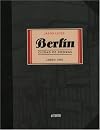
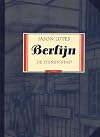
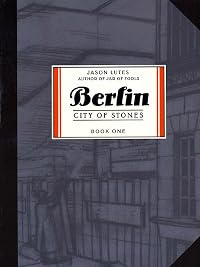
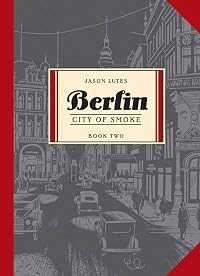
The first book in an ongoing three-volume series, Berlin: City of Stones is a brilliant, loving portrait of the city and its people at the end of the Weimar Republic, just as the Nazi party is rising to power. Readers will immediately draw comparisons between Berlin and Maus, Art Spiegelman’s groundbreaking graphic chronicle of World War II. Where Maus is a memoir concerned with family history and the legacy of terror, Berlin is content to exist in a single moment in history, 1928, digging deep into historical detail. Lutes casually weaves his story around the lives of two people: Marthe Muller, a young art student new to the city, and Kurt Severing, a jaded and weary journalist. Berlin is less concerned with the individuals he show more follows than with their interactions and the web of humanity that they create. It is impossible to write a story of the Weimar Republic without discussing politics, and Lutes does a fine job of putting a human face on the rivalries of disparate political factions without ever seeming heavy-handed. His art is impeccable: spare line drawings that offer just enough detail to set the reader’s imagination on fire. Berlin: City of Stones is followed by the equally enchanting Berlin: City of Smoke in 2008. The third and final installment, though eagerly anticipated, has not yet been released. show less
I’ve always had an interest in Berlin during the Weimar Republic, maybe aided by the fact that so much has been written about it, and that Berlin then, much like Paris, was a city when everything was possible in the arts and culture and for people seeking alternative lifestyles. But it was also a place where disaster was brewing and when a person like me, who lost family members in the ensuing catastrophe, likes to imagine that perhaps things might have taken a different course.
In the first part of what is a trilogy of graphic novels, Jason Lutes presents Berlin through various ordinary people. In the very first frames, on a train inbound for the city, there is Marthe Müller, an artist who is just arriving from another town to make show more a new life for herself and to study art. She and journalist Kurt Severing make an acquaintance in the train car and establish a friendly rapport that will carry throughout this first part at least. There is a young Jewish newspaper seller bullied by anti Semitic youth and when at home, is expected to carry on the traditions of his ancestors. There is a mother of three who must leave her husband and small son behind—he espouses the National Socialist cause and expects his son to follow in his steps, while she is sympathetic to the Communist cause and their emphasis on helping workers like herself not only find employment, but also decent living conditions and food for her two young daughters...
Nicely drawn and with plenty of other characters who come and go so that it takes a while to grasp the narrative and not just see it as a series of vignettes. Ultimately though, as the title indicates, the city itself is the main protagonist of this series. The book is divided into eight sections. It was originally serialized in a comic book by the same name (Berlin). The third part of the trilogy was released very recently in the Fall of 2018 which allows me to complete the work within a reasonable amount of time, unlike most fans, who had to wait for nearly two decades between the first and last part of the trilogy! This volume ends on a rather sad and dramatic note, so it’s probably a good idea to have the second volume, Berlin; City of Smoke on standby. In any case I’m glad I made that provision and will hop right into the next episode right now! :-) show less
In the first part of what is a trilogy of graphic novels, Jason Lutes presents Berlin through various ordinary people. In the very first frames, on a train inbound for the city, there is Marthe Müller, an artist who is just arriving from another town to make show more a new life for herself and to study art. She and journalist Kurt Severing make an acquaintance in the train car and establish a friendly rapport that will carry throughout this first part at least. There is a young Jewish newspaper seller bullied by anti Semitic youth and when at home, is expected to carry on the traditions of his ancestors. There is a mother of three who must leave her husband and small son behind—he espouses the National Socialist cause and expects his son to follow in his steps, while she is sympathetic to the Communist cause and their emphasis on helping workers like herself not only find employment, but also decent living conditions and food for her two young daughters...
Nicely drawn and with plenty of other characters who come and go so that it takes a while to grasp the narrative and not just see it as a series of vignettes. Ultimately though, as the title indicates, the city itself is the main protagonist of this series. The book is divided into eight sections. It was originally serialized in a comic book by the same name (Berlin). The third part of the trilogy was released very recently in the Fall of 2018 which allows me to complete the work within a reasonable amount of time, unlike most fans, who had to wait for nearly two decades between the first and last part of the trilogy! This volume ends on a rather sad and dramatic note, so it’s probably a good idea to have the second volume, Berlin; City of Smoke on standby. In any case I’m glad I made that provision and will hop right into the next episode right now! :-) show less
Fantastic book. Lutes clearly takes seriously the "novel" part of "graphic novels", and draws an epic picture of life during the Weimar Republic. Commoners, aristocrats and bohemien students, they all intertwine their personal struggles within the development of tragedy on a grander, historic scale. Lutes makes you feel for the characters, showing you their mistakes and motives, their hopes and fears, and the inevitable manipulation of their actions by higher powers on all sides of History. Victor Hugo would be proud. You don't need to wait for volume two, as this is a self-contained novel in its own merit. I honestly don't know how Jason Lutes can now top himself, but I'd really like to see him trying.
http://nhw.livejournal.com/250710.html
Fantastic. Very much in the Will Eisner tradition, following a set of characters through a richly imagined historical background; for instance the Potsdamerplatz, in the early episodes, seems to almost have a life of its own. But unlike Will Eisner, we know that there is a historical catastrophe coming; each episode takes place in one of the months from September 1928 to May Day 1929, with different characters experiencing different aspects of the gathering storm. Berlin has always fascinated me, and this book has further whetted my appetite. The most disappointing thing about it is that it's only the first part of a trilogy and the next two bits aren't out yet.
Fantastic. Very much in the Will Eisner tradition, following a set of characters through a richly imagined historical background; for instance the Potsdamerplatz, in the early episodes, seems to almost have a life of its own. But unlike Will Eisner, we know that there is a historical catastrophe coming; each episode takes place in one of the months from September 1928 to May Day 1929, with different characters experiencing different aspects of the gathering storm. Berlin has always fascinated me, and this book has further whetted my appetite. The most disappointing thing about it is that it's only the first part of a trilogy and the next two bits aren't out yet.
A complicated tale of entertwining personal stories marking out the major themes of the rise of Nazism. Full marks for the intellectual depth and use of artistic stylings to convey complex themes (e.g., the two pages of textless illustrations of the jazz band on stage for the first time brilliantly communicates the magic of the moment). Less successful is the illustrator's ability to create visually distinct characters that can always be identified on sight with no identifying speech. Some of the people, at least to me, look much the same in some instances, so it can be challenging to piece together the individual episodes into the appropriate storyline. Could just be me, though.
The first of three books, each a collection of stories originally serialized as comics. The series amounts to a graphic historical novel. While the plot and characterisation are well done if orthodox history, the graphic format allows a striking representation of architecture, urban milieu, and fashion (albeit narrowly focused on Berlin). So then, a visual timeline of the orthodox history of Germany between the wars, and companion to E.H. Carr's Twenty Years Crisis and Peter Gay's Weimar Culture. Suspect this format could prove a useful point of entry for visual learners, in much the same way WWII Hollywood films offered a gateway into documentaries and non-fiction accounts of the wars and those it affected.
Berlin: Book One (Issues 1-8) show more covers Sep 1928 - May 1929 (Blutmai). A gathering of players from various walks of life. The characters are necessarily caricatures, they are meant to stand in for various social classes, their disagreements for social conflicts. Still, Lutes brings them to life in both images and storylines, they are never wooden, and are people not merely allegorical puppets.
//
Jan 2019 re-read to refresh before reading Book 3. This reading leaves stronger impression of a history lesson, one which works as illustration of (as opposed to first encounter with) the various bits of history and setting. B&W illustrations can make the characters blend together: Lutes uses a visual marker for each character, these aren't garish or silly, but sometimes don't appear clearly in a close-up or a wide-angle image. show less
Berlin: Book One (Issues 1-8) show more covers Sep 1928 - May 1929 (Blutmai). A gathering of players from various walks of life. The characters are necessarily caricatures, they are meant to stand in for various social classes, their disagreements for social conflicts. Still, Lutes brings them to life in both images and storylines, they are never wooden, and are people not merely allegorical puppets.
//
Jan 2019 re-read to refresh before reading Book 3. This reading leaves stronger impression of a history lesson, one which works as illustration of (as opposed to first encounter with) the various bits of history and setting. B&W illustrations can make the characters blend together: Lutes uses a visual marker for each character, these aren't garish or silly, but sometimes don't appear clearly in a close-up or a wide-angle image. show less
Berlin: City of Stones, according to the magazine Time, is one of the best graphic novel ever written.
Berlin: City of Stones by Jason Lutes is supposed to be a graphic novel series describing life in Berlin between WWI and WWII. The main characters of book one are an art student (Marthe Mueller) and a journalist (Kurt Severing), a second story line tells about a family who decides to follow the main political streams: mother and daughter join the communist party, while father and son join the Nazis.
In Germany, following World War First, a new government called Weimar Republic is established ; this new parliamentary republic has to face many problems: economic, extremism on the left and right political parties. Weimar Republic ends with show more the beginning of Hitler’s Third Reich.
Back to Berlin: City of Stones, the drawings of this graphic novel are very impressive, black and white shows and tells brilliantly the History of these years.
A last thought / question: Is Kurt Severing the double of Walter Benjamin (without mustache)?
show less
Berlin: City of Stones by Jason Lutes is supposed to be a graphic novel series describing life in Berlin between WWI and WWII. The main characters of book one are an art student (Marthe Mueller) and a journalist (Kurt Severing), a second story line tells about a family who decides to follow the main political streams: mother and daughter join the communist party, while father and son join the Nazis.
In Germany, following World War First, a new government called Weimar Republic is established ; this new parliamentary republic has to face many problems: economic, extremism on the left and right political parties. Weimar Republic ends with show more the beginning of Hitler’s Third Reich.
Back to Berlin: City of Stones, the drawings of this graphic novel are very impressive, black and white shows and tells brilliantly the History of these years.
A last thought / question: Is Kurt Severing the double of Walter Benjamin (without mustache)?
show less
Members
- Recently Added By
Published Reviews
ThingScore 75
Lutes felt that after spending 23 years on the project, he couldn’t give in to the temptation to turn his comic into an allegory for the Trump era. “I still plan to stay true to the characters and their context, without letting current events color things in any overt way,” he says of the final chapters. For all the similarities between Berlin and the United States today, the present can show more seem in some ways unprecedented. show less
added by elenchus
Lists

Club Read's Graphic Stories Recommendations
127 works; 2 members

Drawn Out: The 50 Best Non-Superhero Graphic Novels
175 works; 8 members
Author Information

56+ Works 2,925 Members
Some Editions
Awards and Honors
Series

Work Relationships
Is contained in
Common Knowledge
- Canonical title
- Berlin: City of Stones
- Original title
- Berlin: City of Stones, Book One
- Original publication date
- 2000
- People/Characters
- Marthe Müller; Kurt Severing; Joachim Ringelnatz; Marianne; Carl Ossietzky; Franz Wolzendorf (show all 23); Lucia Wolzendorf; Anna; Richard; Erich; Max; Heinrich; Irwin Immenthaler; Otto Feber; Silvia Braun; Elga Braun; Gudrun Braun; Heinz Braun; Otto Braun; David Schwartz; Abigail Schwartz; Pavel; Berthold Schwartz
- Important places
- Berlin, Germany
- Important events
- Blutmai; Interwar Period; World War I
- First words
- Hello.
- Last words
- (Click to show. Warning: May contain spoilers.)Scatter!
- Original language
- English
- Disambiguation notice
- Collection of material originally serialized in the comic book Berlin in issues 1 through 8.
Only combine like issues full graphic novel editions of Berlin together. Do not combine ALL instances into one super-w... (show all)ork. Each graphic novel collection and individual issue is a unique work.
Classifications
- Genre
- Graphic Novels & Comics
- DDC/MDS
- 741.5973 — Arts & recreation Drawing & decorative arts Drawing Comic books, graphic novels, fotonovelas, cartoons, caricatures, comic strips History, geographic treatment, biography North American United States (General)
- LCC
- PN6727 .L88 .B471 — Language and Literature Literature (General) Literature (General) Collections of general literature Comic books, strips, etc.
- BISAC
Statistics
- Members
- 845
- Popularity
- 32,322
- Reviews
- 33
- Rating
- (3.90)
- Languages
- 11 — Danish, Dutch, English, Finnish, French, German, Italian, Polish, Spanish, Swedish, Turkish
- Media
- Paper, Ebook
- ISBNs
- 17
- ASINs
- 4