Vigil
by George Saunders
On This Page
Description
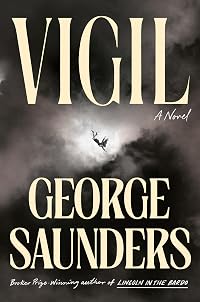
"Not for the first time, Jill 'Doll' Blaine finds herself hurtling toward earth, reconstituting as she falls, right down to her favorite black pumps. She plummets towards her newest charge, yet another soul she must usher into the afterlife, and lands headfirst in the circular drive of his ornate mansion. She has performed this sacred duty 343 times since her own death. Her charges, as a rule, have been greatly comforted in their final moments. But this one, she soon discovers, isn't like show more the others. The powerful K.J. Boone will not be consoled, because he has nothing to regret. He lived a big, bold, epic life, and the world is better for it. Isn't it?"-- show lessTags
Recommendations







Member Reviews
Summary: Jill Blaine is a spirit who consoles the dying but her current charge needs no consoling, leading her to reexamine her short life.
She’s descending to earth, her body and clothing reconstituted as she falls. “She” is Jill “Doll” Blaine, an “elevated” spirit whose task is to console the dying in their last hours, helping them to come to terms with their regrets, fears, the unfinished. She’s done this 343 times.
But K. J. Boone is different. Lying in his bed in his stately Texas mansion, he doesn’t think he needs consolation. As she searches his thoughts she found “a formidable stubbornness. A steady flow of satisfaction, even triumph, coursed through him, regarding all he had managed to do, see, cause, and show more create, especially given his humble origins.” And she found no doubts, even as he lay dying of cancer.
Boone was an oil tycoon who rose from working on rigs to leading one of the largest oil companies. At the height of his powers, he gave a speech “debunking” the science of global warming that became a standard reference for deniers. He was a fierce defender of his industry, and all that it had made possible.
But she was not to be left alone with him. Other “spirits” attempt to show him the error of his ways. The Frenchman who invented the internal combustion engine. People who suffered the effects of climate change. And many more from his past. None shake his self-justifications. But many try to make him accountable.
But this shakes her. She recalls how she died as a newlywed. She was blown up by a car bomb meant for her husband. So, she leaves her charge to revisit her Indiana hometown. She enters the mind of the man who planted the bomb. Like Boone, he had no regrets. He considered it an inevitability.
Accountability versus inevitability. Jill wrestles with what that meant in her short life, and what that means for dealing with her charge and the parade of spirits besieging him as his life wanes away. In other words, was it right to assist the spirits trying to wrangle a deathbed turn-of-heart out of him? Conversely, was there a kind of inevitability to the trajectory of his life, one that justified his self-satisfaction? That is to say, did he simply fulfill a predestined course?
These are unsettling questions–the kind that leave you thinking when you’ve put the book aside for other things. Some want Boone to be responsible for the terrible things he unleashed, although Boone pokes at the pretensions of those fueling their environmental activism with his oil. However we think of these things, we think choices matter and want people to be responsible. Yet are not people a part of things larger than themselves that shape them?
It’s a question Christian theologians have wrestled with for two millenia. Are human beings responsible? Yes. Is God sovereign and does God predestine? Yes. I have not met anyone who has satisfactorily explained how both can be so. Yet both things somehow have a ring of truth, explaining something of the way the world is, kind of like light as both a particle and a wave.
And that is what Saunders would have us wrestle with. Is life complicated enough that we must live with the tension? But it seems that all Saunders would afford the dying is comfort for lives they cannot change. However, what if there were the possibility of grace? show less
She’s descending to earth, her body and clothing reconstituted as she falls. “She” is Jill “Doll” Blaine, an “elevated” spirit whose task is to console the dying in their last hours, helping them to come to terms with their regrets, fears, the unfinished. She’s done this 343 times.
But K. J. Boone is different. Lying in his bed in his stately Texas mansion, he doesn’t think he needs consolation. As she searches his thoughts she found “a formidable stubbornness. A steady flow of satisfaction, even triumph, coursed through him, regarding all he had managed to do, see, cause, and show more create, especially given his humble origins.” And she found no doubts, even as he lay dying of cancer.
Boone was an oil tycoon who rose from working on rigs to leading one of the largest oil companies. At the height of his powers, he gave a speech “debunking” the science of global warming that became a standard reference for deniers. He was a fierce defender of his industry, and all that it had made possible.
But she was not to be left alone with him. Other “spirits” attempt to show him the error of his ways. The Frenchman who invented the internal combustion engine. People who suffered the effects of climate change. And many more from his past. None shake his self-justifications. But many try to make him accountable.
But this shakes her. She recalls how she died as a newlywed. She was blown up by a car bomb meant for her husband. So, she leaves her charge to revisit her Indiana hometown. She enters the mind of the man who planted the bomb. Like Boone, he had no regrets. He considered it an inevitability.
Accountability versus inevitability. Jill wrestles with what that meant in her short life, and what that means for dealing with her charge and the parade of spirits besieging him as his life wanes away. In other words, was it right to assist the spirits trying to wrangle a deathbed turn-of-heart out of him? Conversely, was there a kind of inevitability to the trajectory of his life, one that justified his self-satisfaction? That is to say, did he simply fulfill a predestined course?
These are unsettling questions–the kind that leave you thinking when you’ve put the book aside for other things. Some want Boone to be responsible for the terrible things he unleashed, although Boone pokes at the pretensions of those fueling their environmental activism with his oil. However we think of these things, we think choices matter and want people to be responsible. Yet are not people a part of things larger than themselves that shape them?
It’s a question Christian theologians have wrestled with for two millenia. Are human beings responsible? Yes. Is God sovereign and does God predestine? Yes. I have not met anyone who has satisfactorily explained how both can be so. Yet both things somehow have a ring of truth, explaining something of the way the world is, kind of like light as both a particle and a wave.
And that is what Saunders would have us wrestle with. Is life complicated enough that we must live with the tension? But it seems that all Saunders would afford the dying is comfort for lives they cannot change. However, what if there were the possibility of grace? show less
At a certain distance all action far below seems inevitable, a consequence of forces realized in that next step, that next statement, none of which could really have been otherwise and so, to be just, not really subject to judgement, to disapprobation, to blame. Even, as in this instance, in the case of a K.J. Boone, oil baron and sly manipulator of general opinion who, against his certain knowledge, promulgated the view that there was some doubt, really a lot of doubt, about the effects of the oil-based economy supposedly polluting the atmosphere and such. Even K.J. Boone might, at his death, be comforted. Jill “Doll” Blaine is tasked with this comfort, such is her “elevation.” But it’s bound to be a long night.
George show more Saunders portrays a world so replete with the dead that there is hardly room for the living, or barely living as in K.J. Boone’s case. There are those (dead) who see it as their mission to get Boone to repent his whole life before making his escape. A tall task indeed. But Jill’s task is to comfort, and not to seek repentance, unless repentance itself might bring comfort to her charge. (Not so much in K.J. Boone’s case.) Which makes her project nearly incomprehensible to those bent on justice or vengeance. But such is their curse, I suppose, which, as Jill might note in one of her elevated moments, is probably inevitable.
The writing here is vibrant and imaginative and full of Saunders’ great technique of getting literally inside the heads of disparate characters. There is obviously a dialogue going on here between Saunders’ deathbed tale and Tolstoy’s “Ivan Ilyich,” but that would take much longer than this brief review note to unpack. Save to say that this is a novel that will linger and on which views might change, even reverse, over time. And that in itself is testament to George Saunders’ artistic genius.
Highly recommended to be read, thought on, and discussed at length. show less
George show more Saunders portrays a world so replete with the dead that there is hardly room for the living, or barely living as in K.J. Boone’s case. There are those (dead) who see it as their mission to get Boone to repent his whole life before making his escape. A tall task indeed. But Jill’s task is to comfort, and not to seek repentance, unless repentance itself might bring comfort to her charge. (Not so much in K.J. Boone’s case.) Which makes her project nearly incomprehensible to those bent on justice or vengeance. But such is their curse, I suppose, which, as Jill might note in one of her elevated moments, is probably inevitable.
The writing here is vibrant and imaginative and full of Saunders’ great technique of getting literally inside the heads of disparate characters. There is obviously a dialogue going on here between Saunders’ deathbed tale and Tolstoy’s “Ivan Ilyich,” but that would take much longer than this brief review note to unpack. Save to say that this is a novel that will linger and on which views might change, even reverse, over time. And that in itself is testament to George Saunders’ artistic genius.
Highly recommended to be read, thought on, and discussed at length. show less
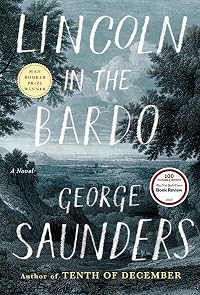
Reading “Vigil” can feel like a case of whiplash. Its almost manic layering of voices and ideas leaves one with a strong sense of chaos. Clearly, Saunders is often deliberately chaotic, and whether that feels brilliant or exhausting depends on how you view his work because “Vigil’s” chaotic feel is certainly intentional. In his work, Saunders frequently mirrors moral and environmental disorder through narrative disorder. The chaos is an atmosphere he creates. His writing can be exhilarating, but it can also feel like simultaneously listening to three radios. Once again, he used this approach in “Lincoln in the Bardo” where he experimented with multiple voices that became realized as a chorus of ghosts.
Another similarity show more between these two novels is their focus on what happens around death. Saunders returns to the bardo in “Vigil” not as a literary gimmick but as a chosen vantage point. In these two novels, he isn’t really writing about death as much as he’s writing about how people avoid seeing reality until it’s too late. In “Lincoln in the Bardo”, the ghosts don’t know they’re dead. In “Vigil”, the dying man doesn’t fully face climate collapse or his role in it. In both cases, denial is his true theme. In effect, Saunders is less obsessed with dying than with the human talent for self-deception.
Clearly, in “Vigil”, Saunders’ literary toolkit is once again on display. He likes choral voices, liminal states, and moral urgency hidden behind absurdity and satire. Some may see this as an emotional core buried under stylistic performance. Yet he deftly moves from the earlier absurdity and almost comic surrealism to gradually coalesce into something morally urgent—climate collapse. The ending reframes what seemed scattered into something substantial. In effect, it dramatizes collective denial and distraction rather than preaching about climate collapse; it uses absurdity to expose the thinness of our moral defenses; and it treats catastrophe not as spectacle, but as something happening amid banal, distracted lives. The emotional payoff sneaks up on you. show less
Another similarity show more between these two novels is their focus on what happens around death. Saunders returns to the bardo in “Vigil” not as a literary gimmick but as a chosen vantage point. In these two novels, he isn’t really writing about death as much as he’s writing about how people avoid seeing reality until it’s too late. In “Lincoln in the Bardo”, the ghosts don’t know they’re dead. In “Vigil”, the dying man doesn’t fully face climate collapse or his role in it. In both cases, denial is his true theme. In effect, Saunders is less obsessed with dying than with the human talent for self-deception.
Clearly, in “Vigil”, Saunders’ literary toolkit is once again on display. He likes choral voices, liminal states, and moral urgency hidden behind absurdity and satire. Some may see this as an emotional core buried under stylistic performance. Yet he deftly moves from the earlier absurdity and almost comic surrealism to gradually coalesce into something morally urgent—climate collapse. The ending reframes what seemed scattered into something substantial. In effect, it dramatizes collective denial and distraction rather than preaching about climate collapse; it uses absurdity to expose the thinness of our moral defenses; and it treats catastrophe not as spectacle, but as something happening amid banal, distracted lives. The emotional payoff sneaks up on you. show less
George Saunders writes the most thought-provoking stories. In that, his newest novella, VIGIL, does not disappoint. Despite its compactness, Mr. Saunders packs a lot into each page, daring the reader to take the time to dig deep into each sentence to get to the heart of what he is trying to tell us.
For those who choose to read at the surface level, VIGIL is a sad little story about a man on his deathbed who refuses to feel sorry for anything he did, even if his actions caused more collective harm to others than most people do. He is unapologetic, sometimes righteous in the beliefs of his own greatness. Jill, his ghostly usher, is sweet and just as firm in her purpose. It is a push-and-pull between the two, interspersed with other show more "helpers" with their own agendas regarding the dying man. It is a sometimes disjointed story, especially when Jill starts remembering her life and death and becomes distracted by those memories, and you find little enjoyment among its pages.
The thing is, I don't think VIGIL is the type of story you are meant to enjoy. There are some funny lines and amusing scenes, but the story is about death, which is rarely, if ever, humorous. Adding to that idea, VIGIL isn't just about death but also about absolution and atonement. Is it something someone bestows on you, or is it enough to believe you did nothing wrong in your life? Does everyone who atones deserve absolution? These are weighty ideas to ponder indeed.
VIGIL does not provide answers but merely serves as a starting point for readers to review their lives' accomplishments and impact on society. Mr. Saunders carefully offers no judgment on his characters, letting each reader draw their own conclusions about legacies, atonement, and absolution. VIGIL is less a story to enjoy and more one that demands more active participation from the reader. As the world watches an American president frantically attempt to put his name on as many buildings and structures as possible in a last-minute effort to create a lasting legacy, VIGIL proves eerily prescient, timely, and worthwhile. show less
For those who choose to read at the surface level, VIGIL is a sad little story about a man on his deathbed who refuses to feel sorry for anything he did, even if his actions caused more collective harm to others than most people do. He is unapologetic, sometimes righteous in the beliefs of his own greatness. Jill, his ghostly usher, is sweet and just as firm in her purpose. It is a push-and-pull between the two, interspersed with other show more "helpers" with their own agendas regarding the dying man. It is a sometimes disjointed story, especially when Jill starts remembering her life and death and becomes distracted by those memories, and you find little enjoyment among its pages.
The thing is, I don't think VIGIL is the type of story you are meant to enjoy. There are some funny lines and amusing scenes, but the story is about death, which is rarely, if ever, humorous. Adding to that idea, VIGIL isn't just about death but also about absolution and atonement. Is it something someone bestows on you, or is it enough to believe you did nothing wrong in your life? Does everyone who atones deserve absolution? These are weighty ideas to ponder indeed.
VIGIL does not provide answers but merely serves as a starting point for readers to review their lives' accomplishments and impact on society. Mr. Saunders carefully offers no judgment on his characters, letting each reader draw their own conclusions about legacies, atonement, and absolution. VIGIL is less a story to enjoy and more one that demands more active participation from the reader. As the world watches an American president frantically attempt to put his name on as many buildings and structures as possible in a last-minute effort to create a lasting legacy, VIGIL proves eerily prescient, timely, and worthwhile. show less
K.J. Boone, an unrepentant oil tycoon, is lying on his death bed. He is being helped through the transition from life to death by a spectral guide named Jill Blaine, who hopes to help him repent of his many deliberate lies and self-serving "scientific studies" promoting the safety of fossil fuels. He steadfastly refuses to face facts, even on his deathbed: "Therefore he'd had no idea - zero - about those studies. Zilch. About which so many were now blabbing such absolute crap." Boone engages in the kind of interior monologue where a character gradually reveal their self-deceptions and lies, which in life have been buttressed by bravado and insensitivity. - but he is a tough nut to crack.
Jill Blaine speaks in a distinctive midwest show more vernacular which allows for the flattening of the profundity of what is actually going on. It is as if characters from a Roz Chast cartoon have come to life in this celestial struggle and don't know how to frame their thoughts properly, so the word "whatnot" does stellar duty. In fact, the great achievement of this book is the framing of profound truths in terms of Midwestern slang. The register is casual, dismissive, almost insufficient to the task. Words and phrases such as "dillweed", "bitcheroo", "No. Flipping. Way", "that snot-assed look on his or her face," "get away from me dirtbag, pronto" give a sense of the comedic effect of this incongruity. Also evident is, the imprecision of the wording, the groping towards truth, which is deliberate.
Think of The Bone Clocks meets Beetlejuice, and you won't be far off. Think again of Banville's "The Infinities", for a whimsical literary comparison, but Vigil is different in that it is both more immediate and more quotidian. I think Thornton Wilder's "Our Town" may actually be the most useful comparison, in that it handles profound truths about life and death in a deliberately stripped down way, and it uses the American vernacular to do it.
At some point during my reading of Vigil I came to think the book was "cornpone" writing, folksy and unsophisticated, but in the end I came to realize that this is George Saunders' gift: characters coming to realize profound truths through bumbling and ineptitude. Characters being human, in other words. And in the end this is what Jill Blaine realizes, after many futile attempts to persuade K.J. Boone of his sins, that what really counts in this universe is "Comfort. Comfort, for all else is futility." Be kind. And in the end the book redeems itself with a transcendent finish, and remains in my head for ever. Yes, this is familiar territory, yes this may seem like "Lincoln in the Bardo" part 2, but it's ok. Saunders may be a one trick pony, but my, what a magnificent pony! show less
Jill Blaine speaks in a distinctive midwest show more vernacular which allows for the flattening of the profundity of what is actually going on. It is as if characters from a Roz Chast cartoon have come to life in this celestial struggle and don't know how to frame their thoughts properly, so the word "whatnot" does stellar duty. In fact, the great achievement of this book is the framing of profound truths in terms of Midwestern slang. The register is casual, dismissive, almost insufficient to the task. Words and phrases such as "dillweed", "bitcheroo", "No. Flipping. Way", "that snot-assed look on his or her face," "get away from me dirtbag, pronto" give a sense of the comedic effect of this incongruity. Also evident is, the imprecision of the wording, the groping towards truth, which is deliberate.
Think of The Bone Clocks meets Beetlejuice, and you won't be far off. Think again of Banville's "The Infinities", for a whimsical literary comparison, but Vigil is different in that it is both more immediate and more quotidian. I think Thornton Wilder's "Our Town" may actually be the most useful comparison, in that it handles profound truths about life and death in a deliberately stripped down way, and it uses the American vernacular to do it.
At some point during my reading of Vigil I came to think the book was "cornpone" writing, folksy and unsophisticated, but in the end I came to realize that this is George Saunders' gift: characters coming to realize profound truths through bumbling and ineptitude. Characters being human, in other words. And in the end this is what Jill Blaine realizes, after many futile attempts to persuade K.J. Boone of his sins, that what really counts in this universe is "Comfort. Comfort, for all else is futility." Be kind. And in the end the book redeems itself with a transcendent finish, and remains in my head for ever. Yes, this is familiar territory, yes this may seem like "Lincoln in the Bardo" part 2, but it's ok. Saunders may be a one trick pony, but my, what a magnificent pony! show less
Saunders gives us a ghost story. THe protagonist is a "comforter", which is a spirit that is trying to have meaning after her grisly, ironic death. She is sent to comfort a man who is dying and trying (not to) come to terms with the horrible consequences of his rapacious capitalist life. Saunders asks the reader to contemplate death, the ultimate folly of wanting meaning or justice from a life. It has a very Buddhist feel to it and it certainly got this reader thinking about his own demise/departure/irrelevance. That said, it is not grim or gruesome but in fact somewhat reassuring in its tonw.
VIGIL is the latest novel from award-winning and one-of-a-kind author George Saunders. He is NOT a writer that appeals to everyone. Both his subject matter and style are unusual and distinctive and I admit I have not been one of his rabid fans. But I'm glad I read this one and gave it four stars.
The book is under 200 pages but it provided SO much for me to think about. What is the legacy of my own life? Who have I wronged? What apologies do I need to make? Have I made the world a better place? Or caused permanent harm?
These are the questions facing VIGIL's protagonist, the legendary, rags-to-riches, mega-millionaire oilman K. J. Boone, who lies close to death. As he waits, an assigned companion appears. She is the spirit of the late show more Jill "Doll" Blaine, whose task is providing comfort to others during their final hours. And, if possible, to encourage K.J. to atone for his past mistakes. The problem is K.J. is one of those men who has always been sure of himself and can't think of a single thing he's ever done wrong.
There are many more characters who participate in this story from both the world of the living and the world of the dead. Family members, including some long dead. Former business acquaintances who provide sarcastic banter. A few old (and odd) friends and others who played some pivotal role in K.J.'s life.
I am not one who generally chooses stories with supernatural phenomena but I have to say I really enjoyed that element in this novel. Spirits travel around and through things and people. Some are forming new relationships with other spirits. Readers learn a bit about each one's history. They all appear to be tackling their own loose ends at the same time. It's actually quite a humorous novel to both read and imagine.
In terms of writing, I found it takes a bit of work to keep track of who is talking, especially at the beginning. But that becomes clearer as the book progresses. There's also a strong dystopian environmental message built in.
My overwhelming impression at the end is how remarkably inventive Saunders is in laying out a rich, chaotic, and imaginative picture of what happens every time someone dies. And his image feels completely plausible. Very fun to read! And unlike anything else you've probably ever read! show less
The book is under 200 pages but it provided SO much for me to think about. What is the legacy of my own life? Who have I wronged? What apologies do I need to make? Have I made the world a better place? Or caused permanent harm?
These are the questions facing VIGIL's protagonist, the legendary, rags-to-riches, mega-millionaire oilman K. J. Boone, who lies close to death. As he waits, an assigned companion appears. She is the spirit of the late show more Jill "Doll" Blaine, whose task is providing comfort to others during their final hours. And, if possible, to encourage K.J. to atone for his past mistakes. The problem is K.J. is one of those men who has always been sure of himself and can't think of a single thing he's ever done wrong.
There are many more characters who participate in this story from both the world of the living and the world of the dead. Family members, including some long dead. Former business acquaintances who provide sarcastic banter. A few old (and odd) friends and others who played some pivotal role in K.J.'s life.
I am not one who generally chooses stories with supernatural phenomena but I have to say I really enjoyed that element in this novel. Spirits travel around and through things and people. Some are forming new relationships with other spirits. Readers learn a bit about each one's history. They all appear to be tackling their own loose ends at the same time. It's actually quite a humorous novel to both read and imagine.
In terms of writing, I found it takes a bit of work to keep track of who is talking, especially at the beginning. But that becomes clearer as the book progresses. There's also a strong dystopian environmental message built in.
My overwhelming impression at the end is how remarkably inventive Saunders is in laying out a rich, chaotic, and imaginative picture of what happens every time someone dies. And his image feels completely plausible. Very fun to read! And unlike anything else you've probably ever read! show less
Members
- Recently Added By
Lists

LoanStars | Adult List: January 2026
10 works; 1 member

Books Read in 2026
1,952 works; 66 members

The LonesomeReader Book Club
36 works; 1 member

Guardian Books of the Day 2026
14 works; 1 member

The Economist Books of 2026 So Far (June 2026)
25 works; 1 member
Author Information

50+ Works 25,490 Members
George Saunders is the author of CivilWarLand in Bad Decline and Pastoralia. (Publisher Provided) George Saunders was born in Amarillo, Texas on December 2, 1958. He received a bachelor's degree in geophysical engineering and a master's degree in creative writing from Syracuse University. He is a professor at Syracuse University and a writer of show more short stories, essays, novellas, and children's books. He won the National Magazine Award for fiction in 1994, 1996, 2000, and 2004 His books include CivilWarLand in Bad Decline, Pastoralia, The Very Persistent Gappers of Frip, The Brief and Frightening Reign of Phil, In Persuasion Nation, and Tenth of December: Stories, which won the inaugural Folio Prize in 2014. His debut novel, Lincoln in the Bardo, received the Man Booker Prize in 2017. (Bowker Author Biography) show less
Some Editions
Awards and Honors
Distinctions
The Guardian Book of the Day (2026-01-21)
Common Knowledge
- Canonical title
- Vigil
- Original publication date
- 2026-01-27
- Dedication
- To Paula (this one, especially)
- First words
- What a lovely home I found myself plummeting toward, acquiring, as I fell, arms, hands, legs, feet, all of which, as usual, became more substantial with each passing second.
- Last words
- (Click to show. Warning: May contain spoilers.)And vowed to seek elevation forever more.
- Original language
- English
Classifications
Statistics
- Members
- 669
- Popularity
- 42,998
- Reviews
- 26
- Rating
- (3.59)
- Languages
- Dutch, English
- Media
- Paper, Audiobook, Ebook
- ISBNs
- 10
- ASINs
- 5