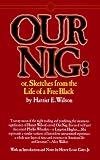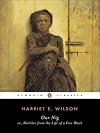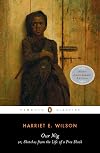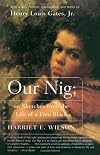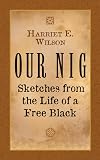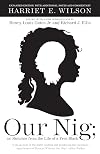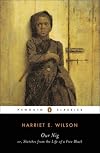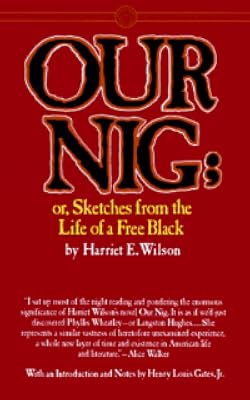
Our Nig; or, Sketches from the Life of a Free Black
by Harriet E. Wilson
On This Page
Description
Frado, a mixed-race girl abandoned by her white mother after the death of her black father, takes a job as a servant to a lower middle-class white family in the North, only to encounter a world of abuse and abandonment.Tags
Recommendations



Member Reviews
I don't know that I would have gotten around to reading this had I not seen it included on the Zora Canon, but I am glad that I did. I especially appreciate this edition with its lengthy introduction by Henry Louis Gates, Jr., and all it does to contextualize this work within both the history of race in America and also literary conventions.
Unsurprisingly (I would hope), this book is not a fun hang. Frado, the main character, may be a free Black person, in that she is not a slave, but she is still trapped by her poverty, lack of family, and the prevailing racism of the time. (Yes, even in the North.) Yet the very existence of the book -- quite possibly the first work of fiction published by a Black woman -- almost certainly show more autobiographical, but reshaped in the form of the sentimental fiction of the period (yet deviating from that form in significant ways) is remarkable. Give Wilson's stated intent in publishing -- to raise money to support herself and her child -- this book could have thrown fewer punches at her most monied possible audience -- white abolitionists, but she does not hesitate to hold up a mirror to the racism, hypocrisy, and ignorance of many (most?) white abolitionists in pre-Civil War America.
A marvel of its time, and still depressingly relevant today. show less
Unsurprisingly (I would hope), this book is not a fun hang. Frado, the main character, may be a free Black person, in that she is not a slave, but she is still trapped by her poverty, lack of family, and the prevailing racism of the time. (Yes, even in the North.) Yet the very existence of the book -- quite possibly the first work of fiction published by a Black woman -- almost certainly show more autobiographical, but reshaped in the form of the sentimental fiction of the period (yet deviating from that form in significant ways) is remarkable. Give Wilson's stated intent in publishing -- to raise money to support herself and her child -- this book could have thrown fewer punches at her most monied possible audience -- white abolitionists, but she does not hesitate to hold up a mirror to the racism, hypocrisy, and ignorance of many (most?) white abolitionists in pre-Civil War America.
A marvel of its time, and still depressingly relevant today. show less
I found the first few chapters hard to read or get into. Once Frada is with the Belmonts the tone of the text changes slightly or maybe I was just more into it.
I like this book, surprisingly. I was a bit worried in the beginning that the novel would follow the 'tragic mulatto' trope and while there are certainly elements of tragedy, Wilson seems to agree with me that blackness is a zero sum game. Mixed race isn't really a viable category for the purposes in which 'race' is used. The entire purpose of 'race' being to separate and elevate whites, everyone else is in effect a 'nigger'.
Love the feminist indictment of both black patriarchy and white abolitionism. Powerful condemnation of the abolitionist movement. Abolitionists were usually show more supporters of racism, just not slavery.
Fairly powerful condemnation of Christianity as basically for white folks, which I think is still valid. I've never understood the adoption of the religion of those that enslaved your ancestors by the Diaspora. show less
I like this book, surprisingly. I was a bit worried in the beginning that the novel would follow the 'tragic mulatto' trope and while there are certainly elements of tragedy, Wilson seems to agree with me that blackness is a zero sum game. Mixed race isn't really a viable category for the purposes in which 'race' is used. The entire purpose of 'race' being to separate and elevate whites, everyone else is in effect a 'nigger'.
Love the feminist indictment of both black patriarchy and white abolitionism. Powerful condemnation of the abolitionist movement. Abolitionists were usually show more supporters of racism, just not slavery.
Fairly powerful condemnation of Christianity as basically for white folks, which I think is still valid. I've never understood the adoption of the religion of those that enslaved your ancestors by the Diaspora. show less
Henry Louis Gates's introduction to my edition (2002, from Vintage) likes to trumpet the fact that Our Nig is the first known novel written by an African-American and published in America (the continents, not the country). I suspect, however, that if it was the seventh, we'd be much less interested in it. The characters, even Frado, the protagonist, are all thin caricatures (though most of them are good for a joke or two, which helps alleviate that). It does deal with some interesting notions (especially the blindness of white abolitionists in the North), but what Wilson chooses to focus on is often strangely arbitrary: we get the marital shenanigans of Frado's white relatives in excruciating detail, whereas Frado's own marriage happens show more in two very short pages.
Gates's critical apparatus is really focused on the autobiographical components to the novel, and though they are considerable, the fact that Wilson published a novel and not an autobiography ought to count for something, I think. The introduction spends a lot of time desperately trying to convince the reader that the Harriet E. Wilson of Boston who wrote this novel is the same of the Harriet E. Wilson of Boston who was a seamstress at the same time, which seems fairly self-evident to me, while the endnotes try to match every character to a historical figure and complain vociferously when they can't. Also annoying is the fact that endnotes are not actually indicated in the text, so the reader just has to guess there might be some referring to a specific page and check. I suspect anyone interested in Our Nig would be better off with the new Penguin Classics edition. show less
Gates's critical apparatus is really focused on the autobiographical components to the novel, and though they are considerable, the fact that Wilson published a novel and not an autobiography ought to count for something, I think. The introduction spends a lot of time desperately trying to convince the reader that the Harriet E. Wilson of Boston who wrote this novel is the same of the Harriet E. Wilson of Boston who was a seamstress at the same time, which seems fairly self-evident to me, while the endnotes try to match every character to a historical figure and complain vociferously when they can't. Also annoying is the fact that endnotes are not actually indicated in the text, so the reader just has to guess there might be some referring to a specific page and check. I suspect anyone interested in Our Nig would be better off with the new Penguin Classics edition. show less
What it says on the box. An autobiographical novel, telling the early lifestory of Alfrado/Frado/"Nig", abandoned by her white mother and black father to a family where she was raised as an indentured servant. There's Free and then there's free. As a child, Frado can only dream of being taken to live with the son who most sympathises with her (and indeed would take her if he weren't so ill); she isn't free to attend church or even to openly read the Bible she's been given; it's not until she's eighteen that she can even begin to choose where to live and work, and even this hardly guarantees a comfortable life.
Available from Project Gutenberg.
Available from Project Gutenberg.
Wilson's auto-biographical novel is perhaps not great literature, but does keep one's interest and reveals volumes about the society in which she lived. I'd recommend this to anyone interested in our nation's history.
All to often we forget what “free” really means.”
2nd copy - backshelf
Members
- Recently Added By
Lists

Must-Read Books by Black Authors
114 works; 92 members

500 Great Books by Women
507 works; 60 members

American Female Authors of the 19th Century
10 works; 1 member

Zora Canon
100 works; 6 members

The Zora Canon
98 works; 4 members
Author Information

1+ Work 757 Members
Some Editions
Awards and Honors
Notable Lists
Series
Belongs to Publisher Series
Work Relationships
Is contained in
Is abridged in
Common Knowledge
- Canonical title
- Our Nig; or, Sketches from the Life of a Free Black
- Original title
- Our Nig, Or, Sketches from the Life of a Free Black, in a Two-story White House, North: Showing that Slavery's Shadows Fall Even There
- Original publication date
- 1859
- People/Characters
- Alfrado
- Epigraph
- In memory of Marguerite Elizabeth Howard Coleman and Gertrude Helen Redman Gates
- Dedication
- This second edition of OUR NIG is dedicated to Pauline Augusta Coleman Gates and Henry Louis Gates Sr.
- First words
- Lonely Mag Smith! See her as she walks with downcast eyes and heavy heart. It was not always thus.
- Quotations
- Religion was not meant for niggers
- Last words
- (Click to show. Warning: May contain spoilers.)Frado has passed from their memories, as Joseph from the butler's, but she will never cease to track them till beyond mortal vision.
- Blurbers
- Walker, Alice
Classifications
Statistics
- Members
- 757
- Popularity
- 37,054
- Reviews
- 7
- Rating
- (3.55)
- Languages
- Dutch, English
- Media
- Paper, Audiobook, Ebook
- ISBNs
- 48
- UPCs
- 1
- ASINs
- 12