On This Page
Description
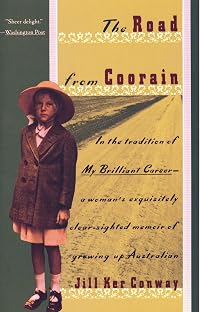
The memoirs of Jill Conway and her journey into adulthood from a 30,000 acre sheep ranch in Coorain, Australia, to America where she became the first woman president of Smith College.Tags
Recommendations

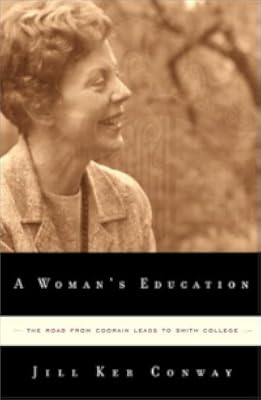
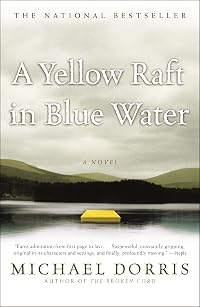
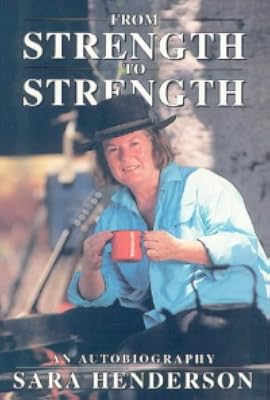

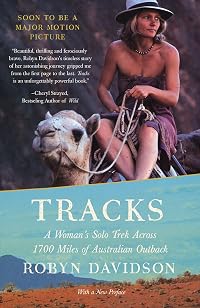
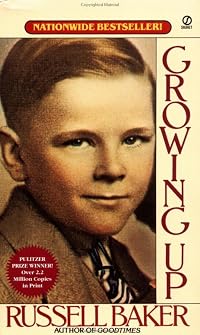


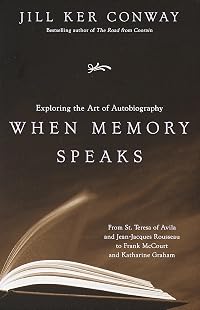
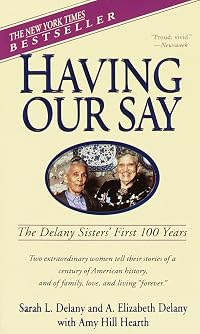
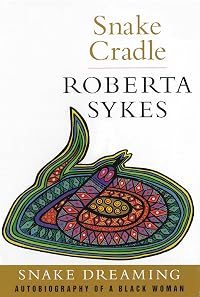







Member Recommendations
suniru Both books cover roughly the same era and locatation from different perspectives.
Member Reviews
A beautifully written exploration of home, family, grief, and making one's way in the world. I especially appreciate Conway's reflection on how leaving home is sometimes necessary to get a sense for where we come from and for the elements that have built our perspective. Also interesting is how class influences accents, which reminds me of the US South. Excellent narration by Barbara Caruso.
Few things seem further from North America than Australia. Not only is it half-a-world away, but the culture varies dramatically. Conway grew up in the back-country of Australia where she often did not regularly see other families and neighbors were tens-of-miles away. That simple start, told as well as it is in this book, sparks the reader’s interest. The fact that she ended up at Harvard by the end of the book should pique even more interest.
Conway details her life in the outback, her transition to a private school in Sydney, and her undergraduate days at the University of Sydney. As such, this memoir is a real-life coming-of-age tale. She describes how she fell in love with the field of history and decided to dedicate her life to show more being a scholar of women’s history.
Her writing style is impressive and entertaining. Not only does she describe things accurately and with a healthy distance, but she also picks interesting details that bring her world alive to the reader. Obviously well-read, she shows the character that brought her from an oppressive environment towards eventually becoming a leader in women’s education.
I find personal inspiration from feminists like Conway. Often, men are not encouraged to find their own place in the world like many women (especially ambitious women) are forced to. As such, the narrative of male lives often does not involve the quest for being and existence. However, I find that I, too, have those questions. Conway’s tale gives me some more rungs to hang my experience on, and for that, I am grateful. show less
Conway details her life in the outback, her transition to a private school in Sydney, and her undergraduate days at the University of Sydney. As such, this memoir is a real-life coming-of-age tale. She describes how she fell in love with the field of history and decided to dedicate her life to show more being a scholar of women’s history.
Her writing style is impressive and entertaining. Not only does she describe things accurately and with a healthy distance, but she also picks interesting details that bring her world alive to the reader. Obviously well-read, she shows the character that brought her from an oppressive environment towards eventually becoming a leader in women’s education.
I find personal inspiration from feminists like Conway. Often, men are not encouraged to find their own place in the world like many women (especially ambitious women) are forced to. As such, the narrative of male lives often does not involve the quest for being and existence. However, I find that I, too, have those questions. Conway’s tale gives me some more rungs to hang my experience on, and for that, I am grateful. show less
As long as this memoir stayed in Coorain, I was captivated. Once it strayed down the road, my interest waned. The struggle of Jill Ker Conway's family to make a living on 18,000 acres of droughty Australian outback has an exotic and almost heroic appeal. Her subsequent teens and early twenties in Sydney, contending with a difficult mother while trying to find her path in academia, don't have nearly the lustre. The writing is careful and has a whiff of scholarly writing, especially in the way that Conway takes a reductionist approach where almost every event or person gets somehow explained away. Sometimes it feels more like dissection than memoir, and not much leeway is left for the reader to imaginatively connect with Conway's younger show more self.
My own dwindling interest post-Coorain, is mirrored in the reception of her three memoirs: the further her ambitions pulled her from Coorain, the less interest there was in her books - each appealing to a progressively narrower audience. Regardless though, of how appreciative one might be of Conway's achievements as a pioneering woman in modern day postsecondary education, the trajectory of her life is breathtaking by any standard. As a child she alone could comfort her young father through his horrifying nightmares of Ypres, Passchendaele, and France. Nowadays her interviews and speeches are featured on Youtube. Her cohort, those who came of age in the 1930s and 1940s, and who are now hitting their 80s, have lived through more profound social, cultural, technological, and political change than any other. In Conway's case this passage is amplified by how far she also came geographically and by how much she was able to achieve along the way. show less
My own dwindling interest post-Coorain, is mirrored in the reception of her three memoirs: the further her ambitions pulled her from Coorain, the less interest there was in her books - each appealing to a progressively narrower audience. Regardless though, of how appreciative one might be of Conway's achievements as a pioneering woman in modern day postsecondary education, the trajectory of her life is breathtaking by any standard. As a child she alone could comfort her young father through his horrifying nightmares of Ypres, Passchendaele, and France. Nowadays her interviews and speeches are featured on Youtube. Her cohort, those who came of age in the 1930s and 1940s, and who are now hitting their 80s, have lived through more profound social, cultural, technological, and political change than any other. In Conway's case this passage is amplified by how far she also came geographically and by how much she was able to achieve along the way. show less
This is probably the best memoir I have read to date. I find myself drawn to memoirs to gather insight into how people achieved their goals or philosophy or overall situation in life, but am frustrated by tales that whine, that pat themselves on the back, that blame others, that name drop and gossip, or that don't reflect on what they learned or how. This was not any of that.
The first third of the book covers her life on the plains of Australia on a sheep farm. The life was hard, but all she knew. The family was fairly isolated and very dependent on each other. She identifies her relationship with her parents and her brothers, admittedly adding in insights that she obtained upon reflection as an adult, but which did not take away from show more the immediacy of the account. Her dealings and descriptions of the few people that they had contact with and the rare trips that they took off the ranch gave a real feel for her life. The weather played an enormous role in the well-being of the ranch and that came across loud and clear.
When the death of her father and the extended years of drought send them to Sydney, we get a different perspective; how an intelligent, socially inept child attempts to adapt to city life and other children. Conway looks at what were her actions and what she was trying to do and reflects on what she did right and what was wrong. She is not sugar coating, blaming or dramatizing, but trying to understand what happened and how it got her to the next situation.
The last third of the book deals with her coming to terms with her intellect, her education, her search for a personal philosophy and an understanding of her country and her place in it. Her strained relationship with her mother, her ambition and ambivalence toward Australian society converge in an understanding that she does not fit into Australia and must leave despite her love for the land of the outback. I have never read a more thoughtful memoir and look forward to reading her follow-up, True North. show less
The first third of the book covers her life on the plains of Australia on a sheep farm. The life was hard, but all she knew. The family was fairly isolated and very dependent on each other. She identifies her relationship with her parents and her brothers, admittedly adding in insights that she obtained upon reflection as an adult, but which did not take away from show more the immediacy of the account. Her dealings and descriptions of the few people that they had contact with and the rare trips that they took off the ranch gave a real feel for her life. The weather played an enormous role in the well-being of the ranch and that came across loud and clear.
When the death of her father and the extended years of drought send them to Sydney, we get a different perspective; how an intelligent, socially inept child attempts to adapt to city life and other children. Conway looks at what were her actions and what she was trying to do and reflects on what she did right and what was wrong. She is not sugar coating, blaming or dramatizing, but trying to understand what happened and how it got her to the next situation.
The last third of the book deals with her coming to terms with her intellect, her education, her search for a personal philosophy and an understanding of her country and her place in it. Her strained relationship with her mother, her ambition and ambivalence toward Australian society converge in an understanding that she does not fit into Australia and must leave despite her love for the land of the outback. I have never read a more thoughtful memoir and look forward to reading her follow-up, True North. show less
http://nwhyte.livejournal.com/1168976. html
Wow. Once I got going, I really couldn't put it down. It's a really impressive autobiography, of a woman growing up in Australia before, during and after the second world war, as a child on a remote sheep station (the Coorain of the title, which some diligent Googling locates here), and then at school and university in Sydney, suffering the deaths of her father and brother and the slow decline of her mother. Yet at the same time it's a story of empowerment and enlightement, of spiritual, intellectual and moral development, as the young Jill realises what it means to be a white woman in Australia, and later to be a white Australian woman in the rest of the world.
Her descriptions of the landscape show more of western New South Wales are lyrical, which makes her account of the long years of drought that killed her father and their lifestyle all the more gruelling. (Six decades on, things weren't much better). Then, after the move to Sydney (she was eleven), she is compelling on the human landscape, both of the silent girl from the bush suddenly immersed in the ways of the city, and of the daughter struggling with her mother's ambitions and her own aspirations. The ending, of course, only points to new beginnings.
I confess I know very little about Australia, despite my four and a half years working for its former foreign minister. While I've enjoyed my dabbling in Peter Carey's novels, I have to say that they did not whet my enthusiasm anything like as much as The Road from Coorain has. show less
Wow. Once I got going, I really couldn't put it down. It's a really impressive autobiography, of a woman growing up in Australia before, during and after the second world war, as a child on a remote sheep station (the Coorain of the title, which some diligent Googling locates here), and then at school and university in Sydney, suffering the deaths of her father and brother and the slow decline of her mother. Yet at the same time it's a story of empowerment and enlightement, of spiritual, intellectual and moral development, as the young Jill realises what it means to be a white woman in Australia, and later to be a white Australian woman in the rest of the world.
Her descriptions of the landscape show more of western New South Wales are lyrical, which makes her account of the long years of drought that killed her father and their lifestyle all the more gruelling. (Six decades on, things weren't much better). Then, after the move to Sydney (she was eleven), she is compelling on the human landscape, both of the silent girl from the bush suddenly immersed in the ways of the city, and of the daughter struggling with her mother's ambitions and her own aspirations. The ending, of course, only points to new beginnings.
I confess I know very little about Australia, despite my four and a half years working for its former foreign minister. While I've enjoyed my dabbling in Peter Carey's novels, I have to say that they did not whet my enthusiasm anything like as much as The Road from Coorain has. show less
This is the memoir of a woman who grew up on an Australian sheep farm and would go on to become the first woman president of Smith College. I started this book expecting to read a story about the Australian outback and got that--and a lot more. Yes, the picture of growing up on a isolated sheep "station" in the forties was certainly interesting. Conway starts with the landscape, giving a picture of the flat and vast vistas, the endless periodic droughts in the arid, ecologically fragile land and how it and the very masculine, stoic "Bush ethos" shapes you. But above all this is an intellectual, as well as emotional, memoir. Growing up with her parents and two older brothers she was so isolated she couldn't remember seeing another female show more child until she was seven years old and had no playmates her own age. Her memoir was a story of continually expanding intellectual and social horizons. First when she moved to Sydney to enroll in a girl's school at eleven, then as a student at Sydney University in the fifties. She described beautifully how her experiences changed her life and thinking. From what it was like to first encounter writers such as Marx, Samuel Butler, James Joyce, Jung, T.S. Eliot, to the shock of finding herself rejected for a civil service position despite being at the top of her class--solely because she was a woman. The writers who inspired and challenged my thinking were different, but I could identify with her intoxication upon encountering a larger world of ideas, and appreciated how she began to ponder how being a woman and an Australian had shaped her and history. show less
Conway leisurely sets the scenee for almost 2 chapters before getting to her birth. She analyzes, from her more mature perspective, the social structure she is a part of. The importance of landscape in the development of her character was important, and more clearly states an intuition I have felt.
As I finished the Australian book, I saw similarities with The Woman Warrior by Maxine Hong Kingston: in both, women were dominated by their mothers, and both used their scholarly skills as a means of escape from the roles laid out for them. Conway's book, even tho it ends when she is about 26, leaves us assured that she does find her own path because the perspective of her older self is evident.
2011 review
As I finished the Australian book, I saw similarities with The Woman Warrior by Maxine Hong Kingston: in both, women were dominated by their mothers, and both used their scholarly skills as a means of escape from the roles laid out for them. Conway's book, even tho it ends when she is about 26, leaves us assured that she does find her own path because the perspective of her older self is evident.
2011 review
Members
- Recently Added By
Lists

Best Biographies, Autobiographies and Memoirs
465 works; 160 members

Childhood: Books for or about children in different cultures around the wor
345 works; 18 members

The Well-Educated Mind Reading Challenge
75 works; 7 members
Phi Beta Kappa reading list
260 works; 8 members

500 Great Books by Women
507 works; 60 members

Most Popular Books Tagged Australia
35 works; 5 members

My TBR list
38 works; 1 member

Allie's List of Books I Want To Read
93 works; 1 member

Books Set in Australia.
45 works; 9 members

Dim Sum Lunch Reading
43 works; 2 members

Well-Educated Mind
150 works; 3 members

Mustich's 1000 Books to Read Before You Die: A Life Changing List
1,001 works; 20 members
Club Read's Recommended Nonfiction Written by Women
618 works; 30 members

The Well-Educated Mind, Susan Wise Bauer, 2016
179 works; 3 members
Author Information

14+ Works 3,609 Members
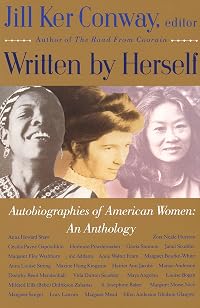
Jill Ker Conway was born Jill Kathryn Ker in Hillston, New South Wales, Australia on October 9, 1934. She received a history degree from the University of Sydney in 1958 and a Ph.D. from Harvard University in 1969. She took a teaching post at the University of Toronto. She became a dean in 1971 and a vice president in 1973. In 1975, she became the show more first woman to be named president of Smith College. She left Smith in 1985 to become a writer. She wrote three memoirs entitled The Road from Coorain, True North, and A Woman's Education. In 2002, the PBS program Masterpiece Theater used The Road from Coorain as the basis for a film. She also wrote When Memory Speaks: Reflections on Autobiography. She edited several books including Written by Herself: Autobiographies of American Women and In Her Own Words: Women's Memoirs from Australia, New Zealand, Canada and the United States. In 2013, she was awarded the National Humanities Medal. She died on June 1, 2018 at the age of 83. (Bowker Author Biography) show less
Awards and Honors
Awards
Distinctions
Series

Belongs to Publisher Series
Work Relationships
Has the adaptation
Common Knowledge
- Original publication date
- 1989
- People/Characters
- Jill Ker; Mr. Ker; Mrs. Ker; Bob Ker; Barry Ker; Angus Waugh (show all 7); Alec Merten
- Important places
- Australia; Sydney, New South Wales, Australia; Coorain, New South Wales, Australia; Harvard University, Cambridge, Massachusetts, USA; Hillston, New South Wales, Australia; New South Wales, Australia
- Related movies
- The Road from Coorain (2002 | IMDb)
- Dedication
- For John
- First words
- The western plains of New South Wales are grasslands.
- Last words
- (Click to show. Warning: May contain spoilers.)I could see how it would blow about and get in people's eyes, and I was content with that.
- Blurbers
- Galbraith, John Kenneth; Heilbrun, Carolyn
Classifications
- Genres
- Biography & Memoir, Nonfiction
- DDC/MDS
- 305.40994092 — Society, government, & culture Social sciences, sociology & anthropology Social group - Age, Gender, Ethnicity Women Standard subdivisions History, geographic treatment, biography Pacific Australia
- LCC
- LD7152.7 — Education Individual institutions – United States United States Women's colleges
- BISAC
Statistics
- Members
- 1,907
- Popularity
- 11,271
- Reviews
- 38
- Rating
- (3.89)
- Languages
- English
- Media
- Paper, Audiobook, Ebook
- ISBNs
- 19
- UPCs
- 2
- ASINs
- 23