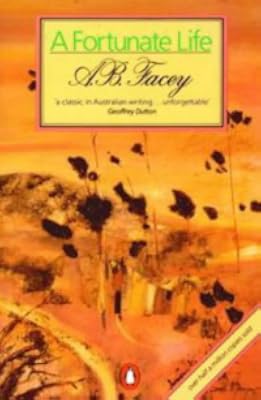
A Fortunate Life
by A. B. Facey
On This Page
Description
Born in 1894, Facey lived the rough frontier life of a sheep farmer, survived the gore of Gallipoli, raised a family through the Depression and spent sixty years with his beloved wife, Evelyn. Despite enduring hardships we can barely imagine today, Facey always saw his life as a 'fortunate' one. A true classic of Australian literature, his simply written autobiography is an inspiration. It is the story of a life lived to the full - the extraordinary journey of an ordinary man.Tags
Recommendations




















Member Recommendations
suniru Both books cover roughly the same era and locatation from different perspectives.
Member Reviews
I am a sucker for a well-told memoir, and I particularly love those by people I've never heard of. Well, I'd never heard of A.B. (Albert Barnett) Facey, but that's mostly because I don't live in Australia. Because in the past thirty-some years his memoir, A FORTUNATE LIFE, has taken on the status of a classic in that country. And here's another thing that intrigued me: having never gone to school, Facey was functionally illiterate until he was nearly twenty years old, and was over eighty when he began writing down his life story. I love it when old guys write their life stories, maybe because I was sixty when I wrote my first memoir.
Albert Facey's story of his life in frontier Western Australia was a fascinating, even mesmerizing one. show more Born into a large family in 1894, Facey's father died when he was only a few years old and his mother married again and left him (and other siblings) to be raised by his grandmother and an aunt and uncle. At eight he was literally "farmed out" to another family who abused and neglected him. Forced to do difficult farm labor and living in filth and rags, Facey learned early to be self-sufficient and to work his scrawny little butt off to survive. The family he'd been indentured to turned out to be one of criminals, cattle thieves and drunks. When he managed to escape that situation, Albert's subsequent jobs with other, kinder families, got gradually better, and by the time he was fourteen he was knowledgeable and tough enough to manage a farm by himself. He learned about wheat farming and working with all manner of stock - sheep, pigs, horses, poultry. As a teenager he was cook's helper driving over two thousand head of cattle for hundreds of miles to a railhead for sale. Along the way he became lost in the wilderness for a week following a stampede and would have starved had he not been found and rescued by friendly Aborigines. He drove spikes for a new railroad line for a time. He was also a professional pugilist with a traveling troupe of boxers, possessing a perfect left jab, and he never lost a fight.
In 1914 he volunteered for the army and was badly wounded at the infamous battle of Gallipoli, and was invalided out of the service with a disability pension. Shortly thereafter he married his wife, Evelyn - a marriage that produced several children and lasted fifty-nine years, until his wife's death in 1976. During that time Facey worked numerous jobs despite his war injuries, which often periodically landed him back in hospital, and endured the hardships of the Great Depression of the 1930s. Three of his sons enlisted in the army for service in WWII, and one of them was killed.
And hey, I'm not really giving anything away here. I'm only skimming the surface of Facey's life in the briefest kind of outline. Facey tells his story in the most straightforward manner, filled with fascinating details and anecdotes, with no trace of self-pity anywhere. And he is the most natural of storytellers, obviously a child of the oral tradition. What you are reading in A FORTUNATE LIFE is history - history of the most personal and valuable sort. Because, for his time, Albert Facey was a kind of Everyman. And the reading world is very fortunate indeed that Albert Facey took the time, with the encouragement of his devoted wife, to set it all down for us. A.B. Facey died in 1982, nine months after his book was published. He was 87 years old.
This is simply one helluva good read. VERY highly recommended. show less
Albert Facey's story of his life in frontier Western Australia was a fascinating, even mesmerizing one. show more Born into a large family in 1894, Facey's father died when he was only a few years old and his mother married again and left him (and other siblings) to be raised by his grandmother and an aunt and uncle. At eight he was literally "farmed out" to another family who abused and neglected him. Forced to do difficult farm labor and living in filth and rags, Facey learned early to be self-sufficient and to work his scrawny little butt off to survive. The family he'd been indentured to turned out to be one of criminals, cattle thieves and drunks. When he managed to escape that situation, Albert's subsequent jobs with other, kinder families, got gradually better, and by the time he was fourteen he was knowledgeable and tough enough to manage a farm by himself. He learned about wheat farming and working with all manner of stock - sheep, pigs, horses, poultry. As a teenager he was cook's helper driving over two thousand head of cattle for hundreds of miles to a railhead for sale. Along the way he became lost in the wilderness for a week following a stampede and would have starved had he not been found and rescued by friendly Aborigines. He drove spikes for a new railroad line for a time. He was also a professional pugilist with a traveling troupe of boxers, possessing a perfect left jab, and he never lost a fight.
In 1914 he volunteered for the army and was badly wounded at the infamous battle of Gallipoli, and was invalided out of the service with a disability pension. Shortly thereafter he married his wife, Evelyn - a marriage that produced several children and lasted fifty-nine years, until his wife's death in 1976. During that time Facey worked numerous jobs despite his war injuries, which often periodically landed him back in hospital, and endured the hardships of the Great Depression of the 1930s. Three of his sons enlisted in the army for service in WWII, and one of them was killed.
And hey, I'm not really giving anything away here. I'm only skimming the surface of Facey's life in the briefest kind of outline. Facey tells his story in the most straightforward manner, filled with fascinating details and anecdotes, with no trace of self-pity anywhere. And he is the most natural of storytellers, obviously a child of the oral tradition. What you are reading in A FORTUNATE LIFE is history - history of the most personal and valuable sort. Because, for his time, Albert Facey was a kind of Everyman. And the reading world is very fortunate indeed that Albert Facey took the time, with the encouragement of his devoted wife, to set it all down for us. A.B. Facey died in 1982, nine months after his book was published. He was 87 years old.
This is simply one helluva good read. VERY highly recommended. show less
This is the autobiography of Western Australian Albert Facey. It is embellished throughout with maps, photos and illlustrations, all of which are fun or relevant in some way. It looks like a doorstop but reading went surprisingly fast, not only because it is so interesting but Facey is a captivating storyteller.
Born in 1894 he was brought up by his grandmother and out of necessity started work at aged eight. One of the most dramatic chapters describes the time he spend on a cattle drive. The events following a stampede caused Facey to become lost in the outback for days, an event that was almost fatal. Fortunately, he was rescued and cared for by Aboriginals.
He survived the atrocity of Gallipoli after suffering wounds that he speaks of show more matter of factly although they affected him all his life. It was only when I reached this section that I realized the details were familiar, and previously seen on a television production. In fact his life story inspired a television series and at least one book.
In the post-war years he was re-established in Western Australia only to lose everything in the Depression. Facey's life was as tough as a life can be, yet there is not one word of self-pity or complaint. He taught himself to read and write. This book, written in a down-to-earth style is all the more moving because of the plain, simple language. As an example, in only a few sentences he was able to create a vivid picture of the horror of a bayonet charge and of hand-to-hand fighting. It must have been particularly horrifying for this amiable guy who held no grudges against anyone.
A Fortunate Life was published when Albert Facey was 87 years old just months before he died. I have to wonder if he took the title from his unique bit of good fortune when he discovered the woman who would become his wife, Evelyn Mary Gibson, through a parcel of socks received in Gallipoli. This national celebrity is, in my opinion, an outstanding person and hero. Thanks to polaris for recommending this excellent book. show less
Born in 1894 he was brought up by his grandmother and out of necessity started work at aged eight. One of the most dramatic chapters describes the time he spend on a cattle drive. The events following a stampede caused Facey to become lost in the outback for days, an event that was almost fatal. Fortunately, he was rescued and cared for by Aboriginals.
He survived the atrocity of Gallipoli after suffering wounds that he speaks of show more matter of factly although they affected him all his life. It was only when I reached this section that I realized the details were familiar, and previously seen on a television production. In fact his life story inspired a television series and at least one book.
In the post-war years he was re-established in Western Australia only to lose everything in the Depression. Facey's life was as tough as a life can be, yet there is not one word of self-pity or complaint. He taught himself to read and write. This book, written in a down-to-earth style is all the more moving because of the plain, simple language. As an example, in only a few sentences he was able to create a vivid picture of the horror of a bayonet charge and of hand-to-hand fighting. It must have been particularly horrifying for this amiable guy who held no grudges against anyone.
A Fortunate Life was published when Albert Facey was 87 years old just months before he died. I have to wonder if he took the title from his unique bit of good fortune when he discovered the woman who would become his wife, Evelyn Mary Gibson, through a parcel of socks received in Gallipoli. This national celebrity is, in my opinion, an outstanding person and hero. Thanks to polaris for recommending this excellent book. show less
Finally I've read this West Australian classic. I've recently been discussing with friends how easy it is to fall into the trap of assuming that mores and attitudes in the past are the same as in the present. This isn't the case, and although we can only view the past from our point of view, it's valuable to try to see it through the eyes of someone who was there. And boy, was A B Facey there! Worked (today we would say exploited) as a boy on the new settler's farms in the wheatbelt, cook's assistant in a cattle drive in the Murchison, on the front line at Gallipoli, returning permanently disabled, yet he still remained able to call himself fortunate. If you've not read this you need to!
The cover blurb promised "A true classic of Australian literature..." - which is thankfully not undeserved hyperbole at all. The author lived a life with many hardships - especially his poverty stricken remote rural childhood - but writes toward the end of his fascinating life with the perspective of one who is not remotely bitter, but full of wisdom, and grace.
Born in the 1890s, Facey's orphan childhood coincided with a period of expansive white settlement in the southwest of Western Australia. The area that much of his story takes place in would become the famous wheat belt of that part of Australia. Living at first with his beloved Grandma and an Uncle who took him and his many siblings in, his life was tough and the work was show more unrelenting from about the time he was big enough to hold a horse.
After being sent away to work and then suffering at the hands of cruel and exploitative owner-employers, young Bertie eventually emerges from his Outback apprenticeship as a modest and hard working young man with a great love of, and skill with, animals and nature. What he lacked in formal education he more than made up for with his knowledge of the land and the rhythm of the seasons and the way to build up a homestead out of almost nothing (which he ends up having to achieve on several occasions for a variety of reasons).
*SPOILERS AHEAD*
It's hard to single out specific episodes or chapters that I liked best, but there is a longer than average section on his experiences working on a cattle drive for the first time - aged about 15 - that particularly stood out for me. The drive lasts for months and journeys deep, deep into the desert bush before circling around in a wide arc back to the west coast cattle market at Geraldton. The drama and the excitement and the pure graft involved, as well as the stunning and stark beauty of the Western Australian deserts really come across most vividly. During the drive, there is a heavy storm which causes a stampede. In the confusion Bert is separated from the others and after a day or two of sheltering from the terrible weather, eventually becomes completely lost. With almost no food and little else, he becomes increasingly weaker and confused. An elderly aboriginal Australian picks up his trail and ultimately saves Bertie's life. It is evident from the way his tale is told that Facey never had any truck with racial prejudices, or any kind of injustice for that matter.
*MORE SPOILERS...*
As the 20th century progresses Facey's young adulthood and coming of age inevitably culminate in the tragedy of the First World War. Leaving Perth with tens of thousands of his adventure-seeking compratiots, he is sent into the bloodbath of Gallipoli. Bert survived 4 months in the hellhole of the doomed Turkish beachhead. Two of his brothers, as well of course as many thousands of other brave ANZAC troops, sadly would not. He even survives being blown up, although his war wounds will blight him for the rest of his life in one way or another.
Returning home after the war, Bert can finally get on with his life and starts a family with his beloved wife in peace. Not without the further troubles that life has to throw at an uneducated war veteran, he manages to make his way in an ever-changing modern Australia as his family grows and his children eventually leave the home to have families of their own.
Despite the many hardships the author has to endure, A Fortunate Life was a wonderful book to read, and one that I really enjoyed. It is a great read for all ages and the ages. A. B. Facey's story really is a story of Australia and that great country's tough earlier pioneering generations. The humility that the author writes with is truly inspiring and this is indeed a genuine classic. show less
Born in the 1890s, Facey's orphan childhood coincided with a period of expansive white settlement in the southwest of Western Australia. The area that much of his story takes place in would become the famous wheat belt of that part of Australia. Living at first with his beloved Grandma and an Uncle who took him and his many siblings in, his life was tough and the work was show more unrelenting from about the time he was big enough to hold a horse.
After being sent away to work and then suffering at the hands of cruel and exploitative owner-employers, young Bertie eventually emerges from his Outback apprenticeship as a modest and hard working young man with a great love of, and skill with, animals and nature. What he lacked in formal education he more than made up for with his knowledge of the land and the rhythm of the seasons and the way to build up a homestead out of almost nothing (which he ends up having to achieve on several occasions for a variety of reasons).
*SPOILERS AHEAD*
It's hard to single out specific episodes or chapters that I liked best, but there is a longer than average section on his experiences working on a cattle drive for the first time - aged about 15 - that particularly stood out for me. The drive lasts for months and journeys deep, deep into the desert bush before circling around in a wide arc back to the west coast cattle market at Geraldton. The drama and the excitement and the pure graft involved, as well as the stunning and stark beauty of the Western Australian deserts really come across most vividly. During the drive, there is a heavy storm which causes a stampede. In the confusion Bert is separated from the others and after a day or two of sheltering from the terrible weather, eventually becomes completely lost. With almost no food and little else, he becomes increasingly weaker and confused. An elderly aboriginal Australian picks up his trail and ultimately saves Bertie's life. It is evident from the way his tale is told that Facey never had any truck with racial prejudices, or any kind of injustice for that matter.
*MORE SPOILERS...*
As the 20th century progresses Facey's young adulthood and coming of age inevitably culminate in the tragedy of the First World War. Leaving Perth with tens of thousands of his adventure-seeking compratiots, he is sent into the bloodbath of Gallipoli. Bert survived 4 months in the hellhole of the doomed Turkish beachhead. Two of his brothers, as well of course as many thousands of other brave ANZAC troops, sadly would not. He even survives being blown up, although his war wounds will blight him for the rest of his life in one way or another.
Returning home after the war, Bert can finally get on with his life and starts a family with his beloved wife in peace. Not without the further troubles that life has to throw at an uneducated war veteran, he manages to make his way in an ever-changing modern Australia as his family grows and his children eventually leave the home to have families of their own.
Despite the many hardships the author has to endure, A Fortunate Life was a wonderful book to read, and one that I really enjoyed. It is a great read for all ages and the ages. A. B. Facey's story really is a story of Australia and that great country's tough earlier pioneering generations. The humility that the author writes with is truly inspiring and this is indeed a genuine classic. show less
Bert Facey lived an ordinary life, yet this memoir is near perfect for its description of how even an ordinary life can be extraordinary. From his childhood in Western Australia at the turn of the last century, to his participation in the Gallipoli Campaign, to his years as a husband and father, he relates his life with honest simplicity and the simple, straight-forward language of a man with no formal education. Throughout the book, his love of the bush, dedication to family, and efforts to always be moving forward preclude any taint of sentimentality or rancor, despite the challenges he faced.
Bert was born in 1894 in Maidstone, Victoria. His father died on the goldfields when he was two, and his mother left to live with his two older show more brothers in Western Australia, leaving him and the other four children with his grandparents. For the rest of his life, he remained very close to his grandmother, who raised him. In 1899, his grandmother could no longer afford to feed them all and took the Bert and three of his siblings to Western Australia where they lived with his aunt and uncle on a homestead.
Things continued to be very hard for the family, and at the age of eight he went to work on a neighboring farm. This began a long string of jobs that Bert held as a child to support himself and relieve the burden on his family. The story of his childhood takes up the majority of the book, and it is an amazing testament to both the hardships children faced at the time and their resilience. Bert never had the opportunity to attend school, but taught himself to read and write, and became a competent adult with vast stores of practical knowledge, self-reliance, and independence.
At the age of twenty, Bert joined the Australian infantry and was sent to the Middle East. After a fiasco in Egypt, he spent four months in the Gallipoli campaign, then returned home for a long stay in the hospital. Although he continued to deal with his war injuries for the rest of his life, it didn't stop him from holding down a wide variety of jobs, marrying, and having children of his own. He had begun writing about his life in journals after returning from the war, and, at the age of 87, he published his memoir primarily for his family. It became widely popular, however, and is now known as an Australian classic.
Highly recommended. show less
Bert was born in 1894 in Maidstone, Victoria. His father died on the goldfields when he was two, and his mother left to live with his two older show more brothers in Western Australia, leaving him and the other four children with his grandparents. For the rest of his life, he remained very close to his grandmother, who raised him. In 1899, his grandmother could no longer afford to feed them all and took the Bert and three of his siblings to Western Australia where they lived with his aunt and uncle on a homestead.
Things continued to be very hard for the family, and at the age of eight he went to work on a neighboring farm. This began a long string of jobs that Bert held as a child to support himself and relieve the burden on his family. The story of his childhood takes up the majority of the book, and it is an amazing testament to both the hardships children faced at the time and their resilience. Bert never had the opportunity to attend school, but taught himself to read and write, and became a competent adult with vast stores of practical knowledge, self-reliance, and independence.
At the age of twenty, Bert joined the Australian infantry and was sent to the Middle East. After a fiasco in Egypt, he spent four months in the Gallipoli campaign, then returned home for a long stay in the hospital. Although he continued to deal with his war injuries for the rest of his life, it didn't stop him from holding down a wide variety of jobs, marrying, and having children of his own. He had begun writing about his life in journals after returning from the war, and, at the age of 87, he published his memoir primarily for his family. It became widely popular, however, and is now known as an Australian classic.
Highly recommended. show less
This book has been on my "must read" list for a long time, if only for the fact that everyone around me has read it, never mind its canonical status in Australian literature.
A Fortunate Life is an epic yarn of one man's life, simply told, from the horrors of his mistreatment as a child farm worker to the even greater horrors of his experiences at Gallipoli in World War One. Yet the horrors are leavened with stories of humour and great achievement in farming the unforgiving country of rural Western Australia, raising a big family during the Depression and teaching himself to read and write.
The standout chapters for me were the author's recollections of his six months on a cattle drive through central Western Australia in 1909. when he show more was not yet 15 years old. This included a harrowing week lost and alone in the bush, surviving on grass and scavenged kangaroo meat, culminating in an encounter with Aboriginal Australians that not only saved his life but altered his perceptions.
Facey genuinely feels "thrilled" looking back on his life, despite the terrible hardships endured, because he relished a challenge and never faltered in his belief at "having a go at something", always "ready to take a risk and try something new. If it worked out, well good, if not I would just try something else."
A few chapters into this book and I was shaking my head, asking myself "How much more can this bloke stand?" I was amazed at his resilience, not just in surviving but in creating such a full and fulfilling life.
Highly recommended. A must read, that's if you haven't read it already. show less
A Fortunate Life is an epic yarn of one man's life, simply told, from the horrors of his mistreatment as a child farm worker to the even greater horrors of his experiences at Gallipoli in World War One. Yet the horrors are leavened with stories of humour and great achievement in farming the unforgiving country of rural Western Australia, raising a big family during the Depression and teaching himself to read and write.
The standout chapters for me were the author's recollections of his six months on a cattle drive through central Western Australia in 1909. when he show more was not yet 15 years old. This included a harrowing week lost and alone in the bush, surviving on grass and scavenged kangaroo meat, culminating in an encounter with Aboriginal Australians that not only saved his life but altered his perceptions.
Facey genuinely feels "thrilled" looking back on his life, despite the terrible hardships endured, because he relished a challenge and never faltered in his belief at "having a go at something", always "ready to take a risk and try something new. If it worked out, well good, if not I would just try something else."
A few chapters into this book and I was shaking my head, asking myself "How much more can this bloke stand?" I was amazed at his resilience, not just in surviving but in creating such a full and fulfilling life.
Highly recommended. A must read, that's if you haven't read it already. show less
Why did no-one ever shove this book in my face and tell me how brilliant it is???! Do yourself a favour and read it now! It will get you right from the start. An absolutely fascinating account of life in pioneer Australia from being a boy on the gold fields, a teen working for his keep to a young man enduring the horrors of WWI at Gallipoli and then to marriage and getting by during the depression of the 30's. This book will take you a journey through the hard but ultimately fortunate life of a man who will show you that with the best attitude your life is in your control.
So many times in his life things could have turned out differently or Mr Facey could have given up but this is just a wonderful life and told in a clear, unique and show more modest voice. show less
So many times in his life things could have turned out differently or Mr Facey could have given up but this is just a wonderful life and told in a clear, unique and show more modest voice. show less
Members
- Recently Added By
Lists

Australian Classics: Fifty Great Writers and Their Celebrated Works
43 works; 1 member

Australia, Oceania, Antarctica
51 works; 5 members

Top Five Books of 2014
1,064 works; 398 members

Non-Fiction Worth Reading
1,016 works; 262 members

Australia, New Zealand and Oceania
88 works; 20 members

What are your favourite books?
121 works; 11 members

Favourite Books
1,820 works; 316 members

Australia's Greatest Books, as chosen by Geoffrey Dutton (1985)
97 works; 6 members

My Favourite Books
86 works; 5 members

Clues about Australia
38 works; 1 member
Author Information

2+ Works 1,057 Members
Some Editions
Awards and Honors
Awards
Notable Lists
Australia's Greatest Books (1981)
Series
Belongs to Publisher Series
Common Knowledge
- Original publication date
- 1981
- People/Characters
- Albert Barnett Facey; Evelyn Gibson
- Important places
- Australia; East Perth, Western Australia, Australia; Gallipoli, Turkey; Western Australia, Australia; Wickepin, Western Australia, Australia
- Important events
- Great Depression; World War I (1914 | 1918); Gallipoli Campaign (1915-04-25 | 1916-01-09)
- Related movies
- A Fortunate Life (1986 | IMDb)
- Dedication
- I dedicate this book to the memory of my wife, Evelyn. It was her patience and understanding which made it become a reality.
- First words
- I was born in the year 1894 at Maidstone in Victoria.
- Last words
- (Click to show. Warning: May contain spoilers.)Afterword: In this respect, his journey was most fortunate for all of us.
(Click to show. Warning: May contain spoilers.)I have lived a very good life, it has been very rich and full. I have been very fortunate and I am thrilled by it when I look back. - Blurbers
- Dutton, Geoffrey
- Original language
- English
Classifications
Statistics
- Members
- 1,054
- Popularity
- 24,449
- Reviews
- 27
- Rating
- (4.21)
- Languages
- English
- Media
- Paper, Audiobook, Ebook
- ISBNs
- 45
- ASINs
- 6