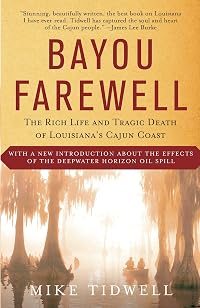
Bayou Farewell: The Rich Life and Tragic Death of Louisiana's Cajun Coast
by Mike Tidwell
On This Page
Description
The Cajun coast of Louisiana is home to a way of life as unique, complex, and beautiful as the terrain itself. As award-winning travel writer Mike Tidwell journeys through the bayou, he introduces us to the food and the language, the shrimp fisherman, the Houma Indians, and the rich cultural history that makes it unlike any other place in the world. But seeing the skeletons of oak trees killed by the salinity of the groundwater, and whole cemeteries sinking into swampland and out of sight, show more Tidwell also explains why each introduction may be a farewell—as the storied Louisiana coast steadily erodes into the Gulf of Mexico.Part travelogue, part environmental exposé, Bayou Farewell is the richly evocative chronicle of the author's travels through a world that is vanishing before our eyes.
. show less
Tags
Recommendations



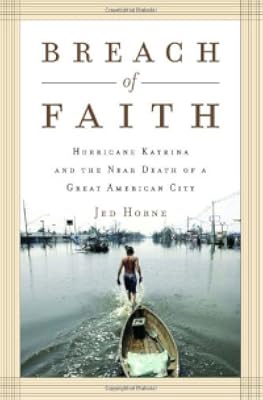

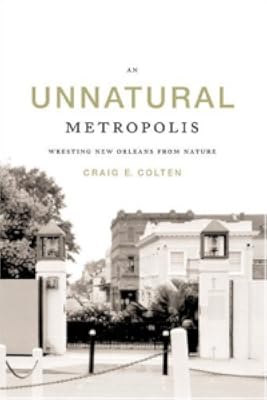

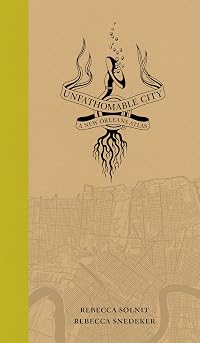
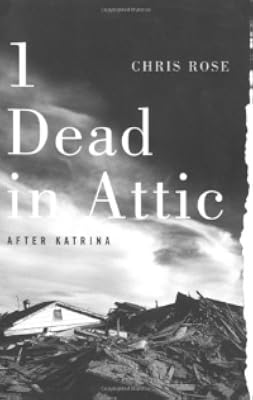





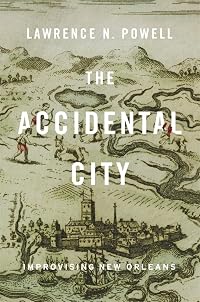
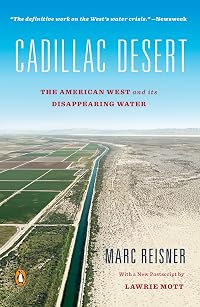

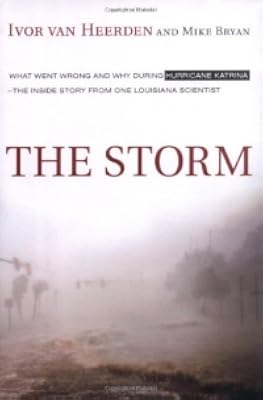














Member Recommendations
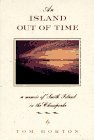
lorax The similarities between Smith Island in the Chesapeake and the bayou country of Louisiana are striking; islands and wetlands literally sinking beneath the waves far more rapidly than sea level rise alone would produce, and the isolated and distinctive local culture of people living off the water vanishing with them.
23
Member Reviews
Subtitled "The Rich Life and Tragic Death of Louisiana's Cajun Coast", this book should have been required reading for every government official in Washington and Louisiana, and a few other places as well, the minute it came off the presses. Tidwell's observations and warnings went largely unheeded, as did those of the shrimpers, fishermen and other locals along the Louisiana Coast, before Hurricane Katrina made him look positively clairvoyant.
Here's a quote from one of the state's field biologists, who tried for over a decade to put a stop to destructive practices of the big oil companies in the Gulf: "There's a reason they're called 'barrier islands'...This is the first line of defense against hurricanes. WIthout these islands, a show more hurricane's storm surge will slam right into the coast unchecked. Then it'll meet the remains of our shrinking marshes, facing little resistance. Then it's straight into the population centers. The next time a direct-hit hurricane comes, I'm afraid it might be really, really ugly."
The destruction of New Orleans and other southern Louisiana towns was totally predictable, but it did not have to happen. Mother Nature's fury was aided and abetted by generations of misguided land and water management, greedy development and oil exploitation, and just plain ignorance.
This book is a beautifully written and moving tribute to the vanishing way of life of the Cajun people of Louisiana, as well as their adopted environment. Read it and weep. show less
Here's a quote from one of the state's field biologists, who tried for over a decade to put a stop to destructive practices of the big oil companies in the Gulf: "There's a reason they're called 'barrier islands'...This is the first line of defense against hurricanes. WIthout these islands, a show more hurricane's storm surge will slam right into the coast unchecked. Then it'll meet the remains of our shrinking marshes, facing little resistance. Then it's straight into the population centers. The next time a direct-hit hurricane comes, I'm afraid it might be really, really ugly."
The destruction of New Orleans and other southern Louisiana towns was totally predictable, but it did not have to happen. Mother Nature's fury was aided and abetted by generations of misguided land and water management, greedy development and oil exploitation, and just plain ignorance.
This book is a beautifully written and moving tribute to the vanishing way of life of the Cajun people of Louisiana, as well as their adopted environment. Read it and weep. show less
One of the most amazing reads in quite a while! The author takes you on a once in a lifetime adventure deep into the swamps of Louisiana that sits below New Orleans and finds that the Gulf of Mexico is reclaiming, and has been reclaiming, hundreds and hundreds of acres for many years.
Yes! He is an environmentalist, but not your screaming environmentalist that foolishly screams to shut everything down now. He believes there is a way to save the coast so fisherman, shrimper and crabbers can continue to crab for many, many years, save the navigational system in the Misissippi, and save the agricultural lands along the Mississippi so people can continue to live and farm.
He's such an awesome writer that I felt like I was on this awesome show more journey with him, hitchhiking on shrimpboats down the bayou from Golden Meadow to the Gulf, visiting some of the most remote villages deep into the swamp, and experiencing the "battlefield" for shrimpers out at Barataria Bay at the first full moon in May...the week before shrimp season opens inside Louisiana territory.
I'm a Cajun whose family has migrated to Southeast Texas. I'm very envious of his journey. My husband and I are making plans now for a weekend adventure excursion to check out the boot below New Orleans. I've never been there before and want to make the drive through Golden Meadow and Leeville, all way to the end of Highway 1, to Grand Isle, Louisiana.
The book was originally published in 2003, with the newest publication in 2010. Here we are now, the year 2018, I wonder if anything has been done to convert some of the Mississippi River back down to the swamps? I'm curious to see if 8 cemetery crypts are still visible above water at the Leesville bridge, or has the Gulf completely claimed them? show less
Yes! He is an environmentalist, but not your screaming environmentalist that foolishly screams to shut everything down now. He believes there is a way to save the coast so fisherman, shrimper and crabbers can continue to crab for many, many years, save the navigational system in the Misissippi, and save the agricultural lands along the Mississippi so people can continue to live and farm.
He's such an awesome writer that I felt like I was on this awesome show more journey with him, hitchhiking on shrimpboats down the bayou from Golden Meadow to the Gulf, visiting some of the most remote villages deep into the swamp, and experiencing the "battlefield" for shrimpers out at Barataria Bay at the first full moon in May...the week before shrimp season opens inside Louisiana territory.
I'm a Cajun whose family has migrated to Southeast Texas. I'm very envious of his journey. My husband and I are making plans now for a weekend adventure excursion to check out the boot below New Orleans. I've never been there before and want to make the drive through Golden Meadow and Leeville, all way to the end of Highway 1, to Grand Isle, Louisiana.
The book was originally published in 2003, with the newest publication in 2010. Here we are now, the year 2018, I wonder if anything has been done to convert some of the Mississippi River back down to the swamps? I'm curious to see if 8 cemetery crypts are still visible above water at the Leesville bridge, or has the Gulf completely claimed them? show less
This book was special for me. It spoke of a place, of customs, and people I'd nearly forgotten because of distance and time put between us. Through weekly talks with my parents, emails of news articles, and reading of online bayou papers I've been kept informed of the disappearing Louisiana coast. My annual trips to the bayou also remind me how fast the land is sinking. I see the differences each year and they're not subtle differences. Places I used to walk, build 'camps', sit under trees and fish are now just water. Prairies of marsh grass around Leeville with little trinasse's [water channels] meandering through the fields of green are now just open water. The community is drowning.
Mike Tidwell's book is non-fiction, but it reads show more like fiction, even like science fiction at times. His message about the disappearing coast is clear. But this is not simply a study of coastal erosion. He travels and lives with the people who call the bayou home, refugees of past wars, people pushed to the southern extremes to eke out a living; the Cajuns, the Indians, and the Vietnamese (before the giant hurricane of 1893 there was even a Chinese community living on the bayou).
I learned just recently that FEMA does not recognize the levee system protecting the lower Lafourche Parish. As a result of this, flood insurance is expected to triple. People are now paying nearly 3 times the amount of their mortgages on insurance. Many are forced to leave. Many don't have insurance.
Simply put, the taming of the Mississippi River and the oil rush of the 20th century created the problem we see today. Plans have been developed to right this wrong. But it appears that once again the Cajuns, the Indians, and the Vietnamese will have to move on and look for other lands, exiled again.
• 'Diz life down here,' he says, 'it's in [the] blood. He just don't realize it yet. He don't realize he can go wherever he wants but he'll never be happy unless he lives down de baya. What good's a job payin' a million dollars if you ain't happy?'
• Before we drift off, Phan lights a final Marlboro in the dark. His Asian face glows with a faint orange hue as he says, 'I think, you know, I'm like special eel in Thailand or salmon in Alaska. Many years go by and I travel far from home and I grow up and now, much time later, I make long trip back, thousands of miles back, to place where my life began, to place where I was born.'
• My travels along the coast are almost over, and the sadness that comes at the end of any meaningful journey is now compounded by the very real possibility that I will never pass this way again. Not because I don't want to, but because the place won't exist. It might be gone. In all my travels around the world I've never had to say goodbye to a place in quite this manner. I've never even imagined such a place could exist. The traveler is supposed to go away, not the destination.
• ... land is still disappearing at the astonishing rate of 25 to 35 square miles per year.
(this was a pre-Katrina/Rita estimate) show less
Mike Tidwell's book is non-fiction, but it reads show more like fiction, even like science fiction at times. His message about the disappearing coast is clear. But this is not simply a study of coastal erosion. He travels and lives with the people who call the bayou home, refugees of past wars, people pushed to the southern extremes to eke out a living; the Cajuns, the Indians, and the Vietnamese (before the giant hurricane of 1893 there was even a Chinese community living on the bayou).
I learned just recently that FEMA does not recognize the levee system protecting the lower Lafourche Parish. As a result of this, flood insurance is expected to triple. People are now paying nearly 3 times the amount of their mortgages on insurance. Many are forced to leave. Many don't have insurance.
Simply put, the taming of the Mississippi River and the oil rush of the 20th century created the problem we see today. Plans have been developed to right this wrong. But it appears that once again the Cajuns, the Indians, and the Vietnamese will have to move on and look for other lands, exiled again.
• 'Diz life down here,' he says, 'it's in [the] blood. He just don't realize it yet. He don't realize he can go wherever he wants but he'll never be happy unless he lives down de baya. What good's a job payin' a million dollars if you ain't happy?'
• Before we drift off, Phan lights a final Marlboro in the dark. His Asian face glows with a faint orange hue as he says, 'I think, you know, I'm like special eel in Thailand or salmon in Alaska. Many years go by and I travel far from home and I grow up and now, much time later, I make long trip back, thousands of miles back, to place where my life began, to place where I was born.'
• My travels along the coast are almost over, and the sadness that comes at the end of any meaningful journey is now compounded by the very real possibility that I will never pass this way again. Not because I don't want to, but because the place won't exist. It might be gone. In all my travels around the world I've never had to say goodbye to a place in quite this manner. I've never even imagined such a place could exist. The traveler is supposed to go away, not the destination.
• ... land is still disappearing at the astonishing rate of 25 to 35 square miles per year.
(this was a pre-Katrina/Rita estimate) show less
A beautiful and sad book about the disappearance of Louisiana's bayou country, and with it, the way of life of the people who live there, the Cajun, Houma and Vietnamese fishermen and shrimpers who provide us with an amazin 30% of America's annual seafood harvest. Thanks to levees on the Mississippi, oil company canals, and other interference with nature, coastal Louisiana is losing land the size of Manhattan every year. The land is sinking, the barrier islands disappearing, and with them go protection against hurricanes, resting places for migratory birds, and a seafood-rich ecosystem.
That it is possible to halt the destruction of this habitat is known. The Atchfalaya River, Louisiana's second largest, still pours silt from its mouth show more to form new land, and small diversion projects are helping. But more and major diversions of the Mississippi, to allow it once again to build up the coast instead of dumping its silt over the continental shelf, must happen and happen quickly before it is too late.
Before, in the words of one shrimper, "Dere won't be no more nothin' left anymore, forever". show less
That it is possible to halt the destruction of this habitat is known. The Atchfalaya River, Louisiana's second largest, still pours silt from its mouth show more to form new land, and small diversion projects are helping. But more and major diversions of the Mississippi, to allow it once again to build up the coast instead of dumping its silt over the continental shelf, must happen and happen quickly before it is too late.
Before, in the words of one shrimper, "Dere won't be no more nothin' left anymore, forever". show less
This book, first published in 2004, focuses on the coastal erosion that takes place in coastal Louisiana. The loss of up to 100 yards of coastal wetlands every 45 minutes has led to many of the Cajun people who live in those areas finding their way of life endangered. The author manages to fully capture the severity of the issue, and calls upon various experts to support his claims.A truly riveting and engaging nonfiction work, I would highly recommend it for any teacher who is crafting a course around the Cajun people, and/or any science teacher who is focusing on wetland loss and the risk of coastal erosion
Fascinating book! I couldn't put it down! Rich in experiences and conversations with people who live and work in Louisiana bayou country: Cajuns, Houma Indians (Native Americans), and Vietnamese. He gave a lot of technical and scientific information, but presented so well that this non-techie, non-scientific person could easily understand, and even find interesting.
Very troubling situation regarding south Louisiana - the land is disappearing, and rapidly! This is mainly due to the excellent levee system that keeps the Mississippi River from flooding, but it is the flooding that builds delta land. Because it's not being re-built, the Gulf of Mexico is eroding it, helped by the pipelines and canals of the oil and gas industry. Very sad. show more The book was published in 2003, before Hurricanes Katrina and Rita, and others. The Third Delta Conveyance has not been built, or even started. It looks dire for Louisiana, and for the rest of the U. S. show less
Very troubling situation regarding south Louisiana - the land is disappearing, and rapidly! This is mainly due to the excellent levee system that keeps the Mississippi River from flooding, but it is the flooding that builds delta land. Because it's not being re-built, the Gulf of Mexico is eroding it, helped by the pipelines and canals of the oil and gas industry. Very sad. show more The book was published in 2003, before Hurricanes Katrina and Rita, and others. The Third Delta Conveyance has not been built, or even started. It looks dire for Louisiana, and for the rest of the U. S. show less
From the first pages, I was totally engrossed in this informative and interesting work. Anyone interested in our environment, Louisiana, and the Mississippi delta should read this book. If you love shrimp, crabs, crawfish and oysters, read this book. Mike Tidwell covers a lot of ground, both physically and figuratively as he travels the bayous, talks with the people who call this home, and explains to us quite graphically but in a language anyone can understand, why we should care. I care, and now I understand even more, also.
Members
- Recently Added By
Published Reviews
Bayou Farewell is a great travel book and a sobering look at a land that is nearly lost. Tidwell’s ingenious spirit and curiosity allow the people of the region to speak for themselves while he provides an honest glimpse into their lives. We also hear the voices of those who are working to save the Louisiana wetlands. This book richly informs those of us who had no idea that this area of the show more country is in such desperate shape, and should inspire many more people to work to save the bayous of the Southern Louisiana coast. Mike Tidwell has done his part by sounding the trumpet in a very clear and compelling voice. show less
added by John_Vaughan
Lists

Best of Travel Narratives (Rivers)
22 works; 1 member
Author Information

9+ Works 527 Members
Mike Tidwell is the author of countless articles published in National Geographic Traveler, Reader's Digest, and the Washington Post, where his writing has earned him two Lowell Thomas Awards. He lives near Washington, DC
Series
Belongs to Publisher Series
Common Knowledge
- Original publication date
- 2003
Classifications
Statistics
- Members
- 256
- Popularity
- 127,349
- Reviews
- 12
- Rating
- (4.40)
- Languages
- English
- Media
- Paper, Ebook
- ISBNs
- 3
- ASINs
- 2