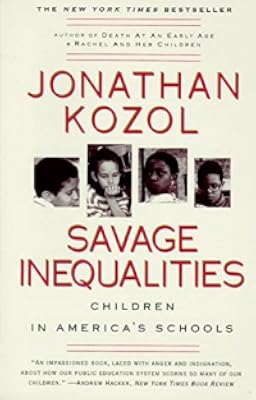
Savage Inequalities: Children in America's Schools
by Jonathan Kozol
On This Page
Description
For two years, beginning in 1988, Jonathan Kozol visited schools in neighborhoods across the country, from Illinois to Washington D.C., and from New York to San Antonio. He spoke with teachers, principals, superintendents, and, most important, children. What he found was devastating. Not only were schools for rich and poor blatantly unequal, the gulf between the two extremes was widening--and it has widened since. The urban schools he visited were overcrowded and understaffed, and lacked the show more basic elements of learning--including books and, all too often, classrooms for the students. In Savage Inequalities, Kozol delivers a searing examination of the extremes of wealth and poverty and calls into question the reality of equal opportunity in our nation's schools. show lessTags
Recommendations
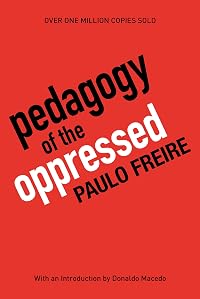
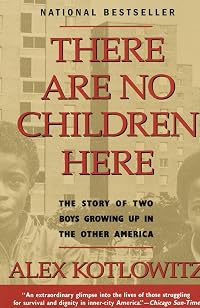
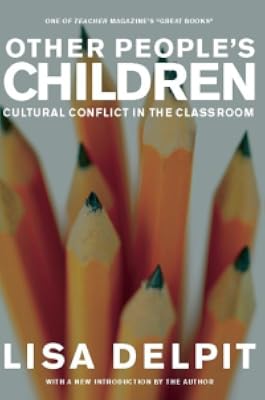
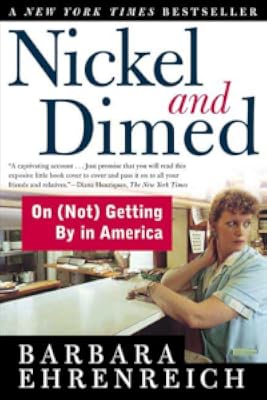



Member Recommendations

Member Reviews
TRPL is proud to present Savage Inequalities, part one of a two part series introducing the works of Jonathon Kozol, author of numerous works on the lives and schools of America�s marginalized and forgotten children.
"Savage" is the only word that can begin to describe the system of education portrayed in Jonathon Kozol's 1991 ground breaking work, Savage Inequalities. Often compared to Upton Sinclair's infamous exposé on the dehumanizing and substandard working conditions of the meat packing industry, Kozol's work takes us deep inside many of America�s urban school districts and shows us conditions that are equally dehumanizing and substandard. As we listen to individual voices of America's students and begin to see the miserable show more conditions many have learned to accept unconditionally, Kozol forces us to question some of the fundamental principles of equality and justice upon which our country was founded and our system of education depends.
In the land of plenty, it seems improbable that so many schools throughout our country could go without the basic necessities required for even an "adequate" education. And yet, as Kozol takes us on a field trip to urban classrooms across America, we find children forced to share discarded textbooks, perform schoolwork with non-existent materials, use dilapidated and often dangerous facilities, and learn from a merry-go-round of substitute teachers with little or no investment in their students' futures. Contrasted against the bleak and miserable conditions are the schools within elite city pockets or neighboring suburbs, schools in many cases just a stone throw away, where resources abound and the quality of education is considerably higher. These savage inequalities are sad reminders that not only can such disparity exist, but that separate and unequal public school systems can be found co-existing side by side.
Beyond simply describing material inequities, Kozol explores issues such as federal court rulings, state funding, and local administrative decisions that have either indirectly impacted school equality or have been directly responsible for creating an uneven playing field for millions of students. What surprises and often enrages the reader throughout this book are some of the arguments made for refusing to take action to raise the level of education in these neglected school districts; arguments such as those made by business leaders in the community who consider children of urban schools as poor "economic investments," arguments made by political leaders against providing urban schools with equitable resources, or an argument made by a Supreme Court Justice who states that education "is not among the rights afforded explicit protection under our Federal Constitution."
Despite Kozol's fluid writing and engaging subject matter, his work is a difficult read because of the emotions his material stirs and the feeling that to continue reading is to accept a social responsibility that would simply be easier to ignore. And yet, this is all the more reason that a book like Savage Inequalities needs to be read, for it is one of those rare books that harshly awakens the conscience from its peaceful slumber and refuses to let it sleep again.
Reviewed by Shaun Kellogg show less
"Savage" is the only word that can begin to describe the system of education portrayed in Jonathon Kozol's 1991 ground breaking work, Savage Inequalities. Often compared to Upton Sinclair's infamous exposé on the dehumanizing and substandard working conditions of the meat packing industry, Kozol's work takes us deep inside many of America�s urban school districts and shows us conditions that are equally dehumanizing and substandard. As we listen to individual voices of America's students and begin to see the miserable show more conditions many have learned to accept unconditionally, Kozol forces us to question some of the fundamental principles of equality and justice upon which our country was founded and our system of education depends.
In the land of plenty, it seems improbable that so many schools throughout our country could go without the basic necessities required for even an "adequate" education. And yet, as Kozol takes us on a field trip to urban classrooms across America, we find children forced to share discarded textbooks, perform schoolwork with non-existent materials, use dilapidated and often dangerous facilities, and learn from a merry-go-round of substitute teachers with little or no investment in their students' futures. Contrasted against the bleak and miserable conditions are the schools within elite city pockets or neighboring suburbs, schools in many cases just a stone throw away, where resources abound and the quality of education is considerably higher. These savage inequalities are sad reminders that not only can such disparity exist, but that separate and unequal public school systems can be found co-existing side by side.
Beyond simply describing material inequities, Kozol explores issues such as federal court rulings, state funding, and local administrative decisions that have either indirectly impacted school equality or have been directly responsible for creating an uneven playing field for millions of students. What surprises and often enrages the reader throughout this book are some of the arguments made for refusing to take action to raise the level of education in these neglected school districts; arguments such as those made by business leaders in the community who consider children of urban schools as poor "economic investments," arguments made by political leaders against providing urban schools with equitable resources, or an argument made by a Supreme Court Justice who states that education "is not among the rights afforded explicit protection under our Federal Constitution."
Despite Kozol's fluid writing and engaging subject matter, his work is a difficult read because of the emotions his material stirs and the feeling that to continue reading is to accept a social responsibility that would simply be easier to ignore. And yet, this is all the more reason that a book like Savage Inequalities needs to be read, for it is one of those rare books that harshly awakens the conscience from its peaceful slumber and refuses to let it sleep again.
Reviewed by Shaun Kellogg show less
While the circumstances in these 1988-1990 scenarios may be different from today’s particular circumstances, the principles still stand. There is an inequity in the education of our children in many school districts, especially in urban districts that represent the highest concentration of children in poverty. The promise of Brown vs Board of Education, much less that of Plessy vs Ferguson, has not been achieved. Much as the laws of Jim Crow have been circumvented by “nice white people” so the ways in which we finance schools and educate our citizens have been thwarted by circumvention. School choice, reliance on test scores, method of funding have all played a part in the erosion of our schools, and have helped to fuel the show more dissension we see in our culture and on social media. Kozol ends this award-winning book with this statement: “There is a deep-seated reverence for fair play in the United States, and in many areas of life we see the consequences in a genuine distaste for loaded dice; but this is not the case in education, health care, or inheritance of wealth. In these elemental areas we want the game to be unfair and we have made it so; and it will likely so remain.” Unfortunately, we have not been able to prove him wrong. show less
Simply put, this book is a report on how minorities in America are compelled to live in segregated schools with a fraction of the support that affluent white schools receive. The author is a good writer, but I take exception with his presentation. His whole argument could have been presented in a quarter of the space. A huge percentage of the book consists of examples of where white/affluent schools are good and minority/poor schools are trash. Fine, I believe him. I believed him after the first three or four detailed examples. I didn't need a dozen more examples. The author does eventually get around to reasons why the differences are so great and so prevalent and why the "haves" are making sure the "have-nots" stay that way. He also show more presents that case well, and much more concisely. However, he does little to say what we, the readers, should do about it, especially since he points out how strong the human element is for "protecting" what we have. Some reviewers of this book commented on how "angry" the author was. I'm sure he was, but it doesn't come through in his writing, unless you feel that pointing out injustice as poor manners. And for what it's worth, I finished reading this book the same day of the Newtown school shooting. Despite the horror and sadness of that event, the book had me thinking and wondering how that tragedy to a white affluent community compared to the day-after-day, year-after-year tragedy of poor minorities living with substandard schools, housing, and environmentally trashed neighborhoods. show less
Although very well written, I had a hard time getting through this book in the beginning because a narrative of the author seemed so contrived and fake that I didn't have any faith in the author's credibility. He begins by recounting a time when he read poems by Robert Frost and Langston Hughes to 4th graders who read at a second grade level. My first reaction was incredulity, as this seemed like the least likely way to get kids interested in poetry (his initial intent). Shel Silverstein and his hilarious poems about boogers is more in their range of interests. He seems to get carried away when painting a picture of his deep impact on the children he encounters when he writes that one of these students cried when he read "What happens show more to a dream deferred? Does it dry up like [b:a raisin in the sun|5517|A Raisin in the Sun|Lorraine Hansberry|http://photo.goodreads.com/books/1165522672s/5517.jpg|3154525]?" I am not gullible enough to believe that a barely literate 4th-grader could comprehend the word "deferred," as a major cause of reading comprehension problems is a limited vocabulary. Furthermore, the idea of such a student applying this line of poetry to her own situation is even less likely. This seemed to me an obvious attempt at rewriting the past to fluff his own feathers. Needless to say, as Kozol passionately and indignantly describes the horrors of the inner-city schools he observed, I had a hard time actually believing him, as I had already detected his tendency towards hyperbole.
As I continued the journey, enjoying all the while Kozol's word artistry and trying to believe (and not to believe) what he was saying, I began to believe what seems to be an impossible truth about America. Thank goodness he quoted so many other people to give more credibility to his reporting and commentary. I'm horrified and appalled, naturally, but more importantly, I explored my own prejudices toward the victims of his story. He bitterly points out that Americans feel that children in poverty have less value---do I feel that way? Of course not. Well......it all started to sink in. It's true that I have my own child in private school and that I haven't advocated for or even been aware of the problem concerning the education of children in poverty. How can this be such a dirty little secret? We just celebrated this big anniversary of Brown vs. Board of Education---how is it that people don't realize the truth behind segregation? The facts are public, it's all out in the open, and Kozol poses an apt question when he wonders why there is this lack of interest (at least),moral outrage, and action by almost all of us.
While much of the facts and supporting evidence is repetitive (it needs to be, to show that this is everywhere--a repeating pattern), the book gets even more interesting towards the end. The discourse on health care issues and how they correlate with education issues truly opens your eyes. The issue of a government choosing who lives and dies is the philosophical quandary that we toss back and forth in literary discussions of novels such as "The Giver" and "1984"--here is real life application.
This book really opened my eyes, posed real-life problems I had never considered, and gave me information I don't know what to do with. And tomorrow I go back to my teaching job--where I teach a 100% caucasion population and complain about the little things that are of no consequence in comparison to having 45 kids in a classroom with no windows. This time, I might realize what I take for granted. Maybe I'll discuss these issues with my kids, but they won't believe me. I don't know what else I'll really do with this new knowledge.
My favorite quotes from this book:
1) pg. 117 about prevention vs. remedy.
2) (About low-achieving students who disrupt the learning environment):
"Knowing one is ruined is a powerful incentive to destroy the learning opportunities for other children, and the consequence in many schools is nearly uncontrollable disruption."
My question: is tracking supposed to help or hinder this problem? When mixed in with kids who are striving to succeed, don't these ones just get weeded out anyway and put in alternative ed classes where all the students spend the day making their learning environment one in which it is impossible to learn?
Julie show less
As I continued the journey, enjoying all the while Kozol's word artistry and trying to believe (and not to believe) what he was saying, I began to believe what seems to be an impossible truth about America. Thank goodness he quoted so many other people to give more credibility to his reporting and commentary. I'm horrified and appalled, naturally, but more importantly, I explored my own prejudices toward the victims of his story. He bitterly points out that Americans feel that children in poverty have less value---do I feel that way? Of course not. Well......it all started to sink in. It's true that I have my own child in private school and that I haven't advocated for or even been aware of the problem concerning the education of children in poverty. How can this be such a dirty little secret? We just celebrated this big anniversary of Brown vs. Board of Education---how is it that people don't realize the truth behind segregation? The facts are public, it's all out in the open, and Kozol poses an apt question when he wonders why there is this lack of interest (at least),moral outrage, and action by almost all of us.
While much of the facts and supporting evidence is repetitive (it needs to be, to show that this is everywhere--a repeating pattern), the book gets even more interesting towards the end. The discourse on health care issues and how they correlate with education issues truly opens your eyes. The issue of a government choosing who lives and dies is the philosophical quandary that we toss back and forth in literary discussions of novels such as "The Giver" and "1984"--here is real life application.
This book really opened my eyes, posed real-life problems I had never considered, and gave me information I don't know what to do with. And tomorrow I go back to my teaching job--where I teach a 100% caucasion population and complain about the little things that are of no consequence in comparison to having 45 kids in a classroom with no windows. This time, I might realize what I take for granted. Maybe I'll discuss these issues with my kids, but they won't believe me. I don't know what else I'll really do with this new knowledge.
My favorite quotes from this book:
1) pg. 117 about prevention vs. remedy.
2) (About low-achieving students who disrupt the learning environment):
"Knowing one is ruined is a powerful incentive to destroy the learning opportunities for other children, and the consequence in many schools is nearly uncontrollable disruption."
My question: is tracking supposed to help or hinder this problem? When mixed in with kids who are striving to succeed, don't these ones just get weeded out anyway and put in alternative ed classes where all the students spend the day making their learning environment one in which it is impossible to learn?
Julie show less
This is the most depressing book I've ever read because it's real. It's one of those "everyone should read this" books. America's children are not all afforded an equal education and the extreme "inequalities" will really shock you.
This book is excellent. Kozol writes honestly and passionately about the inequalities in the public school system in our country. I'll go a bit further than simply giving this book a high recommendation, and state that this is a book that everyone should read. There are a great many injustices in our country, that many of us have no idea how deep and pervasive they are. I would liken this work to Upton Sinclair's 'The Jungle'. It's a book that must be read, because it will open our eyes and minds to what's really going on right under our noses. Awareness is power.
Essential for understanding the state of schools in America today. A great text to recommend to people who insists that American society is meritocratic, or that racism is no longer a problem, or that lower class people are just lazy.
Members
- Recently Added By
Lists

Books for Educators
164 works; 6 members
Author Information

19+ Works 7,392 Members
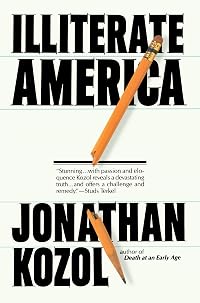
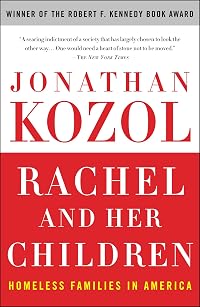
Educator and author Jonathan Kozol was born in Boston. He graduated from Harvard University in 1958. Kozol has an concerns with topics such as illiteracy, children trying to learn in bad neighborhoods and homelessness. His books include Death at an Early Age, Illiterate American and Rachel and Her Children: Homeless Families in America. (Bowker show more Author Biography) show less
Awards and Honors
Awards
Distinctions
Work Relationships
Has as a student's study guide
Common Knowledge
- Important events
- Brown v. Board of Education (1954)
- Canonical DDC/MDS
- 371.967; 370.91732
- Canonical LCC
- LC4091
Classifications
- Genres
- Sociology, Nonfiction, General Nonfiction
- DDC/MDS
- 371.967 — Society, government, & culture Education Schools and their activities; special education Education of special classes By Socioeconomic Status Disadvantaged
- LCC
- LC4091 — Education Special aspects of education Special aspects of education Education of special classes of persons Exceptional children and youth. Special Children and youth with disabilities. Learning
- BISAC
Statistics
- Members
- 2,409
- Popularity
- 8,118
- Reviews
- 18
- Rating
- (4.12)
- Languages
- English
- Media
- Paper, Audiobook, Ebook
- ISBNs
- 12
- ASINs
- 11