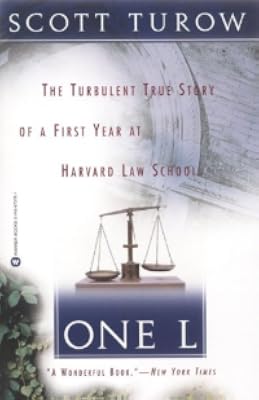
One L: The Turbulent True Story of a First Year at Harvard Law School
by Scott Turow
On This Page
Description
Thirty years after Scott Turow entered law school comes an all new unabridged production of this classic with a special introduction by and interview with the author. One L, Scott Turow's journal of his first year at law school and a bestseller when it was first published in 1977, has gone on to become a virtual bible for prospective law students. Not only does it introduce with remarkable clarity the ideas and issues that are the stuff of legal education; it also brings alive the anxiety show more and competitiveness-with others and, even more, with oneself-that set the tone in this crucible of character building. Each September, a new crop of students enter Harvard Law School to begin an intense, often grueling, sometimes harrowing year of introduction to the law. Will the One L's survive? Will they excel? Will they make the Law Review, the outward and visible sign of success in this ultra-competitive microcosm. With remarkable insight into both his fellow students and himself, Turow leads us through the ups and downs, the small triumphs and tragedies of the year, in an absorbing and thought-provoking narrative that teaches the listener not only about law school and the law but also about the human beings who make them what they are. show lessTags
Recommendations






Member Reviews
Scott Turow’s engrossing account of his first year at Harvard Law School. It is told in chronological order from first class to finals. There is a lot of drama in the competitiveness of the students - both the desire to support each other but also deal with pressure of grades, and the potential ramifications (Law Review, hiring decisions, etc.) Turow went to Harvard in the mid-1970s, so there have likely been changes since then, but he definitely has opinions on areas for improvement and the lack of effectiveness of the Socratic method. I am impressed by the author’s ability to work his magic on what could have been dry material. It is far from it. I flew through this book. I wish Turow would write more non-fiction. He has a knack show more for it. I enjoyed this even more than his fiction. show less
If you attended law school, this book will revive memories you probably suppressed in order to preserve your sanity; if you didn't go to law school, this book shows you exactly what you missed. In the details it is definitely a period piece -- the author complains about paying the exorbitant price of $15 for a casebook (it not uncommon to pay almost $200 today), and bemoans the extravagant $3k/year he pays in Harvard tuition. I won't even try to find out what the current rates are.
The Socratic method so much at the center of his account is presently employed rarely, perhaps because professors no longer understand how it actually works. The fruits of the technique can be seen in the satisfying discoveries the students find in Torts; the show more underside, of course, arises in the "Incident" in Contracts.
Despite the painfulness of the process, I couldn't help but envy the complete immersion and challenge the students experienced in something they willingly chose -- no one is forced to study law, much less at Harvard. If the process had been more like an undergraduate course, I believe it would have been equally unsatisfying, if for different reasons. Yes, it is hazing, but as a whole the year by design breaks down the layman and rebuilds in its place a lawyer. show less
The Socratic method so much at the center of his account is presently employed rarely, perhaps because professors no longer understand how it actually works. The fruits of the technique can be seen in the satisfying discoveries the students find in Torts; the show more underside, of course, arises in the "Incident" in Contracts.
Despite the painfulness of the process, I couldn't help but envy the complete immersion and challenge the students experienced in something they willingly chose -- no one is forced to study law, much less at Harvard. If the process had been more like an undergraduate course, I believe it would have been equally unsatisfying, if for different reasons. Yes, it is hazing, but as a whole the year by design breaks down the layman and rebuilds in its place a lawyer. show less
Scott Turow’s engrossing account of his first year at Harvard Law School. It is told in chronological order from first class to finals. There is a lot of drama in the competitiveness of the students - both the desire to support each other but also deal with pressure of grades, and the potential ramifications (Law Review, hiring decisions, etc.) Turow went to Harvard in the mid-1970s, so there have likely been changes since then, but he definitely has opinions on areas for improvement and the lack of effectiveness of the Socratic method. I am impressed by the author’s ability to work his magic on what could have been dry material. It is far from it. I flew through this book. I wish Turow would write more non-fiction. He has a knack show more for it. I enjoyed this even more than his fiction. show less
The first year of professional school is a molding and transformative experience. As a physician (now retired)I couldn’t help comparing the first year of law school. I now realize that both are professional schools rather than traditional academic disciplines. Still one experiences them as a student and as a hopeful acolyte.
Perhaps one basic difference between law and medicine outs that the human body and knowledge about IT is the foundation of medical.
It appears that the search for justice and the best way to achieve it isn’t the foundation of law school. To my reading the foundation IS the importance of learning hope to secure and what it takes to win an argument. The hope it’s that truth and justice are on the side of winning show more arguments.
I enjoyed Turrow’s comments at the end of the audio.
While the first year of medical school was transformative, for me the truly transformative life changing event was internship - suddenly being responsible for people on a minute by minute level. That was life changing and also supported by colleagues in the care giving and learning environment.
Turrow’s special gift to the reader IS his ability to express things in a clear and captivating way. show less
Perhaps one basic difference between law and medicine outs that the human body and knowledge about IT is the foundation of medical.
It appears that the search for justice and the best way to achieve it isn’t the foundation of law school. To my reading the foundation IS the importance of learning hope to secure and what it takes to win an argument. The hope it’s that truth and justice are on the side of winning show more arguments.
I enjoyed Turrow’s comments at the end of the audio.
While the first year of medical school was transformative, for me the truly transformative life changing event was internship - suddenly being responsible for people on a minute by minute level. That was life changing and also supported by colleagues in the care giving and learning environment.
Turrow’s special gift to the reader IS his ability to express things in a clear and captivating way. show less
Must disagree with the jacket/ GoodReads blurb, "entirely true." NOT according to one of his undergrad professors, Theodore Baird, who wondered how Turow could present himself as such a blank slate upon arriving at Harvard Law, when he had endured the undergrad assault of Baird's Amherst College. But of course, it makes a better story about only the Law School if the naive youth arrives so unprepared for the Big Leagues.
But he'd been in the Big Leagues for four years prior: the League that produced Robert Fagles, Richard Wilbur, James Merrill, William Pritchard, the League started by Robert Frost and Emily Dickinson.
Perhaps the Bildungsroman like this requires mental rags to riches. It does read well, as if "entirely true." But isn't show more that the role of Fiction? I always told my classes that if a film claimed to be based on a True Story, it was far from it, because if it really was such, it would claim the Opposite: "None of the characters are based on real people…" in order to avoid lawsuits. show less
But he'd been in the Big Leagues for four years prior: the League that produced Robert Fagles, Richard Wilbur, James Merrill, William Pritchard, the League started by Robert Frost and Emily Dickinson.
Perhaps the Bildungsroman like this requires mental rags to riches. It does read well, as if "entirely true." But isn't show more that the role of Fiction? I always told my classes that if a film claimed to be based on a True Story, it was far from it, because if it really was such, it would claim the Opposite: "None of the characters are based on real people…" in order to avoid lawsuits. show less
Book on CD read by Holter Graham
3.5***
Subtitle: The Turbulent True Story of a First Year at Harvard Law School
Turow wrote this memoir just after his first year of law school, and it was published before he had graduated. It has, apparently, become a “must-read” for those contemplating going to law school, and Turow gets many letters each year from readers who strongly identify with the incidents he relates.
I was very interested in the psychology of his experience. The stress – both external and self-imposed – was palpable. Turow and his fellow students found themselves in a completely different setting. All high-achievers when they arrived they were thrown into a competitive atmosphere where they felt pitted against one show more another, with the result that many of them began to seriously doubt themselves and became suspicious of their colleagues.
Holter Graham does a fine job of the audiobook, which was produced in 2005, some 28 years after the original book came out. This anniversary edition included additional material from Turow, which he read himself. Also, there was a bonus interview with the author that was quite interesting. show less
3.5***
Subtitle: The Turbulent True Story of a First Year at Harvard Law School
Turow wrote this memoir just after his first year of law school, and it was published before he had graduated. It has, apparently, become a “must-read” for those contemplating going to law school, and Turow gets many letters each year from readers who strongly identify with the incidents he relates.
I was very interested in the psychology of his experience. The stress – both external and self-imposed – was palpable. Turow and his fellow students found themselves in a completely different setting. All high-achievers when they arrived they were thrown into a competitive atmosphere where they felt pitted against one show more another, with the result that many of them began to seriously doubt themselves and became suspicious of their colleagues.
Holter Graham does a fine job of the audiobook, which was produced in 2005, some 28 years after the original book came out. This anniversary edition included additional material from Turow, which he read himself. Also, there was a bonus interview with the author that was quite interesting. show less
Overall, this is an engaging and enlightening memoir. Much of it I liked very much, but it falls short for me in a couple of key areas, preventing me from giving it a 4. (If I could, I could give it a 3.7)
Turow does an excellent job pulling back the curtain on the anxious and thrilling experience of engaging with law study at Harvard Law School in the late '70s. This seems, even if more extreme, a special case of graduate school. It does not seem all that different from my own experiences, except perhaps the magnitude of reading and memorization for would-be lawyers. The details and logic of law - from feudal origins of property law to the irreconcilable hopes for equal application and human context - is the meat to the experience and show more could be amplified in detail and nuance. This is where the content begins to falter.
Where it more meaningfully falters for me is the details around "The Incident." A student is belittled by pseudonymous Harvard Law Professor Rudolph Perini. (Apparently based on Arthur R. Miller.) From my own experiences as a graduate student and college instructor it is hard for me to see how this rose to the level of a multi-student written protest and plan for collective action. There was also student body meetings on protesting curriculum design. Was this just a '70s active student body? did things change at all? Turow does not reveal....
Probably most important - and this surprises me from a professional novelist - the pyschological and existential dimension of "meet my enemy," his term for, I guess, elements of his personality he disrespects and finds ugly yet finds enshrined in institutional law, is a subject too vague in the telling.
I was also better educated on the status and import of being part of Harvard Law Review. A decade later, Obama was the prestigious journal's first black president while during Turow's time, the first woman to serve as the journal's president was Susan Estrich (1977), who later was active in Democratic Party politics and became the youngest woman to receive tenure at Harvard Law School. show less
Turow does an excellent job pulling back the curtain on the anxious and thrilling experience of engaging with law study at Harvard Law School in the late '70s. This seems, even if more extreme, a special case of graduate school. It does not seem all that different from my own experiences, except perhaps the magnitude of reading and memorization for would-be lawyers. The details and logic of law - from feudal origins of property law to the irreconcilable hopes for equal application and human context - is the meat to the experience and show more could be amplified in detail and nuance. This is where the content begins to falter.
Where it more meaningfully falters for me is the details around "The Incident." A student is belittled by pseudonymous Harvard Law Professor Rudolph Perini. (Apparently based on Arthur R. Miller.) From my own experiences as a graduate student and college instructor it is hard for me to see how this rose to the level of a multi-student written protest and plan for collective action. There was also student body meetings on protesting curriculum design. Was this just a '70s active student body? did things change at all? Turow does not reveal....
Probably most important - and this surprises me from a professional novelist - the pyschological and existential dimension of "meet my enemy," his term for, I guess, elements of his personality he disrespects and finds ugly yet finds enshrined in institutional law, is a subject too vague in the telling.
I was also better educated on the status and import of being part of Harvard Law Review. A decade later, Obama was the prestigious journal's first black president while during Turow's time, the first woman to serve as the journal's president was Susan Estrich (1977), who later was active in Democratic Party politics and became the youngest woman to receive tenure at Harvard Law School. show less
Members
- Recently Added By
Author Information

59+ Works 23,860 Members
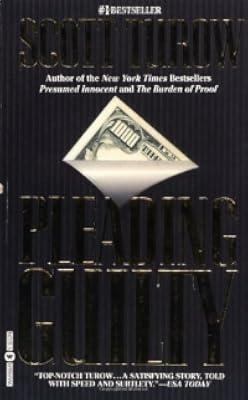
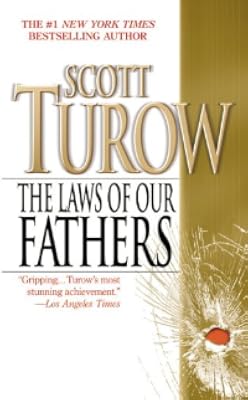
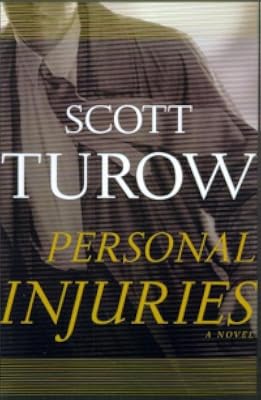
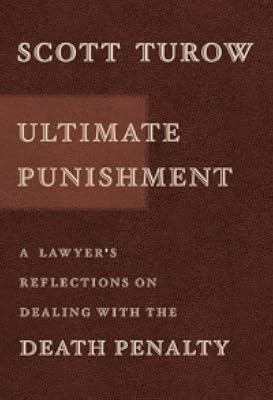
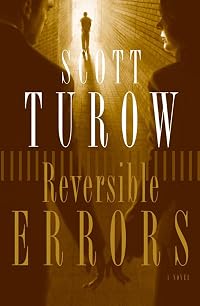
Scott Turow is a writer and lawyer. He was born in Chicago, Illinois, on April 12, 1949. He received a B.A. from Amherst College in 1970 and an M.A. from Stanford University in 1974. He graduated from Harvard Law School in 1978. He was an Assistant United States Attorney in Chicago and served as a prosecutor in several corruption cases. Turow show more continues to work as an attorney. He has written numerous novels including Presumed Innocent, The Burden of Proof, Pleading Guilty, The Laws of Our Fathers, Personal Injuries, Ordinary Heroes, Limitations, Innocent, and Identical. His non-fiction works include One L about his experience as a law student and Ultimate Punishment about the death penalty. He has won numerous awards including the Heartland Prize in 2003 for Reversible Errors, the Robert F. Kennedy Book Award in 2004 for Ultimate Punishment, and Time Magazine's Best Work of Fiction, 1999 for Personal Injuries. He will give a keynote speech at the National writer's Congress 2015. (Bowker Author Biography) show less
Some Editions
Awards and Honors
Notable Lists
Work Relationships
Common Knowledge
- Canonical title
- One L: The Turbulent True Story of a First Year at Harvard Law School
- Alternate titles
- One-L: The Turbulent True Story of a First Year at Harvard Law School
- Original publication date
- 1977
- People/Characters
- Scott Turow; Annette Turow; Rudolph Perini; Nickie Morris; Mann; Fowler (show all 10); Terry; Scott; Gina; Karen
- Important places
- Harvard Law School, Cambridge, Massachusetts, USA; Cambridge, Massachusetts, USA
- Dedication
- For Annette, with love and gratitude and admiration
- First words
- They called us "One Ls," and there were 550 of us who came on the third of September to begin our careers in the law.
- Last words
- (Click to show. Warning: May contain spoilers.)"They will be One Ls."
- Original language
- English
Classifications
Statistics
- Members
- 1,364
- Popularity
- 17,536
- Reviews
- 29
- Rating
- (3.57)
- Languages
- English, Italian
- Media
- Paper, Audiobook, Ebook
- ISBNs
- 19
- ASINs
- 14