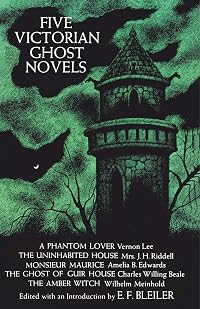
Five Victorian Ghost Novels
by Everett F. Bleiler (Editor)
On This Page
Description
"These five novels present the entire panoply of Victorian thrills and chills at their best: pale ghosts wandering through the ancient chambers of a deserted mansion; the impingement of the restless, unquiet evil on the present; the Devil and bizarre witchcraft, strange magical dooms; love from the past and the no-boundary condition of death; hidden powers, occult knowledge, mental structures and weird magic not recorded elsewhere"--Back cover.Tags
Recommendations





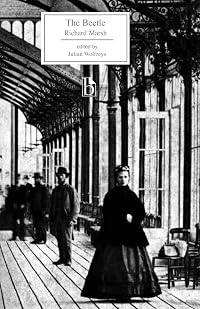

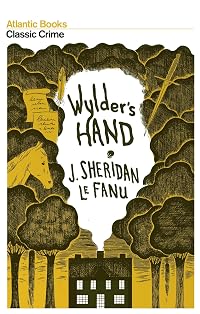

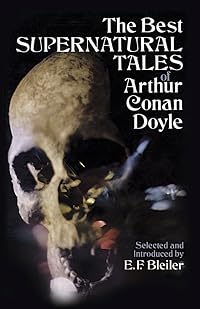

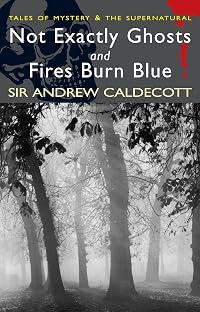











Member Reviews
This collection offers something for everyone. By which I mean no two are in the least similar, and a couple are so disparate that I would venture to say that if you like one, you would not at all enjoy the other.
The second novel in the book, “The Amber Witch,” is the longest, as well as the least enjoyed by me. It is a fictional tale, but when first published claimed to be, as stated in the preface, a translation of a 15th century manuscript written by a pastor who endured much woe and trouble when marauders ravaged his village and his daughter is falsely accused of witchcraft. The “pastor’s” style of writing is antiquated, but readable. My objection is the frequent interjections of Latin words with absolutely no show more explanations of their meanings in English. Presumably the average person in the Victorian era was much more familiar with Latin than today’s reader, and also the scholarly reader of the 1970’s (when this book was published) might have had an easier time. Personally, I had to keep near a computer and look things up quite frequently. Another issue, more personal to me, possibly, than the average person, was the philosophy of the narrator. No matter how many horrible calamities befall him, he is able to work it into his religion, while ascribing to his god both the impetus for his woe as well as the means to endure it. It is quite obvious that the malevolence of the people surrounding him is the sole cause of his hardship, and also that religion is the means by which they convince the general populace to go along with their evil schemes, yet his reliance on his God infrequently wavers. There are also no ghosts in this story.
I much preferred “The Ghost of Guir House.” It felt to me like the reward for slogging through the rest of the book. In this fascinating tale, Paul receives a letter that seems not meant for him but decides to follow its instruction anyway and meet the girl who sent it. She and the old man living with her seem to have a mysterious and esoteric secret, and Paul struggles to learn what it is. The information imparted to Paul in the course of discovering the mystery is somewhat hard to follow, but the story is compelling and suspenseful. Paul is a sort of bumbling person, but means well and so is easy to identify with. The characters of the girl and the old man, as well as, arguably, the third character of Guir House itself are so well developed and stunningly described that it more than makes up for the fact that Paul seems like the method by which to tell the story, rather than a character himself.
To address the other three novels: “The Uninhabited House” suffers from a stilted plot, an entirely too lengthy exposition, and characters who made me very irritated. There is barely a ghost in the novel and the ending was telegraphed from the first paragraph. Heavy foreshadowing as well as (while possibly quite novel 150 years ago) a familiar storyline, made for a complete waste of my time. “Monsieur Maurice” was written in a much more compelling way than “The Uninhabited House,” and was therefore not a complete waste of time. However, it barely had anything to do with ghosts, and was not at all chilling or suspenseful. Interesting more for the picture it drew of the German countryside and the time of Napoleon, as well as the charming perspective of a little girl as the main character serve to recommend it more for a general collection of Victorian tales than a self-described collection of “Ghost Novels.” While there is undoubtedly a more of a ghost present in “The Phantom Lover,” the narrative did not turn dark or suspenseful until the last paragraph. Also, the convention of writing from the perspective of the protagonist speaking to an unknown person who has entered his art gallery was quite jarring at first. It’s like when someone on television addresses the camera to begin, and then the story is told in flashback. This style is not as cohesive in written form. Again the “mystery” of the story was readily apparent to the reader, and even explained by the narrator somewhere in the middle and not at all climactic in presentation. It was almost obvious what would then follow, but the character of Mrs. Alice Oke was quite appealing to both the reader and the narrator engaged to paint her. The story might have benefitted from more historical perspective, as Alice is quite obsessed with an ancestor of hers whom she resembles and who also was responsible for killing her lover. It is quite obvious throughout that this lover is now haunting the present Alice and that she quite likes it. It is never explained why the original Alice killed her lover, and no description is given of what this haunting entails. In fact, the ghost is not even seen by anyone other than Alice until towards the end of the story. I was disappointed. This one could have been so much better, and I kept hoping for it to be.
Overall, I might not recommend this collection, except for the fact that it seems that “The Ghost of Guir House” is so difficult to find that this might be the only place one can do so. In fact, all of the stories in the collection are out of print everywhere else, so if any of them appeal to you, you may want to locate a copy of this book. Or, you can have mine. show less
The second novel in the book, “The Amber Witch,” is the longest, as well as the least enjoyed by me. It is a fictional tale, but when first published claimed to be, as stated in the preface, a translation of a 15th century manuscript written by a pastor who endured much woe and trouble when marauders ravaged his village and his daughter is falsely accused of witchcraft. The “pastor’s” style of writing is antiquated, but readable. My objection is the frequent interjections of Latin words with absolutely no show more explanations of their meanings in English. Presumably the average person in the Victorian era was much more familiar with Latin than today’s reader, and also the scholarly reader of the 1970’s (when this book was published) might have had an easier time. Personally, I had to keep near a computer and look things up quite frequently. Another issue, more personal to me, possibly, than the average person, was the philosophy of the narrator. No matter how many horrible calamities befall him, he is able to work it into his religion, while ascribing to his god both the impetus for his woe as well as the means to endure it. It is quite obvious that the malevolence of the people surrounding him is the sole cause of his hardship, and also that religion is the means by which they convince the general populace to go along with their evil schemes, yet his reliance on his God infrequently wavers. There are also no ghosts in this story.
I much preferred “The Ghost of Guir House.” It felt to me like the reward for slogging through the rest of the book. In this fascinating tale, Paul receives a letter that seems not meant for him but decides to follow its instruction anyway and meet the girl who sent it. She and the old man living with her seem to have a mysterious and esoteric secret, and Paul struggles to learn what it is. The information imparted to Paul in the course of discovering the mystery is somewhat hard to follow, but the story is compelling and suspenseful. Paul is a sort of bumbling person, but means well and so is easy to identify with. The characters of the girl and the old man, as well as, arguably, the third character of Guir House itself are so well developed and stunningly described that it more than makes up for the fact that Paul seems like the method by which to tell the story, rather than a character himself.
To address the other three novels: “The Uninhabited House” suffers from a stilted plot, an entirely too lengthy exposition, and characters who made me very irritated. There is barely a ghost in the novel and the ending was telegraphed from the first paragraph. Heavy foreshadowing as well as (while possibly quite novel 150 years ago) a familiar storyline, made for a complete waste of my time. “Monsieur Maurice” was written in a much more compelling way than “The Uninhabited House,” and was therefore not a complete waste of time. However, it barely had anything to do with ghosts, and was not at all chilling or suspenseful. Interesting more for the picture it drew of the German countryside and the time of Napoleon, as well as the charming perspective of a little girl as the main character serve to recommend it more for a general collection of Victorian tales than a self-described collection of “Ghost Novels.” While there is undoubtedly a more of a ghost present in “The Phantom Lover,” the narrative did not turn dark or suspenseful until the last paragraph. Also, the convention of writing from the perspective of the protagonist speaking to an unknown person who has entered his art gallery was quite jarring at first. It’s like when someone on television addresses the camera to begin, and then the story is told in flashback. This style is not as cohesive in written form. Again the “mystery” of the story was readily apparent to the reader, and even explained by the narrator somewhere in the middle and not at all climactic in presentation. It was almost obvious what would then follow, but the character of Mrs. Alice Oke was quite appealing to both the reader and the narrator engaged to paint her. The story might have benefitted from more historical perspective, as Alice is quite obsessed with an ancestor of hers whom she resembles and who also was responsible for killing her lover. It is quite obvious throughout that this lover is now haunting the present Alice and that she quite likes it. It is never explained why the original Alice killed her lover, and no description is given of what this haunting entails. In fact, the ghost is not even seen by anyone other than Alice until towards the end of the story. I was disappointed. This one could have been so much better, and I kept hoping for it to be.
Overall, I might not recommend this collection, except for the fact that it seems that “The Ghost of Guir House” is so difficult to find that this might be the only place one can do so. In fact, all of the stories in the collection are out of print everywhere else, so if any of them appeal to you, you may want to locate a copy of this book. Or, you can have mine. show less
Ratings
Members
- Recently Added By
Lists

Scary ghost stories - no zombies, vampires or werewolves, please
53 works; 20 members

Ghosts
278 works; 18 members
Author Information

Everett F. Bleiler was born April 30, 1920 in Massachusetts. He received an anthropology degree from Harvard University in 1942 and a degree in the history of culture from the University of Chicago. He started working at Dover Publications in 1955, eventually becoming executive vice president in 1967, and left the company in 1977. After leaving show more Dover, he worked at Charles Scribner's Sons until 1986. He edited or co-edited numerous works including the annual Best Science Fiction Stories series, the Year's Best Science Fiction Novels series, and several anthologies. His nonfiction work includes The Checklist of Fantastic Literature, The Guide to Supernatural Fiction, Supernatural Fiction Writers: Fantasy and Horror, Science Fiction: The Early Years, and Science Fiction: The Gernsback Years. He received several awards including the 1978 World Fantasy Award (Special, Professional), the 1984 SFRA Pilgrim Award, the 1988 World Fantasy Life Achievement Award, the 1994 First Fandom Award, and the 2004 International Horror Guild Living Legend Award. He died on June 13, 2010 at the age of 90. (Bowker Author Biography) show less
All Editions
Work Relationships
Classifications
- Genres
- Fiction and Literature, Horror, Fantasy
- DDC/MDS
- 823.0872 — Literature & rhetoric English & Old English literatures English fiction By type Genre fiction Adventure fiction Mystery fiction
- LCC
- PZ1 .B58 — Language and Literature Fiction and juvenile belles lettres Fiction and juvenile belles lettres Fiction in English
- BISAC
Statistics
- Members
- 157
- Popularity
- 208,124
- Reviews
- 1
- Rating
- (3.61)
- Languages
- English
- Media
- Paper
- ISBNs
- 2
- UPCs
- 1
- ASINs
- 1