
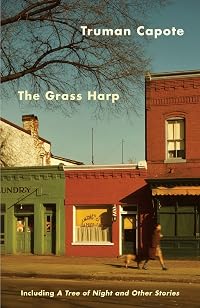
The Grass Harp: Including A Tree of Night and Other Stories
by Truman Capote
On This Page
Description
Set on the outskirts of a small Southern town, The Grass Harp tells the story of three endearing misfits-an orphaned boy and two whimsical old ladies-who one day take up residence in a tree house. As they pass sweet yet hazardous hours in a china tree, The Grass Harp manages to convey all the pleasures and responsibilities of freedom. But most of all it teaches us about the sacredness of love, "that love is a chain of love, as nature is a chain of life." This volume also includes Capote's A show more Tree of Night and Other Stories, which the Washington Post called "unobtrusively beautiful . . . a superlative book.". show lessTags
Recommendations
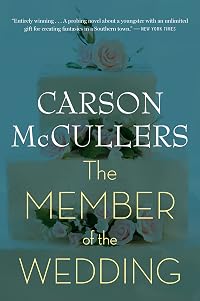
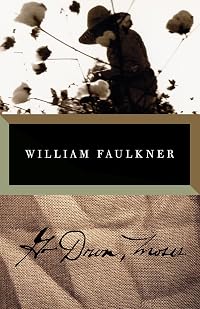
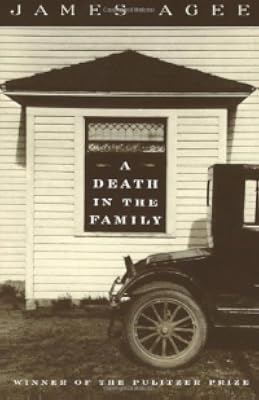
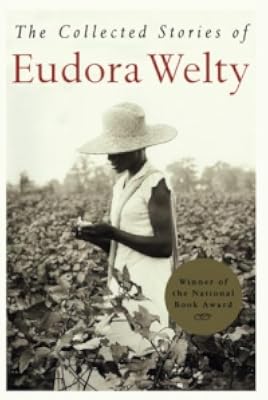



Member Recommendations
Member Reviews
The Grass Harp: 4-stars
After a failed attempt to listen to The Grass Harp on audio, I purchased this book and began again. I am quite glad that I did, since the beauty of the language minus the fake Southern accent is remarkable. I loved the Truman Capote I heard in my own head, with the softness of the accents of my own Aunts Pearl and Maybelle echoing in the words of Miss Dolly.
The audaciousness of the concept of a boy and two old women living in a tree is lost in the genuine delight of the image Capote paints--the defiance of those who are the weaklings in the eyes of everyone else in this town. Dolly is a marvelous character, but Catherine made me smile almost every time she spoke. I could see her, hands on hips, calling Verena show more “That One”.
Capote achieves a lot in a short time. With less than 100 pages in which to tell a fairly complicated story, he says exactly what needs to be said and wastes not a word. Quite an accomplishment. He also manages to incorporate a real humor and a poignant sense of loneliness into this brief moment in a bunch of fractured, and perhaps wasted, lives.
I intend to read the other stories in this collection, but not right now. Hoping to come back soon and complete the review. Meanwhile, I have rated this book with only The Grass Harp in mind. show less
After a failed attempt to listen to The Grass Harp on audio, I purchased this book and began again. I am quite glad that I did, since the beauty of the language minus the fake Southern accent is remarkable. I loved the Truman Capote I heard in my own head, with the softness of the accents of my own Aunts Pearl and Maybelle echoing in the words of Miss Dolly.
The audaciousness of the concept of a boy and two old women living in a tree is lost in the genuine delight of the image Capote paints--the defiance of those who are the weaklings in the eyes of everyone else in this town. Dolly is a marvelous character, but Catherine made me smile almost every time she spoke. I could see her, hands on hips, calling Verena show more “That One”.
Capote achieves a lot in a short time. With less than 100 pages in which to tell a fairly complicated story, he says exactly what needs to be said and wastes not a word. Quite an accomplishment. He also manages to incorporate a real humor and a poignant sense of loneliness into this brief moment in a bunch of fractured, and perhaps wasted, lives.
I intend to read the other stories in this collection, but not right now. Hoping to come back soon and complete the review. Meanwhile, I have rated this book with only The Grass Harp in mind. show less
Weird and weirder: Capote's early stories delve into small town America. The Grass Harp was published in 1951, but the other stories included in this edition are from the late 1940's. Strange characters, oddball events was it really like this? Is it still like this in America? or is this more typical of Capote, there is no hint of modernity these stories could have taken place 40 years earlier. Anachronistic perhaps because of the character profiles that Capote presents to his readers. Elderly ladies, young girls, pre teens people the stories, dysfunctional characters who rarely lift their heads from their own private worlds, but when they are forced to do so they present a challenge that must be snuffed out. The Americans in these show more small town stories seem to live with a certain amount of oddball behaviour: it is part of the fabric of their lives, but when weird gets weirder people get hurt.
The Grass Harp is of novella length taking up nearly half of this publication and is the best and most developed of this collection. It is narrated by Colin a young teenager small for his age a runt who when his mother dies is sent away to live with the Talbo sisters, who are well into their sixties. Verena is a business woman and runs the household; Dolly wears a veil outside the house; she ventures out once a week with her friend/servant/companion Catherine Creek a coloured woman. They collect herbs, bark and grasses to make a potion that they sell as a cure for dropsy, strictly by mail order. Dolly and Catherine live apart from Verena in their own part of the house and Colin becomes their new friend confessing that he is in love with Dolly. The event which fractures this strange household is when Verena seeing a business opportunity attempts to take over the selling of the Dropsy cure. Dolly, Catherine and Colin run away to an abandoned tree house in the woods, where they make their last stand against the forces of law and order. A young roustabout Riley Henderson and a 70 year old judge join the unlikely trio as they defend themselves against the extreme redneckery of the sheriff and his posse. There is hardly room enough in the old tree house.
Capote treats his oddball characters with sympathy in most of his stories, they are tolerated by their community and it is only when their actions challenge others that they run into problems. His characters are not quite in the same realm as Todd Brownings film "Freaks" (1932) but some come pretty close for example in Tree of Night a young woman meets a couple on a train and the man appears to be suffering from some sort of somnambulism. The woman reveals they have a stage act entitled Lazarus where the man is buried alive. Miriam is another typical story a precocious young teen haunts the flat of a lonely 60 year old woman, taking over her life.
In another story Miss Bobbit is a precocious ten year old who moves into a small town and dominated the local people. What sets these stories apart from other weird tales collections that were popular in the 1950's is the quality of the writing and Capote's affinity with his characters. Although the Grass Harp stands head and shoulders above some of the other shorter stories Capote does not fail to provide an atmosphere of strangeness in nearly all of them. Some readers may be offended by Capote's references to black people, but one has to remember that these tales were set in 1950's small town America. Not an essential collection but worth it for the Grass Harp and so 3.5 stars. show less
The Grass Harp is of novella length taking up nearly half of this publication and is the best and most developed of this collection. It is narrated by Colin a young teenager small for his age a runt who when his mother dies is sent away to live with the Talbo sisters, who are well into their sixties. Verena is a business woman and runs the household; Dolly wears a veil outside the house; she ventures out once a week with her friend/servant/companion Catherine Creek a coloured woman. They collect herbs, bark and grasses to make a potion that they sell as a cure for dropsy, strictly by mail order. Dolly and Catherine live apart from Verena in their own part of the house and Colin becomes their new friend confessing that he is in love with Dolly. The event which fractures this strange household is when Verena seeing a business opportunity attempts to take over the selling of the Dropsy cure. Dolly, Catherine and Colin run away to an abandoned tree house in the woods, where they make their last stand against the forces of law and order. A young roustabout Riley Henderson and a 70 year old judge join the unlikely trio as they defend themselves against the extreme redneckery of the sheriff and his posse. There is hardly room enough in the old tree house.
Capote treats his oddball characters with sympathy in most of his stories, they are tolerated by their community and it is only when their actions challenge others that they run into problems. His characters are not quite in the same realm as Todd Brownings film "Freaks" (1932) but some come pretty close for example in Tree of Night a young woman meets a couple on a train and the man appears to be suffering from some sort of somnambulism. The woman reveals they have a stage act entitled Lazarus where the man is buried alive. Miriam is another typical story a precocious young teen haunts the flat of a lonely 60 year old woman, taking over her life.
In another story Miss Bobbit is a precocious ten year old who moves into a small town and dominated the local people. What sets these stories apart from other weird tales collections that were popular in the 1950's is the quality of the writing and Capote's affinity with his characters. Although the Grass Harp stands head and shoulders above some of the other shorter stories Capote does not fail to provide an atmosphere of strangeness in nearly all of them. Some readers may be offended by Capote's references to black people, but one has to remember that these tales were set in 1950's small town America. Not an essential collection but worth it for the Grass Harp and so 3.5 stars. show less
Capote's early work, before the booze, drugs and despair ruined him. These are finely-written stories, full of Southern Gothic misfits and grotesques. The language is beautiful, the subject matter, especially in hindsight, quite heartbreaking. In a world full of outcasts and marginalized dreamers, one senses how the author himself felt alienated and out of place.
Well written story of 15 year old Collin Fenwick, the narrator, and other inhabitants of a small Alabama town in the 1930s. Collin, adopted "aunt" Dolly, Catherine the cook, and other characters take to living in a tree house. Comical and heart-wrenching, My favorite lines, "Big Eddie Stover was legally born a bastard; the other two made the grade on their own" and "I disliked going past it, for Miss Bell's guests, ladies thorny as the blighted rosebushes littering the yard, occupied the porch in a dawn-to-dusk marathon of vigilance."
None of the stories quite rose to the level of "A Christmas Memory," but that story would be hard to top. The titular "Grass Harp" came close, but it struck me as though Capote hadn't quite found his own voice yet.
I am not really a fan short stories but I'm a fan of Capote and have read everything else he has written so I decided to read this novella and short story collection too. The unifying theme is broken people. All the stories are about broken people, often set in the south, but sometimes NY. These are mostly true southern gothic stories. Some dark, almost psychological horror, others just tales with woeful mysterious twist. As usual, Capote's writing is poetic, atmospheric, and very evocative of the south.
An uneven collection of short stories by Truman Capote, with the charmingly lovely and lyrical novella "The Grass Harp", a story about two elderly reclusive sisters in a small town, and the effort by one to carve out a life free of her sister's domination. The following stories are a mixed bag, all finely-crafted and haunting. Capote shows a flair for the macabre and mysterious with some of these stories, but "Shut a Final Door", "Miriam", "The Headless Hawk" and "A Tree of Night" are marred by confusing and jarring endings. The others are marvelous, though, and "My Side of the Matter" is a rare and well-done humorous outing by Capote.
Members
- Recently Added By
Lists

Southern Fiction
212 works; 52 members

1950s
340 works; 22 members

Books Read in 2016
4,666 works; 199 members

Nifty Fifties
129 works; 13 members
Author Information

175+ Works 57,046 Members
Truman Capote, 1924 - 1984 Novelist and playwright Truman Streckfus Person was born in 1924 in New Orleans to a salesman and a 16-year-old beauty queen. His parents divorced when he was four years old and was then raised by relatives for a few years in Monroeville. His mother was remarried to a successful businessman, moved to New York, and Truman show more adopted his stepfather's surname. He attended Greenwich High School and never went to college. When he was 17, Capote's formal education ended when he was employed at The New Yorker magazine. He belived he did not need to go to college to be a writer, since he was writing seriously since age 11. Capote's first novel was "Other Voices, Other Rooms" (1948), which told the story of a boy growing up in the Deep South. "The Grass Harp" (1951) is about a young boy and his elderly cousin discovering that some compromise is necessary for people to live together in a community and was adapted to screen in 1996. The play "The House of Flowers" (1954) is a musical set in a West Indies bordello. Capote then wrote, "Breakfast at Tiffanys" (1958), which tells the story of how Holly Golightly goes to New York seeking happiness. Capote became preoccupied with journalism and, sparked by the murder of a wealthy family in Holcomb, Kansas, began interviewing the locals to recreate the lives of the murderers and their victims. The research and writing for this novel, "In Cold Blood" (1966), took six years for him to complete. Other works of Capote's include the classic "A Christmas Memory" (1966), which is an autobiographical account of a seven-year-old boy, his cousin, and an eccentric old lady, "Music for Chameleons" (1981), which is a collection of short pieces, interviews, stories and conversations that were published in several magazines, and "One Christmas" (1982). On August 26, 1984 in Los Angeles, Truman Capote died of liver disease complicated by phlebitis and multiple drug intoxication. Published after his death were "Conversations With Capote" (1985) and "Answered Prayers: The Untitled Novel" (1986). (Bowker Author Biography) show less
Some Editions
Awards and Honors
Awards
Distinctions
Series
Belongs to Publisher Series
Work Relationships
Is contained in
Common Knowledge
- Canonical title*
- El arpa de hierba
- Original title
- The Grass Harp / A Tree of Night and other stories
- Original publication date
- 1951
- People/Characters*
- Collin Fenwick; Verena Talbo; Dolly Talbo; Catherine; Riley Henderson; Juez Cool
- Related movies
- The Grass Harp (Movie - 1995); The Grass Harp (1995 | IMDb); The Grass Harp (Play of the week, Series 1, episode 25, originally aired on US 28 March 1960 - from IMDb); The Grass Harp (Play - Martin Beck Theatre, 302 West 45th Street - 3/27/1952 - 4/26/1952); The Grass Harp (Musical - Martin Beck Theatre, 302 West 45th Street - 11/2/1971 - 11/6/1971)
- Dedication
- For Miss Sook Faulk. In memory of affections deep and true
- First words
- ¿Cuándo oí hablar por primera verz del arpa de hierba?
When was it I first heard of the grass harp? Long before the autumn we lived in the China tree; an earlier autumn, then; and of course it was Dolly who told me, no one else would have known to call it that, a grass harp. -Cha... (show all)pter 1 - Last words
- (Click to show. Warning: May contain spoilers.)A waterfall of colour flowed across the dry and strumming leaves; and I wanted then for the Judge to hear what Dolly had told me: that it was a grass harp, gathering, telling, a harp of voices remembering a story. We listened.
- Canonical DDC/MDS
- 813.54
- Canonical LCC
- PS3505.A59
*Some information comes from Common Knowledge in other languages. Click "Edit" for more information.
Classifications
Statistics
- Members
- 1,097
- Popularity
- 23,133
- Reviews
- 19
- Rating
- (4.09)
- Languages
- 7 — Czech, Dutch, English, German, Polish, Portuguese, Spanish
- Media
- Paper, Audiobook, Ebook
- ISBNs
- 22
- ASINs
- 15