On This Page
Description
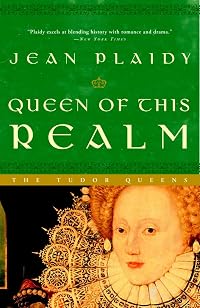
Fiction. Literature. Historical Fiction. HTML:In this "memoir" by Elizabeth I, legendary historical novelist Jean Plaidy reveals the Virgin Queen as she truly was: the bewildered, motherless child of an all-powerful father; a captive in the Tower of London; a shrewd politician; a lover of the arts; and eventually, an icon of an era. It is the story of her improbable rise to power and the great triumphs of her reign—the end of religious bloodshed, the settling of the New World, the defeat show more of the Spanish Armada. Brilliantly clever, a scholar with a ready wit, she was also vain, bold, and unpredictable, a queen who commanded—and won—absolute loyalty from those around her.But in these pages, in her own voice, Elizabeth also recounts the emotional turmoil of her life: the loneliness of power; the heartbreak of her lifelong love affair with Robert Dudley, whom she could never marry; and the terrible guilt of ordering the execution of her cousin, Mary, Queen of Scots. In this unforgettable novel, Elizabeth emerges... show less
Tags
Recommendations








Member Reviews
Elizabeth I of England is such a mighty figure. She is brilliant, witty, vain, flirtatious, manipulative, astute, determined, and even romantic. Jean Plaidy captures all of these facets of the great monarch in such convincing detail. Elizabeth Tudor leaps off the page in all her glory and complexity. I couldn't put the book down.
We follow Elizabeth from the beginning, but thankfully, Plaidy skips over most of her younger years with all of her father's wives. Elizabeth would've been too young to be an interesting narrator, but she is clearly an observant girl from the beginning. She is always presented as vivacious and precocious, and this sometimes gets her into trouble, particularly with Thomas Seymour and even with her sister Mary's show more Catholic ministers. However, she learns her lessons well and manages to keep both her reputation and head intact by the time she ascends the throne in 1558.
Jean Plaidy covers a lot of ground in this novel, some events in more detail than others, and many historical legends appear. She dangles marriage over the heads of the various European powers. In some ways, she is very similar to her mother, Anne Boleyn, in that she excels at leading the chase without ever being caught. There's mention of the atrocities in Ireland, her correspondence w/ Catherine de Medici, the privateering of Spanish ships, exploration in the Americas and the founding of Virginia, the great battle against the Spanish Armada, the failed campaign in the Netherlands, the Rising of Essex, and throughout all of this, she cultivates and maintains the love of her subjects. Personally, I long for the day when a novel about Elizabeth includes a scene where she meets the famed Pirate Queen, Grace O'Malley, but that omission didn't dampen my enjoyment of this telling of the queen's life. It was pure joy to read about such an accomplished monarch. She truly was a genius at statecraft and absolutely fearless. I constantly marveled at her.
Various famous faces cross the stage: William Cecil, Sir Walsingham, Robert Dudley, Robert Deveraux, Sir Francis Drake, Sir Walter Raleigh, William Shakespeare (briefly), Mary Queen of Scots, Lettice Knollys, and many others. There weren't as many famous women crossing her path. Bess of Hardwick is barely mentioned when we know they were great friends, while those who get page time do so because they are rivals to Robert Dudley's affections. Most of the book is about Elizabeth's relationship with Robert, as Plaidy really likes to center her heroines around romantic male figures. However, I think this was actually well-balanced because Elizabeth consistently demonstrated how she navigated both her desire for Robert and her desire for the crown. Plaidy illustrated the tough choices she had to make and the petty ways Elizabeth tried to give herself some normal pleasure.
Plaidy also downplays Elizabeth's faults, especially her physical ones. We know that Elizabeth was indeed marked by smallpox, but Plaidy assures us throughout the novel that Elizabeth's skin was flawless. In addition, Plaidy says only a couple of teeth were pulled when we know that she actually had pretty bad teeth and could be unintelligible at times; although her loss of hair and use of wigs is often mentioned. Elizabeth seems to be fully self-aware and recognizes her faults, what she calls her "frivolous nature", but it is nevertheless hard to read about how she is almost completely taken in by the Earl of Essex, almost to the detriment of the whole country. In the end, reason and wisdom win out, and Essex is justly punished.
To be royal is to be lonely, and this is often a central pillar of Plaidy's novels. Elizabeth is perhaps one of the loneliest monarchs, but this is done to preserve her power. It is astounding, but it is also sad. One can't help but pity how Elizabeth copes in the life she chose and the pain she inflicts on both others and herself as she made the necessary choices to keep the throne over everything else. Elizabeth is complex, and this story is told "in her own" words, but it is absolutely a worthwhile read. show less
We follow Elizabeth from the beginning, but thankfully, Plaidy skips over most of her younger years with all of her father's wives. Elizabeth would've been too young to be an interesting narrator, but she is clearly an observant girl from the beginning. She is always presented as vivacious and precocious, and this sometimes gets her into trouble, particularly with Thomas Seymour and even with her sister Mary's show more Catholic ministers. However, she learns her lessons well and manages to keep both her reputation and head intact by the time she ascends the throne in 1558.
Jean Plaidy covers a lot of ground in this novel, some events in more detail than others, and many historical legends appear. She dangles marriage over the heads of the various European powers. In some ways, she is very similar to her mother, Anne Boleyn, in that she excels at leading the chase without ever being caught. There's mention of the atrocities in Ireland, her correspondence w/ Catherine de Medici, the privateering of Spanish ships, exploration in the Americas and the founding of Virginia, the great battle against the Spanish Armada, the failed campaign in the Netherlands, the Rising of Essex, and throughout all of this, she cultivates and maintains the love of her subjects. Personally, I long for the day when a novel about Elizabeth includes a scene where she meets the famed Pirate Queen, Grace O'Malley, but that omission didn't dampen my enjoyment of this telling of the queen's life. It was pure joy to read about such an accomplished monarch. She truly was a genius at statecraft and absolutely fearless. I constantly marveled at her.
Various famous faces cross the stage: William Cecil, Sir Walsingham, Robert Dudley, Robert Deveraux, Sir Francis Drake, Sir Walter Raleigh, William Shakespeare (briefly), Mary Queen of Scots, Lettice Knollys, and many others. There weren't as many famous women crossing her path. Bess of Hardwick is barely mentioned when we know they were great friends, while those who get page time do so because they are rivals to Robert Dudley's affections. Most of the book is about Elizabeth's relationship with Robert, as Plaidy really likes to center her heroines around romantic male figures. However, I think this was actually well-balanced because Elizabeth consistently demonstrated how she navigated both her desire for Robert and her desire for the crown. Plaidy illustrated the tough choices she had to make and the petty ways Elizabeth tried to give herself some normal pleasure.
Plaidy also downplays Elizabeth's faults, especially her physical ones. We know that Elizabeth was indeed marked by smallpox, but Plaidy assures us throughout the novel that Elizabeth's skin was flawless. In addition, Plaidy says only a couple of teeth were pulled when we know that she actually had pretty bad teeth and could be unintelligible at times; although her loss of hair and use of wigs is often mentioned. Elizabeth seems to be fully self-aware and recognizes her faults, what she calls her "frivolous nature", but it is nevertheless hard to read about how she is almost completely taken in by the Earl of Essex, almost to the detriment of the whole country. In the end, reason and wisdom win out, and Essex is justly punished.
To be royal is to be lonely, and this is often a central pillar of Plaidy's novels. Elizabeth is perhaps one of the loneliest monarchs, but this is done to preserve her power. It is astounding, but it is also sad. One can't help but pity how Elizabeth copes in the life she chose and the pain she inflicts on both others and herself as she made the necessary choices to keep the throne over everything else. Elizabeth is complex, and this story is told "in her own" words, but it is absolutely a worthwhile read. show less
The Queens of England series is Jean Plaidy's retelling of novels she's already written. The difference being the earlier novels are in the third person; TQOE books are in first person. The books are not sequels to one another; they're stand-alone novels.
“Queen of this Realm” is about Elizabeth I. Like the other books in the series, this one features many events that the narrator has no direct involvement in, so the story has many dry second-hand reports. This, to me, makes the point of rewriting a third-person narrative as a first-person one pointless.
Statements like, “Although I was far from the centre of events, I had my own informants”, are common. Sometimes such are events are relevant to Elizabeth’s story, but in most show more cases the info is relayed as dry facts, rather than the author finding a way to liven up the narrative. Yet, on other occasions, events have little or no relevance to Elizabeth’s life, so not only does this result in dry facts, it results in irrelevant dry facts.
It’s one of the author’s traits to include as much history as possible in all her novels, which always proves detrimental. We don’t need extensive second-hand accounts of other historical personages just for the sake of it. Take this segment about Katherine Parr, for example:
“It was enough, and by ill fortune the scheming Gardiner was present. According to Katharine he hurried to commiserate with the King, and the others in the chamber fell silent for a terrible dread had fallen on them. When a man has disposed of two of his wives by decapitating them, uneasy thoughts must quickly enter the heads of others. They would wonder how long that necessary part of the body would be with them.”
If the above quote was dramatized, featuring action, dialogue, body language, suspense, etc., it would’ve been highly engaging, but as this is a first-person narrative, it can’t be done, so it should either have been condensed and presented in a less dry way, or better still cut. The focus should’ve been on Elizabeth and her first-hand experiences. If gaps are evident in parts of her history, then what better opportunity for an author to let loose their imagination?
While I consider Mary, Queen of Scots, to have led a more exciting life than Elizabeth I, I skipped many paragraphs relating to her in this book. Elizabeth and Mary never met, though their lives were intertwined. Yet, one long-winded paragraph after another providing dry historical facts about Mary’s life have no place in a first-person narrative of someone who’s never been in the same room as her. 90 per cent or more of this material should’ve been cut.
As the following quote reveals, at times the narrator is recounting facts that someone tells her after they heard news from somebody else: “Soon I heard the whole story from Kat. She had managed to prize it from Edward, the messenger.” I wish the author had concentrated on storylines that Elizabeth was directly involved in, along with creating her own scenes where history has left no record.
This “telling” instead of “showing” is apparent throughout the book, much of which would’ve fit better in a textbook, rather than a novel. Odd lines, like, “Robert was clearly uneasy,” is blatant telling. Why not *show* his uneasiness?
Reported speech is a particularly annoying way of telling instead of showing with dialogue and action: “I thanked her for her concern and said that I was as well as I could hope to be after my sojourn in the Tower.”
Language is at times inconsistent. It’s mainly contemporary, which I feel is how it should be, but on certain occasions it becomes archaic: “‘Thou art welcome,’ he replied. ‘I forgive thee. Thou art the minister of justice.’”
It’s usually in letters that the language becomes archaic. I presume it’s the author’s way of being authentic, but it’s ridiculous when most of the book features contemporary language. Things like this quote stick out like a sore thumb:
“Let Her Majesty understand how her singular kindness doth overcome my power to acquit it, who, though she will not be a mother, yet she sheweth herself, by feeding me with her own princely hand, as a careful norice.”
And I’ve no clue what “norice” means.
Continuity error: at one point Elizabeth is described as 66, then a few paragraphs later as 65.
Speaking of age, this is another gripe I have: it’s hard to gauge the passage of time because the novel isn’t chapterized. We get breaks, but no chapters, which can be confusing and frustrating when, with no sense of time passing, we learn that Elizabeth is several years older than you think she is. Every so often, we learn what year it is, but otherwise days, weeks, months, and years blend together.
Also, by not chapterizing her novel, the author is missing a trick. Not only do chapters help to break up passages of time, they serve as mini-cliffhangers, or at least give the reader a moment to reflect on what’s just happened and what might happen next. Hitting “enter” twice and leaving a bit of space between sections doesn’t have the same effect as the end of a chapter and the start of the next.
Emotion: Elizabeth makes it clear over and over that she loves Robert of Essex, and she laments his death for years afterwards; however, the death of her governess Kat Ashley, whom she loved dearly as a child and during the early years of her reign, is referred to as if she were a causal acquaintance. She’s only mentioned once after that, much later in the narrative, and she’s referred to indifferently. I find this inconsistent characterization.
The second Robert in Elizabeth’s life is a much more interesting character than the first one. He livens things up quite a bit, though the author’s dry style of writing means it’s not nearly as good as it should’ve been. Still, this did engage my interest for the most part, as did certain parts here and there, which is why I’ve rated this novel three stars, not one or two, but overall, this is a missed opportunity.
Something about Jean Plaidy’s books keep me coming back for more. Perhaps it’s her obvious love for English and French history, which I share, that draws me back. I wish she’d focused less on turning out as greater quantity of novels as possible and concentrated more on quality writing. A novel like this one should be revised about 20 times, yet this at best feels like a second draft. This was poorly put together. Endless second-hand reports, most of which have no relevance to Elizabeth I, spoil what could've been a great novel. show less
“Queen of this Realm” is about Elizabeth I. Like the other books in the series, this one features many events that the narrator has no direct involvement in, so the story has many dry second-hand reports. This, to me, makes the point of rewriting a third-person narrative as a first-person one pointless.
Statements like, “Although I was far from the centre of events, I had my own informants”, are common. Sometimes such are events are relevant to Elizabeth’s story, but in most show more cases the info is relayed as dry facts, rather than the author finding a way to liven up the narrative. Yet, on other occasions, events have little or no relevance to Elizabeth’s life, so not only does this result in dry facts, it results in irrelevant dry facts.
It’s one of the author’s traits to include as much history as possible in all her novels, which always proves detrimental. We don’t need extensive second-hand accounts of other historical personages just for the sake of it. Take this segment about Katherine Parr, for example:
“It was enough, and by ill fortune the scheming Gardiner was present. According to Katharine he hurried to commiserate with the King, and the others in the chamber fell silent for a terrible dread had fallen on them. When a man has disposed of two of his wives by decapitating them, uneasy thoughts must quickly enter the heads of others. They would wonder how long that necessary part of the body would be with them.”
If the above quote was dramatized, featuring action, dialogue, body language, suspense, etc., it would’ve been highly engaging, but as this is a first-person narrative, it can’t be done, so it should either have been condensed and presented in a less dry way, or better still cut. The focus should’ve been on Elizabeth and her first-hand experiences. If gaps are evident in parts of her history, then what better opportunity for an author to let loose their imagination?
While I consider Mary, Queen of Scots, to have led a more exciting life than Elizabeth I, I skipped many paragraphs relating to her in this book. Elizabeth and Mary never met, though their lives were intertwined. Yet, one long-winded paragraph after another providing dry historical facts about Mary’s life have no place in a first-person narrative of someone who’s never been in the same room as her. 90 per cent or more of this material should’ve been cut.
As the following quote reveals, at times the narrator is recounting facts that someone tells her after they heard news from somebody else: “Soon I heard the whole story from Kat. She had managed to prize it from Edward, the messenger.” I wish the author had concentrated on storylines that Elizabeth was directly involved in, along with creating her own scenes where history has left no record.
This “telling” instead of “showing” is apparent throughout the book, much of which would’ve fit better in a textbook, rather than a novel. Odd lines, like, “Robert was clearly uneasy,” is blatant telling. Why not *show* his uneasiness?
Reported speech is a particularly annoying way of telling instead of showing with dialogue and action: “I thanked her for her concern and said that I was as well as I could hope to be after my sojourn in the Tower.”
Language is at times inconsistent. It’s mainly contemporary, which I feel is how it should be, but on certain occasions it becomes archaic: “‘Thou art welcome,’ he replied. ‘I forgive thee. Thou art the minister of justice.’”
It’s usually in letters that the language becomes archaic. I presume it’s the author’s way of being authentic, but it’s ridiculous when most of the book features contemporary language. Things like this quote stick out like a sore thumb:
“Let Her Majesty understand how her singular kindness doth overcome my power to acquit it, who, though she will not be a mother, yet she sheweth herself, by feeding me with her own princely hand, as a careful norice.”
And I’ve no clue what “norice” means.
Continuity error: at one point Elizabeth is described as 66, then a few paragraphs later as 65.
Speaking of age, this is another gripe I have: it’s hard to gauge the passage of time because the novel isn’t chapterized. We get breaks, but no chapters, which can be confusing and frustrating when, with no sense of time passing, we learn that Elizabeth is several years older than you think she is. Every so often, we learn what year it is, but otherwise days, weeks, months, and years blend together.
Also, by not chapterizing her novel, the author is missing a trick. Not only do chapters help to break up passages of time, they serve as mini-cliffhangers, or at least give the reader a moment to reflect on what’s just happened and what might happen next. Hitting “enter” twice and leaving a bit of space between sections doesn’t have the same effect as the end of a chapter and the start of the next.
Emotion: Elizabeth makes it clear over and over that she loves Robert of Essex, and she laments his death for years afterwards; however, the death of her governess Kat Ashley, whom she loved dearly as a child and during the early years of her reign, is referred to as if she were a causal acquaintance. She’s only mentioned once after that, much later in the narrative, and she’s referred to indifferently. I find this inconsistent characterization.
The second Robert in Elizabeth’s life is a much more interesting character than the first one. He livens things up quite a bit, though the author’s dry style of writing means it’s not nearly as good as it should’ve been. Still, this did engage my interest for the most part, as did certain parts here and there, which is why I’ve rated this novel three stars, not one or two, but overall, this is a missed opportunity.
Something about Jean Plaidy’s books keep me coming back for more. Perhaps it’s her obvious love for English and French history, which I share, that draws me back. I wish she’d focused less on turning out as greater quantity of novels as possible and concentrated more on quality writing. A novel like this one should be revised about 20 times, yet this at best feels like a second draft. This was poorly put together. Endless second-hand reports, most of which have no relevance to Elizabeth I, spoil what could've been a great novel. show less
Sigh. Didn’t age well. I enjoyed. It, but I did not like Plaidy’s Elizabeth….too much slapping (Kat! Before she was Queen!). But I still have a pile of Plaidys I found at a used bookstore and this in no way turned me off of them!
3.75 stars.
This one is about Elizabeth I.
This is only the second Plaidy I’ve read, but it seems that they are very detailed. Which is very interesting, but at times I found it a little long (which is why I didn't give it the full 4 stars). Sometimes it’s hard to think that the book is fiction. Obviously, with the dialogue and such, it is, but I’m thinking that most of what she describes actually did happen, and Plaidy doesn’t seem to play up the rumours. They are mentioned, but in the book, they are just rumours.
This one is about Elizabeth I.
This is only the second Plaidy I’ve read, but it seems that they are very detailed. Which is very interesting, but at times I found it a little long (which is why I didn't give it the full 4 stars). Sometimes it’s hard to think that the book is fiction. Obviously, with the dialogue and such, it is, but I’m thinking that most of what she describes actually did happen, and Plaidy doesn’t seem to play up the rumours. They are mentioned, but in the book, they are just rumours.
The best word I can think to describe this book is tedious. Elizabeth I is a very interesting person and her life story should not have been all about her relationship with men. I found no strength of character and she appeared to be a ding-bat teen in her emotional relationships up until her death. Elizabeth speaks of her beloved Robert endlessly. Which might be ok except she says the same thing page after page..."I could almost marry him today...but I can't". And she also goes on and on about how she surrounds herself with handsome men at court who are all in love with her and who must show her that love and pretty much court her forever because she can't ever marry, but she wants to be loved. You get the picture? Where was all the show more interesting spy stuff? Mary Queen of Scotland? Oh she was there, but in the same way as Elizabeth spoke of the men. She should kill her, but not today because she really doesn't want to be remembered for killing another Queen. The first person voice used to tell this tale was the wrong fit. show less
I definitely enjoyed reading this story. I know that someone less patient than I would have much trouble with the monotony of the novel. Elizabeth the I, while a fascinating historical character, becomes quite tedious throughout the book, especially as she really shows no change throughout the 400+ changes. At times the book dragged and the story became old. The constant repetition of various ideas and feelings often became frustrating. The entire book would do well to see the business end of the delete key.
Despite this I enjoyed the novel. I don't know that I would recommend it to anyone. Perhaps because I don't know anyone who would be interested in such a book.
Despite this I enjoyed the novel. I don't know that I would recommend it to anyone. Perhaps because I don't know anyone who would be interested in such a book.
I really like this historical fiction novel by Jean Plaidy. This is the second volume in Jean Plaidy's "Queens of England" series of books and it is written as a first person narrative, which makes this book highly readable. It makes Elizabeth I more relatable and more personable to the reader. The author takes the reader through Elizabeth's early years and her early and tumultous reign to the end. This is a great book for anyone interested in the period and likes historical-fiction.
Members
- Recently Added By
Lists

Books Read in 2017
4,249 works; 129 members
Author Information

253+ Works 37,323 Members
Jean Plaidy was a British writer who wrote under various pen names. Her real name is Eleanor Alice Burford Hibbert. She was born in London on September 1, 1906. Most of the books written as Jean Plaidy are historical romances based on English history featuring historical figures. The first, Beyond the Blue Mountains, was published in 1947. Hibbert show more also wrote five nonfiction histories and two children's books. Besides Jean Plaidy, Hibbert wrote under Victoria Holt, Phillipa Carr, Elbur Ford, Kathleen Kellow, Ellalice Tate, and her maiden name, Eleanor Burford. Hibbert died on January 18, 1993. (Bowker Author Biography) show less
Series

Common Knowledge
- Original publication date
- 1984
- People/Characters
- Elizabeth I, Queen of England; Katherine Ashley; Henry Carey, 1st Baron Hunsdon; William Cecil, 1st Baron Burghley; Robert Devereux, 2nd Earl of Essex; Sir Francis Drake (show all 23); Lady Mary Dudley (Lady Mary Sidney, Lady Mary Sidney Dudley); Robert Dudley, 1st Earl of Leicester; Edward VI, King of England; Isabella Harington; Sir Christopher Hatton; Henry VIII, King of England; Henry Howard, Earl of Surrey; Katherine Howard; Thomas Howard, 4th Duke of Norfolk; Lettice Knollys; Mary I, Queen of England; Mary, Queen of Scots; Katherine Parr; Sir Walter Raleigh; Lady Jane Seymour (cousin to the queen of that name); Edward de Vere, 17th Earl of Oxford; Sir Francis Walsingham
- First words
- When I look back over the first twenty-five years of my life and consider the number of times I was in danger of losing it, I believe - as I have since that wonderful day when I rode into my capital city in a riding dress of ... (show all)purple velvet, beside me my Master of Horse, Robert Dudley, the most handsome man in England, and listened to the guns of the Tower greeting me, and saw the flowers strewn in my path- yes, I fervently believe that my destiny was to be a great queen.
- Last words
- (Click to show. Warning: May contain spoilers.)I wonder if I shall die on the festival of the annunciation. It would be appropriate for the Virgin Queen. Now I lay down my pen, for the end is coming very near.
Classifications
Statistics
- Members
- 463
- Popularity
- 66,156
- Reviews
- 10
- Rating
- (3.56)
- Languages
- English
- Media
- Paper, Audiobook, Ebook
- ISBNs
- 12
- ASINs
- 5