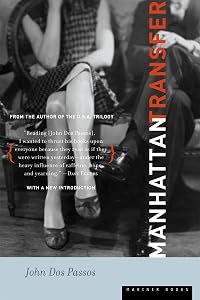
Manhattan Transfer
by John Dos Passos
On This Page
Description
Considered by many to be John Dos Passos's greatest work, Manhattan Transfer is an "expressionistic picture of New York" (New York Times) in the 1920s that reveals the lives of wealthy power brokers and struggling immigrants alike..
Tags
Recommendations
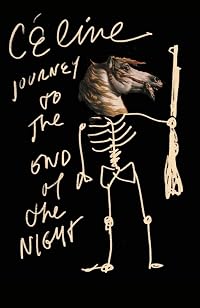
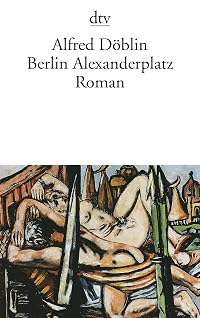

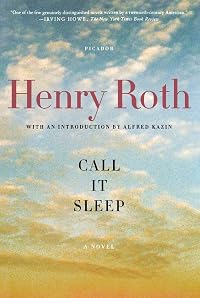

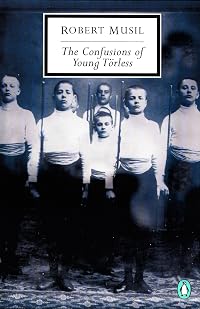
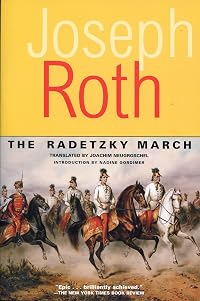
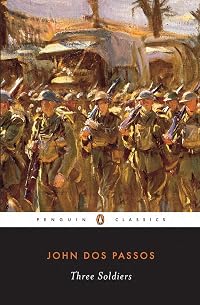


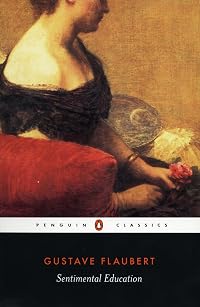
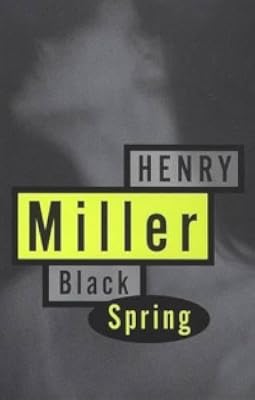
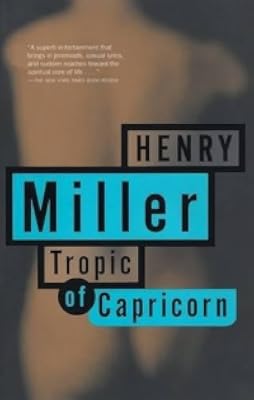

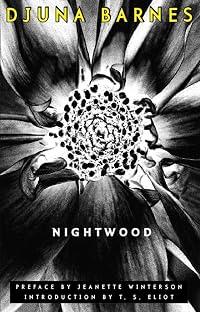
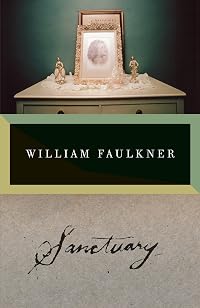
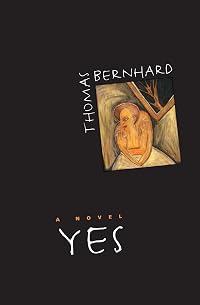
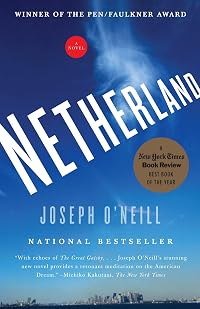
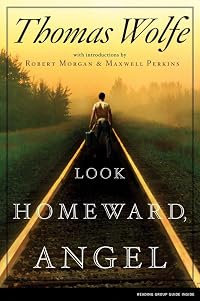
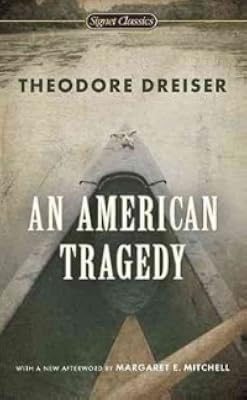
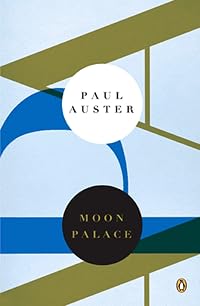




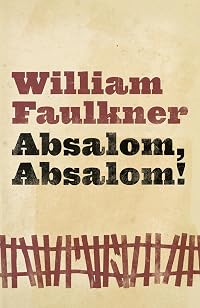
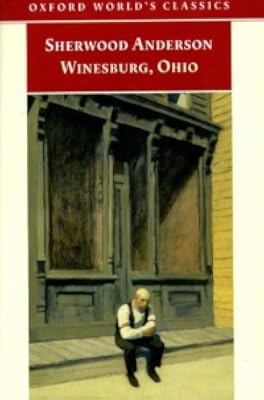
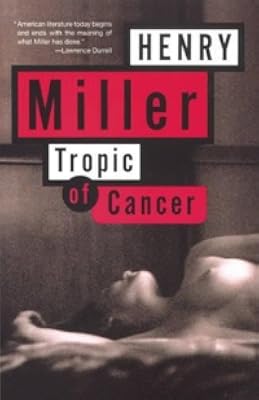


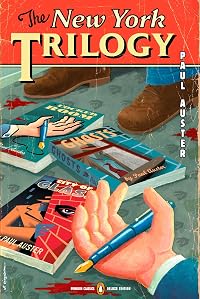
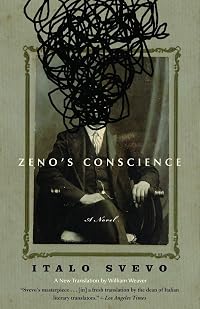
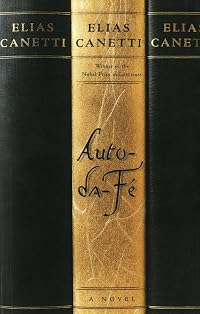
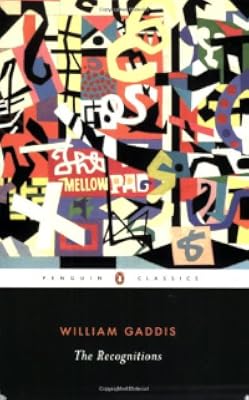
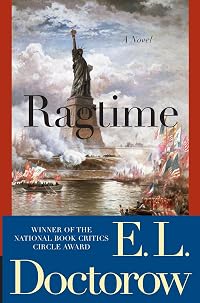
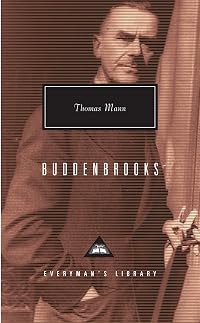

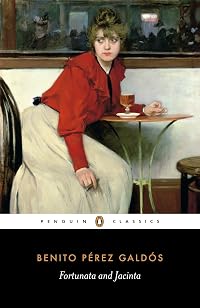


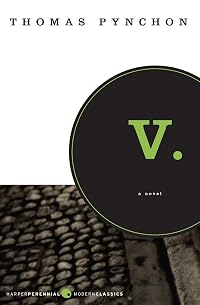
Member Recommendations
lucybrown Both deal with the quest to be part of the American Dream. Both deal with corruption and innocence. And both have a unique rhythm and lyricism which captures well the time and place.
20
Member Reviews
The ferry-slip. A ferry, and a newborn baby. A young man comes to the metropolis and the story begins. It is a story of that metropolis: "The world's second metropolis." But it is really the latest in a line that extends backward in time to "Nineveh . . Athens . . . Rome . . . Constantinople . ." and others since.
John Dos Passos presents stories of some of the people who call this metropolis, Manhattan, home near the beginning of the twentieth century. The novel is about New Yorkers and their stories -- numerous characters whose commonality is only their status as New Yorkers brought them together, impersonally and randomly. He does so with an engaging style that encompasses the sights, sounds, feelings, and excitement encountered by show more those who peopled this island metropolis. Each chapter begins with passages comprising observations of city life, newspaper headlines, bits and pieces of dialogue, and phrases from advertisements. All these passages emphasize that "Manhattan Transfer" is a collective novel about the city of New York, about its shallowness, immorality, and grinds of the urban life. The characters' lives only depict some of them.
There are the dreams of new parents whose daughter, Ellen, is born at the opening of the novel. Her life and career will be one of two that span the course of the novel. But there are also young lovers, young men, down-and-outers, immigrants, swells, and others on the make with little but their dreams to keep them going. Some stories are about dreams shattered or those whose lives are stillborn,limited by poverty or lack of vision. The angry rebels are present as well -- those found on the street corner protesting for better treatment, better pay, or mimicking the ideas of radicals and anarchists of the day.
Among the many stories some stand out. One of the most successful inhabitants of Dos Passos's Manhattan is Congo Jake starts out as a peglegged sailor and ends up as a wealthy New Yorker with a new name, Armand Duval, an attractive wife and more money than he knows what to do with. On the other extreme, we encounter Joe Harland, the Wizard of Wall Street, who makes a killing in the stock market and loses it all, but attributes his change of luck to the loss of a crocheted blue silk necktie that his mother had given him when he was a youngster. Then there is James Merivale who is born to wealth and a prosperous future and the family man Ed Thatcher with his wife and newborn daughter Ellen (mentioned above). There is also the other character whose story will span the novel, Jimmy Herf, whose path will cross that of Ellen. Jimmy Herf works with the "Times" in a job that he finds unfulfilling eventually leaving this job. Jimmy's search for his dream will form another arc that provides a link for all the stories bringing the reader ultimately back to the ferry with which the book began. This arc is not unfamiliar in the sense it is similar to the arc of young Nicholas Rostov in War and Peace and many other young men since.
Dos Passos' style is mesmerizing and fits perfectly with the story he tells. The characters form a mosaic that blends with the sights and sounds of Manhattan to create a world that is alive with all the possibilities, both successes and defeats, that humanity may experience. Upon its publication, Sinclair Lewis seemed to anticipate this development, praising Manhattan Transfer as "a novel of the very first importance" and predicting that it could represent "the foundation of a whole new school of novel-writing." While British novelist D. H. Lawrence wrote Manhattan Transfer is "the best modern book about New York" because it "becomes what life is, a stream of different things and different faces rushing along in the consciousness, with no apparent direction save that of time".
The historical references include discussion of the "bonus marchers" of veterans requesting their military bonuses, references to Sarajevo, and other events; all of which provide a background that provides context for these peoples' lives. I found this book an exciting read that gripped my attention and did not let it go. I would highly recommend this modern classic. show less
John Dos Passos presents stories of some of the people who call this metropolis, Manhattan, home near the beginning of the twentieth century. The novel is about New Yorkers and their stories -- numerous characters whose commonality is only their status as New Yorkers brought them together, impersonally and randomly. He does so with an engaging style that encompasses the sights, sounds, feelings, and excitement encountered by show more those who peopled this island metropolis. Each chapter begins with passages comprising observations of city life, newspaper headlines, bits and pieces of dialogue, and phrases from advertisements. All these passages emphasize that "Manhattan Transfer" is a collective novel about the city of New York, about its shallowness, immorality, and grinds of the urban life. The characters' lives only depict some of them.
There are the dreams of new parents whose daughter, Ellen, is born at the opening of the novel. Her life and career will be one of two that span the course of the novel. But there are also young lovers, young men, down-and-outers, immigrants, swells, and others on the make with little but their dreams to keep them going. Some stories are about dreams shattered or those whose lives are stillborn,limited by poverty or lack of vision. The angry rebels are present as well -- those found on the street corner protesting for better treatment, better pay, or mimicking the ideas of radicals and anarchists of the day.
Among the many stories some stand out. One of the most successful inhabitants of Dos Passos's Manhattan is Congo Jake starts out as a peglegged sailor and ends up as a wealthy New Yorker with a new name, Armand Duval, an attractive wife and more money than he knows what to do with. On the other extreme, we encounter Joe Harland, the Wizard of Wall Street, who makes a killing in the stock market and loses it all, but attributes his change of luck to the loss of a crocheted blue silk necktie that his mother had given him when he was a youngster. Then there is James Merivale who is born to wealth and a prosperous future and the family man Ed Thatcher with his wife and newborn daughter Ellen (mentioned above). There is also the other character whose story will span the novel, Jimmy Herf, whose path will cross that of Ellen. Jimmy Herf works with the "Times" in a job that he finds unfulfilling eventually leaving this job. Jimmy's search for his dream will form another arc that provides a link for all the stories bringing the reader ultimately back to the ferry with which the book began. This arc is not unfamiliar in the sense it is similar to the arc of young Nicholas Rostov in War and Peace and many other young men since.
Dos Passos' style is mesmerizing and fits perfectly with the story he tells. The characters form a mosaic that blends with the sights and sounds of Manhattan to create a world that is alive with all the possibilities, both successes and defeats, that humanity may experience. Upon its publication, Sinclair Lewis seemed to anticipate this development, praising Manhattan Transfer as "a novel of the very first importance" and predicting that it could represent "the foundation of a whole new school of novel-writing." While British novelist D. H. Lawrence wrote Manhattan Transfer is "the best modern book about New York" because it "becomes what life is, a stream of different things and different faces rushing along in the consciousness, with no apparent direction save that of time".
The historical references include discussion of the "bonus marchers" of veterans requesting their military bonuses, references to Sarajevo, and other events; all of which provide a background that provides context for these peoples' lives. I found this book an exciting read that gripped my attention and did not let it go. I would highly recommend this modern classic. show less
Ho desiderato tanto leggere questo libro. Una voce nuova e diversa dalla generazione perduta. Una voce dall'America della generazione perduta. E in parte ne ho ricavato soddisfazione, perché Dos Passos è un mirabile cantore di una metropolitanità folle, fatta di un sottobosco di piccoli imbroglioni, ubriachi, attricette più o meno troie, gente che tira a campare e affaristi che vanno dalle stalle alle stelle e viceversa in un battito di ciglia. Solo in parte, perché, nonostante quella in mio possesso sia una traduzione celebratissima, non riesce a convincermi. Non riesco a capire se il linguaggio immaginifico sia quello dell'autore o una somma di svarioni; come il vestito di Helene, che è descritto come color fiammingo e invece show more molto probabilmente è color fenicottero.
Pazienza, un altro libro da mettere in elenco per quando avrò tempo di leggere in lingua originale. show less
Pazienza, un altro libro da mettere in elenco per quando avrò tempo di leggere in lingua originale. show less
Dos Passos is an American writer I'm coming to appreciate more and more. This book originally published in 1925--is very experimental in nature following a variety of threads occuring often simultaneously and which more often than not resemble an impressionistic and cinematic style reliant on newspaper headlines and tin pan alley popular musical lyrics to fill the gaps between scenes and/or to flesh the scenes out. Dos Passos has a very good eye for detail and is very keen on showing the gap between the rich and the poor--those who are defeated far outweighing in numbers the success stories. The two main characters of Jimmy Herf--an orphan brought up in well to do circumstances by his mothers' wealthy family who somewhat to their show more chagrin rejects the opportunity to join the family business--and becomes a newspaper man instead and Elaine Thatcher an aspiring actress on Broadway being chased by a whole host of would be suitors--and both of whom over the course of events eventually hook up to raise the child of the man Elaine really loved--who had accidentally killed himself. There are however no real happy endings here. The marraige is doomed from the start and as the book ends the penniless Mr. Herf is to be seen hitchhiking out of New York out to what one would hope to be a new and better horizon.
Anyway liked it very much. show less
Anyway liked it very much. show less
Manhattan Transfer is a portrait of New York City made of words. We are introduced to a dozen or so characters whose lives become more and more intertwined as time goes on. The action takes place immediately before, during, and after World War I.
The first third of this book was stunning. Dos Passos's descriptions of the city are so rich and vivid that I wanted to savor each one before moving on to the next. The pictures he paints aren't pretty at all; in fact, they're extremely harsh, but that was what life was like in the squalid tenements of the city at the turn of the century. As the novel progressed, however, and more and more characters whose storylines had been separate started interacting with each other, I started having trouble show more remembering who was who. I like the technique of bringing everyone together, but there needed to be fewer characters for it to work for me. Also, the negativity and harshness of everyone's lives got harder to take because there was nothing good that happened to anybody. By the last third of the book, although the descriptions were still poetic, I was tired of the harshness and unable to keep the characters straight, and I was glad to be done with it. This is a book that really needs to be read slowly and patiently. show less
The first third of this book was stunning. Dos Passos's descriptions of the city are so rich and vivid that I wanted to savor each one before moving on to the next. The pictures he paints aren't pretty at all; in fact, they're extremely harsh, but that was what life was like in the squalid tenements of the city at the turn of the century. As the novel progressed, however, and more and more characters whose storylines had been separate started interacting with each other, I started having trouble show more remembering who was who. I like the technique of bringing everyone together, but there needed to be fewer characters for it to work for me. Also, the negativity and harshness of everyone's lives got harder to take because there was nothing good that happened to anybody. By the last third of the book, although the descriptions were still poetic, I was tired of the harshness and unable to keep the characters straight, and I was glad to be done with it. This is a book that really needs to be read slowly and patiently. show less
I got less from this book than I expercted. There are many critical reviews due to the numerous characters and the bare development of many of them. I was interested to learn about New York City and the liberal views of many. The difficulties experienced by so many saddened me. I also noticed that Jews had an especially difficult time and many of the worse characters had Jewsih names. I don't know the history to know if that was based on fact. I did care about many of the characters. This occurred mainly in the late 1800's to the beginning of World War II.
This is a dense read, but well worth the time. Dos Passos' language and metaphors are brilliant, and his characters as entertaining as they are realistic. It's a book that you need to spend time with because, fair warning, there are dozens of characters to keep track of, but the atmosphere of early twentieth century New York is flawlessly portrayed, and the book as a whole is a masterpiece of careful portrayal and interpretation. This is a book that bears up under reading and rereading, and it's worth the time to explore. It's not an easy read, but I highly recommend it when you have the time to fully escape into a piece of literature for a few days.
This book is almost as challenging to read as it is to review, because it innovatively eschews so many of what we would consider to be standard literary conventions and still manages, at times, to be a compelling read.
The novel opens on a ferry boat and quickly introduces two key elements: short segments featuring one or two major characters that comprise the chapters of the book, and a HUGE and diverse cast of characters that populate this slice of city life. With such an expansive project, much of the early going of the novel is merely keeping all the characters and their situations straight, with every few pages switching gears to explore a completely new scenario. It's disorienting, and probably intentionally so, in that it show more highlights through its style one of the problems of modernity.
Unfortunately, not all of these tales are particularly engrossing, and while some of them evolve throughout the novel, others appear in a blink and vanish. The evolution of Jimmy Herf, for instance, who grows up during the course of the novel, becomes more and more intriguing as he piles up successes and failures and comes to terms with his mother's death when he was a child. "Congo Jake," on the other hand, never really becomes more than a stereotype, and so we don't truly celebrate when his proverbial ship comes in late in the text.
But again, perhaps this is all part of the game: to mirror real life through the ways in which we keep up with and lose sight of people we perhaps wish we hadn't. To that end, the novel succeeds, but the lack of trajectory or clear resolution of many of these stories (or stories-in-progress) makes for a very unconventional work but also one that doesn't necessarily seem to be gesturing towards anything specific.
A good read for the patient and the attentive. show less
The novel opens on a ferry boat and quickly introduces two key elements: short segments featuring one or two major characters that comprise the chapters of the book, and a HUGE and diverse cast of characters that populate this slice of city life. With such an expansive project, much of the early going of the novel is merely keeping all the characters and their situations straight, with every few pages switching gears to explore a completely new scenario. It's disorienting, and probably intentionally so, in that it show more highlights through its style one of the problems of modernity.
Unfortunately, not all of these tales are particularly engrossing, and while some of them evolve throughout the novel, others appear in a blink and vanish. The evolution of Jimmy Herf, for instance, who grows up during the course of the novel, becomes more and more intriguing as he piles up successes and failures and comes to terms with his mother's death when he was a child. "Congo Jake," on the other hand, never really becomes more than a stereotype, and so we don't truly celebrate when his proverbial ship comes in late in the text.
But again, perhaps this is all part of the game: to mirror real life through the ways in which we keep up with and lose sight of people we perhaps wish we hadn't. To that end, the novel succeeds, but the lack of trajectory or clear resolution of many of these stories (or stories-in-progress) makes for a very unconventional work but also one that doesn't necessarily seem to be gesturing towards anything specific.
A good read for the patient and the attentive. show less
Members
- Recently Added By
Published Reviews
ThingScore 75
To me, Manhattan Transfer is the best modern book about New York that I have read. It is an endless series of glimpses of people in the vast scuffle of Manhattan Island, as they turn up again and again and again, in a confusion that has no obvious rhythm, but wherein at last we recognize the systole-diastole of success and failure, the end being all failure, from the point of view of life; and show more then another flight towards another nowhere...
The scenes whirl past like snowflakes. Broadway at night — whizz! gone! — a quick-lunch counter! gone! — a house on Riverside Drive, the Palisades, night — gone! But, gradually, you get to know the faces. It is like a movie picture with an intricacy of different stories and no close-ups and no writing in between. Mr. Dos Passos leaves out the writing in between. show less
The scenes whirl past like snowflakes. Broadway at night — whizz! gone! — a quick-lunch counter! gone! — a house on Riverside Drive, the Palisades, night — gone! But, gradually, you get to know the faces. It is like a movie picture with an intricacy of different stories and no close-ups and no writing in between. Mr. Dos Passos leaves out the writing in between. show less
added by SnootyBaronet
Lists

Le Monde - Les 100 livres du siècle
121 works; 25 members

1001 Books You Must Read Before You Die
1,448 works; 1,134 members
Novels from The Guardian's Great American Novelist Tournament
148 works; 24 members

Stream of Consciousness
87 works; 8 members

Recommend the 20 best books you've read in the last five years
2,168 works; 606 members
Canon de la narrativa universal del siglo XX
254 works; 6 members
Books Set in New York City
127 works; 21 members
The American Experience
173 works; 18 members

Experimental Literature
141 works; 19 members
1920s
141 works; 6 members
American Lit for Eng 11 Research Project
368 works; 6 members

Books Read in 2024
4,727 works; 128 members

Books We Love to Reread
688 works; 296 members
Canon de la narrativa universal del s. XX (cicutadry)
499 works; 3 members

Novels with a city or town in the title
61 works; 1 member
Author Information

116+ Works 11,658 Members
John Dos Passos, 1896 - 1970 John Passos was born January 14,1896 to John Randolph Dos Passos and Lucy Addison Sprigg Madison. He attended Harvard University from 1912-1916. He was in the ambulance service units in France and Italy and in 1918, enlisted in the U.S. Army Medical Corps. From 1926-29, he directed New Playwrights' Theatre in New York show more City. In 1929, Passos married Katharine Smith and in 1947, they were in an automobile accident that killed his wife and left him blind in one eye. He married Elizabeth Holdridge in 1949 and a year later, Lucy Hamlin Dos Passos was born. Passos' many novels include "One Man's Initiation" (1917), "Three Soldiers" (1921), which has met with wide acclaim, "Streets of Night" (1923), "Facing the Chair" (1927), which defends the immigrants Sacco and Vanzetti, "Orient Express" (1927), "The Ground We Stand On" (1949), and "Prospects of a Golden Age" (1959). He received the Gold Medal for fiction from the National Institute of Arts and Letters in 1957, the Feltrinelli Prize for Fiction in 1967 and was elected to the American Academy of Arts and Letters in 1947. On September 28, 1970, Passos died of heart failure in Baltimore, Maryland. (Bowker Author Biography) show less
Some Editions
Awards and Honors
Series
Belongs to Publisher Series
Work Relationships
Is contained in
Has as a reference guide/companion
Common Knowledge
- Canonical title*
- Manhattan Transfer
- Original title
- Manhattan Transfer
- Original publication date
- 1927
- People/Characters
- Bud Korpenning; Ed Thatcher; Susie Thatcher; Ellie Thatcher; Marcus Antonius Zucher; Mr. Perry (show all 15); Emile; Congo; Slats; Fifi Waters; Billy Olafson; Bertha Olafson; Gus McNeil; Nellie McNeil; George Baldwin
- Important places
- New York, New York, USA
- First words
- Three gulls wheel above the broken boxes, orangerinds, spoiled cabbage heads that heave between the splintered plank walls, the green waves spume under the round bow as the ferry, skidding on the tide, crashes, gulps the brok... (show all)en water, slides, settles slowly into the slip.
- Quotations
- Let's have another rye Charley. That's the stuff to make a man of you. I been laying off it too much, that's what's the matter with me. You wouldn't think it to look at me now, would you friend, but they used to call me the W... (show all)izard of Wall Street which is another illustration of the peculiar predominance of luck in human affairs.
He lay on his back on top of the sheet. There came on the air through the window a sourness of garbage, a smell of burnt gasoline and traffic and dusty pavements, a huddled stuffiness of pigeonhole rooms where men and women's... (show all) bodies writhed alone tortured by the night and the young summer. He lay with seared eyeballs staring at the ceiling, his body glowed in a brittle shivering agony like redhot metal.
You understand them things Mr 'Erf. but a feller like you, good education, all 'at, you don't know what life is. When I was seventeen I come to New York... no good. I tink of notten but raising Cain. Den I shipped out again a... (show all)nd went everywhere to hell an gone. In Shangai I learned spik American an tend bar. I come back to Frisco an got married. Now I want to be American. But unlucky again see? Before I marry zat girl her and me lived togedder a year sweet as pie, but when we get married no good. She make fun of me and call me Frenchy because I no spik American good and den she kick no out of the house an I tell her go to hell. Funny thin a man's life. - Last words
- (Click to show. Warning: May contain spoilers.)"I dunno .... Pretty far."
- Blurbers
- O'Brien, Tim
- Original language
- English
*Some information comes from Common Knowledge in other languages. Click "Edit" for more information.
Classifications
Statistics
- Members
- 2,477
- Popularity
- 7,822
- Reviews
- 34
- Rating
- (3.80)
- Languages
- 15 — Catalan, Danish, Dutch, English, Estonian, Finnish, French, German, Hungarian, Italian, Lithuanian, Polish, Portuguese, Spanish, Turkish
- Media
- Paper, Audiobook, Ebook
- ISBNs
- 88
- UPCs
- 2
- ASINs
- 64