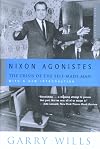
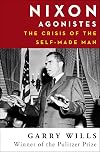
Nixon Agonistes: The Crisis of the Self-Made Man
by Garry Wills
On This Page
Description
With a new preface: A "stunning" analysis of the troubled Republican president by the Pulitzer Prize-winning author of Lincoln at Gettysburg (The New York Times Book Review). In this acclaimed biography that earned him a spot on Nixon's infamous "enemies list," Garry Wills takes a thoughtful, in-depth, and often "very amusing" look at the thirty-seventh US president, and draws some surprising conclusions about a man whose name has become synonymous with scandal and the abuse of power (Kirkus show more Reviews). Arguing that Nixon was a reflection of the country that elected him, Wills examines not only the psychology of the man himself and his relationships with others-from his wife, Pat, to his vice-president, Spiro Agnew-but also the state of the nation at the time, mired in the Vietnam War and experiencing a cultural rift that pitted the young against the old. Putting his findings into moral, economic, intellectual, and political contexts, he ultimately "paints a broad and provocative landscape of the nation's-and Nixon's-travails" (The New York Times). Simultaneously compassionate and critical, and raising interesting perspectives on the shifting definitions of terms like "conservative" and "liberal" over recent decades, Nixon Agonistes is a brilliant and indispensable book from one of America's most acclaimed historians. show lessTags
Recommendations


























Member Reviews
When Esquire magazine commissioned an article from Garry Wills about Richard Nixon and the New Hampshire primary—the opening salvo of the 1968 presidential election campaign— the assumption was that this would be a requiem for a has-been who had dictated his own political obituary to reporters six years earlier, at the close of his failed attempt to win the California governorship.
Yet less than one year later, when Nixon stood on the steps of the Capitol to take the oath of office, there was a sense of inevitability that he should become president at that fraught moment in U. S. history.
One of the points Wills stresses in Nixon Agonistes is that it’s a fallacy to believe that the lumbering, flawed American political process churns show more out, every four years, the best man (and it has always been a man so far). It would be more accurate, Wills maintains, to say that it serves up the most appropriate for a given moment. And this was never so true, in his view, as in 1968. As he writes in his Preface, “What is best and weakest in America goes out to reciprocating strengths and deficiencies in Richard Nixon.”
A second inevitability, in retrospect, is that one article assignment would lead to more, and these, in turn—given that Wills’s expertise extends to a deep-rooted knowledge of the origins of American political philosophy—would result in this book.
Nixon Agonistes stands out in the genre of books that report on political campaigns—a genre that blossomed in the wake of the success of T. H. White’s Making of the President 1960. Less than a third of its six hundred pages are devoted to that. And although Wills is an insightful, observant reporter, it is not this that gives this book its continued relevance.
Instead, the importance of this book lies in the interpretive framework Wills constructs for his deeper analysis. Much of what he writes in these chapters remains true of American society.
This framework views the American political experiment as a market, or rather an interplay of four markets—moral (personified by Ralph Waldo Emerson), economic (Adam Smith), intellectual (John Stuart Mill), and political (Woodrow Wilson). The underlying philosophy of these intersecting markets is, Wills writes, classic liberalism. For all the surface conflict between left and right in the American political spectrum, the debates are framed in terms that originate here, assumptions often unexamined.
Yet classic liberalism, which Wills explains as a combination of the political philosophy of John Locke and the economic views of Adam Smith, has broken into two branches, with those who continue to uphold Smith finding themselves on the right, where their strange bedfellows tend to authoritarian views, while students of Locke tend to cluster on the left. The last intellectual to fully unite both strands was John Stuart Mill. Even Woodrow Wilson was, in his time, an anachronism.
Yet it was Wilson who was Nixon’s model—something Nixon never hid and which Wills takes seriously. But if Wilson was already, in his time, a throwback to an earlier political philosophy, what does that make Nixon? For Wills, “Nixon’s victory was the nation’s concession of defeat, an admission that we have no politics left but the old individualism, a web of myths that have lost their magic.” Wills asks in the title of the book’s final chapter whether Nixon is not the last liberal. By the way, it’s important to recognize that, in addition to writing of “classic liberalism,” at times, Wills uses the term “liberal” in the way it’s commonly used in American political discourse, for instance, in his criticism of Arthur Schlesinger and other academics.
For all the strength of Wills’s analysis, suggesting that Nixon is the last liberal demonstrates the limits of punditry. Like Nixon’s election, this book is a product of its historical moment. Mired in an unwinnable war, riven by domestic turbulence, it truly seemed that—in the memorable phrase of Yeats that Wills used for the title of his second chapter—the center could not hold.
For Wills, classic liberalism, for all its accomplishments, was in terminal decline. The emphasis on individual achievement, inextricably wedded to emulation; the dream of getting ahead balanced by the fear of falling behind had created what he at one point calls “moral monsters.”The crisis of the self-made man Wills diagnoses in the subtitle of his book is not only Nixon but the mainstream American formed by Horatio Alger, Emerson, and Peale. He laments that “[t]here is, in our legends, no heroism of the office clerk, no stable industrial ‘peasantry’ of the men who actually make the system work.” His prescription is that the “facts of community life” be integrated into America’s political theory.
A half-century later, any faltering step in this direction is still decried as “collectivist,” and our political system seems even more in need of an overhaul than it did in 1968, placed in office in 2016, a caricature of Nixon’s worst traits and impulses. The American myth is nothing if not resilient. show less
Yet less than one year later, when Nixon stood on the steps of the Capitol to take the oath of office, there was a sense of inevitability that he should become president at that fraught moment in U. S. history.
One of the points Wills stresses in Nixon Agonistes is that it’s a fallacy to believe that the lumbering, flawed American political process churns show more out, every four years, the best man (and it has always been a man so far). It would be more accurate, Wills maintains, to say that it serves up the most appropriate for a given moment. And this was never so true, in his view, as in 1968. As he writes in his Preface, “What is best and weakest in America goes out to reciprocating strengths and deficiencies in Richard Nixon.”
A second inevitability, in retrospect, is that one article assignment would lead to more, and these, in turn—given that Wills’s expertise extends to a deep-rooted knowledge of the origins of American political philosophy—would result in this book.
Nixon Agonistes stands out in the genre of books that report on political campaigns—a genre that blossomed in the wake of the success of T. H. White’s Making of the President 1960. Less than a third of its six hundred pages are devoted to that. And although Wills is an insightful, observant reporter, it is not this that gives this book its continued relevance.
Instead, the importance of this book lies in the interpretive framework Wills constructs for his deeper analysis. Much of what he writes in these chapters remains true of American society.
This framework views the American political experiment as a market, or rather an interplay of four markets—moral (personified by Ralph Waldo Emerson), economic (Adam Smith), intellectual (John Stuart Mill), and political (Woodrow Wilson). The underlying philosophy of these intersecting markets is, Wills writes, classic liberalism. For all the surface conflict between left and right in the American political spectrum, the debates are framed in terms that originate here, assumptions often unexamined.
Yet classic liberalism, which Wills explains as a combination of the political philosophy of John Locke and the economic views of Adam Smith, has broken into two branches, with those who continue to uphold Smith finding themselves on the right, where their strange bedfellows tend to authoritarian views, while students of Locke tend to cluster on the left. The last intellectual to fully unite both strands was John Stuart Mill. Even Woodrow Wilson was, in his time, an anachronism.
Yet it was Wilson who was Nixon’s model—something Nixon never hid and which Wills takes seriously. But if Wilson was already, in his time, a throwback to an earlier political philosophy, what does that make Nixon? For Wills, “Nixon’s victory was the nation’s concession of defeat, an admission that we have no politics left but the old individualism, a web of myths that have lost their magic.” Wills asks in the title of the book’s final chapter whether Nixon is not the last liberal. By the way, it’s important to recognize that, in addition to writing of “classic liberalism,” at times, Wills uses the term “liberal” in the way it’s commonly used in American political discourse, for instance, in his criticism of Arthur Schlesinger and other academics.
For all the strength of Wills’s analysis, suggesting that Nixon is the last liberal demonstrates the limits of punditry. Like Nixon’s election, this book is a product of its historical moment. Mired in an unwinnable war, riven by domestic turbulence, it truly seemed that—in the memorable phrase of Yeats that Wills used for the title of his second chapter—the center could not hold.
For Wills, classic liberalism, for all its accomplishments, was in terminal decline. The emphasis on individual achievement, inextricably wedded to emulation; the dream of getting ahead balanced by the fear of falling behind had created what he at one point calls “moral monsters.”The crisis of the self-made man Wills diagnoses in the subtitle of his book is not only Nixon but the mainstream American formed by Horatio Alger, Emerson, and Peale. He laments that “[t]here is, in our legends, no heroism of the office clerk, no stable industrial ‘peasantry’ of the men who actually make the system work.” His prescription is that the “facts of community life” be integrated into America’s political theory.
A half-century later, any faltering step in this direction is still decried as “collectivist,” and our political system seems even more in need of an overhaul than it did in 1968, placed in office in 2016, a caricature of Nixon’s worst traits and impulses. The American myth is nothing if not resilient. show less
Wills convincingly argues for the view that Nixon was really a liberal in the modern political sense. His approach to Nixon, based on this premise, is both enlightening and intelligent. Richard Nixon was certainly a national enigma, our president of polarization--I personally saw that happen in my family. Considering the policies initiated by Nixon; for example, going off the gold standard, expanding major government programs like the EPA, and opening ties to Red China, the view of Nixon as a liberal is not unreasonable. Wills absolutely nailed Nixon's character, and not unsympathetically. He noted, for instance, that Nixon revered Woodrow Wilson, the only Democrat whose picture hung in Nixon's oval office. Although Nixon was "not a show more convincing moralist," Wills explained, he was nonetheless (like Wilson) a moralist by conviction: "He does not woo the Forgotten American cynically; he agrees with the silent majority." The result is an unbiased portrait that has the virtue of avoiding some of the excesses of Nixon's many detractors. Combined with his always excellent prose this book is one of Wills' best and in my experience one of the best analyses of Richard Nixon. show less
This is one of the most searing analyses I have read of Richard Nixon. An equal assessment might be when Hunter S. Thompson said in 1994 that Nixon was the death of the American Dream and that his body should be burned in a trash bin. This coarse yet logical analysis of the 'most artificial character in politics' also serves as a greater indictment of the contradictions of classical liberalism, as well as a view of the state of American society in the late 1960s, and how a Richard Nixon could come to power at all.
The first part of the book is a more biographical analysis. His Quaker upbringing. His saintly mother, temperamental father, his brothers dying young. Early senatorial career and elections, uniquely vicious. His resentment of show more the entrenched Northeastern power structures, later blossoming into conspiracies of the liberal elite, soldiers in the university system. His early struggles for power against Eisenhower, whom he resented, and later outmaneuvered in that brilliant display of political whoring known as the 'Checkers speech'.
The summa of Nixon's arguments includes not only resentment, but also the idea of classical liberalism - not to be confused with modern social liberalism. In today's world, the free hand of the market as seen in classical liberalism can be a strong and powerful force, but it does not know what it does, nor can it foresee what harm is causes. We see free exchange of moral ideas, with began with Ralph Waldo Emerson and confused contradiction of the university system then and the 'free media' now. Economic classical liberalism which began with John Stuart Mill and presently exists through the profane incarnations of Milton Friedman and Ayn Rand. And finally, the political and moral liberalism of Woodrow Wilson, Nixon's idol of foreign policy. Although the author then did not know of Nixon's secret peaces, bombings, and reconciliations with Mao, he could, strangely enough, be characterized as both a brutal realist and a woolly idealist.
Yet it was not necessarily these elements which led to the primary cause of his downfall. Nixon was the one with his hand caught in the cookie jar, spying on too many people. His paranoia might have got the better of him then. But executive privilege has existed long before him, and long after. And the contradictory elements of his policy, and those who helped him carry it out, continued to exist long after, in Reagan's movie-star presidency, the deranged crusades of Bush administration, in Fox News, in Romney and the Tea Party as a pale, geriatric, age-spotted imitation of the previous. This pernicious blend of characteristics continues because there is a large segment of the population which thirsts for them. It still believes in the primacy of the market, of economic social Darwinism, of resentment against a previous ruling elite.
We have seen the enemy, and he is us. show less
The first part of the book is a more biographical analysis. His Quaker upbringing. His saintly mother, temperamental father, his brothers dying young. Early senatorial career and elections, uniquely vicious. His resentment of show more the entrenched Northeastern power structures, later blossoming into conspiracies of the liberal elite, soldiers in the university system. His early struggles for power against Eisenhower, whom he resented, and later outmaneuvered in that brilliant display of political whoring known as the 'Checkers speech'.
The summa of Nixon's arguments includes not only resentment, but also the idea of classical liberalism - not to be confused with modern social liberalism. In today's world, the free hand of the market as seen in classical liberalism can be a strong and powerful force, but it does not know what it does, nor can it foresee what harm is causes. We see free exchange of moral ideas, with began with Ralph Waldo Emerson and confused contradiction of the university system then and the 'free media' now. Economic classical liberalism which began with John Stuart Mill and presently exists through the profane incarnations of Milton Friedman and Ayn Rand. And finally, the political and moral liberalism of Woodrow Wilson, Nixon's idol of foreign policy. Although the author then did not know of Nixon's secret peaces, bombings, and reconciliations with Mao, he could, strangely enough, be characterized as both a brutal realist and a woolly idealist.
Yet it was not necessarily these elements which led to the primary cause of his downfall. Nixon was the one with his hand caught in the cookie jar, spying on too many people. His paranoia might have got the better of him then. But executive privilege has existed long before him, and long after. And the contradictory elements of his policy, and those who helped him carry it out, continued to exist long after, in Reagan's movie-star presidency, the deranged crusades of Bush administration, in Fox News, in Romney and the Tea Party as a pale, geriatric, age-spotted imitation of the previous. This pernicious blend of characteristics continues because there is a large segment of the population which thirsts for them. It still believes in the primacy of the market, of economic social Darwinism, of resentment against a previous ruling elite.
We have seen the enemy, and he is us. show less
I was drawn to read this examination of Nixon's campaign and first term. I can't help but wonder if there is a connection between the GOP base now and then which lurched into having a criminal head.
In exploiting fear and differences, this was the birth of the "Southern Strategy". Is the "solid South" crumbling, now? It certainly feels purplish in parts at least to me, now. The exploration here of the birth of that approach in racial and class differences also got the attention of Brad DeLong, author of Slouching Towards Utopia: An Economic History of the Twentieth Century interested.
I still feel today it is a lot more about urban versus rural differences, than it is about state borders, especially when current and historical gerrymandering is considered. Also, I resent how I feel from the Republican side it is about stoking prejudices.
Ultimately, this was a vision
The vision of a rabid base feels current:
In a chapter with the epigram from Shakespeare
I find the people strangely fantasied;
Possess'd with rumours, full of idle dreams,
Not knowing what they fear, but full of fear
It interests me how in this book an examination of the context of the first Nixon presidency considers the foreign policy of Woodrow Wilson and an evolution of Liberalism which includes Liberal elements of the Nixon worldview.
To my ears today, “the Super-President of Richard Neustadt” hardly Unitary executive theory sounds “liberal”, but more like the Unitary executive theory which I associate with Reagan, Bush, etc. in its strong version.
A good summary of some inherent Americanism hypocrisy.
Here is an interesting observation:
There are many books referenced here. Two that sounded interesting are:
* The Deadlock of Democracy: Four-party Politics in America
* Presidential Power and the Modern Presidents: The Politics of Leadership from Roosevelt to Reagan
You can support my reviews with purchases made on Amazon through this link. show less
In exploiting fear and differences, this was the birth of the "Southern Strategy". Is the "solid South" crumbling, now? It certainly feels purplish in parts at least to me, now. The exploration here of the birth of that approach in racial and class differences also got the attention of Brad DeLong, author of Slouching Towards Utopia: An Economic History of the Twentieth Century interested.
Only the South added Republican strength in 1964 when Goldwater ran at the top of the ticket; and convention votes are apportioned to the states accordingshow more
to their performance in the last national election. Moreover, each state that gave its electors to Goldwater—and only Southern states did—got a bonus of six extra votes. This meant that the Southern states had a whopping 316 votes to cast in Miami. “. Add Arizona and Texas, and the total came to 388 “votes. If Nixon could add a border state like Maryland (by adopting its governor), he would be bargaining for a package of 414 votes (with only 667 needed to nominate him).
Nor was it only a question of Miami. The South was just as important in November...
...What is at stake, if one accepts the Southern strategy as the basis for Republican growth, is a reversal of the Democrats’ reign as the majority party—a reversal that is likely to last for decades. Political scentists like Harry Jaffa and Samuel Lubell point out that the American party system has not been a matter of fairly equal see-sawing. The normal situation is to have one solidly established party, to which a minority party can make only partial challenges, until an electoral revolution effects a change in their relationship, giving the minority party a new dominance.
According to Jaffa, there have been only four such “electoral revolutions”—those marked by the rise of Jefferson (1800), Jackson (1823), Lincoln (1860), and Roosevelt (1932). The significance of Rusher’s article—and of the Nixon campaign which, far more than Goldwater’s, was based on its insights—is that Nixon’s election may go down in history as such a turning point. That is clearly what the Nixon organization had in mind. There was much talk among them, all through 1968, of “new coalitions,” of “the passing of the New Deal”—the meeting of their man with a great historic hinge and moment “of reversal.
...Always animated by one ambition—to know who hates who. “That is the secret,” he says with a disarming boyish grin, one that snags a bit on his front tooth, like an unmalevolent Richard Widmark’s. “In New York City, for instance, you make plans from certain rules of exclusion—you can’t get the Jews and the Catholics. The Liberal Party was founded here for Jews opposing Catholics, and the Conservative Party for Catholics fighting Jews. The same kind of basic decision has to be made in national politics. The Civil War is over now; the parties don’t have to compete for that little corner of the nation we live in. Who needs Manhattan when we can get the electoral votes of eleven Southern states? Put those together with the Farm Belt and the Rocky Mountains, and we don’t need the big cities. We don’t even want them.
...Jaffa claims that each revolution was in the direction of greater equality, and therefore “from the Left” in American politics. How could that apply to the Republican Party in 1968? “The clamor in the past has been from the urban or rural proletariat. But now ‘populism’ is of the middle class, which feels exploited by the Establishment. Almost everyone in the productive segment of society considers himself middle-class now, and resents the exploitation of society’s producers. This is not a movement in favor of laissez-faire or any ideology; it is opposed to welfare and the Establishment…
...I asked Phillips if the growth of Negro registration would not recompense Southern Democrats for their losses to the Republican Party. “No, white Democrats will desert their party in droves the minute it becomes a black party. When white Southerners move, they move fast. Wallace is helping, too—in the long run. People will ease their way into the Republican Party by way of the “American Independents”—just as Thurmond eased himself over by way of his Dixiecrat candidacy in 1948 and his independent write-in race in 1956. “We’ll get two thirds to three fourths of the Wallace vote in nineteen seventy-two.”
The demographic shifts in America have been away from the old centers of population. The big cities are declining in population, and declining even more drastically in voting population. The large cities now make up only 30 percent of the national population, against 35 percent suburban, and 35 percent rural and small-town dwellers. This diffusion means that economic climbers do not try to adopt Brahmin standards from old social leaders. The suburbs of the new rich are, like the Sunbelt, unashamed of their gains, unburdened by liberal conscience.
I still feel today it is a lot more about urban versus rural differences, than it is about state borders, especially when current and historical gerrymandering is considered. Also, I resent how I feel from the Republican side it is about stoking prejudices.
Ultimately, this was a vision
...animated by one ambition to know who hates who. ... "In New York City, for instance, you make plans from certain rules of exclusion you can't get the Jews and the Catholics. The Liberal Party was founded here for Jews opposing Catholics, and the Conservative Party for Catholics fighting Jews. The same kind of basic decision has to be made in national politics. The Civil War is over now; the parties don't have to compete for that little corner of the nation we live in. Who needs Manhattan when we can get the electoral votes of eleven Southern states? Put those together with the Farm Belt and the Rocky Mountains, and we don't need the big cities. We don't even want them. Sure, Hubert will carry Riverside Drive in November. La-de-dah. What will he do in Oklahoma?"
The vision of a rabid base feels current:
…They are not, as Nixon knows, the kind who march or riot. They just lock their doors. And they vote. They do not, most of them, go to Wallace rallies; but those who do go speak for them in growing measure. This is the vague unlocalized resentment that had such effect in the 1968 campaign, tainting all the air around talk of law and order. America itself, like her major cities, has blight at the core, not in limbs and extremities. As I stood, bewildered like most reporters, in the insane din of that Wallace rally, saw a crowd of eight thousand tormented by a mere few hundred, I realized at last what had not sunk in at Miami's riot, or Chicago's. I realized this is a nation that might do anything. Even elect Nixon.
In a chapter with the epigram from Shakespeare
I find the people strangely fantasied;
Possess'd with rumours, full of idle dreams,
Not knowing what they fear, but full of fear
…The maker of international mischief was no longer the UN, but the CIA. The chemical that poisoned the world was no longer fluoridated water but Dow Chemical napalm. Instead of Roosevelt's treachery at Pearl Harbor, we had the CIA's plot to kill Kennedys. The point of McCarthyism, old or new, is that whatever has gone wrong was planned to go wrong. It was treason, conspired at. The uncovering of this labyrinthine plot or plots is almost hopeless, so encased in protective secrecy is The System, so deeply has it brainwashed the public; but virtuous citizens must make the effort. This conspiratorial view exactly reflects what Richard Hofstadter, analyzing McCarthyism, called the paranoid style in politics: "When it argues that we are governed largely by means of near-hypnotic manipulation (brainwashing), wholesale corruption, and betrayal, it is indulging in something more significant than the fantasies of indignant patriots: it is questioning the legitimacy of the political order itself."
At the end of World War II, a strong sentiment for what was called internationalism, a tendency to blame the world's past troubles on "nationalism," led to the expectation that there would be greater cohesion in the world, an amalgamation of groups (e.g., a United States of Europe), experiments in federalism leading eventually to World Government. But the very steps taken to promote this movement seem to have had an opposite effect. Not only were many new nations born, but "double nations" arose (Germany, China, Korea, Laos, Vietnam, Nigeria). Liberals, forced to explain these unintended effects, tried to distinguish Bad Nationalism (attacked in propaganda for the UN) from Good Nationalism (nurtured by the UN). Professor Schlesinger was ready to oblige: "The nationalism that arose after the Second World War was, in the main, not the aggressive and hysterical nationalism that had led nations before the war to try to dominate other nations. [That is: It was not Bad Nationalism.] It was, rather, the nationalism generated by the desire to create or restore a sense of nationhood. [That is: It was Good Nationalism.]" Yet this Good Nationalism had all the marks of the Bad jealousy of one's own sovereignty, prickliness toward neighbors, militarism. Most of the nationalist lead-
It interests me how in this book an examination of the context of the first Nixon presidency considers the foreign policy of Woodrow Wilson and an evolution of Liberalism which includes Liberal elements of the Nixon worldview.
Schlesinger's nondistinction was based on the assumption that nationalism is an anomaly in the framework of liberal internationalism. But it is not; it was implicit in liberal theory from the outset a point recently stressed by Professor Seliger of the University of Jerusalem (in John Locke, Problems and Perspectives, edited by John W. Yolton): "To the extent that liberalism provides foundations of modern democracy, it does so also with regard to modern nationalism," since "collective is derived from individual self-determination."
Now we see why it was so urgent for Wilson to demand open elections everywhere in the world as a necessary condition for peace anywhere in the world. We need some uniform mechanism to discover what the people want, who the people are, who shall represent each people in the Covenant. Where the ballot does not exist, we must introduce it; where voting is restricted or rigged, we must supervise the elections; and then, having created the conditions for free choice, we must abide by the results. Which means there must be results. Clear results some policies and leaders chosen, others rejected. If there is no popular will expressed through this machinery, there is certifiably existing no people. If two wills are expressed, there are two peoples. If more than that, then more peoples. If an ambiguous will is expressed, then there is no moral agent for the nation, no body to house the ghostly rights of nationhood. That is why we must have faith in the power of elections to "settle matters." We must believe, even, that where no clear popular will existed previously, election can create one (not just reflect it) can, in that sense, create nationhood, call a people into being. So Nixon summons a new nation to arise in South Vietnam, the result of an election internationally supervised. Though the power of elections is in many…
[…]
A false analogy underlies this whole complex of beliefs. The analogy runs: as the individual is to the nation-state, so the nation-state is to the international organization. We have already seen Wilson's expression of this equation: he said nations must be "governed in their conduct toward each other by the same principles of honor and respect for the common law of civilized society that govern the individual citizens of all modern nations in their relations with one another." The analogy suggests that each country has a unitary national will, expressed in the result of its elections. This leads to difficulties already mentioned in the case of inchoate or crumbling or questionably existent nations. But it leads to even more pervasive (and less suspected) misunderstanding in the established nations, those which have apparently successful electoral systems. America, for instance, is presumed to have a machinery capable of expressing the national will, at least on matters of great importance to the nation. That is why Nixon refers to "what America wants in Vietnam." Yet it is clear, from an analysis of the 1968 election, that the American people had no way of indicating what they wanted in Vietnam that no one can know for sure what they want there, or know whether they know what they want. And if America, with an electoral system as open and flexible as any in the world, cannot say with confidence what its national will is on such a crucial issue, how can countries without settled constitutional processes arrive at knowledge of the popular will?
Yet the concept of a unitary popular will cannot be shed by liberal thinkers. That is why, despite his antiauthoritarian philosophy, the liberal so often yearns for a strong executive - the Super-President of Richard Neustadt, of all those liberals who canonize maximum leaders like Wilson, FDR, and John Kennedy. The clash of blocs and interests in Congress is a constant reminder that there is no such thing as a single will in the nation.
To my ears today, “the Super-President of Richard Neustadt” hardly Unitary executive theory sounds “liberal”, but more like the Unitary executive theory which I associate with Reagan, Bush, etc. in its strong version.
A good summary of some inherent Americanism hypocrisy.
…when we are willing to "send the gunboats" to "protect the flag" when one American citizen is threatened abroad, by foreigners, but are unwilling to think of the national prestige as engaged in the protection of American children from rats in this country's slums. The competitive ethic makes us think of any American as "on our team" when we are competing abroad, with other countries, but reduces that same American to a rival, a potential enemy, in our domestic competition, our struggles against each other in the marketplace; so that patriotism is degraded from love of countrymen to mere hatred of foes, mere xenophobia, and men consider it "patriotic" to prefer the muddled abstractions of "confrontation with Communism" in Vietnam to the lives of our young men.
The growth of American business has little to do with the free market. The reality behind that growth was governmental favoring of manufacture over agriculture (e.g., in the great preferential tariff fights that led up to the Civil War), governmental expansion at the proddings of commerce (e.g., in the political deals for rail rights and land grants that determined the westward expansion), governmental protection of capital risks abroad by "gunboat diplomacy," governmental shelter for big combines in turn-of-the-century Supreme Court decisions. Big business and big government grew in the past by feeding each other - and they still do. That is why Republican fundamentalists, who took the strictures against big government seriously, were regularly defeated by the party's Eastern Establishment. Senator Taft, defeated in 1952, huffed that "Every Republican candidate for President since 1936 has been nominated by the Chase National Bank." And now, as money shifts westward following population trends, Richard Nixon combines old-fashioned attacks on "Big Government" with the promise of big government contracts to the military industries of the Sunbelt.
Here is an interesting observation:
"Participatory politics" is not the way to make men happy, whole, humane. We should have learned that long ago, simply by observing the effect of politics on its most intimate participants the pros, the politicians themselves. If anything, politics is a drain upon the humanity of its practitioners, not a heart-pump to restore it. The most fully "politicized" man in the world may well be Richard Nixon.
There are many books referenced here. Two that sounded interesting are:
* The Deadlock of Democracy: Four-party Politics in America
* Presidential Power and the Modern Presidents: The Politics of Leadership from Roosevelt to Reagan
You can support my reviews with purchases made on Amazon through this link. show less
This is a reissuing of Will's pioneering work of political psychology, the examination of perhaps the most interesting figure (in a host of different ways) of late 20th century American politics. But Nixon really requires the talents of a Euripides or a Shakespeare.
Ratings
Members
- Recently Added By
Author Information

69+ Works 13,309 Members
Garry Wills, 1934 - Garry Wills was born in Atlanta, Georgia in 1934. Wills received a B.A. from St. Louis University in 1957, an M.A. from Xavier University of Cincinnati in 1958, an M.A. (1959) and a Ph.D. (1961) in classics from Yale. Wills was a junior fellow of the Center for Hellenic Studies from 1961-62, an associate professor of classics show more and adjunct professor of humanities at Johns Hopkins University from 1962-80. Wills was the first Washington Irving Professor of Modern American History and Literature at Union College, and was also a Regents Professor at the University of California in Santa Barbara, Silliman Seminarist at Yale, Christian Gauss Lecturer at Princeton, W.W. Cook Lecturer at the University of Michigan Law School, Hubert Humphrey Seminarist at Macalester College, Welch Professor of American Studies at Notre Dame University and Henry R. Luce Professor of American Culture and Public Policy at Northwestern University (1980-88). Wills is also a member of the American Academy of Arts and Sciences and the American Academy of Arts and Letters, and his articles appear frequently in The New York Review of Books. Wills is the author of "Lincoln at Gettysburg," which won the Pulitzer Prize for General Nonfiction in 1993 and the NEH Presidential Medal, "John Wayne's America," "A Necessary Evil: A History of American Distrust of Government" and "The Kennedy Imprisonment." Other awards received by Wills include the National Book Critics Award, the Merle Curti Award of the organization of American Historians, the Wilbur Cross Medal from Yale Graduate School, the Harold Washington Book Award and the Peabody Award for excellence in broadcasting, which was for writing and narrating the 1988 "Frontline" documentary "The Candidates." (Bowker Author Biography) Garry Wills is a Pulitzer-prize winning historian and cultural critic. A former professor of Greek at Yale University, his many books include Lincoln at Gettysburg, Reagan's America, Witches and Jesuits, and a biography of Saint Augustine. He lives in Evanston, Indiana. (Publisher Provided) Garry Wills is a frequent contributor to The New York Times Magazine and The New York Review of Books. He lives in Evanston, Illinois. (Publisher Provided) show less
Common Knowledge
- People/Characters
- Richard M. Nixon
Classifications
- Genres
- Nonfiction, History, General Nonfiction, Biography & Memoir, Politics and Government
- DDC/MDS
- 973.924 — History & geography History of North America United States 1901- Cold War, Vietnam War, Digital Age (1953-2001) Richard Nixon (1969-1974) Watergate Scandal, U.S. withdrawal from Vietnam
- LCC
- E856 .W53 — History of the United States United States Later twentieth century, 1961-2000 Nixon's administrations, 1969-August 9, 1974
- BISAC
Statistics
- Members
- 362
- Popularity
- 87,253
- Reviews
- 6
- Rating
- (3.90)
- Languages
- English
- Media
- Paper, Audiobook, Ebook
- ISBNs
- 13
- UPCs
- 1
- ASINs
- 18