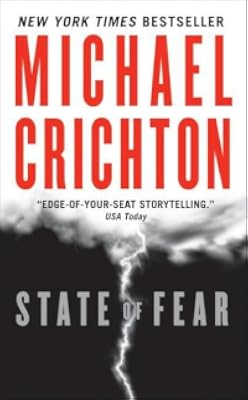
State of Fear
by Michael Crichton
On This Page
Description
New York Times bestselling author Michael Crichton delivers another action-packed techo-thriller in State of Fear.When a group of eco-terrorists engage in a global conspiracy to generate weather-related natural disasters, its up to environmental lawyer Peter Evans and his team to uncover the subterfuge.
From Tokyo to Los Angeles, from Antarctica to the Solomon Islands, Michael Crichton mixes cutting edge science and action-packed adventure, leading readers on an edge-of-your-seat ride show more while offering up a thought-provoking commentary on the issue of global warming. A deftly-crafted novel, in true Crichton style, State of Fear is an exciting, stunning tale that not only entertains and educates, but will make you think.
. show less
Tags
Recommendations





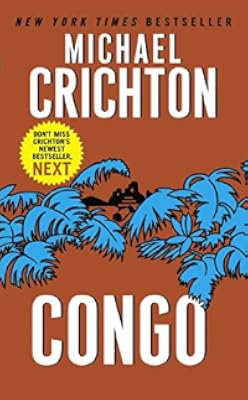
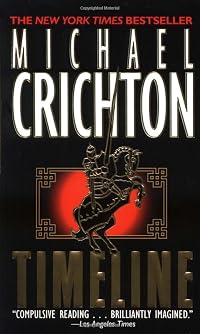
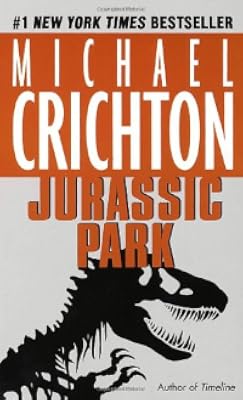
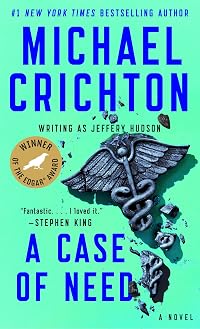


Member Recommendations
PghDragonMan We know the climate is changing, but which way? These books take opposite viewpoints.
PghDragonMan A rebuttal to Michael Crichton's State of Fear.
Member Reviews
This was my first experience reading a Michael Crichton novel, so I didn’t know quite what to expect. Would it be similar to Robert Ludlum’s espionage thrillers? Or given the subject - Global Warming, would it be more like an Orwellian tale of futuristic environmental disasters reducing the global population to living in a perpetual state of fear?
The plot gets off to a quick start - people disappear, dead bodies, robberies, and a mysterious poison that can render people comatose. At the onset, it is difficult to determine who is on the side of good, and who is evil. Crichton goes over the top in escape scenes - to the point of ridiculous. He must think the general reading audience is so jaded by evil and violence that it is no show more longer entertained by just one major successful escape.
Along with an abundance of action, suspense, and drama, the plot brings awareness to readers just how corrupt some organizations can be. And how many scientists, claiming to know the truth, are sometimes biased to the point of reporting disingenuous information, omitting pertinent facts. The novel comes with a message of caution: 1. sometimes seemingly legitimate organizations that claim to do good for humanity are just a front for evil activities. 2. Don’t believe everything you see and hear in the media - do your own research.
Two of my favorite pages of the book were 455 and 458 so I will leave you with a quote from each:
About fear: “Social control… the requirement of every sovereign state to exert control over the behavior of its citizens… that social control is best managed through fear…. in the last 15 years we have been under the control of the politico-legal-media complex… dedicated to promoting fear in the population - under the guise of promoting safety. Politicians need fears to control the population. Lawyers need dangers to litigate, and make money. The media needs scare stories to capture the audience.“
About Universities and fear: "Universities today are the factories of fear. They invent all the new terrors and all the new social anxieties. All the new restrictive codes. Words you can’t say, Thoughts you can’t think… behavior that is unacceptable… restrictive setting… behind closed doors, without due process. The notion that these institutes are liberal is cruel joke.”
And this book was written in 2004 - before WOKE became a common term of liberal thought. Michael Crichton seems to be clairvoyant.
Rated 4 Stars October 2021 show less
The plot gets off to a quick start - people disappear, dead bodies, robberies, and a mysterious poison that can render people comatose. At the onset, it is difficult to determine who is on the side of good, and who is evil. Crichton goes over the top in escape scenes - to the point of ridiculous. He must think the general reading audience is so jaded by evil and violence that it is no show more longer entertained by just one major successful escape.
Along with an abundance of action, suspense, and drama, the plot brings awareness to readers just how corrupt some organizations can be. And how many scientists, claiming to know the truth, are sometimes biased to the point of reporting disingenuous information, omitting pertinent facts. The novel comes with a message of caution: 1. sometimes seemingly legitimate organizations that claim to do good for humanity are just a front for evil activities. 2. Don’t believe everything you see and hear in the media - do your own research.
Two of my favorite pages of the book were 455 and 458 so I will leave you with a quote from each:
About fear: “Social control… the requirement of every sovereign state to exert control over the behavior of its citizens… that social control is best managed through fear…. in the last 15 years we have been under the control of the politico-legal-media complex… dedicated to promoting fear in the population - under the guise of promoting safety. Politicians need fears to control the population. Lawyers need dangers to litigate, and make money. The media needs scare stories to capture the audience.“
About Universities and fear: "Universities today are the factories of fear. They invent all the new terrors and all the new social anxieties. All the new restrictive codes. Words you can’t say, Thoughts you can’t think… behavior that is unacceptable… restrictive setting… behind closed doors, without due process. The notion that these institutes are liberal is cruel joke.”
And this book was written in 2004 - before WOKE became a common term of liberal thought. Michael Crichton seems to be clairvoyant.
Rated 4 Stars October 2021 show less
On the question of global warming/climate change, the theme that dominates Michael Crichton's 2004 thriller State of Fear, I'll try to keep it mercifully brief for anyone who might be reading this review. Suffice to say that the people who give this book 1-star, and those who give it 5-stars, are both wide of the mark, and reveal their ideological allegiances. Crichton is a sceptic but not a 'denialist', that loaded term which has become all the rage in the two decades since State of Fear was published and which has always seemed to me an underhand attempt to provoke connotations to Holocaust denial.
Crichton's appeal is for scientific scepticism and independent inquiry, endeavouring to be free from bias, ideology, financial influence or show more peer pressure. Whatever one's opinions on Crichton's specific stance or his conclusions, that's a worthy aim for any piece of fiction. His commentary on media manipulation and the politicization of science remains timely, and has perhaps become even more so in the years since State of Fear's publication. One can only imagine what Crichton, who earned a medical degree from Harvard, would have written of our approach to the Covid pandemic and lockdown.
Contentious themes aside – and it seems a lot of Crichton's books possess such taboo themes, and it's a shame that honest contrarians and dissenters have been harried out of mainstream art and culture – the inconvenient truth is that State of Fear is not a great thriller. Crichton is a good storyteller, and his pages flow by easily, but the plot was very synthetic. Kenner, the spy with an answer to everything, lacks the flaws to make him interesting, and the fact that the plot sees him bring along our everyman cast of lawyers and 9-to-5-ers across dangerous continents and into perilous gunfights and outlandish action set-pieces becomes increasingly absurd. The threat from the environmental terrorists in the book (which is made weaker by the lack of a central villain) would in a common-sense book be dealt with by spies and special forces, not by one spy and the have-a-go heroes he picks up along the way.
It's clear that State of Fear was a polemic of environmental scepticism first, and a thriller a distant second. The plot and characters are thinly adorned around the powerful and controversial theme and exist solely to justify it. Or at least, they justified it in 2004, when the book was published; in 2023, the reverse is true. The plot and characters are no reason at all for State of Fear to retain value or interest. But its expression of a minority viewpoint, a view that has become verboten in the years since, gives it a transgressive value in a Western culture that has become increasingly slavish to the cultural complacency, under-informed debate and scientific hubris that Crichton always railed against in his novels, regardless of their particular topics. His are novels that, for all their pessimism, now seem like a time capsule of a healthier age. show less
Crichton's appeal is for scientific scepticism and independent inquiry, endeavouring to be free from bias, ideology, financial influence or show more peer pressure. Whatever one's opinions on Crichton's specific stance or his conclusions, that's a worthy aim for any piece of fiction. His commentary on media manipulation and the politicization of science remains timely, and has perhaps become even more so in the years since State of Fear's publication. One can only imagine what Crichton, who earned a medical degree from Harvard, would have written of our approach to the Covid pandemic and lockdown.
Contentious themes aside – and it seems a lot of Crichton's books possess such taboo themes, and it's a shame that honest contrarians and dissenters have been harried out of mainstream art and culture – the inconvenient truth is that State of Fear is not a great thriller. Crichton is a good storyteller, and his pages flow by easily, but the plot was very synthetic. Kenner, the spy with an answer to everything, lacks the flaws to make him interesting, and the fact that the plot sees him bring along our everyman cast of lawyers and 9-to-5-ers across dangerous continents and into perilous gunfights and outlandish action set-pieces becomes increasingly absurd. The threat from the environmental terrorists in the book (which is made weaker by the lack of a central villain) would in a common-sense book be dealt with by spies and special forces, not by one spy and the have-a-go heroes he picks up along the way.
It's clear that State of Fear was a polemic of environmental scepticism first, and a thriller a distant second. The plot and characters are thinly adorned around the powerful and controversial theme and exist solely to justify it. Or at least, they justified it in 2004, when the book was published; in 2023, the reverse is true. The plot and characters are no reason at all for State of Fear to retain value or interest. But its expression of a minority viewpoint, a view that has become verboten in the years since, gives it a transgressive value in a Western culture that has become increasingly slavish to the cultural complacency, under-informed debate and scientific hubris that Crichton always railed against in his novels, regardless of their particular topics. His are novels that, for all their pessimism, now seem like a time capsule of a healthier age. show less
A masterwork of climate change denial. I suspect it has been quite successful, too. If you want to understand the climate change debate, it's an important book to read.
It reminds me a little of Jacques Roubaud's Princess Hoppy novels, where he mixes fictional narrative with math exercises. Here, Crichton mixes real scientific data and reports into the action-packed thriller story. It certainly motivates the reader to think about the science involved! Crichton is not bashful in the least about the slant he is putting on the data.
It's hard to say what Crichton's goal is exactly. He has a grand time bursting the bubbles of the ignorant, but to what end exactly is unclear. He says that people will not be able to stabilize climate. I don't show more know all the proposals and goals that folks in the climate change world might have, but that's one I haven't heard. Crichton acknowledges that human activity most likely does affect climate. Crichton doesn't quite come out and say that climate change theory is a plot to establish a worldwide totalitarian regime. How else could people control the behavior of people? Hmmm, yet here is Crichton publishing propaganda! It's tricky territory, for sure!
Crichton attempts to refute the precautionary principle without quite defining it. It's a bit like atheists who deny God without being careful to define God. Of course there is an extreme version of the precautionary principle that would require people to refrain from any sort of risky activity. Of course just being alive involves a 100% chance of death. That extreme version of precaution is absurd. But to go to the other extreme - just do whatever you want because nobody can be absolutely certain about the results - that is absurd too. This puzzle is a nice example where some kind of middle way between extremes seems called for - I have been advocating a Buddhist Philosophy of Science as a way to cultivate such middle ways.
We really do not have the intellectual tools to confront the problem of climate change. Yeah Crichton says that forecasts of resource limits more generally are ridiculous because there have been so many failed predictions. Go back, friend, and read the Scientific American article by M. King Hubbert from I think 1980. The fact that many people are wrong doesn't mean that nobody has anything useful to say.
It's a crazy situation. If we were really to take the problem of climate change seriously, it would probably mean the end of the modern world. But if we don't take the problem seriously, it means that we have decided to stop trusting science as a guide to action. Crichton warns us that mixing up science and politics will taint science. But using science as a guide to action is to mix up science and politics. Crichton actually gives a rather confused version of double blind experimental methodology in this book - at least I have never seen double blind used to mean multiple independent teams of researchers. Usually it means that the researchers cannot tell e.g. which subjects are in the control group and which are in the experimental group. But Crichton's version, using independent teams, is a reasonable idea. But if the results are guiding high stakes decisions, at some point the rubber has to meet the road - somebody has to perform the meta-study that combines the reports from the various teams...
We seem to be getting to the point where preserving our way of life means we just have to discard science, which, uh, is actually the foundation of our way of life. Rather that walking forward, eyes open, into the end of the modern age, we are going to trip and stumble blindly into it.
This is definitely a book to get a person thinking! show less
It reminds me a little of Jacques Roubaud's Princess Hoppy novels, where he mixes fictional narrative with math exercises. Here, Crichton mixes real scientific data and reports into the action-packed thriller story. It certainly motivates the reader to think about the science involved! Crichton is not bashful in the least about the slant he is putting on the data.
It's hard to say what Crichton's goal is exactly. He has a grand time bursting the bubbles of the ignorant, but to what end exactly is unclear. He says that people will not be able to stabilize climate. I don't show more know all the proposals and goals that folks in the climate change world might have, but that's one I haven't heard. Crichton acknowledges that human activity most likely does affect climate. Crichton doesn't quite come out and say that climate change theory is a plot to establish a worldwide totalitarian regime. How else could people control the behavior of people? Hmmm, yet here is Crichton publishing propaganda! It's tricky territory, for sure!
Crichton attempts to refute the precautionary principle without quite defining it. It's a bit like atheists who deny God without being careful to define God. Of course there is an extreme version of the precautionary principle that would require people to refrain from any sort of risky activity. Of course just being alive involves a 100% chance of death. That extreme version of precaution is absurd. But to go to the other extreme - just do whatever you want because nobody can be absolutely certain about the results - that is absurd too. This puzzle is a nice example where some kind of middle way between extremes seems called for - I have been advocating a Buddhist Philosophy of Science as a way to cultivate such middle ways.
We really do not have the intellectual tools to confront the problem of climate change. Yeah Crichton says that forecasts of resource limits more generally are ridiculous because there have been so many failed predictions. Go back, friend, and read the Scientific American article by M. King Hubbert from I think 1980. The fact that many people are wrong doesn't mean that nobody has anything useful to say.
It's a crazy situation. If we were really to take the problem of climate change seriously, it would probably mean the end of the modern world. But if we don't take the problem seriously, it means that we have decided to stop trusting science as a guide to action. Crichton warns us that mixing up science and politics will taint science. But using science as a guide to action is to mix up science and politics. Crichton actually gives a rather confused version of double blind experimental methodology in this book - at least I have never seen double blind used to mean multiple independent teams of researchers. Usually it means that the researchers cannot tell e.g. which subjects are in the control group and which are in the experimental group. But Crichton's version, using independent teams, is a reasonable idea. But if the results are guiding high stakes decisions, at some point the rubber has to meet the road - somebody has to perform the meta-study that combines the reports from the various teams...
We seem to be getting to the point where preserving our way of life means we just have to discard science, which, uh, is actually the foundation of our way of life. Rather that walking forward, eyes open, into the end of the modern age, we are going to trip and stumble blindly into it.
This is definitely a book to get a person thinking! show less
I think that when an author gets older and has a long string of bestsellers, he can write anything and it will get published, even if it's poorly written, poorly conceived, or both. Crichton's not the only author I would say this about. This book may have been his last, and it was definitely the worst I read. Every single character in this book is a stereotype. The plot is nothing but a long series of cliches. It's very disappointing to see an author you respect fall so far.
Michael Crichton would really like to let you know that there’s no such thing as global warming. Also, the media keeps you in a constant state of fear about whatever crisis or catastrophe is coming next. You’re more easily controllable that way. To that end, he has carefully crafted a science fiction thriller with handy real-life corollaries and a multitude of footnotes. He even includes a forward that seems to assert the truth of this entire tale. A more malleable mind might take him at his word and believe the work to be non-fiction. In fact, US Senator Jim Inhofe (R-OK), who chaired the Senate Committee on Environment and Public Works, made State of Fear “required reading” for members of said committee. Because fiction novels show more should absolutely inform public policy.
Crichton’s novel almost works as a thriller; a group of people race around the world trying to stop members of the EarthEnvironmental Liberation Front from creating “natural” disasters to coincide with a big Abrupt Climate Change Conference. Unfortunately, the leader of the group, John Kenner, keeps engaging people in conversations in which he points out how silly and wrong-headed their media-informed opinions are about climate change, wildlife management, pesticides, pharmaceuticals, and more. He’s really quite a dick about it. Also, it’s difficult for suspense to build when every plane ride to the next disaster consists of this guy pontificating. With footnotes! Did I mention the footnotes? There are tons of them. A cursory Google search of the book will produce several different scientific organizations who have gone pretty much point-by-point through Crichton’s arguments and poked holes in all of them, but as Kenner would say, that’s because the scientists are in the pockets of the environmentalists. Which is just about as ridiculous as his denigration of the people who dismiss contradictory studies because they were funded by industry. Who even knows what the science is really saying anymore? Which scientists should one believe? That actually seems to be the conclusion drawn by the book, that science should be blind to funding. Which, theoretically, is a great idea. It’s just too bad Crichton has to bash most of the scientists on the planet in order to make that (arguably unrealistic) point. show less
Crichton’s novel almost works as a thriller; a group of people race around the world trying to stop members of the EarthEnvironmental Liberation Front from creating “natural” disasters to coincide with a big Abrupt Climate Change Conference. Unfortunately, the leader of the group, John Kenner, keeps engaging people in conversations in which he points out how silly and wrong-headed their media-informed opinions are about climate change, wildlife management, pesticides, pharmaceuticals, and more. He’s really quite a dick about it. Also, it’s difficult for suspense to build when every plane ride to the next disaster consists of this guy pontificating. With footnotes! Did I mention the footnotes? There are tons of them. A cursory Google search of the book will produce several different scientific organizations who have gone pretty much point-by-point through Crichton’s arguments and poked holes in all of them, but as Kenner would say, that’s because the scientists are in the pockets of the environmentalists. Which is just about as ridiculous as his denigration of the people who dismiss contradictory studies because they were funded by industry. Who even knows what the science is really saying anymore? Which scientists should one believe? That actually seems to be the conclusion drawn by the book, that science should be blind to funding. Which, theoretically, is a great idea. It’s just too bad Crichton has to bash most of the scientists on the planet in order to make that (arguably unrealistic) point. show less
The story State of Fear is about eco terrorists plot to influence public fear in order to get funding. The protagonist is Peter Evans, an environmentalist lawyer who is assigned to work with George Morton a millionaire philanthropist. Peter Evans is a whimsy, idealist who becomes involved in an effort to stop the plans to create natural disasters that will harm unknowing individuals. The heroes jet all over the world and the US; California, Arizona, Hawaii, Antarctic, Solomon Islands. I liked the infusion of research articles and charts. The author is known for his science filled suspense novels. I appreciated the challenge that we should examine our beliefs to see if they are truly facts or just assumptions. The title comes from this show more line "ecology of thought and how it has led to a state of fear" found on page 495. The book is also about manipulation through use of media. How much of what we believe do we really know or are we just accepting what we hear. This book has a tendency to irritate quite a few people but I think it has some valid challenges to us to at least examine whether we truly know what we think we know. Something my parents wanted to instill in me when I was a young person.
This will be cross posted to pick a year, subdue the shelf and also the road trip. I am sorry this is so short and I may fix it later if I find some wifi and can work on my computer instead of the iPad. (vacation) show less
This will be cross posted to pick a year, subdue the shelf and also the road trip. I am sorry this is so short and I may fix it later if I find some wifi and can work on my computer instead of the iPad. (vacation) show less
That was quite surprising. This is not a novel - this is a novel-length opinion column pretending to be a novel. It is very well written for what it is - it's very difficult to write hundreds of pages of opinion column good enough for me to read to the end - and this book does it. But still, it's not a novel. The plot is a silly excuse for the author to share his opinion of global warming, and I think your time will be better spent getting that information from a more objective source.
Members
- Recently Added By
Lists

Biggest Disappointments
606 works; 168 members

Novels that you shouldn't waste your time on
94 works; 52 members

Unread books
1,063 works; 87 members

Independent Reading Suggestions
69 works; 3 members

HarperCollins Publishers
144 works; 3 members
Author Information

143+ Works 172,431 Members
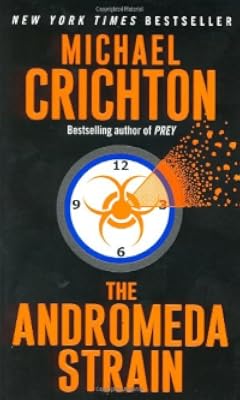
John Michael Crichton, known as Michael Crichton, was born on October 28, 1942 in Chicago, Illinois. He wrote novels while attending Harvard University and Harvard Medical School to help pay the tuition. One of these, The Andromeda Strain, which was published in 1969, became a bestseller. After graduating summa cum laude, he was a postdoctoral show more fellow at the Salk Institute in California before becoming a full-time writer and film director. His carefully researched novels included Eaters of the Dead, The Terminal Man, The Great Train Robbery, Congo, Sphere, Jurassic Park, Rising Sun, Disclosure, The Lost World, Airframe, and Micro. He also wrote non-fiction works including Five Patients: The Hospital Explained, Jasper Johns, and Travels. In the late 1960s, he also wrote under the pen names Jeffrey Hudson and John Lange. He has received several awards including Writer of the Year in 1970 from the Association of American Medical Writers and two Edgar Awards in 1968 and in 1979. Many of his novels have been made into highly successful films, six of which he directed. He was also the creator and executive producer of the Emmy Award-winning television series ER. In addition to his writing and directorial success, his expertise in information science enabled him to run a software company and develop a computer game. He died of cancer on November 4, 2008 at the age of 66. (Bowker Author Biography) show less
Some Editions
Awards and Honors
Series
Belongs to Publisher Series
Work Relationships
Is abridged in
Has as a student's study guide
Common Knowledge
- Canonical title
- State of Fear
- Original title
- State of Fear
- Alternate titles
- State of Fear
- Original publication date
- 2004-12-07
- People/Characters
- John Kenner; Peter Evans
- Epigraph
- There is something fascinating about science. One gets such wholesale returns of conjecture out of such a trifling investment of fact. - Mark Twain
Within any important issue, there are always aspects no one wishes to discuss. - George Orwell - First words
- Introduction. In late 2003, at the Sustainable Earth Summit conference in Johannesburg, the Pacific island nation of Vanutu announced that it was preparing a lawsuit against the Environmental Protection Agency of the United S... (show all)tates over global warming.
- Last words
- (Click to show. Warning: May contain spoilers.)The plane descended smoothly toward Los Angeles.
- Original language
- English
Classifications
Statistics
- Members
- 9,636
- Popularity
- 1,075
- Reviews
- 163
- Rating
- (3.39)
- Languages
- 17 — Catalan, Chinese, Czech, Danish, Dutch, English, Finnish, French, German, Greek, Hungarian, Italian, Lithuanian, Polish, Portuguese, Slovenian, Spanish
- Media
- Paper, Audiobook, Ebook
- ISBNs
- 87
- UPCs
- 1
- ASINs
- 31