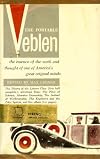
The Portable Veblen
by Thorstein Veblen, Max Lerner (Editor)
120 Members (2.83)
On This Page
Description
"A list of Veblen's books": pages 629-630."Further reading on Veblen": pages 630-632.Tags
Recommendations


















Member Reviews
Members
- Recently Added By
Author Information

38+ Works 3,695 Members
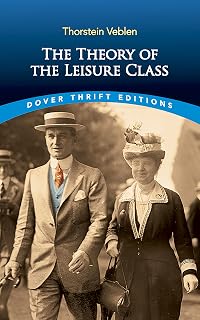
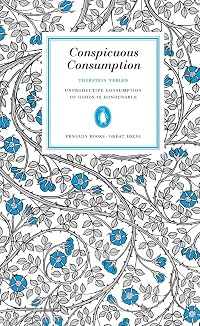
Thorstein Bunde Veblen was an American economist and social scientist best known for challenging the economic theories of his time. He rejected the neat logic and natural laws of his contemporaries, asserting instead that economic order was evolutionary and that this evolution was strongly influenced by institutions such as labor unions, business show more organizations, schools, and even churches. In so doing, Veblen laid the basis for what is now known as the institutional school of economics. Veblen was often described as being an aloof and isolated, albeit gifted, misfit. His sense of isolation was established early; he was born on a farm in rural Wisconsin to immigrant Norwegian parents. English was spoken only as a second language in the tight-knit Norwegian community and Veblen did not perfect his use of the language until he entered college. A voracious reader with a distinct aversion to farm work, he was sent to nearby Carleton College to study for the Lutheran ministry. While at Carleton, Veblen alienated some of the faculty with inflammatory and agnostic writings, and, although he graduated in 1880, it was without the divinity degree that would have enabled him to teach at one of the many small religious colleges of the time. After graduate work at Johns Hopkins University and Yale University, he returned to his parents' home, where he spent the next seven years relaxing, reading, and doing odd jobs. In 1888 he married Ellen Rolfe, much to the dismay of her uncle who happened to be the president of Carleton College. During this period, Veblen had little luck finding a job, even with the benefit of his wife's and her uncle's connections. Finally, at the age of 34, Veblen went to Cornell University to seek a teaching position. Despite his frontier appearance---corduroy trousers and coonskin cap---he was given a one-year teaching assignment. The next year he joined the faculty at the University of Chicago, where he taught until 1906. While at the University of Chicago, he wrote two of his most important works, The Theory of the Leisure Class (1899) and The Theory of Business Enterprise (1904). The Theory of the Leisure Class was an insightful, if not contemptuous, analysis of the excess consumption and wasteful behavior of the wealthy. Veblen contended that the modern quest for the accumulation of money, and its lavish display, was derived from the predatory barbarian practice of seizing goods and wealth without work. In The Theory of Business Enterprise, he described the heads of corporate enterprises as saboteurs of the economic system---people interested only in the financing of production rather than the process of production. This was a radical view, but Veblen was writing during the period when the "robber barons" seemed obsessed by the profits that could be made from stock flotations, bond issues, and other complex financial deals. Veblen's notorious womanizing cost him his position with the University of Chicago in 1906. He moved on to Stanford University, then the University of Missouri, and finally to the New School for Social Research in New York, where he taught briefly before retiring to a small rustic cabin in California. Divorced from his wife in 1911, he remarried in 1914, but his second wife was institutionalized shortly after for psychological problems. Veblen was one of the most provocative economists of his time, but his ideas were such that he attracted few disciples. Even so, economists have come to recognize the importance of institutions and their impact on economic behavior. Additional testament to the influence of his work is the fact that many of the terms he coined are in wide use today, among them conspicuous consumption conspicuous consumption, the leisure class, and cultural lag. (Bowker Author Biography) show less

Max Lerner (1902-1992) was distinguished professor at the Graduate School of Human Behavior, United States International University at San Diego. He was also a syndicated columnist for the Los Angeles Times Syndicate and the New York Post. Robert Schmuhl is Walter H. Annenberg-Edmund P. Joyce Chair in American Studies and Journalism at the show more University of Notre Dame, where he is also chairperson of the department of American studies and director of the John W. Gallivan Program in Journalism, Ethics, and Democracy. show less
Series
Belongs to Publisher Series
Work Relationships
Contains
Classifications
Statistics
- Members
- 120
- Popularity
- 272,643
- Rating
- (2.83)
- Languages
- English
- Media
- Paper
- ISBNs
- 2
- ASINs
- 8