Psychological Types
by C. G. Jung
On This Page
Description
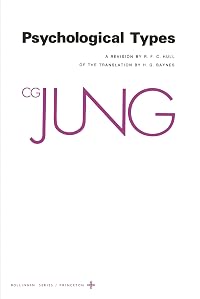
One of the most important of Jung's longer works, and probably the most famous of his books, Psychological Types appeared in German in 1921 after a "fallow period" of eight years during which Jung had published little. He called it "the fruit of nearly twenty years' work in the domain of practical psychology," and in his autobiography he wrote: "This work sprang originally from my need to define the ways in which my outlook differed from Freud's and Adler's. In attempting to answer this show more question, I came across the problem of types; for it is one's psychological type which from the outset determines and limits a person's judgment. My book, therefore, was an effort to deal with the relationship of the individual to the world, to people and things. It discussed the various aspects of consciousness, the various attitudes the conscious mind might take toward the world, and thus constitutes a psychology of consciousness regarded from what might be called a clinical angle." In expounding his system of personality types Jung relied not so much on formal case data as on the countless impressions and experiences derived from the treatment of nervous illnesses, from intercourse with people of all social levels, "friend and foe alike," and from an analysis of his own psychological nature. The book is rich in material drawn from literature, aesthetics, religion, and philosophy. The extended chapters that give general descriptions of the types and definitions of Jung's principal psychological concepts are key documents in analytical psychology. show lessTags
Recommendations











Member Reviews
Algo estranho ocorreu. Minha edição deste livro caiu da prateleira hoje e como esta é razoavelmente pesada e velhinha, acabou-se por partir ao meio. O estranho não foi isso e sim o fato que durante a queda o livro partiu igualmente ao meio o poster de Kill Bill Volume 2 que ficava alí do lado. O que dizia o livro entre as páginas partidas?
"O homem sempre esquece, e volta sempre a esquecer, que o que foi bom uma vez nem sempre pode continuar a sê-lo por toda eternidade. Percorre ainda os antigos caminhos, que foram bons outrora, mas já não o são mais, pois se converteram em maus caminhos e só com os maiores sacrifícios e incríveis esforços pode desembaraçar-se da obsessão de que o bom de um tempo passado ainda é bom e show more não se fez velho." Rá! Go Beatrix Kiddo! show less
"O homem sempre esquece, e volta sempre a esquecer, que o que foi bom uma vez nem sempre pode continuar a sê-lo por toda eternidade. Percorre ainda os antigos caminhos, que foram bons outrora, mas já não o são mais, pois se converteram em maus caminhos e só com os maiores sacrifícios e incríveis esforços pode desembaraçar-se da obsessão de que o bom de um tempo passado ainda é bom e show more não se fez velho." Rá! Go Beatrix Kiddo! show less
il contenuto
«L’ipotesi che esista una sola psicologia o un solo principio psicologico fondamentale costituisce un’intollerabile tirannia», così Jung a proposito di questa che forse è la sua opera più famosa. Con Tipi psicologici si abbandona la pretesa, ancora radicata in Freud, di concepire la psicologia come scienza esatta, e si riconosce la presenza ineliminabile di un fattore soggettivo. Qui Jung integra la scoperta dell’inconscio con la definizione e la descrizione degli otto tipi psicologici principali. Tipi psicologici è anche un trattato di psicologia, ricco di casi clinici, e una storia del pensiero umano, in cui Jung ricostruisce i conflitti sorti dalla presenza dei due caratteri fondamentali, «apollineo» e show more «dionisiaco», che hanno dominato lo spirito nella filosofia e nelle arti da Platone a Goethe, da Aristotele a Nietzsche. Qui Jung dispiega tutto il suo fascino di evocatore di miti, personaggi, civiltà scomparse. show less
«L’ipotesi che esista una sola psicologia o un solo principio psicologico fondamentale costituisce un’intollerabile tirannia», così Jung a proposito di questa che forse è la sua opera più famosa. Con Tipi psicologici si abbandona la pretesa, ancora radicata in Freud, di concepire la psicologia come scienza esatta, e si riconosce la presenza ineliminabile di un fattore soggettivo. Qui Jung integra la scoperta dell’inconscio con la definizione e la descrizione degli otto tipi psicologici principali. Tipi psicologici è anche un trattato di psicologia, ricco di casi clinici, e una storia del pensiero umano, in cui Jung ricostruisce i conflitti sorti dalla presenza dei due caratteri fondamentali, «apollineo» e show more «dionisiaco», che hanno dominato lo spirito nella filosofia e nelle arti da Platone a Goethe, da Aristotele a Nietzsche. Qui Jung dispiega tutto il suo fascino di evocatore di miti, personaggi, civiltà scomparse. show less
Jung's Psychological Types is an important book for those wishing to understand the different types of personality, ways of thinking, and ways of perceiving the world, that various people have. It is all too easy to view the world only as you would naturally view it yourself, and be completely unaware that other people have fundamentally different ways of thinking, hard wired into them, that are not a result of education, intellectual capacity, or cultural influence. Jung finds and presents evidence for the existence of these types in the great writers of the past, showing that they are essentially common across the globe, and also not merely suitable to describe the facets of the contemporary psyche. Again, I was surprised at the the show more incisiveness of Jung's observations, and his scientific outlook, which have forced me to take Psychological study seriously, something I wasn't previously inclined to do. This book will help you understand your own not-so-peculiarities better, as well as those of those around you. Well worth reading out of interest, and invaluable I would imagine if you were actually a student of psychology. show less
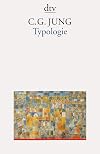
708 pages. Binding burst at the outer joint with cliché rubbed on the spine and on the capitals and edges. Name on intent. Paper darkened, some sheets with creases and a few with stains. Also soiled at the foot cut. Language: German Weight in grams: 800 First edition. First and second thousand.
Tipos psicológicos publicado en 1921, es uno de los libros más conocidos de C. G. Jung. En esta obra fundamental, que describe por primera vez nociones que luego han pasado a formar parte del lenguaje común, Jung presenta ciertas estructuras y mecanismos de funcionamiento típicos de la psique, buscando así promover en el ser humano unmejor entendimiento tanto de sí mismo como de su prójimo. La oposición entre los tipos no solo desempeña un importante papel en polémicas teológicas y disputas científicas, culturales y filosóficas, sino también en las relaciones humanas en general. De especial interés son los análisis dedicados por Jung a Friedrich Schiller, Carl Spitteler o William James. El último capítulo recoge las show more definiciones, elaboradas por el propio Jung, de los conceptos psicológicos más habitualmente utilizados en sus escritos. El Apéndice incluye la conferencia de 1913 «Sobre la cuestión de los tipos psicológicos», en la que el autor basó buena parte de las reflexiones del presente volumen. show less
Feb 4, 2026Spanish
Ratings
Members
- Recently Added By
Lists

Books Referenced by Izetbegovic's Islam Between East and West
233 works; 2 members

My List
302 works; 1 member
Author Information

895+ Works 42,731 Members
Carl Gustav Jung was born in Switzerland on July 26, 1875. He originally set out to study archaeology, but switched to medicine and began practicing psychiatry in Basel after receiving his degree from the University of Basel in 1902. He became one of the most famous of modern psychologists and psychiatrists. Jung first met Sigmund Freud in 1907 show more when he became his foremost associate and disciple. The break came with the publication of Jung's Psychology of the Unconscious (1912), which did not follow Freud's theories of the libido and the unconscious. Jung eventually rejected Freud's system of psychoanalysis for his own "analytic psychology." This emphasizes present conflicts rather than those from childhood; it also takes into account the conflict arising from what Jung called the "collective unconscious"---evolutionary and cultural factors determining individual development. Jung invented the association word test and contributed the word complex to psychology, and first described the "introvert" and "extrovert" types. His interest in the human psyche, past and present, led him to study mythology, alchemy, oriental religions and philosophies, and traditional peoples. Later he became interested in parapsychology and the occult. He thought that unidentified flying objects (UFOs) might be a psychological projection of modern people's anxieties. He wrote several books including Studies in Word Association, Flying Saucers: A Modern Myth of Things Seen in the Skies, and Psychology and Alchemy. He died on June 6, 1961 after a short illness. (Bowker Author Biography) show less
Some Editions
Awards and Honors
Series
Belongs to Publisher Series
Common Knowledge
- Canonical title
- Psychological Types
- Original title
- Psychologische Typen
- Original publication date
- 1921
- Original language
- German
Classifications
Statistics
- Members
- 995
- Popularity
- 26,304
- Reviews
- 5
- Rating
- (4.09)
- Languages
- 13 — Danish, Dutch, English, Estonian, French, German, Italian, Latvian, Portuguese (Brazil), Russian, Serbian, Spanish, Swedish
- Media
- Paper, Audiobook, Ebook
- ISBNs
- 59
- ASINs
- 18