
The First Circle
by Aleksandr Solzhenitsyn
On This Page
Description
Indirectly based on Solzhenitsyn's own experiences of working as a mathematician in a prison research institute, The First Circle is set amongst a group of scientists caught up in the system of prison camps. Forced to work for the secret police, they debate the morality of what they doing but are cruelly aware that failure to co-operate would secure them a worse fate. The title is a reference to the first, and least unpleasant, circle of Hell in Dante's inferno but Solzhenitsyn's characters show more know that the lower circles of hell are there in the shape of the forced labour camps and that these await them if they make a false step. This searing insight into the dark side of Soviet life in the final years of Stalin's regime is both a brooding account of human nature and a scrupulously exact description of a historical period. show lessTags
Recommendations


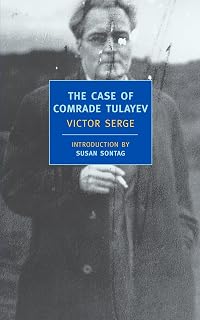
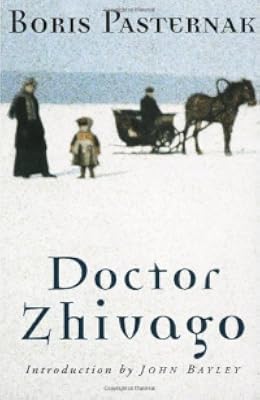
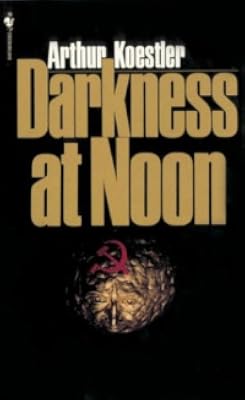
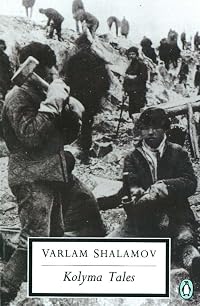
























Member Recommendations

editfish This novel goes beyond the research of 'Gulag' and looks at life in the Sharaska (Paradise Islands) of the Archipelago.
20
Member Reviews
Joseph Stalin, as presented by Aleksandr Solzhenitsyn’s novel The First Circle, is no less than
“The . . .
All Highest
Best Friend of Communications Workers; Best Friend of Counterintelligence Operatives; Best Friend of Sailors
Father of the People; Father and Teacher; Father of Western and Eastern Peoples
Great Coryphaeus; Great Generalissimo; Greatest of All the Great; Greatest Genius of Geniuses; Greatest Man on Earth
Immortal
Leader of All Progressive Humanity; Leader Elected of God; Leader of Nations; Leader of the Peoples
Most Brilliant Strategist of All Times and Peoples; Most Humane of All Statesman
Nearest and Dearest
One-and-only and Infallible
Plowman
Sovereign
Wise Father; Wisest of the Wise.”
I sense authorial insincerity. Also, a show more lineage that would come to include Kim Jong-un.
Most characters in The First Circle (1968 version) are not known at all to The All Highest, Best Friend of . . . etc. They are prisoners, called zeks. A select group—engineers, scientists, mathematicians, even a linguist and one artist—they are confined at a sharashka, a prison for work on technological projects. Their transgression? Somehow falling into the net of Stalin’s political paranoia. Nearly all have as their assigned work improving the state’s ability to capture more prisoners, ones as guilty or as innocent as they know themselves to be. This terrible irony informs much of what we witness in the novel.
But why shouldn’t Stalin be paranoid? Look at what he must face:
"The people loved him, yes, but the people themselves swarmed with shortcomings…How much quicker communism could be built if it were not for the soulless bureaucrats. If it were not for the conceited big shots. If it were not for the organizational weakness of indoctrination efforts among the masses. For the “drifting” in party education. For the slackened pace of construction, the delays in production, the output of low-quality goods, the bad planning, the apathy toward the introduction of new technology and equipment, the refusal of young people to pioneer distant areas, the loss of grain in the fields, overexpenditure by bookkeepers, thievery at warehouses, swindling by managers, sabotage by prisoners, liberalism in the police, abuse of public housing, insolent speculators, greedy housewives, spoiled children, chatterboxes on streetcars, petty-minded “criticism” in literature, liberal tendencies in cinematography."
Lucky the people loved him. Imagine the problems had they not.
While the political prisoners are constantly aware of any injustices they suffer, and are forced to work long hours, it’s the officials held directly responsible for the zeks’ progress who seem to suffer worse work-related stress—they have the burden of pleasing that “Most Humane of All Statesmen”:
"Stalin was terrifying because one mistake in his presence could be that one mistake in life which set off an explosion…he did not listen to excuses, made no accusations; his yellow tiger eyes simply brightened balefully…the condemned man…left [Stalin’s office] in peace, was arrested at night, and shot by morning."
The regular stresses of imprisonment at the sharashka are lightened by having intelligent comrades and sometimes absorbing work. They are darkened painfully by the impact imprisonment for their “crimes” can have on the status of wives and others who will suffer persecution if it is publicly known a relation is a political prisoner. The suspense of this novel, then, often is in what happens outside the prison, and that fate is linked to what happens inside it and in the net composed of the state apparatus and its informers. A baleful net it is. One where, if innocents are captured with the prey, so it goes.
The lasting lesson is that here, the Gulag, is where a society is led when government is too much beset with fear of insecurity. The First Circle forces readers to contemplate the question of what must be risked to preserve free action and thought when any action at all risks taking them from you. No complacent answer will do and Solzhenitsyn brings emphasis to the theme early in his novel with, appropriately, an interrogatory thought: “If one is forever cautious, can one remain a human being?” show less
“The . . .
All Highest
Best Friend of Communications Workers; Best Friend of Counterintelligence Operatives; Best Friend of Sailors
Father of the People; Father and Teacher; Father of Western and Eastern Peoples
Great Coryphaeus; Great Generalissimo; Greatest of All the Great; Greatest Genius of Geniuses; Greatest Man on Earth
Immortal
Leader of All Progressive Humanity; Leader Elected of God; Leader of Nations; Leader of the Peoples
Most Brilliant Strategist of All Times and Peoples; Most Humane of All Statesman
Nearest and Dearest
One-and-only and Infallible
Plowman
Sovereign
Wise Father; Wisest of the Wise.”
I sense authorial insincerity. Also, a show more lineage that would come to include Kim Jong-un.
Most characters in The First Circle (1968 version) are not known at all to The All Highest, Best Friend of . . . etc. They are prisoners, called zeks. A select group—engineers, scientists, mathematicians, even a linguist and one artist—they are confined at a sharashka, a prison for work on technological projects. Their transgression? Somehow falling into the net of Stalin’s political paranoia. Nearly all have as their assigned work improving the state’s ability to capture more prisoners, ones as guilty or as innocent as they know themselves to be. This terrible irony informs much of what we witness in the novel.
But why shouldn’t Stalin be paranoid? Look at what he must face:
"The people loved him, yes, but the people themselves swarmed with shortcomings…How much quicker communism could be built if it were not for the soulless bureaucrats. If it were not for the conceited big shots. If it were not for the organizational weakness of indoctrination efforts among the masses. For the “drifting” in party education. For the slackened pace of construction, the delays in production, the output of low-quality goods, the bad planning, the apathy toward the introduction of new technology and equipment, the refusal of young people to pioneer distant areas, the loss of grain in the fields, overexpenditure by bookkeepers, thievery at warehouses, swindling by managers, sabotage by prisoners, liberalism in the police, abuse of public housing, insolent speculators, greedy housewives, spoiled children, chatterboxes on streetcars, petty-minded “criticism” in literature, liberal tendencies in cinematography."
Lucky the people loved him. Imagine the problems had they not.
While the political prisoners are constantly aware of any injustices they suffer, and are forced to work long hours, it’s the officials held directly responsible for the zeks’ progress who seem to suffer worse work-related stress—they have the burden of pleasing that “Most Humane of All Statesmen”:
"Stalin was terrifying because one mistake in his presence could be that one mistake in life which set off an explosion…he did not listen to excuses, made no accusations; his yellow tiger eyes simply brightened balefully…the condemned man…left [Stalin’s office] in peace, was arrested at night, and shot by morning."
The regular stresses of imprisonment at the sharashka are lightened by having intelligent comrades and sometimes absorbing work. They are darkened painfully by the impact imprisonment for their “crimes” can have on the status of wives and others who will suffer persecution if it is publicly known a relation is a political prisoner. The suspense of this novel, then, often is in what happens outside the prison, and that fate is linked to what happens inside it and in the net composed of the state apparatus and its informers. A baleful net it is. One where, if innocents are captured with the prey, so it goes.
The lasting lesson is that here, the Gulag, is where a society is led when government is too much beset with fear of insecurity. The First Circle forces readers to contemplate the question of what must be risked to preserve free action and thought when any action at all risks taking them from you. No complacent answer will do and Solzhenitsyn brings emphasis to the theme early in his novel with, appropriately, an interrogatory thought: “If one is forever cautious, can one remain a human being?” show less
Somewhere in the Stone Reader documentary, likely its bonus features, a critic named The First Circle as the last novel of the 19th Century. The isolation of Soviet themes was likely exaggerated by the critic but the novel itself doesn't appear to reveal self-awareness: perhaps such would also be a violation of Article 58. I read this in tandem with my wife and what a glorious experience that was. As tragic as this tale of a neutered Hell of sorts remains, it begs so many questions about the nature of penal system in the Soviet Union. Cross-purposes appeared to proliferate with exposure to air. If Guilt was endemic why have them work, espeially around such sensitive areas of expertise? My naievety albeit bruised and riddled will likely show more cling for my life's extent. I still ponder motives. show less
The book is well written, literary, and contemplative. There is no doubt that Solzhenitsyn is a skilled novelist and a vital figure for his documentation of life under the Soviet regime following World War II. And this particular book is well worth the effort of reading it.
There is not a lot of happiness and sunshine, of course, but I suspect few people turn to Solzhenitsyn for that. In a way, however, it is precisely the nearness of sunshine, of comfort, of companionship, of freedom ... all of which remains just out of reach ... that drives this book. The First Circle, an allusion to Dante's First Circle of Hell, is a unique place of punishment because it is the furthest from the the depths of Hell and also the closest to Heaven one show more gets while still being in Hell. In the sharashka where the zeks in this book spend their days, their torment is amplified by the closeness of the habits and comforts of their former lives that are perpetually unobtainable. They are near but unobtainable, like the stand of lindens just beyond the prison walls, the grass trapped beneath a layer of ice in the prison yard, the sun beyond a veil of fog, the gossamer scraps of meat floating in an otherwise thin and barely nourishing prison stew. And even all of this, paltry as it is, could be taken away.
Daily, the zeks toil in manufacturing the conditions of their own incarceration. The zeks at the heart of this novel are (many of them) trained professionals put to work on surveillance technologies that support additional dubious charges and detentions. Nevertheless, the zeks find ways to maintain their humanity and find small outlets for subversion.
I am not sure how soon I will build up the fire to read more Solzhenitsyn but I am sure I will at some point. show less
There is not a lot of happiness and sunshine, of course, but I suspect few people turn to Solzhenitsyn for that. In a way, however, it is precisely the nearness of sunshine, of comfort, of companionship, of freedom ... all of which remains just out of reach ... that drives this book. The First Circle, an allusion to Dante's First Circle of Hell, is a unique place of punishment because it is the furthest from the the depths of Hell and also the closest to Heaven one show more gets while still being in Hell. In the sharashka where the zeks in this book spend their days, their torment is amplified by the closeness of the habits and comforts of their former lives that are perpetually unobtainable. They are near but unobtainable, like the stand of lindens just beyond the prison walls, the grass trapped beneath a layer of ice in the prison yard, the sun beyond a veil of fog, the gossamer scraps of meat floating in an otherwise thin and barely nourishing prison stew. And even all of this, paltry as it is, could be taken away.
Daily, the zeks toil in manufacturing the conditions of their own incarceration. The zeks at the heart of this novel are (many of them) trained professionals put to work on surveillance technologies that support additional dubious charges and detentions. Nevertheless, the zeks find ways to maintain their humanity and find small outlets for subversion.
I am not sure how soon I will build up the fire to read more Solzhenitsyn but I am sure I will at some point. show less
Finished this while recovering from an appendectomy in hospital. For me it didn’t match Cancer Ward in terms of the integration of the characters despite it having more of a storyline. Nevertheless, it’s a great novel because Solzhenitsyn depicts an era which very few lived through, let alone survived to write about in such style. He brings the political prison system alive from a huge range of perspectives: prisoner, guard, warden, government minister, male, female, wife, lover - even “Uncle Joe” himself gets a chapter. The ending is poignant and laden with feeling.
I suspect I like the idea of Solzhenitsyn as a writer more than I like actually reading his writing. If that makes sense. I’d no real desire to read Solzhenitsyn until seeing Sokurov’s Dialogues with Solzhenitsyn, and when I saw a copy of The First Circle, and immediately linked it to Sokurov’s The Second Circle, a favourite film, then I was suddenly keen to read Solzhenitsyn. And now I have read him – this book, and A Day in the Life of Ivan Denisovich last year – I’m wondering what all the fuss was about. True, I’m not reading him in the original Russian, so any infelicities in prose and style are more likely the fault of the translator, but… Well, the two books by Solzhenitsyn I’ve read so far are blackly comic show more works about the inhuman excesses of Stalin’s regime. And, well, I knew that, I knew Stalin was, and still is, the worst despot this planet has ever seen, responsible for a vast number of deaths, more perhaps than many historical epidemics. He killed more Russians in WWII, for example, than the Germans did. The First Circle, which is quite a hefty novel, covers three days among the inmates, and others linked to them, of Mavrino Prison, which is actually a secret penal laboratory staffed by politicial prisoners and others pulled from gulags and labour camps. Compared to others in the Soviet prison system, they have it cushy. But not as cushy as the family of the prison head, which includes his son-in-law, a young and upcoming diplomat, who foolishly telephones a doctor about to leave for Paris and warns him not to hand over some medical data to the West as he had threatened. The authorities were, of course, listening in… but they can’t identify the caller. Fortunately, some of the Mavrino inmates, and some of the equipment they’ve built, could help the MGB… The contrast with the lot of the prisoners and the diplomat’s family is stark, as is the contrast between those in Mavrino and their previous experiences in the gulags. Solzhenitsyn manages to find the nobility, and venality, in his prisoners, and paints them vividly as people. But the endless reiteration of bureaucratic cruelty – epitomised, if not literalised, by the treatment of the diplomat in the Lubyanka after his arrest – does pall on occasion. The First Circle, despite its short narrative timeframe, is surprisingly rambunctious, but less philosophical than I had expected – although, to be fair, most, if not all, of the references to Russian literature were lost on me. I still like the idea of Solzhenitsyn as a writer, and I still have another of his novels on the TBR, but I’ve yet to make up my mind about his actual writing. show less
This is a long book of 700 pages that covers just a few days. Solzhenitsyn's genius is to make it both grim and sad and also see the humour in the everyday lives of prisoners and in the nonsense of the Soviet system. Each character is rounded and has a back story, which is one reason why the novel is so long despite only covering a few days. Solzhenitsyn shows his humanity time and again, as he draws the characters and the reader understands them. His observation is also outstanding and the detail of everything from the feel of a blanket, the action of chopping of wood and the warmth of friendship brings alive the prisoners and members of staff in the special prison.
I am about to do a very great injustice to Aleksandr Solzhenitsyn, and I apologize for it in advance: I am going to discuss one of his novels without reference to its artistic merit. Let me make it clear that _The First Circle_ is a book that will always reward its reader, written as it is in a very coherent manner with an immense amount of skill and depth of characterization -- but at this point in time, what's more important than that is politics.
If you still have any doubts as to the depths of depravity characteristic of Joseph Stalin -- if, for example, you think he wasn't as bad as Hitler -- you _must_ read this book. Fictional though it is, its portrait of Stalin is true to life, and that's all I need to say on _that_ subject. He show more is in a way the central figure, the protagonist, of the novel; it's his policies, his paranoia born of his own successful treachery, his unhealthy fear of spies and Heaven only knows what else, that created the Russia in which the fictitious characters of the novel are trapped. Solzhenitsyn had first-hand experience of the then-MGB (now FSB, most famously known as the KGB) and the GULAG network; he knows only too well, in this book, of what he writes... show less
If you still have any doubts as to the depths of depravity characteristic of Joseph Stalin -- if, for example, you think he wasn't as bad as Hitler -- you _must_ read this book. Fictional though it is, its portrait of Stalin is true to life, and that's all I need to say on _that_ subject. He show more is in a way the central figure, the protagonist, of the novel; it's his policies, his paranoia born of his own successful treachery, his unhealthy fear of spies and Heaven only knows what else, that created the Russia in which the fictitious characters of the novel are trapped. Solzhenitsyn had first-hand experience of the then-MGB (now FSB, most famously known as the KGB) and the GULAG network; he knows only too well, in this book, of what he writes... show less
Members
- Recently Added By
Lists

1001 Books You Must Read Before You Die
1,448 works; 1,134 members

Russian Literature
184 works; 35 members
Jordan B. Peterson's Recommended Books
104 works; 5 members

1,001 BYMRBYD Concensus
723 works; 27 members

Stories featuring characters who are mathematicians
42 works; 5 members

Blue Pyramid 1,276 Best Books of All Time
1,248 works; 32 members

How to Read a Book's Recommended Reading List
309 works; 10 members

Recommended Literary Books
111 works; 1 member
New Lifetime Reading Plan by Fadiman and Major
225 works; 5 members

Best Sellers / Popular 1968
237 works; 5 members
Canon de la narrativa universal del s. XX (cicutadry)
499 works; 3 members
Talk Discussions
Past Discussions
Group Read, July 2019: The First Circle in 1001 Books to read before you die (July 2019)
Group Read, December 2016: The First Circle in 1001 Books to read before you die (January 2017)
Author Information

253+ Works 44,398 Members
Aleksandr Solzhenitsyn was born on December 11, 1918 in Kislovodsk in the northern Caucusus Mountains. He received a degree in physics and math from Rostov University in 1941. He served in the Russian army during World War II but was arrested in 1945 for writing a letter criticizing Stalin. He spent the next decade in prisons and labor camps and, show more later, exile, before being allowed to return to central Russia, where he worked as a high school science teacher. His first novel, One Day in the Life of Ivan Denisovich, was published in 1962. In 1970, he was awarded the Nobel Prize for Literature. In 1974, he was arrested for treason and exiled following the publication of The Gulag Archipelago. He moved to Switzerland and later the U. S. where he continued to write fiction and history. When the Soviet Union collapsed, he returned to his homeland. His other works include The First Circle and The Cancer Ward. He died due to a heart ailment on August 3, 2008 at the age of 89. (Bowker Author Biography) show less
Some Editions
Awards and Honors
Series
Belongs to Publisher Series
Work Relationships
Is contained in
Contains
Is an abridged version of
Common Knowledge
- Canonical title
- The First Circle
- Original title
- В круге первом
- Original publication date
- 1968
- People/Characters
- Joseph Stalin (Iosif Stalin); Gleb Vikentyevich Nerzhin; Anton Nikolayevich Yakonov; Viktor Semyonovich Abakumov; Olga; Dmitry Aleksandrovich Sologdin (show all 48); Lev Grigoryevich Rubin; Grigory Borisovich Adamson; Bobynin; Vladamir Erastovich Chelnov; Rostislav Vadimich Doronin; Ivan Selivanovich Dyrsin; Larisa Nikolayevna Emina; Dinera Galakhov; Nikolai Arkadevich Galakhov; Illarion Pavlovich Gerasimovich; Natalya Pavlovna Gerasimovich; Isaak Moiseyevich Kagan; Ilya Terentevich Khorobrov; Ilya Terentevich Klimentiev; Lieutenant Klykachev; Hippolyte Mikhailich Kondrashev-Ivanov; Alexei Lansky; Clara Petrovna Makarygin; Pyotr Afanasyevich Makarygin; Yakov Ivanovich Mamurin; Major Myshin; Junior Lieutenant Nadelashin; Nadya Nerzhin; Foma Guryanovich Oskolupov; Aleksandr Nikolayevich Poskrebyshev; Andrei Andreyevich Potapov; Valentine Martynich Pryanchikov; Dushan Radovich; Adam Veniaminovich Roitman; Mikhail Dmitriyevich Ryumin; Sevastyanov; Captain Shchagov; Major Shikin; Lieutenant Shusterman; Arthur Siromakha; Lieutenant Smolosimov; Boris Sergeyevich Stepanov; Serafima Vitalyevna; Dotnara Volodin; Innokenty Artemyevich Volodin; Spiridon Danilovich Yegorov; Lieutenant Zhvakun
- Important places
- Mavrino Prison, Moscow
- First words
- The fretted hands of the bronze clock on the shelf stood at five to five.
Le lancette traforate segnavano le cinque e cinque. - Last words
- (Click to show. Warning: May contain spoilers.)"Now and again on the streets of Moscow you meet food delivery vans, clean, well designed and hygienic. One must admit that the city's food supplies are admirably well organized."
(Click to show. Warning: May contain spoilers.)Non si può non riconoscere che il rifornimento della capitale è ottimo. - Original language
- Russian
Classifications
- Genres
- General Fiction, Fiction and Literature, Historical Fiction
- DDC/MDS
- 891.7344 — Literature & rhetoric Literatures of other languages East Indo-European and Celtic literatures Russian and East Slavic languages Russian fiction USSR 1917–1991 Late 20th century 1917–1991
- LCC
- PZ4 .S69 .F — Language and Literature Fiction and juvenile belles lettres Fiction and juvenile belles lettres Fiction in English
- BISAC
Statistics
- Members
- 2,708
- Popularity
- 6,847
- Reviews
- 31
- Rating
- (4.14)
- Languages
- 15 — Danish, Dutch, English, Finnish, French, German, Hungarian, Italian, Norwegian (Bokmål), Polish, Portuguese, Romanian, Russian, Spanish, Swedish
- Media
- Paper, Audiobook, Ebook
- ISBNs
- 70
- UPCs
- 1
- ASINs
- 75