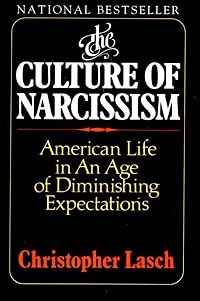
The Culture of Narcissism: American Life in an Age of Diminishing Expectations
by Christopher Lasch
On This Page
Description
When The Culture of Narcissism was first published, it was clear that Christopher Lasch had identified something important: what was happening to American society in the wake of the decline of the family over the last century. The book quickly became a bestseller. This edition includes a new afterword, "The Culture of Narcissism Revisited.".Tags
Recommendations




























Member Recommendations
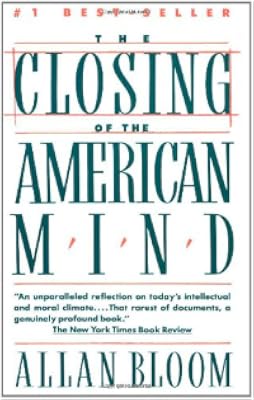
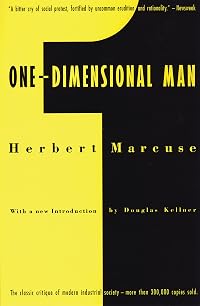
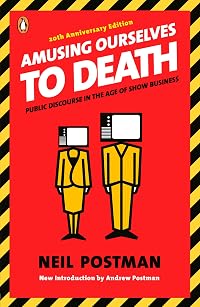
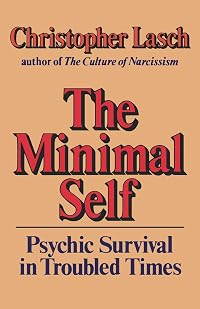
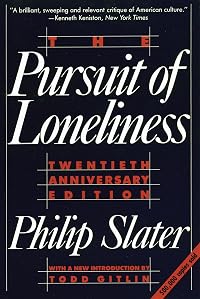
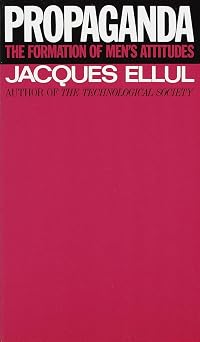
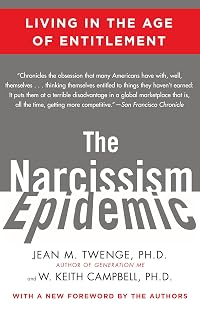
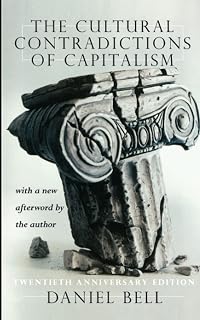
mambo_taxi Recommended instead of Lasch's book if reflections on America's cultural decline are your thing.
02
Member Reviews
This is a well-written and valuable book. Coming from a left-leaning perspective, Lasch’s critiques of what most Americans would consider the foundations of “liberal” politics are novel and cutting, even over 40 years after the publication of this book. For someone who doesn’t consider themselves as allied with either stream of mainline American political thought, it’s amazing how much of the political dogmas you still might absorb. There were dozens of times reading this book where I encountered a perspective on a problem that I simply had never even heard of before, let alone considered. The stock liberal/conservative tropes are so drilled into my brain that I often found my self trying to place Lasch in some kind of show more paradigm, only to remember that his whole project here is to undermine that kind of thinking. Lasch is definitely acting as contrarian here, and I can’t say I agree with everything he says. His views on Feminism, while interesting and worthwhile, are almost certainly outdated at this point. But as someone who values argument for arguments sake, i found a ton to think about in this book.
Most relevant to my life, and I would expect for most people in their late 20s early 30s, are Lasch’s views on education, sexuality, and the idea of societal progress. I had taken it for granted my whole life without really being conscious of it that public, state-run education systems were a flawed but commendable ideal - Lasch in just a few pages demonstrates the obvious problems with this ideal; the homogenized standards that hold everyone, regardless of ability, interest, or personality to the same bureaucratic standard; the degradation of educational standards that comes from pushing so many different people through the system; the idea that the school is now the fulcrum of a child’s entire life and that it’s held responsible not just for their academic education but also for their physical fitness, mental health, even practical skills like keeping house, cooking, repairing things etc.
In the chapter on sexuality, Lasch trots out some of the Freudian mumbo jumbo that sometimes sneaks into the book that I don’t care enough about to truly understand - at best these segments were a kind of surrealistic intermission from the rest of the book with nightmarish descriptions of vaginas with teeth and women with man-crushing legs. But I do think Lasch’s insight into the emptiness of the sexual environment is still pertinent. So many people of my generation, myself included, have been hardened and disheartened by modern dating, bulwarked as it is by dating apps, social networks, face-tuned photos, and ghosting. In many ways this situation couldn’t have been better designed to suit the narcissistic zeitgeist that Lasch is critiquing. For a while I’ve had the intimation that the economic and environment past and prognosis under which we grew up has scarred us in a way that pushed our generation into fickleness and unreliability, cultivating a “zen” feeling towards the temporary nature of relationships and external conditions, only as a coping mechanism against the ever-rising sensation of danger and instability.
All of this ties into Lasch’s main point which is that the left has too long been associated with, and drawn it’s inspiration from, an unbridled tendency towards “progress”, and that this progress, in the process of changing some truly outdated and disgusting societal problems, has also destroyed the things that have moored humanity since time immemorial. I came of age during the first Obama campaign and victory and found it super inspiring. I remember at that time the general tenor among the liberal adults around me was that the progressive ideal was coming to fruition. Of course that wasn’t true, both in the actions of the Obama administration once in office, and the shocking rebuke of this ideal when Trump was elected. I’m sure there are million things written about Trump as the manifestation of Lasch’s idea of narcissism, so I won’t wade into those deep waters. But left leaning folks have been been in the ideological wilderness for a while now, and I think letting go of this oppressive idea of “progress” could be a way out. One thing Lasch makes clear is, the “progress” we’ve talked about for so long is not that of the average person - it is instead that of cynical, exploitative capitalism, one of which’s most striking features is its ability to absorb any criticism and opposition into itself and use it against its dissidents.
What keeps Lasch relevant for me, is that despite his seemingly conservative views or retrograde inclinations, he is always clear about what the problem is here: capitalism and bureaucracy run rampant. If anything can draw the two sides of the political spectrum in America together, it’s this common enemy.
As a side note, it feels extremely timely reading this book after getting into Norm MacDonald over the last few months, mostly thru YouTube videos, and then after the comedians recent death. Through what I learned about him in interviews and such, MacDonald wouldn’t have called himself an anti-capitalist or leftist by any stretch, but I feel like he had a Laschian streak for sure; never following any party line, politically undefinable, aggressively down to earth and plain spoken, never afraid to touch the third rail of any issue. Despite differences of opinion or background I will always have an appreciation for brilliant, principled people. Lasch and Macdonald were both most certainly that. show less
Most relevant to my life, and I would expect for most people in their late 20s early 30s, are Lasch’s views on education, sexuality, and the idea of societal progress. I had taken it for granted my whole life without really being conscious of it that public, state-run education systems were a flawed but commendable ideal - Lasch in just a few pages demonstrates the obvious problems with this ideal; the homogenized standards that hold everyone, regardless of ability, interest, or personality to the same bureaucratic standard; the degradation of educational standards that comes from pushing so many different people through the system; the idea that the school is now the fulcrum of a child’s entire life and that it’s held responsible not just for their academic education but also for their physical fitness, mental health, even practical skills like keeping house, cooking, repairing things etc.
In the chapter on sexuality, Lasch trots out some of the Freudian mumbo jumbo that sometimes sneaks into the book that I don’t care enough about to truly understand - at best these segments were a kind of surrealistic intermission from the rest of the book with nightmarish descriptions of vaginas with teeth and women with man-crushing legs. But I do think Lasch’s insight into the emptiness of the sexual environment is still pertinent. So many people of my generation, myself included, have been hardened and disheartened by modern dating, bulwarked as it is by dating apps, social networks, face-tuned photos, and ghosting. In many ways this situation couldn’t have been better designed to suit the narcissistic zeitgeist that Lasch is critiquing. For a while I’ve had the intimation that the economic and environment past and prognosis under which we grew up has scarred us in a way that pushed our generation into fickleness and unreliability, cultivating a “zen” feeling towards the temporary nature of relationships and external conditions, only as a coping mechanism against the ever-rising sensation of danger and instability.
All of this ties into Lasch’s main point which is that the left has too long been associated with, and drawn it’s inspiration from, an unbridled tendency towards “progress”, and that this progress, in the process of changing some truly outdated and disgusting societal problems, has also destroyed the things that have moored humanity since time immemorial. I came of age during the first Obama campaign and victory and found it super inspiring. I remember at that time the general tenor among the liberal adults around me was that the progressive ideal was coming to fruition. Of course that wasn’t true, both in the actions of the Obama administration once in office, and the shocking rebuke of this ideal when Trump was elected. I’m sure there are million things written about Trump as the manifestation of Lasch’s idea of narcissism, so I won’t wade into those deep waters. But left leaning folks have been been in the ideological wilderness for a while now, and I think letting go of this oppressive idea of “progress” could be a way out. One thing Lasch makes clear is, the “progress” we’ve talked about for so long is not that of the average person - it is instead that of cynical, exploitative capitalism, one of which’s most striking features is its ability to absorb any criticism and opposition into itself and use it against its dissidents.
What keeps Lasch relevant for me, is that despite his seemingly conservative views or retrograde inclinations, he is always clear about what the problem is here: capitalism and bureaucracy run rampant. If anything can draw the two sides of the political spectrum in America together, it’s this common enemy.
As a side note, it feels extremely timely reading this book after getting into Norm MacDonald over the last few months, mostly thru YouTube videos, and then after the comedians recent death. Through what I learned about him in interviews and such, MacDonald wouldn’t have called himself an anti-capitalist or leftist by any stretch, but I feel like he had a Laschian streak for sure; never following any party line, politically undefinable, aggressively down to earth and plain spoken, never afraid to touch the third rail of any issue. Despite differences of opinion or background I will always have an appreciation for brilliant, principled people. Lasch and Macdonald were both most certainly that. show less
A withering critique of contemporary society, probably more relevant (and frightening) read today than back in '79. He leans heavily on Freud and mixes in Marxist/Frankfurt school style criticism. More or less his thesis reinforces everything a pessimistic cultural critic already sees/feels in 'late capitalist' society, but here, he persuasively argues that the reader is more than likely a narcissist and probably has never been aware of his condition (which, as Lasch defines, is the new psychological nerusosis of our time: the implication that a narcissist is a narcissist without knowing it). Who, me?
Lasch, on the evidence of this book, is the American Adorno. He writes in a similar style; each sentence is perfectly formed, but often not so well connected to the preceding and following sentences. He has no patience for the conservative/progressive distinction, and would rather discuss the effects of an idea or practice rather than immediately laud or damn it (so, for instance, 'feminism' isn't abruptly praised or scornfully ignored; rather, the difficulties of putting feminist doctrine into effect, and the inadequacy of feminism as a theory of society, are outlined... without concluding that women are inferior to men). Finally, this is Major Theory. He is not 'making a space for conversation' or 'analyzing discourses' or adding one show more brick to the great Academic Wall. He has a theory that late twentieth century life is really messed up, he traces out how we got to be like we are and speculates about how we could stop being that way. And his theory does seem to explain an awful lot.
In short, the conjunction of progressive liberalism and capitalism destroys traditional forms of life without providing any satisfactory replacement. Since people can no longer rely on those traditional forms, we feel a) at a loss, homeless, as if the world is out to crush us, but also, b) we're completely and increasingly dependent on the world. Our psychological defense against this is to become 'narcissistic,' reliant upon others for praise to boost our self-esteem. That praise needn't be genuine, in fact, it's usually better if it's not, since then there's no danger of our becoming dependent upon anyone. Relationships seem to require co-dependence, rather than friendship or love. It's increasingly difficult for us to become mature adults. Nonetheless, Lasch doesn't seem to be advocating a return to feudalism or anything. Socialism - not bureaucracy, but the human control of the economy, state and society - is his chosen solution to these problems.
The big problem with the book is that it's all a little Freudy. If you're allergic to Freud, as many people seem to be, you'll find that pretty off-putting. But there's not a whole lot of the really whacky Oedipus stuff. Lasch relies on the later Freud's theory of the id/ego/super-ego, to suggest that the revolt against authority makes it impossible for us to form an effective ego. Instead, it's all id (uncontrolled instinct) and terrifying super-ego (crushing guilt and self-loathing). You can and should cherry-pick chapters, even if you don't like Freud.
The second problem is that this is not a book for people who don't know about sociology and psychology as traditions of thought. In that way he's like Adorno too- this isn't popular non-fiction, whatever else it is. How it became a best-seller I'll never know. I do think that someone who's done a good job with a core undergraduate education should be able to muddle through and get the point; but how many people have done that? This is frustrating, because I want to recommend it to everyone I know. And if I do that, half of my friends will think I've become a knee-jerk conservative, one quarter will say 'oh Justin, up to his commie tricks again,' and the other quarter will roll their eyes and wish I wasn't such an elitist. Well suck it up, friends- I'm a conservative, socialist, elitist. Maybe I just like this book because I already agreed with it. show less
In short, the conjunction of progressive liberalism and capitalism destroys traditional forms of life without providing any satisfactory replacement. Since people can no longer rely on those traditional forms, we feel a) at a loss, homeless, as if the world is out to crush us, but also, b) we're completely and increasingly dependent on the world. Our psychological defense against this is to become 'narcissistic,' reliant upon others for praise to boost our self-esteem. That praise needn't be genuine, in fact, it's usually better if it's not, since then there's no danger of our becoming dependent upon anyone. Relationships seem to require co-dependence, rather than friendship or love. It's increasingly difficult for us to become mature adults. Nonetheless, Lasch doesn't seem to be advocating a return to feudalism or anything. Socialism - not bureaucracy, but the human control of the economy, state and society - is his chosen solution to these problems.
The big problem with the book is that it's all a little Freudy. If you're allergic to Freud, as many people seem to be, you'll find that pretty off-putting. But there's not a whole lot of the really whacky Oedipus stuff. Lasch relies on the later Freud's theory of the id/ego/super-ego, to suggest that the revolt against authority makes it impossible for us to form an effective ego. Instead, it's all id (uncontrolled instinct) and terrifying super-ego (crushing guilt and self-loathing). You can and should cherry-pick chapters, even if you don't like Freud.
The second problem is that this is not a book for people who don't know about sociology and psychology as traditions of thought. In that way he's like Adorno too- this isn't popular non-fiction, whatever else it is. How it became a best-seller I'll never know. I do think that someone who's done a good job with a core undergraduate education should be able to muddle through and get the point; but how many people have done that? This is frustrating, because I want to recommend it to everyone I know. And if I do that, half of my friends will think I've become a knee-jerk conservative, one quarter will say 'oh Justin, up to his commie tricks again,' and the other quarter will roll their eyes and wish I wasn't such an elitist. Well suck it up, friends- I'm a conservative, socialist, elitist. Maybe I just like this book because I already agreed with it. show less
A couple times I almost tossed this aside, but then I rather liked it in the end.
At times it seemed ranty and overly focused on the 70s. At others, and sometimes simultaneously, it seemed like it could've been written last year and was a cogent criticism of modern society--in some ways worse in the exact ways the author criticized forty years ago.
Lasch deploys liberal and conservative criticism alike -- sounding almost Marxian in his criticisms of capitalism at times and Reaganesque in his comments about the family at others -- but not incoherently.
I went in to this book unaware of the book's details but with a vague notion that it was from a conservative point of view. So, while disorienting at first, I appreciated Lasch's ecumenical show more approach -- I don't think either side has all the answers and there are surely things to criticize American capitalism for as well as to praise the American family for.
Lasch ties these disparate critical threads together in a persuasive criticism of a decade that is, for all its seeming differences, it similar to our own. In some ways, this was the most sobering realization for me -- that many of the legitimate criticisms he makes are still extant and arguably worse in more than a few cases today. show less
At times it seemed ranty and overly focused on the 70s. At others, and sometimes simultaneously, it seemed like it could've been written last year and was a cogent criticism of modern society--in some ways worse in the exact ways the author criticized forty years ago.
Lasch deploys liberal and conservative criticism alike -- sounding almost Marxian in his criticisms of capitalism at times and Reaganesque in his comments about the family at others -- but not incoherently.
I went in to this book unaware of the book's details but with a vague notion that it was from a conservative point of view. So, while disorienting at first, I appreciated Lasch's ecumenical show more approach -- I don't think either side has all the answers and there are surely things to criticize American capitalism for as well as to praise the American family for.
Lasch ties these disparate critical threads together in a persuasive criticism of a decade that is, for all its seeming differences, it similar to our own. In some ways, this was the most sobering realization for me -- that many of the legitimate criticisms he makes are still extant and arguably worse in more than a few cases today. show less
Christopher Lasch’s “The Culture of Narcissism” was originally published in 1979, and has been a major cynosure of cultural and social criticism ever since. English literary critic Frank Kermode called it, not inaccurately, a “hellfire sermon.” It is a wholesale indictment of contemporary American culture. It also happens to fall into a group of other books which share the same body of concerns that I have been working my way through, or around, in recent months: Daniel Boorstin’s “The Image: A Guide to Pseudo-Events in America,” Guy Debord’s “Society of the Spectacle,” Philip Rieff’s entire corpus (especially “Charisma,” but also his earlier work on Freud), and even the book I’m currently reading, Tony show more Judt’s “Ill Fares the Land.”
All of these books discuss some aspect of social anomie, loss of community, and subsequent feelings of dissolution. This isn’t by any means a new debate; in the field of sociology, it dates at least as far back as Ferdinand Tonnies’ distinction between gemeinschaft and gesellschaft, a distinction that was almost a prerequisite for the invention of modernism.
First, a note on the word “narcissism.” It was formerly a clinical term to diagnose the individual, but has “gone global” - or at least national. Lasch doesn’t really mean for the term to be a diagnosis in the clinical sense, but rather a “metaphor for the human condition” in contemporary times. In his argot, the word means much more than just lack of empathy, a tendency toward manipulative actions and pretentious behavior. “People today hunger not for personal salvation, let alone for the restoration of an earlier golden age, but for the feeling, the momentary illusion, of personal well-being, health, and psychic security” (p. 7). Lasch is more interested in the dissolution of communities and relationships that makes us feel as if we live highly individualized, atomized lives detached from the concerns of others. The book spells out the ways in which these patterns are positively correlated with the rise of materialism, technologism, “personal liberation” (those bywords of sixties radicalism) and nominal egalitarianism.
His few words on contemporary corporate America will strike anyone who has ever worked in one of these organizational hellscapes: he states that corporate bureaucracies “put a premium on the manipulation of interpersonal relations, discourage the formation of deep personal attachments and at the same time provide the narcissist with the approval he needs in order to validate his self-esteem.”
A la Debord, the politics of narcissism become more about “managing impressions” and “human relations” more than actually solving problems, citing Kennedy’s disaster at the Bay of Pigs as an example. To steal from the language of yet another late French thinker, it’s all about the simulacra. In a chapter called “The Degradation of Sport,” he notes that enormous amounts of corporate money have turned athletes into mere entertainers to be sold to the most prestigious sports syndicate. The central concept of the sporting even – the agon, the contest – has been displaced in order to sell products and personalities who will invariably be with the team for only a short time.
Lasch’s political affiliations are sometimes interestingly and tellingly misconstrued. Though often criticized for being a reactionary conservative simply because he points to the radicalism of the sixties as one of the desiderata under consideration, Lasch’s analysis is self-consciously informed by both Marx and Freud, two figures hardly recognized for being popularly co-opted by various brands of twentieth-century conservatism. Those who believe that Lasch is a blind ideologue on other side of the spectrum need to read him again: he explicitly faults both the right for their veneration of the market’s “invisible hand” and the left for their cultural progressivism. Lasch is in politics, above all else, a democratic humanist.
He writes in the Afterword, “The best defenses against the terrors of existence are the homely comforts of love, work, and family life, which connect us to a world that is independent of our wishes yet responsive to our needs. It is through love and work, as Freud noted … that we exchange crippling emotional conflict for ordinary unhappiness.” It might not sound like a prognosis abounding in optimism, but it drips with the sincerity of an honest, heartfelt critic of American culture. show less
All of these books discuss some aspect of social anomie, loss of community, and subsequent feelings of dissolution. This isn’t by any means a new debate; in the field of sociology, it dates at least as far back as Ferdinand Tonnies’ distinction between gemeinschaft and gesellschaft, a distinction that was almost a prerequisite for the invention of modernism.
First, a note on the word “narcissism.” It was formerly a clinical term to diagnose the individual, but has “gone global” - or at least national. Lasch doesn’t really mean for the term to be a diagnosis in the clinical sense, but rather a “metaphor for the human condition” in contemporary times. In his argot, the word means much more than just lack of empathy, a tendency toward manipulative actions and pretentious behavior. “People today hunger not for personal salvation, let alone for the restoration of an earlier golden age, but for the feeling, the momentary illusion, of personal well-being, health, and psychic security” (p. 7). Lasch is more interested in the dissolution of communities and relationships that makes us feel as if we live highly individualized, atomized lives detached from the concerns of others. The book spells out the ways in which these patterns are positively correlated with the rise of materialism, technologism, “personal liberation” (those bywords of sixties radicalism) and nominal egalitarianism.
His few words on contemporary corporate America will strike anyone who has ever worked in one of these organizational hellscapes: he states that corporate bureaucracies “put a premium on the manipulation of interpersonal relations, discourage the formation of deep personal attachments and at the same time provide the narcissist with the approval he needs in order to validate his self-esteem.”
A la Debord, the politics of narcissism become more about “managing impressions” and “human relations” more than actually solving problems, citing Kennedy’s disaster at the Bay of Pigs as an example. To steal from the language of yet another late French thinker, it’s all about the simulacra. In a chapter called “The Degradation of Sport,” he notes that enormous amounts of corporate money have turned athletes into mere entertainers to be sold to the most prestigious sports syndicate. The central concept of the sporting even – the agon, the contest – has been displaced in order to sell products and personalities who will invariably be with the team for only a short time.
Lasch’s political affiliations are sometimes interestingly and tellingly misconstrued. Though often criticized for being a reactionary conservative simply because he points to the radicalism of the sixties as one of the desiderata under consideration, Lasch’s analysis is self-consciously informed by both Marx and Freud, two figures hardly recognized for being popularly co-opted by various brands of twentieth-century conservatism. Those who believe that Lasch is a blind ideologue on other side of the spectrum need to read him again: he explicitly faults both the right for their veneration of the market’s “invisible hand” and the left for their cultural progressivism. Lasch is in politics, above all else, a democratic humanist.
He writes in the Afterword, “The best defenses against the terrors of existence are the homely comforts of love, work, and family life, which connect us to a world that is independent of our wishes yet responsive to our needs. It is through love and work, as Freud noted … that we exchange crippling emotional conflict for ordinary unhappiness.” It might not sound like a prognosis abounding in optimism, but it drips with the sincerity of an honest, heartfelt critic of American culture. show less
It was galling to read this book when it first emerged in 1979, and I struggled against accepting its thesis, even as I realized that my struggle was symptomatic of my narcissistic pathology. Now, some 30 years on, I have grown weary of the struggle; I surrender to my narcissism with a humble, even cheerful, good grace. The beginning of wisdom? This unrepentant narcissist would like to believe so.
Chock full of trenchant insights about what forms and constitutes our cultural narcissism. A tad too much Freud and Marx for my taste, but even those frameworks are utilized deftly.
Members
- Recently Added By
Lists

culture
320 works; 1 member

Books Read in 2010
631 works; 11 members

Recovery from Psychopath
128 works; 1 member

Recommendations by Tim Keller
50 works; 1 member
Author Information

21+ Works 3,980 Members
Christopher Lasch (1932-1994) was a professor of history at the University of Rochester and wrote, among many other works. The True and Only Heaven: Progress and Its Critics and the best-selling Revolt of the Elites and the Betrayal of Democracy.
Awards and Honors
Awards
Distinctions
Series
Belongs to Publisher Series
Work Relationships
Common Knowledge
- Original title
- The Culture of Narcissism : American Life in an Age of Diminishing Expectations
- Original publication date
- 1979
- Dedication
- To Kate
For she is wise, if I can judge of her,
And fair she is, if that mine eyes be true,
And true she is, as she hath prov'd herself;
And therefore, like herself, wise, fair, and true,
<... (show all)br>Shall she be placed in my constant soul.
THE MERCHANT OF VENICE, II. vi - First words
- Hardly more than a quarter-century after Henry Luce proclaimed “the American century,” American confidence has fallen to a low ebb.
- Last words
- (Click to show. Warning: May contain spoilers.)That discipline—indispensable to the task of building a new order—endures most of all in those who knew the old order only as a broken promise, yet who took the promise more seriously than those who merely took it for granted.
(Click to show. Warning: May contain spoilers.)Everything conspires to encourage escapist solutions to the psychological problems of dependence, separation, and individuation, and to discourage the moral realism that makes it possible for human beings to come to terms with existential constraints on their power and freedom. (afterword) - Original language
- English
Classifications
- Genres
- Sociology, Nonfiction, General Nonfiction, History
- DDC/MDS
- 973.92 — History & geography History of North America United States 1901- Cold War, Vietnam War, Digital Age (1953-2001)
- LCC
- HN65 .L33 — Social sciences Social history and conditions. Social problems. Social reform Social history and conditions. Social problems. By region or country
- BISAC
Statistics
- Members
- 1,753
- Popularity
- 12,579
- Reviews
- 19
- Rating
- (3.89)
- Languages
- 15 — Czech, Danish, Dutch, English, French, German, Hungarian, Italian, Norwegian (Bokmål), Norwegian, Polish, Portuguese, Croatian, Spanish, Swedish
- Media
- Paper, Audiobook, Ebook
- ISBNs
- 52
- ASINs
- 19