On This Page
Description
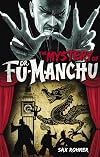
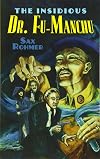
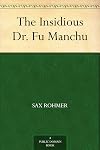
This first novel in Sax Rohmer's series, The Insidious Dr. Fu Manchu combined together previously written short stories into a single story about the dealings of this criminal mastermind. Master poisoner, chemist, member of the "Yellow Peril", and wearer of iconographic facial hair, Fu Manchu is "the greatest genius which the powers of evil have put on the earth for centuries." Although his dark purpose is not yet clear, Fu Manchu seems determined to abduct Europe's greatest engineers and show more take them back to China. show lessTags
Recommendations
















Member Recommendations

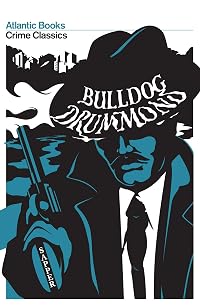
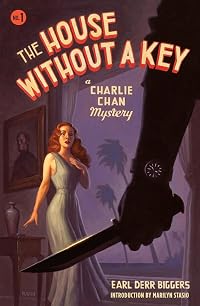
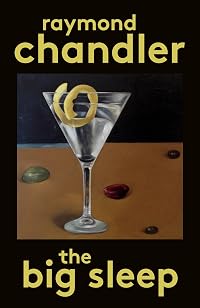
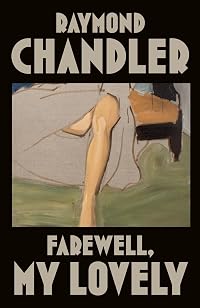
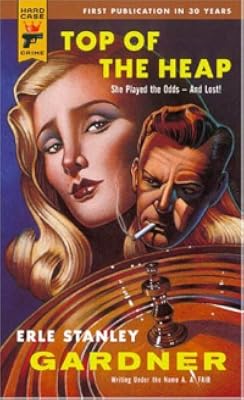
leigonj Both are adventure/ detective stories in which the heroes must battle to stop mysterious, evil, foreign antagonists striking at the very heart of the British Empire.
Member Reviews
The first of Sax Rohmer’s classic Fu Manchu series, it was originally published in novel form in Great Britain in 1913 as The Mystery of Dr. Fu-Manchu, collecting a series of short stories published in 1912. As a novel, the work contains thirty chapters, but, like others in the series, is more or less a series of semi-related, episodic story arcs of roughly a half-dozen chapters each. It is firmly in the “Yellow Peril” genre of literature, and indeed, encapsulates – if not originates – most of the tropes we associate with this kind of work. The Oriental mastermind Fu Manchu has spawned countless imitators and representations in films, books, radio shows, comics, and art. From our perspective in the twenty-first century, you show more may find the anxiety-ridden Orientalism present in the novels deplorable, but you should at least take a look and see why this literature has resonated so strongly for decades. This first in the series is a good place to begin those explorations.
Spoilers ahead – continue onward at your own peril.
The book begins with a fateful meeting between the narrator, Dr. John Petrie, a seemingly ordinary British physician, and his old friend, Denis Nayland Smith, another British gentleman who has served for years as a roving special police commissioner in Burma and elsewhere in Asia. This meeting, and the threats and perils our protagonists encounter, set the stage for the rest of the series. The pair are very much in the Holmes and Watson tradition, save that instead of Holmes’ special powers of observation and deduction, Nayland Smith enjoys an encyclopedic knowledge of all things Oriental and the ability to command the aid and support of pretty much all British government officials. Petrie brings his knowledge of medicine, chemistry, forensics, and he’s a crack shot with his revolver as well. In some of the later adventures in this novel, they are assisted by the doughty Inspector Weymouth of New Scotland Yard. The novel begins with Nayland Smith and Petrie’s investigation into the mysterious (locked-room style) death of Sir Crichton Davey who, as it turns out has been killed by the enigmatic “Zayat Kiss,” feared throughout the Orient. We learn that Nayland Smith is hot on the trail of the inscrutable Chinese mastermind, Dr. Fu Manchu (sometimes spelled with a hyphen, sometimes not), who is also behind Davey’s death, among many other crimes. Who is Fu Manchu? I will let Nayland Smith provide his iconic answer:
"Imagine a person, tall, lean and feline, high-shouldered, with a brow like Shakespeare and a face like Satan, a close-shaven skull, and long, magnetic eyes of the true cat-green. Invest him with all the cruel cunning of an entire Eastern race, accumulated in one giant intellect, with all the resources of science past and present, with all the resources, if you will, of a wealthy government—which, however, already has denied all knowledge of his existence. Imagine that awful being, and you have a mental picture of Dr. Fu-Manchu, the yellow peril incarnate in one man." (Chapter Two)
In their first outing, there is undercover work in an opium den, a death trap, unexpected aid from Karamaneh (a reluctant female servant of Fu Manchu’s who will come to play a much larger role in the series), and the escape of Fu Manchu. Our protagonists next become involved in the minor affair of saving the life of an Episcopal clergyman, who was involved tangentially in the Boxer Rebellion but is now threatened by Fu Manchu for his actions in China. Then they are brought in to investigate the attempted murder of explorer and naturalist Sir Lionel Barton (these British noblemen don’t seem to have a very high life expectancy, do they?) Nayland Smith and Petrie also face Fu Manchu’s use of the dread Call of Siva, seemingly a kind of compulsion to suicide that Fu Manchu has mastered, among other outré threats.
I don’t want to provide too many spoilers so will forego running through the rest of the novel’s plot bit-by-bit, but the constant dueling with Fu Manchu as his various plots are discovered and narrowly thwarted continues. Time after time, Fu Manchu acts through agents (human and exotic animal alike) or, when forced to act himself, manages to narrowly escape, usually by gaining the upper hand over Nayland Smith or Petrie at the last second. One ally of the pair suffers a truly horrific fate, but again, no horrendous plot spoilers here.
In addition to Fu Manchu’s virtual menagerie of hideous and deadly animal and human assassins, he is also a master of chemistry who uses poison gas and, as we will see as the series advances, a variety of other fantastical elixirs unknown to modern science. He is also a cruel master of torture, to include the “wire jacket,” which I will not describe here except to say that the book contains passages with real menace and true horror. To be sure, the language is at times stilted, but it’s still capable of evoking feelings of atmospheric dread and so I found it effective as both thriller and horror novel.
I give this book a strong 4 stars out of 5. Yes, of course, it contains sentiments we now deride as racist. You knew that going into the book. Allow yourself to look past those flaws to see what all the fuss is about and why almost everyone has an idea of who Fu Manchu is. It’s a darn good adventure novel that’s well-plotted and with plenty of twists and turns, frights and horrors. Highly recommended.
Review copyright 2011 J. Andrew Byers show less
Spoilers ahead – continue onward at your own peril.
The book begins with a fateful meeting between the narrator, Dr. John Petrie, a seemingly ordinary British physician, and his old friend, Denis Nayland Smith, another British gentleman who has served for years as a roving special police commissioner in Burma and elsewhere in Asia. This meeting, and the threats and perils our protagonists encounter, set the stage for the rest of the series. The pair are very much in the Holmes and Watson tradition, save that instead of Holmes’ special powers of observation and deduction, Nayland Smith enjoys an encyclopedic knowledge of all things Oriental and the ability to command the aid and support of pretty much all British government officials. Petrie brings his knowledge of medicine, chemistry, forensics, and he’s a crack shot with his revolver as well. In some of the later adventures in this novel, they are assisted by the doughty Inspector Weymouth of New Scotland Yard. The novel begins with Nayland Smith and Petrie’s investigation into the mysterious (locked-room style) death of Sir Crichton Davey who, as it turns out has been killed by the enigmatic “Zayat Kiss,” feared throughout the Orient. We learn that Nayland Smith is hot on the trail of the inscrutable Chinese mastermind, Dr. Fu Manchu (sometimes spelled with a hyphen, sometimes not), who is also behind Davey’s death, among many other crimes. Who is Fu Manchu? I will let Nayland Smith provide his iconic answer:
"Imagine a person, tall, lean and feline, high-shouldered, with a brow like Shakespeare and a face like Satan, a close-shaven skull, and long, magnetic eyes of the true cat-green. Invest him with all the cruel cunning of an entire Eastern race, accumulated in one giant intellect, with all the resources of science past and present, with all the resources, if you will, of a wealthy government—which, however, already has denied all knowledge of his existence. Imagine that awful being, and you have a mental picture of Dr. Fu-Manchu, the yellow peril incarnate in one man." (Chapter Two)
In their first outing, there is undercover work in an opium den, a death trap, unexpected aid from Karamaneh (a reluctant female servant of Fu Manchu’s who will come to play a much larger role in the series), and the escape of Fu Manchu. Our protagonists next become involved in the minor affair of saving the life of an Episcopal clergyman, who was involved tangentially in the Boxer Rebellion but is now threatened by Fu Manchu for his actions in China. Then they are brought in to investigate the attempted murder of explorer and naturalist Sir Lionel Barton (these British noblemen don’t seem to have a very high life expectancy, do they?) Nayland Smith and Petrie also face Fu Manchu’s use of the dread Call of Siva, seemingly a kind of compulsion to suicide that Fu Manchu has mastered, among other outré threats.
I don’t want to provide too many spoilers so will forego running through the rest of the novel’s plot bit-by-bit, but the constant dueling with Fu Manchu as his various plots are discovered and narrowly thwarted continues. Time after time, Fu Manchu acts through agents (human and exotic animal alike) or, when forced to act himself, manages to narrowly escape, usually by gaining the upper hand over Nayland Smith or Petrie at the last second. One ally of the pair suffers a truly horrific fate, but again, no horrendous plot spoilers here.
In addition to Fu Manchu’s virtual menagerie of hideous and deadly animal and human assassins, he is also a master of chemistry who uses poison gas and, as we will see as the series advances, a variety of other fantastical elixirs unknown to modern science. He is also a cruel master of torture, to include the “wire jacket,” which I will not describe here except to say that the book contains passages with real menace and true horror. To be sure, the language is at times stilted, but it’s still capable of evoking feelings of atmospheric dread and so I found it effective as both thriller and horror novel.
I give this book a strong 4 stars out of 5. Yes, of course, it contains sentiments we now deride as racist. You knew that going into the book. Allow yourself to look past those flaws to see what all the fuss is about and why almost everyone has an idea of who Fu Manchu is. It’s a darn good adventure novel that’s well-plotted and with plenty of twists and turns, frights and horrors. Highly recommended.
Review copyright 2011 J. Andrew Byers show less
Episodic and moderately entertaining yarn (or yarns) pitting Edwardian British Government agent Nayland Smith and his cohort, friend and narrator, Dr. Petrie, against the master criminal "yellow peril personified" Dr. Fu Manchu. Fu Manchu himself is the most interesting character, and his varied and ingenious ways of facilitating murder in inaccessible locales and locked rooms the most entertaining tropes. It was also amusing to read a thriller actually written in this era (circa 1913) depicting a world now so often treated in steampunk fare.
As to the "politically incorrect" aspect, I will only observe that these stories were written on the heels of the Boxer Rebellion and opium wars. What can we make of the paranoia about the Yellow show more Race seeking to dominate the White Race if not the imperialists suppressed guilt projected outward onto to imagined mastermind of evil? show less
As to the "politically incorrect" aspect, I will only observe that these stories were written on the heels of the Boxer Rebellion and opium wars. What can we make of the paranoia about the Yellow show more Race seeking to dominate the White Race if not the imperialists suppressed guilt projected outward onto to imagined mastermind of evil? show less
A good story, though a trifle hard to read at times, do to the overt racism against the "yellow menace". Setting that aside, Dr. Fun Manchu is one heck of a villain - cunning, smart, and slippery as heck! Nayland Smith and Dr. Petrie, along with Inspector Weymouth try hard to best him, but to no avail. I liked all the characters, along with the potential love interest Karamaneh, but the Dr. stands tall among them! He is their intellectual superior, and an expert in poisons, drugs, fungi, and bacilli, with the ability to come and go as he pleases! The story, and the style, remind me of Bram Stoker's Dracula, and the adversarial nature of the characters is reminiscent of another doctor, Sherlock Holmes. Still, the racist nature of the show more narrative does give me pause as to how I feel overall about the book. I leave it to you to decide for yourself! show less
'The Insidious Dr. Fu Manchu' is the American title for 'The Mystery of Fu Manchu' (published in the UK in 1913) which, in turn, was the novelisation of a series of short stories by Sax Rohmer published in 1912.
It is an exercise in sustained hysteria which is only partly explained by the original short story magazine format with its requirement for cliff hangars and constant thrills. Yet it remains a classic as the quintessential expression of Edwardian imperial paranoia and self-image.
I reviewed Phil Baker's biography of Sax Rohmer at https://www.goodreads.com/review/show/1555777814 so there is no need to add to the analysis there. All we need to know here is that an early Fu Manchu novel should be on the reading list of any ironical show more post-modern Englishman.
Whatever you do, do not take this book too seriously. Just go with the maniacal flow and enjoy it. Be a bit steampunk and fantasise about living in a world where people like Nayland Smith and Dr. Petrie (the Holmes and Watson of the story) could exist and be taken seriously.
The evil villain Fu Manchu is truly evil but he is granted high intelligence and has the same cause as Captain Nemo, a loathing of British imperialism. There is an ambiguity in the tale as our heroes recognise that their Chinese antagonist is actually much brighter than they are.
In the end, Nayland Smith and Petrie win because they are dogged, persistent and stout-hearted and because they are lucky. After a while, we might even sympathise with Fu Manchu whose brilliant evil plans are constantly thwarted by an excitable mid-ranking official and an amateur.
My old Victorian-founded grammar school had a school song with the lines 'sentiment is more than skill'. The pragmatic anti-intellectualism, gamesmanship and moral self-righteousness of the English middle classes are well expressed in this tale of secret service defence of the imperial realm.
Later in the series, Fu Manchu becomes a little more human and less of a theatrical villain (one who is not merely inscrutable but genuinely gratuitously murderous and cruel) but, here, the best word for him comes from Victorian melodrama - daastardly.
The 'novel' is little more than a series of unusual crimes committed or threatened, solved or thwarted by our heroes, amidst much mystery and puzzlement. More often than not, we see a life-threatening event cunningly pre-planned by the evil doctor from which they bound free.
There is a sustained love interest in the beautiful Arab slave Karamaneh whose ambiguous charms express all the yearning of the English middle class male reader for the louche sexual pleasures of freedom from responsibility.
Pages could be written on the sexual aspects of the plot but suffice it to say that Petrie's love for this exotic woman (which she reciprocates) frequently results in the plans of the heroes coming to naught (largely to permit the next story in the series).
Petrie is the sort of man who would later be characterised as Colonel Blimp in Powell and Pressburger's 1943 film. Since Petrie (like Watson) tells the tale we can only surmise Nayland Smith's periodic despair at the plot-necessary stupidity of his dim but honourable amanuensis.
Still, they triumph in the end though not enough to stop 14 official (one posthumous) Rohmer outings for the villain, five or six authorised post-Rohmer continuations and at least five and probably many more appearances in the fiction of other writers.
The novel is like a time travel experience to another moral world, wholly incomparable to our own, and it is definitely not great literature but its verve and its essential simplicity as well as its almost ridiculous story line make it an enjoyable read from the age of Zane Grey and Edgar Rice Burroughs. show less
It is an exercise in sustained hysteria which is only partly explained by the original short story magazine format with its requirement for cliff hangars and constant thrills. Yet it remains a classic as the quintessential expression of Edwardian imperial paranoia and self-image.
I reviewed Phil Baker's biography of Sax Rohmer at https://www.goodreads.com/review/show/1555777814 so there is no need to add to the analysis there. All we need to know here is that an early Fu Manchu novel should be on the reading list of any ironical show more post-modern Englishman.
Whatever you do, do not take this book too seriously. Just go with the maniacal flow and enjoy it. Be a bit steampunk and fantasise about living in a world where people like Nayland Smith and Dr. Petrie (the Holmes and Watson of the story) could exist and be taken seriously.
The evil villain Fu Manchu is truly evil but he is granted high intelligence and has the same cause as Captain Nemo, a loathing of British imperialism. There is an ambiguity in the tale as our heroes recognise that their Chinese antagonist is actually much brighter than they are.
In the end, Nayland Smith and Petrie win because they are dogged, persistent and stout-hearted and because they are lucky. After a while, we might even sympathise with Fu Manchu whose brilliant evil plans are constantly thwarted by an excitable mid-ranking official and an amateur.
My old Victorian-founded grammar school had a school song with the lines 'sentiment is more than skill'. The pragmatic anti-intellectualism, gamesmanship and moral self-righteousness of the English middle classes are well expressed in this tale of secret service defence of the imperial realm.
Later in the series, Fu Manchu becomes a little more human and less of a theatrical villain (one who is not merely inscrutable but genuinely gratuitously murderous and cruel) but, here, the best word for him comes from Victorian melodrama - daastardly.
The 'novel' is little more than a series of unusual crimes committed or threatened, solved or thwarted by our heroes, amidst much mystery and puzzlement. More often than not, we see a life-threatening event cunningly pre-planned by the evil doctor from which they bound free.
There is a sustained love interest in the beautiful Arab slave Karamaneh whose ambiguous charms express all the yearning of the English middle class male reader for the louche sexual pleasures of freedom from responsibility.
Pages could be written on the sexual aspects of the plot but suffice it to say that Petrie's love for this exotic woman (which she reciprocates) frequently results in the plans of the heroes coming to naught (largely to permit the next story in the series).
Petrie is the sort of man who would later be characterised as Colonel Blimp in Powell and Pressburger's 1943 film. Since Petrie (like Watson) tells the tale we can only surmise Nayland Smith's periodic despair at the plot-necessary stupidity of his dim but honourable amanuensis.
Still, they triumph in the end though not enough to stop 14 official (one posthumous) Rohmer outings for the villain, five or six authorised post-Rohmer continuations and at least five and probably many more appearances in the fiction of other writers.
The novel is like a time travel experience to another moral world, wholly incomparable to our own, and it is definitely not great literature but its verve and its essential simplicity as well as its almost ridiculous story line make it an enjoyable read from the age of Zane Grey and Edgar Rice Burroughs. show less
To a student a literature, there are classics of older times for which allowances that must be made to understand the cultural in which they were written.
And then there's The Insidious Dr. Fu Manchu
The story is simple enough. Knock-off Sherlock Holmes (henceforth KOSH) returns from Asia, informing Knock-Off of Doctor Watson (henceforth KODW) of the threat of . . .
Well, he doesn't really say, honestly. KOSH just pulls KODW through an entire adventure, occasionally mentioning someone named Fu Manchu without explaining who that person is or what they want. Honestly, the book makes an equal amount of sense at this point if you replace every occurrence of "Fu Manchu" with "Mr. Potato Head."
Eventually, we learn that Fu Manchu is a nefarious show more Chinese covert agent, working for a secret Chinese council to further his country's interests. With his army of assassins, masters of strange science, and expertise in poisons, Fu Manchu plans to help China rise high on the global stage.
The underscores an important point. Fu Manchu is, by far, the most sympathetic, interesting, and likable character in this book. He's the Chinese James Bond or Nick Fury, committing plans with style and panache, often sparing his enemies' lives, and generally making me wish he'd murder the Baker Street knock-off duo.
Of course, the reader is supposed to find Fu Manchu horrifying because the Chinese people are, Sax Rohmer constantly reminds us, an evil subhuman race of unimaginable cruelty and inscrutable motives.
I've read Lovecraft and the Tarzan novels, and this is one of the most racist things I've ever read. Like, "describing Chinese people with terms like 'chattering' 'simian,' and 'yellow paws'" racist. KODW spends a good chunk of a chapter informing us of how the Chinese in Hawaii are buying scorpions to murder their infant girls with plausible deniability, remarking that only the Chinese have a character capable of producing a Fu Manchu.
Every Chinese person in the book is, obviously enough, an agent of Fu Manchu. Aside from the man himself, only one of them speaks; I didn't understand any his dialogue until I realized I had to read the l's as r's.
This is the core of the book, which never fails to remind us that the central conflict is White vs. Yellow. Other nonwhites don't come out so good either. Rohmer fills a mansion murder scheme with a surprising diversity, only to proceed to generate a singularity of stereotypes.
. . . and we come to the Egyptian love interest.
She's exotic, beautiful, courageous, and KODW apologizes to his reader at the disgust they must have for his attraction to her, as the very idea of a white man loving an Asian is, to him, stomach-turning. KOSH offers sound relationship advice. It's like Cyrano, only the best friend is suggesting the girl in question would quite like being dragged by her hair into a cellar and threatened with a whip. Because Asians.
She doesn't disabuse the notion, basically saying, "Lock me up, and I'll tell you everything! You wanna beat me?" The romantic dynamic between our protagonist and the femme fatale makes [book:Fifty Shades of Grey|10818853] look like a gender studies textbook.
So there's my conumdrum. There are thrills and mysteries in here that I really liked, escapades and traps, world-building and wonders, and they are awesome. When Fu Manchu needs to eliminate an enemy of Chinese ambition, they are dealt with in ways that perfectly blend pulp and mystery. I was cheering and the ingenuity of several, and there's a kidnapping attempt so brilliant that I want to throw it into my role-playing games.
And then there's Fu Manchu himself.
"Imagine a person, tall, lean and feline, high-shouldered, with a brow like Shakespeare and a face like Satan, a close-shaven skull, and long, magnetic eyes of the true cat-green."
So, surprisingly, no mustache. Like the Holmesian deerstalker, that was added in the films.
Fu Manchu is such a magnificent bastard, I can't help but love him. Once, our putative heroes stand on a dock, watching a ship sailing into the distance as a sign of their defeat in that particular case. KOSH immediately hears Fu's voice at his ear say, "Another victory for China, Mister Knock-off Sherlock Holmes!"
Did you catch that? The mastermind secret agent takes time out of his busy day to perform the 1904 espionage community equivalent of tea-bagging.
It is a thing of beauty to watch Fu Manchu in action. My favorite is from later in the book, where he lays down on a couch surrounded by trapdoors and either pretends or actually does smoke a bowl of opium, waiting for our heroes to rush him like racist Wile E. Coyotes.
All this joy is constantly punctuated by the narrator's reminder that Asians are subhuman.
In short, I hate the heroes and love the villain. So how do I grade this?
Well, I'm going to leave the racism on the table as something that bothers me. I've read a lot of fiction from that period as a longtime subscriber to the H.P.Lovecraft Literary Podcast, and few affected me like this. There's casual racism, there's heavy racism, and them there's this guy.
Sax Rohmer was pissed that he was banned in Nazi Germany, because he asserted his books were in no way ideologically opposed to Nazism. Screw that guy.
But the text does crackle at times. The deathtraps are awesome. Fu Manchu is amazing, strangely honorable, and endlessly creative.
So, here's how you can add two stars, making the review a total of four stars.
a) If I think of KODW as an unreliable narrator chronicling the battle between two equally imperial spies, it works.
b) If you picture the main characters as Inspector Clouseau-level bunglers, that's cool. They're the Colonel Klink of the pulp hero world.
c) If you can admit that a staggeringly racist author can, almost accidentally, create a rich character from the people that he despises.
After all, I truly love the character of Fu Manchu as he's presented here. I thought he was a fascinating badass when I first encountered him in Marvel Comics as the father of Shang Chi, the Master of Kung-Fu.
Dear merciful Glob, do I want that Shang-Chi: Master of Kung-Fu Omnibus Vol. 1.
I can probably read The Return of Fu Manchu, as long as Fu Manchu is suitably magnificent in how he foils our "heroes." Guess what Fu Manchu book I'm looking forward to reading more?
Ten Years Beyond Baker Street.
Yup, . I bet the actual Holmes will have a lot less cringe-worthy dialogue about Chinese cruelty. show less
And then there's The Insidious Dr. Fu Manchu
The story is simple enough. Knock-off Sherlock Holmes (henceforth KOSH) returns from Asia, informing Knock-Off of Doctor Watson (henceforth KODW) of the threat of . . .
Well, he doesn't really say, honestly. KOSH just pulls KODW through an entire adventure, occasionally mentioning someone named Fu Manchu without explaining who that person is or what they want. Honestly, the book makes an equal amount of sense at this point if you replace every occurrence of "Fu Manchu" with "Mr. Potato Head."
Eventually, we learn that Fu Manchu is a nefarious show more Chinese covert agent, working for a secret Chinese council to further his country's interests. With his army of assassins, masters of strange science, and expertise in poisons, Fu Manchu plans to help China rise high on the global stage.
The underscores an important point. Fu Manchu is, by far, the most sympathetic, interesting, and likable character in this book. He's the Chinese James Bond or Nick Fury, committing plans with style and panache, often sparing his enemies' lives, and generally making me wish he'd murder the Baker Street knock-off duo.
Of course, the reader is supposed to find Fu Manchu horrifying because the Chinese people are, Sax Rohmer constantly reminds us, an evil subhuman race of unimaginable cruelty and inscrutable motives.
I've read Lovecraft and the Tarzan novels, and this is one of the most racist things I've ever read. Like, "describing Chinese people with terms like 'chattering' 'simian,' and 'yellow paws'" racist. KODW spends a good chunk of a chapter informing us of how the Chinese in Hawaii are buying scorpions to murder their infant girls with plausible deniability, remarking that only the Chinese have a character capable of producing a Fu Manchu.
Every Chinese person in the book is, obviously enough, an agent of Fu Manchu. Aside from the man himself, only one of them speaks; I didn't understand any his dialogue until I realized I had to read the l's as r's.
This is the core of the book, which never fails to remind us that the central conflict is White vs. Yellow. Other nonwhites don't come out so good either. Rohmer fills a mansion murder scheme with a surprising diversity, only to proceed to generate a singularity of stereotypes.
. . . and we come to the Egyptian love interest.
She's exotic, beautiful, courageous, and KODW apologizes to his reader at the disgust they must have for his attraction to her, as the very idea of a white man loving an Asian is, to him, stomach-turning. KOSH offers sound relationship advice. It's like Cyrano, only the best friend is suggesting the girl in question would quite like being dragged by her hair into a cellar and threatened with a whip. Because Asians.
She doesn't disabuse the notion, basically saying, "Lock me up, and I'll tell you everything! You wanna beat me?" The romantic dynamic between our protagonist and the femme fatale makes [book:Fifty Shades of Grey|10818853] look like a gender studies textbook.
So there's my conumdrum. There are thrills and mysteries in here that I really liked, escapades and traps, world-building and wonders, and they are awesome. When Fu Manchu needs to eliminate an enemy of Chinese ambition, they are dealt with in ways that perfectly blend pulp and mystery. I was cheering and the ingenuity of several, and there's a kidnapping attempt so brilliant that I want to throw it into my role-playing games.
And then there's Fu Manchu himself.
"Imagine a person, tall, lean and feline, high-shouldered, with a brow like Shakespeare and a face like Satan, a close-shaven skull, and long, magnetic eyes of the true cat-green."
So, surprisingly, no mustache. Like the Holmesian deerstalker, that was added in the films.
Fu Manchu is such a magnificent bastard, I can't help but love him. Once, our putative heroes stand on a dock, watching a ship sailing into the distance as a sign of their defeat in that particular case. KOSH immediately hears Fu's voice at his ear say, "Another victory for China, Mister Knock-off Sherlock Holmes!"
Did you catch that? The mastermind secret agent takes time out of his busy day to perform the 1904 espionage community equivalent of tea-bagging.
It is a thing of beauty to watch Fu Manchu in action. My favorite is from later in the book, where he lays down on a couch surrounded by trapdoors and either pretends or actually does smoke a bowl of opium, waiting for our heroes to rush him like racist Wile E. Coyotes.
All this joy is constantly punctuated by the narrator's reminder that Asians are subhuman.
In short, I hate the heroes and love the villain. So how do I grade this?
Well, I'm going to leave the racism on the table as something that bothers me. I've read a lot of fiction from that period as a longtime subscriber to the H.P.Lovecraft Literary Podcast, and few affected me like this. There's casual racism, there's heavy racism, and them there's this guy.
Sax Rohmer was pissed that he was banned in Nazi Germany, because he asserted his books were in no way ideologically opposed to Nazism. Screw that guy.
But the text does crackle at times. The deathtraps are awesome. Fu Manchu is amazing, strangely honorable, and endlessly creative.
So, here's how you can add two stars, making the review a total of four stars.
a) If I think of KODW as an unreliable narrator chronicling the battle between two equally imperial spies, it works.
b) If you picture the main characters as Inspector Clouseau-level bunglers, that's cool. They're the Colonel Klink of the pulp hero world.
c) If you can admit that a staggeringly racist author can, almost accidentally, create a rich character from the people that he despises.
After all, I truly love the character of Fu Manchu as he's presented here. I thought he was a fascinating badass when I first encountered him in Marvel Comics as the father of Shang Chi, the Master of Kung-Fu.
Dear merciful Glob, do I want that Shang-Chi: Master of Kung-Fu Omnibus Vol. 1.
I can probably read The Return of Fu Manchu, as long as Fu Manchu is suitably magnificent in how he foils our "heroes." Guess what Fu Manchu book I'm looking forward to reading more?
Ten Years Beyond Baker Street.
Yup, . I bet the actual Holmes will have a lot less cringe-worthy dialogue about Chinese cruelty. show less
Well, okay, this is...it's entertaining, okay? I had fun. It's a pretty shameless Sherlock Holmes ripoff, with a doctor sidekick narrating an adventure in which the protagonist is his brilliant detectiveish friend. Moriarty is Asianified, but comes with the same breathless, constant hyperbolic descriptions: "The most brilliant criminal mind to have existed in generations!"
The problem with hyperbole is that you kinda have to back it up. Conan Doyle is great at this. There's this fine line you want to walk: you want to leave the reader unable, usually, to solve the mystery, but when you do the big reveal at the end you want the reader not to feel cheated. I have to think, "I didn't get that - but I could have. I almost did. It makes show more sense." Conan Doyle pioneered that, as far as I know. (Don't bring up Dupin! Holmes owes that guy, but not for this. Poe sucked at this. "Murders at the Rue Morgue" spoiler:"The fucking orangutan did it" is not a good reveal. )
On the other hand, there's a less-discussed, dirtier trick that can be effective: the obvious, shitty reveal that you totally guessed 50 pages ago. You think you don't like that, but actually you sortof do, for the same reason you enjoy easy crossword puzzles or yelling out Jeopardy answers: because it makes you feel smart. You may not come away with the utmost respect for the author...but you may buy his next book anyway, because it's nice to feel smart. I'm convinced that some authors do this on purpose. It's a bit of a craven, lazy strategy, but whatever works I guess.
So...Fu Manchu sometimes pulls off some neat tricks. The explanation for the corpses with mutilated hands was pretty fun, and there's a terrific scene near the end involving mushrooms. And for all I know the old trapdoor trick was invented by Fu Manchu. (Good question, actually.) But still...most of the time, you can guess what's happened way before Nayland Smith does, which makes it hard to respect him as a genius, which therefore makes it hard to respect the insidious Chinaman who's constantly outsmarting him.
And speaking of Chinamen, have you heard that this book is SUPER CRAZY RACIST? Well, you heard right! It is hilariously, horribly racist, in that adorable old-timey racist way: "Unless you have been in their clutches, you can never imagine the depths of cruelty to which a Chinaman is capable of stooping." You just want to pinch racism's cheek when it comes like that.
This is pulp fiction at its pulpiest. Narrow escapes, beautiful exotic women, diabolical traps, madmen, gaping plot holes...Sure, man. I dug it. show less
The problem with hyperbole is that you kinda have to back it up. Conan Doyle is great at this. There's this fine line you want to walk: you want to leave the reader unable, usually, to solve the mystery, but when you do the big reveal at the end you want the reader not to feel cheated. I have to think, "I didn't get that - but I could have. I almost did. It makes show more sense." Conan Doyle pioneered that, as far as I know. (Don't bring up Dupin! Holmes owes that guy, but not for this. Poe sucked at this. "Murders at the Rue Morgue" spoiler:
On the other hand, there's a less-discussed, dirtier trick that can be effective: the obvious, shitty reveal that you totally guessed 50 pages ago. You think you don't like that, but actually you sortof do, for the same reason you enjoy easy crossword puzzles or yelling out Jeopardy answers: because it makes you feel smart. You may not come away with the utmost respect for the author...but you may buy his next book anyway, because it's nice to feel smart. I'm convinced that some authors do this on purpose. It's a bit of a craven, lazy strategy, but whatever works I guess.
So...Fu Manchu sometimes pulls off some neat tricks. The explanation for the corpses with mutilated hands was pretty fun, and there's a terrific scene near the end involving mushrooms. And for all I know the old trapdoor trick was invented by Fu Manchu. (Good question, actually.) But still...most of the time, you can guess what's happened way before Nayland Smith does, which makes it hard to respect him as a genius, which therefore makes it hard to respect the insidious Chinaman who's constantly outsmarting him.
And speaking of Chinamen, have you heard that this book is SUPER CRAZY RACIST? Well, you heard right! It is hilariously, horribly racist, in that adorable old-timey racist way: "Unless you have been in their clutches, you can never imagine the depths of cruelty to which a Chinaman is capable of stooping." You just want to pinch racism's cheek when it comes like that.
This is pulp fiction at its pulpiest. Narrow escapes, beautiful exotic women, diabolical traps, madmen, gaping plot holes...Sure, man. I dug it. show less
Imagine a person, tall, lean and feline, high-shouldered, with a brow like Shakespeare and a face like Satan, a close-shaven skull, and long, magnetic eyes of the true cat-green.
The Insidious Dr. Fu-Manchu has all the weaknesses of the typical pulp stories of its era. It perpetuates racial and gender stereotypes, it relies too much on melodrama, and it overuses hyperbole. And yet, with all that, it still manages to entertain.
The two protagonists, Petrie and Nayland Smith, are out to save the world from the evil genius Dr. Fu-Manchu. Try as they might to stop him, Fu-Manchu always stays one step ahead, moving from one shady hideout to the next, unleashing horrible dangers upon helpless victims. Fortunately, the two heroes have the help show more of the alluring Karamaneh, woman of mystery.
Fans of the old pulp magazines like Doc Savage, The Shadow or Weird Tales will find much to enjoy in The Insidious Dr. Fu-Manchu. Readers with more modern tastes may find it offensive and hard to stomach.
As for me, despite its flaws, I loved its energy, its exotic flavor, and the way Rohmer brings the evil Fu-Manchu to life. show less
The Insidious Dr. Fu-Manchu has all the weaknesses of the typical pulp stories of its era. It perpetuates racial and gender stereotypes, it relies too much on melodrama, and it overuses hyperbole. And yet, with all that, it still manages to entertain.
The two protagonists, Petrie and Nayland Smith, are out to save the world from the evil genius Dr. Fu-Manchu. Try as they might to stop him, Fu-Manchu always stays one step ahead, moving from one shady hideout to the next, unleashing horrible dangers upon helpless victims. Fortunately, the two heroes have the help show more of the alluring Karamaneh, woman of mystery.
Fans of the old pulp magazines like Doc Savage, The Shadow or Weird Tales will find much to enjoy in The Insidious Dr. Fu-Manchu. Readers with more modern tastes may find it offensive and hard to stomach.
As for me, despite its flaws, I loved its energy, its exotic flavor, and the way Rohmer brings the evil Fu-Manchu to life. show less
Members
- Recently Added By
Lists

Works Referenced in The League of Extraordinary Gentlemen
122 works; 6 members
Books mentioned in Julian Symons’ Bloody Murder
438 works; 6 members

Jones & Newman: Best Horror Books Further Recommended Reading
577 works; 4 members

Haycraft Queen Cornerstones
181 works; 3 members
Author Information

189+ Works 6,139 Members
Sax Rohmer was born in Birmingham, Warwickshire. At the age of 18, he adopted the name Sarsfield, the name of a famous Irish general admired by Rohmer's mother. He married Rose Elizabeth Knox in 1909 and, at his wife's insistence, began using the name Sax Rohmer for his fiction, eventually employing the pseudonym as his actual name. Rohmer was show more basically a self-taught scholar. He started writing as a journalist; his beat was the Limehouse underworld in London. Rohmer had a difficult time breaking into the professional fiction markets, but once he did, he became a household name for exotic adventure both in England and in America. Although his writing brought Rohmer success and money, he was never much of a businessman, and most of his wealth was squandered because of his extravagance and through financial mismanagement. Rohmer eventually moved to New York City. One of Rohmer's great intellectual interests was the occult and supernatural, and these elements frequently appeared as motifs in his fiction. His most famous creation was the evil oriental mastermind, Dr. Fu Manchu, first presented in the novel The Mystery of Fu Manchu in 1913 (later retitled The Insidious Dr. Fu Manchu for its American publication, also in 1913). Most espionage or adventure fiction exploits the social paranoias of its time, and Rohmer himself effectively tapped the Westerner's fear of the stereotyped "yellow peril" threat---the negatively perceived belief that Orientals will conquer the world. The Fu Manchu adventures were patterned, in part, after Arthur Conan Doyle's Sherlock Holmes stories. Rohmer's protagonists in these adventures, Sir Denis Nayland Smith and his companion Dr. Petrie, look very much like Doyle's Holmes and Watson, but, whereas Doyle centered his narratives on the heroes and specifically on the elaborate process of detection, Rohmer focused his attention on the villain and on slam-bang action. Fu Manchu was a master of both Western science and Eastern mysticism, and his efforts at world domination caused no end of problems for Smith and Petrie. In Fu Manchu, Rohmer had created the most famous villain in popular fiction (although Rohmer maintained that Fu Manchu was based on an actual Limehouse criminal). Despite Rohmer's use of outrageous racial stereotyping, many of his novels hold up well today and provide superior examples of how to create narrative pacing and suspense. (Bowker Author Biography) show less
Some Editions
Awards and Honors
Notable Lists
Series

Belongs to Publisher Series
Work Relationships
Is contained in
Has the adaptation
Common Knowledge
- Canonical title
- The Insidious Doctor Fu-Manchu
- Original title
- The Mystery of Dr. Fu-Manchu
- Alternate titles
- The Mystery of Fu Manchu
- Original publication date
- 1913-06-26; 1913
- People/Characters
- Sir Lionel Barton; Fu Manchu; Dr. Petrie; Sir Denis Nayland Smith; Karamaneh; John Weymouth
- Important places
- Limehouse, London, England, UK; New Scotland Yard, London, England, UK; Waterloo Station, London, England, UK; River Thames, England, UK; Strand, London, England, UK; Redmoat
- First words
- "A gentleman to see you, Doctor."
- Last words
- (Click to show. Warning: May contain spoilers.)"Bit early for the season, but you might find something to amuse you!"
- Disambiguation notice
- Originally serialized in the Storyteller, October, 1912-July, 1913.
Please note: "Dr. Fu Manchu" (publ. Helge Erchsens Forlag, 1946) should NOT be separated. It's a Norwegian translation of "The insidious..".
Classifications
Statistics
- Members
- 785
- Popularity
- 35,628
- Reviews
- 30
- Rating
- (3.24)
- Languages
- 10 — Dutch, English, Estonian, Finnish, French, German, Italian, Norwegian (Bokmål), Portuguese, Swedish
- Media
- Paper, Audiobook, Ebook
- ISBNs
- 98
- UPCs
- 2
- ASINs
- 55