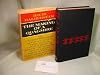
The Making of a Quagmire: America and Vietnam During the Kennedy Era
by David Halberstam
On This Page
Description
Pulitzer-prize winning author David Halberstam's eyewitness account provides a riveting narrative of how the United States created a major foreign policy disaster for itself in a faraway land it knew little about. In the introduction to this edition, historian Daniel J. Singal supplies crucial background information that was unavailable in the mid-1960s when the book was written. With its numerous firsthand recollections of life in the war zone, The Making of a Quagmire penetrates to the show more essence of what went wrong in Vietnam. Although its focus is the Kennedy era, its analysis of the blunders and misconceptions of American military and political leaders holds true for the entire war. show lessTags
Recommendations







































Member Reviews
The Making of a Quagmire is an absolutely heartbreaking look, a clear-eyed examination of the failures of the Vietnam War that came out just a little too late to make a difference. Halberstam drew on his experience as a reporter to chart in detail three related problems.
The first was the government of Ngo Dinh Diem: isolated, corrupt, paranoid, Diem and his brother and sister-in-law the Nhus were the rotting head of South Vietnamese politics. Everything was cast through the lens of personal loyalty and palace intrigue. At one point, there were 13 separate and warring secret police factions. Competent men who told the truth were punished, corrupt toadies rewarded. Even as American aid and advice flowed in, it was absorbed by the infinite show more avarice of the South Vietnamese ruling class, rather than the peasants who were the center of gravity of the war.
The second side was the War in the Delta, and the related propaganda war on the American home front. ARVN units lacked the leadership to pursue and destroy Viet Cong forces, as commanders who lost troops were sacked. The Strategic Hamlet program was a twisted joke of forced relocation against a profoundly place-based culture. Meanwhile, General Harkins at MACV and various figures in the State department were feeding back the same optimistic and fundamentally false stats. Halberstam and the other reporters were ordered to get on the team, or get out.
The final bit is the Buddhist Crisis and the coup that depose Diem and the Nhus in 1963. Through an escalating series of missteps, the Diem government forced a showdown with the last vestige of independent civil society, the Buddhist masses. As protests rocked the streets, the CIA orchestrated a coup that brought down Diem, and replaced him with a rotating set of empty suits.
As Halberstam demonstrates again and again, American diplomacy was simply incapable of meaningfully changing the political culture of South Vietnam. New technological weapons like helicopters and APCs could provide a temporary advantage, but couldn't alter the fundamental dynamics of peasant political war. This book, written post '63 and published in 1965, predicted exactly what actually happened with the escalation. It seems like no one in power read it, and they certainly failed to understand its lessons. show less
The first was the government of Ngo Dinh Diem: isolated, corrupt, paranoid, Diem and his brother and sister-in-law the Nhus were the rotting head of South Vietnamese politics. Everything was cast through the lens of personal loyalty and palace intrigue. At one point, there were 13 separate and warring secret police factions. Competent men who told the truth were punished, corrupt toadies rewarded. Even as American aid and advice flowed in, it was absorbed by the infinite show more avarice of the South Vietnamese ruling class, rather than the peasants who were the center of gravity of the war.
The second side was the War in the Delta, and the related propaganda war on the American home front. ARVN units lacked the leadership to pursue and destroy Viet Cong forces, as commanders who lost troops were sacked. The Strategic Hamlet program was a twisted joke of forced relocation against a profoundly place-based culture. Meanwhile, General Harkins at MACV and various figures in the State department were feeding back the same optimistic and fundamentally false stats. Halberstam and the other reporters were ordered to get on the team, or get out.
The final bit is the Buddhist Crisis and the coup that depose Diem and the Nhus in 1963. Through an escalating series of missteps, the Diem government forced a showdown with the last vestige of independent civil society, the Buddhist masses. As protests rocked the streets, the CIA orchestrated a coup that brought down Diem, and replaced him with a rotating set of empty suits.
As Halberstam demonstrates again and again, American diplomacy was simply incapable of meaningfully changing the political culture of South Vietnam. New technological weapons like helicopters and APCs could provide a temporary advantage, but couldn't alter the fundamental dynamics of peasant political war. This book, written post '63 and published in 1965, predicted exactly what actually happened with the escalation. It seems like no one in power read it, and they certainly failed to understand its lessons. show less
The only way American citizens were in touch with the Vietnam War, at all, was through the eyes of reporters. They were responsible for bringing the fighting as well as the politics of South Vietnam into the forefront of public awareness. They were credited for keeping the public more informed than in the dark. It has been said that not many could cite what we were fighting for "in the jungle." Not many more could find Vietnam on a map. Yet, with the publishing of the Making of a Quagmire David Halberstam sets up to explain just how involved the U.S. was before the conflict erupted. In a comprehensive manner he explains our country's commitment to the political struggle in South Vietnam. Despite pressure on all political sides show more Halberstam never compromised his view of the crisis. He refused to publish propaganda to support either side. The Making of a Quagmire is simply unflinching and honest. show less
Anyone wanting to understand the American involvement in Vietnam should read this book. Halberstam was there reporting at the beginning
Ratings
Members
- Recently Added By
Author Information

David Halberstam was born on April 10, 1934 in New York City and later attended Harvard University. After graduating in 1955, Halberstam worked at a small daily newspaper until he attained a position at the Nashville Tennessean. Halberstam has written over 20 books including The Children, a written account of his coverage of the Civil Rights show more Movement; The Best and Brightest, which was a bestseller; and The Game and October, 1964, both detailing his fascination of sports. Halberstam also won a Pulitzer Prize for his reports on the Vietnam War while working for the New York Times. He was killed in a car crash on April 23, 2007 at the age of 73. (Bowker Author Biography) show less
Some Editions
Common Knowledge
- Canonical title*
- En plein bourbier
- Original title
- The Making of a Quagmire. America and Vietnam During the Kennedy Era; The making of a quagmire. America and Vietnam during the Kennedy Era
- Original publication date
- 1964
- Original language*
- Anglais (Etats-Unis) (Etats-Unis)
*Some information comes from Common Knowledge in other languages. Click "Edit" for more information.
Classifications
- Genres
- Nonfiction, History, General Nonfiction, Politics and Government
- DDC/MDS
- 959.704 — History & geography History of Asia Southeast Asia: Myanmar, Thailand, Laos, Cambodia, Vietnam Vietnam 1949-
- LCC
- DS557 .A6 .H3 — History of Europe, Asia, Africa and Oceania Asia History of Asia Southeast Asia French Indochina Vietnam. Annam Vietnamese Conflict
- BISAC
Statistics
- Members
- 172
- Popularity
- 189,846
- Reviews
- 3
- Rating
- (4.18)
- Languages
- English, French, German, Swedish
- Media
- Paper, Ebook
- ISBNs
- 6
- ASINs
- 6