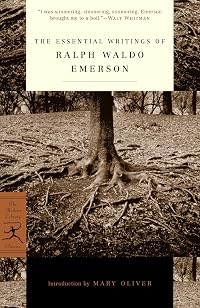
The Essential Writings of Ralph Waldo Emerson (Modern Library Classics)
by Ralph Waldo Emerson 
On This Page
Description
A collection of Emerson's major speeches, essays, and poetry, The Essential Writings of Ralph Waldo Emerson chronicles the life's work of an "American Scholar." As one of the architects of the transcendentalist movement, Emerson embraced a philosophy that championed the individual, emphasized independent thought, and prized "the splendid labyrinth of one's own perceptions." He forged a style distinct from his European predecessors and defined what it meant to be an American.Tags
Recommendations














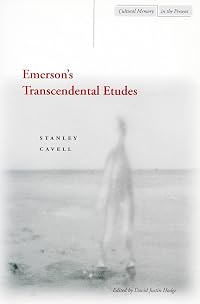

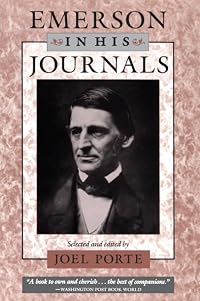
Member Recommendations
Member Reviews
American philosopher and Harvard professor Stanley Cavell claims "Emerson and Thoreau... are the founding philosophers of America" and comparable to Plato. Before reading this I tackled Thoreau. Emerson was his mentor, and they were both considered part of the Transcendental circle in mid-Century America. I found Emerson less irritating than Thoreau, but less readable and challenging. By challenging I don't mean less difficult, but less thought-provoking. I think Emerson is harder to parse, to "get." From what I've read elsewhere even many of his contemporaries found Emerson impenetrable and at times even incoherent. Thoreau on the other hand is easily understandable--and often provocative. So even while I hated what Thoreau had to say show more in "Living Without Principle" or "A Plea for Captain John Brown" I was engaged and I could see how his thinking tied in with various schools of thought and movements and the history of the era. I seldom felt that way about Emerson. And most of the essays were originally lectures and it shows. I often felt "talked at" from a height in a way I didn't feel with Thoreau.
I got a sense of just how far apart we are in his essay "Transcendentalism" where he divides people into "Idealists" and "Materialists." He's definitely the first, and I'm definitely the second. I value being grounded in the senses and reason and science--I'm a fan of reality. I find nature more harsh and cruel than beautiful and pure. I'm not much interested in doctrinal issues in Christianity such as examined in "An Address to Harvard Divinity School" and "The Lord's Supper" or such spiritual essays as "The Over-Soul," which I found about as relevant to reality as a horoscope.
And for a quintessential American philosopher (not that Thoreau was much better in this) I couldn't help but note that Emerson pretty much ignores any American intellectuals such as Franklin, Paine, Hamilton, Madison, Jefferson et al to pretty much load up instead on classical allusions. Oliver Wendell Holmes, Sr. called Emerson's address "The American Scholar" America's "Intellectual Declaration of Independence," but I couldn't see it in that essay. European thinkers alluded to in the article? Plato, Cicero, Chaucer, Bacon, Shakespeare, Marvell, Dryden, Locke, Pope, Swedenborg, Linnaeus, Johnson, Goldsmith, Cowper, Gibbon, Goethe, Burns, Cuvier, Wordsworth, Davy, and Carlyle. Americans? None. Admittedly in 1837 writers such as Poe, Longfellow, Melville and Hawthorne had yet to make their mark, but I can't for the life of me see anything in the address that has American roots and his philosophy in general obviously owes huge debts to Plato, Descartes and Kant. The density of classical and topical allusion made much of what he wrote about in these works obscure to me.
I also think there are some thinkers where you're just fine on your own--that they can be sophisticated yet accessible. Plato for one. Even Thoreau. With Emerson I did miss not reading this book as part of a college class or well-educated reading group. I suspect with Emerson that there was a lot that may have passed over my head. He's long-winded, rambling, pedantic and very abstract. That said, there was hardly one essay in the book where I didn't find insightful and striking passages in the essays. I suspect that one thing that made Emerson so difficult is so much insight and wisdom is so densely packed in that you hardly have time to take in one idea before another hits you. He was hard to absorb and I admit some essays I just skimmed over, but even the earlier ones that I determinedly tackled word for word I wouldn't say I understood completely. If I had to pick a favorite essay, it would be "Self-Reliance" with that famous passage about consistency being "the hobgoblin of little minds" and "Friendship" with just so many passages that stuck out to me ("A friend is a person with whom I may be sincere. Before him I may think aloud." "Better be a nettle in the side of your friend than his echo.")
I didn't care much for English Traits, his reflections on England after visiting there. There was a lot of talk of Englishmen as a race here--common to the time but still disconcerting, and a lot of unsourced data and abstract speculation, where I would have found more specifics of what in his visit led to his conclusions more valuable. As for the poetry included, I was underwhelmed, perhaps because I recently read poetry by John Donne, William Blake and John Keats and in comparison I found Emerson mediocre. So, bottom line, I think this collection is worth at least browsing through. I'm not likely to revisit any but a very few of the essays however. show less
I got a sense of just how far apart we are in his essay "Transcendentalism" where he divides people into "Idealists" and "Materialists." He's definitely the first, and I'm definitely the second. I value being grounded in the senses and reason and science--I'm a fan of reality. I find nature more harsh and cruel than beautiful and pure. I'm not much interested in doctrinal issues in Christianity such as examined in "An Address to Harvard Divinity School" and "The Lord's Supper" or such spiritual essays as "The Over-Soul," which I found about as relevant to reality as a horoscope.
And for a quintessential American philosopher (not that Thoreau was much better in this) I couldn't help but note that Emerson pretty much ignores any American intellectuals such as Franklin, Paine, Hamilton, Madison, Jefferson et al to pretty much load up instead on classical allusions. Oliver Wendell Holmes, Sr. called Emerson's address "The American Scholar" America's "Intellectual Declaration of Independence," but I couldn't see it in that essay. European thinkers alluded to in the article? Plato, Cicero, Chaucer, Bacon, Shakespeare, Marvell, Dryden, Locke, Pope, Swedenborg, Linnaeus, Johnson, Goldsmith, Cowper, Gibbon, Goethe, Burns, Cuvier, Wordsworth, Davy, and Carlyle. Americans? None. Admittedly in 1837 writers such as Poe, Longfellow, Melville and Hawthorne had yet to make their mark, but I can't for the life of me see anything in the address that has American roots and his philosophy in general obviously owes huge debts to Plato, Descartes and Kant. The density of classical and topical allusion made much of what he wrote about in these works obscure to me.
I also think there are some thinkers where you're just fine on your own--that they can be sophisticated yet accessible. Plato for one. Even Thoreau. With Emerson I did miss not reading this book as part of a college class or well-educated reading group. I suspect with Emerson that there was a lot that may have passed over my head. He's long-winded, rambling, pedantic and very abstract. That said, there was hardly one essay in the book where I didn't find insightful and striking passages in the essays. I suspect that one thing that made Emerson so difficult is so much insight and wisdom is so densely packed in that you hardly have time to take in one idea before another hits you. He was hard to absorb and I admit some essays I just skimmed over, but even the earlier ones that I determinedly tackled word for word I wouldn't say I understood completely. If I had to pick a favorite essay, it would be "Self-Reliance" with that famous passage about consistency being "the hobgoblin of little minds" and "Friendship" with just so many passages that stuck out to me ("A friend is a person with whom I may be sincere. Before him I may think aloud." "Better be a nettle in the side of your friend than his echo.")
I didn't care much for English Traits, his reflections on England after visiting there. There was a lot of talk of Englishmen as a race here--common to the time but still disconcerting, and a lot of unsourced data and abstract speculation, where I would have found more specifics of what in his visit led to his conclusions more valuable. As for the poetry included, I was underwhelmed, perhaps because I recently read poetry by John Donne, William Blake and John Keats and in comparison I found Emerson mediocre. So, bottom line, I think this collection is worth at least browsing through. I'm not likely to revisit any but a very few of the essays however. show less
The Essential Writings of Ralph Waldo Emerson contains what it says. It is an annotated collection of the writings of noted American Scholar Ralph Waldo Emerson. It contains his essays, transcriptions of his speeches, poetry that he had written and so on. All of his major works are included and I am hard pressed to think of anything that is not in the book. This is mainly because I am not a scholar of Emerson’s works. The book also contains a biography that glosses over Emerson’s life. Since the man was in his late seventies when he died, I suppose that this is no small task. They accomplish it well enough though.
It is difficult to boil down the life and works of a person as prolific as Emerson, and the book is over 800 pages long. show more As with many of the works and books featured in this series, there is an entire section that asks questions about Emerson in terms of a Book Club; questions that lead to a discussion I should say. Finally, the book contains opinions on Emerson from notable people like Henry James, Henry David Thoreau, Oliver Wendell Holmes, and others. show less
It is difficult to boil down the life and works of a person as prolific as Emerson, and the book is over 800 pages long. show more As with many of the works and books featured in this series, there is an entire section that asks questions about Emerson in terms of a Book Club; questions that lead to a discussion I should say. Finally, the book contains opinions on Emerson from notable people like Henry James, Henry David Thoreau, Oliver Wendell Holmes, and others. show less
I outgrew the transcendentalists by the time i was 16, but I think everyone should go through an Emerson-Thoreau period.
NATURE
THE AMERICAN SCHOLAR
AN ADDRESS
THE TRANSCENDENTALIST
THE LORD'S SUPPER
ESSAYS: FIRST SERIES
* History
* Self-Reliance
* Compensation
* Spiritual Laws
* Love
* Friendship
* Prudence
* Heroism
* The Over-Soul
* Circles
* Intellect
* Art
ESSAYS: SECOND SERIES
* The Poet
* Experience
* Character
* Manners
* Gifts
* Nature
* Politics
* Nominalist & Realist
* New England Reformers
PLATO; OR THE PHILOSOPHER
NAPOLEON; OR THE MAN OF THE WORLD
ENGLISH TRAITS
I. First Visit to England
II. Voyage to England
III. Land
IV. Race
V. Ability
VI. Manners
VII. Truth
VIII. Character
IX. Cockayne
X. Wealth
XI. Aristocracy
XII. Universities
XIII. Religion
XIV. Literature
XV. The "Times"
XVI. Stonehenge
XV. Personal
XVI. Result
XVII. Speech at Manchester
CONDUCT OF LIFE
* Wealth
* Culture
SOCIETY AND show more SOLITUTE
FARMING
POEMS
* Good-bye
* The Problem
* Uriel
* Rhodora
* The Humble-Bee
* The Snow-Storm
* Ode
* Forebearance
* Forerunners
* Give All to Love
* Threnody
* Concord Hymn
* May-Day
* The Aridondacs
* Brahma
* Merlin's Song
* Hymn
* Days
* Character
* Walden
* Lines to Ellen
* Self-Reliance
* Webster
EZRA RIPLEY, D.D.
EMANCIPATION OF THE BRITISH WEST INDIES
THE FUGITIVE SLAVE LAW
JOHN BROWN
THE EMANCIPATION PROCLAMATION
THOREAU
ABRAHAM LINCOLN
CARLYLE show less
THE AMERICAN SCHOLAR
AN ADDRESS
THE TRANSCENDENTALIST
THE LORD'S SUPPER
ESSAYS: FIRST SERIES
* History
* Self-Reliance
* Compensation
* Spiritual Laws
* Love
* Friendship
* Prudence
* Heroism
* The Over-Soul
* Circles
* Intellect
* Art
ESSAYS: SECOND SERIES
* The Poet
* Experience
* Character
* Manners
* Gifts
* Nature
* Politics
* Nominalist & Realist
* New England Reformers
PLATO; OR THE PHILOSOPHER
NAPOLEON; OR THE MAN OF THE WORLD
ENGLISH TRAITS
I. First Visit to England
II. Voyage to England
III. Land
IV. Race
V. Ability
VI. Manners
VII. Truth
VIII. Character
IX. Cockayne
X. Wealth
XI. Aristocracy
XII. Universities
XIII. Religion
XIV. Literature
XV. The "Times"
XVI. Stonehenge
XV. Personal
XVI. Result
XVII. Speech at Manchester
CONDUCT OF LIFE
* Wealth
* Culture
SOCIETY AND show more SOLITUTE
FARMING
POEMS
* Good-bye
* The Problem
* Uriel
* Rhodora
* The Humble-Bee
* The Snow-Storm
* Ode
* Forebearance
* Forerunners
* Give All to Love
* Threnody
* Concord Hymn
* May-Day
* The Aridondacs
* Brahma
* Merlin's Song
* Hymn
* Days
* Character
* Walden
* Lines to Ellen
* Self-Reliance
* Webster
EZRA RIPLEY, D.D.
EMANCIPATION OF THE BRITISH WEST INDIES
THE FUGITIVE SLAVE LAW
JOHN BROWN
THE EMANCIPATION PROCLAMATION
THOREAU
ABRAHAM LINCOLN
CARLYLE show less
Ratings
Members
- Recently Added By
Author Information

797+ Works 21,112 Members
Known primarily as the leader of the philosophical movement transcendentalism, which stresses the ties of humans to nature, Ralph Waldo Emerson, American poet and essayist, was born in Boston in 1803. From a long line of religious leaders, Emerson became the minister of the Second Church (Unitarian) in 1829. He left the church in 1832 because of show more profound differences in interpretation and doubts about church doctrine. He visited England and met with British writers and philosophers. It was during this first excursion abroad that Emerson formulated his ideas for Self-Reliance. He returned to the United States in 1833 and settled in Concord, Massachusetts. He began lecturing in Boston. His first book, Nature (1836), published anonymously, detailed his belief and has come to be regarded as his most significant original work on the essence of his philosophy of transcendentalism. The first volume of Essays (1841) contained some of Emerson's most popular works, including the renowned Self-Reliance. Emerson befriended and influenced a number of American authors including Henry David Thoreau. It was Emerson's practice of keeping a journal that inspired Thoreau to do the same and set the stage for Thoreau's experiences at Walden Pond. Emerson married twice (his first wife Ellen died in 1831 of tuberculosis) and had four children (two boys and two girls) with his second wife, Lydia. His first born, Waldo, died at age six. Emerson died in Concord on April 27, 1882 at the age of 78 due to pneumonia and is buried in Sleepy Hollow Cemetery in Concord, Massachusetts. (Bowker Author Biography) show less
Ralph Waldo Emerson has a Legacy Library. Legacy libraries are the personal libraries of famous readers, entered by LibraryThing members from the Legacy Libraries group.
Series
Belongs to Publisher Series
Common Knowledge
- Important places
- Concord, Massachusetts, USA
- Important events
- Fugitive Slave Act of 1850, Harper's Ferry
- First words
- A subtle chain of countless rings / The next unto the farthest brings; / The eye reads omens where it goes, / And speaks all languages the rose; / And, striving to be man, the worm / Mounts through all the spires of form.
- Last words
- (Click to show. Warning: May contain spoilers.)He never feared the face of man.
Classifications
Statistics
- Members
- 1,412
- Popularity
- 16,798
- Reviews
- 4
- Rating
- (4.20)
- Languages
- English
- Media
- Paper, Audiobook, Ebook
- ISBNs
- 8
- ASINs
- 4