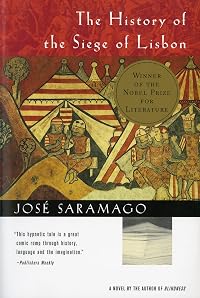
The History of the Siege of Lisbon
by José Saramago
On This Page
Description
A proofreader tinkering with a historical text opens up a world of ambiguity and inventionWhat happens when the facts of history are replaced by the mysteries of love?When Raimundo Silva, a lowly proofreader for a Lisbon publishing house, inserts a negative into a sentence of a historical text, he alters the whole course of the 1147 Siege ofTags
Recommendations

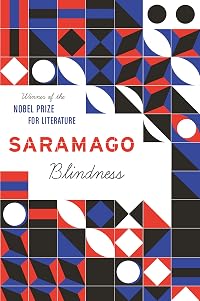
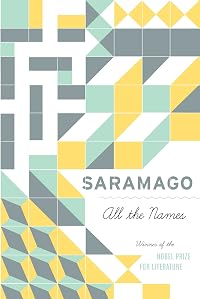
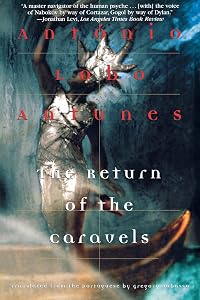
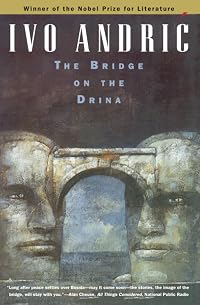










Member Recommendations

Member Reviews
Dies Buch ist ein Spiel mit vielen Spielen: ein Spiel mit den historischen Gegebenheiten, mit der Zeit, mit der Wirklichkeit, mit Schicksalen von Tod und Liebe, mit dem Schreiben selbst, und vor allem mit der Sprache, die alle diese Spiele zusammenfügt zu einem wunderbaren Mosaik. Hier auch eine der schönsten Liebesszene, der ich je in einem Roman begegnet bin.
Leider lassen sich in der deutschen Übersetzung die außerordentlich häßlichen Worte für ‘mamilo‘ und ‘aréola‘ (: Warze, Brustwarzenhof) nicht vermeiden: Was sagt das über die historische deutsche Einstellung zur Erotik und Sexualität?
Aber wenn du mit Saramagos Sprache nicht zurecht kommst, dann lies nicht weiter, denn dann ist dieses Buch nicht für dich show more bestimmt. (VII-12) ***** show less
Leider lassen sich in der deutschen Übersetzung die außerordentlich häßlichen Worte für ‘mamilo‘ und ‘aréola‘ (: Warze, Brustwarzenhof) nicht vermeiden: Was sagt das über die historische deutsche Einstellung zur Erotik und Sexualität?
Aber wenn du mit Saramagos Sprache nicht zurecht kommst, dann lies nicht weiter, denn dann ist dieses Buch nicht für dich show more bestimmt. (VII-12) ***** show less
I'd previously read his excellent novel Blindness, but this was even better, both more human and more high-concept. It's a deceptively simple novel, centering around Raimundo Silva, a middle-aged proofreader in modern-day Lisbon who, when given a book called The History of the Siege of Lisbon to proof, impulsively inserts the single word "not" into a crucial sentence about the decision of a Crusader army to come to the aid of an army of Galicians besieging the city of Lisbon during the Reconquista. When his crime is discovered, he's called into his head office and chastised, but allowed to keep his job. His new supervisor is an attractive older woman named Maria Sara who takes a liking to him and suggests that he write an alternate show more history exploring how the Galicians, who were the founders on the Portuguese nation, managed to get themselves into Lisbon without the help of the Crusaders. The rest of the book concentrates on the proofreader's tale, and their ensuing romance.
Silva is kind of a funny character, a shy nerd who also seems to reflect a bit of Saramago himself. His extreme nervousness around Maria never gets tedious, and you end up rooting for him to pick up the phone and call her. Her role as his muse feels right, and she reminds me of Hector Berlioz's ladyfriend, who demanded he write his grand opera The Trojans in spite of all his self-doubts. The other layer of the story, Saramago's meditations on the nature of history and the veracity of various "true" historical events, is very well-done and concise, too. When posterity records Dom Alfonso Henriques as uttering implausibly eloquent St. Crispin's Day-esque royal speeches, what are we being encouraged to think? How should we regard the completely ridiculous miracles of the saints, like the story of St. Anthony and the donkey, that come straight out of Borges' "The Theologian"? This theme is enhanced by Saramago's trademark no quotes/long paragraphs/interweaving narrative style, with a wry authorial voice possessed of a dislike of war, a fondness for human irrationalities, and indulgent of digressions. It's a similar theme as Thomas Pynchon's Mason & Dixon, but though the book is shorter than that masterpiece, "Like any story, it can be told in ten words, or a hundred, or a thousand, or never end." show less
Silva is kind of a funny character, a shy nerd who also seems to reflect a bit of Saramago himself. His extreme nervousness around Maria never gets tedious, and you end up rooting for him to pick up the phone and call her. Her role as his muse feels right, and she reminds me of Hector Berlioz's ladyfriend, who demanded he write his grand opera The Trojans in spite of all his self-doubts. The other layer of the story, Saramago's meditations on the nature of history and the veracity of various "true" historical events, is very well-done and concise, too. When posterity records Dom Alfonso Henriques as uttering implausibly eloquent St. Crispin's Day-esque royal speeches, what are we being encouraged to think? How should we regard the completely ridiculous miracles of the saints, like the story of St. Anthony and the donkey, that come straight out of Borges' "The Theologian"? This theme is enhanced by Saramago's trademark no quotes/long paragraphs/interweaving narrative style, with a wry authorial voice possessed of a dislike of war, a fondness for human irrationalities, and indulgent of digressions. It's a similar theme as Thomas Pynchon's Mason & Dixon, but though the book is shorter than that masterpiece, "Like any story, it can be told in ten words, or a hundred, or a thousand, or never end." show less
A wonderful, eccentric, playful and unpredictable novel, in which Saramago explores the ways history and fiction interact in our imagination, challenges one of the central stories in the making of Portuguese national identity, and - not least - affirms once again his enormous affection for the city of Lisbon. As so often in Saramago, one little element in the “real world” is reversed to act as the grain of sand on which the narrative can nucleate, in this case it develops into a pair of parallel, intersecting stories, medieval and contemporary. It's a book-within-a-book novel, but you can't easily decide which book is inside which: each of the two stories is effectively writing the other as it develops.
Giovanni Pontiero’s English show more translation, as usual, feels natural and unobtrusive. show less
Giovanni Pontiero’s English show more translation, as usual, feels natural and unobtrusive. show less
With this engaging postmodern narrative Jose Saramago has created a complex tale that encompasses many themes including language, history and historiography, and war in the medieval world. At the same time the story dwells on the power of Eros over the mind and imagination and what results therefrom.
At the heart of this novel is Raimundo Silva, a middle-aged bachelor and proofreader in a contemporary Portuguese publishing house. However the focal point for Raimundo and the reader is the siege of the Moorish city of Lissibona (Lisbon) in 1147 by Portuguese forces under Christian King Alfonso I, its conquest and the expulsion of the Moors-a battle in which as many as 150,000 perished. Under the sway of his own fertile imagination, a show more dangerous thing for a proofreader, on one day Raimundo writes his own alternative history of the siege by changing a single word in a manuscript, thereby implying, contrary to the historical record, that the Crusaders refused to help the Portuguese besiege and capture the city.
Why does he do this? It seems that he is in love with the city of Lisbon as seen when the narrator says, "for it might well be that Lisbon, contrary to all appearances, was not a city but a woman, and the perdition simply amorous". But he is also enamored of his younger, iconoclastic boss, Maria Sara, with whom he falls in love. He is inexplicably encouraged by her to rewrite the entire history of the siege. He does so by continuing to weave a web of chivalrous deeds, love and intrigue around the bare historical record. The romantic affair with Maria blossoms, the apparent present and the imagined past meld into one another in a complicated narrative that shifts constantly between past and present tenses. In doing so it develops into a complex meditation on the meaning of both history and words as well as a romance and parable of life under authoritarian rule. Another major theme is Saramago's appreciation of the Reconquista, a central element in the history of Portugal as well as Spain, of which the conquest or re-conquest of Lisbon by Christians and its transformation into the capital of Portugal is a key event.
On one level, Saramago is exploring the thirst for power, religious and political fanaticism, intolerance, hypocrisy and jingoism, as well as the human need for love, companionship, sex. On another level, of more import for this reader, he is developing his abiding theme that history is a form of fiction, a selective reordering of facts. This reminds me of Tolstoy's philosophic musings near the end of War and Peace. Saramago's prose style does take some extra effort to adjust to with a stream-of-consciousness technique, long paragraphs, and serpentine sentences; but it is worth the effort and, like Faulkner and others with difficult prose styles, repays the reader who perseveres. This is nevertheless a mesmerizing tale that engages the reader's mind and emotions. show less
At the heart of this novel is Raimundo Silva, a middle-aged bachelor and proofreader in a contemporary Portuguese publishing house. However the focal point for Raimundo and the reader is the siege of the Moorish city of Lissibona (Lisbon) in 1147 by Portuguese forces under Christian King Alfonso I, its conquest and the expulsion of the Moors-a battle in which as many as 150,000 perished. Under the sway of his own fertile imagination, a show more dangerous thing for a proofreader, on one day Raimundo writes his own alternative history of the siege by changing a single word in a manuscript, thereby implying, contrary to the historical record, that the Crusaders refused to help the Portuguese besiege and capture the city.
Why does he do this? It seems that he is in love with the city of Lisbon as seen when the narrator says, "for it might well be that Lisbon, contrary to all appearances, was not a city but a woman, and the perdition simply amorous". But he is also enamored of his younger, iconoclastic boss, Maria Sara, with whom he falls in love. He is inexplicably encouraged by her to rewrite the entire history of the siege. He does so by continuing to weave a web of chivalrous deeds, love and intrigue around the bare historical record. The romantic affair with Maria blossoms, the apparent present and the imagined past meld into one another in a complicated narrative that shifts constantly between past and present tenses. In doing so it develops into a complex meditation on the meaning of both history and words as well as a romance and parable of life under authoritarian rule. Another major theme is Saramago's appreciation of the Reconquista, a central element in the history of Portugal as well as Spain, of which the conquest or re-conquest of Lisbon by Christians and its transformation into the capital of Portugal is a key event.
On one level, Saramago is exploring the thirst for power, religious and political fanaticism, intolerance, hypocrisy and jingoism, as well as the human need for love, companionship, sex. On another level, of more import for this reader, he is developing his abiding theme that history is a form of fiction, a selective reordering of facts. This reminds me of Tolstoy's philosophic musings near the end of War and Peace. Saramago's prose style does take some extra effort to adjust to with a stream-of-consciousness technique, long paragraphs, and serpentine sentences; but it is worth the effort and, like Faulkner and others with difficult prose styles, repays the reader who perseveres. This is nevertheless a mesmerizing tale that engages the reader's mind and emotions. show less
Literary fiction about a proofreader that significantly alters the meaning of a book by changing one word, such that his revised text states the crusaders did NOT help the Portuguese drive the Moors out of Lisbon in the year 1147. At the suggestion of his newly appointed supervisor, the proofreader then goes on to write his own version of The History of the Siege of Lisbon, using his altered text as a starting point. Since he lives in Lisbon, he can actually visit some of the locations where the Siege took place. The proofreader’s version of history is interspersed with his present-day narrative.
Saramago’s writing is lovely, but the meandering can be distracting. I often had to re-read sections to figure out where the initial show more thought started and how I ended up so far afield from that thought. He employs long sentences using only commas and periods. Dialogue is embedded in the prose, and there is no indication which character is speaking, so the reader will have to keep track mentally. The author does not differentiate between two story arcs, often moving between them within the same paragraph. There are long paragraphs describing a character’s internal dialogue (for example, of whether or not to make a phone call) that span several pages. The narrator goes off on many tangents, some of which are head-scratchers. In short, this book requires a great deal of patience and concentration.
I found I needed to understand more about Portuguese history to fully appreciate the storyline, so it took me a while to finish this book, since I was constantly looking up events and people that played a role in the actual Siege of Lisbon. Thus, I recommend getting an overview of the historical Siege, as well as the key players involved, before embarking on this novel.
I believe the point of this book is to show how fiction can impact the historical record. Participants often leave no written record of their thoughts and emotions, and Saramago explores whether we can truly understand the reasons behind why people acted the way they did after many years have passed.
I have read two other books by Saramago, Blindness and The Year of the Death of Ricardo Reis, and enjoyed both. As clever as it is, this one just didn’t work as well for me, primarily due to its structure. I found the present-day story more engaging than the alternate history. It isn’t necessarily fun to read this book, but it certainly engages the brain. show less
Saramago’s writing is lovely, but the meandering can be distracting. I often had to re-read sections to figure out where the initial show more thought started and how I ended up so far afield from that thought. He employs long sentences using only commas and periods. Dialogue is embedded in the prose, and there is no indication which character is speaking, so the reader will have to keep track mentally. The author does not differentiate between two story arcs, often moving between them within the same paragraph. There are long paragraphs describing a character’s internal dialogue (for example, of whether or not to make a phone call) that span several pages. The narrator goes off on many tangents, some of which are head-scratchers. In short, this book requires a great deal of patience and concentration.
I found I needed to understand more about Portuguese history to fully appreciate the storyline, so it took me a while to finish this book, since I was constantly looking up events and people that played a role in the actual Siege of Lisbon. Thus, I recommend getting an overview of the historical Siege, as well as the key players involved, before embarking on this novel.
I believe the point of this book is to show how fiction can impact the historical record. Participants often leave no written record of their thoughts and emotions, and Saramago explores whether we can truly understand the reasons behind why people acted the way they did after many years have passed.
I have read two other books by Saramago, Blindness and The Year of the Death of Ricardo Reis, and enjoyed both. As clever as it is, this one just didn’t work as well for me, primarily due to its structure. I found the present-day story more engaging than the alternate history. It isn’t necessarily fun to read this book, but it certainly engages the brain. show less
I am grateful to the Author Theme Reads group for making Saramago the mini-author for January-April; otherwise I would not have read this wonderful book. Saramago interweaves the story of a 20th century Lisbon proofreader, an isolated, serious, professionally responsible man, who unexpectedly inserts a "not" into a history of the siege of Lisbon, indicating that the Crusaders did not come to the aid of of the Christian Portuguese laying siege to the Moor-held city of Lisbon, with an alternative history of that 12th century siege told through the eyes of the participants, and with a love story. He is not only a wonderful story-teller, but an amazing writer with a magical way with language, almost piling words on to bring out very show more slightly different shades of meaning, finding the telling detail to illuminate character and place, exploring multiple facets of both contemporary and medieval life, and implicitly drawing parallels between them.
Through this story, Saramago plays with the meaning of history and the writing of history, the role of individuals, the centrality of daily life, the use and abuse of language, the grittiness of war, and the transformative power of love. His writing style is sometimes difficult to follow, requiring and rewarding careful attention, but is beautiful (and, I must assume, beautifully translated). I have to believe Saramago had fun writing this delightful book. This was my first Saramago, but it will not be my last. show less
Through this story, Saramago plays with the meaning of history and the writing of history, the role of individuals, the centrality of daily life, the use and abuse of language, the grittiness of war, and the transformative power of love. His writing style is sometimes difficult to follow, requiring and rewarding careful attention, but is beautiful (and, I must assume, beautifully translated). I have to believe Saramago had fun writing this delightful book. This was my first Saramago, but it will not be my last. show less
I enjoy this novel, written in a dictatorship, and discussing what effect an attempt to rewrite the past by literally changing just a word in a text, can have. All dictatorships rewrite their pasts, and living in Canada, under our Conservative Government, I am watching that actually occur. I enjoyed the novel, and abhor the process.
Members
- Recently Added By
Lists

1001 Books You Must Read Before You Die
1,448 works; 1,133 members

Top Five Books of 2013
1,562 works; 721 members

20th Century Literature
1,161 works; 55 members

Philosophical Fiction
97 works; 27 members

1980s
356 works; 22 members

Favourite Books
1,819 works; 316 members
Nobel Price Winners
222 works; 20 members

EU Fiction: 1950-2022
223 works; 68 members

1,001 BYMRBYD Concensus
723 works; 27 members

Five star books
1,755 works; 107 members

SHOULD Read Books!
354 works; 9 members
Books translated from Romance Languages into English
102 works; 7 members

Books I Own But Haven't Read
144 works; 2 members

Global Reads: Books Set in Western Europe
186 works; 10 members

Favorite Books in Translation
320 works; 133 members
Author Information

240+ Works 53,168 Members
José Saramago was born on November 16, 1922. He spent most of his childhood on his parent's farm, except while attending school in Lisbon. Before devoting himself exclusively to writing novels in 1976, he worked as a draftsman, a publisher's reader, an editor, translator, and political commentator for Diario de Lisboa. He is indisputably show more Portugal's best-known literary figure and his books have been translated into more than 25 languages. Although he wrote his first novel in 1947, he waited some 35 years before winning critical acclaim for work such as the Memorial do Convento. His works include The Year of the Death of Ricardo Reis, The Stone Raft, Baltasar and Blimunda, The History of the Siege of Lisbon, The Gospel According to Jesus Christ, and Blindness. At age 75, he was awarded the Nobel Prize for Literature in 1998 for his work in which "parables sustained by imagination, compassion and irony, continually enables us to apprehend an elusory reality." He died from a prolonged illness that caused multiple organ failure on June 18, 2010 at the age of 87. (Bowker Author Biography) show less
Some Editions
Awards and Honors
Series
Belongs to Publisher Series
Biblioteca Folha (4)
El confident (6)
Work Relationships
Is contained in
Common Knowledge
- Canonical title
- The History of the Siege of Lisbon
- Original title
- História do cerco de Lisboa
- Original publication date
- 1989
- People/Characters
- Raimundo Silva; Dr. Maria Sara; Afonso of Portugal
- Important places
- Lisbon, Portugal
- Important events
- Siege of Lisbon (1147)
- Epigraph
- Until you attain the truth,
you will not be able to amend it.
But if you do not amend it,
you will not attain it. Meanwhile,
do not resign yourself.
- from The Book of Exhortations - Dedication
- For Pilar
- First words*
- Sí, va dir el corrector, el nom d'aquest signe és deleàtur, l'usem quan hem de suprimir i esborrar, la mateixa paraula ho diu, i tant serveix per a lletres com per a paraules completes.
Ha detto il revisore, Sì, il nome di questo segno è deleatur, lo usiamo quando abbiamo bisogno di sopprimere e cancellare, la parola stessa lo dice, e vale sia per lettere singole che per parole intere, - Quotations*
- Il ricordo della notte stupenda distrae Raimundo Silva, la sorpresa di risvegliarsi al mattino e vedere e sentire un corpo nudo accanto, il piacere inesprimibile di toccarlo, qui, lì, dolcemente, come se fosse una rosa, dire... (show all) fra sé e sé, Piano piano, non la svegliare, fatti conoscere, rosa, corpo, fiore, poi la premura delle mani, la carezza prolungata e insistente, fino a che Maria Sara apre gli occhi e sorride, hanno detto contemporaneamente, Amore mio, e si sono abbracciati.
- Last words
- (Click to show. Warning: May contain spoilers.)Beneath the verandah roof a shadow sighed.
- Original language
- Portuguese
*Some information comes from Common Knowledge in other languages. Click "Edit" for more information.
Classifications
- Genres
- Fiction and Literature, General Fiction, Historical Fiction
- DDC/MDS
- 869.342 — Literature & rhetoric Spanish Literature Literatures of Portuguese and Galician languages Portuguese fiction 20th Century 1945-1999
- LCC
- PQ9281 .A66 .H5713 — Language and Literature French, Italian, Spanish and Portuguese literatures Portuguese literature Individual authors, 1961-2000
- BISAC
Statistics
- Members
- 1,998
- Popularity
- 10,517
- Reviews
- 25
- Rating
- (3.83)
- Languages
- 20 — Basque, Catalan, Danish, Dutch, English, Finnish, French, German, Hebrew, Hungarian, Italian, Norwegian (Bokmål), Norwegian, Polish, Romanian, Slovak, Spanish, Swedish, Turkish, Portuguese (Portugal)
- Media
- Paper, Audiobook, Ebook
- ISBNs
- 61
- ASINs
- 14